Vet-assistant guidance on removing ticks from cats safely: what tools to use, how to pull the tick cleanly, what not to do, aftercare warning signs, and prev...
Article
•
Designer Mixes
Remove Ticks From Cats

Shari Shidate
Designer Mixes contributor
Finding a tick on your cat can make your stomach drop. I get it. The good news is that when you remove a tick promptly and correctly, you can greatly reduce the chance of disease transmission and skin infection.
This care guide walks you through safe, evidence-based tick removal at home, what to do after, and when it is time to call your vet. If your cat has a thick or long coat, do not worry. The steps are the same, you may just need better lighting and a little more patience.
Why ticks are a big deal for cats
Ticks are not just a nuisance. They bite, attach, and can transmit infections while feeding. Cats can also develop local irritation, swelling, or infection at the bite site, especially if the tick breaks during removal or the skin is scratched.
Tick-borne disease risk varies by region and by tick species. In the U.S., ticks can carry organisms associated with illnesses such as Lyme disease, anaplasmosis, ehrlichiosis, babesiosis, and others. Cats are diagnosed less often than dogs and some of these infections are rare or less well documented in cats, but they are not immune. The safest approach is quick removal plus prevention.
How quickly can disease spread?
Transmission time depends on the organism, the tick species, and how long the tick has already been feeding. Many pathogens often require hours of attachment before transmission, but some can transmit sooner. That is why removing ticks as soon as you find them matters so much. Do not wait and see.
Before you remove a tick
Aim for a calm, clean, well-lit setup. Ticks are easier to remove when you can clearly see the mouthparts and where they meet the skin.
- Choose the right spot: Bright light, a flat surface, and minimal distractions.
- Recruit help if needed: One person to gently hold and soothe, one to remove the tick.
- Protect yourself: Wear disposable gloves if you have them, especially if you have any cuts on your hands.
Supplies to gather
- Fine-tipped tweezers or a tick-removal tool (a small hook style tool can be helpful for thick fur)
- Disposable gloves
- Rubbing alcohol (isopropyl) and cotton pads
- Small jar or zip bag (for saving the tick)
- Flashlight or phone light
- A treat for your cat afterward
Skip these common DIY mistakes: petroleum jelly, nail polish, essential oils, alcohol directly on the tick while it is attached, heat, or “smothering” methods. These approaches can stress the tick, may increase salivation or regurgitation, and can make removal messier.

Step-by-step tick removal
1) Part the fur and confirm it is a tick
Ticks often hide around the head, neck, ears, under the collar area, armpits, groin, and between toes. A tick feels like a small bump that does not brush away. You may see legs close to the skin.
2) Grasp the head, not the body
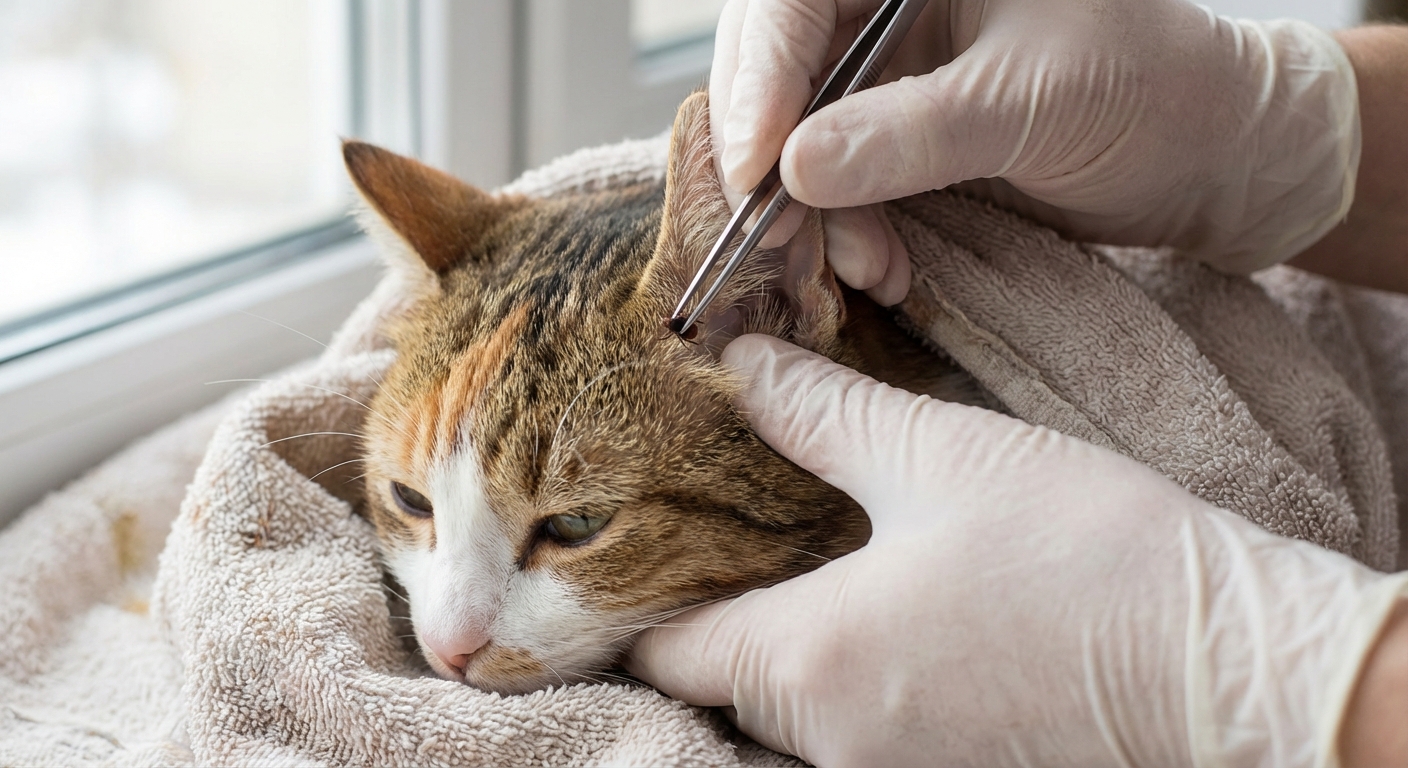
Using fine-tipped tweezers, grab the tick as close to your cat’s skin as possible, right where the mouthparts enter the skin. Avoid grabbing the swollen body, which can squeeze the tick or tear it during removal.
3) Pull straight out with steady pressure
With tweezers, pull upward in a slow, firm, steady motion. Do not twist, jerk, or rock side-to-side. The goal is to remove the tick intact, including the mouthparts.
If you are using a hook style tick tool: follow the directions for that specific tool. Some are designed to slide under the tick and lift, and some use a gentle rotation technique.
4) Check the tick and the skin
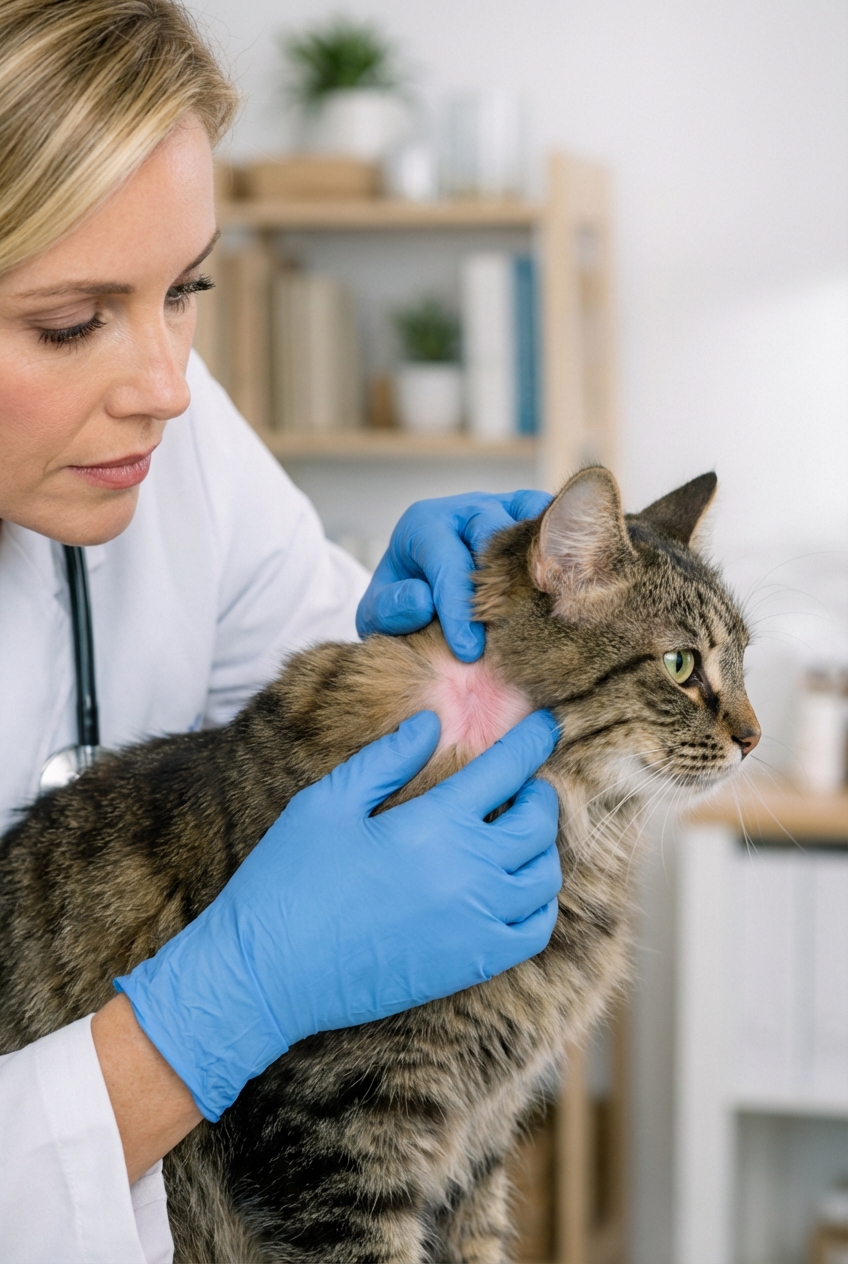
Look at the tick to see if it appears whole. Look at the bite site for bleeding, swelling, or a dark fragment that might be retained mouthparts.
5) Clean the area
Gently clean the bite site with soap and water or a small amount of diluted antiseptic recommended by your veterinarian. Avoid harsh chemicals on irritated skin.
6) Save the tick
Place it in a sealed jar or zip bag, ideally with a date and where on the body you found it. If your cat becomes ill later, your veterinarian may find this helpful.
7) Wash your hands and tools
Even if you wore gloves, wash up well and disinfect tweezers or the tick tool.
If your cat is squirmy, wrap them in a towel like a “kitty burrito,” leaving only the area you need exposed. You are not being dramatic. You are preventing a bite, a scratch, and a botched removal.
If you cannot do this safely, stop and call your vet. A stressed cat plus sharp tweezers is not a great combination.
What if the head stays in?
This is a common worry. Sometimes what looks like “the head” is actually minor scabbing or local irritation. If mouthparts are truly retained, the skin can become inflamed or infected.
What you should do:
- Do not dig aggressively with a needle or sharp tool. That can cause more trauma and infection.
- Clean the area and monitor closely.
- Call your vet if you see increasing redness, swelling, heat, discharge, or your cat seems painful.
- If the area is very tender, swollen, or your cat will not let you touch it, it is reasonable to have your vet handle it promptly.
Aftercare for the next 30 days
Most cats do just fine after prompt tick removal, but I always recommend a simple watch list because early treatment is easier than late treatment.
Monitor the bite site
- Mild redness for a day or two can be normal.
- Call your vet if you notice a growing lump, pus, foul odor, significant swelling, or your cat is repeatedly scratching or crying when touched.
Watch your cat’s overall health
Contact your veterinarian if you notice any of the following, especially within a few weeks of a tick bite:
- Lethargy or hiding more than usual
- Decreased appetite
- Fever
- Limping or stiffness
- Vomiting or diarrhea that does not resolve
- Pale gums or trouble breathing (urgent)
When to call your vet
- The tick is attached near the eye, inside the ear canal, or in the mouth
- Your cat becomes very stressed, aggressive, or you cannot safely restrain them
- You suspect multiple ticks and cannot locate them all
- The bite site looks infected
- You could not remove the tick fully, or your cat seems painful at the site
- Your cat is a kitten, elderly, pregnant, or immunocompromised and you want the safest plan
Tick prevention that works
Removal is step one. Prevention is how you stop the cycle.
Use veterinarian-recommended tick control
The safest and most effective option is a vet-approved product labeled specifically for cats. Many dog tick products, especially those containing permethrin, are toxic to cats. Always confirm the species, weight range, and dosing schedule.
If you have both cats and dogs at home, be extra cautious with dog products that could transfer through cuddling or shared bedding.
- Topical spot-ons: Often applied monthly.
- Oral products: Some are available for cats depending on your region and your veterinarian’s recommendation.
- Tick collars: Can be helpful, but choose a cat-safe collar and ensure proper fit and breakaway safety.
Do quick, routine tick checks
If your cat goes outdoors, tick checks should be a habit during warm months and anytime ticks are active in your area.
- Run your fingers against the direction of the fur
- Check the neck, around ears, under legs, and around the tail base
- Use a flea comb for thicker coats
Make your yard less tick-friendly
- Keep grass trimmed and remove leaf litter
- Create a barrier between wooded areas and your lawn with gravel or mulch
- Discourage wildlife that carry ticks (like rodents and deer) when possible
Keeping cats indoors or limiting outdoor time also lowers tick exposure.

FAQ
Should I put alcohol on the tick to make it back out?
No. Putting alcohol or other irritants on the tick while it is attached may increase salivation or regurgitation and can make removal harder. Remove it mechanically with tweezers or a tick tool.
How do I dispose of a tick?
Seal it in a jar or bag. You can keep it for a short period in case your veterinarian wants to identify it. If disposing, some people place it in alcohol inside a sealed container or tape it securely before throwing it away. Do not crush it with bare fingers, and do not count on flushing it.
My cat never goes outside. Can they still get ticks?
Yes. Ticks can hitch a ride indoors on people, dogs, or even on items brought in from outdoors. Indoor cats are lower risk, not no risk.
Can ticks affect people too?
Yes. Ticks can bite people and spread disease. After removing a tick from your cat, wash your hands, check yourself, and consider checking other pets in the household.
Bottom line
You do not need fancy equipment to remove a tick correctly. You need good lighting, the right tool, steady hands, and a calm plan. Pull straight out (or follow your tick tool directions), clean the area, save the tick, and monitor your cat for any changes. Then, talk with your veterinarian about reliable tick prevention so you are not doing tick removal again next weekend.