Get skunk smell off your dog safely with the peroxide, baking soda, and dish soap method. Includes step-by-step washing tips, face/eye care, vet red flags, a...
Article
•
Designer Mixes
Remove Skunk Odor From Dog

Shari Shidate
Designer Mixes contributor
Few pet moments are as unforgettable as a skunk encounter. The smell can feel like it has soaked into everything: your dog’s coat, your hands, your furniture, and the whole house. The good news is that skunk odor is very treatable at home if you act quickly, use the right chemistry, and keep your dog safe in the process.
As a veterinary assistant in Frisco, Texas, I’ve seen the same pattern over and over: well-meaning pet parents try tomato juice, perfume, or repeated shampooing and still can’t get the odor out. That’s because skunk spray is oily and contains sulfur-based compounds that cling to hair and skin. You need a solution that breaks those compounds down, not one that just masks them.
Safety first
Before you worry about the smell, take a minute to assess your dog. Skunk spray can irritate eyes, nose, mouth, and skin. Some dogs also get sprayed at close range and may have more intense symptoms.
Watch for red flags
- Eye squinting, pawing at the face, redness, or excessive tearing
- Vomiting, drooling, coughing, or trouble breathing
- Lethargy or acting “off” after the incident
- Spray directly into the mouth or eyes
If you see significant eye irritation, flush the eyes with sterile saline if you have it and call your veterinarian. Skunk spray can cause chemical conjunctivitis and it is miserable for dogs.
Contain the smell
- Keep your dog outside or in a garage if possible until you can bathe them.
- Use an old towel to gently blot the coat. Do not rub hard because it can spread oils.
- Put on rubber gloves and wear clothing you do not mind washing immediately.
Tomato juice: why it fails
Tomato juice is a classic myth. It may temporarily “change” what your nose perceives, but it does not reliably neutralize the sulfur compounds in skunk spray. The most effective home option is a peroxide-based solution that oxidizes and breaks down odor molecules.
Skunk spray is oily and sulfur-heavy. The goal is to neutralize it, not cover it up.
Best at-home skunk recipe
This formula is widely recommended in veterinary settings because it works on the chemistry of skunk spray. Mix it fresh right before you use it.
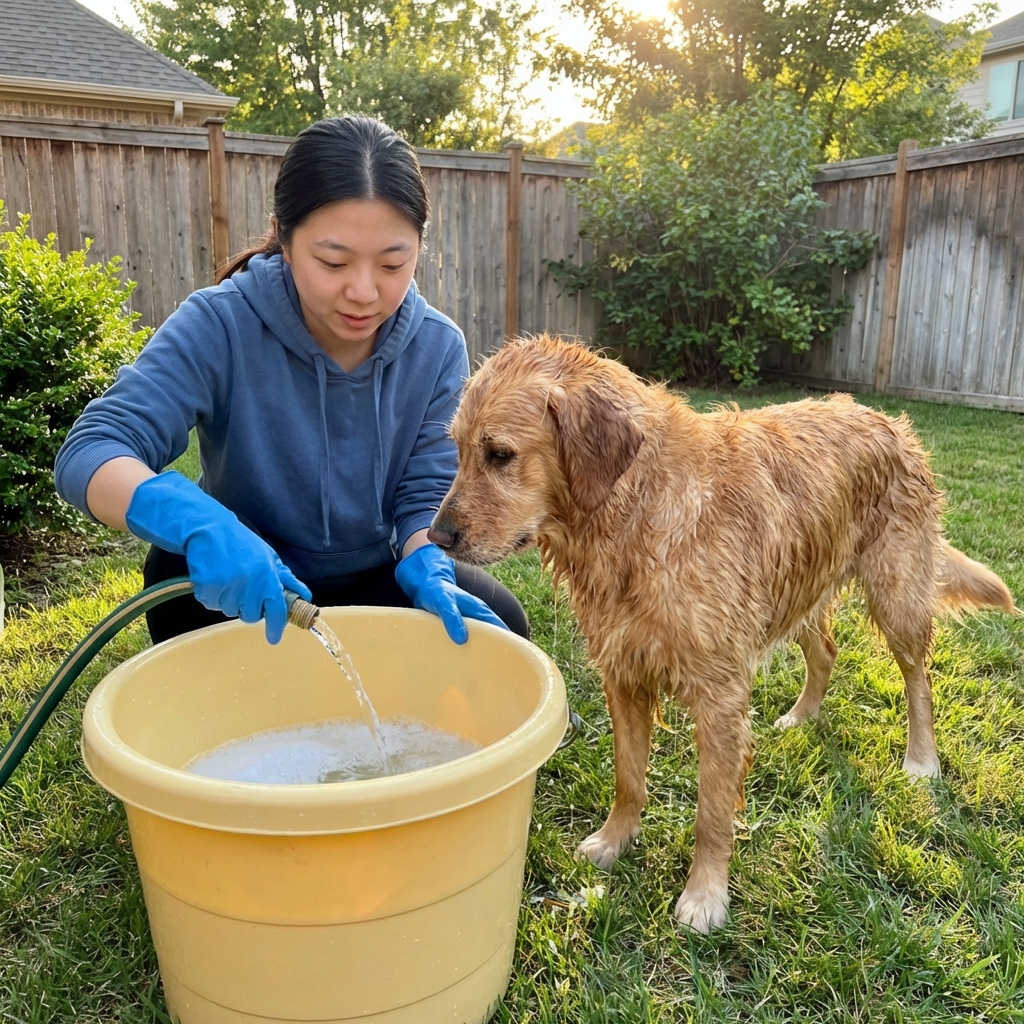
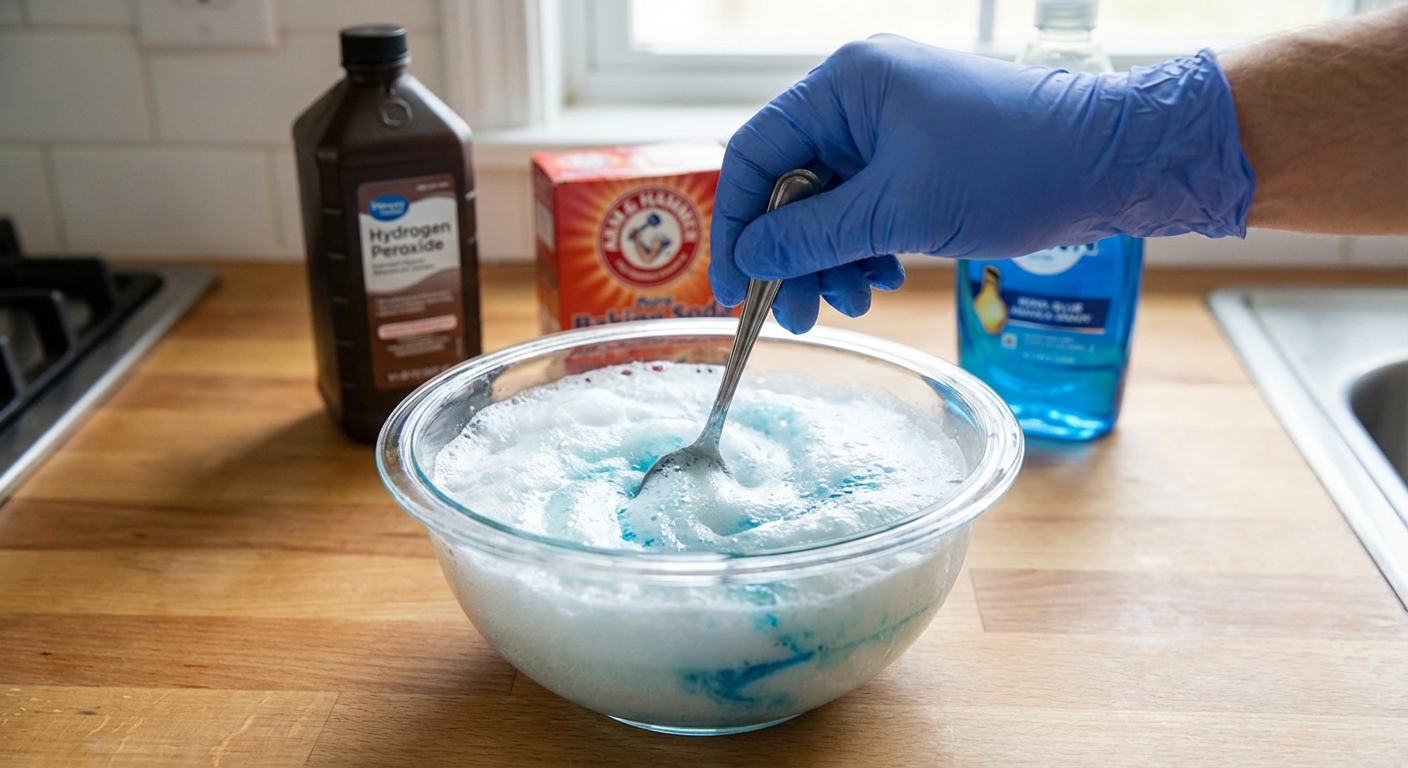
Peroxide skunk wash (mix fresh)
- 1 quart (4 cups) 3% hydrogen peroxide (do not use higher concentrations)
- 1/4 cup baking soda
- 1 teaspoon liquid dish soap (a grease-cutting type)
Important: Do not store this mixture in a closed container. It can build pressure. Make it, use it, then discard any leftover.
How to use it
- Start with a dry coat when you can. If your dog is already wet from rain or you already started rinsing, do not panic. Towel-blot well and continue. The key is getting the solution onto the oily spray as directly as possible.
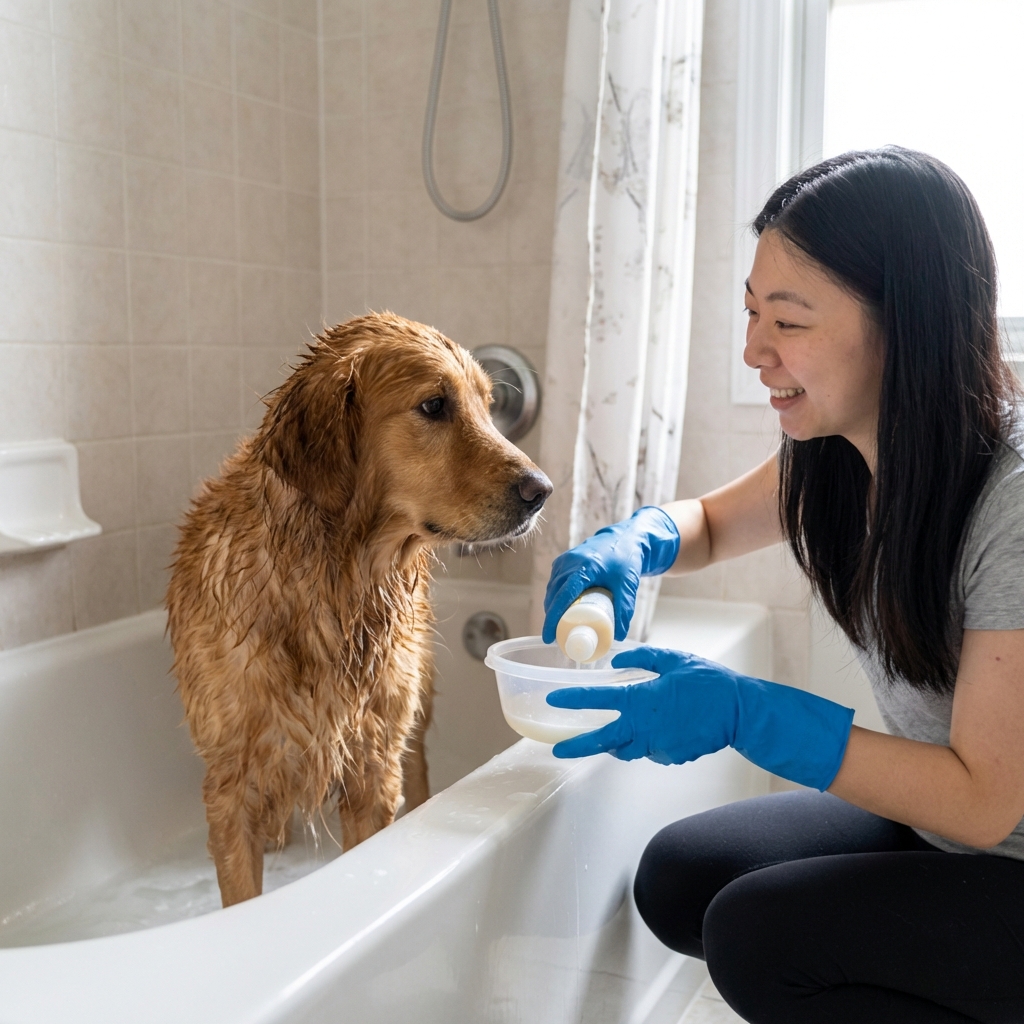
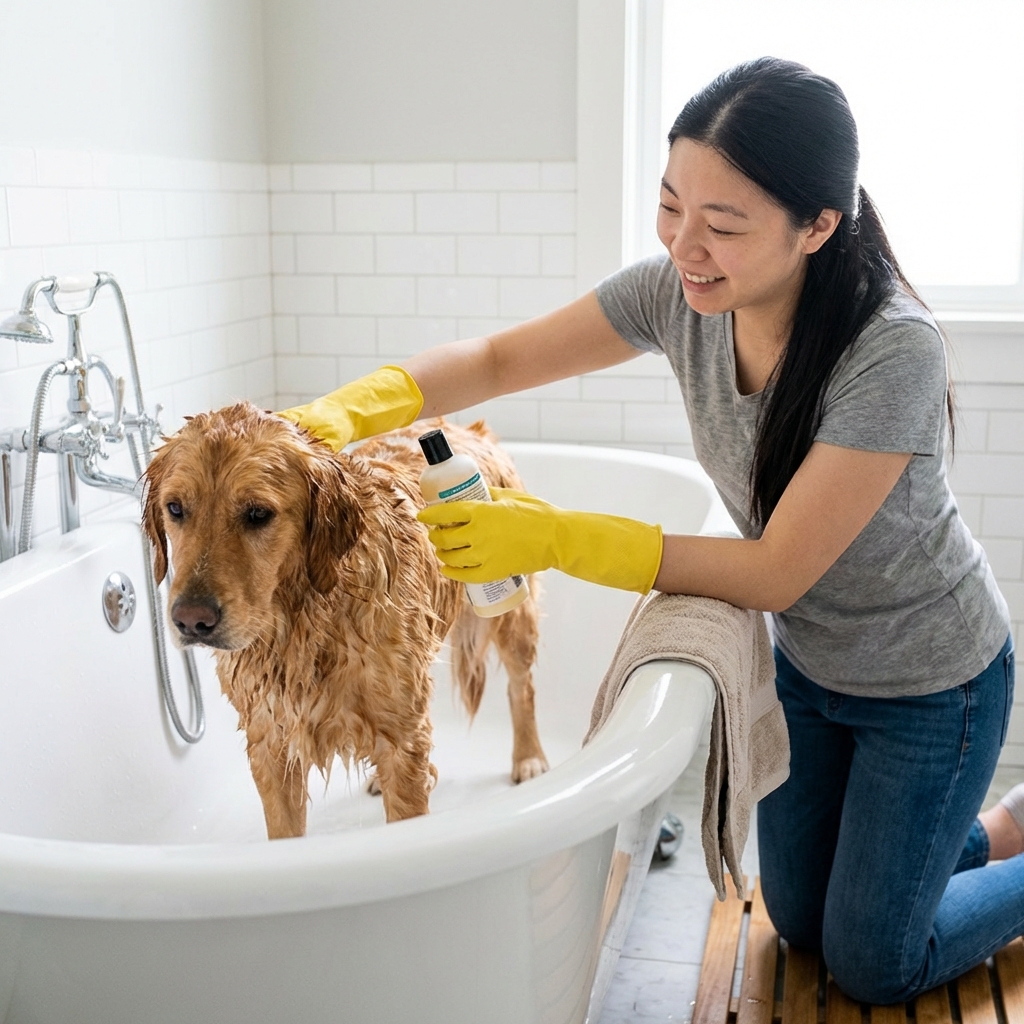
- Apply the mixture to the affected areas, working it into the coat like you are massaging in shampoo.
- Avoid the eyes, nose, mouth, and inner ears. Use a damp cloth for the face instead.
- Let sit for 5 minutes (do not exceed 10 minutes on most dogs, especially darker coats or sensitive skin, to reduce irritation and lightening risk).
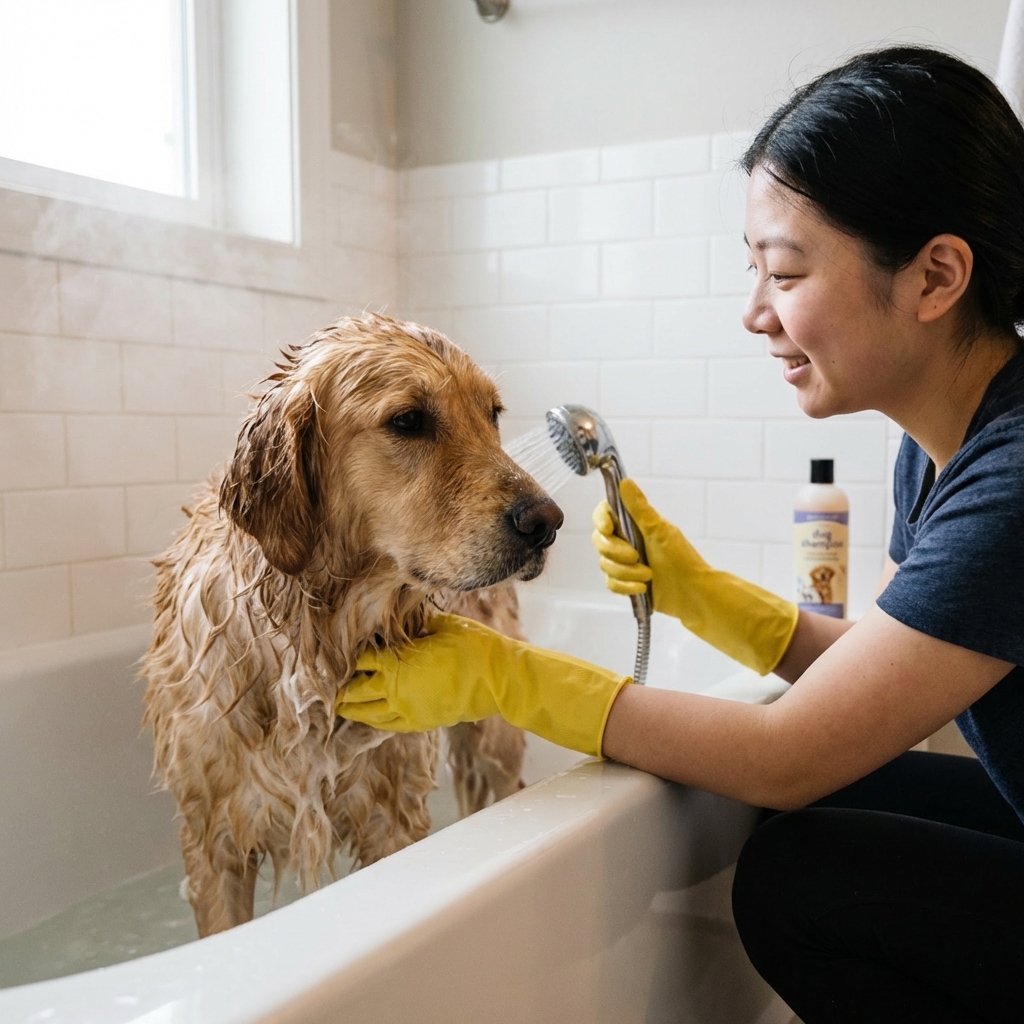
- Rinse thoroughly with lukewarm water.
- Follow with a gentle pet shampoo and rinse again.
- Towel dry and keep your dog warm.
If your dog has a very thick coat or the spray was heavy, you may need a second round. If you do repeat, focus only on the smelliest zones.
Even with perfect technique, a faint odor can linger for a couple of days, especially when your dog gets damp. That usually improves quickly with time and normal bathing.
Special cases
Sprayed in the face
Use extreme caution. The peroxide mixture can sting and irritate mucous membranes. For the face:
- Use a mild dog shampoo and a wet washcloth for cheeks and chin.
- For the area around the eyes, use plain water or sterile saline on a soft cloth.
- If your dog is squinting or the eyes look red, call your vet.
Puppies, seniors, and sensitive skin
Dogs with allergies, broken skin, or very young puppies can be more reactive to peroxide and dish soap. In these cases, consider a commercial skunk shampoo made for pets and ask your veterinarian what is safest for your dog’s skin.
Cats and multi-pet homes
If you also have cats at home, keep them away from the cleaning area and do not use home recipes on cats unless your veterinarian directs you. Cats are more sensitive to many household products, and they groom aggressively, which increases the risk of irritation and ingestion.
Will peroxide lighten fur?
It can slightly lighten some coats, especially dark coats, if left on too long or used repeatedly. Using the mix briefly and rinsing well reduces that risk.
Get the smell out of your house
Once your dog is handled, your home is the next challenge. Skunk oils can transfer to collars, leashes, bedding, and anything your dog rubbed against.
Collars, harnesses, and leashes
- Wash with hot water (if safe for the item) and a strong detergent.
- Soak in a mix of warm water plus a grease-cutting dish soap.
- If odor persists, consider replacing porous items like nylon collars.
- Avoid peroxide mixes on colored fabrics or gear you care about. It can discolor.
Bedding and washable fabrics
- Wash separately from other laundry.
- Add baking soda to the wash cycle.
- Air dry first if you can. Heat from the dryer can “set” lingering odor.
Hard surfaces and floors
Use a pet-safe enzymatic cleaner or a mild degreasing solution. Ventilate well by opening windows and running fans.
Chemical safety: Do not mix cleaning products. In particular, never combine peroxide with bleach or other strong chemicals, and do not mix bleach with vinegar or ammonia.

Mistakes that keep odor around
- Bathing with plain dog shampoo only: it does not break down the sulfur compounds well enough.
- Soaking with water first: it can spread oily spray deeper into the coat, so blot first and treat as directly as you can.
- Using essential oils or fragrance sprays: these can irritate airways and may be unsafe if licked.
- Skipping the rinse: residue can cause skin irritation and lingering smell.
- Letting the dog roam the house before treatment: it spreads oil everywhere.
When to call the vet
Most skunk incidents are an at-home fix, but please call your veterinarian if:
- Spray got into the eyes and your dog is still squinting after gentle flushing.
- Your dog is drooling, vomiting, coughing, or acting weak.
- Your dog has open sores, severe allergies, or a history of skin infections.
- You cannot get the odor down after two careful treatments.
Also keep in mind: skunks can carry rabies. Any bite or scratch should be treated as a potential exposure. Contact your veterinarian right away to confirm your dog’s rabies vaccination is current and follow local animal control or public health guidance.
Prevention tips
Skunk encounters often happen at dusk and dawn. A few simple changes can reduce repeat incidents.
- Walk dogs on a leash during low-light hours.
- Use a flashlight in the yard before letting dogs out at night.
- Secure trash, cover compost, and avoid leaving pet food outside.
- Block access under decks and sheds where skunks may den.