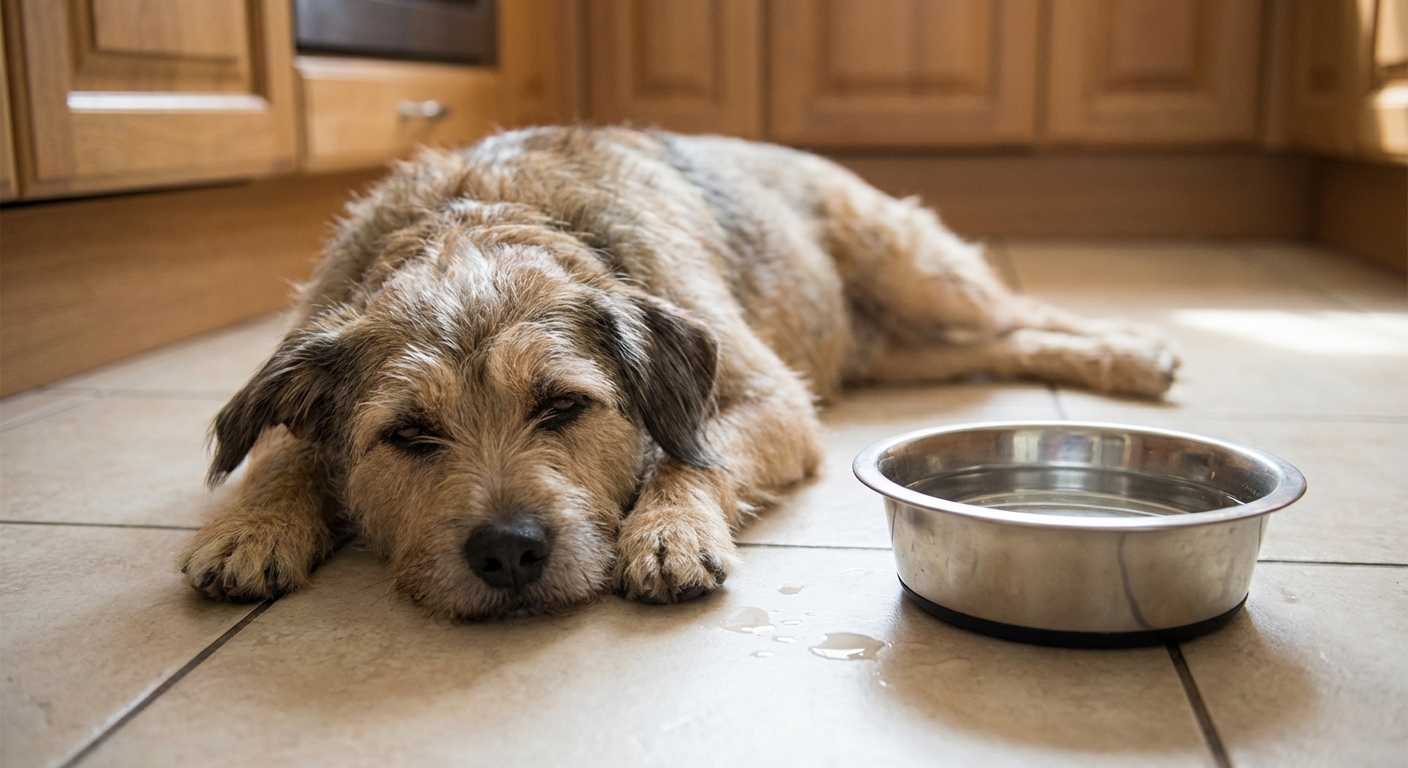
Step-by-step home care for mild dog diarrhea and vomiting: short food break, small sips of water, bland diet, pumpkin, probiotics, dehydration checks, and ur...
Article
•
Designer Mixes
Reasons for Dog Throwing Up

Shari Shidate
Designer Mixes contributor
Seeing your dog throw up can be scary, especially when it happens out of the blue. As a veterinary assistant, I can tell you this is one of the most common reasons people call their vet. The good news is that many causes are mild and short-lived. The important part is knowing when vomiting is an “observe at home” situation and when it is an emergency.
In this guide, we will walk through the most common reasons dogs vomit, what the vomit can sometimes suggest, simple at-home steps that are generally safe, and the red flags that mean you should contact your veterinarian right away.
Vomiting vs. regurgitation
First, it helps to separate vomiting from regurgitation because they can point to different problems.
- Vomiting is an active process. You may see nausea, drooling, lip licking, retching, and abdominal heaving. The material often looks partially digested.
- Regurgitation is more passive. Food or water comes back up without much effort, often shortly after eating, and usually looks undigested and tube-shaped.
If you are not sure which you are seeing, try to note what happens right before and how the material looks. Those details genuinely help your veterinary team.
Common reasons dogs throw up
1) Eating too fast or overeating
Dogs that gulp meals or get into the trash can throw up shortly after eating. This is especially common in multi-dog households where a dog feels pressured to eat quickly.
Helpful tip: Use a slow feeder bowl, feed smaller meals, and consider separating dogs at mealtime.
2) Dietary indiscretion and sudden diet changes
“Dietary indiscretion” is a fancy way of saying your dog ate something they should not have, such as greasy leftovers, spoiled food, cat litter, or a new treat that does not agree with them. Sudden switches in food can also upset the stomach, even if the new food is high quality.
Helpful tip: Transition foods gradually over 7 to 10 days whenever possible.
3) Mild gastritis
Sometimes the stomach lining gets irritated and your dog throws up once or a few times and then seems mostly fine. Mild gastritis can happen from stress, eating unfamiliar foods, or a short-lived irritation.
4) Parasites
Intestinal parasites like roundworms and hookworms can cause vomiting, diarrhea, pot-bellied appearance, and weight loss, especially in puppies. Adult dogs can be affected too.
Helpful tip: Keep your dog on veterinarian-recommended parasite prevention and bring a fresh stool sample to routine visits as recommended by your vet.
5) Infections (viral or bacterial)
Some dogs develop vomiting from gastrointestinal infections. These may include vomiting alone or vomiting plus diarrhea, decreased appetite, and lethargy.
Special note about puppies: Parvovirus can be life-threatening and often causes vomiting, diarrhea (often bloody), and severe lethargy. Puppies and unvaccinated dogs need urgent veterinary care if parvo is a possibility.
6) Pancreatitis
Pancreatitis is inflammation of the pancreas. It can be triggered by high-fat foods, among other factors. Vomiting, abdominal pain, hunched posture, diarrhea, and loss of appetite are common signs.
This is not a “wait it out” issue. Many dogs require fluids, pain control, and prescription diets.
7) Food intolerance or food allergy
Some dogs throw up because an ingredient does not agree with them. Food allergy is more often linked with chronic itching and ear infections, but gastrointestinal signs can happen too. Food intolerance can look like intermittent vomiting, loose stool, or gassiness.
8) Foreign body (swallowed object)
Socks, toys, corn cobs, bones, hair ties, and pieces of chews can cause partial or complete obstruction. Vomiting can be repeated and severe, and the dog may not be able to keep water down.
This can become an emergency quickly. The sooner your vet evaluates a possible obstruction, the better the outcome tends to be.
9) Toxins and household hazards
Many common items can cause vomiting, including chocolate, xylitol, grapes or raisins, certain houseplants, human medications (especially ibuprofen and naproxen), rodent bait, and antifreeze.
Xylitol deserves a special warning: even small amounts can cause dangerous low blood sugar and, in some cases, liver failure.
If you suspect toxin exposure, contact your veterinarian or a pet poison helpline immediately. Time matters.
10) Motion sickness or stress
Some dogs throw up in the car or when anxious. Younger dogs are more prone to motion sickness, and it can improve with age.
Helpful tip: Ask your veterinarian about anti-nausea options for car rides and consider positive associations with short, calm trips.
11) Chronic medical conditions
Ongoing vomiting can sometimes be linked to conditions such as kidney disease, liver disease, endocrine disorders, inflammatory bowel disease, or Addison’s disease. These cases often come with other signs, such as increased thirst, weight loss, appetite changes, or lethargy.
What the vomit can suggest
Important: Color and appearance are not a diagnosis, but they can give your veterinary team useful clues. If it is safe to do so, take a quick photo for your vet.
- Undigested food soon after eating: eating too fast, overeating, regurgitation, or an esophageal issue.
- Yellow foam: bile from an empty stomach, reflux, or mild gastritis. If it happens frequently, your vet may recommend meal timing changes or medication.
- White foam: can be associated with nausea, stomach irritation, reflux, swallowing saliva or air, or empty-stomach retching. (Some dogs also gag up white foam with respiratory irritation, such as kennel cough.)
- Brown vomit or foul, stool-like odor: can indicate gastrointestinal bleeding, severe stomach irritation, or, if it smells fecal, an intestinal obstruction. This needs urgent veterinary attention.
- Bright red blood: can be from irritation, swallowed blood, or more significant bleeding. Call your veterinarian.
- “Coffee grounds” material: partially digested blood and is often more urgent.
- Worms visible: bring a photo and schedule a visit. Your dog likely needs deworming and follow-up testing.
When it is an emergency
Please contact your veterinarian urgently or go to an emergency hospital if you notice any of the following:
- Repeated episodes, or vomiting that does not stop
- Inability to keep water down
- Blood in vomit, or dark “coffee grounds” material
- Severe lethargy, weakness, collapse, or pale gums
- Bloated abdomen, unproductive retching, or signs of intense abdominal pain
- Possible foreign body ingestion (toys, socks, bones, corn cobs)
- Possible toxin exposure (medications, chocolate, xylitol, grapes or raisins, rodent bait)
- Puppy vomiting, especially with diarrhea or lack of vaccination
- Vomiting plus neurologic signs (stumbling, tremors, seizures)
- A senior dog throwing up with any new or worsening symptoms
Helpful timeline triggers: Call your vet the same day if your dog vomits more than 2 to 3 times in 24 hours, has vomiting plus diarrhea that lasts more than 24 hours, or refuses food for more than 24 hours.
If your gut is telling you “this is not normal for my dog,” trust that instinct and call your veterinary clinic. You are never wasting our time by asking.
High-risk dogs
Some dogs need a lower threshold for veterinary advice, even with “mild” stomach upset:
- Puppies and toy breeds: can dehydrate or develop low blood sugar faster.
- Seniors: are more likely to have underlying disease.
- Brachycephalic breeds: may be more prone to regurgitation and aspiration risk.
- Dogs on NSAIDs or steroids: higher risk for stomach and intestinal ulceration.
- Dogs with diabetes or Addison’s disease: vomiting can become serious quickly.
- Dogs with a history of GI surgery or prior obstruction: higher concern for recurrence.
If your dog falls into one of these groups, it is reasonable to call your vet sooner.
What you can do at home
These steps are for dogs who vomited once or twice, are bright and alert (normal energy for them, responsive, interested in their surroundings, normal pink gums), and have no red-flag symptoms. If you are unsure, call your vet first.
Step 1: Give the stomach a short break (only in select cases)
Your vet may recommend withholding food for a short period (often 6 to 12 hours in healthy adult dogs) only after a brief, mild episode when your dog is otherwise acting normal.
Do not do this for puppies, tiny dogs, diabetics, or dogs with other medical conditions unless a veterinarian tells you to. Also skip fasting and call your vet if you suspect a foreign body, pancreatitis, toxin exposure, or if vomiting continues.
Step 2: Offer small amounts of water
Offer a small amount of water and see if it stays down. If your dog gulps and vomits, try smaller amounts more frequently.
Step 3: Try a bland diet for 24 to 48 hours
Common bland options include:
- Boiled, skinless chicken breast with plain white rice
- Boiled lean turkey with white rice
Feed small meals, several times a day. If your dog improves, slowly transition back to their normal diet over several days.
Good to know: Prescription gastrointestinal diets are also a great option. If pancreatitis is suspected, or if your dog has a history of food sensitivities, ask your vet before using chicken and rice.
Step 4: Avoid common triggers
- No fatty foods, table scraps, or rich treats
- No new chews or bones
- Limit intense exercise right after meals
Step 5: Watch hydration and comfort
Make sure your dog is urinating normally and staying bright. Basic dehydration clues can include tacky or dry gums, reduced energy, and a “skin tent” that is slow to settle. These checks are not perfect, so when in doubt, call your veterinarian.
If vomiting returns, diarrhea becomes severe, or appetite disappears, it is time to call your veterinarian.
What not to do
- Do not give human medications like Pepto-Bismol, ibuprofen, or anti-nausea tablets unless your veterinarian instructs you. Some are unsafe or can mask important symptoms.
- Do not force food if your dog is still nauseated.
- Do not wait too long if episodes continue or your dog seems painful, weak, or dehydrated.
How your vet may diagnose it
Veterinarians start with your dog’s history and a physical exam, then recommend testing based on what they find. Common diagnostics include:
- Fecal test for parasites
- Bloodwork to check organ function, inflammation, electrolytes
- X-rays to look for obstruction or abnormal gas patterns
- Ultrasound for a closer look at the stomach, intestines, pancreas, liver
- Parvo testing for puppies or high-risk dogs
Preventing it when you can
- Feed predictably and avoid frequent sudden diet changes.
- Use a slow feeder if your dog gulps meals.
- Keep hazards out of reach, including socks, toys, medications, and garbage.
- Stay current on parasite prevention and routine fecal testing.
- Be careful with high-fat treats, especially for dogs prone to pancreatitis.
- Ask your vet about chronic vomiting because frequent vomiting is not “normal,” even if your dog bounces back quickly.
One more gentle reminder: your dog’s digestive system is deeply connected to overall health. The goal is not just stopping one episode, but understanding the pattern so you can prevent it from becoming a repeat problem.
Quick checklist for your vet
If you call your clinic, these details help a lot:
- How many times your dog threw up and over what time period
- What it looked like (food, foam, bile, blood)
- Whether your dog is eating, drinking, and acting normal
- Any diarrhea, especially blood
- Any chance of toxin exposure or swallowed objects
- Diet changes, new treats, new chews, or table scraps
- Your dog’s age, weight, and medical history
- Any current medications (especially NSAIDs or steroids)