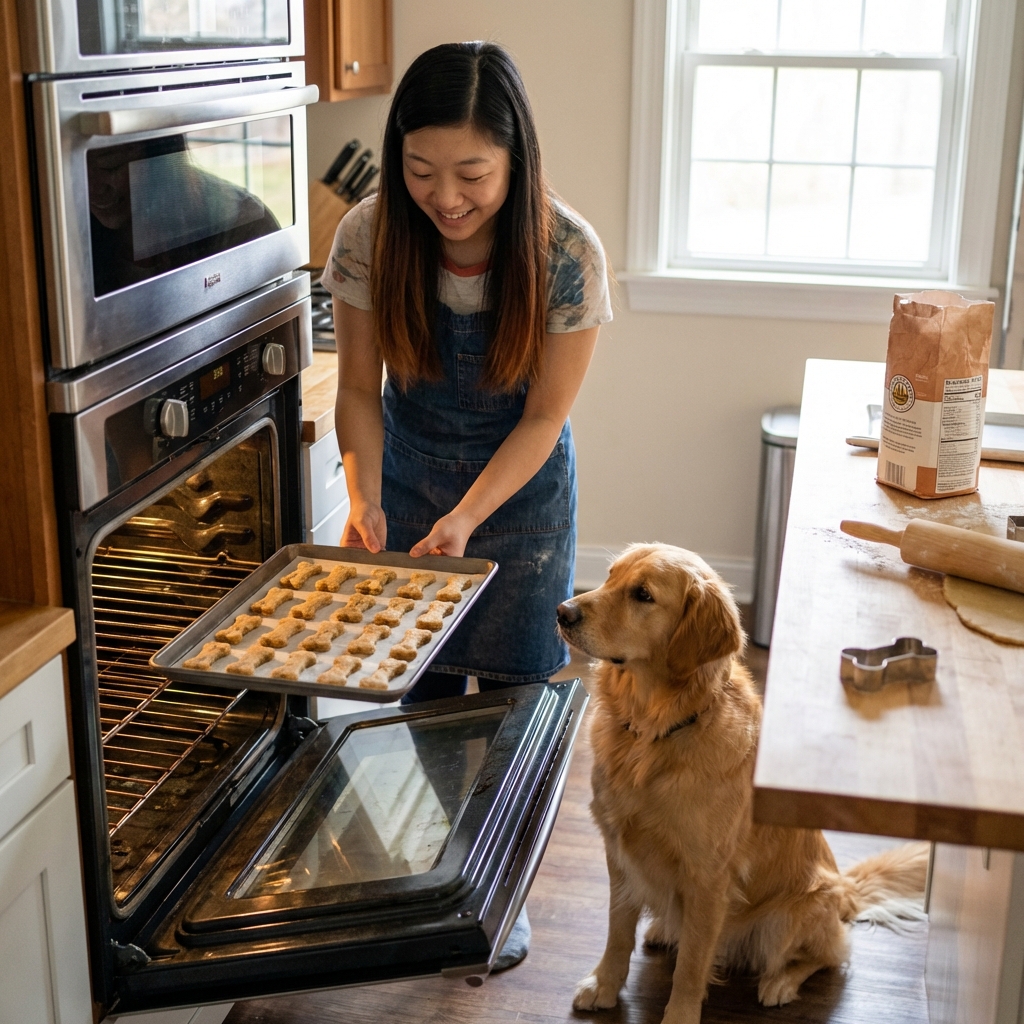
Skip mystery ingredients and bake simple veggie dog treats at home. Learn dog-safe vegetables, easy formulas, and 3 recipes—pumpkin oat crunch, sweet potat...
Article
•
Designer Mixes
Raw Vegetables for Dogs: Safe or Not?

Shari Shidate
Designer Mixes contributor
As a veterinary assistant here in Frisco, Texas, I hear this question all the time: “Can I give my dog raw veggies, or is that asking for trouble?” The practical answer is: some raw vegetables can be safe for many dogs, but “safe” does not always mean “best” for every stomach. For a lot of pups, lightly cooking or pureeing vegetables helps with digestion, makes more nutrients available, and can reduce choking risk.
Let’s walk through what’s truly safe, what’s risky, and how to serve vegetables in a way that supports your dog’s gut, weight, and long-term health.
Why raw veggies can be tricky
Dogs can digest some plant foods, but they are not built like humans when it comes to breaking down plant matter. Many vegetables have tough cell walls made of cellulose. Humans chew thoroughly and have different digestive mechanics. Dogs often swallow bigger pieces, and their GI tract may not break down raw plant fibers as efficiently.
That’s why you’ll sometimes see bits of raw carrot or leafy greens show up in stool. It does not always mean something is “wrong,” but it can mean your dog is not getting much nutritional value from that veggie the way it was served.
Common issues I see
- Choking on hard chunks (especially carrots, raw broccoli stems, and large pieces of celery).
- GI upset like gas, cramping, or diarrhea from certain fibers.
- Pancreatitis flare risk from high-fat add-ons people pair with veggies (dips, oils, butter, cheese), not from the vegetables themselves.
- Obstructions in dogs that gulp food or have a history of eating non-food items.
So are raw vegetables safe?
For many healthy adult dogs, small amounts of certain raw vegetables are safe as a treat or topper. The key is choosing the right vegetables, preparing them correctly, and keeping portions reasonable.
Think of vegetables as nutritional support, not the foundation of the diet. Your dog still needs a complete and balanced diet built around appropriate protein, fat, and essential micronutrients.
Usually safe raw veggies
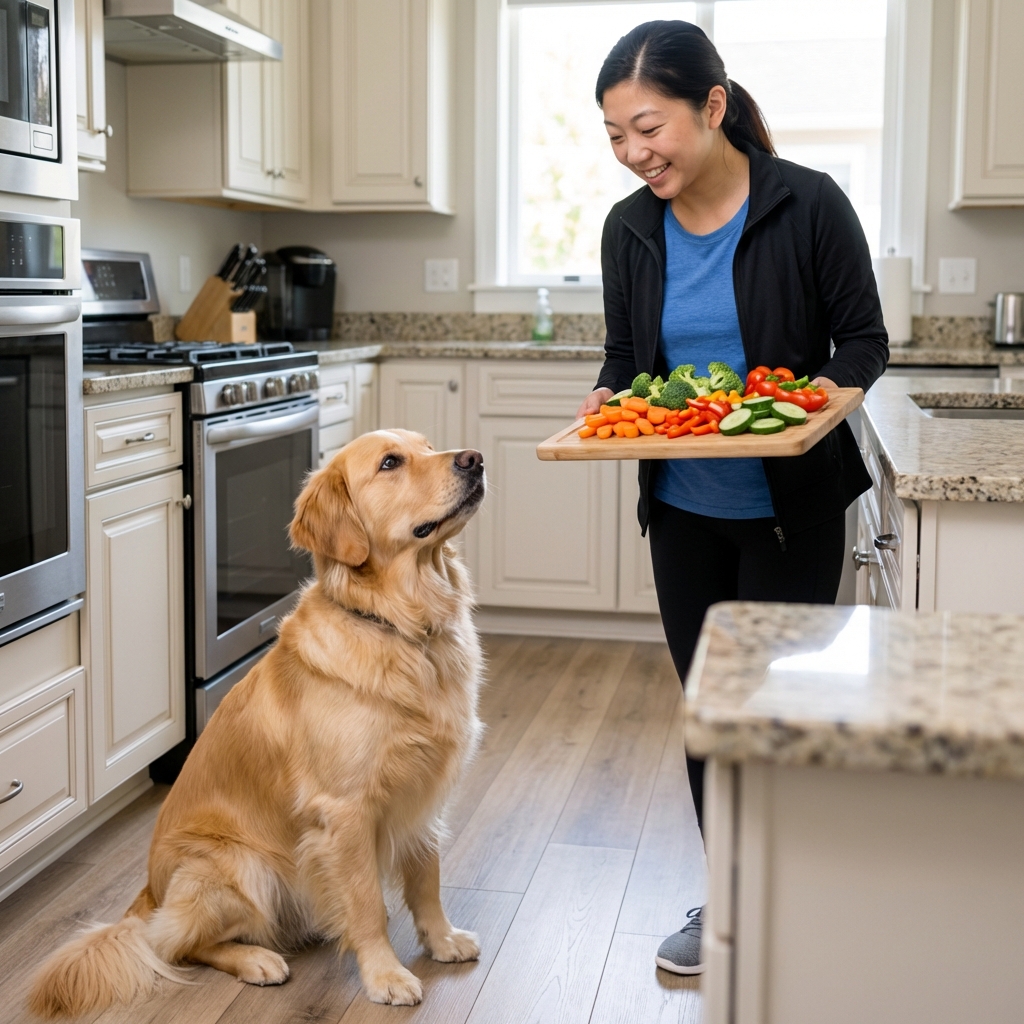
These are commonly tolerated by many dogs when washed well and served in dog-safe shapes and sizes:
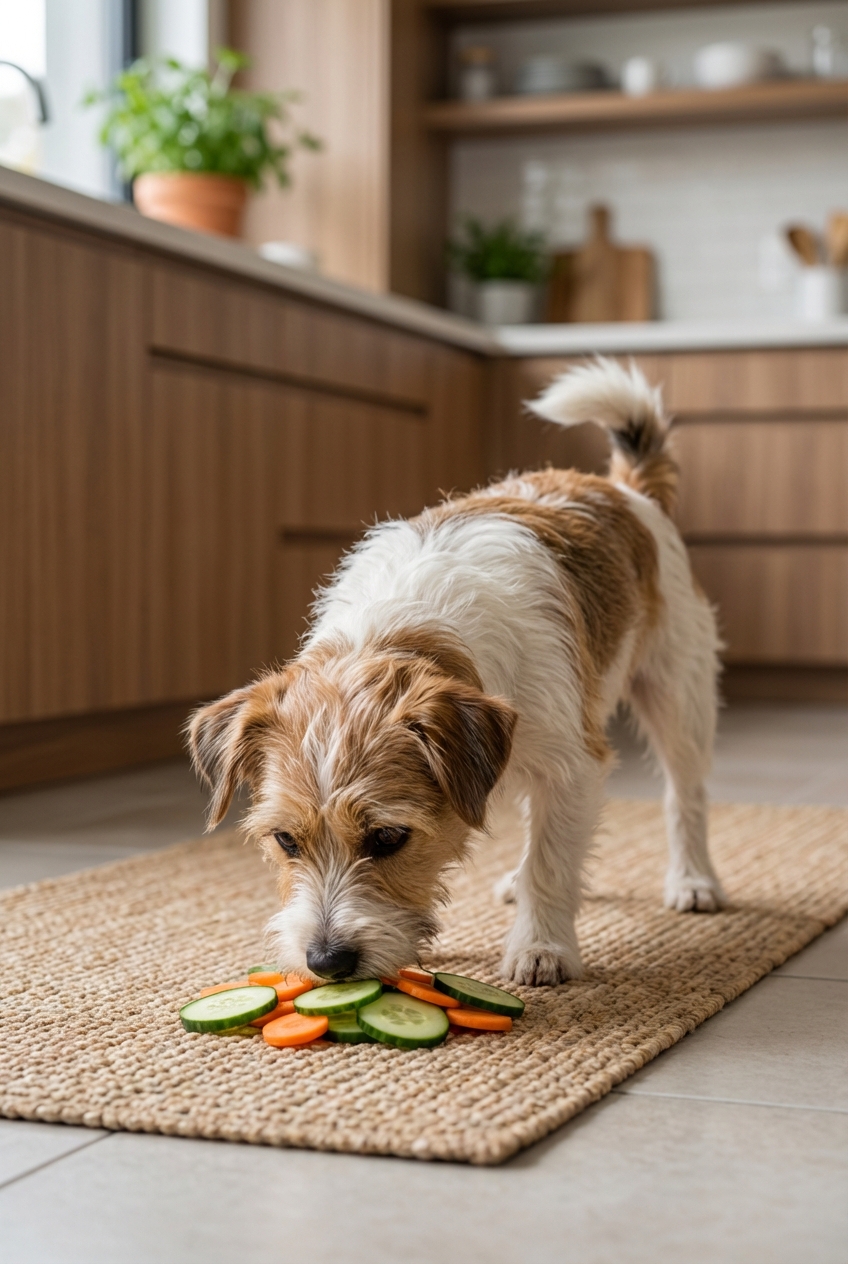
- Cucumber (great crunchy, low-calorie option).
- Bell pepper (especially red, sliced thin; skip spicy peppers).
- Carrots (raw is fine, but cut into thin sticks or shredded; avoid big chunks and thick coin rounds).
- Celery (slice thin to reduce stringy choking risk).
- Romaine lettuce (small pieces; not very nutrient-dense but usually gentle).
- Zucchini (thin slices, small amounts).
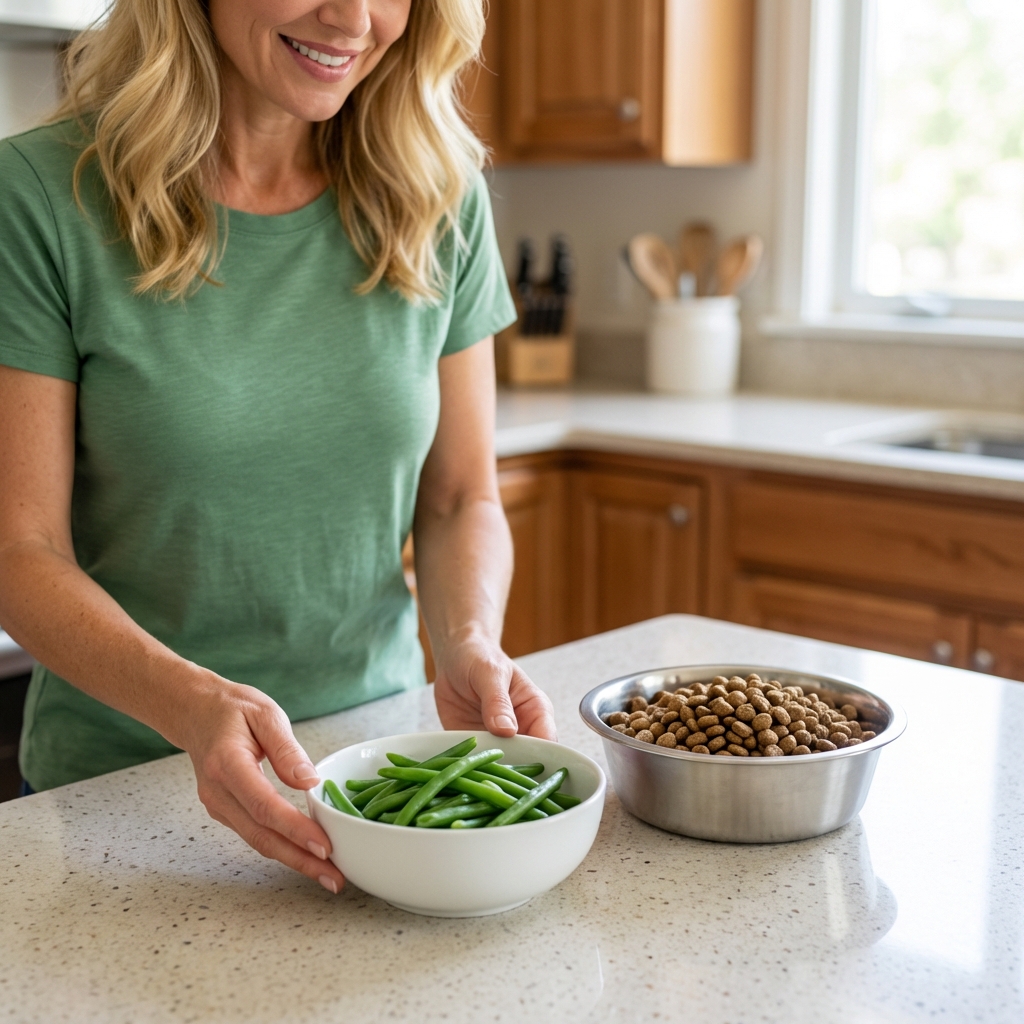
- Green beans (raw can be okay; many dogs do best with lightly cooked).
Tip: If your dog tends to gulp food, choose thin sticks or small diced pieces over big crunchy chunks. If your dog is tiny, senior, brachycephalic (like a Frenchie), or has dental disease, raw crunchy veggies may not be a good match.
Sometimes foods (raw)
These can be nutritious, but they are more likely to cause gas or stomach upset if fed raw, especially in larger amounts:
- Broccoli (small florets only; too much can cause GI irritation, in part due to naturally occurring compounds called isothiocyanates).
- Cauliflower (can be very gassy for some dogs).
- Brussels sprouts (nutritious but famously gas-producing).
- Kale (fine for many dogs in small amounts; may be too fibrous raw for sensitive stomachs).
- Spinach (small amounts; I usually avoid making it a daily veggie for dogs with a history of calcium oxalate urinary stones or oxalate-sensitive dogs).
If you want the benefits with fewer side effects, lightly steam these veggies, then cool before serving.
Do not feed
Here are the big ones to keep on your “no” list:
- Onions (all forms, including raw, cooked, powdered): can damage red blood cells.
- Garlic: also an allium and can be toxic. I do not recommend adding it to food unless your veterinarian specifically directs you.
- Leeks, chives, shallots: same family risk as onions.
- Wild mushrooms: high risk of toxicity and misidentification.
- Unripe green tomatoes and raw potato: can contain solanine, which is problematic.
Tomato note: Ripe tomato flesh in small amounts is generally considered low risk for many dogs, but the green parts (stems and leaves) are more concerning. When in doubt, skip it.
Important: If you suspect onion or garlic exposure and your dog seems weak, pale, is vomiting, or has a fast heart rate, call your veterinarian or an animal poison hotline right away.
Raw vs cooked
In general, light cooking often improves digestibility for many vegetables. Steaming can soften fiber, making it easier for dogs to break down.
There is a tradeoff though. Some nutrients become more available after cooking (like certain carotenoids), while some vitamins are more heat-sensitive. That is one reason I usually recommend gentle steaming rather than overcooking.
Raw vegetables still have value, especially as crunchy enrichment and low-calorie treats. But if your goal is comfort and nutrition, many dogs do best with veggies that are:
- Lightly cooked (steamed, gently baked, or warmed in a little water).
- Finely chopped or pureed (this helps dogs access nutrients).
- Served plain (no salt, garlic or onion seasoning, butter, or oils).
How much is too much?
Vegetables are a wonderful add-on, but too much fiber can cause diarrhea or gassiness, and too many “extras” can unbalance a complete diet.
A practical, safe approach for most healthy dogs:
- Treat use: Keep veggie treats to 10 percent or less of daily calories.
- As part of a homemade-style bowl: Many dogs do well with veggies as a smaller portion of the meal, often around 10 to 20 percent, depending on the dog and the overall recipe.
If you are feeding a fully homemade diet, talk with your veterinarian or a veterinary nutritionist about calcium, essential fatty acids, and key micronutrients. Veggies are supportive, but they do not make a diet complete.
Serving tips
Preparation checklist
- Wash thoroughly to reduce pesticide residue and dirt. Washing helps, but it does not remove everything.
- Cut small: thin sticks, small dice, or shredded.
- Steam for sensitive stomachs: especially cruciferous veggies.
- Go slow: introduce one veggie at a time for 2 to 3 days.
- Skip the seasoning: no onion powder, garlic salt, or spicy blends.
Easy ways to use veggies
- Mix a spoonful of pureed pumpkin (plain, not pie filling) into meals for stool support.
- Offer a few cucumber slices as a hydrating summer treat.
- Freeze thin carrot sticks for a longer-lasting chew, but supervise heavy chewers and gulpers.
- If you use broth, make it low sodium and onion and garlic-free.
Fresh, frozen, canned
- Frozen veggies are often fine if they are plain (no sauces or seasoning). Thaw and chop for small dogs.
- Canned veggies can be high in sodium. If you use them, choose no-salt-added and rinse well.
When raw veggies are not a good idea
Raw vegetables may not be the best choice if your dog:
- Has a history of pancreatitis, IBD, frequent vomiting, or chronic diarrhea.
- Is a gulper or has had choking scares.
- Has significant dental disease or trouble chewing.
- Is a puppy with a sensitive GI tract or an older dog with slower digestion.
If any of these fit your dog, cooked and mashed veggies are often a gentler option.
Common produce hazards
These are not vegetables, but they come up constantly because they are common “healthy snacks” in the kitchen:
- Grapes and raisins: can cause kidney failure in some dogs. Avoid completely.
- Avocado: can cause GI upset, and the higher fat can be rough on pancreatitis-prone dogs. Avoid the pit and skin, which are also choking and obstruction hazards.
- Corn cobs: not digestible and a common cause of intestinal obstruction.
- Xylitol: found in some peanut butters and sugar-free products, and it is dangerous for dogs. Always check labels.
A simple starter routine
If you are new to veggies for dogs, here is a gentle way to start:
- Day 1 to 3: 1 to 2 teaspoons of finely chopped cucumber or lightly steamed green beans with a meal.
- Day 4 to 7: Continue if stool stays normal. Add one new veggie, like thin-sliced bell pepper.
- Week 2: Rotate 2 to 3 veggies and keep portions modest.
Watch your dog’s stool, energy, and appetite. Your dog’s body will tell you quickly what works.
Bottom line: raw vegetables can be safe for many dogs, but lightly cooked, chopped, or pureed veggies are often easier on the gut and more useful nutritionally. Start small, choose wisely, and keep it plain.
Quick FAQ
Can dogs eat raw carrots?
Yes, many can. Cut carrots into thin sticks or shred them to reduce choking risk, and supervise if your dog tends to gulp. Baby carrots can be a choking risk for small dogs or gulpers, so size them appropriately.
Can dogs eat raw broccoli?
Small amounts may be fine, but it commonly causes gas and can irritate the GI tract in larger amounts. Light steaming is often better.
Do dogs need vegetables every day?
Not necessarily. Many dogs do well with veggies several times per week as part of a balanced diet. Tolerance and overall nutrition matter most.
What should I do if my dog gets diarrhea after raw veggies?
Stop the new veggie, and consider reintroducing later in a smaller amount or switching to cooked. If diarrhea is severe, bloody, or lasts more than 24 hours, call your vet.
Where can I double-check toxicity questions?
If you are unsure about a specific food, check a trusted resource like the ASPCA Animal Poison Control, or call your veterinarian.