Hay comes first, then the right veggies. Learn how much to feed, which greens and crunchy veggies are safest, how to rotate options, and what to limit or avoid.
Article
•
Designer Mixes
Rabbit Care Tips for Pet Lovers

Shari Shidate
Designer Mixes contributor
Rabbits are gentle, funny little companions, but they are not “low maintenance.” In the veterinary world, I see the same pattern again and again: a rabbit is brought home with the best intentions, then develops gut trouble, dental pain, or stress behaviors because their housing, diet, or handling was not quite rabbit-friendly. The good news is that many common rabbit issues can be prevented or reduced with the right daily routine.
This guide walks you through simple, widely recommended ways to keep a pet rabbit healthy, comfortable, and truly thriving.
Before you bring a rabbit home
Choose the right rabbit
Many rabbits do great in calm households, but temperament matters. If possible, adopt from a reputable rescue that can match you with a rabbit who fits your lifestyle.
- Single rabbit vs. bonded pair: Rabbits are social animals. A bonded pair often does better emotionally, but it also means double the long-term costs and space. If you adopt one rabbit, plan for daily social time.
- Age: Adults often have more predictable personalities than babies. Seniors can be wonderful but may have more medical needs.
- Spay or neuter: This is one of the biggest quality-of-life upgrades for most pet rabbits. It can reduce hormone-driven behaviors and helps prevent serious reproductive diseases, especially in females.
Find a rabbit-savvy vet
Not all clinics see rabbits routinely. Before an emergency happens, locate an exotics or rabbit-experienced veterinarian, ask about after-hours options, and save the number in your phone.
- Ask about vaccines: Rabbit Hemorrhagic Disease Virus (RHDV2) is a major concern in many regions. Vaccine availability and recommendations vary by location, so ask your vet what is advised where you live.
Housing that supports health
Space needs
Rabbits need room to hop, stretch out fully, stand up on their hind legs, and explore. Small cages are a common reason rabbits become bored, stressed, and physically deconditioned.
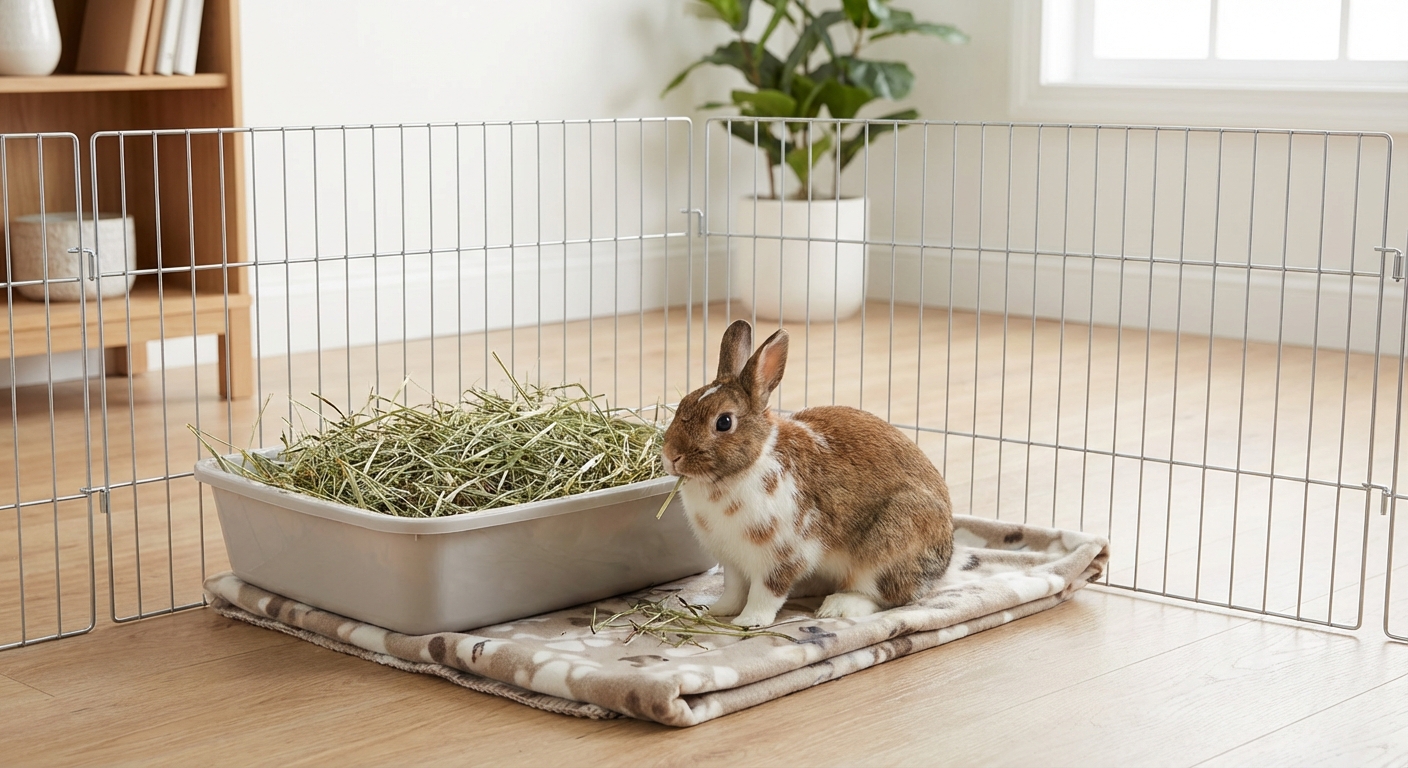
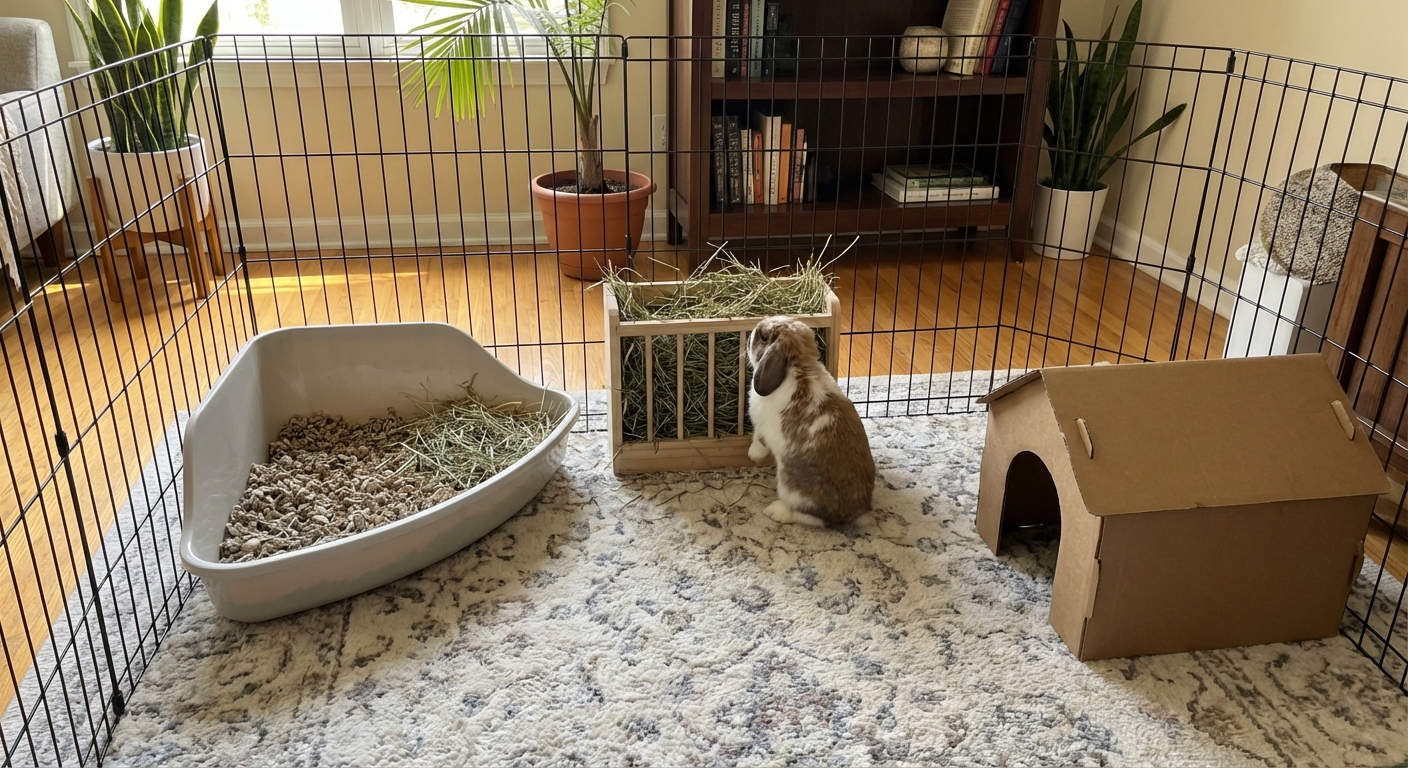
- Best setup: An exercise pen (x-pen) or a rabbit-proofed room.
- Daily time: Even with a roomy pen, aim for several hours a day of exercise in a larger safe area, or provide a larger space full-time.
Flooring and bedding
Wire floors can injure feet. Aim for stable, non-slip flooring.
- Good options: fleece blankets, washable rugs, grass mats, or foam tiles covered with washable fabric.
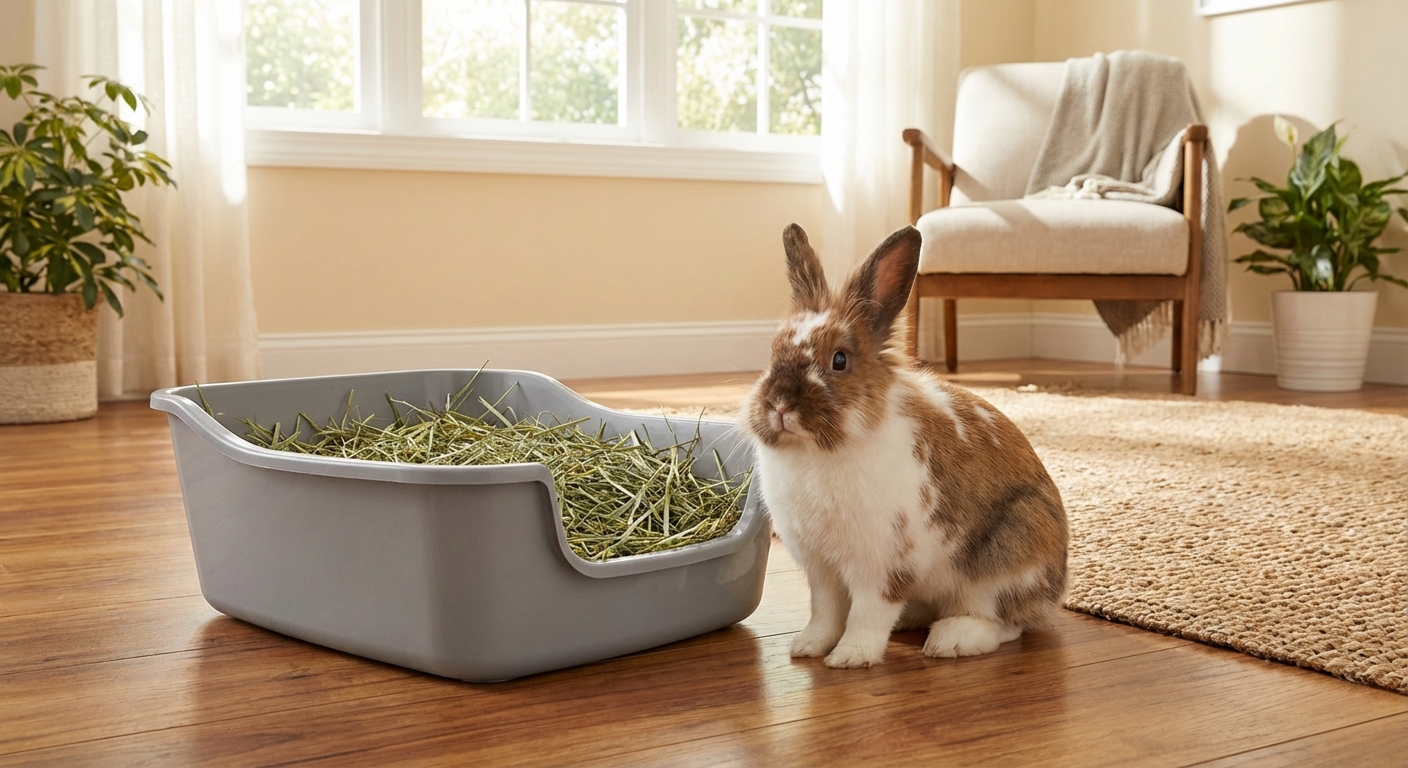
- Litter box: A large box with paper-based litter, topped with hay in one end to encourage natural habits.
- Avoid: clumping cat litter, cedar shavings, and dusty products that can irritate airways. Pine shavings are more complicated. Some people use kiln-dried, low-aromatic pine, but if you are unsure, stick with paper-based litter or ask your rabbit-savvy vet what they recommend.
Enrichment and hiding spots
Rabbits are prey animals. They feel safest when they can hide and choose when to interact.
- Provide at least one hide house per rabbit.
- Add chew-safe toys, cardboard boxes, paper bags (no handles), and tunnels.
- Rotate toys weekly to keep things interesting.
Nutrition basics
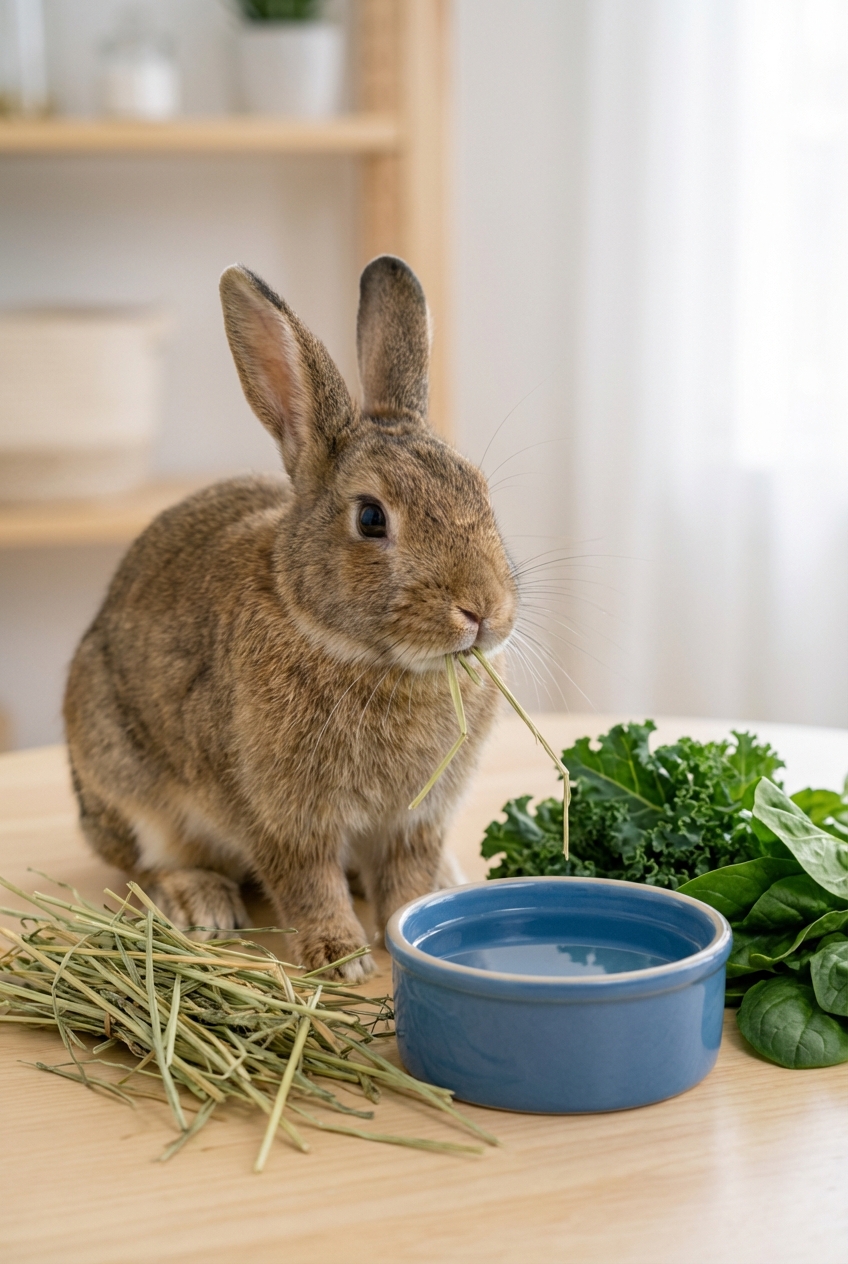
If I could put one rabbit-care message on every fridge, it would be this: most of the diet should be grass hay. Hay supports dental wear and healthy gut motility, which are two of the biggest foundations of rabbit wellness.
1) Unlimited grass hay
- Great choices: timothy, orchard grass, meadow hay.
- Alfalfa: typically best for growing rabbits, pregnant or nursing rabbits, and some underweight rabbits under veterinary guidance.
2) Leafy greens
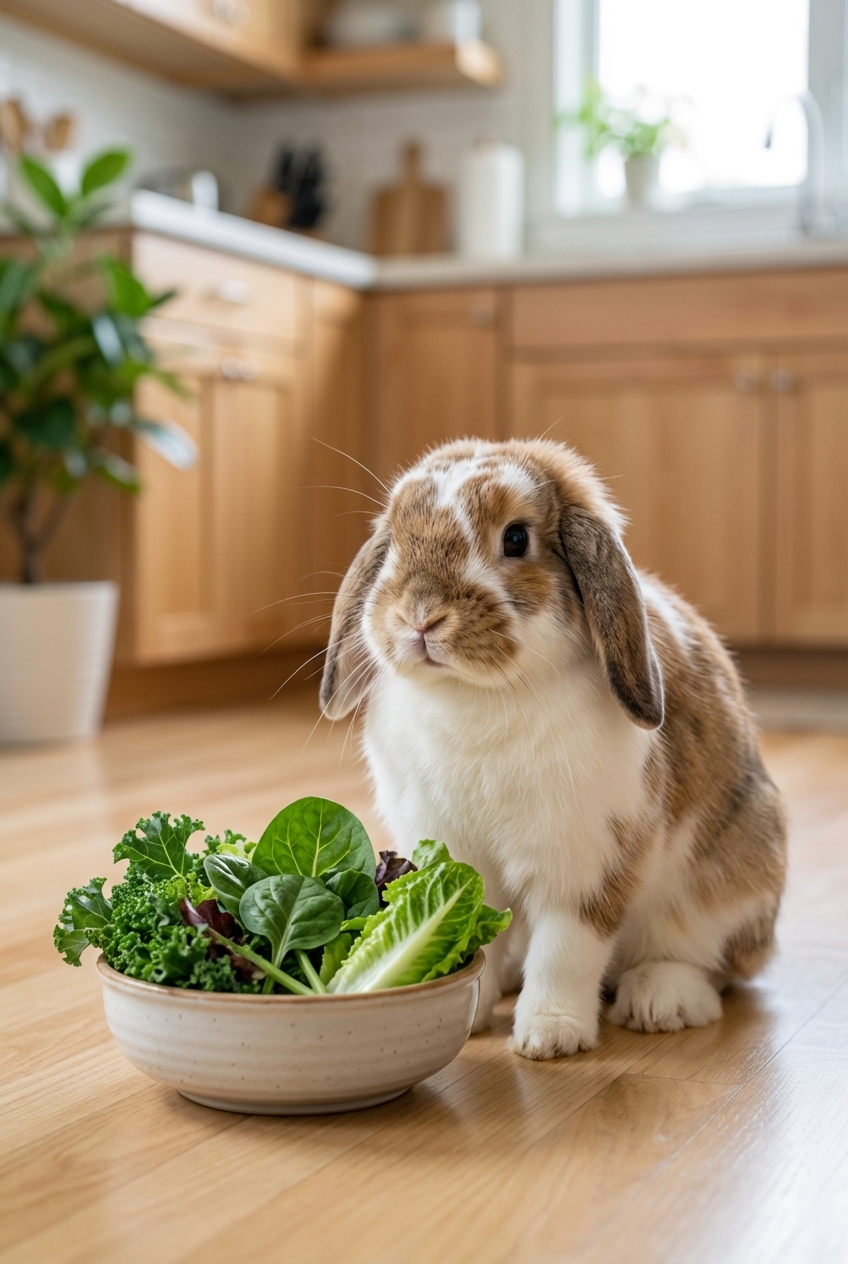
Offer a variety of leafy greens to add hydration and micronutrients. Introduce new greens slowly.
- Examples: romaine, green leaf lettuce, cilantro, parsley, basil, arugula, dandelion greens.
- Go easy: very gassy vegetables for sensitive rabbits, especially broccoli, cabbage, cauliflower, and kale. Not every rabbit reacts the same, so watch stool quality and appetite when introducing new items.
- Avoid: iceberg lettuce (very low nutrition and can cause loose stool in some rabbits), and anything treated with pesticides you cannot wash thoroughly.
3) Pellets
For many adult rabbits, pellets should be a small, measured portion. Overfeeding pellets can crowd out hay intake and contribute to weight gain and picky eating.
- Choose a plain, timothy-based pellet without colorful bits, seeds, or dried fruit.
- General guide for adults: about 1/4 cup of pellets per 4 to 5 lbs of body weight per day, then adjust based on your rabbit’s body condition and your vet’s advice. Some rabbits need less, and growing rabbits often need a different plan.
4) Treats
Fruit and starchy treats can upset digestion and contribute to soft stools. Keep treats small and occasional.
- Better treats: a teaspoon of berries, a thin slice of apple (no seeds), or a small piece of banana.
- Avoid: yogurt drops, sugary snacks, and mixes with seeds or nuts.
Water
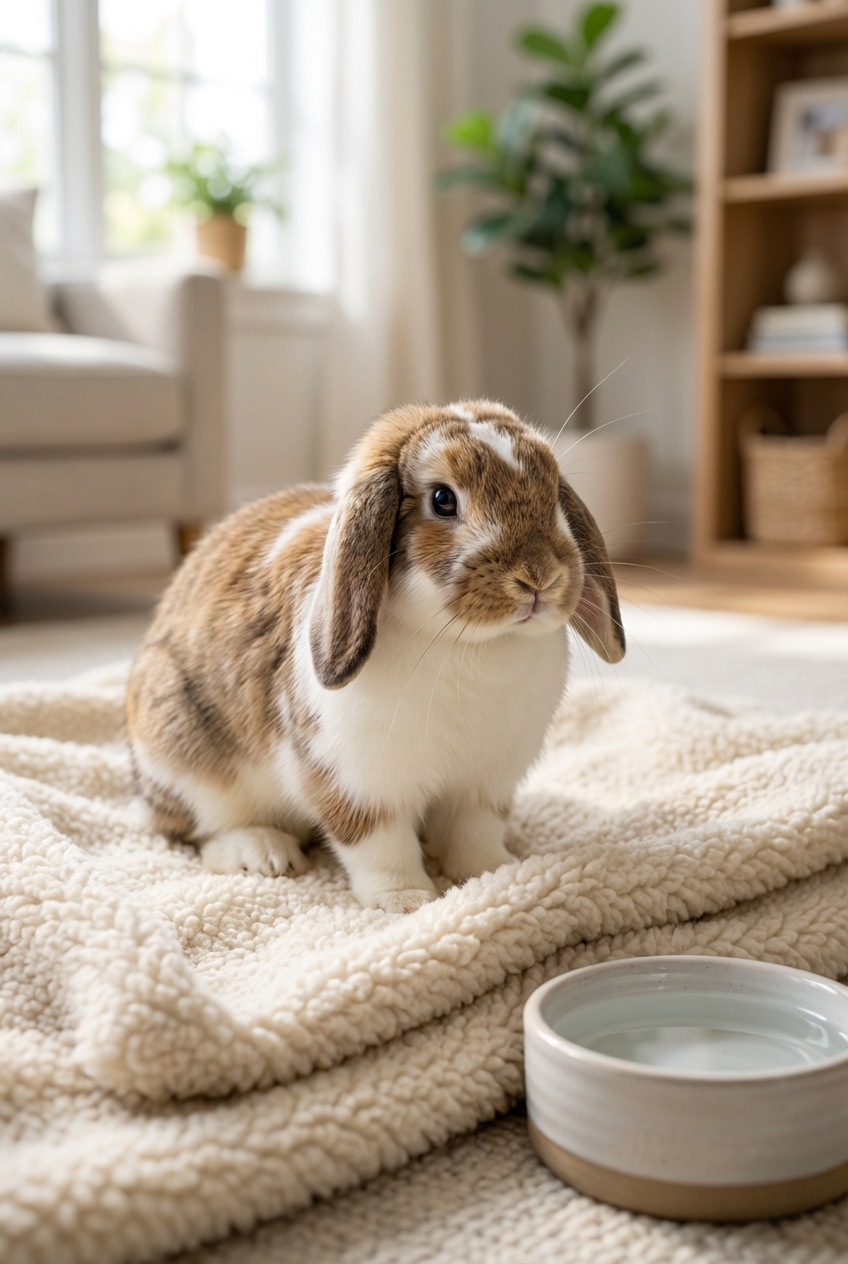
Many rabbits drink more from a heavy ceramic bowl than from a bottle. Clean and refill daily.
Handling and bonding
How to pick up a rabbit
Rabbits can panic when lifted, and a sudden kick can cause serious spinal injury. When in doubt, do not lift. Instead, sit on the floor and let your rabbit come to you.
- Support the chest and fully support the hindquarters.
- Hold close to your body for security.
- Never pick a rabbit up by the ears or scruff.
Bonding that builds trust
- Spend time at floor level with calm movement and a soft voice.
- Offer a favorite green or a tiny treat from your hand.
- Pet the forehead and cheeks first, which many rabbits prefer.
Litter training
Most rabbits can be litter trained, especially after spay or neuter.
- Place the litter box where your rabbit naturally chooses to go.
- Put hay in or next to the litter box. Rabbits love to munch while they potty.
- Clean frequently, but leave a small amount of used litter at first to reinforce the spot.
If accidents persist, it is often a setup issue (box too small, wrong location, not enough boxes) or a medical problem like pain or a urinary issue.
Daily and weekly checklist
Daily
- Refresh hay and water.
- Feed measured greens and pellets as appropriate.
- Quick health look: eating, pooping, energy level, posture.
- Spot clean litter box and pick up soiled bedding.
- Exercise and interaction time.
Weekly
- Deep clean litter box with a rabbit-safe cleaner and rinse well.
- Check nails and trim as needed (many rabbits need trims every 4 to 8 weeks).
- Brush, especially during shedding seasons to help reduce hair ingestion.
Grooming and health monitoring
Nail trims
Overgrown nails can change posture and cause sore hocks. If you are nervous, ask your vet team to show you how, or schedule regular trims.
Brushing and hair management
Rabbits cannot vomit. During molts, swallowed fur can contribute to gut slowdowns. Brush more often when shedding and keep hay intake strong.
Teeth
Rabbit teeth grow continuously. The goal is steady wear from hay and chewing. Watch for drooling, reduced appetite, picky eating, or smaller droppings, which can point to dental pain.
Vaccines and prevention
In many areas, vaccines are now an important part of routine rabbit care, especially for RHDV2. Your rabbit-savvy vet can tell you what is recommended locally and how often boosters are needed.
Rabbit-proofing your home
Rabbits explore with their mouths. Think of rabbit-proofing as both safety and stress prevention.
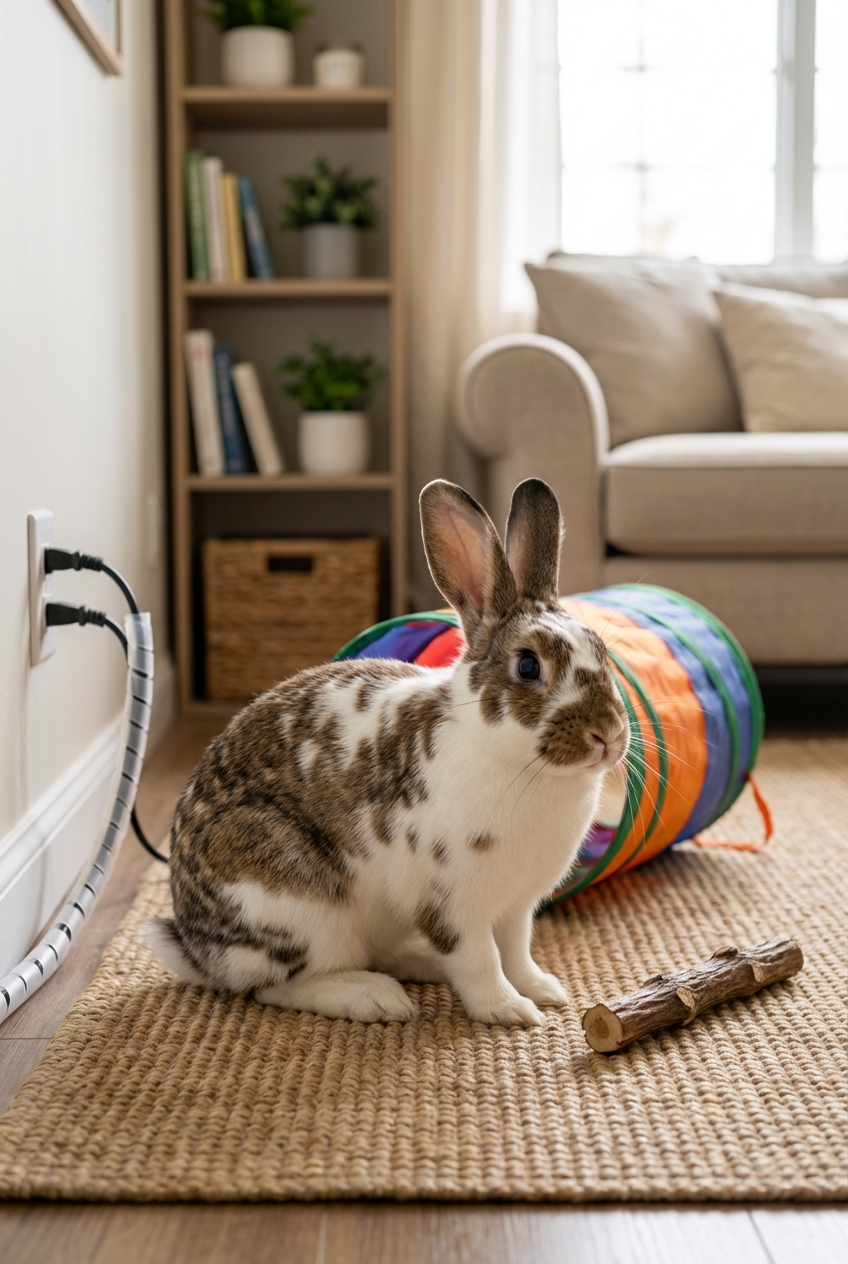
- Protect cords: use cord covers and block access behind furniture.
- Block tight spaces: behind appliances, recliners, and anywhere a rabbit could get stuck.
- Choose safe plants: many common houseplants are toxic. Keep plants out of reach unless you are 100% sure they are rabbit-safe.
- Provide legal chewing: untreated willow, apple sticks, hay toys, and cardboard can redirect chewing away from baseboards.
When it is an emergency
Rabbits can decline quickly. Trust your instincts and call a rabbit-savvy veterinarian if you notice any of the following.
Red flags
- Not eating or refusing favorite foods
- Very small, fewer, or no droppings
- Hunched posture, teeth grinding, or obvious discomfort
- Bloated belly or signs of pain
- Labored breathing, pale or blue-tinged lips, tongue, or gums, or extreme lethargy
- Head tilt, loss of balance, or sudden weakness
Digestive slowdown and GI stasis can be life-threatening. Early veterinary care makes a huge difference, so do not wait it out at home. If your rabbit seems painful, severely lethargic, or bloated, call a vet right away and do not force-feed unless your veterinarian specifically instructs you to.
A gentle start
If you are feeling a little overwhelmed, take a breath. You do not have to perfect everything overnight. Start with the big health levers: unlimited grass hay, a roomy safe space, a rabbit-savvy vet (including vaccine guidance), and calm daily interaction. Those four steps alone can change your rabbit’s entire quality of life.
Action step: Today, measure how much space your rabbit has to hop and stretch. If it feels tight, upgrading to an x-pen setup is one of the best changes you can make.