Treat your cat with simple, protein-first DIY snacks. Get 5 quick recipes plus vet-style guidance on safe ingredients, portion limits, storage, and introduci...
Article
•
Designer Mixes
Quick Homemade Cat Treats

Shari Shidate
Designer Mixes contributor
If you have ever flipped over a bag of cat treats and thought, What is all of this?, you are not alone. Some store-bought treats are loaded with starches, vague “meat meals,” added flavors, and extra calories that add up quickly. The good news is you can make simple, cat-safe treats at home in minutes using real ingredients, and they can be cheaper per serving depending on the protein you choose.
As a veterinary assistant in Frisco, Texas, I love anything that helps cats stay at a healthy weight and keeps owners feeling confident about what they are feeding. Let’s make treats that are tasty, practical, and vet-informed.
Why homemade can help
Homemade treats are not automatically “perfect,” but they give you control. When you keep recipes simple and portion sizes small, you can reduce unnecessary additives and better match your cat’s needs.
- Fewer fillers: Cats are obligate carnivores, meaning they are built to thrive on animal-based protein. Many commercial treats rely heavily on starch to hold shape.
- Better for weight management: Treat calories can quietly push a cat into overweight territory, which is linked with issues like diabetes, arthritis, and urinary concerns.
- Budget-friendly (sometimes): Using a little of what you already buy (eggs, tuna, chicken) often costs pennies per treat. Costs vary with pricier proteins like salmon.
- Great for training and bonding: Tiny, high-value treats make handling, nail trims, and carrier practice much easier.
Before you start
Keep treats truly treat-sized
A good rule of thumb is to keep treats to 10% or less of your cat’s daily calories.
Example: A 10 lb indoor adult cat often eats around 180 to 220 calories per day. That means treats should be about 18 to 22 calories total per day. Many tiny homemade meat treats are only a couple of calories each, so think “tiny bites,” not big chunks.
Cook proteins thoroughly
To lower the risk of foodborne illness for both you and your cat, cook meat and eggs fully. Avoid feeding raw doughs or raw egg mixtures.
Skip these common kitchen hazards
- Onion, garlic, chives: Can damage red blood cells.
- Grapes and raisins: Potential kidney risk. Data in cats is limited, but they are still best avoided.
- Xylitol (birch sugar): Extremely dangerous for dogs and best avoided in pet households altogether.
- Alcohol, caffeine, chocolate: Toxic.
- Cooked bones: Splinter risk.
- Very salty, seasoned, or spicy foods: Hard on the digestive tract and not appropriate for cats.
Quick note: If your cat has kidney disease, diabetes, food allergies , pancreatitis, IBD, or is on a prescription diet, check with your veterinarian before changing treats. “Simple” ingredients can still be a problem for certain medical conditions.
5 quick homemade cat treats
These are designed to be easy, with ingredients you can find in a typical grocery store. Start with small amounts and see how your cat does.
1) Two-ingredient tuna bites (baked)
Best for: A firm, dry-to-the-touch treat that is easy to portion and freeze (but not safe to leave out at room temperature).
- 1 can tuna in water, no salt added or low sodium if possible (drained)
- 1 egg
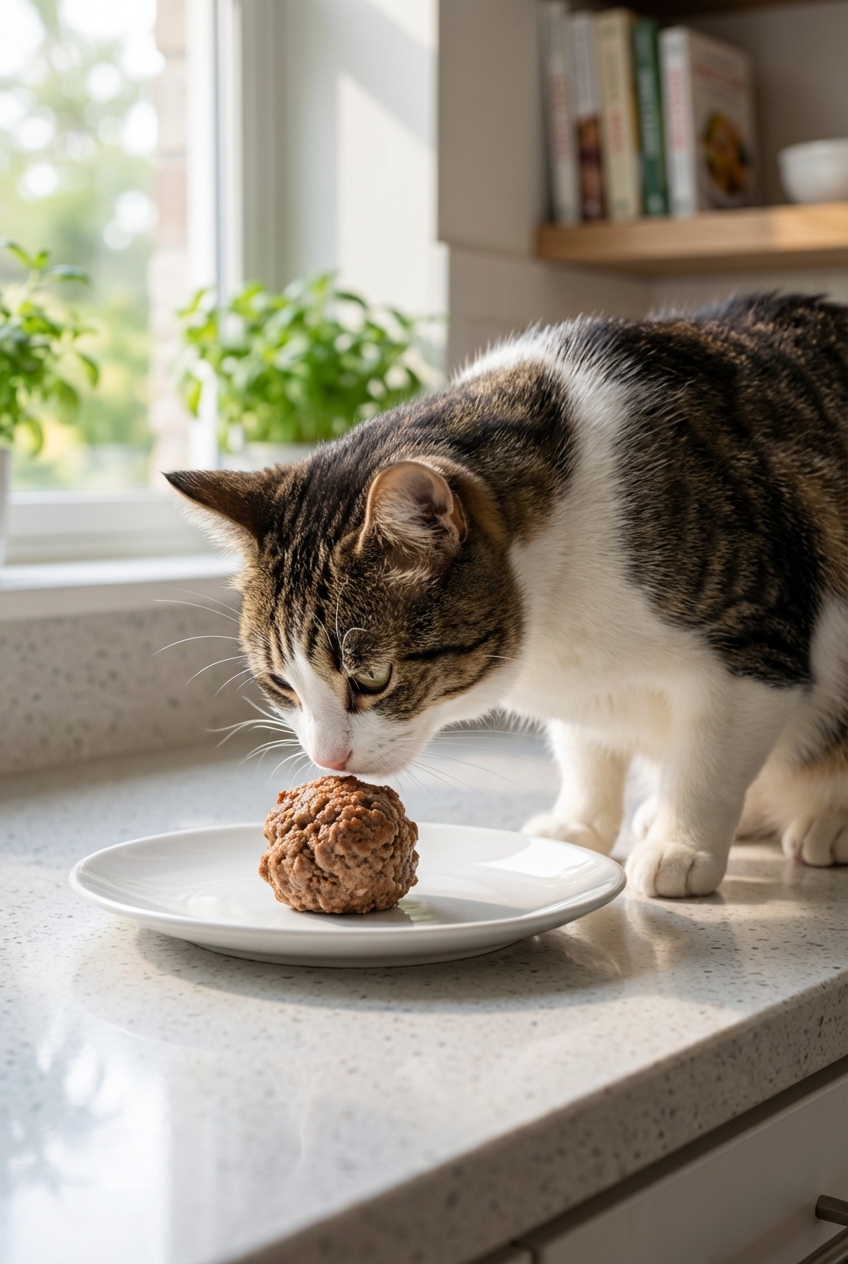
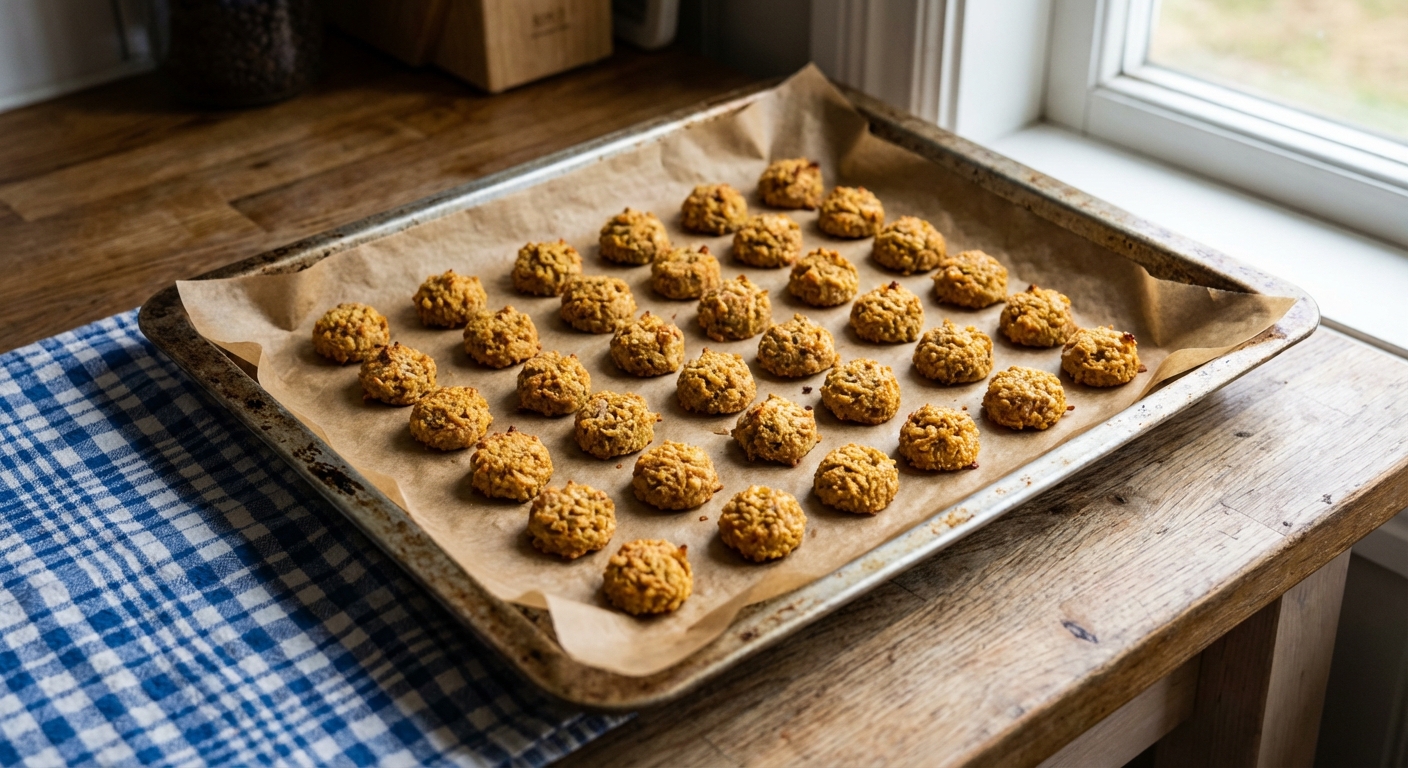
How: Preheat oven to 350°F. Blend tuna and egg into a thick paste. Spoon pea-sized dots onto a parchment-lined baking sheet. Bake 10 to 12 minutes until set. Cool completely.
Storage: Refrigerate 3 to 4 days or freeze up to 2 months. Do not store on the counter.
Fish note: Tuna is best as an occasional treat, not a daily staple. Rotate proteins when you can.
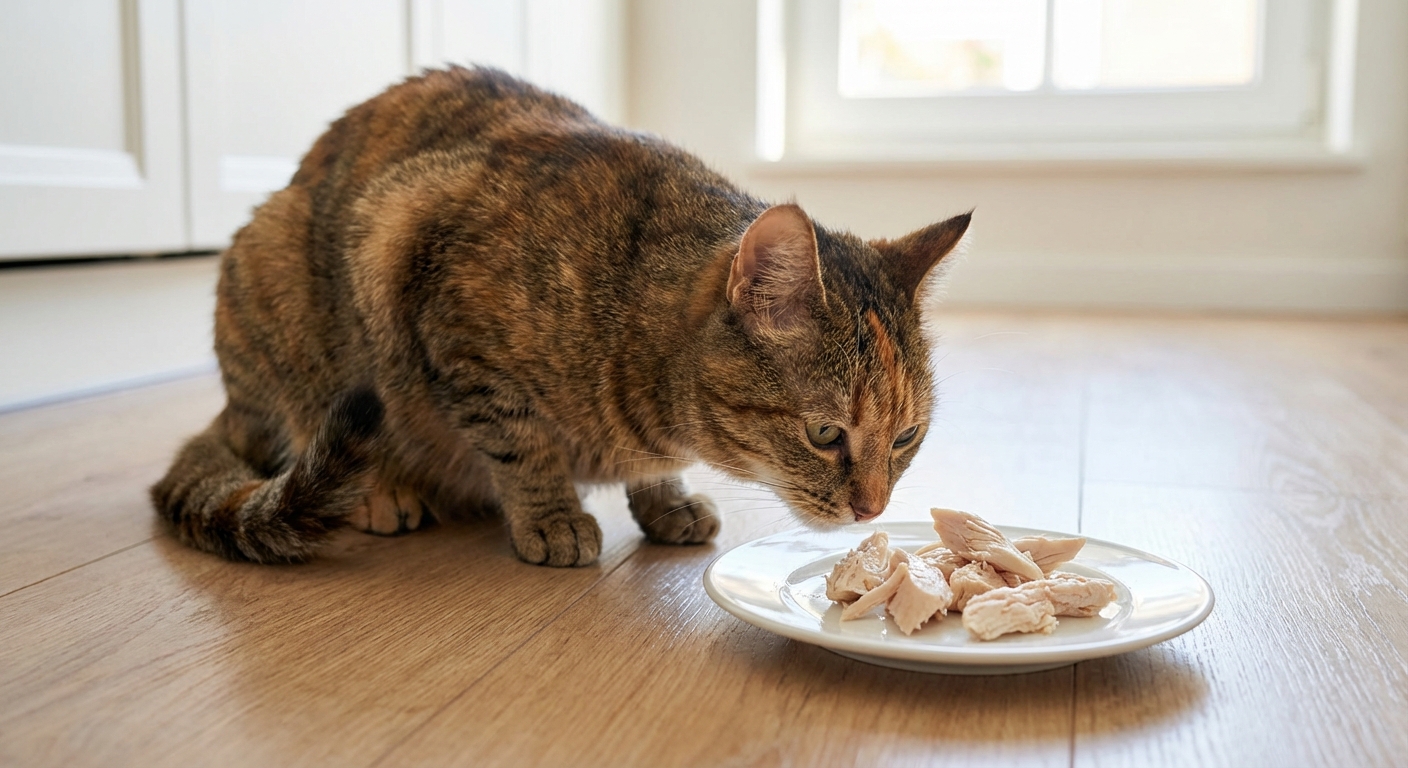
2) Warm shredded chicken sprinkles (no baking)
Best for: Picky cats or cats who need a high-value reward.
- Cooked plain chicken (breast or thigh, no seasoning, no skin)
How: Shred finely. Offer a pinch at a time. You can also sprinkle a small amount on top of regular food to encourage eating.
Budget tip: Save a little plain chicken from your meal before you season it.
Storage: Refrigerate up to 3 days or freeze up to 2 months.
3) Salmon flake training treats (pan-cooked)
Best for: Soft, aromatic treats that feel special.
- Cooked salmon (plain)
How: Cook salmon thoroughly, let cool, then flake into tiny pieces. Use sparingly because salmon is richer and higher calorie.
Storage: Refrigerate 2 to 3 days or freeze up to 2 months.
4) Single-ingredient freezer treats
Best for: Fast prep and portion control.
- Plain cooked chicken or plain cooked turkey, chopped very small
How: Spread pieces on a tray and freeze. Transfer to a freezer bag. Grab a few pieces as needed.
Why it helps: Freezing makes it easy to use tiny portions without spoilage.
Storage: Refrigerate up to 3 days or freeze up to 2 months.
5) Cat-safe broth cubes (hydration helper)
Best for: Cats who do not drink much water, especially in dry climates or heated homes.
- Plain homemade broth made from simmered chicken or turkey (no onion, no garlic, no salt added)
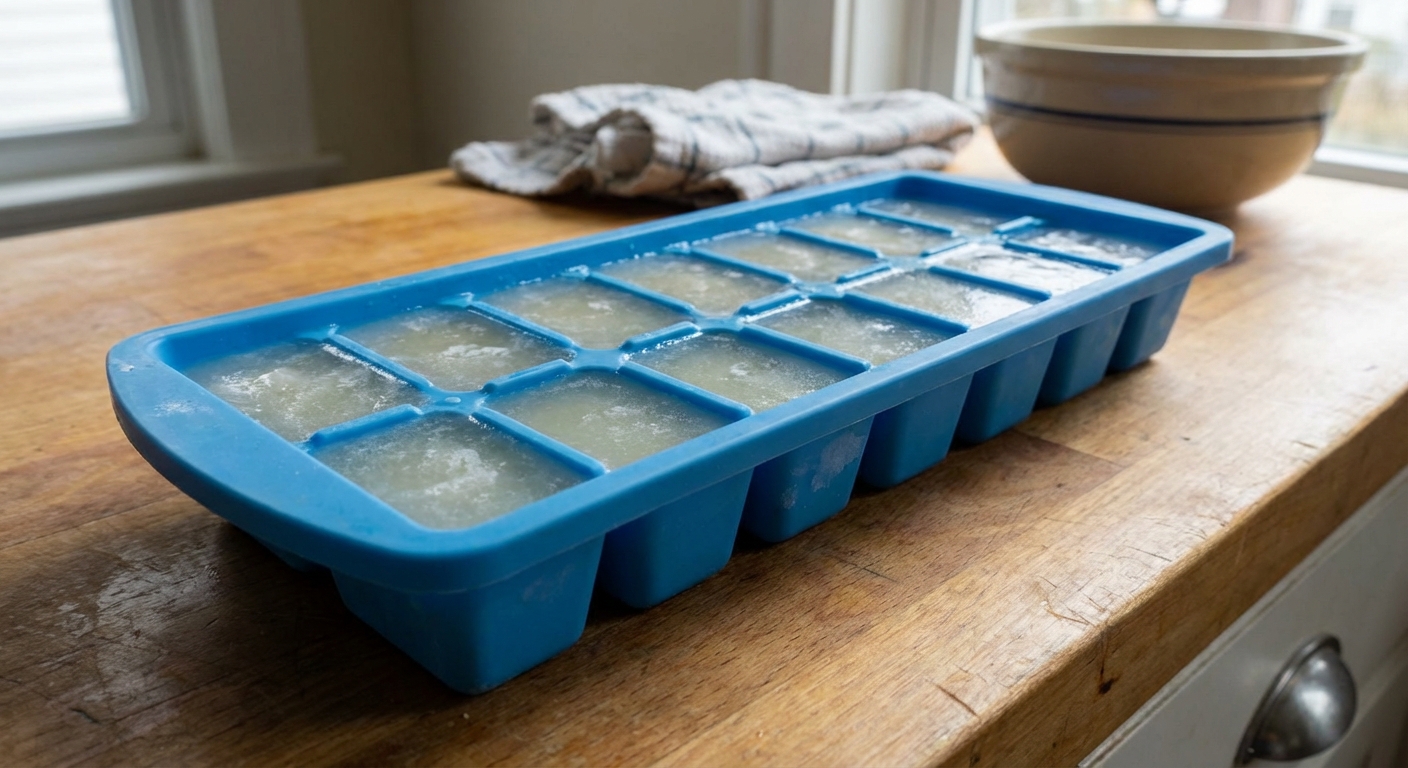
How: Cool broth, skim excess fat if needed, then freeze in ice cube trays. Offer a cube in a bowl (thawed or partially thawed) as an occasional treat.
Important: Broth is not a complete meal, but it can support hydration.
Quick caution: Most store-bought broths contain onion, garlic, or a lot of salt. Skip them unless you have confirmed the ingredient list is pet-safe.
Keep treats in balance
Use treats strategically
- For handling practice: Touch ear, treat. Touch paw, treat. This builds calm cooperation.
- For carrier training: Feed treats near the carrier, then inside it, so it becomes a safe place.
- For enrichment: Toss a few tiny treats down a hallway or use a puzzle feeder to encourage movement.
Watch stool and appetite
Any new food can cause soft stool, gas, or vomiting in sensitive cats . Introduce one new treat type at a time, and start with a tiny amount. If you notice ongoing digestive upset, stop and talk with your veterinarian.
Be mindful with fish
Many cats love fish, but fish treats can be salty (especially canned) and can add calories fast. Some cats also get very fixated on fish flavors. Rotate proteins when you can, and keep fish treats as an occasional option.
Healthier store-bought options
If homemade is not realistic every week, you still have options that are often better than brightly colored, carb-heavy treats.
- Freeze-dried single-ingredient treats: Look for “chicken,” “turkey,” or “salmon” as the only ingredient.
- Simple meat-based treats with short ingredient lists: Fewer ingredients usually means fewer surprises.
- Portion-controlled lickable treats: These can be useful, but check calories and use a small amount.
Tip: Always check the calories per treat, and break bigger treats into smaller pieces. You get the same training value with fewer calories.
When in doubt, choose treats where you can identify every ingredient and the first ingredient is a named animal protein.
FAQ
Can cats eat eggs?
Cooked egg is generally safe for many cats in small amounts, and it is a good protein source. Avoid raw egg. If your cat has a history of food sensitivities, introduce slowly.
How many treats per day is okay?
It depends on your cat’s size and calorie needs, but the safest approach is to keep treats under 10% of daily calories and use very small pieces. If your cat is overweight or on a therapeutic diet, you may need to cut back further and choose treats that fit that plan.
Do homemade treats replace a complete cat food?
No. Treats are not nutritionally complete and balanced. Your cat’s main diet should be a complete and balanced cat food that meets AAFCO nutrient profiles for their life stage.
Simple next step
Pick just one recipe to start, like the tuna-and-egg bites or plain shredded chicken. Make a small batch, keep portions tiny, and see how your cat responds. You do not have to be perfect to make a meaningful upgrade. Little changes, done consistently, can support better weight, better energy, and a happier routine with your cat.