Make your puppy’s first night home smoother with a calm bedtime routine, crate setup tips, realistic potty-break timing, feeding guidance, and puppy-proofi...
Article
•
Designer Mixes
Puppy’s First Night at Home

Shari Shidate
Designer Mixes contributor
Your puppy’s first night at home can feel like a big moment for everyone. Your puppy has just left their mom, littermates, and the only sleep routine they have ever known. A little whining, restlessness, or that sudden wave of new-owner worry is common, and it does not mean you are doing anything wrong.
As a veterinary assistant, I like to focus on two goals for night one: keep your puppy safe and help them feel secure. When you get those right, sleep usually improves quickly.
Quick note: This is general guidance. If your puppy is very young, has medical issues, or something feels off, your veterinarian is the best source for advice tailored to your pup.
Before bed: set up success
Keep the evening calm
Puppies do best with a predictable rhythm. Aim for a low-key evening with gentle play, a potty break, and a wind-down period. Overly exciting games right before bed can make it harder for their nervous system to relax.
- Feed dinner early if possible, then offer water normally through the evening.
- Short play session (tug, a few tosses, a sniffy walk in the yard).
- Quiet time for 20 to 30 minutes before bed (chew toy, cuddles, soft music).
If you are wondering about water: in most cases, you do not need to restrict it aggressively. If nighttime accidents are frequent, ask your vet (and your trainer, if you have one) for a plan that keeps your puppy hydrated and comfortable while you build bladder control.
Time the last potty break
Plan for a potty break right before you put your puppy in their sleep space. Keep it boring: leash on, same spot, minimal talking, then straight back inside. This helps your puppy learn that nighttime is for bathroom and back to bed.
Pick a sleep setup
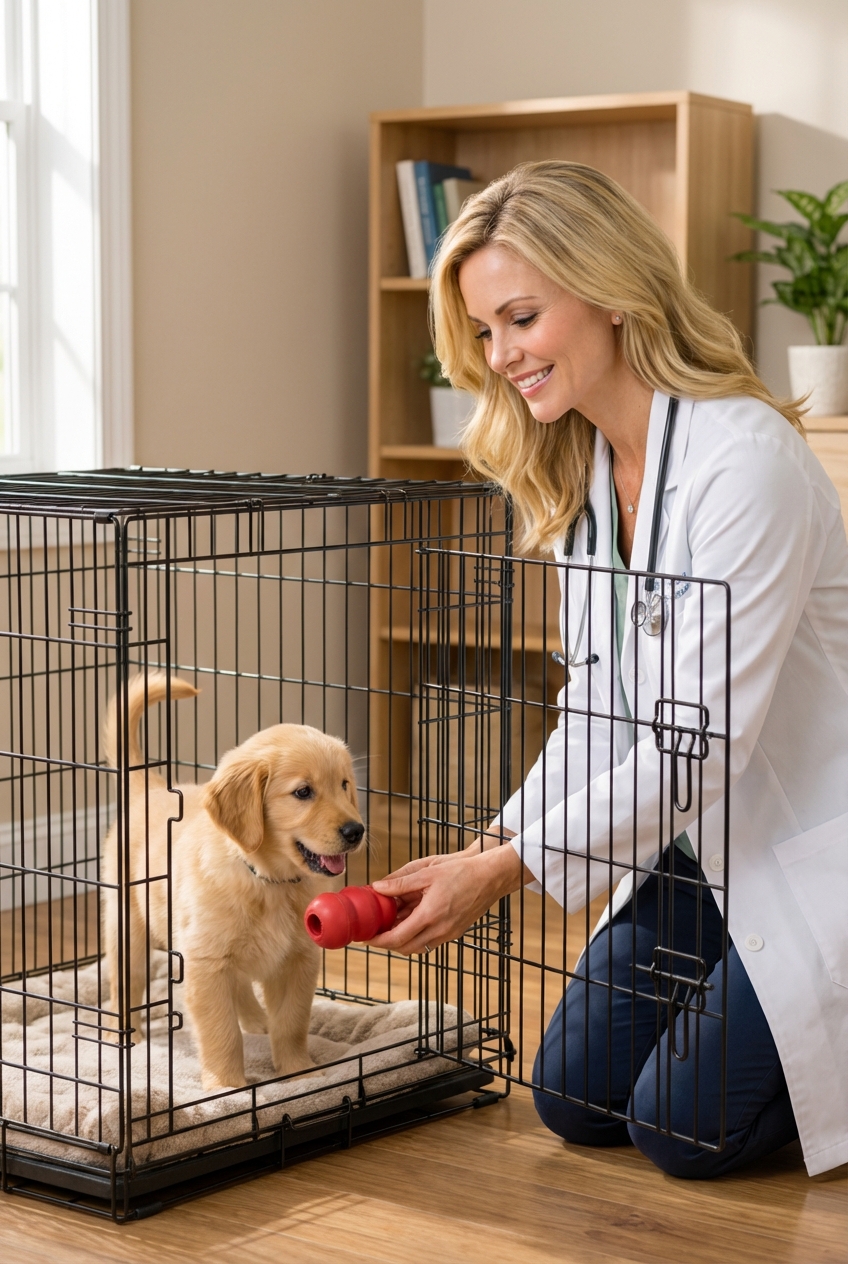
For most families, a properly introduced crate or a crate attached to an exercise pen works best. It prevents roaming, chewing, and accidents while you sleep.
- Crate: Great for safety and housetraining. Choose a size your puppy can stand and turn around in.
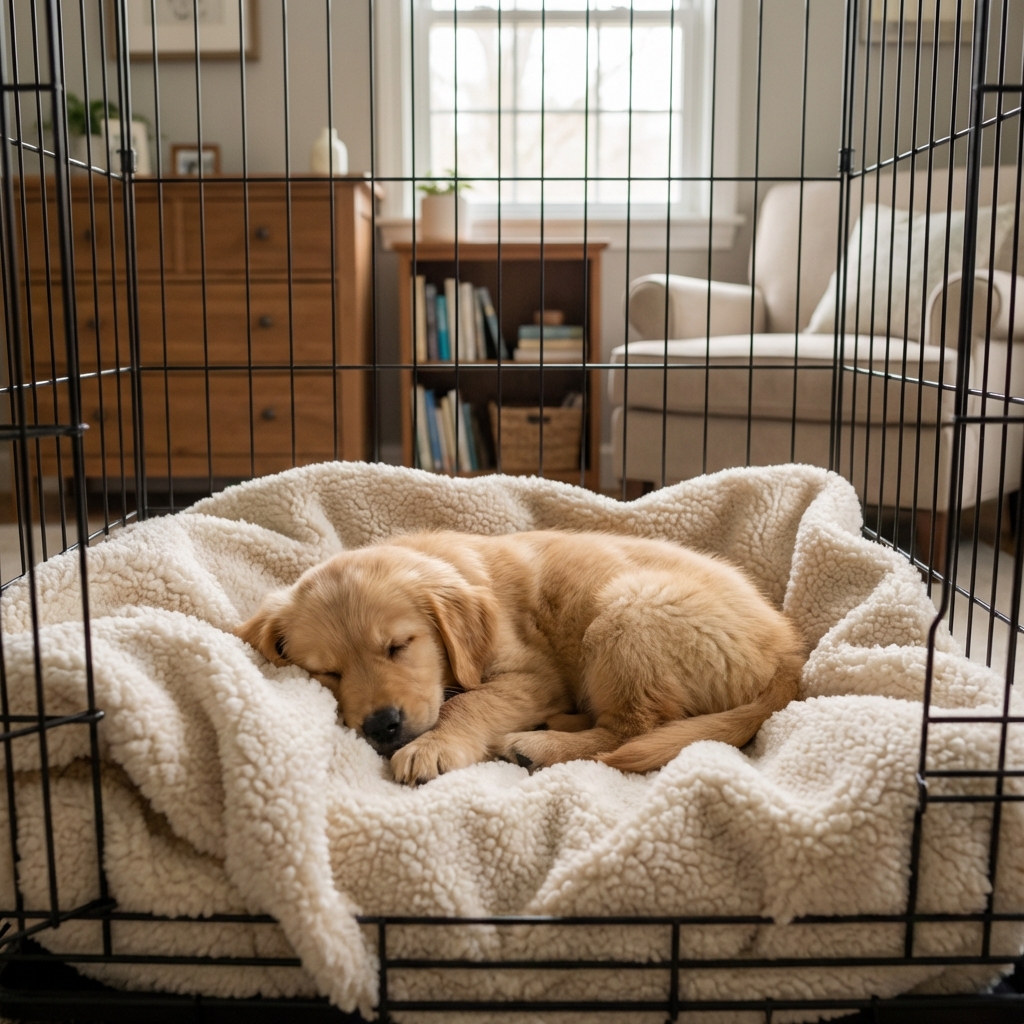
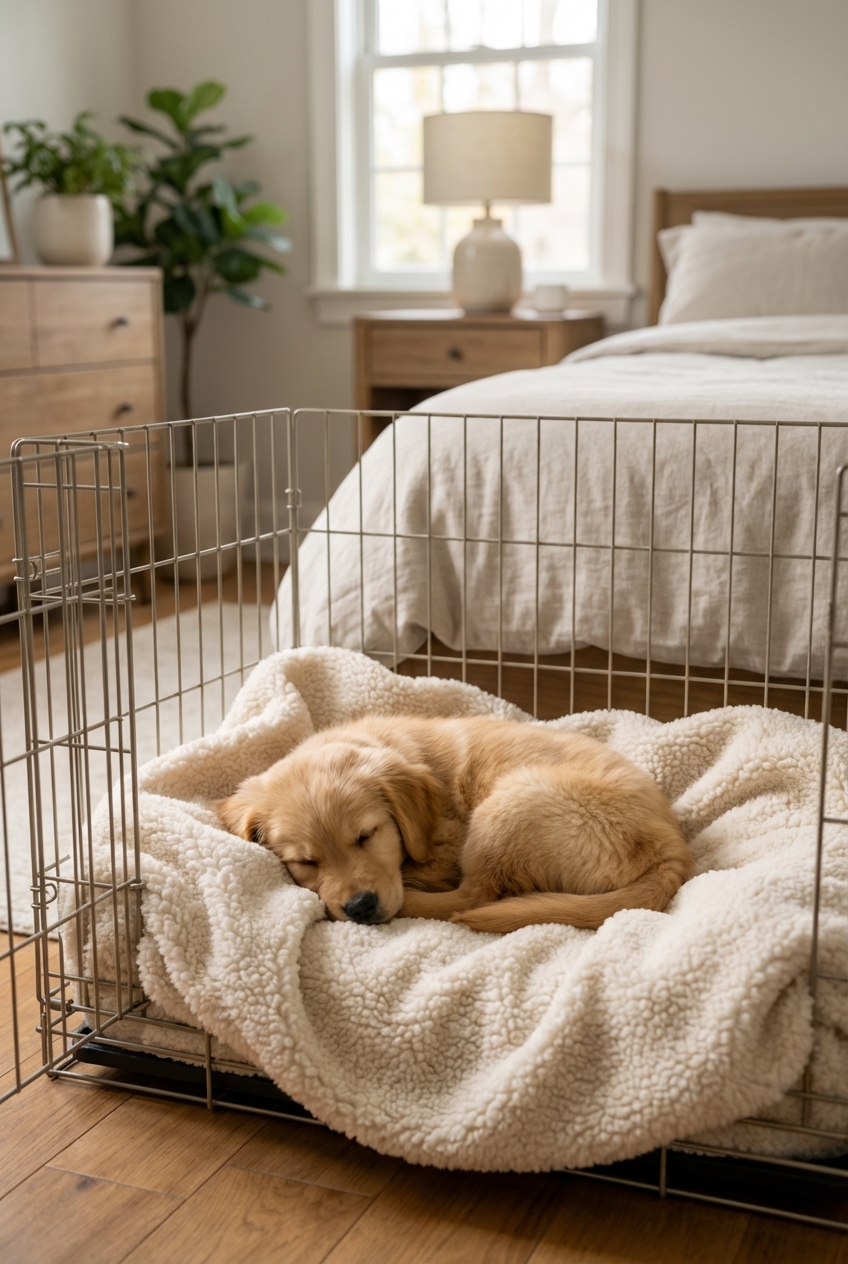
- Crate + pen: Can help some puppies who need a little more space or who are still learning to settle. For other puppies, extra space can mean more pacing or accidents, so watch what your puppy does and adjust.
- Puppy-proof room: Only if it is truly safe and you are ready for slower housetraining.
Keep bedding simple. Some puppies chew and swallow fabric, which can become a medical emergency. If your puppy is a chewer, start with a bare crate or a towel you can remove if needed. Products marketed as “chew-resistant” can still be torn and swallowed, so monitor closely. No bedding is truly chew-proof.
For comfort and safety, aim for a well-ventilated, comfortable room temperature. Avoid overheating (heavy blankets, hot rooms, heat sources) and keep the crate out of direct drafts.
If you are new to crates, a helpful rule is: make the crate a good place. Feed treats in it, practice short calm sessions, and never use it as punishment.
Where should they sleep?
For most puppies, the best place on night one is close to you. Being alone in a new house can feel scary, and your proximity helps them settle.
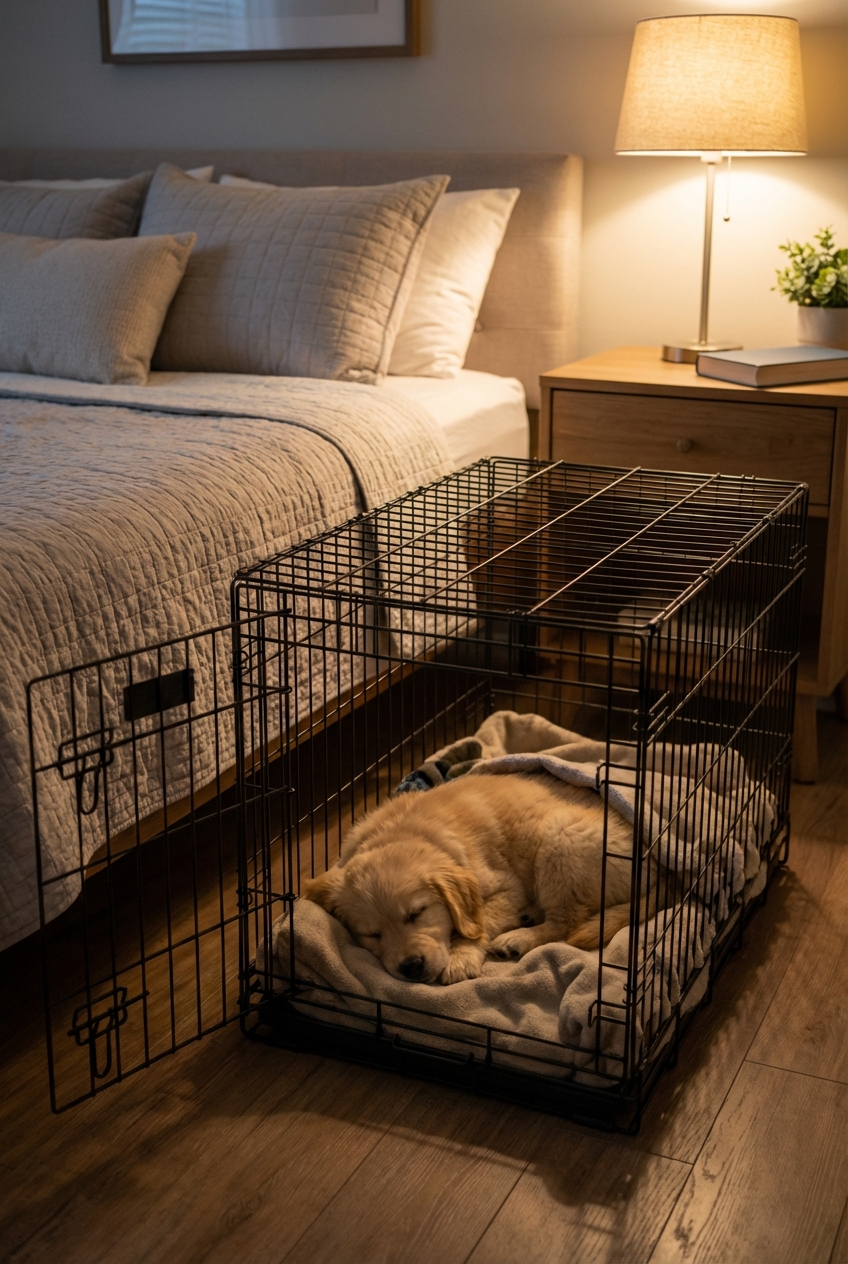
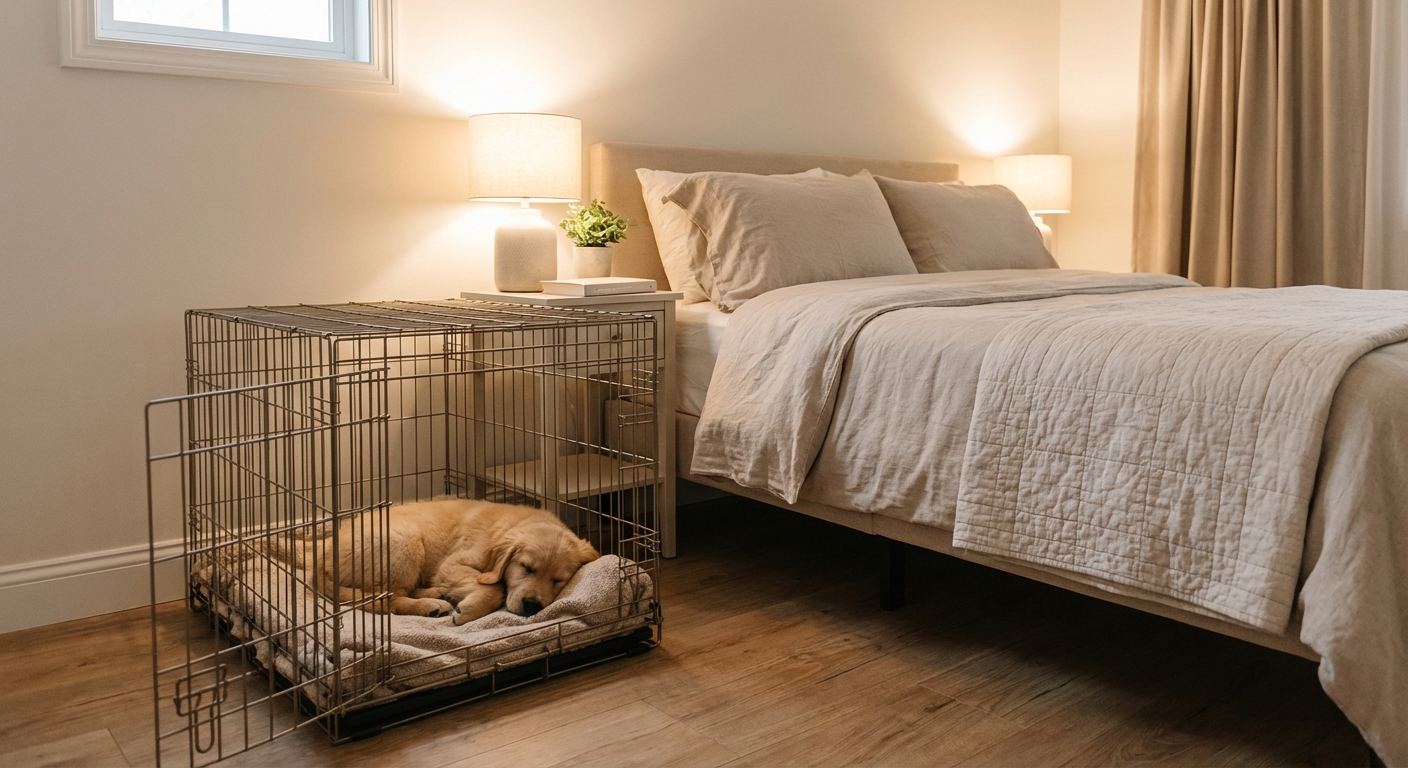
- Best option: Crate beside your bed, so your puppy can hear and smell you.
- Next best: Crate in the bedroom doorway or a nearby hall where you can respond quickly.
If you plan to have your adult dog sleep elsewhere later, that is okay. Start close for comfort, then gradually move the crate a few feet farther away every couple of nights.
Older puppies and puppies from shelters or rehoming situations may have stronger first-night stress. The same basics apply, but you may need extra patience and a slower transition.
Whining: respond without rewards
This is the part that worries families the most. The goal is to meet real needs without accidentally teaching, “If I cry, I get a party.”
Step 1: pause and listen
If your puppy is fussing, wait 10 to 30 seconds to see if they settle. Many puppies vocalize briefly as they drift off.
Step 2: check the basics
- Do they need to potty?
- Are they too hot or cold?
- Is something in the crate scary (tag clinking, crate wobble, loud noise)?
Step 3: comfort calmly
If your puppy is safe and has just pottied, offer quiet reassurance. You can place your fingers near the crate, speak softly, or sit nearby for a minute. Keep the lights low and your voice sleepy. The message is, “You are safe. It is bedtime.”
When it probably means potty
New puppies often need a potty break at night. If your puppy wakes suddenly, cries urgently, circles, or sniffs intensely, take them out immediately. Quietly carry them if needed, go to the potty spot, offer brief, calm praise when they finish, then return to the crate.
A simple night-one plan
Here is a realistic flow for night one. Adjust based on your puppy’s age, size, and breeder or shelter guidance.
- 7 to 9 pm: Dinner, calm play, short training session (sit, name game).
- 9 to 10 pm: Wind-down time with a chew and gentle handling.
- Right before bed: Final potty break, then into the crate.
- Middle of the night: One potty break if your puppy wakes and signals.
- Early morning: Potty break immediately after waking, then breakfast later.
Very young puppies may need more than one potty break. Many puppies can manage roughly about one hour per month of age as a starting estimate, and some people use age in months plus one. Nighttime can be a little easier than daytime for some pups because they sleep more, but individuals vary a lot. When in doubt, plan an extra trip and keep it boring.
Crate items: yes and no
Helpful items
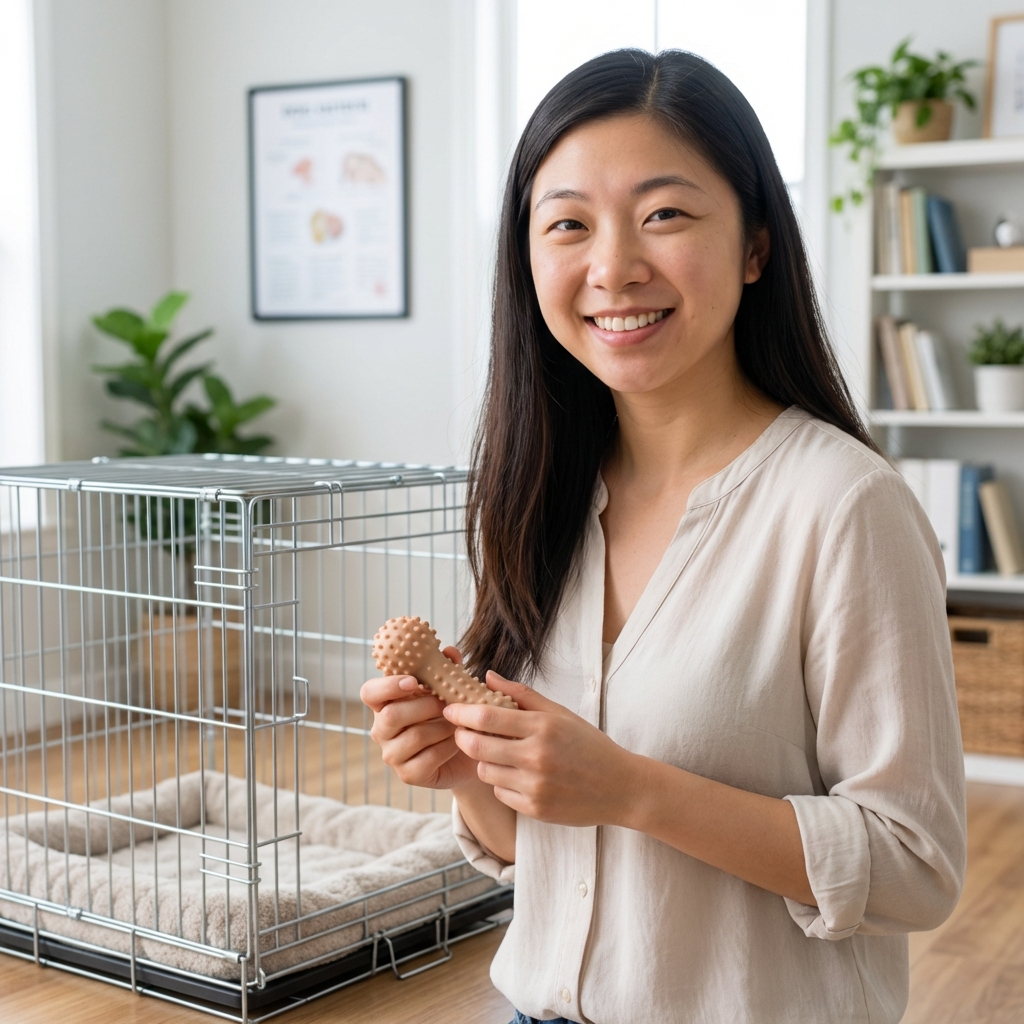
- A safe chew (ask your vet about age-appropriate options).
- A light blanket if your puppy is not chewing bedding.
- Comfort scent: Some breeders send a blanket that smells like the litter. This can be very soothing.
Use caution
- Stuffed toys for heavy chewers (risk of swallowing pieces).
- Loose collars inside a crate (can snag on bars).
- Heated items (burn risk). If you use a warming pad, choose one made for pets and follow all safety instructions.
Mistakes to avoid
- Too much freedom: Letting a puppy roam overnight often leads to accidents and unsafe chewing.
- Skipping the last potty break: One extra trip outside can save you a rough night.
- Big reactions to crying: Lots of talking, picking up, or play can unintentionally reinforce the noise.
- Changing rules hourly: Try to be consistent. Your puppy learns faster when the routine is steady.
When to call your vet
Some discomfort is normal. But if you see any of the signs below, it is smart to call your vet for guidance, especially with very young puppies.
- Repeated vomiting, diarrhea, or blood in stool
- Straining to urinate, crying while peeing, or very frequent tiny pees
- Extreme lethargy, collapse, or refusing food and water
- Bloated belly, unproductive retching, or obvious distress
Trust your gut. If your puppy seems “off,” you are never bothering your veterinary team by asking questions.
The truth about night one
Your puppy is not giving you a hard time. They are having a hard time. With a safe sleep setup, a boring potty routine, and calm reassurance, most puppies adjust within a few nights.
Take a deep breath, keep things simple, and remember: you are building a foundation for years of confident, secure sleep.