A practical home-care plan for mild puppy diarrhea: safety check, hydration tips, bland diet portions, probiotics and pumpkin, plus red flags that mean call ...
Article
•
Designer Mixes
Puppy With Diarrhea: Step-by-Step Tips and Insights

Shari Shidate
Designer Mixes contributor
Diarrhea in puppies is common, and it is also one of those symptoms that can turn serious faster than many pet parents realize. Puppies have small bodies, so they can get dehydrated quickly. The good news is that many mild cases improve with prompt, simple care at home and a watchful eye.
As a veterinary assistant here in Frisco, Texas, I like to keep this topic practical: what to do first, what to track, what is safe to try at home, and when to call your veterinarian. This is general education and not a substitute for an exam.
First: Is this an emergency?
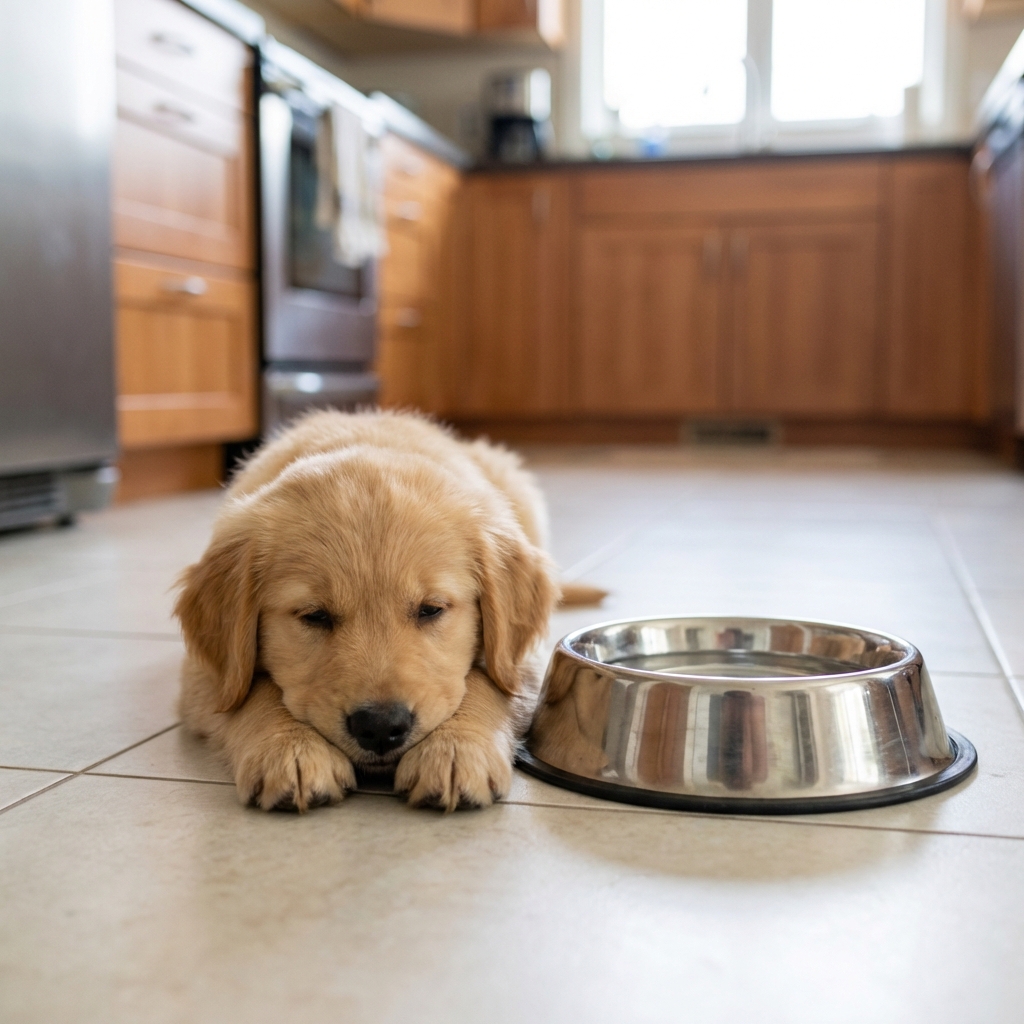
Before you try any home tips, do a quick safety check. Puppies can go from “messy poop” to “needs urgent care” in a short window, especially toy breeds and very young pups.
Go to urgent care or call your vet now if you notice:
- Blood in the stool (bright red or black, tarry stool)
- Vomiting more than once, or cannot keep water down
- Lethargy, weakness, collapse, or a painful belly
- Dehydration signs (tacky or sticky gums, sunken eyes, reduced urination, or skin “tents” when gently lifted; skin tenting is less reliable in very young pups)
- Very young or high risk (under 12 weeks, very small breed, or not fully vaccinated). These puppies should be assessed sooner.
- Possible toxin exposure (xylitol, grapes or raisins, rodent bait, medications, mushrooms, etc.)
- Possible blockage (repeated vomiting, straining without producing much stool, painful belly, refusing food, or you suspect they swallowed a toy, sock, corn cob, stick, etc.)
- Diarrhea lasting more than 24 hours, or clearly worsening
If you are unsure, it is always okay to call your vet and ask. Describing what you are seeing helps them triage safely. If your puppy is unvaccinated or under-vaccinated, mention that right away since parvovirus can start with diarrhea and low energy and needs immediate care.
Step-by-step: What to do at home (for mild cases)
If your puppy is acting mostly normal (bright, wants to eat, no repeated vomiting, no blood), these steps can support the gut while you monitor closely. If your pup has a medical condition or is on medication, check with your veterinarian first.
Step 1: Pause and observe
- Note the time the diarrhea started.
- Check energy level: are they playful or “not themselves”?
- Look at the stool: watery vs. soft-serve, mucus, worms, and color changes.
Step 2: Prevent dehydration
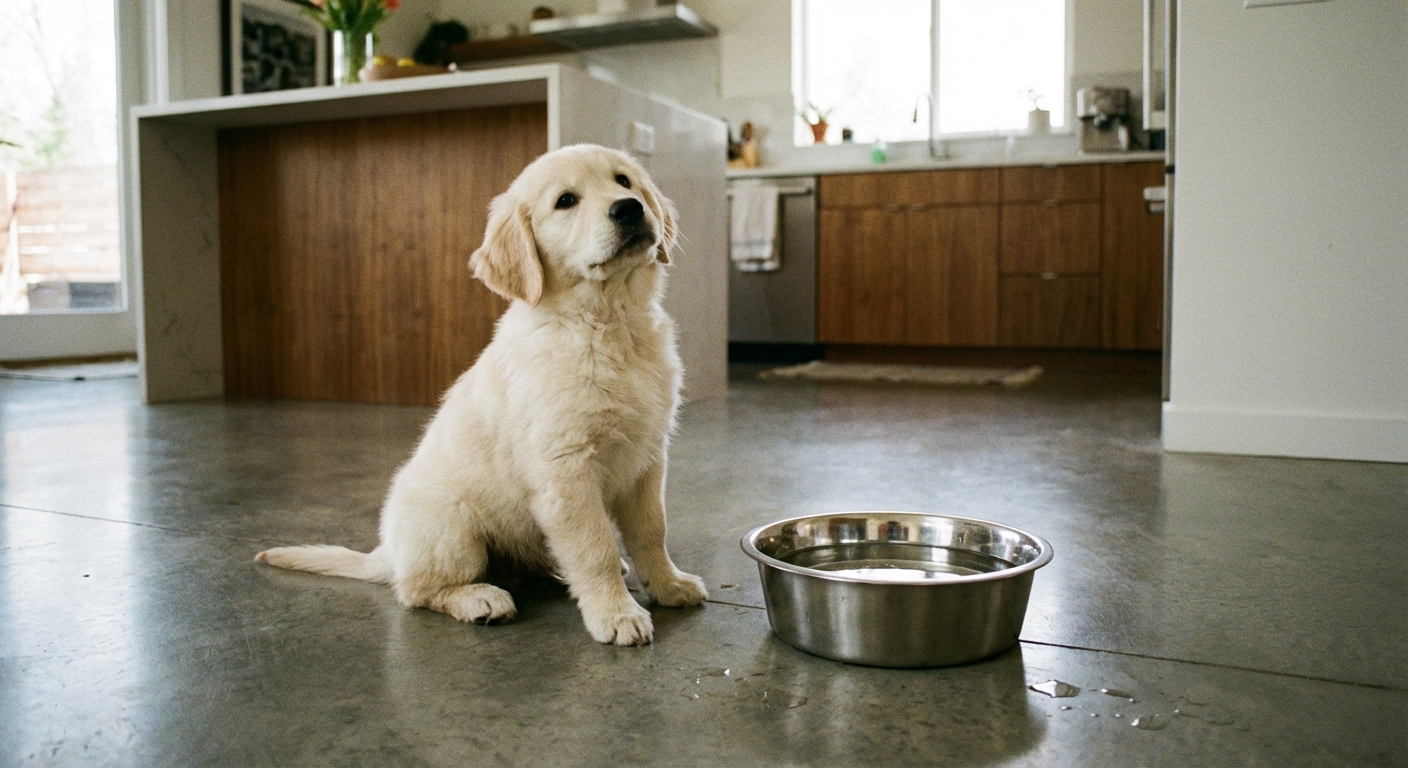
Hydration is priority number one. Offer frequent access to fresh water. If your puppy gulps water and vomits, offer smaller amounts more often.
- Keep water bowls clean and easy to reach.
- For some pups, ice chips can be easier to tolerate than a big drink.
- Ask your vet whether a pet-appropriate oral rehydration solution is right for your puppy’s age and size.
- Call your vet if your puppy is not urinating normally, cannot keep water down, or their gums stay tacky despite drinking.
Step 3: Feed a gentle, simple diet
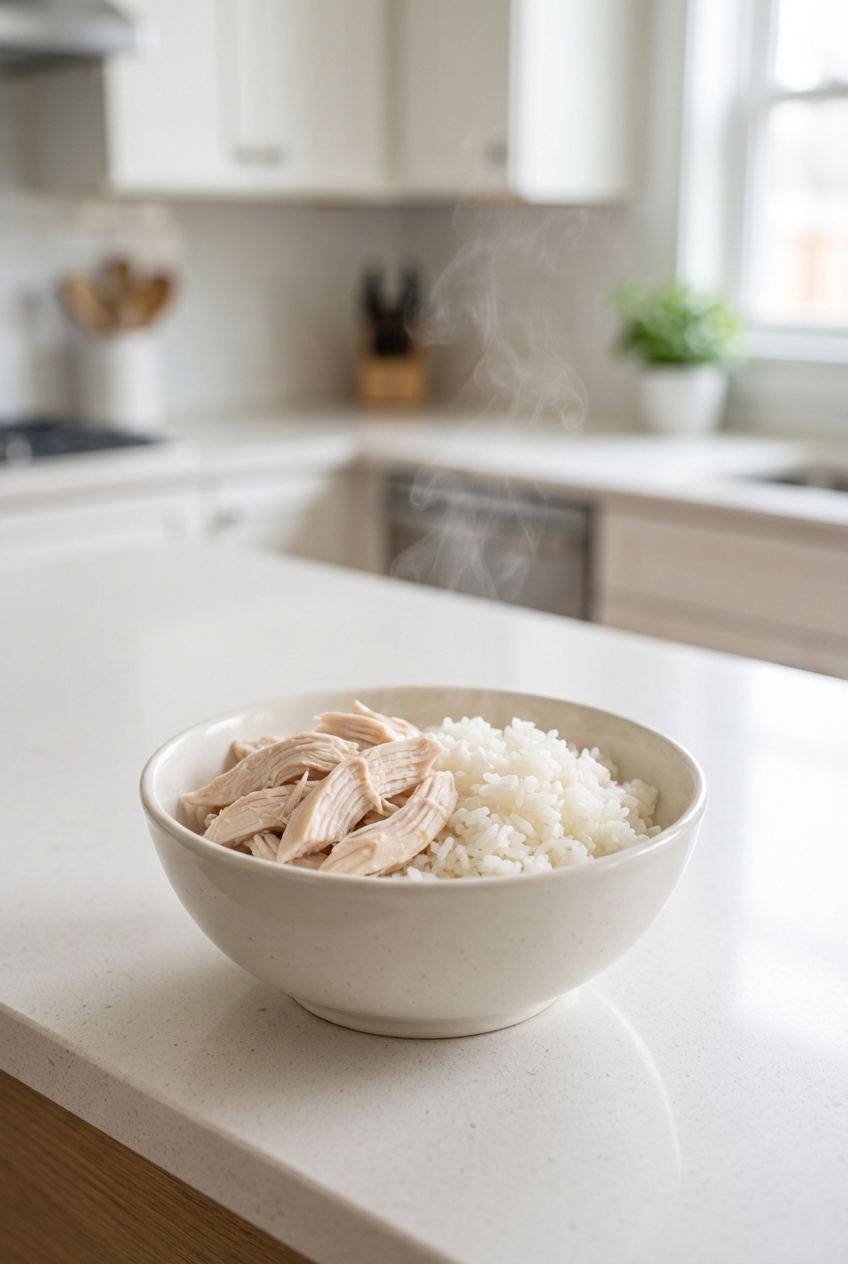
Many mild digestive upsets improve when we simplify the food. A common vet-approved approach is a short-term bland diet (typically 1 to 3 days), then a gradual transition back to their normal puppy food. Some puppies do best on a highly digestible veterinary GI diet instead, so ask your veterinarian if you are not sure.
- Protein: boiled, skinless, boneless chicken breast or very lean ground turkey (drained well)
- Carb: plain white rice
- Ratio: about 1:1 chicken to rice by volume
- How to serve: no seasoning, no butter, no oil
- Portion: small meals, more often (think “snack-sized”)
Important: Puppies still need calories for growth. Do not do long fasts unless a veterinarian instructs you to. If your puppy refuses food, call your vet.
Step 4: Consider a puppy-safe probiotic
There is some evidence that certain veterinary probiotics can help shorten the duration of acute diarrhea in dogs by supporting a healthier gut microbiome. Results vary by product and strain, so use a pet-specific probiotic and follow the label. When in doubt, ask your veterinarian for a recommendation based on your puppy’s size.
Step 5: Clean up safely and reduce reinfection
Some causes of diarrhea are contagious (like parasites or viruses), and even non-contagious diarrhea can keep recurring if your puppy re-ingests germs from the yard.
- Pick up stool promptly.
- Clean indoor accidents with an enzymatic cleaner.
- Wash bedding and sanitize food and water bowls.
Step 6: Reintroduce normal food slowly
Once stools are improving, transition back over 2 to 4 days:
- Day 1: 75% bland diet, 25% regular puppy food
- Day 2: 50% bland, 50% regular
- Day 3: 25% bland, 75% regular
- Day 4: 100% regular
If diarrhea returns during the transition, pause and call your veterinarian.
What causes puppy diarrhea?
Puppy digestive systems are still maturing, and they explore the world with their mouths. A few common causes include:
- Diet change (switching food too fast, new treats, rich table foods)
- Parasites (roundworms, hookworms, whipworms, coccidia, giardia)
- Stress (new home, crate training, travel)
- Infections (viral and bacterial causes, including parvovirus in unvaccinated pups)
- Eating “junk” (trash, sticks, mulch, dropped food)
- Foreign body (swallowed toys, fabric, bones, corn cobs, and other objects that can irritate or obstruct the GI tract)
- Food intolerance or sensitivity
If your puppy has diarrhea more than once, a fecal test is often one of the most helpful next steps. Many parasites are treatable, but you need the right medication. Your clinic may recommend a fecal flotation plus a specific Giardia test depending on the history.
Helpful insights
- Mucus is common with colon irritation. It looks alarming but often shows up with “large bowel” diarrhea from stress, diet change, or parasites. Blood is a bigger concern.
- Color clues matter: black, tarry stool can signal digested blood; pale, gray, or clay-colored stool can suggest reduced bile pigment and should be discussed with your vet; green stool can happen after eating grass or certain dyes. Always mention unusual colors to your vet.
- Small dogs dehydrate faster because they have less fluid reserve. A tiny pup with watery stool deserves quicker veterinary guidance.
- Most “pumpkin fixes everything” advice is incomplete. Plain canned pumpkin can help some mild cases, but it is not a cure-all, and it should not delay a fecal test if symptoms persist.
What not to do
- Do not give human anti-diarrheal meds (like loperamide or bismuth) unless your veterinarian explicitly tells you to. These can be unsafe for some puppies and can hide worsening disease.
- Do not switch foods repeatedly in a panic. Rapid changes can prolong diarrhea.
- Do not ignore vaccination status. If your puppy is not fully vaccinated, diarrhea plus low energy is a “call now” situation.
- Do not assume it is “just teething.” Some puppies do get looser stools during big changes, but parasites and infection are extremely common too.
Your quick tracking checklist
Having clear notes makes your vet visit faster and more effective. Keep this list in your phone:
- How many episodes in the last 24 hours
- Any vomiting (how many times, what it looked like)
- Stool appearance (watery, soft, mucus, blood, worms)
- Appetite and water intake
- Urination (normal, less than usual, none)
- Any new foods, treats, chews, people food, or trash access
- Vaccination and deworming dates (and whether there was any recent deworming)
- Exposure risks (dog park, boarding, new dog, standing water)
If you can safely bring a fresh stool sample to your vet (in a clean bag or container), that is often very helpful.
Prevention tips
- Transition foods slowly over 7 to 10 days when possible.
- Limit rich treats and keep training treats tiny.
- Keep up with deworming and do fecal checks as recommended.
- Supervise yard time to reduce eating sticks, rocks, and mystery snacks.
- Vaccinate on schedule to reduce risk of serious infections like parvovirus.
One last reassuring note
Most puppy diarrhea episodes are fixable, and many are preventable once you identify the trigger. Keep things simple, prioritize hydration, and partner with your veterinarian if symptoms are intense, persistent, or just not sitting right with you.