If you’ve noticed sticky, mucousy discharge around your puppy’s vulva, take a breath. As a veterinary assistant in Frisco, Texas, I’ve talked with many worried pet parents who thought, “Is she going into heat already?” or “Is this an emergency?”
The truth is that mild vulvar discharge in a puppy before her first heat can happen, and one cause we see fairly often in practice is something called puppy vaginitis. It often improves as the puppy approaches puberty, but there are also times when discharge points to an infection, a urinary problem, or something more serious.
This guide will help you understand what the discharge might mean, how puppy vaginitis is different from a first heat and from pyometra, and exactly what signs should prompt a vet visit.
What is puppy vaginitis?
Puppy vaginitis is inflammation of the vagina in a young female dog who has not had her first heat yet. In real life, the vulva is often irritated too, so you may notice discharge, redness, or licking around the vulvar area. You may also hear it called juvenile vaginitis or prepubertal vaginitis.
In many puppies, it is mild and self-limiting, meaning it may resolve with time and maturity. But “mild” does not mean “ignore everything.” Your job is to watch for specific red flags and keep the area clean without causing more irritation.
What discharge can look like
The most common thing families notice is discharge that seems to “appear out of nowhere” on fur, bedding, or the floor.
Common discharge descriptions
- Sticky or tacky residue on the hair around the vulva
- Mucous-like, stringy, or gelatinous material
- White, off-white, pale yellow, or slightly cloudy discharge
- A small amount that comes and goes
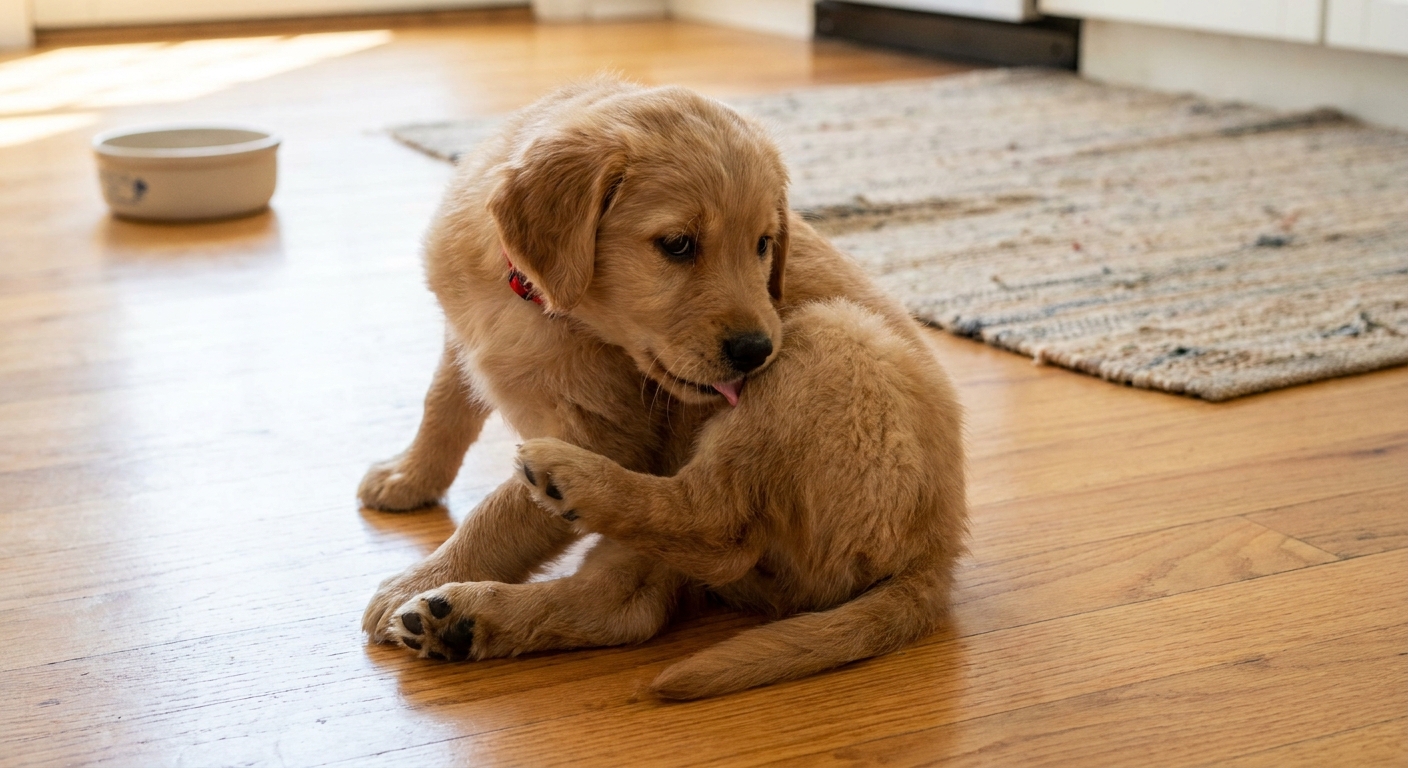
Some puppies also lick the area a bit more than usual, but they otherwise seem bright, playful, and are eating normally.
Puppy vaginitis vs. first heat
This is the biggest point of confusion I see.
First heat basics
Most dogs have their first heat somewhere around 6 to 18 months depending on breed and size. Some toy breeds can cycle earlier, and some giant breeds may not cycle until after 18 months.
How heat discharge usually differs
- Color: Heat commonly starts with a bloody or blood-tinged discharge (pink to red, then often lighter).
- Vulva: The vulva often looks noticeably swollen.
- Behavior: You may see increased attention from male dogs, restlessness, flagging (tail held to the side), or clinginess.
Puppy vaginitis more often looks like mucous, white to yellow discharge without the classic swollen vulva and heat-related behaviors.
If your puppy is very young (for example, 3 to 5 months), true heat is less likely, but outliers exist. When in doubt, your veterinarian can help you sort out what you are seeing.
Puppy vaginitis vs. pyometra
Pyometra is a uterine infection that typically occurs in intact adult female dogs after they have gone through heat cycles. It is much less common in puppies who have never had a heat, but rare exceptions can occur. Either way, it is important to understand because it can be life-threatening.
Key differences
- Age and timing: Pyometra is most often seen in mature intact females, commonly weeks after a heat.
- How the dog feels: Dogs with pyometra often act sick, not just “a little irritated.”
- Discharge: If the cervix is open, discharge may be bloody, creamy, yellow-green, or foul-smelling. If the cervix is closed, there may be no discharge at all, but the dog can be very ill.
Pyometra warning signs
- Lethargy or weakness
- Vomiting
- Loss of appetite
- Fever (not always present)
- Increased drinking and urination
- A distended or painful belly
- Strong, foul odor from discharge
If you ever suspect pyometra, treat it as an urgent, same-day veterinary emergency.
When wiping and watching is enough
If your puppy seems to feel fine and the discharge is mild, your veterinarian may recommend a watch-and-wait approach. In many mild cases, supportive care is all that is needed.
Wipe and watch can be reasonable when:
- The discharge is small in amount and not worsening
- It is white to pale yellow and not green or bloody
- There is no strong odor
- Your puppy is eating, drinking, playing, and acting normal
- No vomiting, diarrhea, fever, or lethargy
- No signs of urinary pain (straining, frequent small pees, accidents)
How to wipe safely
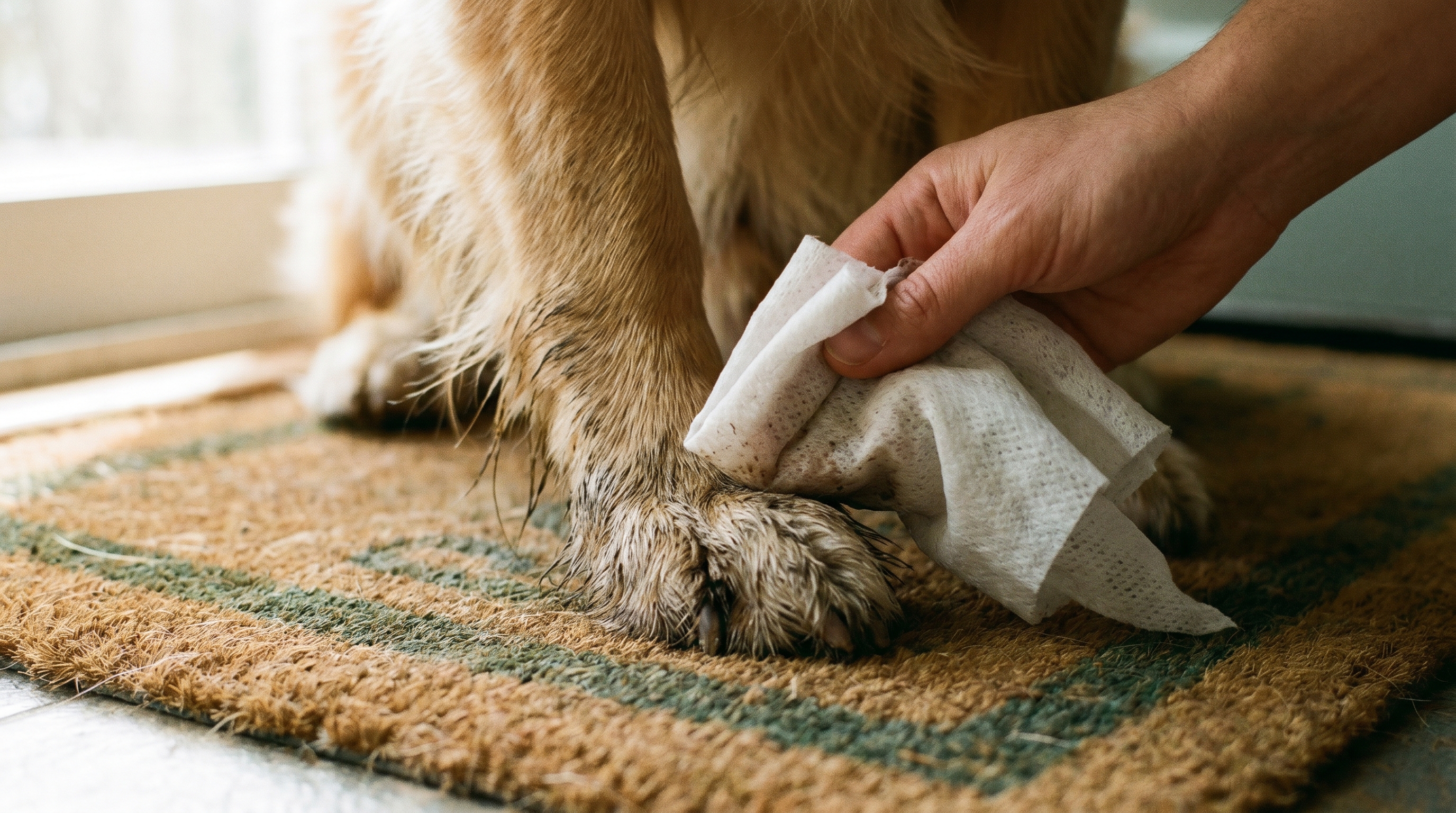
- Use a soft, damp cloth or an unscented, non-medicated pet wipe.
- Wipe the vulvar area gently, then pat dry.
- Do not douche, flush, or put peroxide, alcohol, essential oils, or human creams on the vulva unless your vet directs you.
- Avoid medicated wipes (including chlorhexidine) unless your veterinarian specifically recommends them.
- Keep the hair around the vulva trimmed if it traps discharge (your groomer or clinic can help).
If you can, take a quick photo of the discharge and note the date. Patterns help your veterinarian, especially if it comes and goes.
What not to do at home
- Do not give leftover antibiotics or use someone else’s medication.
- Do not scrub the area or bathe repeatedly with scented shampoos. More cleaning is not always better.
- Do not let licking become constant. If your puppy cannot leave it alone, call your vet. Some pups need a cone for a short time to break the lick cycle.
- Do not assume discharge is “normal” if your puppy seems sick in any way. A puppy who is lethargic, vomiting, not eating, or painful should be seen promptly, even if the discharge looks mild.
Signs you should call the vet
I always tell families: discharge is information. Sometimes it is mild irritation. Sometimes it is the first clue that we need to look deeper.
Call your vet within 24 to 48 hours if you notice:
- Discharge that lasts more than a few days or keeps recurring
- Yellow, thick discharge that is increasing
- New or persistent vulvar redness or swelling
- Frequent licking that seems obsessive or is causing skin irritation
- Any sign of pain when urinating, straining, or accidents in a previously house-trained pup
- Discharge plus scooting (can overlap with anal gland issues, irritation, or parasites)
Go the same day (urgent) if you see:
- Foul or rotten odor
- Green discharge
- Bloody discharge in a very young puppy
- Heavy bleeding at any age (dripping, leaving frequent spots, or soaking bedding)
- Lethargy, fever, vomiting, or refusing food
- A swollen, painful belly
- Suspected trauma, bite wound, or something stuck in the vulvar area
Other causes of discharge
Puppy vaginitis is one possibility, but it is not the only one. Here are other causes your veterinarian may consider.
- Urinary tract infection (UTI): Sometimes what looks like “vaginal discharge” is urine dribbling or urinary inflammation causing licking and wetness.
- Vulvar conformation: A recessed vulva or extra skin folds can trap moisture and debris, leading to irritation or infections. Weight gain can make this worse in some dogs.
- Foreign material: Dirt, plant material, or debris can cause irritation, especially in active outdoor puppies.
- Parasites or skin infection: Fleas, mites, or bacterial skin infections can cause licking and secondary irritation.
- Stool contamination: Soft stools or diarrhea can irritate the vulvar area and mimic discharge.
Because the treatment depends on the cause, it is worth involving your vet if it is persistent, smelly, painful, or paired with urinary signs.
If your puppy is already spayed
If you adopted your puppy already spayed and you are seeing vulvar discharge, it is still worth a call to your veterinarian. Puppy vaginitis can still be discussed, but we also think about other causes like UTIs, local skin irritation (vulvitis), congenital vulvar shape issues, and very rarely reproductive tract conditions like stump pyometra. The good news is that the first step is usually simple: an exam and a urine test.
What your vet may do
A good puppy vaginitis workup is usually straightforward and focused on ruling out the problems we do not want to miss.
- Physical exam: Checking vulva shape, redness, skin irritation, and any swelling.
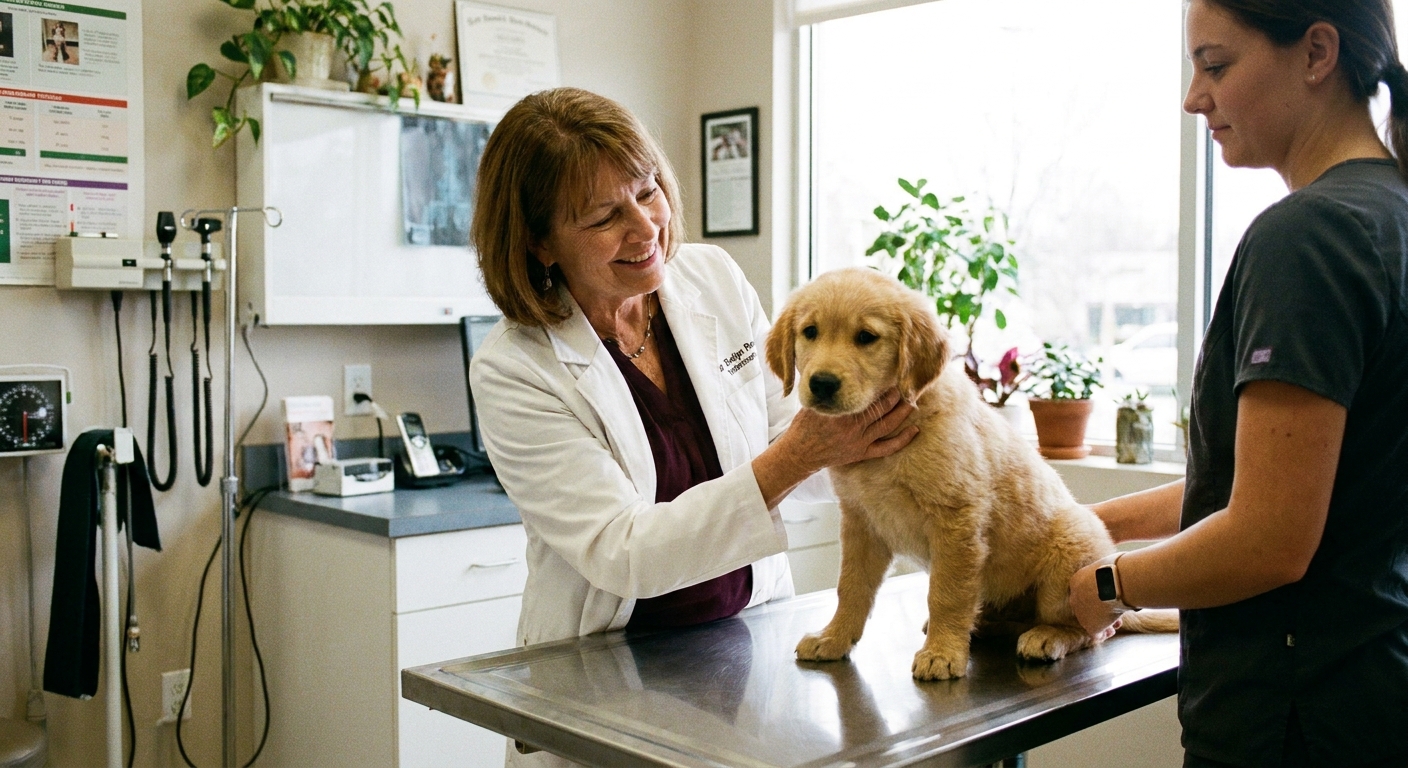
- Urinalysis: Looks for signs of UTI or crystals. In some cases, your vet may recommend a sterile, vet-collected urine sample to reduce contamination.
- Vaginal cytology: A gentle swab to look for inflammation, bacteria, yeast, and cell types.
- Culture: In recurring cases, to identify the best antibiotic if one is needed.
- Additional tests: If your puppy seems unwell, your vet may recommend bloodwork or imaging based on findings.
Some mild cases do not need antibiotics at all. Others may need treatment, especially if there is infection, significant discomfort, or a secondary problem like a UTI.
Spay timing questions
This is a common question, and the answer depends on the individual dog and the veterinarian’s findings.
Many mild cases of prepubertal vaginitis improve with maturity, but it is not a guarantee. Some veterinarians prefer to let the puppy reach puberty, then spay after the first heat in certain situations. Others recommend spaying at the planned time for your family, especially if discharge is mild and there are no structural issues.
If your puppy has a recessed vulva or recurring urinary problems, your vet may discuss how timing of spay could affect vulvar development. This is one of those decisions where individualized advice matters.
FAQ
How long does puppy vaginitis last?
Mild cases may come and go for days to weeks and often improve as a puppy approaches her first heat. If it keeps recurring, it is worth a veterinary workup to check for UTI, anatomy, or infection.
Can puppy vaginitis be caused by hygiene?
It is not usually because a home is “dirty.” But moisture, urine dribbling, soft stool, skin folds, or a recessed vulva can make irritation more likely. Gentle cleaning and keeping the area dry can help.
Is discharge always an infection that needs antibiotics?
No. Some puppies have inflammation without a bacterial infection. That is why vets often prefer testing like urinalysis or cytology before automatically prescribing antibiotics.
Can I use human wipes or creams?
I recommend skipping scented human wipes and avoiding creams unless your veterinarian tells you exactly what to use. Fragrance and topical products can worsen irritation or encourage licking.
The bottom line
Sticky or mucous vulvar discharge in a puppy before her first heat is often consistent with puppy vaginitis, and many mild cases improve with time and simple supportive care. But discharge should never be dismissed if it has a strong odor, turns green, becomes bloody, or comes with heavy licking, urinary signs, or any “sick puppy” behavior.
If you are unsure, that is exactly what your veterinary team is here for. A quick exam and a urine test can bring a lot of peace of mind, and it helps us catch the rare problems early.