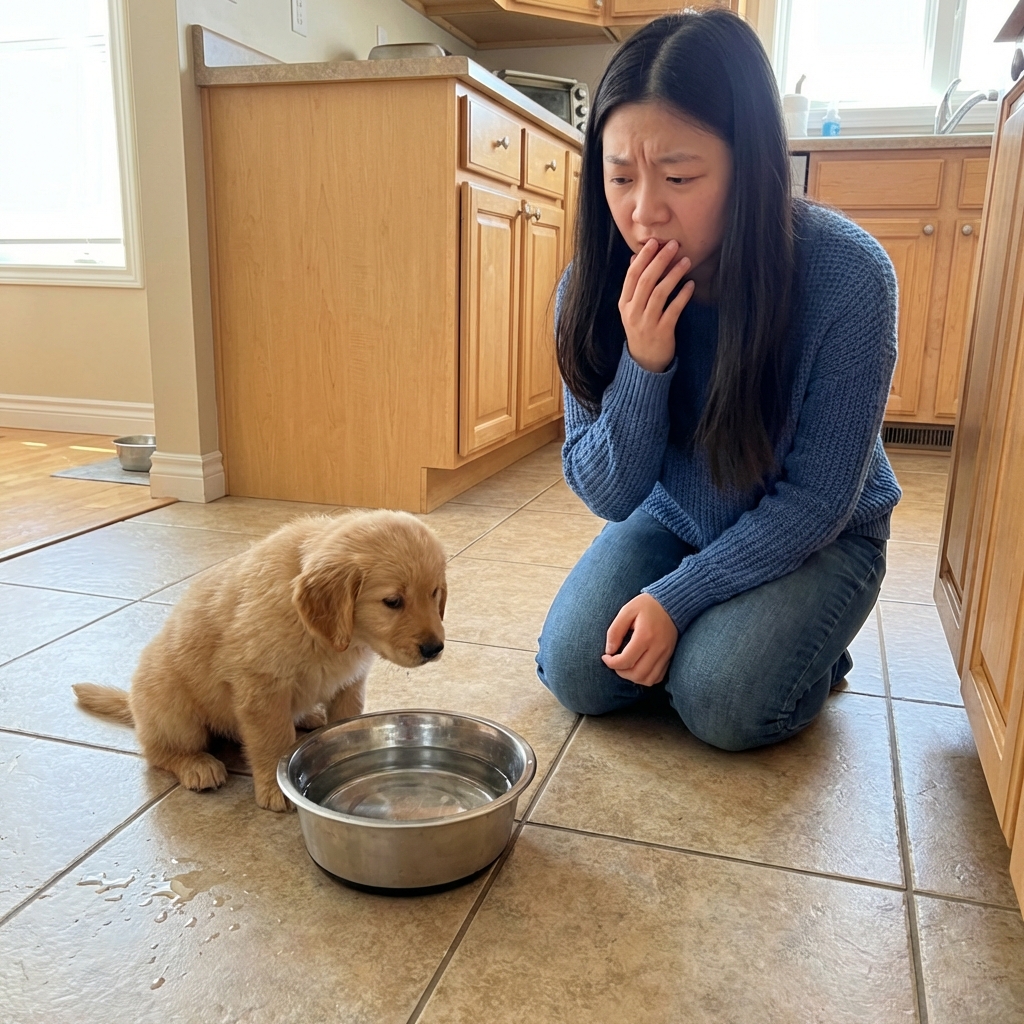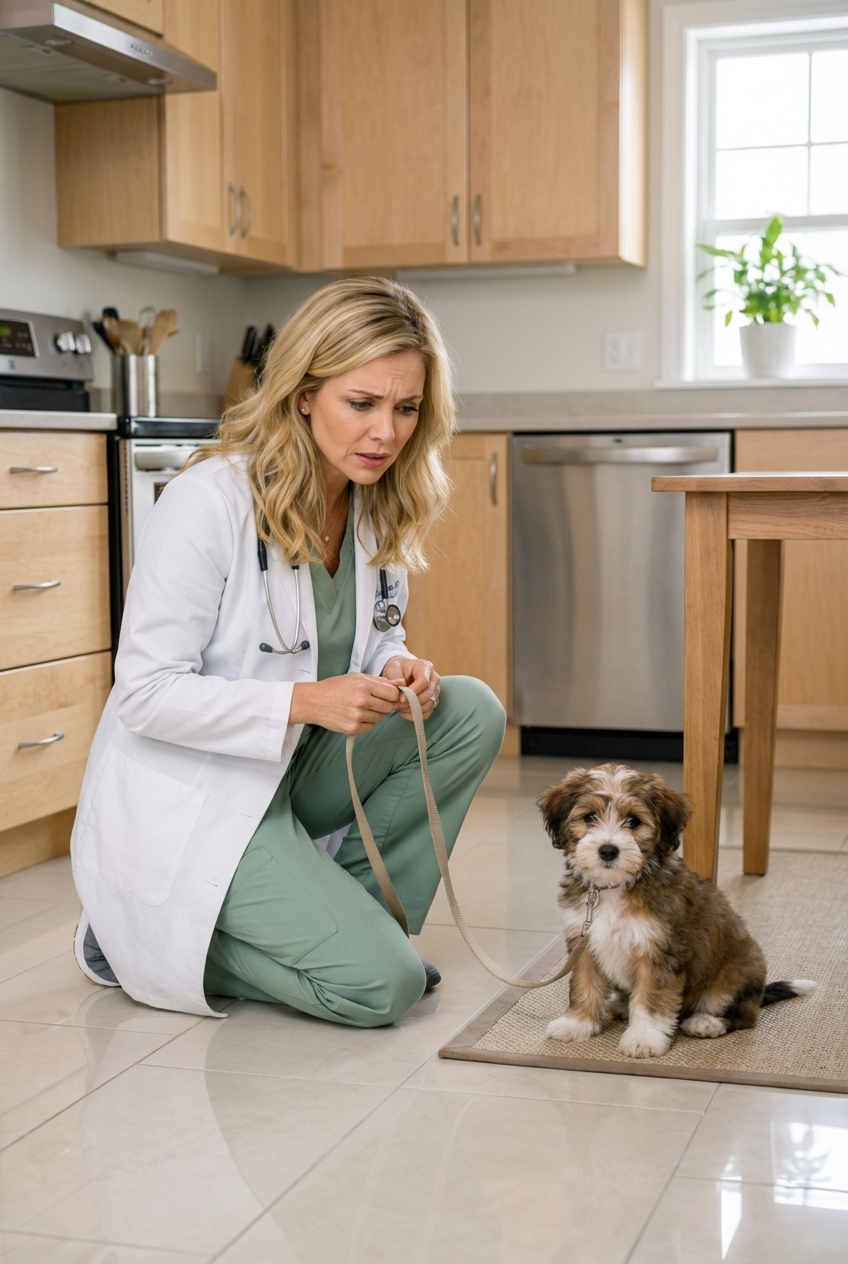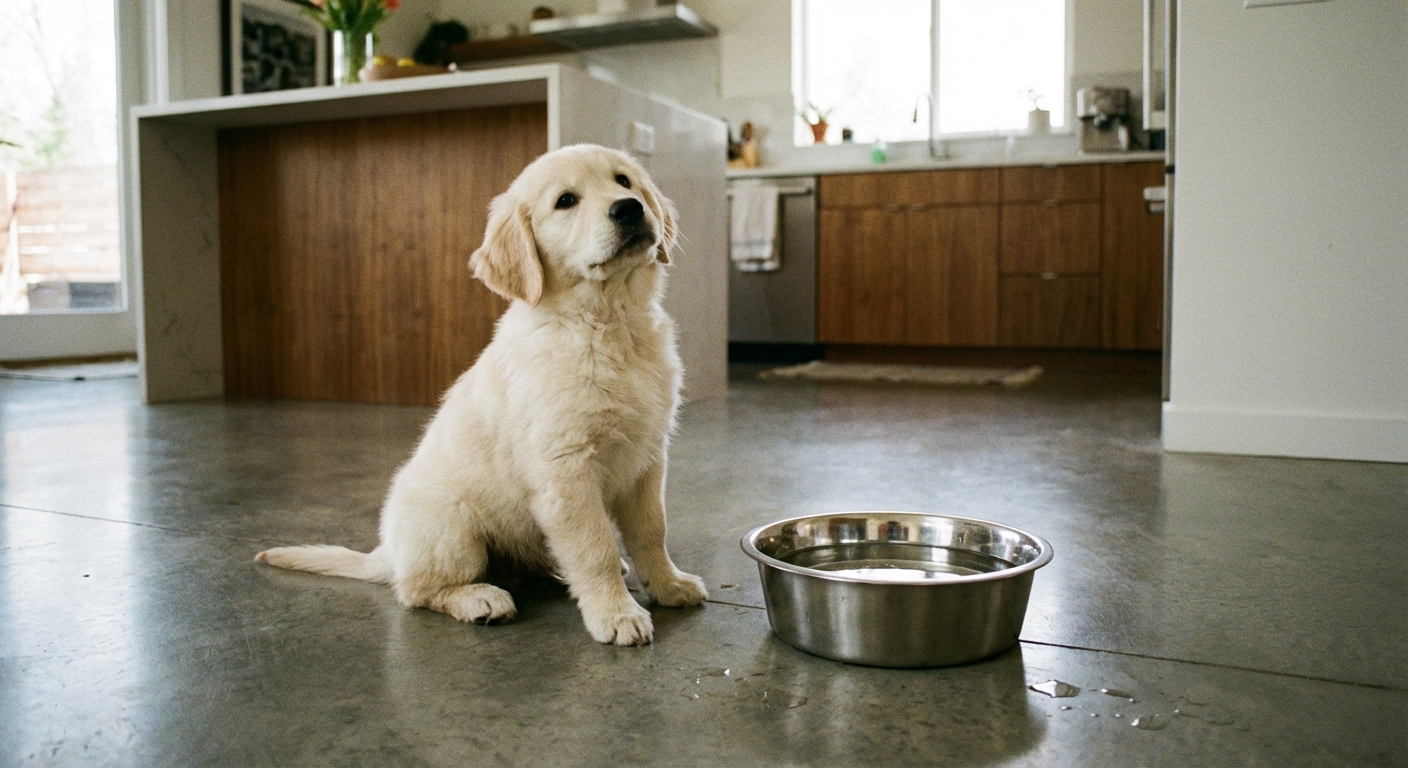
A practical home-care plan for mild puppy diarrhea: safety check, hydration tips, bland diet portions, probiotics and pumpkin, plus red flags that mean call ...
Article
•
Designer Mixes
Puppy Upset Stomach: Insights & Advice

Shari Shidate
Designer Mixes contributor
Few things worry pet parents faster than a puppy with an upset stomach. One minute they are bouncing around the living room, and the next you are dealing with loose stool, vomiting, or a puppy who suddenly is not interested in dinner. The good news is that many mild tummy upsets are short-lived and manageable at home. The key is knowing what is normal, what is not, and when to call your veterinarian.
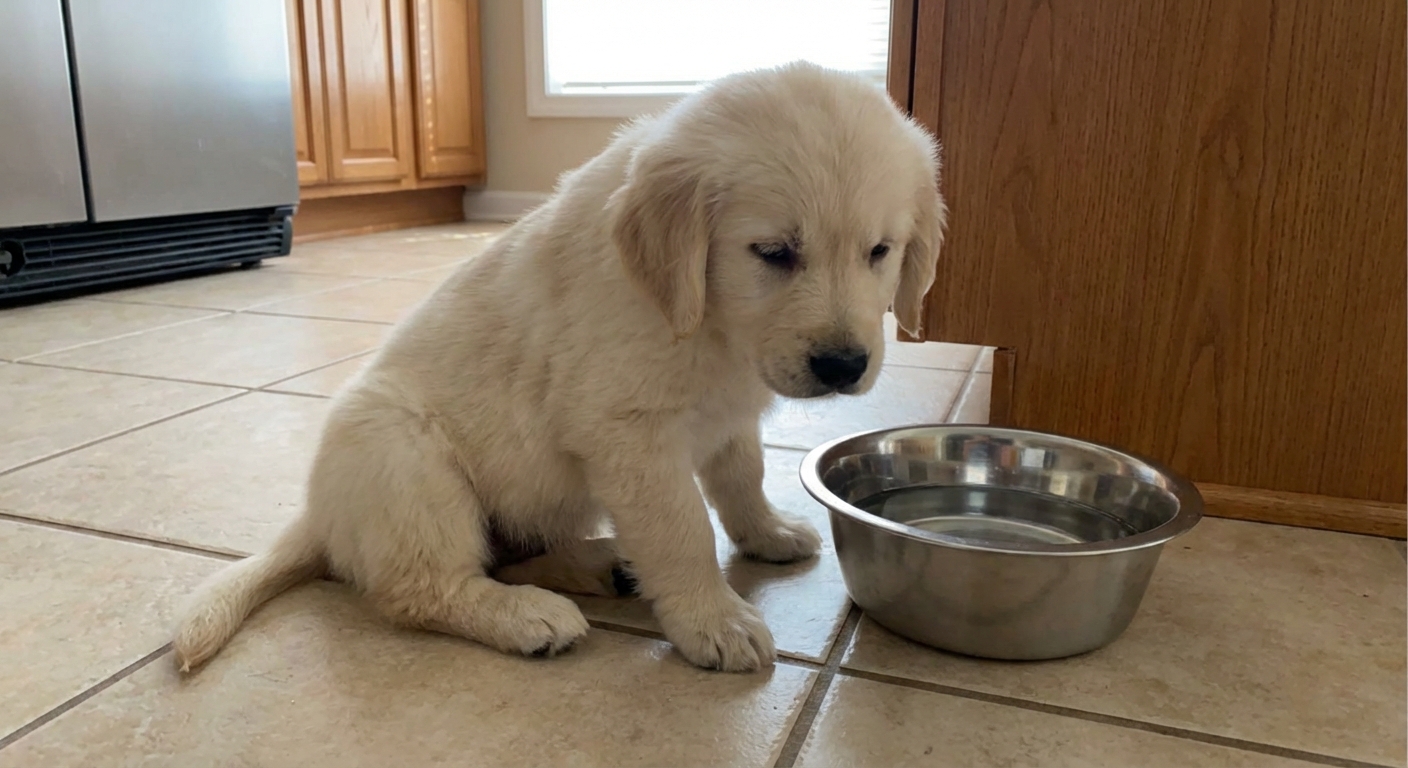
Why puppies get upset stomachs so easily
Puppies have sensitive digestive systems, and they are still building a healthy gut microbiome. In the clinic, I see a few common themes that can trigger vomiting or diarrhea in young dogs.
- Diet changes: Switching foods too quickly, new treats, or rich table foods.
- Stress: Moving homes, crate training, boarding, or a busy weekend with lots of visitors.
- Parasites: Roundworms, hookworms, Giardia, and (depending on age and region) whipworms can be common causes of diarrhea in puppies.
- Eating things they should not: Socks, toys, sticks, mulch, trash, cat litter, and more.
- Viral or bacterial infections: Parvovirus is a major concern in unvaccinated or under-vaccinated puppies and can cause severe vomiting, diarrhea, and fast dehydration.
- Food intolerance: Some puppies react to certain proteins, dairy, or high-fat snacks.
Because puppies are small and can dehydrate quickly, even “just diarrhea” can become a bigger issue sooner than you would expect, especially in very young or toy-breed pups.
Quick triage at home: what to notice right away
Before you do anything else, take 2 minutes to observe. These details help you decide if you can monitor at home or need urgent care.
Check the basics
- Energy: Bright and playful, or weak and listless?
- Water intake: Drinking normally, refusing water, or drinking and vomiting it back up?
- Vomiting: How many times, and is it bile, food, foam, or something concerning like blood?
- Diarrhea: Soft stool, watery stool, mucus, or blood?
- Appetite: Interested in food, or completely refusing?
- Exposure risk: Any chance they got into trash, toxins, a new chew, or another dog’s poop?
- Vaccines: If your puppy is not fully vaccinated, take vomiting or diarrhea more seriously and call sooner.
How to check hydration (quick at-home clues)
These checks are helpful, but not perfect. If you are unsure, call your vet.
- Gums: Healthy gums should feel moist, not tacky or dry.
- Capillary refill: Press a finger gently on the gum until it turns pale, then release. Color should return quickly (about 1 to 2 seconds).
- Skin tent (with caveats): Gently lift the skin over the shoulders and let go. If it “stays tented,” dehydration may be present. This is less reliable in very young puppies and some breeds.
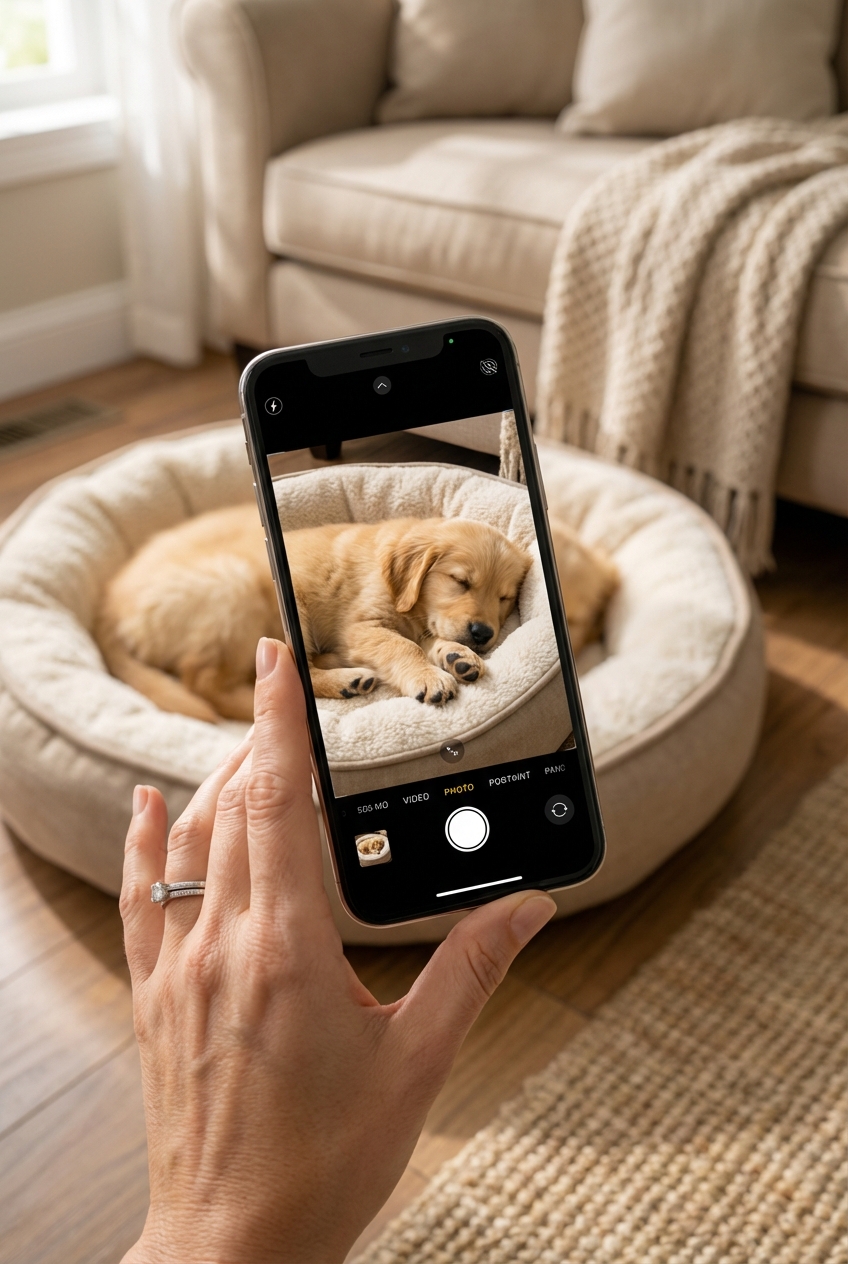
If you can safely do so, take a photo of the stool or vomit. It is not glamorous, but it can genuinely help your vet.
When you should call a vet right now
Trust your instincts. If something feels off, it is always okay to call. In general, do not wait if you see any of the following:
- Repeated vomiting (especially more than 2 to 3 times within 4 to 6 hours, or vomiting that continues for 12 hours)
- Cannot keep water down
- Blood in vomit or bright red or black/tarry stool
- Watery diarrhea that is frequent, explosive, or worsening (or diarrhea that lasts more than 24 hours in a puppy)
- Lethargy, weakness, collapse, or a painful abdomen
- Bloated belly or repeated unproductive retching
- Signs of dehydration (dry gums, sunken eyes, sticky saliva, very reduced urination)
- Puppy is very young (under 12 to 16 weeks), very small, or has other health issues
- Possible foreign body (toy, sock, corn cob, bones, string)
- Not fully vaccinated and has vomiting or diarrhea, especially with low energy (parvovirus can worsen fast and needs immediate care)
- Known or possible toxin exposure (xylitol, grapes/raisins, chocolate, medications, cleaners)
If toxin exposure is even a possibility, call your vet right away. In the United States, you can also contact ASPCA Animal Poison Control or Pet Poison Helpline for time-sensitive guidance (fees may apply). If you are outside the U.S., ask your veterinarian about a local poison hotline.
These situations can become emergencies quickly, so it is safer to get professional guidance early.
Supportive care for mild cases (what many vets recommend)
If your puppy is still fairly bright, only has mild symptoms, and none of the red flags above apply, supportive care may be appropriate while you monitor closely. Always follow your veterinarian’s advice first, especially if your puppy has ongoing issues.
1) Hydration is the priority
Offer small, frequent sips of fresh water. If your puppy gulps and vomits, try giving a tablespoon or two every 10 to 15 minutes for an hour, then slowly increase if tolerated.
- Skip flavored sports drinks and human electrolyte products unless your vet recommends a specific option.
- Ice chips can work for some puppies who vomit after drinking.
2) Give the gut a short rest (only if your vet approves)
For some puppies, a brief food break can help reduce vomiting, but this is not one-size-fits-all. Very young puppies can be prone to low blood sugar, so do not fast a tiny or very young pup without veterinary guidance.
As a general safety rule, do not withhold food for more than 6 to 8 hours in a young puppy unless your veterinarian tells you to. If vomiting continues, or your puppy seems weak, call right away.
3) Use a bland diet for 24 to 72 hours
When your puppy is ready to eat again, a bland, low-fat diet is often easier on the stomach.
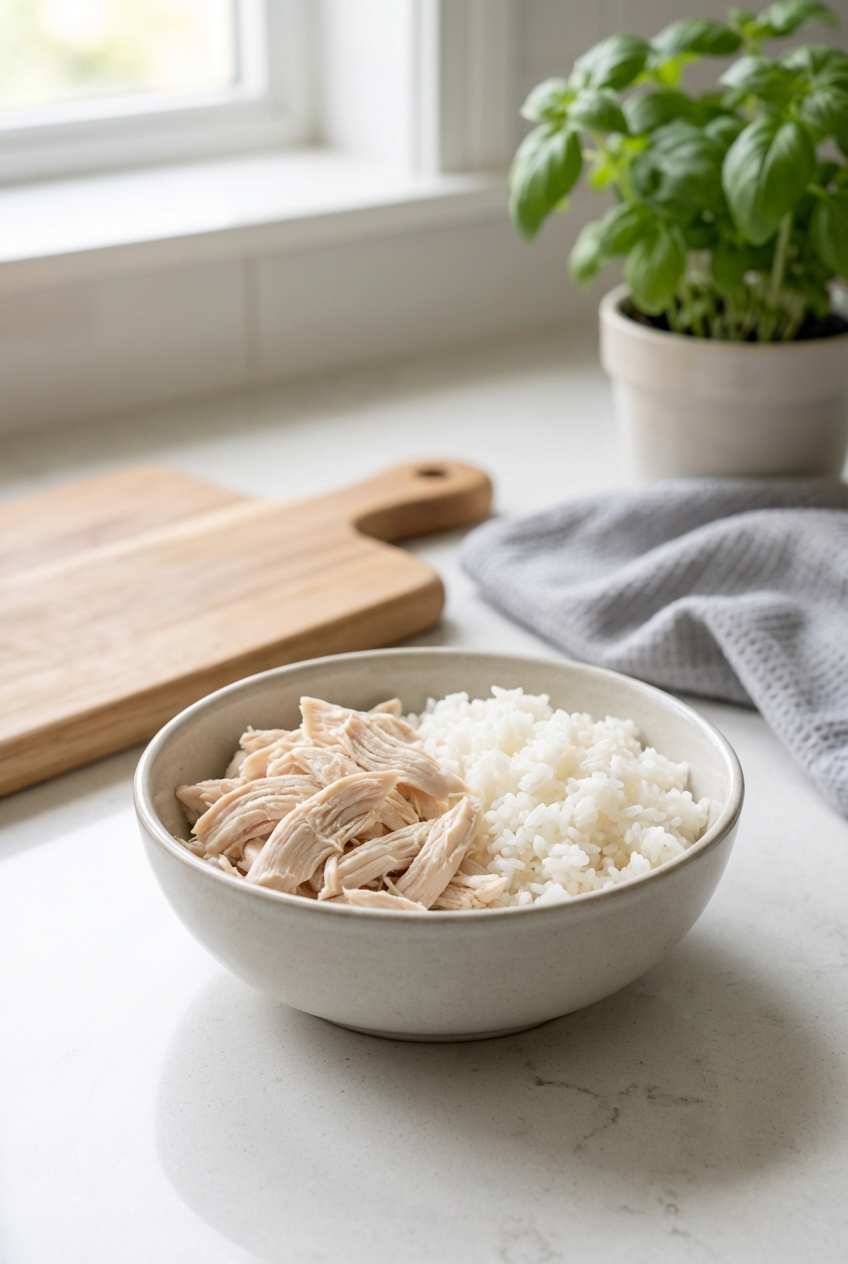
- Common vet-approved bland choices: boiled skinless chicken breast with plain white rice, or lean turkey with rice.
- Alternative: a prescription gastrointestinal diet from your vet if symptoms are more than mild, recurring, or you need something more nutritionally complete.
- Portioning: small meals, 3 to 6 times per day.
Important: chicken and rice is not a complete diet for growing puppies. It is meant for short-term support only. As your puppy improves, transition back to their balanced puppy food slowly over several days (or use a vet GI puppy-appropriate diet if your veterinarian recommends it).
What not to do (common mistakes that backfire)
- Do not give human medications like Pepto-Bismol, Imodium, or aspirin unless your veterinarian specifically instructs you. Some can be dangerous for dogs, especially puppies. For example, bismuth subsalicylate products can increase salicylate risk and may mask bleeding.
- Avoid rich foods (bacon, greasy meat, cheese, butter) which can worsen diarrhea and can trigger pancreatitis.
- Do not switch foods repeatedly in a panic. Too many changes can keep the gut irritated.
- Avoid bones and rawhides during a GI upset. They can irritate the gut or cause obstruction.
Poop talk: what stool can tell you
I always tell pet parents: stool is information. It is one of the fastest ways to see what is happening inside the digestive tract.
- Soft but formed: Often mild diet-related upset or stress.
- Watery diarrhea: Higher dehydration risk, consider calling sooner.
- Mucus: Common with large bowel irritation, stress colitis, or parasites.
- Bright red blood: Can occur with straining or inflammation, but still warrants a vet call if persistent, frequent, or paired with lethargy.
- Black/tarry stool: Potential digested blood, needs urgent vet care.
- Rice-like segments: Possible tapeworm segments. They may look like rice when fresh and more like dried cucumber seeds or sesame seeds later. This needs treatment.
If diarrhea lasts more than a day, is frequent, or your puppy seems unwell, bring a fresh stool sample to your appointment. Parasites are a very common and very treatable cause.
Parasites and puppies: why a fecal test matters
Even well-cared-for puppies can pick up intestinal parasites. Many are microscopic, and you cannot reliably identify them at home. A simple fecal test at your vet can check for common worms and Giardia.
Why it matters: untreated parasites can lead to poor growth, chronic diarrhea, anemia, and dehydration. Some parasites are also zoonotic, meaning they can affect people, especially kids.
How to prevent repeat stomach upsets
Once your puppy is feeling better, prevention becomes the long game. These small habits can make a big difference.
Transition foods slowly
Most puppies do best with a gradual change over 7 to 10 days.
- Days 1 to 3: 25% new, 75% old
- Days 4 to 6: 50% new, 50% old
- Days 7 to 9: 75% new, 25% old
- Day 10 and beyond: 100% new
Keep treats simple and predictable
Use one to two treat types at a time, and keep treats under about 10% of daily calories. For sensitive tummies, choose low-fat options.
Puppy-proof like you mean it
Most “mystery vomiting” in puppies has a very real cause: they ate something. Keep laundry, kids’ toys, and trash secured. Supervise yard time.
Stay current on deworming and vaccines
Your veterinarian will tailor a plan based on your puppy’s age, lifestyle, and local risks.
Gentle encouragement from someone who has seen it firsthand
If your puppy has an upset stomach right now, take a breath. Many cases resolve quickly with the right support, and you are doing the most important thing by paying attention early.
Focus on hydration, watch energy level closely, and do not hesitate to call your veterinarian if symptoms escalate or your puppy seems “not themselves.”
And if you are ever unsure, that is not you overreacting. That is you being a good pet parent.