Vet-informed guide to a short-term bland diet for dogs: chicken and rice 1:2 ratio, daily cup ranges by weight, how many meals to split into, and red flags t...
Article
•
Designer Mixes
Puppy Throwing Up Yellow Liquid

Shari Shidate
Designer Mixes contributor
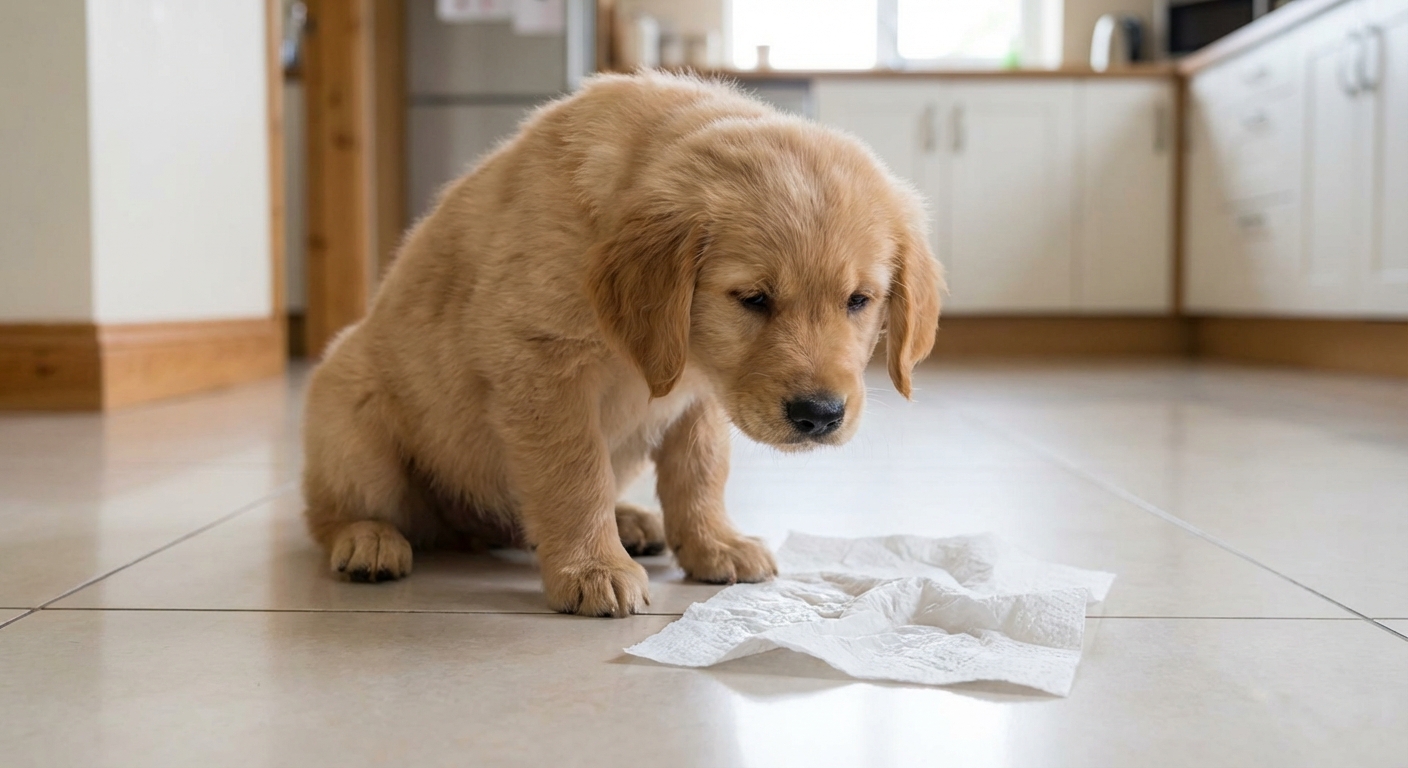
If your puppy is throwing up yellow liquid, it is scary, messy, and it can also be a clue. Often, that yellow fluid is bile, a digestive liquid made by the liver and stored in the gallbladder. Sometimes it is mostly stomach fluid with a small amount of bile mixed in. Puppies commonly bring up yellow fluid when their stomach is empty, when their tummy is irritated, or when something more serious is going on.
As a veterinary assistant in Frisco, Texas, I want you to feel supported and informed. This article will walk you through what the yellow vomit likely means, when you can try simple at-home steps, and when it is time to call your vet right away.
What the yellow liquid usually is
Yellow vomit is most often bile (sometimes mixed with stomach fluid). It can look bright yellow to yellow-green, and it tends to be watery or foamy. You will often see it when a puppy retches but does not have much food to bring up.
Common, less alarming reasons include:
- Empty stomach (vomiting first thing in the morning or long after a meal)
- Mild stomach upset after eating too fast, eating grass, or getting a new treat
- Diet change (switching foods too quickly can irritate the GI tract)
- Motion sickness (car rides can trigger nausea in puppies)
But yellow vomit can also show up with issues that need prompt veterinary care, like parasites, intestinal blockage, pancreatitis, parvovirus, or toxin exposure.
Quick note: Some owners use “vomiting” to describe both vomiting and regurgitation. Vomiting usually includes heaving/retching and belly effort. Regurgitation is more passive and can look like food or liquid coming back up without warning. Either can be serious if it keeps happening, but they can point to different causes, so tell your vet which one you are seeing.
Quick triage: when to call the vet now
Use this section like a checklist. If any of the items below are true, call your veterinarian or an emergency clinic immediately.
- Repeated vomiting (especially if it is ongoing, your puppy cannot settle, or it happens several times in a day)
- Can’t keep water down or vomits shortly after drinking
- Blood in vomit (red streaks or coffee-ground appearance)
- Diarrhea that is severe, watery, or contains blood
- Lethargy, weakness, collapse, or acting “not like themselves”
- Swollen or painful belly, hunched posture, whining when picked up
- Suspected foreign body (chewed toys, socks, bones, corn cobs, etc.)
- Possible toxin exposure (xylitol, chocolate, grapes/raisins, medications, cleaners, marijuana products, rodent bait)
- Very young or very small puppy (especially under 4 months), because dehydration and low blood sugar can happen fast
- Not vaccinated or unknown vaccine status (parvovirus risk is higher)
If your puppy is vomiting and also has diarrhea, especially with lethargy, treat it as urgent until your vet tells you otherwise.
Why puppies throw up bile
1) Empty stomach or “hunger pukes”
This is one of the most common patterns: yellow foam early morning, or late at night, especially if meals are far apart. Bile can reflux into the stomach when it is empty, irritating the lining and triggering vomiting.
2) Eating something irritating
Puppies explore with their mouths. Grass, sticks, treats that are too rich, table scraps, or sudden diet changes can cause irritation and yellow vomiting.
3) Intestinal parasites
Roundworms, hookworms, whipworms, and giardia can cause intermittent vomiting, poor appetite, diarrhea, and weight loss. Even indoor puppies can get parasites. A fecal (stool) test is the best way to check, but some parasites are shed intermittently, so your vet may recommend repeat testing or treatment based on risk and symptoms.
4) Infection (including parvovirus)
Parvo often starts with vomiting and lethargy, then progresses to severe diarrhea (often bloody). This is a medical emergency. Puppies can go downhill quickly without aggressive supportive care.
5) High-fat foods and pancreatitis
Rich treats, greasy table scraps, and sudden diet changes can trigger significant nausea and GI upset. Pancreatitis is one possible cause (it is less common in puppies than adult dogs), and it needs a veterinary diagnosis. Vomiting, belly pain, and decreased appetite are common signs. Your vet may recommend bloodwork, imaging, and a bland, low-fat plan.
6) Foreign body or partial blockage
If a puppy swallows part of a toy or other object, vomiting can start as food, then progress to yellow fluid as the stomach empties. If vomiting continues, appetite drops, or your puppy strains, it is time for an exam and likely X-rays or ultrasound.
What you can do at home for mild, one-time yellow vomit
If your puppy vomited yellow liquid once, is otherwise bright and playful, has no diarrhea, and is willing to drink, these gentle steps are often reasonable while you monitor closely. When in doubt, call your vet.
Step 1: Take away food briefly, but do not over-fast a young puppy
For adult dogs, vets sometimes recommend a short food break. With puppies, we are more cautious because their blood sugar can drop. If your puppy is very young or tiny, call your vet for individualized timing.
Step 2: Offer small amounts of water
Provide frequent, small sips. If your puppy gulps water and vomits again, remove the bowl for 20 to 30 minutes and try smaller amounts.
Step 3: Reintroduce a bland meal in small portions
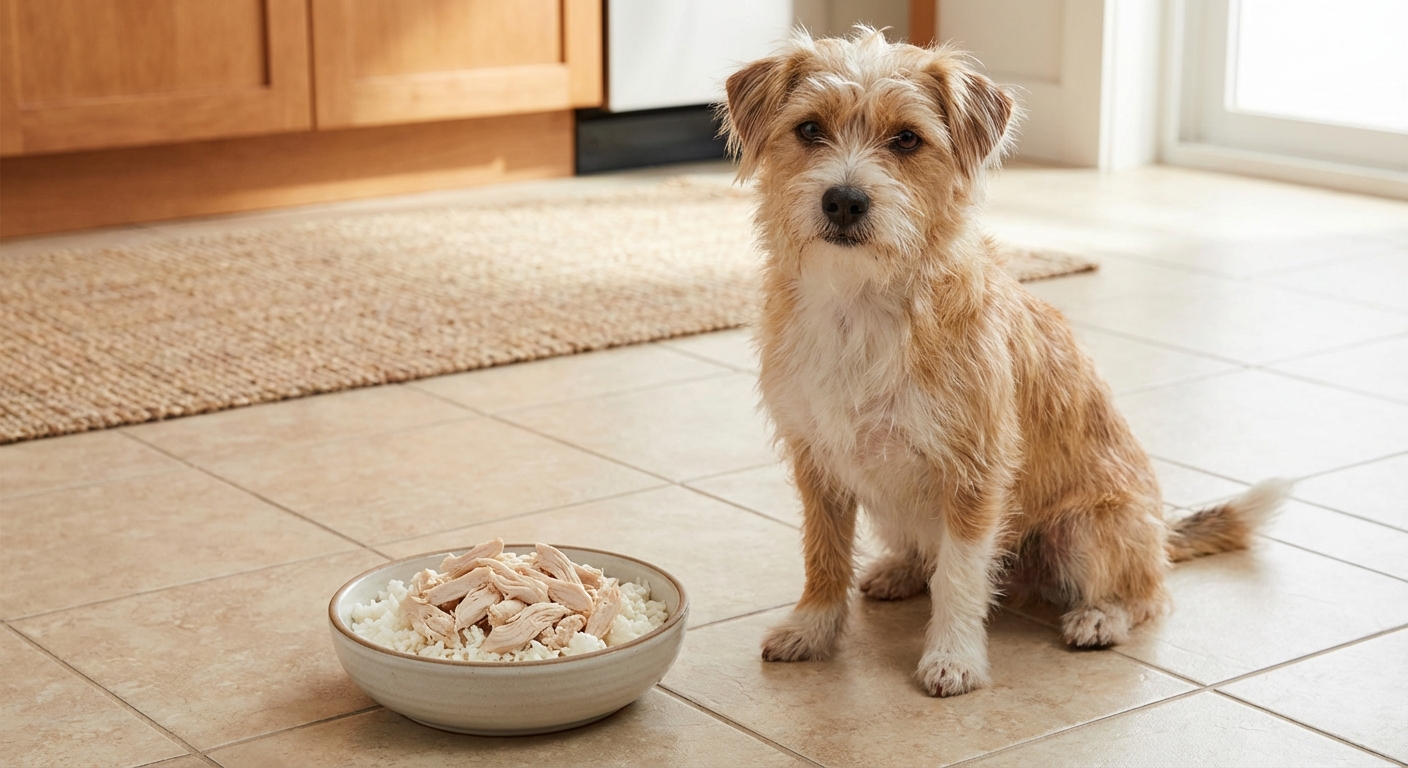
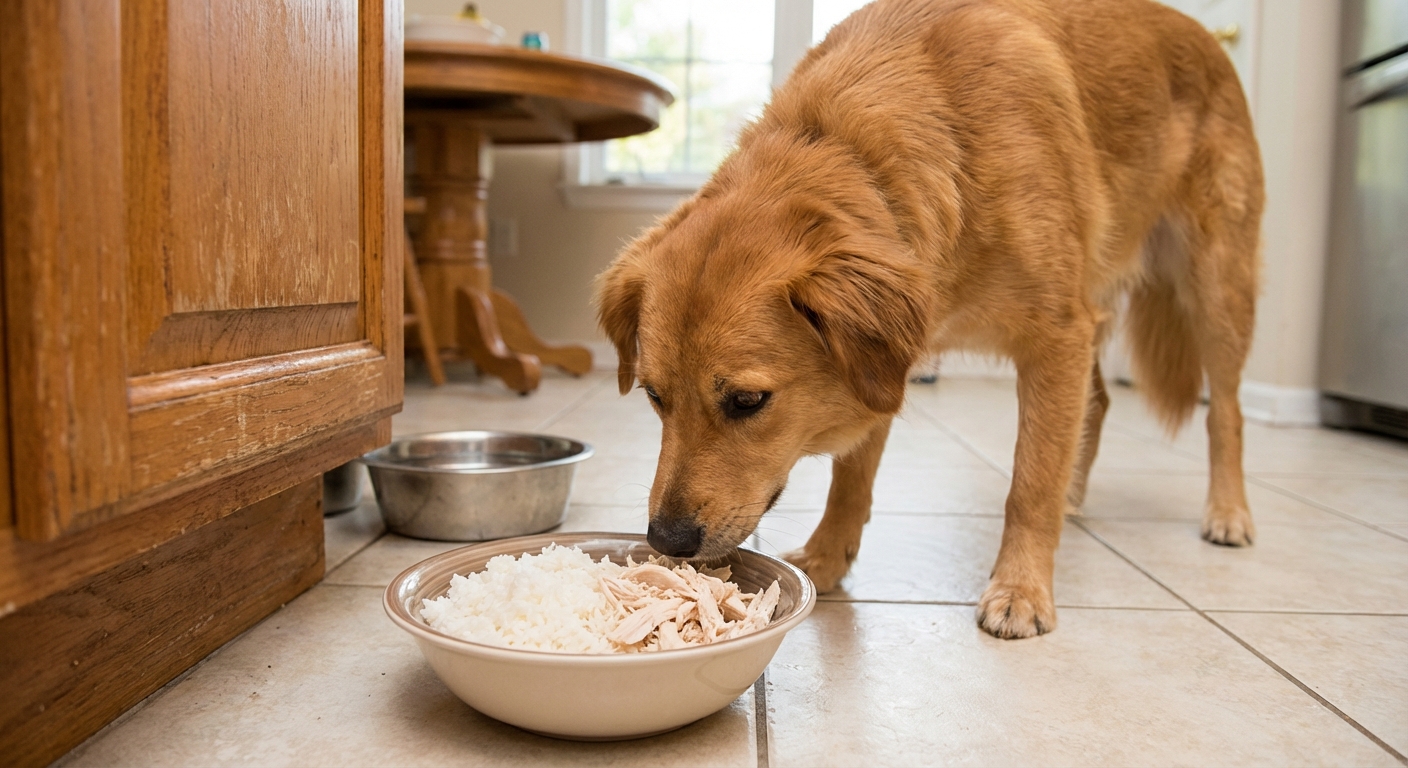
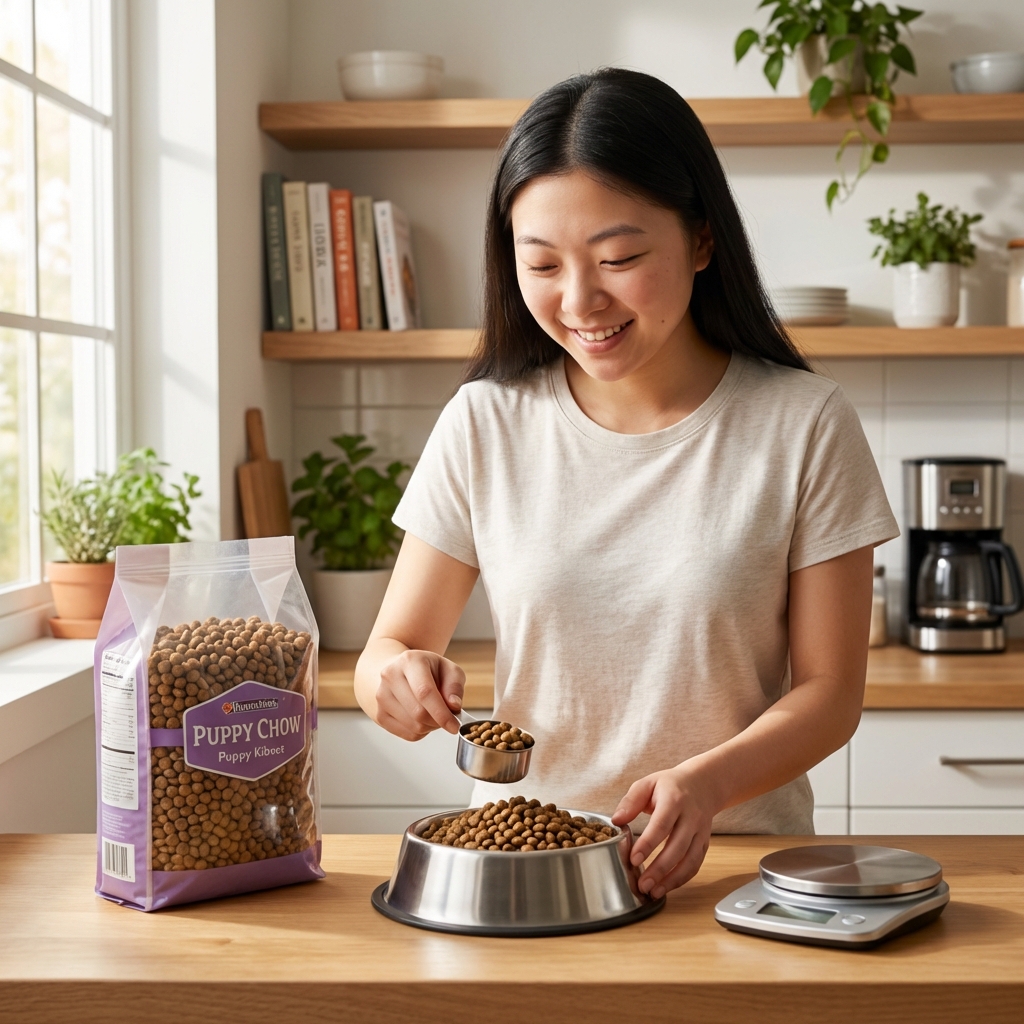
If vomiting stops for several hours and your puppy is acting normal, offer a small bland meal. Many clinics suggest plain boiled chicken breast with white rice, or a prescription GI diet, depending on your puppy’s needs. Keep portions small and feed multiple mini-meals.
Bland diets are short-term: Puppies need complete, balanced nutrition for growth. If your puppy needs a bland diet longer than 24 to 48 hours, or symptoms keep returning, involve your veterinarian so you do not accidentally underfeed key nutrients.
Step 4: Adjust meal timing to prevent an empty stomach
If the pattern is early-morning yellow vomit, try:
- A small bedtime snack (a bit of their regular puppy food)
- Splitting daily food into 3 to 4 smaller meals
- A slower transition when changing foods (over 7 to 10 days)
Step 5: Watch for dehydration
Puppies can dehydrate quickly. Call your vet urgently if you notice:
- Tacky or dry gums
- Sunken-looking eyes
- Less energy or trouble staying awake
- Reduced urination (fewer wet spots, darker urine)
Step 6: If vomiting returns, stop home care and call your vet
If your puppy vomits again, develops diarrhea, refuses food and water, or seems painful or unusually quiet, do not keep trying home steps. That is your cue to call your veterinarian.
A note on medications: Do not give human anti-nausea meds, Pepto-Bismol, or aspirin unless your veterinarian tells you to. Some products can be unsafe for puppies.
What to track before you call the vet
Vets can help you faster when you bring clear details. If you can, write down:
- How many times your puppy vomited and when it started
- What the vomit looked like (yellow foam, watery, food, mucus, blood)
- Whether it looked like vomiting (retching) or regurgitation (passive)
- Any diarrhea (color, frequency, blood)
- Energy level and appetite
- Anything they may have eaten (new treat, trash, toy pieces)
- Vaccination status and last deworming
- Whether they are still peeing normally
If possible, take a photo of the vomit and bring a fresh stool sample to your appointment.
Prevention tips that actually help
- Feed consistent meals and avoid long gaps, especially overnight
- Transition foods slowly over 7 to 10 days
- Puppy-proof your home: pick up socks, kids’ toys, chews that splinter, and trash access
- Keep vaccines and deworming current and do routine fecal testing
- Use a slow feeder if your puppy eats too fast
FAQ
Is yellow vomit always serious?
No. A single episode of yellow fluid in an otherwise normal puppy can be a mild upset or empty-stomach vomiting. What matters most is frequency and how your puppy feels overall.
Can teething cause yellow vomit?
Teething can lead to chewing and swallowing things that irritate the stomach, and some puppies get mild nausea from stress or excitement. But teething should not cause repeated vomiting, lethargy, or diarrhea. If those show up, call your vet.
Should I switch foods if my puppy vomits bile?
Not automatically. Many vomiting episodes are triggered by timing, treats, parasites, or swallowing something. If your vet recommends a change, do it slowly and choose a diet appropriate for growth.
When can I go back to normal food?
If your puppy has no more vomiting, is energetic, and is keeping water down, many vets recommend transitioning back to normal puppy food gradually over 1 to 3 days. If symptoms return at any point, call your veterinarian.