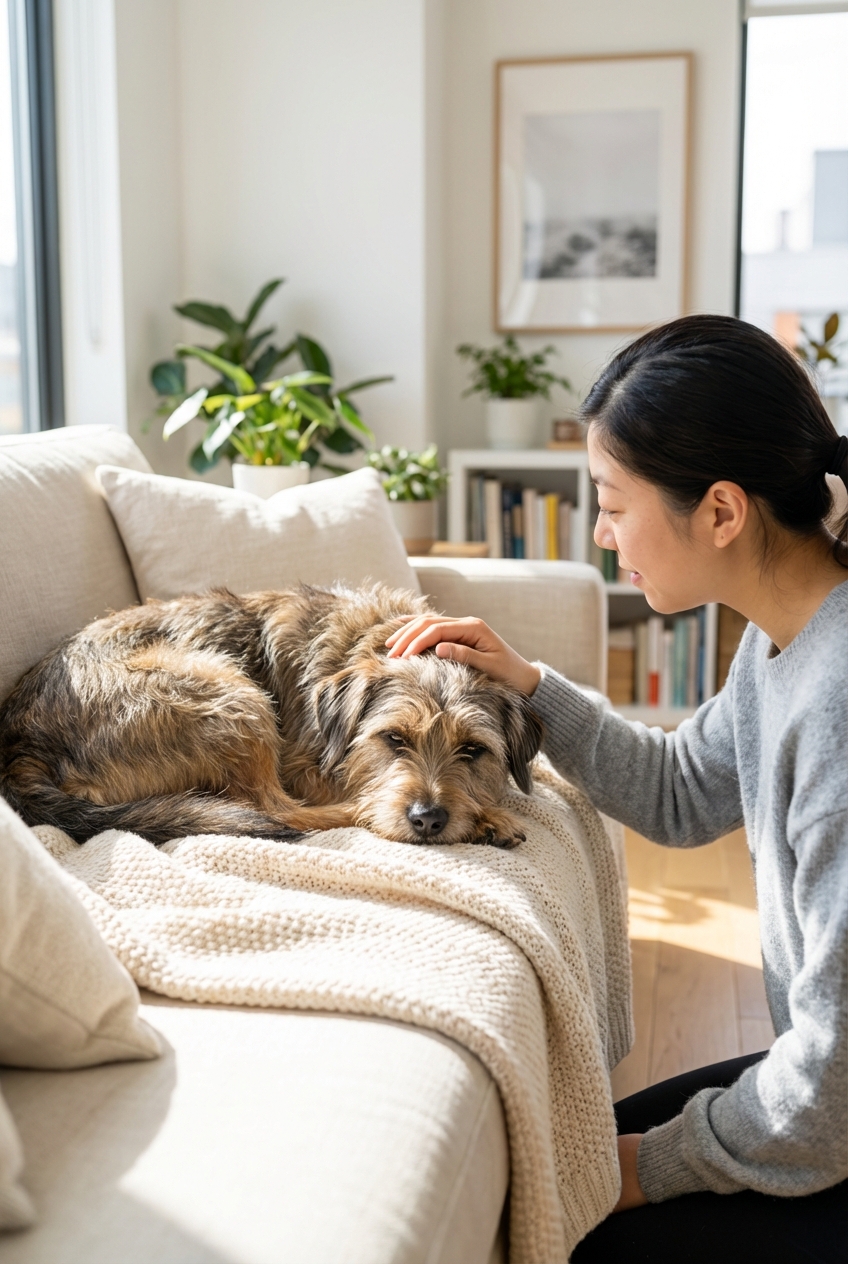
Understand the most common reasons puppies vomit, what different colors and textures can mean, safe at-home steps for mild cases, and clear red flags to call...
Article
•
Designer Mixes
Puppy Throwing Up: What It Means and What to Do

Shari Shidate
Designer Mixes contributor
Few things make your heart drop faster than seeing your puppy throw up. I get it. Puppies are curious, quick, and mouthy, and their little bodies are still learning how to handle new foods, stress, and germs. The good news is that many cases of vomiting are mild and pass quickly. The important part is knowing when it is safe to monitor at home and when to call your vet right away.
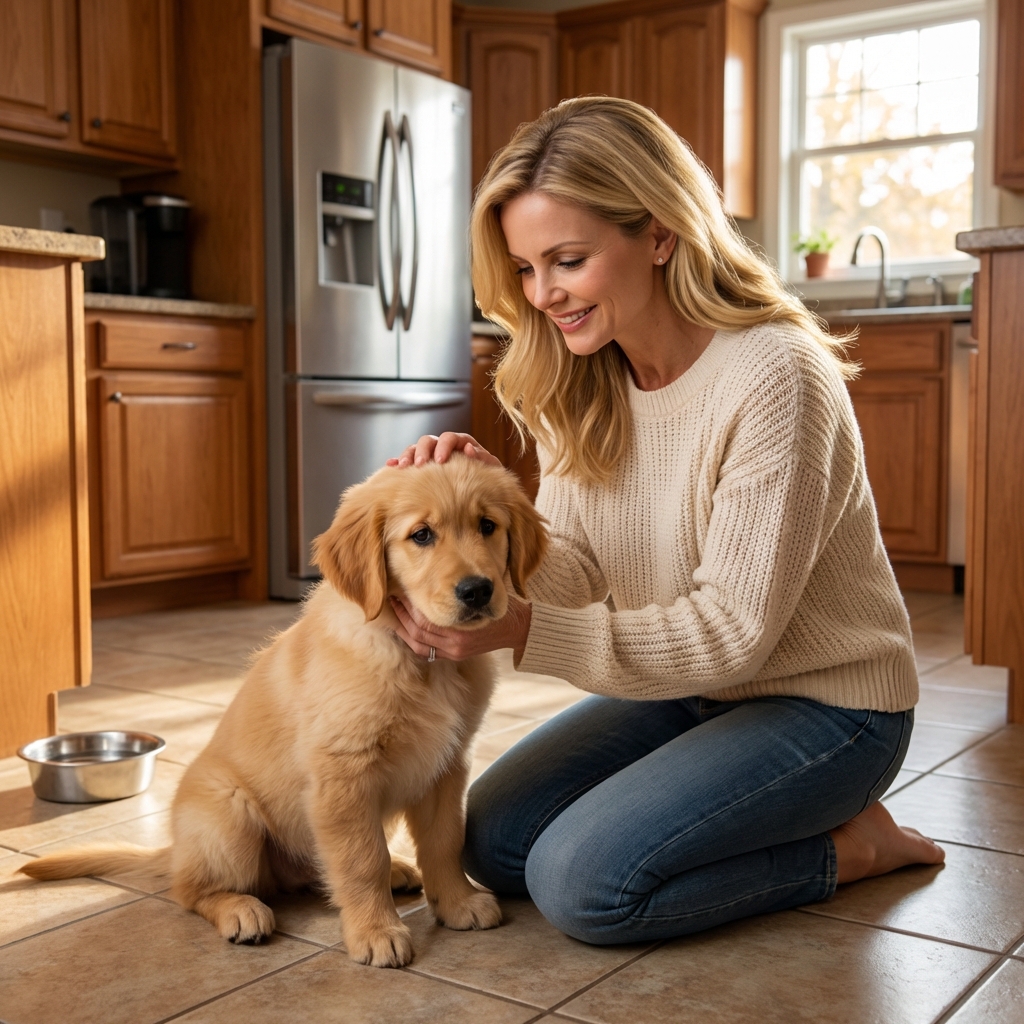
Vomiting vs. regurgitation
Before you decide what to do next, it helps to identify what you are seeing. People often say “throwing up” for both vomiting and regurgitation, but they can point to different problems.
- Vomiting usually involves nausea and effort. You may see drooling, lip smacking, pacing, belly contractions, and then stomach contents come up. The material may look partially digested.
- Regurgitation is more passive. Food or water comes back up with little warning or heaving, often in a tube or pile shape. It can happen soon after eating or drinking.
If you are unsure, a quick video on your phone can be incredibly helpful for your vet.
Note: Repeated regurgitation (especially at most meals) is not something to “wait out.” It can be linked to esophageal problems (like megaesophagus or a stricture) and needs veterinary evaluation.
Common reasons puppies vomit
Puppies vomit more easily than adult dogs. Their diets change quickly, their immune systems are still maturing, and they explore with their mouths.
1) Eating too fast
Gulping meals can trigger vomiting shortly after eating. This is especially common in multi-dog homes or with very food-motivated pups.
2) Diet changes and rich treats
Switching foods too quickly, feeding table scraps, fatty treats, new chews, or high-calorie training treats can irritate the stomach and intestines.
3) “Puppy proofing” misses
Chewed toys, socks, rocks, mulch, string, corn cobs, and even small pieces of tennis balls can cause vomiting. Some items can lead to intestinal blockage, which is an emergency.
4) Parasites
Roundworms, hookworms, and Giardia are common in puppies and can cause vomiting, diarrhea, poor growth, and a pot-bellied look. Other parasites (including whipworms) can occur too.
5) Viruses and infections
Parvovirus is the one we worry about most in unvaccinated or partially vaccinated puppies. It often causes lethargy, vomiting, and severe diarrhea. Kennel cough and other respiratory illnesses can also trigger gagging and vomiting, especially after coughing.
6) Motion sickness or stress
Car rides, new environments, boarding, or big schedule changes can cause stomach upset.
7) Toxins
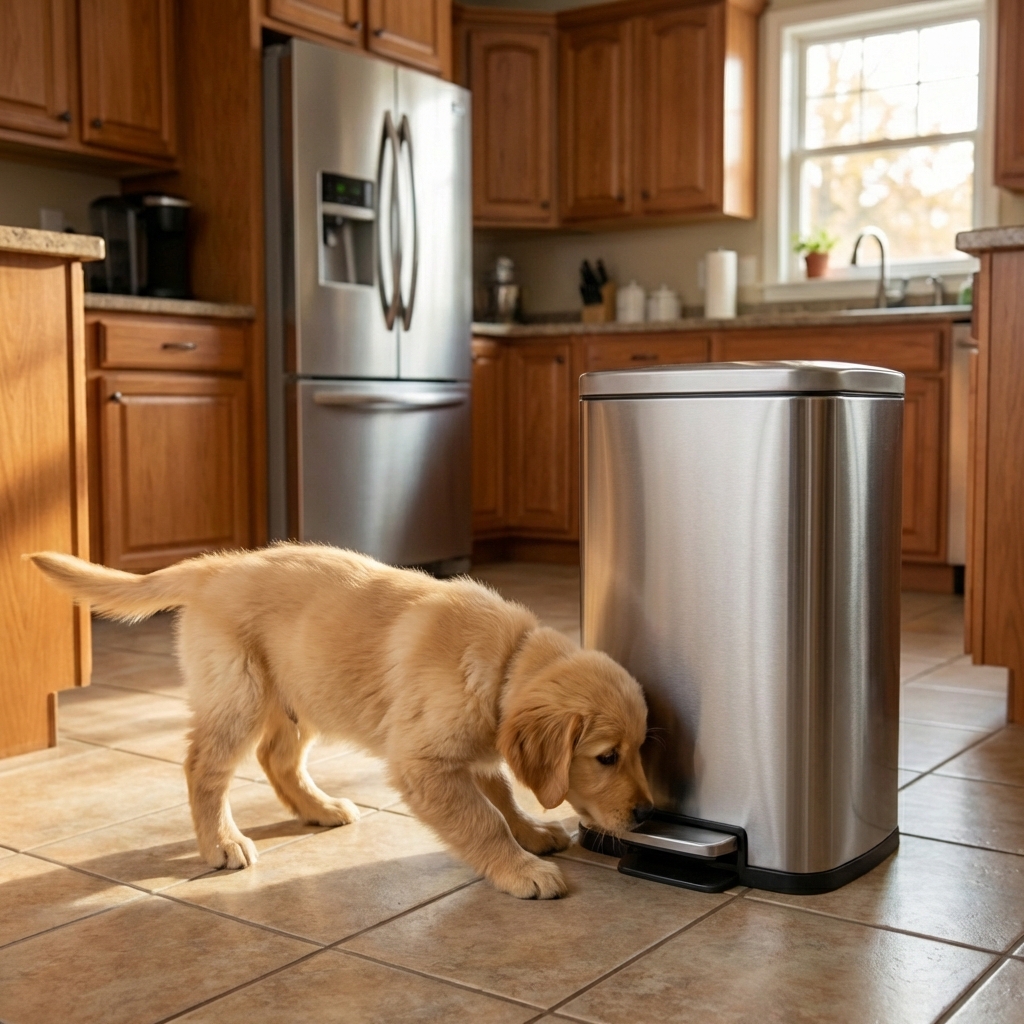
Chocolate, xylitol (often in sugar-free gum), grapes and raisins, rodent bait, some human medications, nicotine, and many household chemicals can cause vomiting. With toxins, time matters.
What vomit can tell you
The appearance does not diagnose the cause by itself, but it can help you decide how urgent the situation is.
- Foamy white: can happen with an empty stomach, mild nausea, reflux, or after swallowing saliva.
- Yellow: often bile, sometimes seen when the stomach is empty or meals are spaced too far apart.
- Undigested food: may happen with eating too fast, regurgitation, or a stomach that is irritated.
- Grass or plant material: common, but repeated vomiting after plant eating can still signal stomach upset.
- Coffee grounds, black, or bloody: can suggest digested blood or severe GI irritation and should be treated as urgent.
- Brown with a fecal smell: can signal serious GI disease or obstruction and should be treated as urgent.
- Bright red blood: can occur with irritation, but it is still a reason to call your vet promptly.
- Worms: call your vet. Bring a photo and a fresh stool sample if you can.
Also pay attention to frequency. One isolated vomit is very different from repeated vomiting over several hours.
When to call the vet now
With puppies, I lean conservative. They can become dehydrated quickly, and some illnesses progress fast.
- Your puppy is very young, very small (especially toy breeds), or has other health issues.
- Your puppy is not fully vaccinated or you are concerned about parvo.
- Repeated vomiting (more than 2 to 3 times in a day), vomiting that will not stop, or vomiting that continues beyond 12 to 24 hours even if it seems mild.
- Vomiting plus diarrhea, especially if watery or bloody.
- Lethargy, weakness, collapse, pale gums, or your puppy “just is not right.”
- Abdominal swelling, painful belly, hunched posture, or crying when picked up.
- Repeated retching with little or no vomit, especially with a swollen belly or distress. This can be a sign of bloat (GDV), which is an emergency.
- Suspected foreign body (toy pieces, socks, bones, corn cob, string, etc.).
- Possible toxin exposure (human meds, chocolate, xylitol, grapes/raisins, rodent bait, chemicals).
- Signs of dehydration: tacky or dry gums, sunken eyes, reduced urination, weakness, or a “skin tent” that stays up longer than usual (not perfect in puppies, but can help when combined with other signs).
- Not able to keep water down.
If you need after-hours guidance in the U.S., you can also call the ASPCA Animal Poison Control Center or Pet Poison Helpline (fees may apply).

If it is mild: safe at-home steps
If your puppy vomited once, seems bright and alert, wants to drink, and has no red-flag symptoms, you can often do careful home monitoring. When in doubt, call your vet. A quick phone check-in can save you a lot of worry.
Step 1: Pause food briefly
For many healthy puppies with a single vomit, your vet may recommend resting the stomach for a short period. Because puppies can be prone to low blood sugar, do not fast a very young puppy or a toy-breed puppy without veterinary guidance. If vomiting repeats, your puppy seems weak, or they cannot keep water down, skip the fasting plan and contact your vet.
Step 2: Offer small amounts of water
Let your puppy sip. If they gulp and vomit again, offer smaller amounts more frequently. Ice cubes can help slow down drinking for some puppies.
Step 3: Reintroduce a gentle meal
Once vomiting has stopped and your puppy can keep water down, you can offer a small meal. Some vets recommend a veterinary GI diet for short-term stomach upset. Others may suggest bland, puppy-safe options like boiled chicken and white rice in small portions. (Chicken can be a sensitivity for some dogs, so your vet may recommend a different protein.) Avoid fatty foods and rich treats while the stomach is settling.
Step 4: Keep activity calm
Big zoomies right after eating can trigger another episode. Keep things quiet for a bit.
Step 5: Watch the whole dog
Track appetite, water intake, energy, urination, stool quality, and any coughing or gagging.
Tip from the vet assistant side: Write down the time of each vomit, what it looked like, and what your puppy ate or chewed that day. Bring that info to your appointment.
What not to do
- Do not give human medications (like Pepto, Imodium, aspirin, ibuprofen, acetaminophen) unless your vet specifically instructs you. Many are unsafe for dogs.
- Do not force food if your puppy is nauseated.
- Do not ignore repeated vomiting, even if the vomit looks “normal.”
- Do not assume it is just “something they ate” if your puppy is acting tired, painful, or cannot keep water down.
Preventing future vomiting
Slow down meals
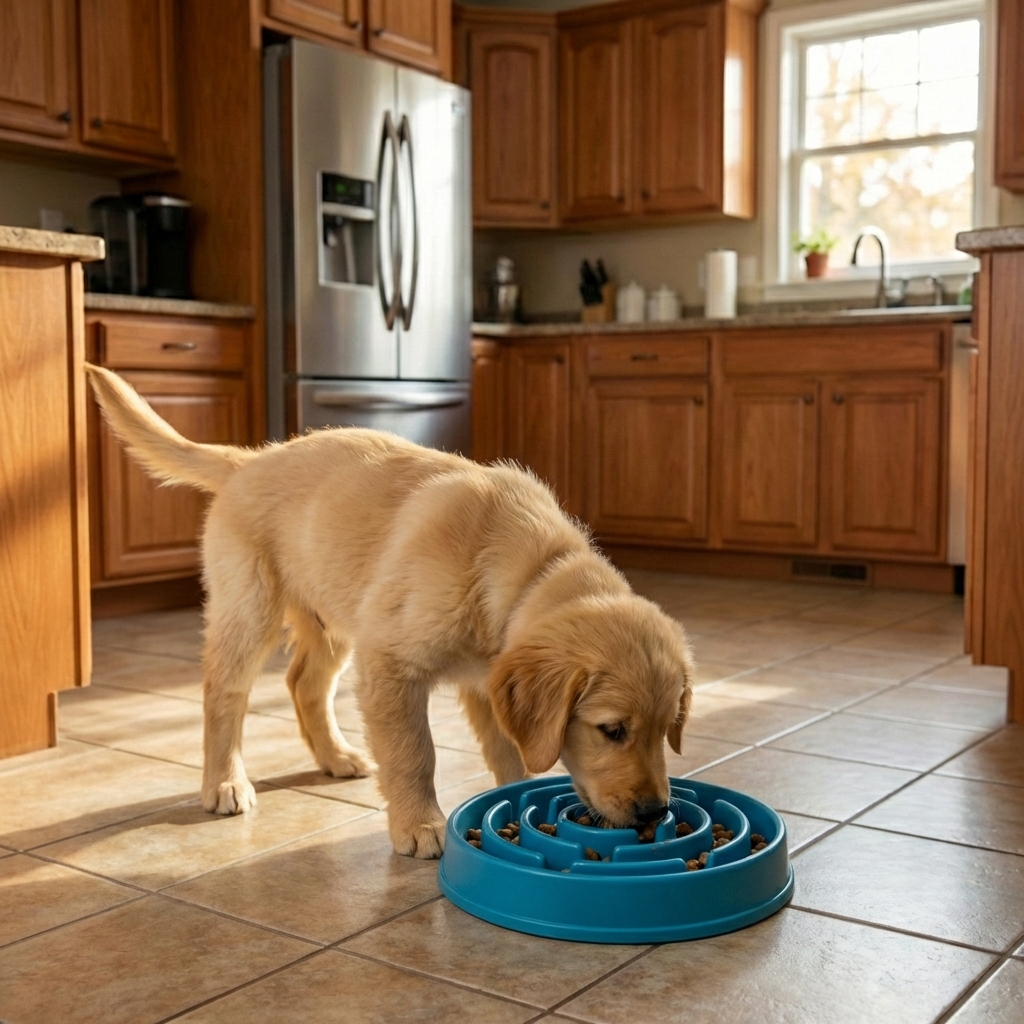
- Use a slow feeder bowl or food puzzle.
- Feed smaller, more frequent meals (your vet can advise what is appropriate for your puppy’s age).
- Separate puppies from other pets during feeding if competition causes gulping.
Transition foods slowly
When changing diets, aim for a gradual transition over about a week, unless your vet recommends otherwise.
Stay current on parasite prevention
Follow your vet’s deworming schedule and bring stool samples as recommended. Many parasites are very treatable, but they can make puppies miserable.
Puppy-proof like it is your second job
- Keep socks, underwear, kids’ toys, string, hair ties, and trash out of reach.
- Choose safe chews sized appropriately for your puppy.
- Supervise play, especially with plush toys that can be shredded.
Support gut health with consistency
Once your puppy is stable, consistent feeding routines, high-quality nutrition, and vet-approved probiotics for sensitive pups can help some dogs. If vomiting is recurring, it is worth discussing diet and possible food sensitivities with your vet.
Quick checklist before you call
Having these details ready helps your clinic triage faster.
- Age, breed, and weight
- Vaccination status and recent exposures (dog parks, daycare, new dogs)
- How many times your puppy vomited and when it started
- What the vomit looked like (color, food, foam, blood, foreign material)
- Any diarrhea, coughing, gagging, or lethargy
- Diet and any recent changes, treats, chews, or possible swallowed objects
- Any possible toxin exposure
The bottom line
One isolated vomit in an otherwise bright, playful puppy can be a “watch and wait” moment. Repeated vomiting, vomiting with diarrhea, signs of dehydration, suspected swallowed objects, repeated retching with little or no vomit, or any toxin concern should be treated as urgent. Trust your instincts. You know your puppy’s normal best, and your veterinary team would always rather you call early than wait too long.