
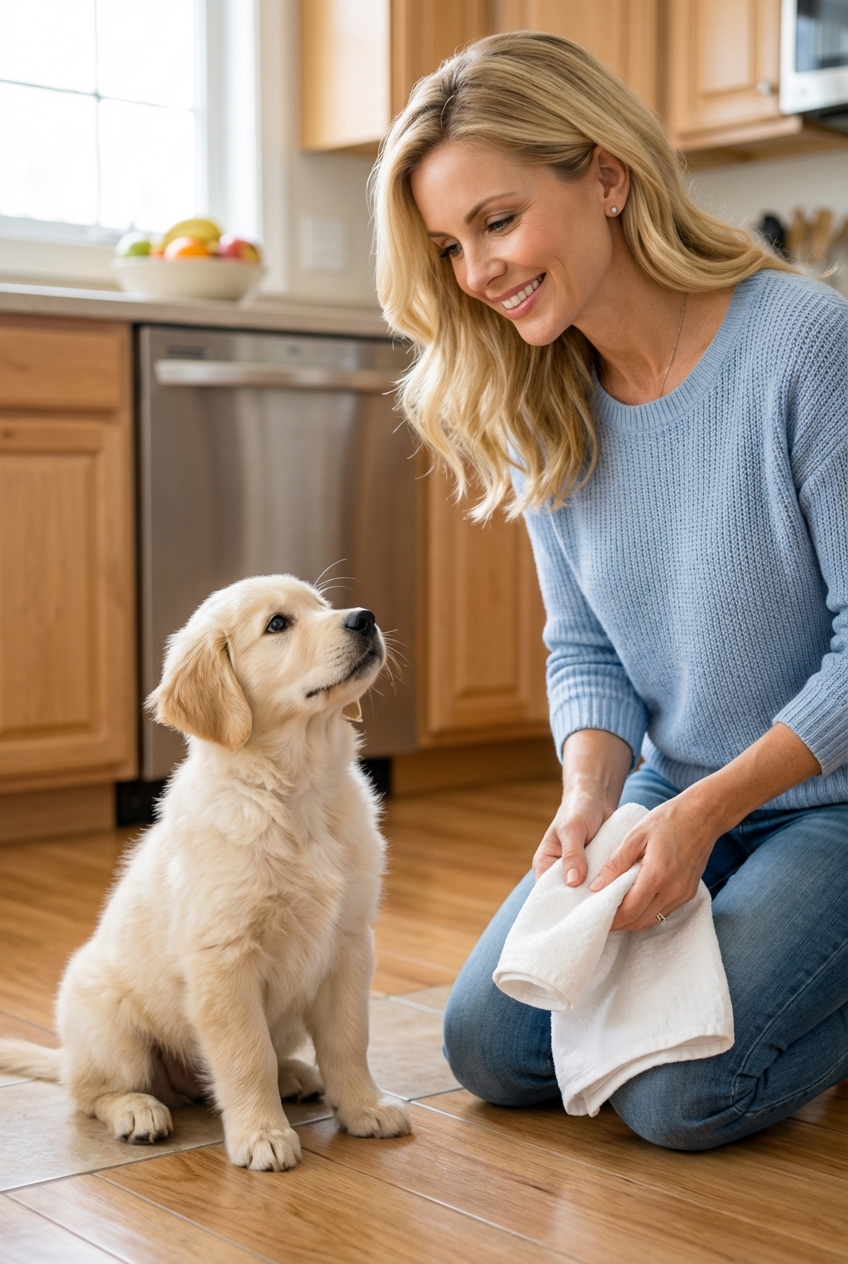
A practical, vet-informed guide to puppy vomiting: how to spot emergencies, interpret vomit types, common causes (parvo, parasites, toxins, blockage), and sa...
Article
•
Designer Mixes
Puppy Throwing Up: Quick Guide

Shari Shidate
Designer Mixes contributor
Seeing a puppy throw up can be scary, especially because little bodies can get dehydrated quickly and can also have trouble keeping their blood sugar stable. The good news is that many cases are mild and short-lived. The not-so-good news is that vomiting can also be an early sign of infection, a blockage, toxins, parasites, or other illness.
This quick guide will help you sort out what to do next, what is urgent, and how to support your pup safely while you contact your veterinarian.
First, vomiting or regurgitation?
They can look similar, but the cause and urgency can be different.
- Vomiting: usually involves nausea, retching, or heaving. It comes from the stomach (and sometimes the small intestine) and may include bile (yellow foam) or partially digested food.
- Regurgitation: often looks sudden and effortless, usually soon after eating or drinking. The material is often undigested and may be foamy saliva or a tube or sausage shape. It can point to an esophagus problem (including megaesophagus) or eating too fast. Repeated regurgitation is vet-urgent because of dehydration risk and the risk of breathing food or fluid into the lungs (aspiration pneumonia).
If you are unsure, take a quick video for your veterinarian. It helps more than you might think.
Red flags: emergency now
Quick rule: If your puppy looks unwell overall, is very young, or cannot keep water down, do not wait.
If any of the signs below are present, go to an emergency veterinarian now. Puppies can deteriorate quickly, especially small or toy breeds and puppies with vomiting plus diarrhea.
- Repeated vomiting, especially more than 2 to 3 times in a few hours, or vomiting that continues over several hours
- Blood in vomit (red or coffee-ground appearance)
- Severe lethargy, collapse, weakness, or unresponsive behavior
- Bloated or painful belly, constant gagging, or trying to vomit but nothing comes up
- Suspected foreign object swallowed (toy pieces, socks, corn cob, rocks)
- Possible toxin exposure (xylitol, chocolate, grapes or raisins, rodent bait, human medications, some plants)
- Vomiting plus diarrhea, especially if diarrhea is bloody
- Fever, pale gums, or signs of dehydration (tacky or dry gums, sunken eyes, reduced urination). Note: dehydration signs can be subtle in puppies and gum moisture is not a perfect test.
- Puppy is very young (under 12 weeks), very small or toy breed, or not fully vaccinated
If you suspect poison, call your veterinarian and also consider contacting ASPCA Animal Poison Control (888-426-4435) for immediate guidance. Fees may apply. (Always verify the most current number on the official ASPCA website before publication.)
Common causes
Here are frequent causes I see in the clinic setting, from simple to serious.
Eating too fast or overeating
Puppies inhale food like it is a sport. That can lead to vomiting right after meals. A slow feeder bowl and smaller, more frequent meals can help.
Diet change, rich treats, or garbage gut
Switching foods abruptly, table scraps, greasy treats, raiding the trash, or new chews can upset the stomach. Puppies do best with slow transitions over 7 to 10 days.
Motion sickness
Some pups vomit in the car, especially after eating. Your veterinarian can recommend safe options if it is frequent.
Parasites (including giardia)
Roundworms and other intestinal parasites can cause vomiting, diarrhea, pot belly, and poor growth. Giardia can also cause soft stool or diarrhea. A fecal test and appropriate deworming or treatment are key.
Infections (parvo risk)
Viral illnesses like parvovirus can begin with vomiting and lethargy, and can become life-threatening fast. Risk is higher in unvaccinated puppies and those exposed to high-dog-traffic areas. If your puppy is not fully vaccinated, take vomiting very seriously and contact your veterinarian right away. Keep your puppy away from other dogs until you have guidance and testing.
Foreign body or blockage
Puppies explore with their mouths. A partial or complete obstruction can cause repeated vomiting, loss of appetite, and belly pain.
Pancreatitis (less common, but possible)
It is less common in puppies than adult dogs, but it can happen, especially after very fatty foods. Signs can include vomiting, belly pain, and loss of appetite.
Stress
New home, new routine, or separation anxiety can stir up tummy trouble. Stress vomiting should still be discussed with your veterinarian, but it is often manageable with routine and gentle support.
Congenital or age-related issues
Very young puppies can have problems like reflux, a cleft palate, or other congenital conditions that may show up as regurgitation, coughing, or poor weight gain.
Home care for mild cases
Quick rule: Home care is only for puppies who are bright, alert, not dehydrated, and have vomited once or twice without other red flags.
Important: Do not fast very young puppies (especially under 12 weeks) or very small or toy-breed puppies without veterinary direction. They can be at risk for low blood sugar (hypoglycemia). When in doubt, call your veterinarian.
Step 1: Pause food briefly
- For older, healthy puppies with mild vomiting, removing food for a short period can help the stomach settle. Your veterinarian can tell you what is appropriate for your puppy’s age and size.
- Do not do prolonged fasting at home.
Step 2: Offer small amounts of fluid
- Offer small amounts of water frequently. If your puppy gulps and vomits, try 1 to 2 teaspoons every few minutes, then gradually increase.
- Some puppies do better with small licks of ice chips.
- Some veterinarians may recommend an unflavored pediatric electrolyte solution in small amounts, but use this only if your veterinarian approves.
Do not force water. If your puppy cannot keep even small sips down, contact your veterinarian promptly.
Step 3: Reintroduce a bland meal
Once your puppy has gone several hours without vomiting and is acting fairly normal, offer a small bland meal.
- Best option: a veterinary gastrointestinal puppy diet, if you have access to one
- Short-term option (24 to 48 hours unless your veterinarian advises otherwise): plain boiled chicken breast (or lean ground turkey) plus plain white rice
Start with a small portion, then feed small meals every 4 to 6 hours. Transition back to the regular puppy food slowly over several days, as tolerated (some pups do fine in 2 to 3 days, others need closer to 5 to 7).
Step 4: Skip risky add-ons
- No fatty foods
- No bones, rawhide, or new chews
- No milk or heavy dairy
- Avoid supplements and “home remedies” unless your veterinarian recommends them (including pumpkin, probiotics, or herbal products)
- Avoid human medications like Pepto-Bismol, ibuprofen, or acetaminophen unless your veterinarian specifically instructs it. Bismuth subsalicylate (Pepto-Bismol) can be risky in some situations and can mask signs of gastrointestinal bleeding.
What to track
When you call your veterinarian, these details help them triage quickly and accurately.
- How many times your puppy vomited and over what time period
- What it looked like (food, foam, yellow bile, mucus, blood)
- Any diarrhea, coughing, gagging, or repeated regurgitation
- Energy level and appetite changes
- What your puppy ate in the last 24 hours (including chews, treats, trash access)
- Possible access to toxins, plants, or small objects
- Vaccination status and deworming history
- Urination (normal, reduced, or none)
If you can safely do so, bring a fresh stool sample to the appointment for parasite testing.
Prevention
- Feed puppy-appropriate food in measured portions, divided into 3 to 4 meals daily for young pups.
- Use a slow feeder if your puppy eats too fast.
- Transition foods slowly over at least a week.
- Puppy-proof your home: pick up socks, hair ties, kids’ toys, and anything chewable.
- Stay current on vaccines and deworming, and do routine fecal checks.
- Keep trash secure and avoid letting your puppy roam with “mystery snacks” outdoors.
If your gut says, “This isn’t normal for my puppy,” trust that instinct and call your veterinarian. Early care is almost always easier and less expensive than waiting.
When to call your veterinarian
Quick rule: If vomiting or regurgitation keeps happening, or your puppy seems even a little “off,” call.
- Vomiting returns after bland meals
- Your puppy refuses food for more than one meal
- You notice weight loss, worms in stool or vomit, or ongoing soft stool
- Your puppy is on medications or has a known medical condition
- Any vomiting or repeated regurgitation in a very young or unvaccinated puppy
Vomiting is a symptom, not a diagnosis. Your veterinarian may recommend a fecal test, parvo testing, x-rays, or bloodwork based on your puppy’s age, vaccination status, and exam findings.