Hands-off slow cooker dog food for busy owners: 3 easy recipes (chicken/rice, turkey/sweet potato, beef/pumpkin) plus calcium guidance, safe ingredients, por...
Article
•
Designer Mixes
Puppy Teething Care and Training Tips

Shari Shidate
Designer Mixes contributor
Puppy teething can feel like living with a tiny, adorable piranha. One day your puppy is cuddly, and the next they are chewing your shoelaces, chair legs, and fingers. The good news is this stage is normal, temporary, and very manageable when you combine smart teething relief with simple, consistent training.
As a veterinary assistant in Frisco, Texas, I have seen how much easier teething becomes when we focus on three things: safe chewing outlets, gentle mouth handling, and rewarding the behaviors we want. Let’s walk through what is happening in your puppy’s mouth and exactly what to do day to day.
What teething looks like
Puppies are born without visible teeth, but their teeth are developing under the gums. Those tiny baby teeth (called deciduous teeth) come in early, and then they start falling out as adult teeth erupt. That transition is when most of the intense chewing happens.
Typical timeline
- 3 to 6 weeks: baby teeth start to appear.
- Around 12 to 16 weeks: many puppies begin losing baby teeth (some start a bit later).
- About 4 to 6 months: adult teeth come in; chewing often peaks.
- Most by 6 to 7 months: adult teeth are usually in (42 total), with some breed-to-breed variation.
During this window you may notice drooling, mild gum bleeding, increased chewing, and occasional irritability. Many puppies also become more mouthy during play because their gums feel sore and pressure helps.
One quick note from the clinic: it is completely normal to never find baby teeth. Many puppies swallow them while eating or playing.

Safe teething relief
Your goal is to give your puppy something that is safe to chew, soothing on the gums, and interesting enough to beat your furniture. Rotate a few options so your puppy does not get bored.
Good chew choices
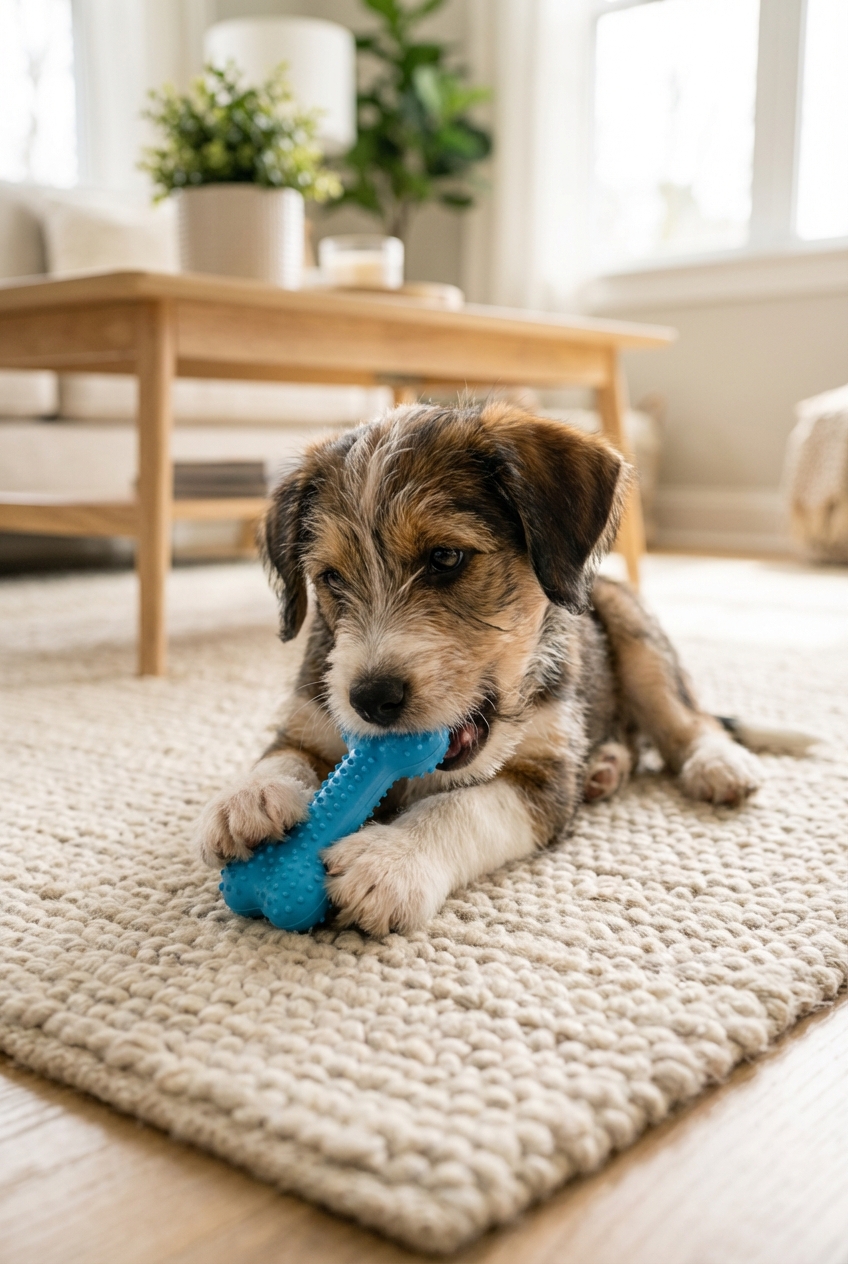
- Rubber chew toys: Look for durable rubber sized appropriately so it cannot be swallowed.
- Stuffable toys: A food-stuffed toy can keep a puppy busy and calm.
- Frozen wet washcloth: Wet a clean cloth, twist it, and freeze it. Supervise closely, remove loose threads, and take it away if it starts shredding.
- Chilled carrots: Many puppies love a cold, whole carrot. Supervise and take away small pieces if they break off.
- Dental chews (puppy-appropriate): Use veterinarian-recommended options when possible, and look for VOHC-accepted products where applicable. Not every dental chew is appropriate for every age or chewing style, so follow the package guidelines.
What to avoid
- Very hard chews: Antlers, hooves, hard bones, and very rigid chews can fracture developing teeth. A practical rule I share with owners: avoid chews that feel rock-hard and do not have any “give” when you press them. If you would not want it thumping your kneecap, it is probably too hard for a teething puppy.
- Cooked bones: They can splinter and cause serious injury.
- Small items: Anything small enough to be swallowed whole is a choking risk.
- Rawhide (especially for young puppies): Risk varies by size, processing, and how your puppy chews. Some products soften and shred into swallowable pieces, which can become a choking or blockage risk. If you use any chew like this, do it with close supervision and remove it before it gets small.
- Hard frozen objects: Skip ice cubes or rock-solid frozen items that can be hard on teeth. Cold, slightly flexible options are usually a better choice for sore gums.
Supervision matters as much as the chew itself. The most common “uh-oh” moment happens at the end, when the chew becomes a small piece. Swap it for a fresh toy before it gets tiny, and consider a chew holder for stick-style chews so the last inch does not become a gulp hazard.
If you are unsure whether a chew is safe, bring it to your veterinarian and ask. That quick question can prevent a broken tooth or a GI blockage.
Teach puppy not to bite
Teething is not an excuse for painful biting, but it is a reason to be patient and consistent. Puppies explore the world with their mouths, and they need clear guidance on what is okay to chew. It also helps if everyone in the household responds the same way every time.
Redirect and reward
This is my favorite approach because it is simple and evidence-based.
- Step 1: The moment teeth touch skin, calmly stop moving your hand.
- Step 2: Present a toy at mouth level as your puppy turns toward it (instead of pushing it into their face).
- Step 3: The second they chew the toy, praise softly and reward with a tiny treat.
Over time your puppy learns: “Chewing people makes the fun stop. Chewing toys makes good things happen.”
Try a gentle “ouch” (optional)
Some puppies respond to a soft “ouch” and pause. If your puppy gets more excited, skip the “ouch” and move straight to redirecting or a short time-out.
Calm time-outs
If your puppy is overstimulated and keeps biting, do a brief reset.
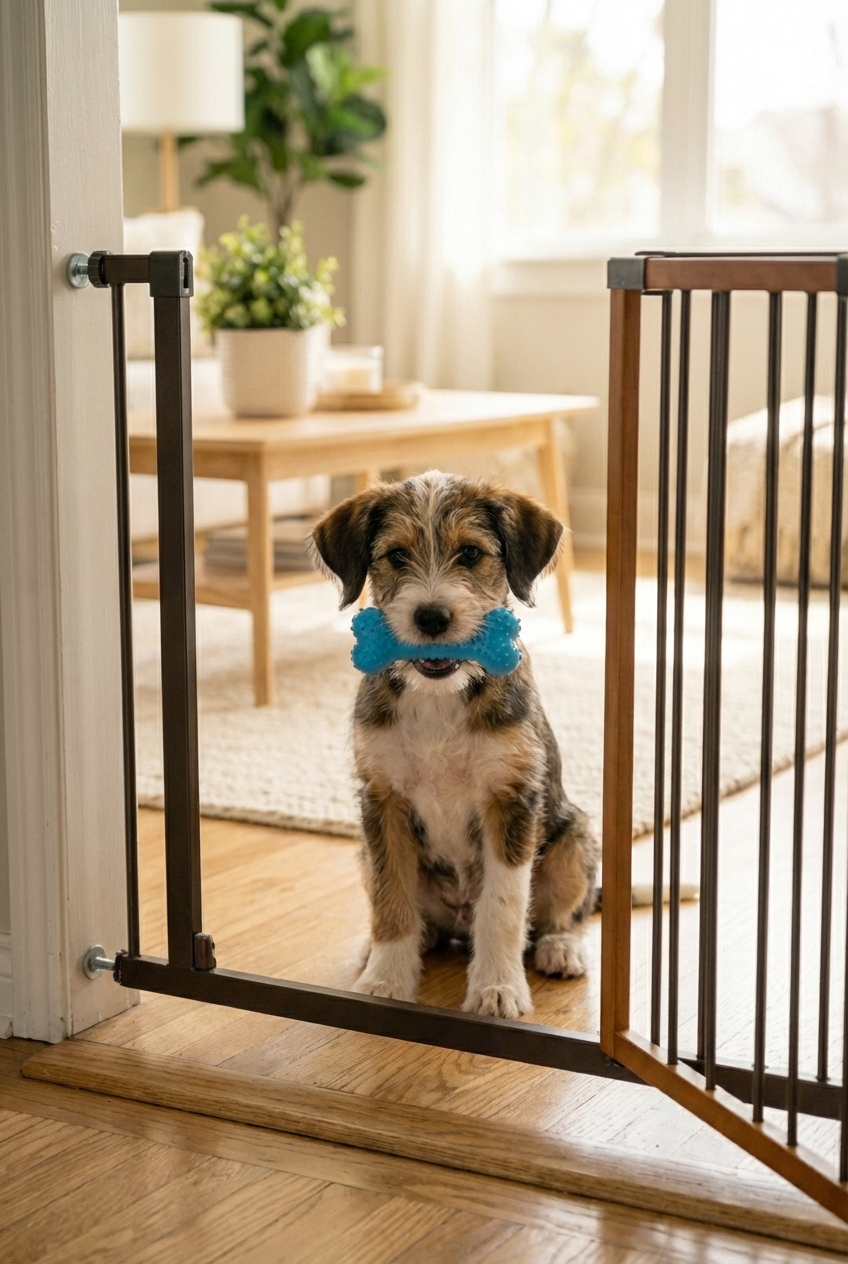
- Quietly stand up and step behind a baby gate for 20 to 60 seconds.
- No scolding, no chasing, no big reaction.
- Return and immediately offer an appropriate chew toy.
This works because it removes the reward of attention without creating fear.
Hands-safe play tips
- Use long tug toys: A longer tug keeps your hands farther from sharp little teeth.
- Skip tug when they are amped: If your puppy is grabbing hands or escalating, switch to a stuffed toy, a scatter of kibble for sniffing, or a quick nap break.
A simple daily routine
Many “biting problems” are actually an exhausted or under-stimulated puppy. A routine keeps their brain and body satisfied, which reduces frantic mouthing.
Sample day
- Potty break right after waking, after meals, and after play.
- 5 to 10 minutes of training (sit, touch, leash practice). Keep it upbeat.
- Enrichment feeding using a puzzle feeder or stuffed toy.
- Play session with tug toys, gentle fetch, or short sniff walks.
- Nap time in a crate or safe pen. Puppies need lots of sleep.
- Chew time with a safe chew while you relax nearby.
If your puppy becomes extra bitey in the evening, it often means they need an earlier nap, not more play.
Mouth care basics
Teething is a great time to teach your puppy that mouth handling is safe. This pays off for tooth brushing, grooming, and vet exams later.
Mouth handling (60 seconds)
- Touch the chin, reward.
- Lift the lip for one second, reward.
- Touch a tooth, reward.
- Stop before your puppy gets wiggly.
Do this once daily. Tiny sessions build trust faster than long ones.
Brushing basics
- Use dog-safe toothpaste only. Human toothpaste can be unsafe if swallowed.
- Start with a finger brush or soft puppy toothbrush.
- Brush a few teeth at first and slowly increase.
Even brushing 3 times per week can make a big difference long-term, especially for small breeds and mixes prone to tartar.
Common questions
Is a little bleeding normal?
Small spots of blood on toys can be normal when baby teeth fall out. However, heavy bleeding, a foul odor, swelling, or obvious pain warrants a vet visit.
My puppy swallowed a baby tooth. Should I worry?
Usually not. Many puppies swallow baby teeth while eating or playing. Contact your veterinarian if your puppy is gagging, vomiting, or acting unwell.
Do teething gels help?
Be cautious. Many over-the-counter gels are not recommended for pets. Cold chews and safe chew toys are typically better choices. When in doubt, ask your veterinarian before using any oral gel.
When to call your vet
Most teething is routine, but some situations need professional guidance.
- Broken tooth or a tooth that looks chipped.
- Persistent bad breath, pus, or swollen gums.
- Not eating for more than a meal or two, especially in small puppies.
- Vomiting or diarrhea, which can happen if a puppy chews and swallows unsafe materials.
- Retained baby teeth (an adult tooth coming in while the baby tooth stays). Retained deciduous canines are especially common in small breeds and may need removal to prevent crowding.
If you are ever unsure, take a clear photo of your puppy’s mouth and send it to your veterinary clinic. We would much rather answer a quick question early than see a painful problem later.
Bottom line
Puppy teething is a season, not a life sentence. With the right chews, a calm redirect-and-reward plan, and a routine that includes naps, you can protect your hands, your home, and your puppy’s confidence.
Start small, stay consistent, and celebrate progress. A puppy who learns what to chew now grows into an adult dog with great manners and a healthy mouth.