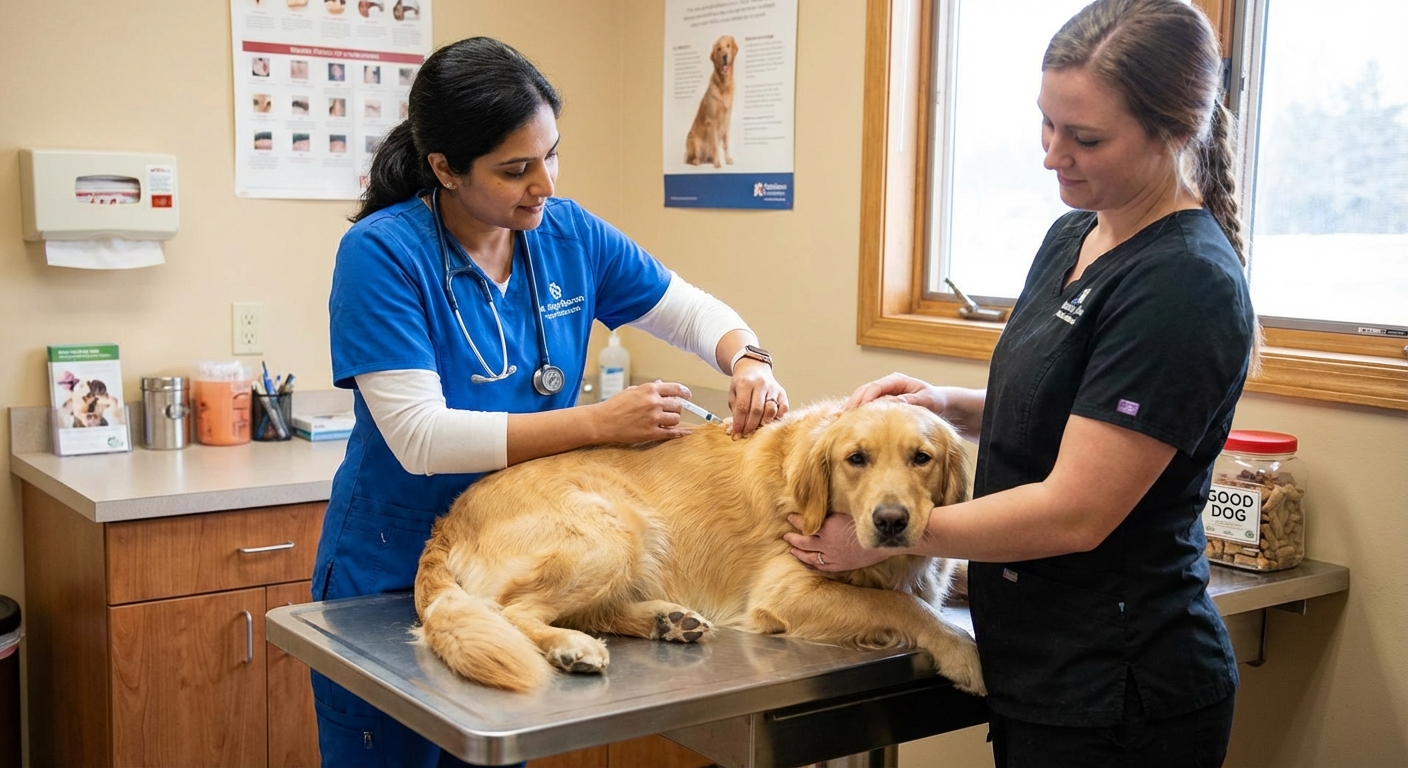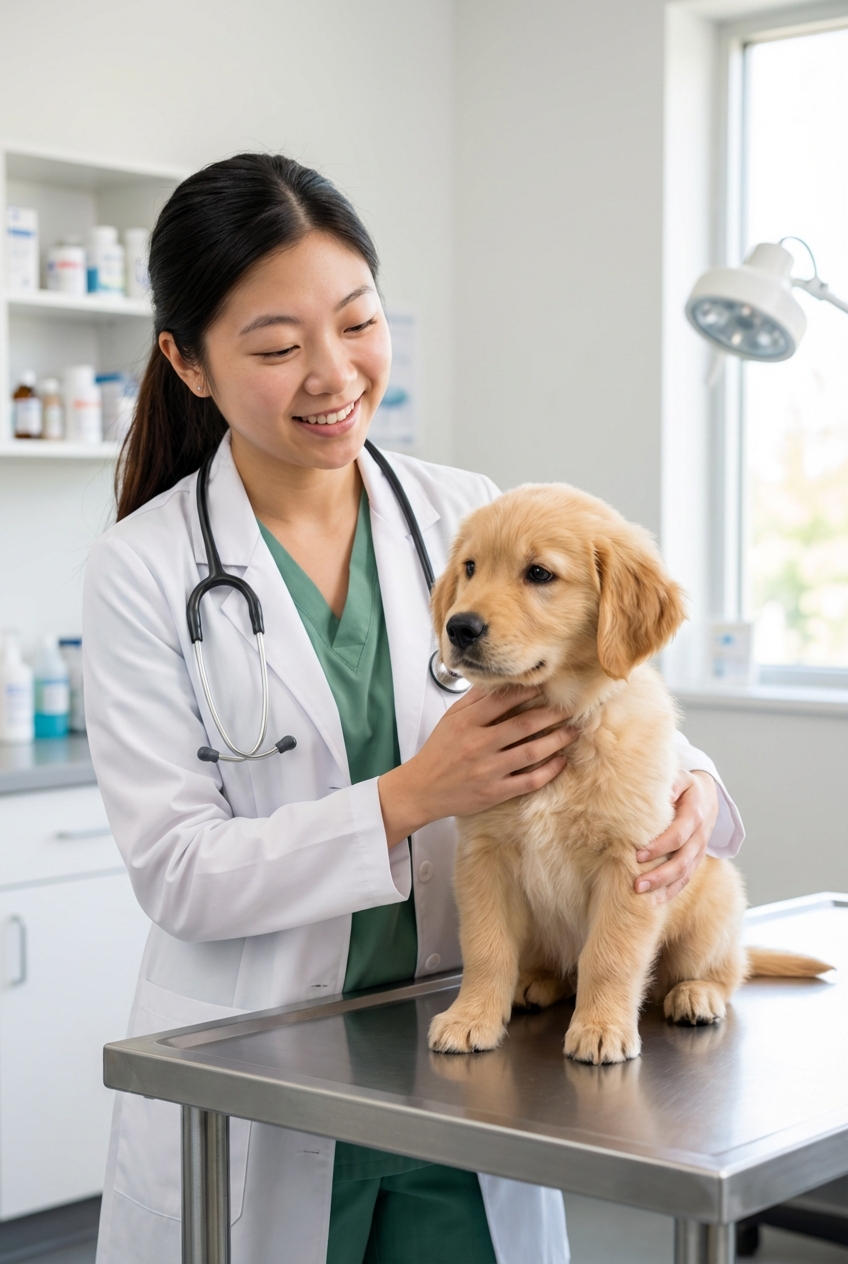
Use this vet-informed puppy vaccine timeline to stay on track with DHPP and rabies, add lifestyle vaccines as needed, and learn safe socialization plus what ...
Article
•
Designer Mixes
Puppy Shots: Fun Facts and Smart Tips

Shari Shidate
Designer Mixes contributor
Bringing home a puppy is pure joy, until you realize how many to-do items pop up all at once. Vaccines are one of the biggest, and they can feel confusing because there are multiple shots, multiple visits, and lots of opinions online.
As a veterinary assistant here in Texas, I like to keep it simple and evidence-based. Vaccines protect puppies during their most vulnerable months, when their immune systems are still learning what to fight and how to fight it.
Fun fact: Puppies are not born fully protected
Puppies get early protection from their mom’s first milk, called colostrum. It contains antibodies that help guard against disease in those first weeks. The tricky part is that these same antibodies can also block vaccines from working too early.
This is why puppies get a series of vaccines, not just one. The goal is to “catch” the moment when maternal antibodies fade enough for your puppy’s immune system to respond strongly.
Core vs lifestyle vaccines
Veterinarians generally split vaccines into two categories. Knowing the difference helps you make confident, budget-friendly choices.
Core vaccines (for nearly all puppies)
- DHPP (distemper combo), sometimes listed as DA2PP: Protects against distemper, adenovirus (hepatitis), parvovirus, and parainfluenza.
- Rabies: Required by law in most U.S. states (including Texas) and essential for public health.
Common lifestyle vaccines (based on risk)
- Bordetella (kennel cough): Often recommended for daycare, grooming, training classes, and boarding. It can be given oral, intranasal, or injectable, and timing can vary by product and facility requirements.
- Leptospirosis: Spread through urine of wildlife and standing water. It is often recommended in many parts of Texas due to regional exposure risk.
- Canine influenza: Consider if your puppy is around lots of dogs, travels, or outbreaks are reported locally. Most vaccines require an initial two-dose series.
- Lyme: Region-dependent and based on tick exposure.
Your best guide is your puppy’s real life: where you walk, where they play, if you travel, and what local diseases your clinic is seeing.
Typical puppy vaccine timeline
Every clinic has small variations, and your veterinarian will tailor timing to your puppy’s health and history. But most puppy plans follow a familiar rhythm.
In general, the distemper combo vaccine (DHPP) is given every 3 to 4 weeks until your puppy reaches at least 16 weeks of age.
- 6 to 8 weeks: First DHPP (sometimes earlier in shelters or high-risk areas)
- 10 to 12 weeks: DHPP booster, discuss lifestyle vaccines (often lepto or bordetella)
- 14 to 16 weeks: DHPP booster. Many puppies finish the series here.
- 16 to 20 weeks (sometimes): An extra DHPP booster may be recommended if your puppy is high-risk, or if the last DHPP dose happened before 16 weeks.
- 12 to 16 weeks: Rabies (depends on local law and clinic protocol)
- 1 year later: Booster visit, then vaccines are typically spaced out based on product labeling and your vet’s guidance
Also worth knowing: some lifestyle vaccines are a two-dose starter series (like lepto and canine influenza), then boosters are often due yearly (or based on local risk and product guidance).
If you adopt a puppy with an unknown history, don’t panic. Your vet can treat them as unvaccinated and get them protected safely.
Myth: One shot is enough
With puppies, that is rarely true. Parvovirus is a perfect example of why. It is extremely contagious, it can survive in the environment for a long time, and it can be life-threatening, especially to young dogs.
The vaccine series is designed to build immunity step-by-step. Skipping boosters can leave a puppy with a false sense of security.
Safe socialization
Socialization is not optional, and it is time-sensitive. The key is choosing lower-risk experiences until your puppy finishes their initial vaccine series.
Lower-risk ideas
- Invite a few healthy, fully vaccinated adult dogs over for short, calm playdates.
- Carry your puppy at outdoor shopping areas so they see sights and hear sounds without touching the ground.
- Practice gentle handling at home: paws, ears, mouth, brushing, nail trims.
- Enroll in a reputable puppy class that requires vaccine documentation and cleans thoroughly.
Higher-risk places to avoid early on
- Dog parks
- Pet store floors
- High-traffic community potty spots in apartments
- Areas with unknown dogs and unknown vaccination status
After-vaccine expectations
Most puppies do great. Mild, short-lived side effects can happen and are usually not dangerous.
Common, mild reactions
- Sleepiness for 12 to 24 hours
- Temporary soreness at the injection site
- Small bump at the vaccine site that fades over time
When to call your vet right away
- Vomiting or diarrhea that starts soon after the appointment
- Facial swelling, hives, intense itchiness
- Difficulty breathing or collapse
- Severe lethargy that lasts longer than a day
Tip: If your puppy ever has a reaction, tell your vet at the next visit. Clinics can often adjust vaccine timing, separate vaccines across visits, or pre-medicate when appropriate.
If you are worried about “too many vaccines at once,” you are not alone. It is common to give more than one vaccine in a visit, but your vet can help prioritize and split them up if your puppy is tiny, sensitive, or has a history of reactions.
Tips for smoother visits
- Bring high-value treats and feed throughout the visit to build positive associations.
- Arrive a few minutes early so your puppy can settle and sniff calmly.
- Ask about fecal testing and deworming. Puppy visits often include parasite checks, and it is a very normal part of preventative care.
- Ask about parasite prevention at the same time. Fleas, ticks, and intestinal parasites can stress a puppy’s body and complicate health.
- Keep a vaccine folder (paper or photos on your phone). Boarding, grooming, training, and travel often require proof.
- Schedule strategically if possible. Avoid major stressors on the same day, like long car rides or a brand-new daycare.
Quick Q and A
Can vaccines cause the disease?
In healthy puppies, core vaccines like DHPP are not expected to cause the diseases they prevent. They train the immune system to recognize threats without triggering full-blown illness. Serious reactions are rare, but they can happen, and puppies with certain immune system problems may need a customized plan.
Do indoor puppies still need vaccines?
Yes. Parvo can be tracked indoors on shoes. Rabies laws still apply, and you never know when an emergency trip or unexpected exposure might happen.
What if we miss a booster appointment?
Call your vet and get rescheduled. Many times, your puppy can simply continue the series with an adjusted timeline.
The bottom line
Puppy immunizations are not just “shots.” They are a short-term plan that helps build long-term protection, especially against diseases like parvo and distemper that can be devastating in young dogs.
If you are ever unsure what your puppy needs, bring your records and ask your veterinarian to walk you through a risk-based plan. You do not need to memorize everything. You just need a schedule you can stick to.