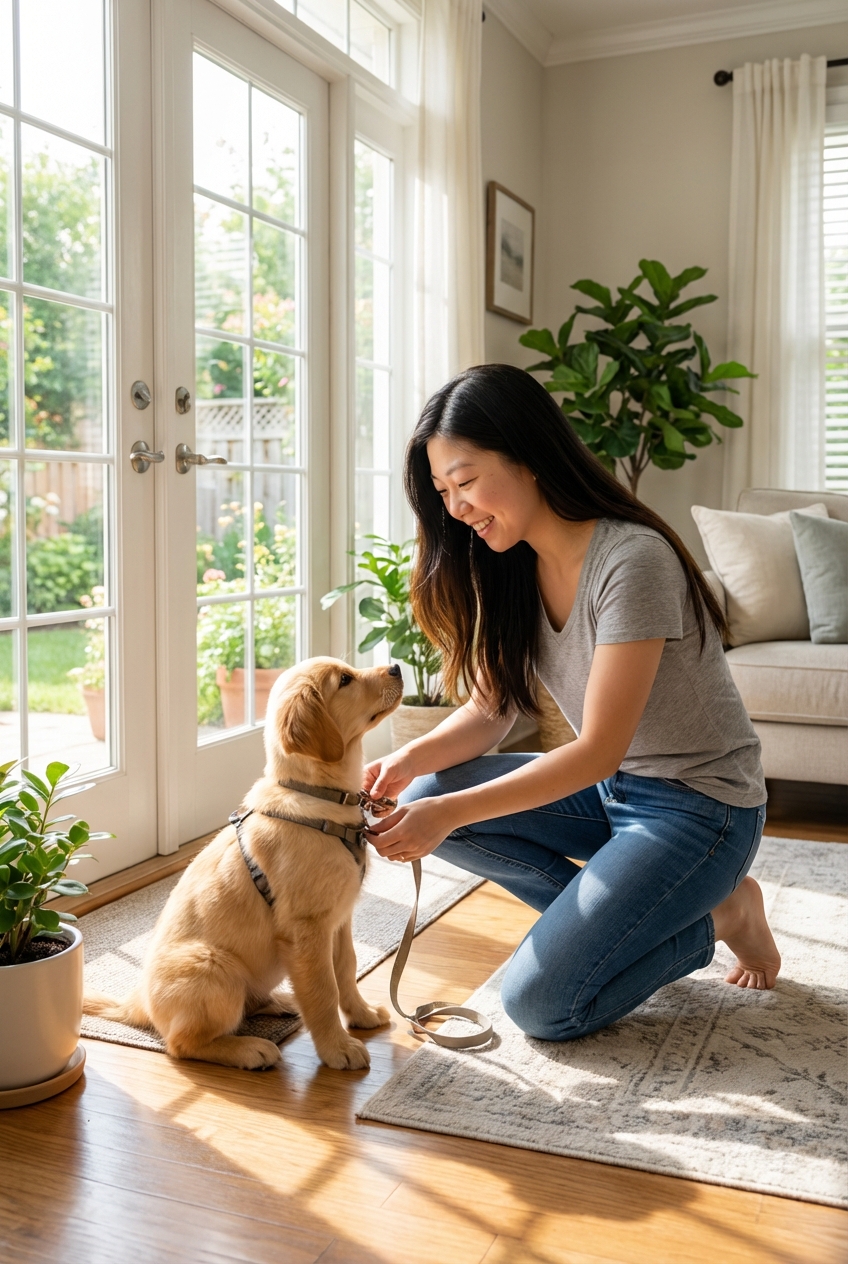
Learn how to potty train your puppy with a proven routine: timing, supervision, crate and pen setup, “go potty” cue training, accident cleanup, and mista...
Article
•
Designer Mixes
Puppy Potty Training Care Tips

Shari Shidate
Designer Mixes contributor
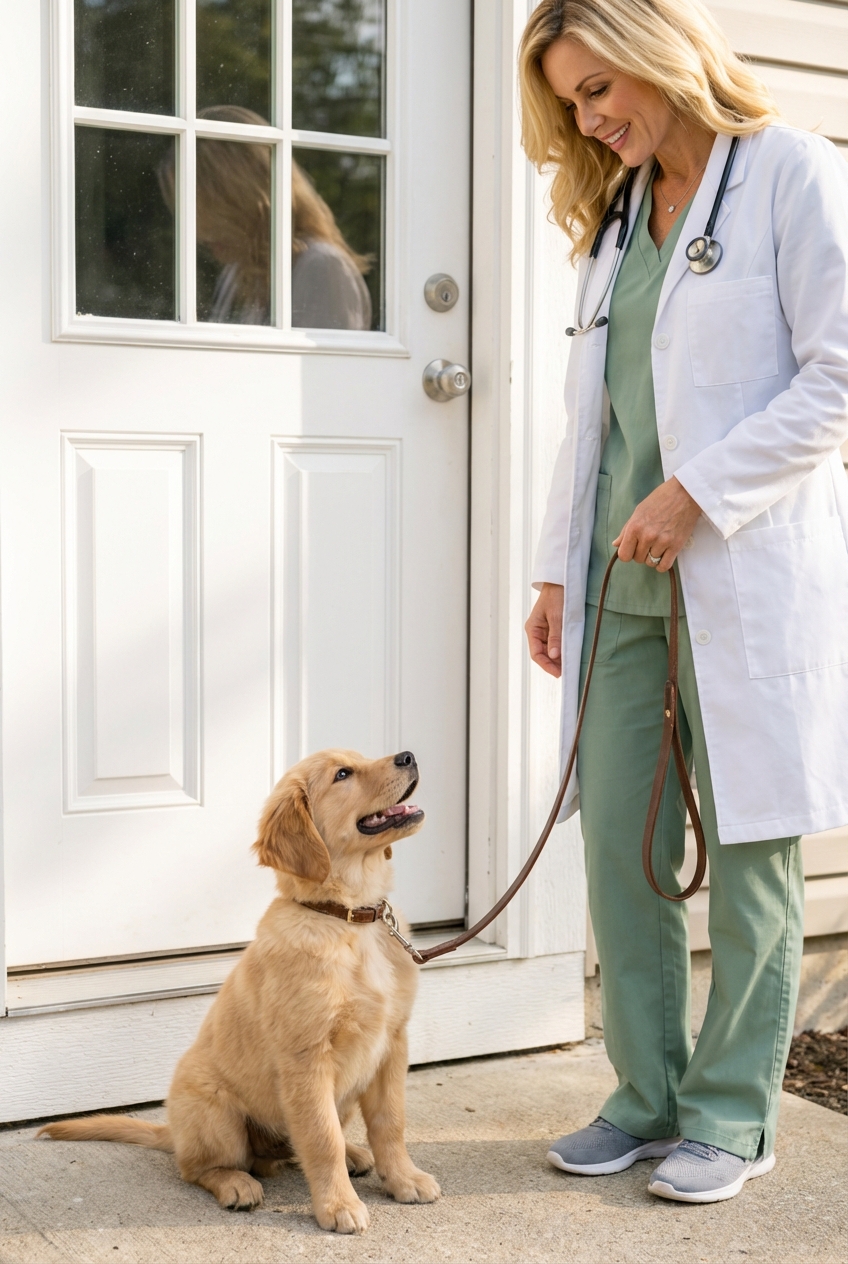
Potty training is not just about teaching your puppy where to go. It is about setting their little body clock up for success, protecting your floors, and helping your pup feel safe and confident in a brand new home. As a veterinary assistant in Frisco, Texas, I can tell you this: most “accidents” happen because a puppy simply wasn’t taken out soon enough, or the plan wasn’t consistent.
The good news is that potty training is absolutely teachable. When you focus on timing, supervision, and rewards, you can see real progress in days, and strong habits in a few weeks.
Start with realistic expectations
Puppies don’t have the bladder control of adult dogs. Very young pups are also learning a whole new routine, new food, new water schedule, and new people. That is a lot for their nervous system and digestive system.
How long can a puppy hold it?
A common rule of thumb is age in months plus one hour as a maximum for many puppies. For example, a 3-month-old puppy might hold it about 4 hours. But “maximum” is not the same as “comfortable,” and daytime, awake holds are often shorter. Many puppies need to go out more often, especially after eating, drinking, playing, or waking up.
- 8 to 10 weeks: about every 30 to 60 minutes when awake
- 10 to 16 weeks: about every 1 to 2 hours when awake
- 4 to 6 months: about every 2 to 4 hours when awake
Nighttime is often easier than daytime because puppies are asleep and not eating or drinking. Still, many young pups need one overnight potty break at first. If you’re unsure what is realistic for your puppy’s age or breed size, your veterinarian can help you set a schedule that fits.
Set up your home for success
Potty training goes smoother when your puppy can’t wander off and silently have an accident. The goal is gentle management, not punishment.
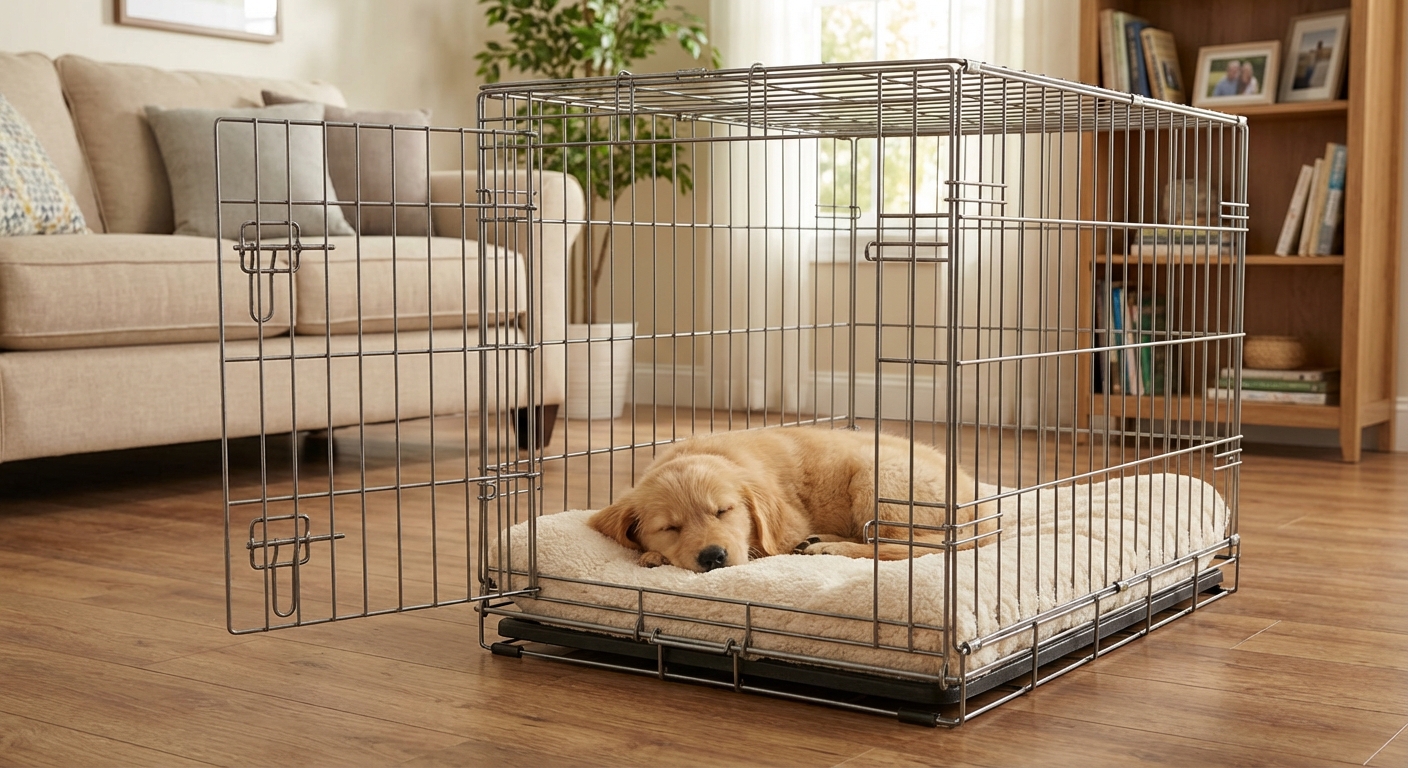
Use a crate and a puppy-safe zone
A properly sized crate helps because most puppies avoid soiling the area where they sleep. Choose a crate that is large enough to stand up, turn around, and lie down comfortably, but not so large that your puppy can use one corner as a bathroom.
When your puppy is not crated, use:
- baby gates to block off extra rooms
- a playpen for a supervised “puppy zone”
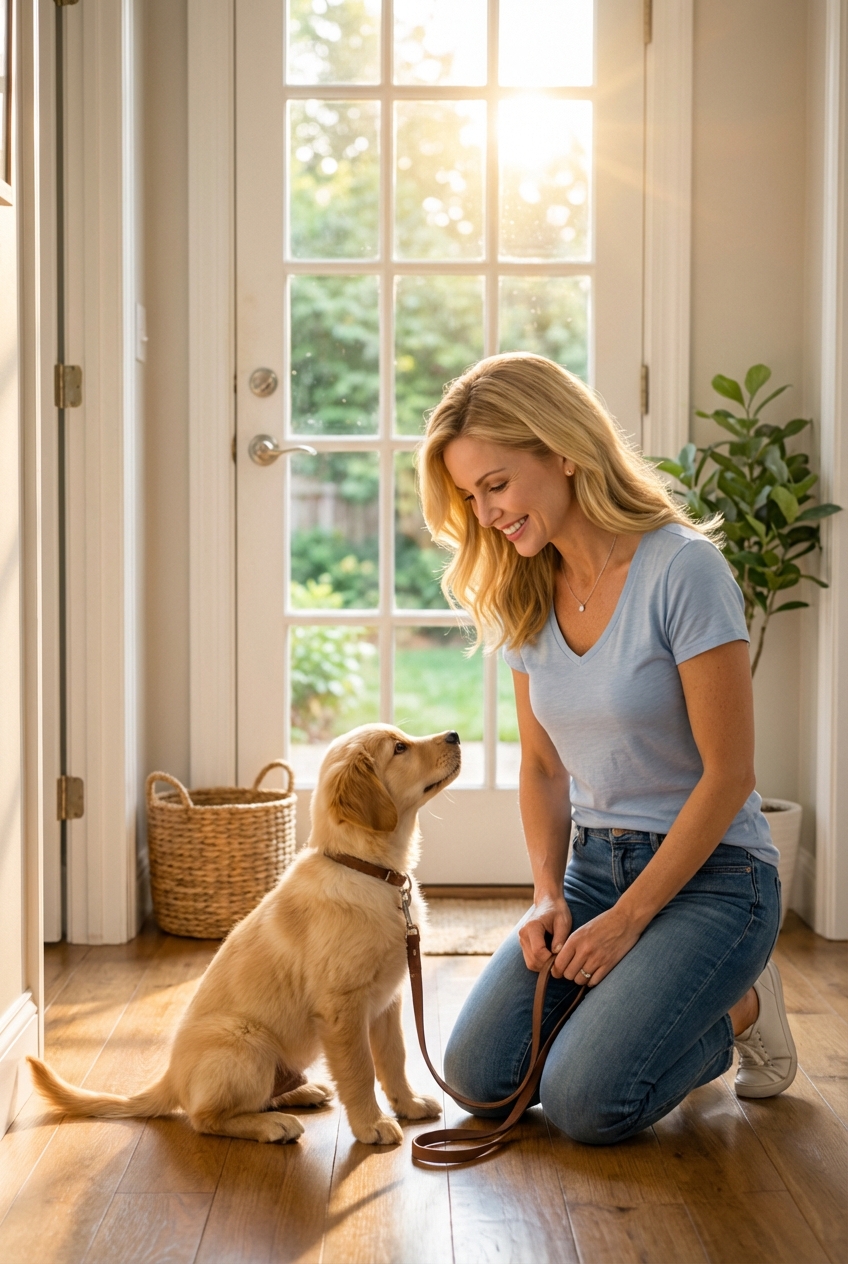
- leash tethering so your puppy stays close to you
Build a simple potty schedule
Puppies thrive on routine. A schedule reduces accidents because you stop guessing and start predicting.
Take your puppy out at these key times
- first thing in the morning
- after every meal
- after drinking a lot of water
- after play sessions or zoomies
- after naps
- right before bedtime
- any time you move them from crate or pen to freedom
Keep meals consistent
Feeding at regular times usually creates more regular poops. If you free feed all day, potty timing is harder. Talk to your veterinarian about the best feeding schedule for your puppy’s age and breed size.
Choose one spot and one cue
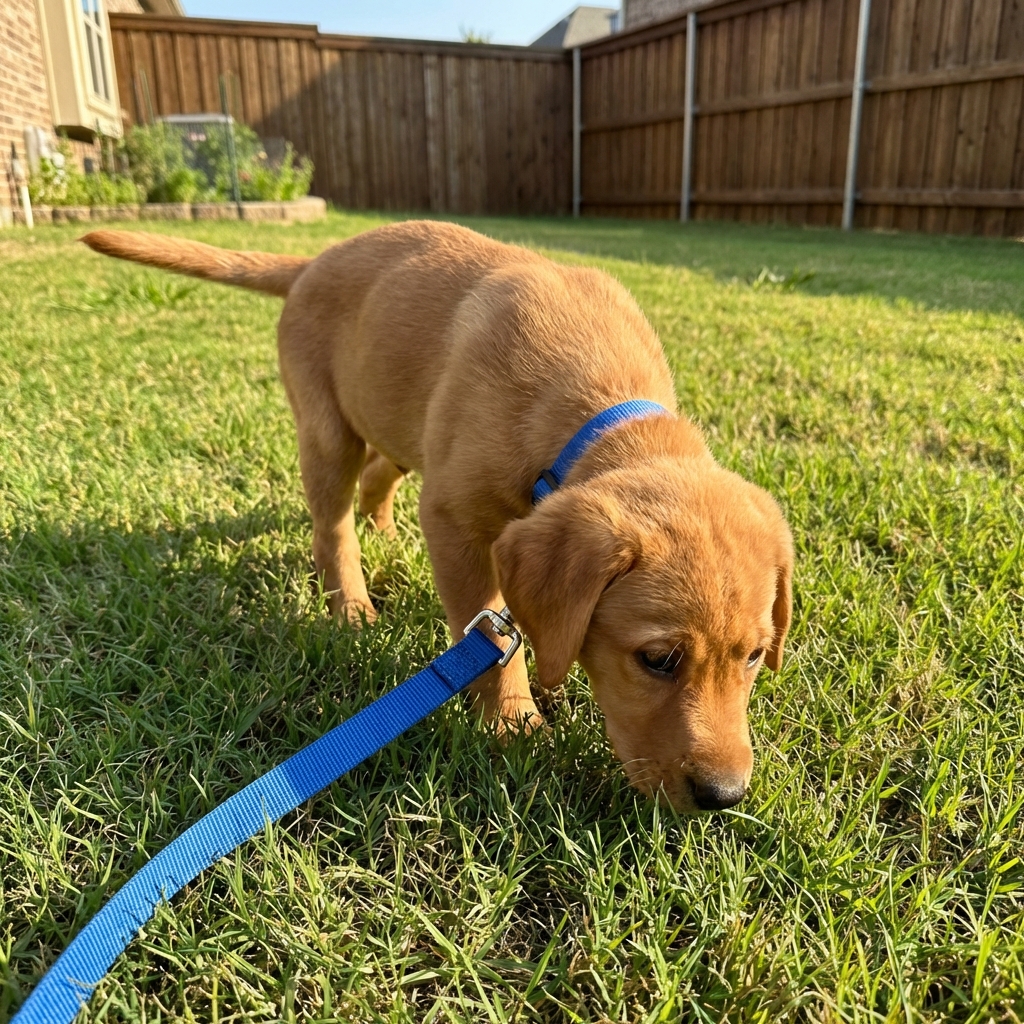
Consistency matters. Pick one outdoor area and take your puppy there on a leash during training. This reduces distractions and helps your puppy connect the dots.
Use a cue phrase
Choose a simple phrase like “Go potty” or “Do your business.” Say it once or twice while your puppy is sniffing and circling. When they finish, calmly praise and reward.
Tip: If your puppy gets too distracted outside, stand still and be boring for a minute. Sniffing is part of the process, but wandering and playing can delay the potty.
Reward the right moment
In potty training, timing is everything. Reward immediately after your puppy finishes peeing or pooping in the correct spot.
- Use high-value treats that your puppy loves.
- Praise warmly, but don’t get so excited that your puppy stops mid-stream.
- Give the treat outside, not after you come back in. Your puppy should learn that the outdoor potty spot is where good things happen.
If your puppy potties outside, consider giving them a few minutes of extra yard time as a bonus. For many pups, sniffing time is a powerful reward.
When they won’t go outside
This is one of the biggest reasons puppies have an accident the moment they come back in. If your puppy doesn’t potty within a few minutes, assume they still need to go.
Try this simple loop
- Go outside for 3 to 5 minutes (same spot, on leash).
- If they don’t go, come back in and place them in the crate or a small puppy-safe zone for 10 to 15 minutes.
- Go right back out and try again.
It feels repetitive, but it prevents the “out for 30 seconds, then pee on the rug” pattern.
What to do when an accident happens
Accidents are part of the process. They are information. They tell you your puppy needed more supervision, more frequent breaks, or a tighter schedule.
If you catch your puppy in the act
- Interrupt gently with a neutral sound like “oops.”
- Pick them up or quickly guide them outside.
- If they finish outside, reward.
If you find it later
Don’t scold. Your puppy won’t connect your reaction to something that happened minutes ago. Also, harsh corrections can create anxiety or even submissive urination in some puppies, which makes training harder. Instead, clean thoroughly and adjust the plan.
Clean with an enzyme cleaner
Use an enzymatic cleaner designed for pet urine. Regular household cleaners may remove the stain but leave odor molecules behind that tell your puppy, “This is a bathroom.”
Pee pads vs. outdoors
Pee pads can be helpful in specific situations, like high-rise living, extreme weather, or medical restrictions before vaccines are complete. But pads can also teach “it is okay to potty indoors,” which can slow outdoor training for some puppies.
If you use pads, consider using them as a temporary bridge and plan your transition:
- move the pad gradually closer to the door over several days
- then move it just outside
- then remove it once your puppy is reliably going outdoors
Placement tip: Avoid putting pads on rugs, carpet, bath mats, or other absorbent surfaces. Those textures can feel like an “approved bathroom” later.
If you’re crate training and focusing on outdoor potty habits, many families skip pads altogether.
Expand freedom slowly
More freedom is earned, not granted all at once. If your puppy is having accidents, their world is too big right now.
A simple rule
- Start with one small area you can supervise.
- Add one room at a time after several accident-free days (and only if your puppy is asking to go out or reliably going on schedule).
- If accidents return, reduce the space again and tighten the schedule for a few days.
Health and care factors
Sometimes potty training struggles aren’t a behavior problem. They are a body problem. Keep an eye out for signs that your puppy needs a vet visit.
Call your veterinarian if you notice
- frequent urination with very little output
- straining or discomfort
- blood in urine or stool
- diarrhea lasting more than 24 hours, or any diarrhea in a very young puppy that seems weak or dehydrated
- accidents that suddenly start after progress
- excessive thirst or sudden increased urination
Urinary tract infections, intestinal parasites, diet changes, and stress can all affect potty habits. Your puppy’s vaccine schedule also matters because it impacts where it is safe to potty and socialize. In general, avoid high-traffic dog areas (like dog parks and busy pet store sidewalks) until your veterinarian says your puppy is protected. Many puppies can still potty in a private yard or other low-risk spot, but ask your vet what is safest for your neighborhood.
A simple 7-day reset
If you feel like things are messy or inconsistent, this reset plan can get you back on track.
Days 1 to 3
- Take out every 30 to 60 minutes when awake.
- Leash to the same spot each time.
- Treat immediately after successful potty.
- Crate or supervise closely indoors.
Days 4 to 7
- Gradually stretch time between breaks by 15 minutes if your puppy is staying accident-free.
- Keep the same cue phrase and reward routine.
- Track potty times in your phone notes to spot patterns.
Most families see fewer accidents quickly when they tighten supervision and reward the correct behavior consistently.
Reminders for humans
Potty training is a relationship skill. Your puppy is learning to trust your guidance, and you are learning their signals.
Look for early signs like sniffing, circling, sudden wandering away, or abruptly stopping play. When you see those signs, take your puppy out right away. Over time, you’ll start recognizing your pup’s “I need to go” language, and your puppy will learn how to ask.
If you are tired, that’s normal. Puppyhood is a season. A consistent plan now creates a calmer, cleaner life for years.