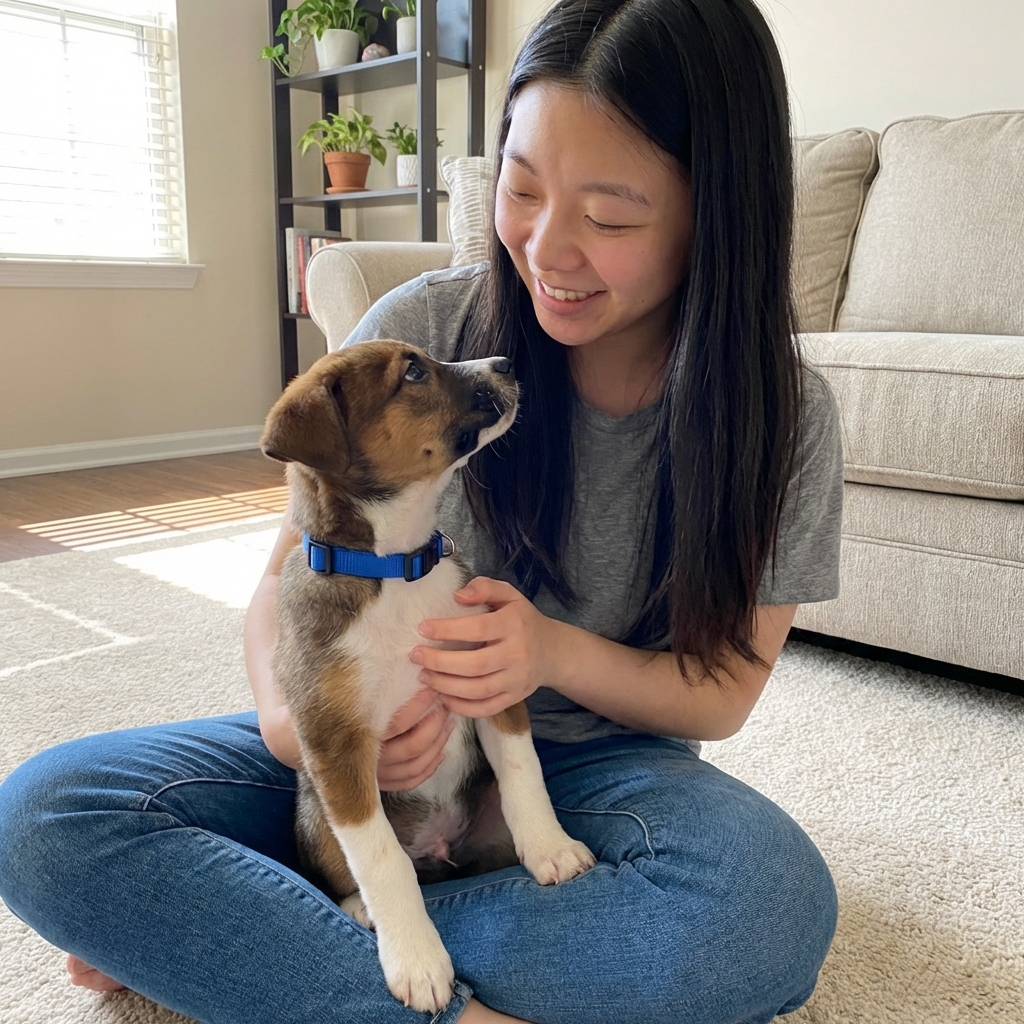
Teach your dog their name with a simple, reward-based Name Game: name → look → mark → treat. Includes setup tips, mistakes to avoid, and fixes for igno...
Article
•
Designer Mixes
Puppy Names Facts and Insights

Shari Shidate
Designer Mixes contributor
Picking a puppy name feels like pure fun, until you realize you are going to say it hundreds of times a week at the park, at the vet, and in your living room while holding a chewed-up sock. As a veterinary assistant in Frisco, Texas, I can tell you this: a name is not just a cute label. It is a training tool, a safety cue, and a little window into your dog’s personality and your family’s style.
Below are trainer-informed, clinic-tested insights to help you choose a name that is easy to teach, easy to recognize in real life, and something you will still love years from now.
Why names matter
Your puppy does not understand “names” the way humans do. What they learn is: this sound predicts attention, good things, or direction. In training terms, their name becomes a useful cue that helps you:
- Get attention fast in distracting environments.
- Build recall (coming when called), which is a major safety skill.
- Reduce stress during handling, grooming, and vet visits when your voice feels familiar and positive.
In clinic, we also see how a well-chosen, easy-to-say name helps owners communicate clearly when they are worried or rushing. It is a small detail that can make a big difference.
What makes a name easy
Short, crisp sounds help
Many trainers prefer one or two syllables because they are quick and clear. That does not mean longer names are bad. It just means you will likely want a shorter everyday nickname for training.
- Great: Luna, Max, Nala, Milo, Rocky
- Works well with a nickname: Sir Wellington (Wells), Penelope (Penny)
Clear consonants may cut through noise
This is more of a practical rule of thumb than a hard rule, but many trainers find that names with sharper consonants (like K, T, P, D) are easier to pick out in busy places. Think “Koda” or “Pepper” versus a very soft-sounding name that blends into background speech.
Avoid sound-alikes with cues
This is one of the most common “why is my puppy confused?” issues we see. If your puppy’s name sounds like a cue you plan to teach, you will get mix-ups.
- “Bo” can sound like “No”
- “Kit” can sound like “Sit”
- “Ray” can sound like “Stay”
If you love a name that is close to a cue, choose a slightly different version. For example, “Kit” could become “Kip” or “Kitty” (and you can still call them Kit as a casual nickname later).
Also avoid common household words
Some names get lost because they sound like things you say all day. If you have a “May,” “Noah,” or “Bee,” notice how often those sounds pop up in normal conversation. You can still use the name, just be prepared to use a distinct nickname for training.
Trends and fun facts
Human names are popular
In many recent “most popular dog names” lists (from pet services and veterinary industry reports), human-style names keep ranking high. In day-to-day life, that means you will meet a lot of dogs named Charlie, Bella, Lucy, Teddy, and Milo.
Pop culture drives spikes
Movies, TV shows, and viral social media moments can make certain names surge. If you pick a highly trendy name, you may hear it called five times at the dog park. If that does not bother you, great. If you want uniqueness, consider a twist on the trend (like “Luna” becoming “Lumi”).
Food names keep winning
As someone who talks about nutrition all day, I smile every time I meet a “Mochi” or “Biscuit.” Food names feel warm, playful, and easy to say, which is why they stay popular.
Breed and mix inspiration
Mixed-breed and designer mix puppies can blend traits from both parents, and names can reflect that mix too. Consider:
- Coat and color: Ash, Cocoa, Honey, Pepper, Blue
- Size and build: Tiny, Moose, Bear, Bean
- Energy style: Zippy, Dash, Sunny, Chill (or “Chili” for the spicy personalities)
If you are naming a doodle-type mix, you might lean into soft, bouncy names that match that teddy-bear vibe. If your pup has a more athletic build, sharper names can feel fitting.
A 2-minute naming test
Before you commit, try this simple test at home. It saves a lot of regret later.
1) The front door test
Say the name the way you would if your puppy slipped out the door. Can you say it clearly and confidently without feeling awkward?
2) The living room test
Say the name 10 times in a calm voice. Does it still feel natural, or does it start to annoy you?
3) The vet clinic test
Imagine calling the name in a waiting room. Is it respectful and comfortable to say around strangers?
This is especially important if you are considering a joke name. Joke names can be hilarious until it is 7:30 a.m. and you are asking a technician to print it on a medical record.
Common mistakes
Changing the name too often
Puppies can learn new names, but consistency makes training smoother. If your family is using five different nicknames, your puppy may respond slowly because the cue is not stable.
Fix: Pick one primary name for training, then add nicknames later once the main cue is solid.
Using the name when you are upset
If “Buddy!” always precedes nail trims your puppy hates, you may accidentally teach them that their name predicts something unpleasant.
Fix: Say the name, then follow it with something good frequently: praise, a treat, a toy, or a gentle pet.
Choosing a name that matches another pet
In multi-pet homes, similar-sounding names can create chaos. “Milo” and “Nilo” will confuse everyone, not just the dogs.
Fix: Choose names with different starting sounds and different syllable patterns.
Picking a name that blends into neighborhood noise
If your street has three “Lunas” and your best friend’s dog is “Leo,” your puppy may hear their name constantly. That can make attention training harder in public.
Fix: Either choose a more distinct name, or commit to a unique nickname you use outside the house.
Quick name ideas
Friendly and classic
- Max
- Bailey
- Charlie
- Lucy
- Sadie
Modern and cute
- Luna
- Milo
- Koda
- Nala
- Nova
Food-inspired
- Mochi
- Biscuit
- Waffles
- Olive
- Cocoa
Texas-inspired
- Austin
- Dallas
- Rio
- Willow
- Tex

Teach the name
Once you choose a name, teach it like you would teach any skill.
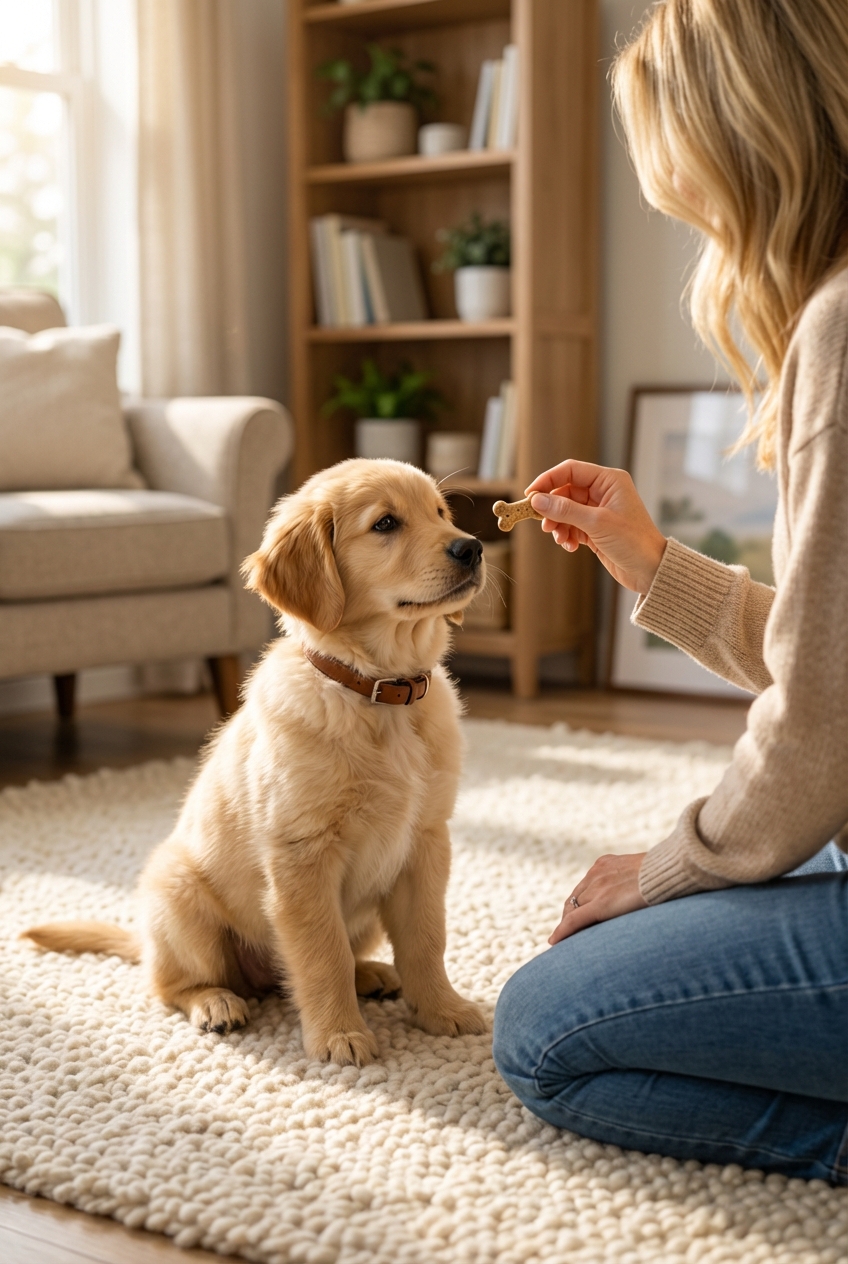
- Say the name once in a cheerful tone.
- When your puppy looks at you, mark and reward (a “Yes!” or click, then a small treat).
- Practice for 30 to 60 seconds, a few times a day.
Keep it light and positive. If your puppy does not respond, avoid repeating the name over and over. Instead, make a gentle noise, move a step away, or show the treat, then try again.
Your goal is: “Name” equals “look at my person” and good things happen.
If you are renaming a puppy
If your puppy came from a shelter, rescue, or breeder with an existing name, do not worry. Many dogs adapt quickly to a new name when it is paired with good things.
Simple transition: For a week or two, say the new name, then immediately reward. If you want an extra-smooth switch, you can briefly pair them (old name + new name), then fade the old name out.
When to ask for help
If your puppy seems consistently unable to hear or respond to sound, bring it up with your veterinarian. Hearing issues are not common, but they can happen, and risk is higher in some coat patterns linked to congenital deafness (for example, extreme white, piebald, or merle patterns).
Also, if your puppy is anxious or shut down, a trainer or veterinary behavior professional can help you build positive responses to your voice and handling.
A name is a starting point. Pair it with kindness, clear training, good sleep, and great nutrition, and you are setting your puppy up for a confident life.