Puppy biting is usually normal. Learn why it happens and how to reduce it fast with redirects, reverse time-outs, calm breaks, naps, enrichment, and teething...
Article
•
Designer Mixes
Puppy Keeps Biting Me

Shari Shidate
Designer Mixes contributor
If your puppy keeps biting you, you are not failing. You are living with a baby predator who explores the world with their mouth. In my work as a veterinary assistant, I see this every day, and the good news is that puppy biting is both normal and very trainable.
What matters most is what you do next. The goal is not to punish. The goal is to teach your puppy what to bite, how hard, and when play stops.
Why puppies bite so much
Puppies bite for a few predictable reasons. When you match your response to the reason, training goes faster.
- Teething pain and gum itch: Many puppies start losing baby teeth around 12 to 16 weeks and finish teething by about 6 months (timing varies), and chewing helps.
- Play and attention: Nipping often works because humans squeal, move fast, or engage. From a puppy’s perspective, that is fun.
- Overtired and overstimulated: A “wild” puppy is often a sleepy puppy who missed a nap.
- Herding or chase instincts: Many mixes will nip ankles, pant legs, and hands that move quickly.
- Hunger or frustration: “I want that” moments can make mouthing worse. Occasionally, especially in very small or very young puppies, being overdue for a meal can also make behavior spikier.
One important note: true aggression in puppies is much less common than normal mouthing. Most families are dealing with developmentally normal behavior that just hurts.
First, keep everyone safe
When kids are involved, safety and consistency matter more than perfect training sessions.
- Supervise puppy and children together. If you cannot supervise, separate with a baby gate, playpen, or crate.
- Teach kids “be a tree”: Stand still, hands tucked, eyes away, quiet voice if the puppy starts nipping.
- Protect little ankles: Long pants and closed-toe shoes can reduce accidental reinforcement from squealing and running.
- Use barriers, not wrestling: Avoid grabbing collars during a bitey frenzy. Step behind a gate or calmly move the puppy to a safe area.
What to do in the moment
1) Get boring, then redirect
The moment teeth touch skin, stop movement. No tugging your hand away fast. No squealing. Stay neutral.
- Freeze briefly (1 to 2 seconds), then redirect so you do not get stuck in a tug game.
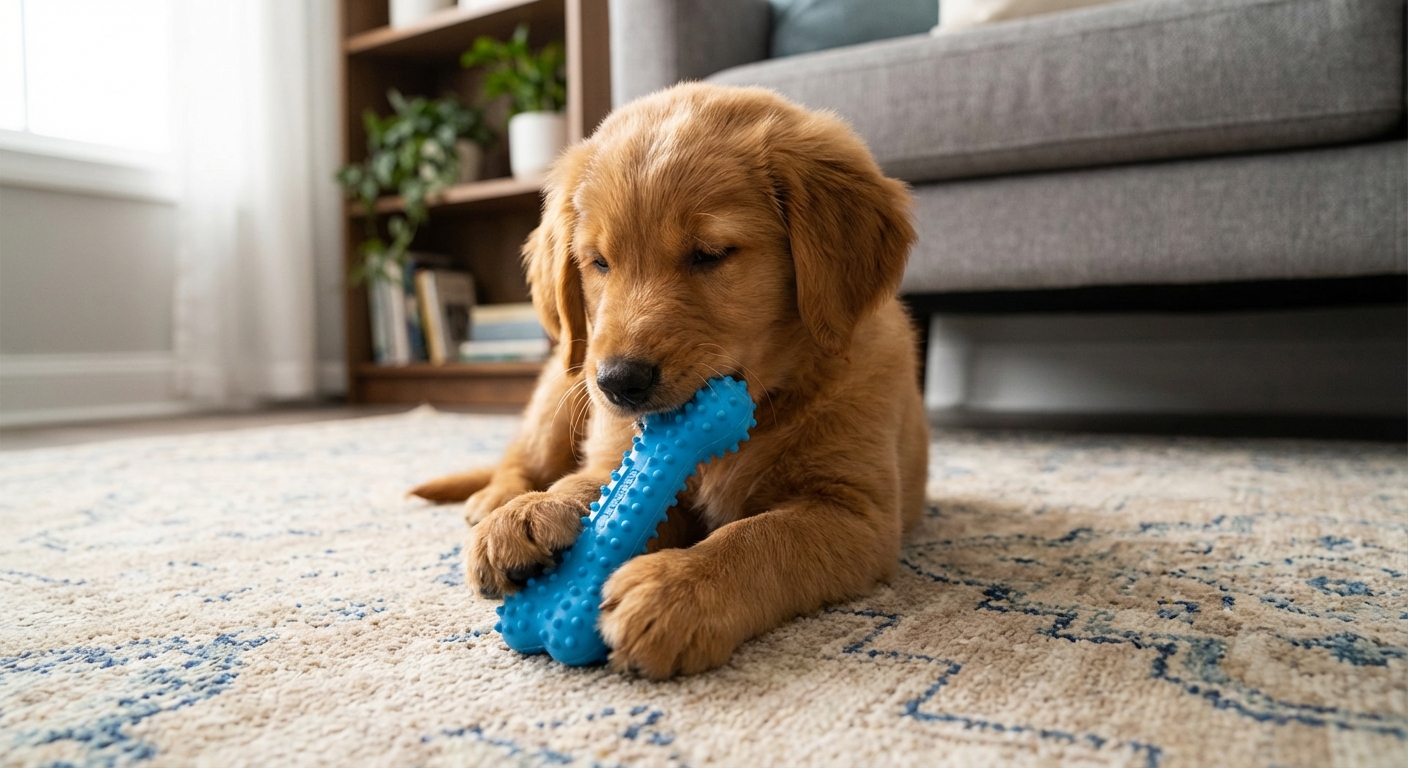
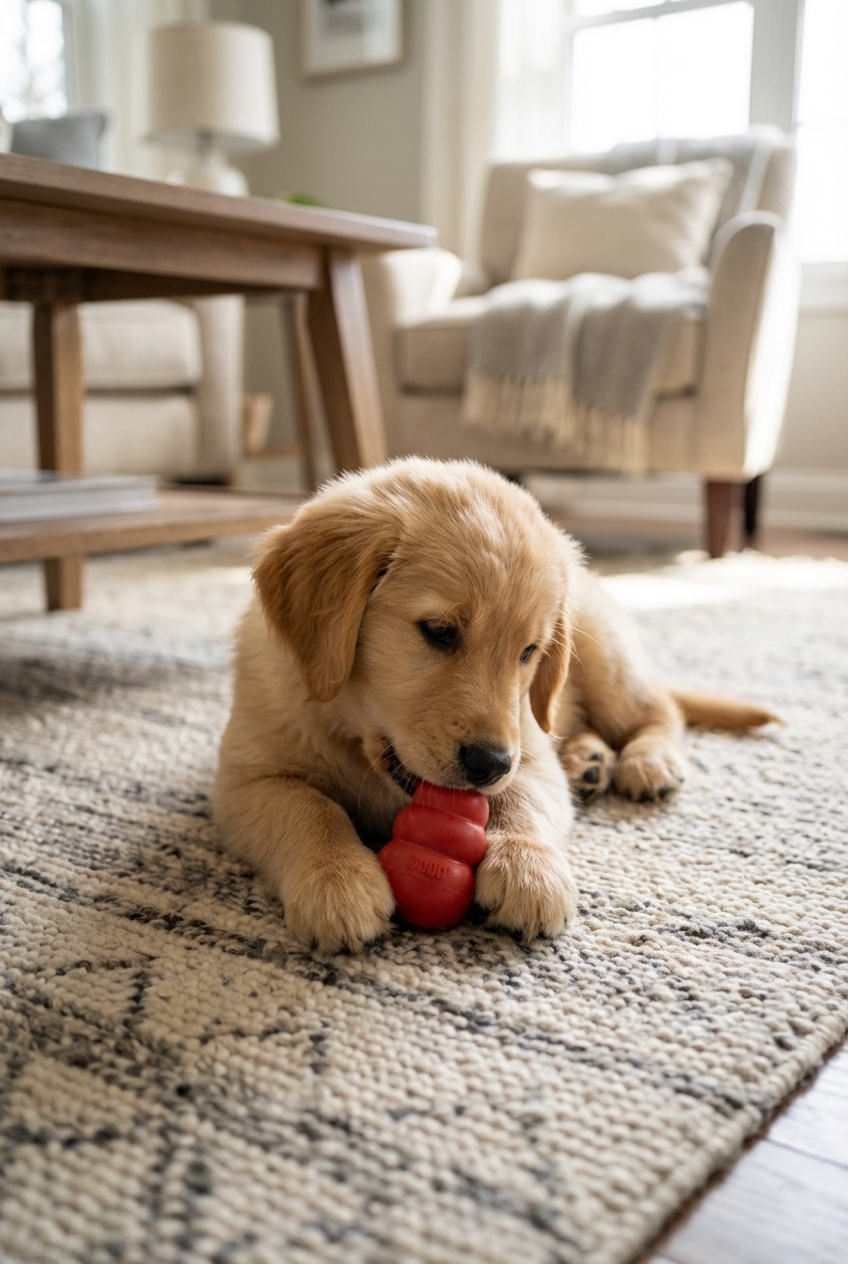
- Calmly offer a chew item or toy right at your puppy’s mouth.
- When they bite the toy, softly praise.
This teaches: skin makes fun stop, toys make fun continue.
2) If they ignore it, end play fast
Some puppies are so amped up that redirection fails. That is your cue to remove the reward, which is access to you.
- Say a brief, neutral marker like “Oops” in a normal tone (no yelling).
- Step behind a gate or turn away for 10 to 20 seconds.
- Come back and restart calmly with a toy already in hand.
Keep it short and repeatable. Long time-outs often just create confusion.
Note: This is a reverse time-out (you leaving). If you are crate training, avoid using the crate as punishment. You want the crate to stay a safe, happy place.
3) Try an indoor leash
For chronic ankle nippers, an indoor leash can help you guide your puppy away without chasing them.
- Clip on a light leash during high-energy times.
- When nipping starts, calmly step on the leash to limit jumping and grabbing, then redirect.
- Reward when your puppy switches to the appropriate item.
Safety tips: Do not jerk the leash. Use a well-fitted harness or collar, keep slack so you are not putting pressure on the neck, and supervise closely to prevent tangling around furniture.
Common mistakes
- Hand play: Wiggling fingers, wrestling, and allowing “gentle bites” on skin can confuse young puppies.
- Yelling or smacking: This can increase arousal, create fear, and sometimes turns biting into a game.
- Pulling away fast: This triggers chase and makes your hands exciting.
- Inconsistent rules: If biting is “cute” sometimes and “bad” other times, your puppy will keep trying.
- Too little sleep: Many young puppies need a lot of rest, often around 16 to 20 hours a day. An overtired puppy is a land shark.
Better things to chew
Think of chew items like toddler toys. You want safe options that match your puppy’s chewing intensity, plus rotation so they stay interesting.
Safer choices
- Rubber chew toys sized appropriately for your puppy.
- Food-stuffed toys with a simple filling your puppy tolerates well.
- Chilled chews: Some puppies love a toy that has been refrigerated (not frozen rock-hard).
- Veterinarian-approved dental chews for puppies, used with supervision.
Use caution
- Very hard chews that can crack puppy teeth.
- Cooked bones, which can splinter.
- Rawhide and similar products that can be a choking or GI blockage risk. Risk varies by product and by dog, so if you use them, supervise closely and choose reputable, size-appropriate options.
Supervise your puppy with any chew, and remove items that are breaking into swallowable chunks. If you are unsure whether a chew is appropriate for your puppy’s age, size, or bite strength, ask your veterinarian. Safety is always worth the extra minute.
Teach a gentle mouth
Puppies do learn bite inhibition, but it works best when you are consistent and calm.
- Start with a toy in your hand, not bare skin.
- Reward calm: If your puppy takes treats softly or mouths a toy gently, praise and treat.
- Interrupt hard bites: Freeze, redirect, or briefly end play.
- Practice daily in short sessions, especially after naps when your puppy can think.
One of my favorite mindset shifts is this: you are not trying to “stop biting forever” in one week. You are building a lifelong skill, step by step.
Play rules for tug
Tug is great for many puppies, but it needs rules so hands do not become the target.
- Start and stop cues: Teach “Take it” to start and “All done” to end.
- Teeth on skin ends the game: If your puppy grabs your hand, the game pauses and you reset with the toy.
- Trade to end: Offer a treat to get the toy back, then give the toy again. This builds trust and prevents grabbing.
Daily plan to prevent biting
Prevention is half the solution. Most bitey puppies need more structure, not more corrections.
Sample schedule
- Potty right after waking
- 5 to 10 minutes training (sit, touch, down) using small treats
- 10 to 15 minutes play with toys only (tug, fetch, flirt pole used safely)
- Chew time with a stuffed toy or safe chew
- Nap in crate or pen
If you notice biting spikes in the evening, you are not alone. The “witching hour” is real. Add a nap before that time and you may see a big improvement in just a few days.
Management tools help, too. During high-arousal periods, use baby gates and pens proactively, and aim for age-appropriate exercise and enrichment. Too much intense activity can backfire, but too little mental and physical outlet can make a puppy mouthy.
When does biting improve?
Most puppies improve with consistent training and management, especially as teething ends. Many families notice a big shift somewhere around 6 to 8 months, but timing varies by breed, individual personality, and how much practice your puppy gets with gentle play.
Progress often looks like fewer hard bites, faster recovery after excitement, and more frequent choice of toys on their own.
When it could be health
Most mouthing is behavioral, but it is smart to rule out discomfort.
- Teething pain is expected, but extreme distress is not.
- GI upset or being off schedule with meals can increase irritability and nipping.
- Skin itching from allergies or fleas can make puppies restless and mouthy.
- Dental issues like retained baby teeth can cause discomfort.
If biting suddenly worsens, your puppy seems painful, stops eating, has vomiting or diarrhea, or is unusually reactive when touched, call your veterinarian.
When to get a trainer
Getting help early is a gift to your puppy and your family.
Consider a certified, force-free trainer if:
- Biting is causing repeated punctures or bruising.
- Your puppy guards toys or food while biting.
- You feel nervous handling your puppy.
- There are children in the home and you want a clear safety plan.
Look for credentials like CPDT-KA or IAABC, and ask what methods they use. You want someone who will coach the whole family, not just “fix the dog.”
Progress often looks like fewer hard bites, faster recovery, and more toy choices. Celebrate those wins. They are real.
Quick checklist
- Keep a toy within reach in every room.
- Freeze briefly when teeth touch skin, then redirect.
- If needed, end play for 10 to 20 seconds behind a gate.
- Add one extra nap and see what changes.
- Schedule a puppy class that focuses on positive methods and bite inhibition.
With consistency, most families see meaningful improvement within a couple of weeks, and big maturity shifts as teething ends. You are not stuck with this phase forever, and you can absolutely guide your puppy through it.