Learn a proven, kind puppy house-training plan with a simple schedule, crate and supervision tips, a repeatable potty routine, cleaning methods, and nighttim...
Article
•
Designer Mixes
Puppy House Training Overview

Shari Shidate
Designer Mixes contributor
Bringing home a puppy is pure joy, and also a big adjustment for their little body and brain. House training is really about building a predictable routine your puppy can understand, plus setting up your home so accidents are less likely. The good news is most healthy puppies learn quickly when we make the “right thing” easy and the “wrong thing” hard.
As a veterinary assistant here in Frisco, Texas, I always remind pet parents of two well-supported truths from modern positive reinforcement training: puppies do best with consistency, and accidents are information, not failure. If you track patterns and respond calmly, you can get to reliable potty habits faster than you think.
Quick note: This guide is general education, not a substitute for veterinary care. If something feels “off,” trust your instincts and call your veterinarian.
How long does house training take?
Most puppies make major progress in the first few weeks, but “fully reliable” can take a few months depending on age, size, learning history, and how consistent the routine is. Smaller and toy breeds often have smaller bladders and may need more frequent breaks. Overnight holds can also vary widely.
A helpful scheduling guideline (not a promise): many puppies can often hold their bladder about 1 hour per month of age when awake (plus a little extra when sleeping). Some puppies, especially very young pups or small breeds, will need more frequent trips even with a solid routine.
Basics your puppy can understand
1) Supervision or confinement
In the early weeks, if your puppy is loose in the house and you are not actively watching them, accidents will happen. A simple rule that works: if you can’t watch, they’re safely confined.
- Supervision: puppy is with you, tethered on a leash, or in the same room where you can see them.
- Confinement: crate, exercise pen, or a small puppy-proofed area.
2) Reward right after outside potty
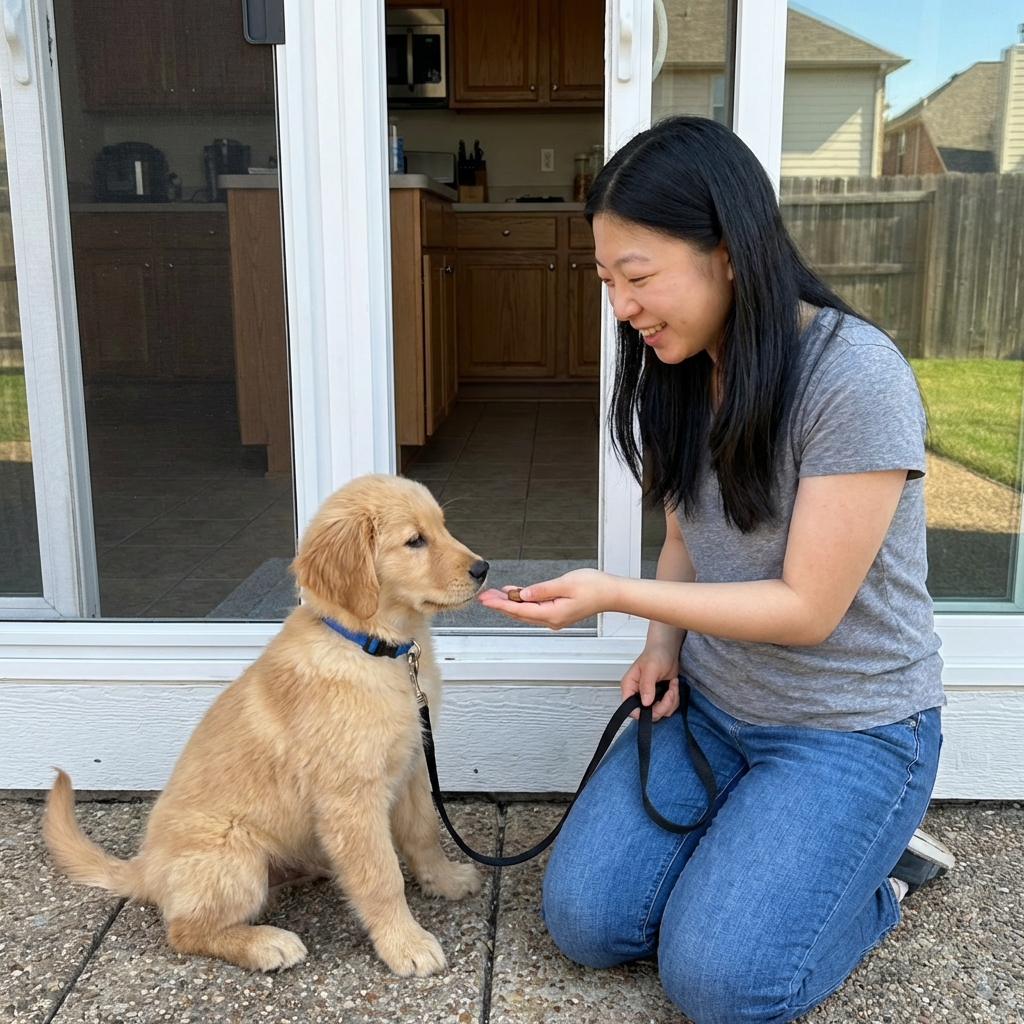
Puppies learn by timing. Reward within 1 to 2 seconds of finishing, not after you get back inside. Use tiny, high-value treats and warm praise. This is how you build a strong “outside is the right place” habit.
3) One potty spot and one cue
Take your puppy to the same outdoor area whenever possible. The smell helps trigger the behavior. Add a simple cue like “Go potty” said once, calmly. Over time, the cue becomes a helpful tool for travel days and rainy nights.
Potty signals to watch for
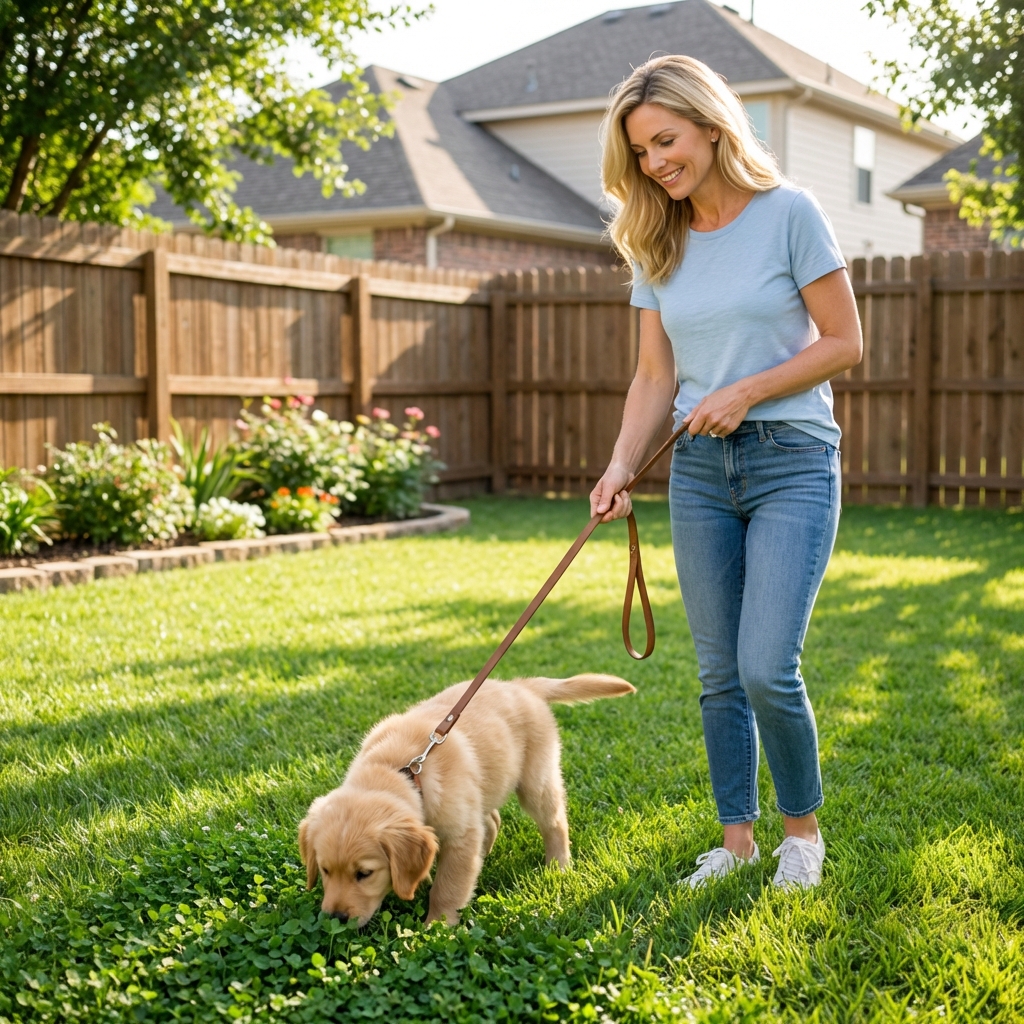
Some puppies are subtle, and some are very obvious. If you see any of these, take them out right away:
- Sniffing the ground intensely
- Circling or pacing
- Suddenly wandering away from you
- Heading toward a door or corner
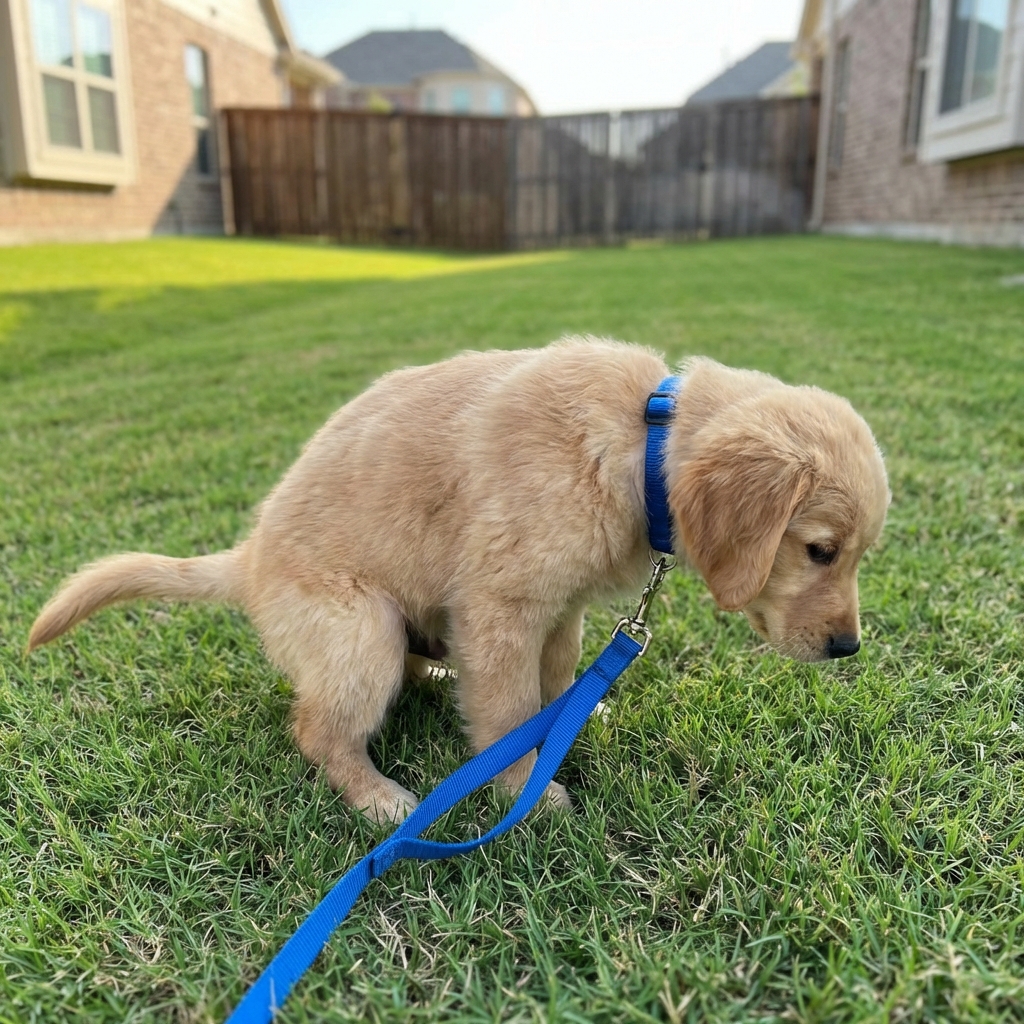
- Squatting (even briefly)
A simple schedule that prevents accidents
When you’re starting out, it’s better to take too many potty breaks than too few. Frequent success outside is what speeds up learning.
Take your puppy out:
- First thing in the morning
- After eating or drinking
- After playtime or zoomies
- After waking up from a nap
- Before bedtime
- Any time you see potty signals
Typical timing (adjust for your puppy)
- 8 to 12 weeks: every 30 to 60 minutes when awake
- 3 to 4 months: every 60 to 90 minutes when awake
- 5 to 6 months: every 2 to 3 hours when awake
If your puppy is having accidents, shorten the time between breaks for a week and rebuild from there.
Consistency across people
If more than one person is helping, agree on the same potty cue, the same reward plan, and the same schedule. Inconsistent timing is a common reason families feel “stuck,” even when everyone is trying.
Workdays and long meetings
If your puppy’s schedule cannot match your day yet, plan support early. A midday dog walker, neighbor, or pet sitter break can prevent accidents and speed up training. Relying on a puppy to “hold it” before they are ready often backfires.
Crate training
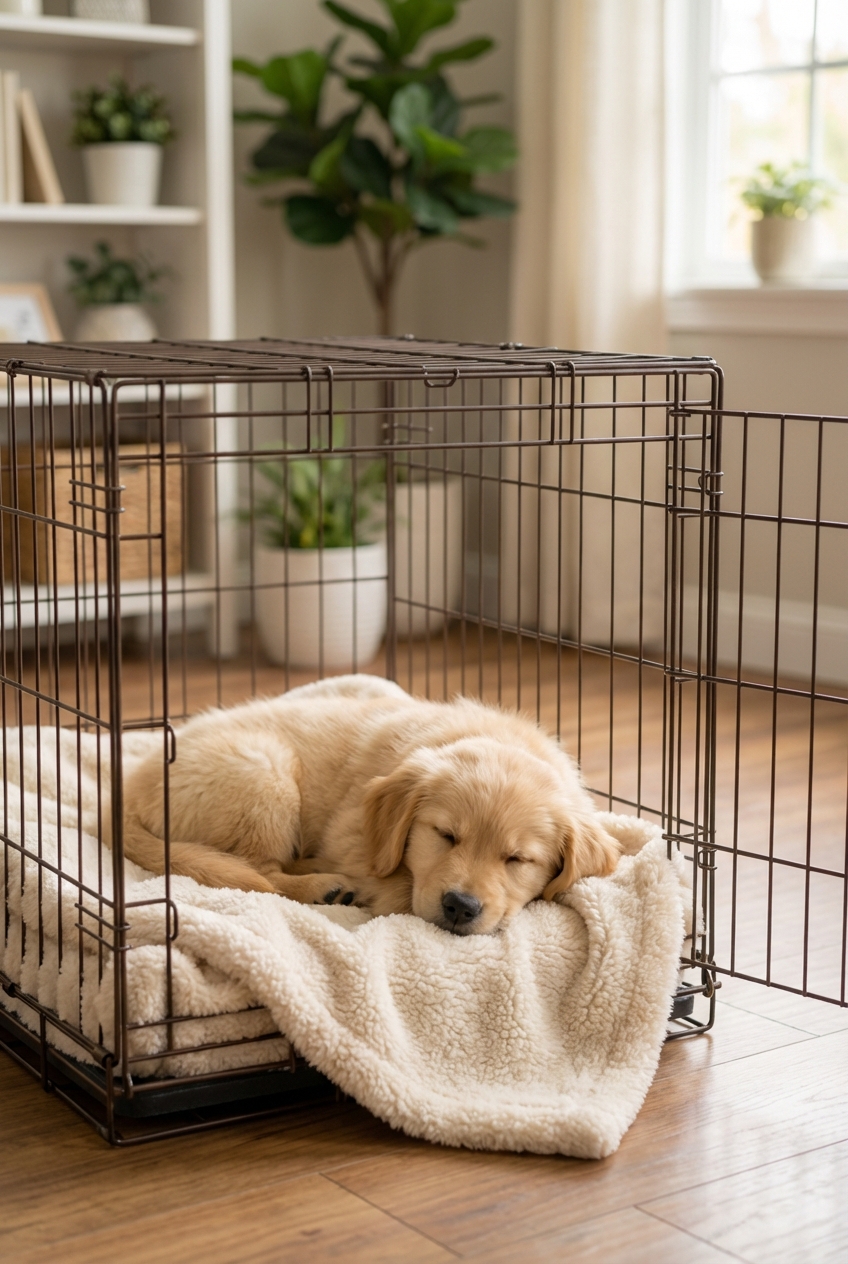
Used correctly, a crate can be a powerful house training tool because many puppies prefer not to soil where they sleep. That said, very young puppies, puppies who have been kept in small enclosures for long periods, or puppies crated longer than they can hold it may not show this instinct at first. The crate should feel safe and cozy, never like punishment.
Crate sizing matters
Your puppy should be able to stand up, turn around, and lie down comfortably. If the crate is too large, a puppy may potty on one side and sleep on the other. Many crates come with dividers so you can “grow” the space over time.
Crate tips
- Feed meals in the crate or toss treats in for happy associations.
- Start with short sessions while you are home.
- Use a consistent bedtime routine.
- Avoid crating longer than your puppy can reasonably hold it. Use the 1 hour per month of age guideline as a starting point, and plan a break (or help) if you will be gone longer.
Accidents without setbacks
Accidents will happen. The goal is to respond in a way that teaches, not scares.
If you catch them in the act
- Calmly interrupt with a gentle sound like “Oops” (not yelling).
- Pick up or guide your puppy outside immediately.
- If they finish outside, reward enthusiastically.
If you find it after the fact
- Do not punish. Your puppy will not connect it to the earlier behavior.
- Clean thoroughly with an enzyme cleaner to remove odor cues.
- Adjust the schedule and supervision to prevent the next one.
Important: avoid ammonia-based cleaners, which can smell similar to urine and may make repeat accidents more likely in that spot.
Nighttime house training
Many puppies need at least one nighttime potty break at first. Place the crate near your bed so you can hear stirring before crying escalates.
Night routine
- If your puppy is not free-feeding, offer dinner early enough that they can potty afterward. Late meals can mean late-night digestion.
- Pick up the water bowl about 1 to 2 hours before bedtime (unless your veterinarian advises otherwise). Do not restrict water excessively, especially in hot weather or for very young puppies. The goal is simply to reduce a very full bladder right at bedtime.
- Last potty trip right before bed, same spot, same cue.
- Keep nighttime potty trips boring: leash on, quick potty, quiet praise, back to bed.
Common challenges
Puppy won’t potty outside
- Give them time. Stand still and quiet for 5 minutes.
- If nothing happens, bring them in for 10 minutes of supervised time, then try again.
- After they potty, let them sniff a bit or play briefly so they do not learn to hold it to stay outside longer.
Accidents in the same place
- Use an enzyme cleaner and block access temporarily.
- Increase potty breaks and supervision for that time of day.
Excitement or submissive peeing
This is common in young puppies. Keep greetings calm, avoid leaning over them, and take them out before visitors arrive. Most puppies grow out of it with maturity and confidence.
Regression after doing well
Teething, schedule changes, growth spurts, and stress can cause backslides. Return to the basics for 1 to 2 weeks. More structure usually resolves it.
Apartments, pads, and vaccine safety
If you live in an apartment, have limited outdoor access, or your puppy is not fully vaccinated yet, talk with your veterinarian about the safest potty option for your area. In higher-risk parvo regions, some families use a designated potty area at home (such as a balcony potty patch or a specific indoor pad spot) until vaccines are complete.
If you choose pads, keep it consistent: one location, easy to reach, and still reward immediately. When you are ready to transition outdoors, gradually move the pad closer to the door, then outside, and keep the same cue and reward timing.
When to call your veterinarian
House training is behavior, but frequent accidents can also be a medical issue. Reach out to your veterinarian if you notice:
- Straining to urinate, blood in urine, or crying when peeing
- Very frequent urination or sudden new accidents after being trained
- Excessive thirst
- Diarrhea, vomiting, or stool accidents with urgency
- Lethargy or reduced appetite
Urinary tract infections, intestinal parasites, and dietary intolerance can all mimic “training problems,” and they deserve prompt care.
A realistic mindset
House training is not about perfection. It is about building habits. If you focus on prevention, routine, and rewarding the right behavior, your puppy will get there.
Progress looks like fewer accidents, faster potty trips, and a puppy who starts heading for the door on their own.
If you want a simple next step, start today by tracking potty times for 48 hours and tightening supervision. Patterns will show up fast, and once you see the pattern, you can train with confidence.