Feed your puppy with confidence using age, current weight, and body condition. Includes toy to giant breed charts, meals-per-day guidance, wet vs dry tips, a...
Article
•
Designer Mixes
Puppy Growth Stages Guide

Shari Shidate
Designer Mixes contributor
Puppies change fast. One week they are wobbling around like tiny wind-up toys, and the next they are sprinting, teething, and testing every boundary you did not know you had.
As a veterinary assistant here in Frisco, Texas, I love helping families understand what is normal at each stage, what needs a vet visit, and how to support healthy growth without overfeeding or overexercising. Let’s walk through puppy growth stages in a way that is easy to use in real life.
Quick note: This article is general education and not a substitute for veterinary care. Your puppy’s best plan depends on their breed, health, and local disease risk.
Puppy growth stages at a glance
Most puppies move through the same developmental stages, but the timing and size changes vary a lot by breed. Toy breeds mature earlier; giant breeds take longer.
- 0 to 2 weeks (neonatal): eat, sleep, grow. Eyes and ears closed.
- 2 to 4 weeks (transitional): eyes and ears open, first steps, and baby teeth begin erupting around 3 to 4 weeks.
- 3 to 12 weeks (socialization): critical learning window. Gentle exposure matters.
- 3 to 6 months (juvenile): teething, rapid growth, lots of learning and chewing.
- 6 to 12 months (adolescent): independence, testing limits, hormones begin (varies).
- 12 to 24 months (young adult): many growth plates finish closing, especially in large and giant breeds (timing varies by breed and bone).
0 to 2 weeks: newborn basics
At this stage, puppies should stay warm, nurse well, and gain weight steadily. They cannot regulate their body temperature, and they depend on mom for everything.
What is normal
- Sleeping most of the day
- Nursing frequently
- Crawling, not walking
- Soft belly after nursing
Weight and sleep basics
- Weight: steady gain matters more than a specific number. Daily weighing can be helpful for neonates. If you are unsure what rate is appropriate, ask your vet.
- Sleep: newborns sleep almost all day, waking mostly to nurse.
Call a vet urgently if you see
- Weakness, constant crying, or separation from the litter
- Not nursing or losing weight
- Cold body temperature, pale gums, or labored breathing
If you are caring for an orphaned puppy, get veterinary guidance right away on formula type, feeding schedule, and safe warming methods.
2 to 4 weeks: waking up
Eyes and ears open, and mobility improves quickly. This is also when puppies begin transitioning from only milk to exploring soft foods.
What you can do
- Keep the environment clean: puppies start eliminating on their own and will explore everything with their mouths.
- Introduce gentle handling: brief, calm touch helps them grow comfortable with people.
- Talk to your vet about deworming schedules: intestinal parasites are common in puppies and can affect growth.
Over the next few weeks, curiosity skyrockets. This is when safe, positive experiences start shaping your puppy’s “default settings” for life.

3 to 12 weeks: socialization
This is the most important window for building a confident, resilient adult dog. Socialization does not mean letting everyone rush up and pet your puppy. It means safe, positive exposures to the world.
Healthy socialization looks like
- Seeing different people, ages, and appearances from a comfortable distance
- Hearing household sounds paired with treats (vacuum, doorbell, blender)
- Walking on new surfaces (grass, tile, rubber mat) at the puppy’s pace
- Short car rides that end in something pleasant
Vaccines and “can my puppy go out?”
This is where many families get stuck. You want to socialize early, but you also want to avoid preventable diseases like parvovirus.
- Ask your veterinarian about local parvo risk and your puppy’s vaccine schedule.
- Choose low-risk options early on: carrying your puppy in public, visiting vaccinated friends’ homes, puppy classes that require vaccine records and sanitize well.
- Avoid high-risk areas until your vet says it is safe: dog parks, busy sidewalks with lots of unknown dogs, pet store floors, and shared potty spots.
Tip from the clinic: A puppy can be “out in the world” before fully vaccinated if you manage the environment. Safe exposure now often prevents fear and reactivity later.
3 to 6 months: growth and teething
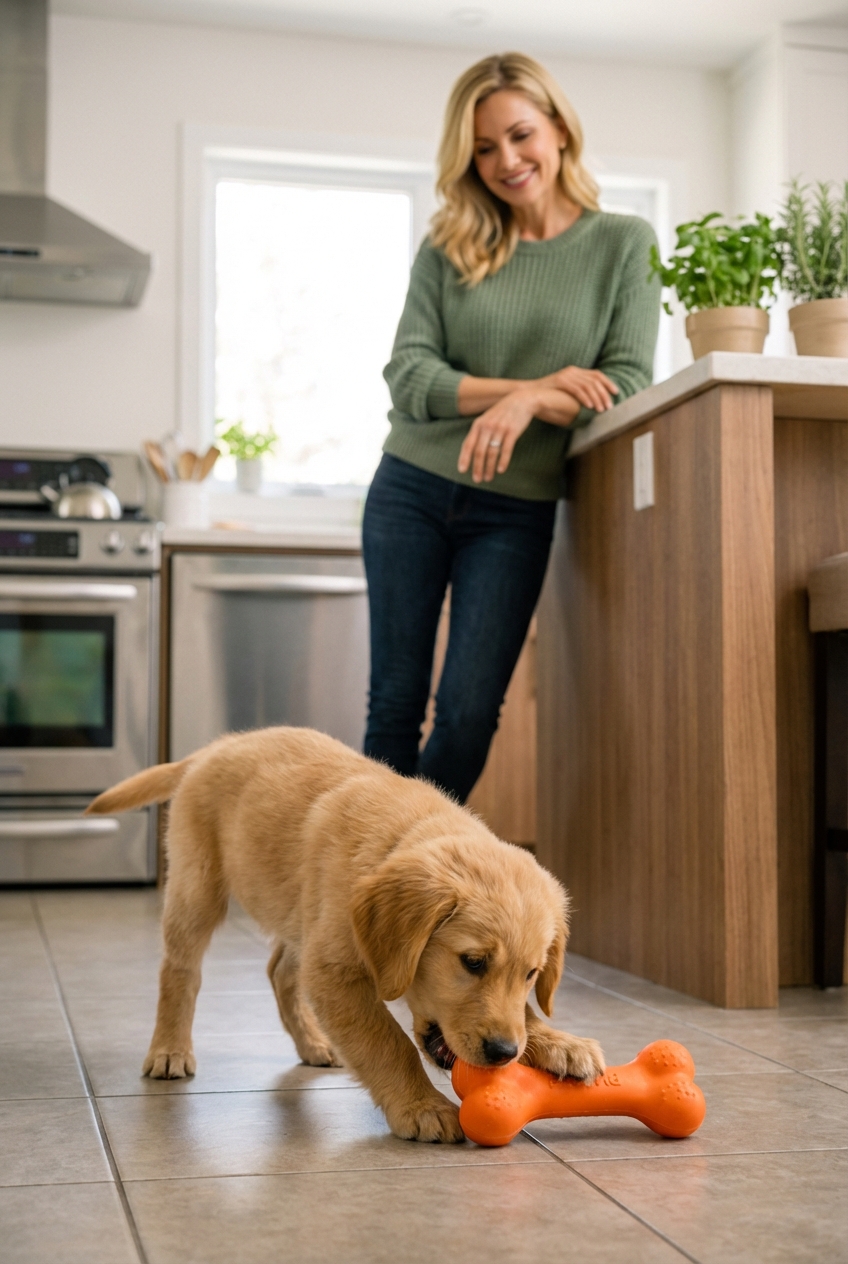
This is the “land shark” stage. Baby teeth fall out and adult teeth come in, usually between 12 and 24 weeks. Chewing ramps up, and so can nipping.
Common questions
When do puppies stop teething?
Most puppies finish getting their adult teeth by around 6 months, but chewing behavior can continue longer, especially in high-energy breeds.
What should I give my puppy to chew?
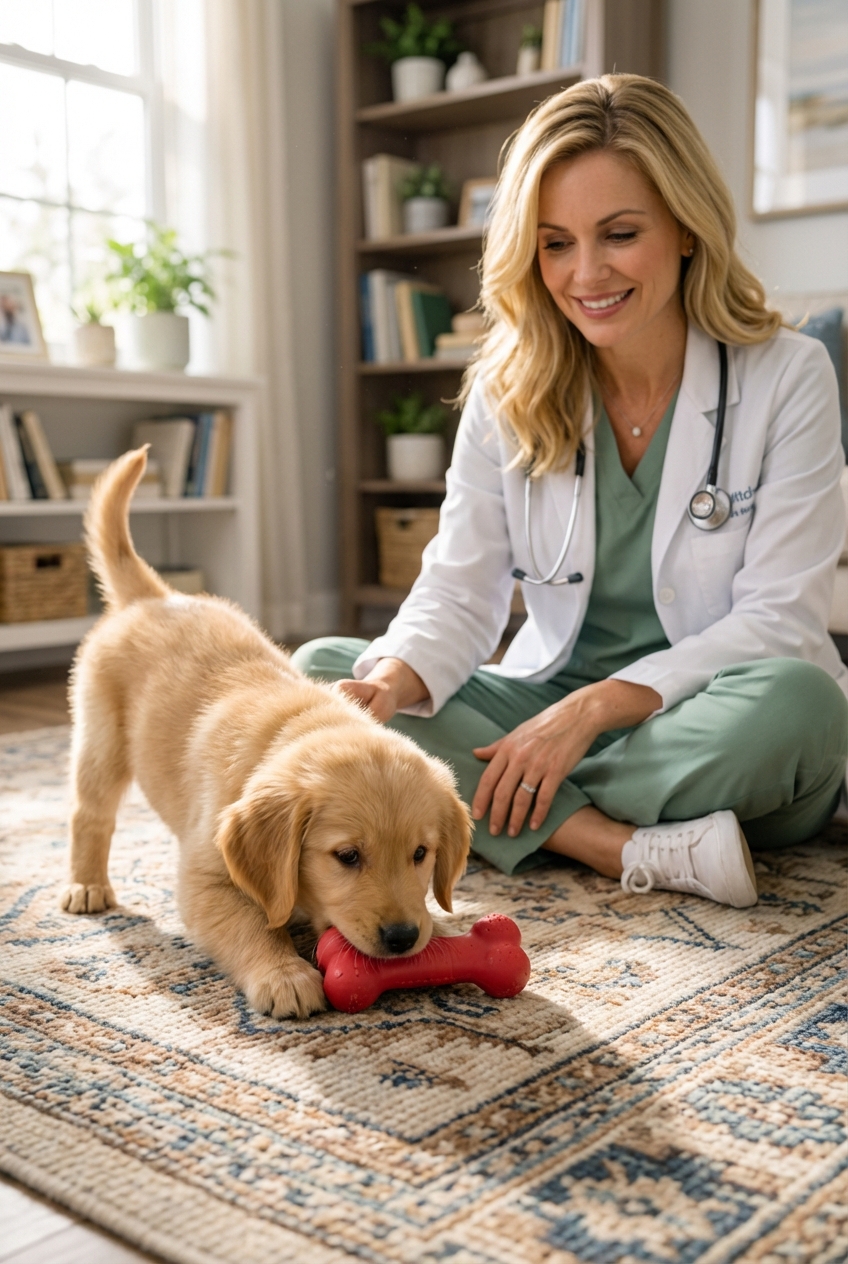
- Veterinarian-approved chews that match your puppy’s size and chewing style
- Rubber toys you can stuff with wet puppy food and freeze
- Supervised chew time to prevent swallowing big pieces
Avoid very hard chews that can crack teeth. A simple rule many clinics use is: if you cannot indent it with a fingernail, it may be too hard for puppy teeth.
Feeding for healthy growth
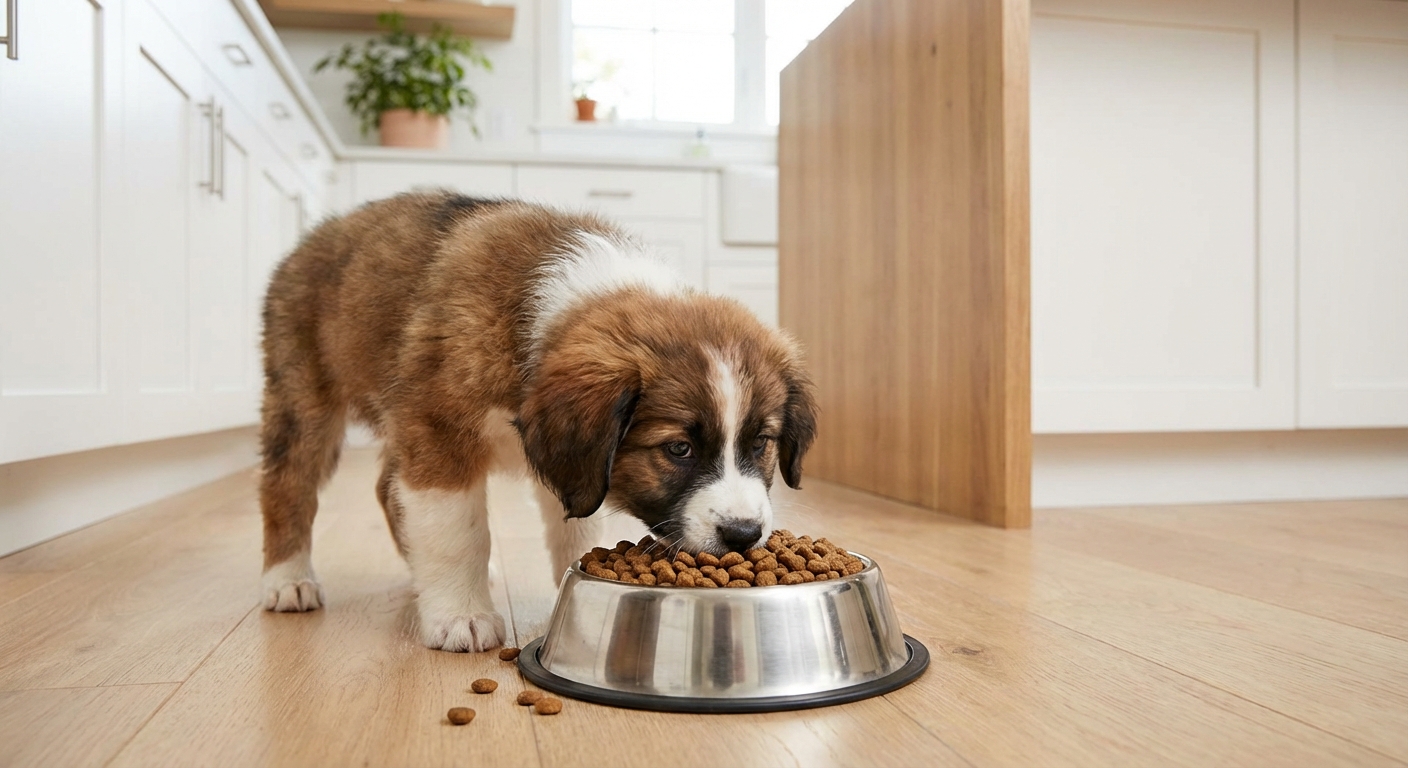
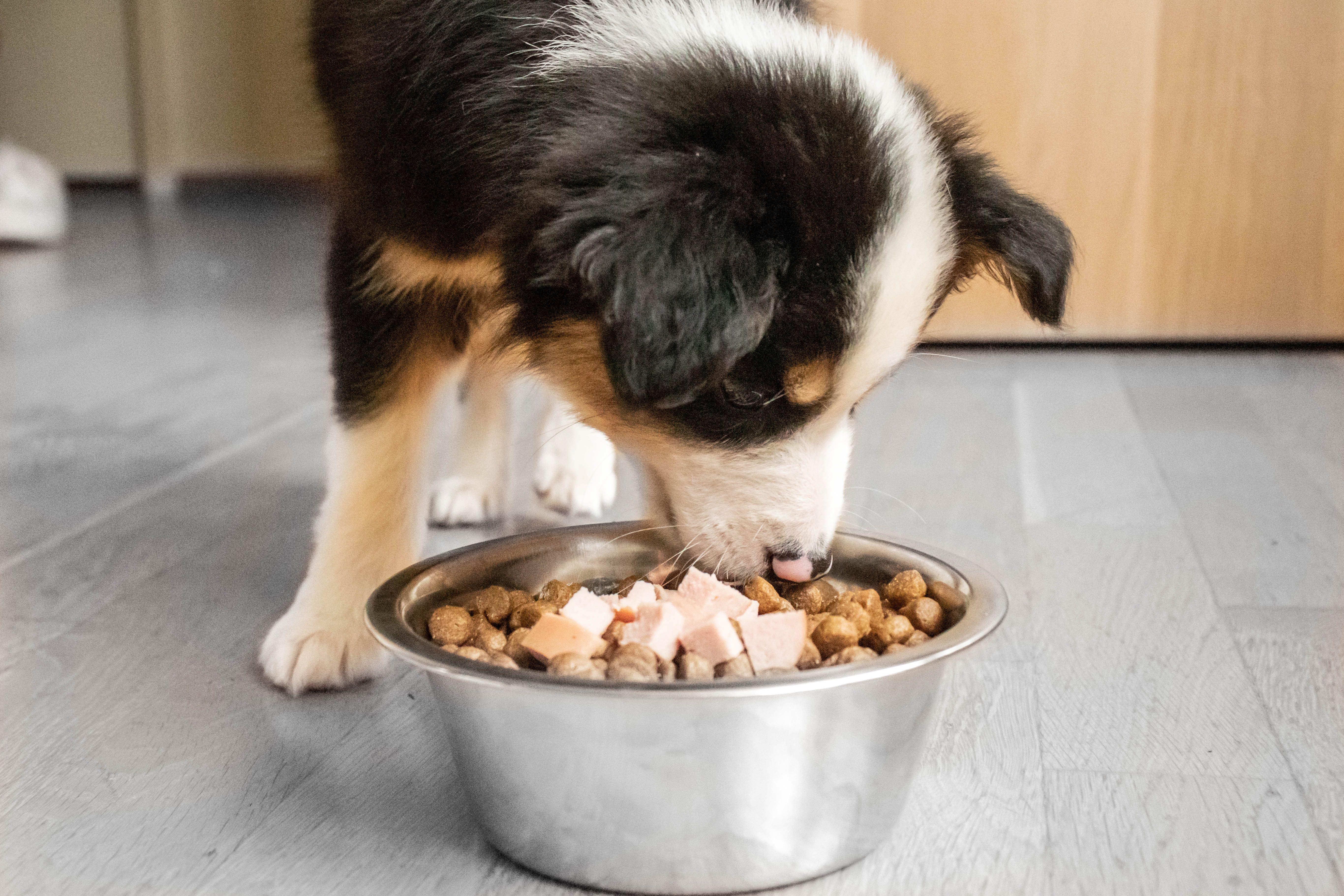
Use a complete and balanced puppy diet that meets AAFCO standards for growth. Large-breed puppies do best on a large-breed puppy formula to support controlled growth and healthier bones and joints.
Sleep and overstimulation
Puppies still need a lot of sleep in this stage, often 16 to 20 hours per day. If your puppy gets extra bitey, zoomy, or wild, they may be overtired, not “bad.”
6 to 12 months: adolescence
Adolescence is real. Your puppy’s body is stronger, their brain is still developing, and distractions suddenly seem more interesting than your voice.
What is normal
- Testing boundaries
- Temporary fear periods (suddenly wary of things they handled fine before)
- More stamina and bigger emotions
How to handle it
- Keep training sessions short: 3 to 5 minutes, several times a day.
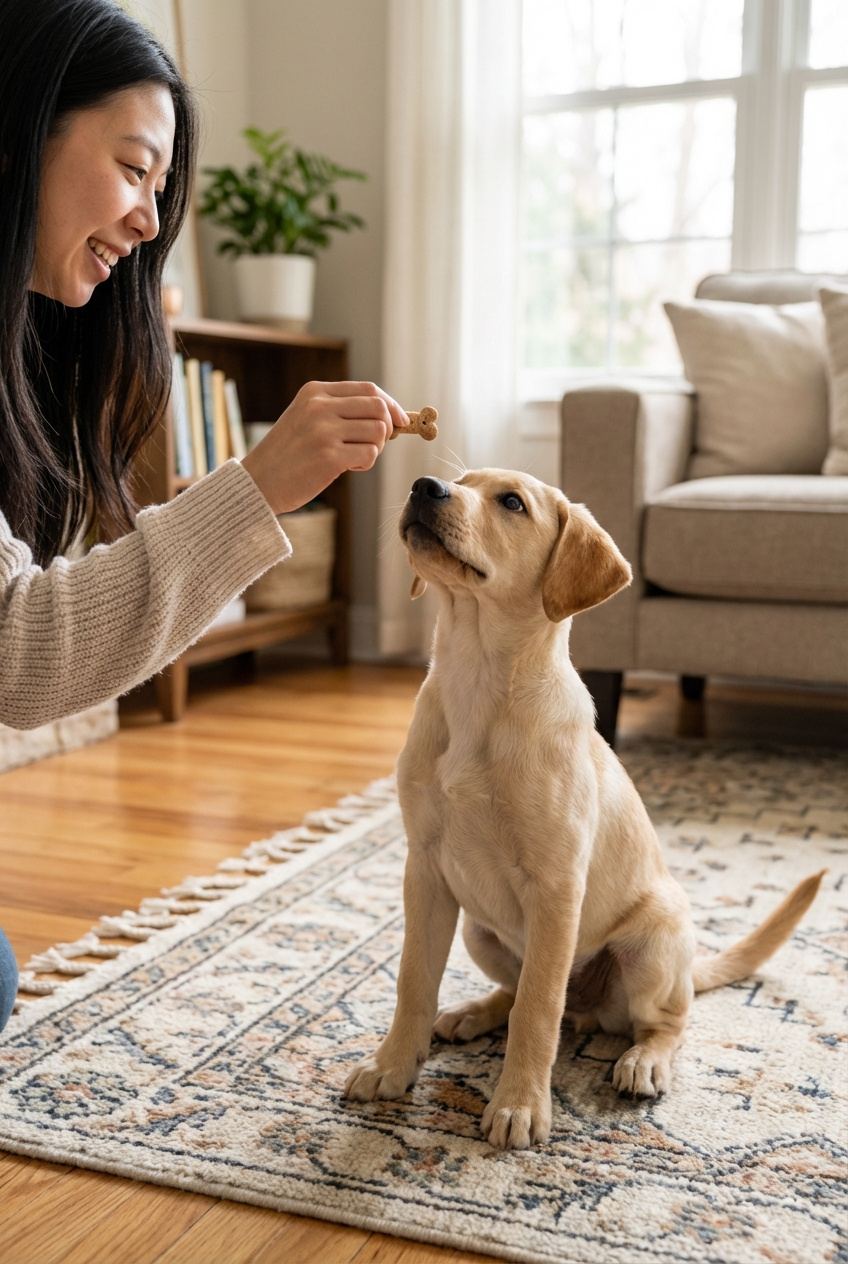
- Reward what you want: calm greetings, four paws on the floor, checking in on walks.
- Manage the environment: baby gates, crates, and leashes prevent rehearsal of bad habits.
Spay and neuter timing
This is a great conversation to have with your veterinarian. Timing can depend on breed, size, lifestyle, and health factors. For some dogs, waiting longer can support joint development; for others, earlier can be beneficial. There is not one perfect answer for every puppy.
12 to 24 months: fully grown?
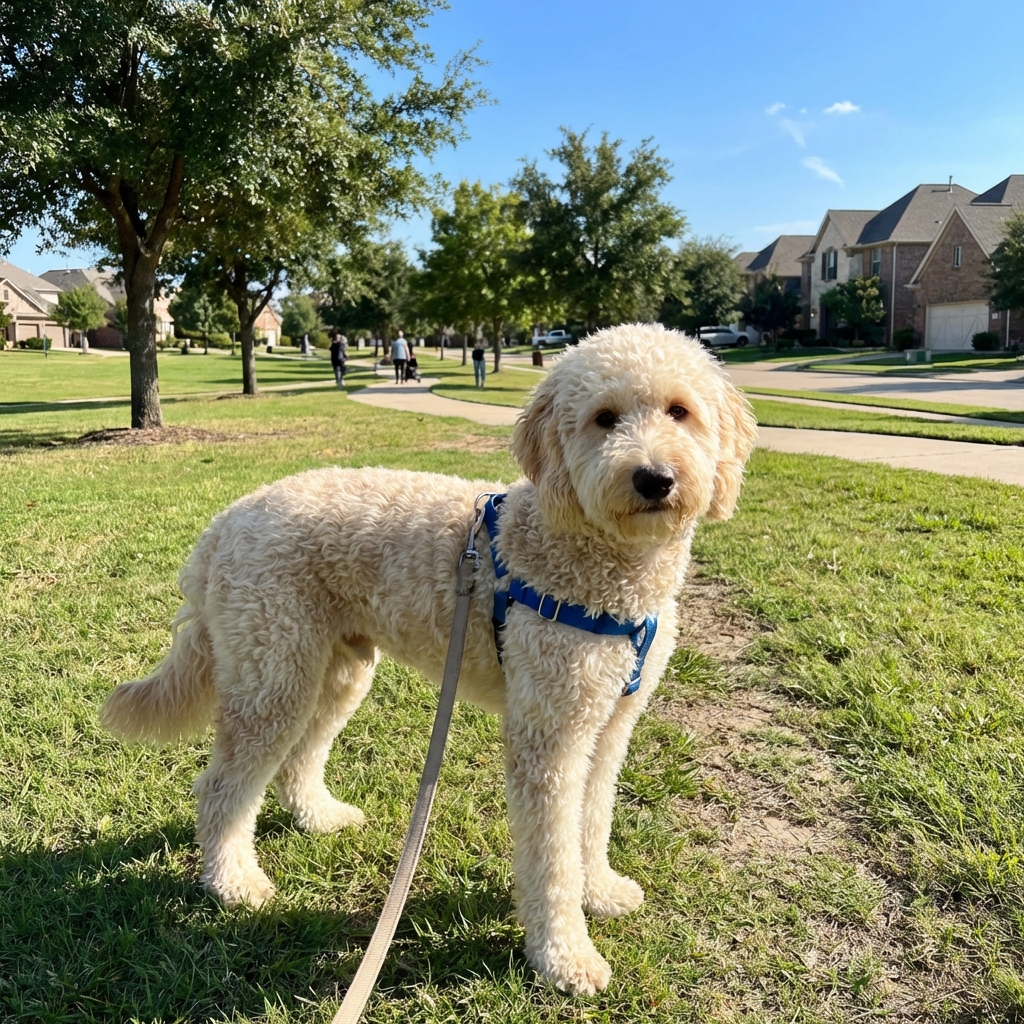
Most dogs reach adult height before they reach adult maturity. Growth plate closure and “filling out” can vary by breed and by individual.
- Small breeds: often physically mature around 9 to 12 months
- Medium breeds: around 12 months
- Large and giant breeds: often 15 to 24 months for full musculoskeletal maturity (sometimes longer, depending on breed)
Even after they stop growing taller, many dogs continue to fill out in chest and muscle as they become young adults.
Puppy growth: what matters most
The number on the scale is useful, but it is not the whole story. In practice, I focus on body condition.
Quick body condition check
- Ribs: you should be able to feel ribs easily with light pressure, but they should not be sharply visible.
- Waist: viewed from above, there should be a noticeable waist behind the ribs.
- Tuck: viewed from the side, the belly should tuck up behind the ribcage.
If your puppy is getting chunky, it is not about looks. It is about joint protection, heart health, and setting them up for a longer, more comfortable life.
Exercise by stage
Puppies need exercise, but growing bones and growth plates need protection, especially in large breeds.
General guidelines
- Favor frequent short sessions over one long workout.
- Choose softer surfaces when you can (grass over concrete), but remember that soft ground alone does not make high-impact activity “safe.”
- Limit repetitive impact like constant stair running or long-distance jogging until your vet confirms maturity.
- Let play be puppy-led: if your puppy lies down, slows, or seems overstimulated, end on a calm note.
If you are unsure what is appropriate for your puppy’s breed mix, your veterinarian can help tailor a plan.
Milestones: preventive care
Puppy preventive care is part of healthy growth. Your exact schedule should come from your veterinarian, but these are common milestones:
- Vaccines (often 6 to 16+ weeks): core vaccine series over multiple visits (many protocols start around 6 to 8 weeks and continue every 3 to 4 weeks until at least 16 weeks)
- Fecal testing and deworming: early and repeated as recommended
- Heartworm prevention: start as directed by your vet; heartworm testing is typically done at the appropriate age and timing for your puppy and product
- Flea and tick prevention: ask your veterinarian what makes sense for your region and your puppy’s age and weight
- Microchip: commonly placed when young
Bring a fresh stool sample to puppy visits when asked. Parasites can quietly slow growth and cause tummy upset.
Red flags at any age
Trust your gut. Puppies can go downhill quickly because they are small and have less reserve.
- Repeated vomiting or diarrhea, especially with lethargy
- Not eating for more than one meal in a young puppy
- Coughing, labored breathing, or blue or pale gums
- Swollen belly with unproductive retching
- Limping that lasts more than 24 hours, or any severe pain
- Sudden behavior change, collapse, or seizures
A simple routine that works
If you want a straightforward plan you can actually stick with, here is a routine I recommend often:
- Daily: 2 to 5 short training games (sit, touch, leash walking, name game)
- Daily: one enrichment meal (snuffle mat, frozen stuffed toy, slow feeder)
- Weekly: one new safe exposure (new place, new sound, new surface)
- Monthly: weigh-in and body condition check, adjust food if needed
Puppyhood is a season. You do not have to do it perfectly. You just have to keep showing up with consistency, kindness, and good information.