Make your puppy’s first night home smoother with a calm bedtime routine, crate setup tips, realistic potty-break timing, feeding guidance, and puppy-proofi...
Article
•
Designer Mixes
Puppy First Night Home: Tips and Advice

Shari Shidate
Designer Mixes contributor
What your puppy feels the first night
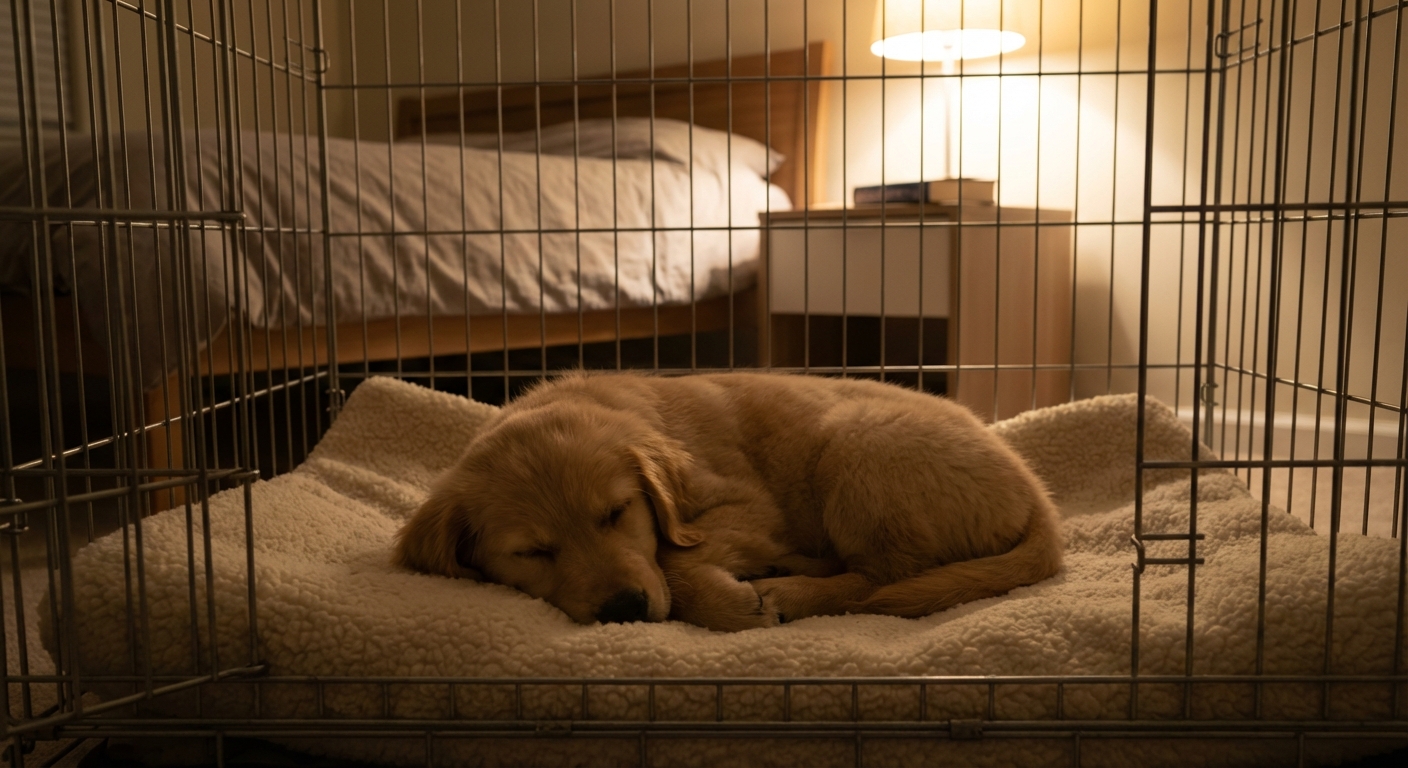
Your puppy’s first night at home is a big deal. They have just left their mom, littermates, familiar smells, and their routine. Even confident pups can feel anxious, vocal, or restless. The good news is that most first-night struggles are normal, short-lived, and very manageable with the right setup.
As a veterinary assistant, I always tell new puppy parents this: your job tonight is safety, comfort, and consistency. Gentle training can start immediately, but tonight’s priority is helping your puppy learn, “This new place is safe, and my people come back.”
Before bed: set up an easier night
Keep the evening calm
Avoid loud visitors, intense play right before bed, or too many new experiences at once. A gentle routine helps your puppy settle faster.
Food, water, and potty timing
- Feed dinner a few hours before bedtime so there is time to digest.
- Offer water freely for most of the day and evening. Some owners choose to pick it up about 1 to 2 hours before bed to reduce overnight accidents, but this is not right for every puppy (very young or small breeds, hot weather, certain medical issues). When in doubt, ask your veterinarian.
- Potty, then potty again: take your puppy out 20 to 30 minutes before bed, and again right before you put them in their sleep space.

Plan for overnight potty breaks
Most young puppies cannot “hold it” all night. You may hear a rule of thumb like 1 hour per month of age, but that guideline is often more realistic for daytime holding with active supervision, and it can overestimate what very young puppies can do overnight. Breed, size, sleep cycles, and stress levels matter.
If your puppy is 8 to 10 weeks old, plan on one or two overnight potty breaks. If they wake and cry, assume they may need to go.
Where should your puppy sleep?
Crate or pen is usually safest
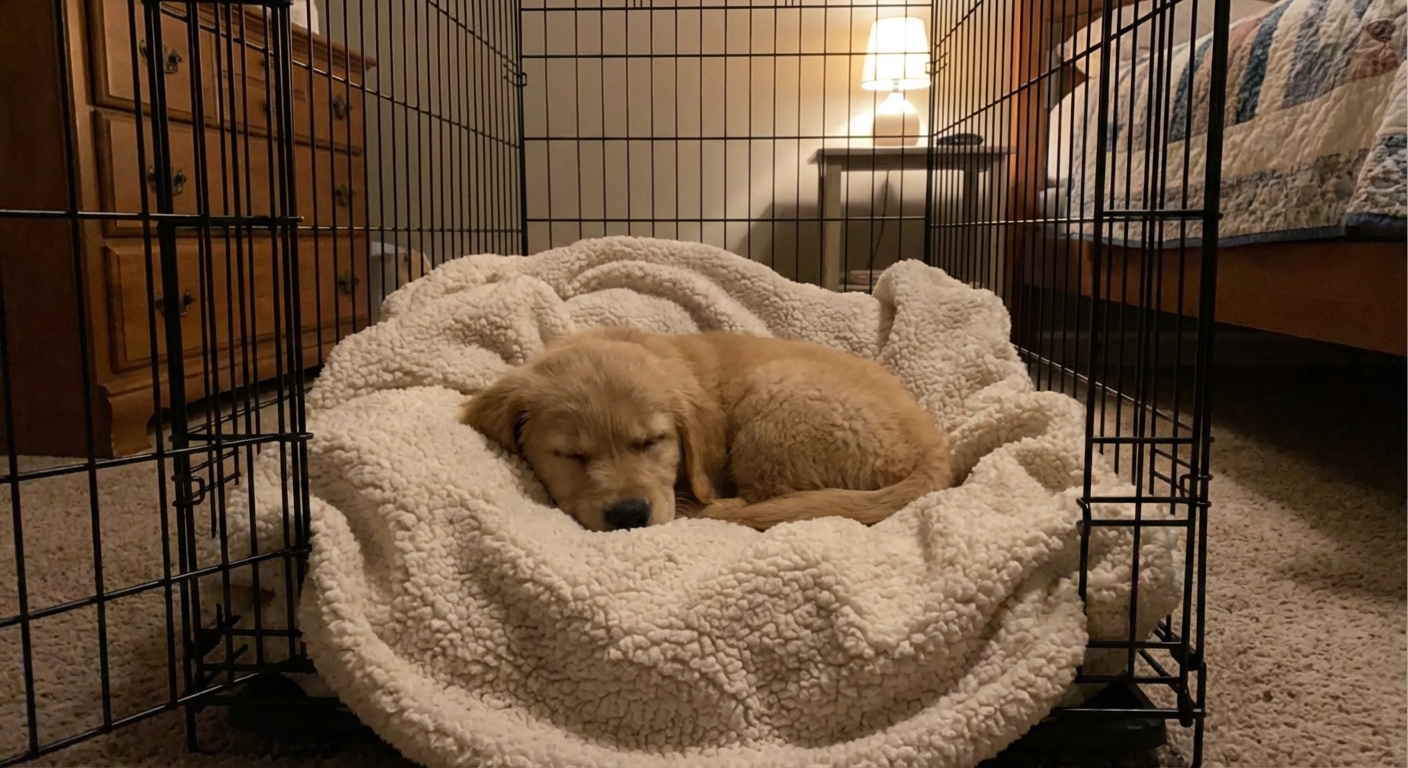
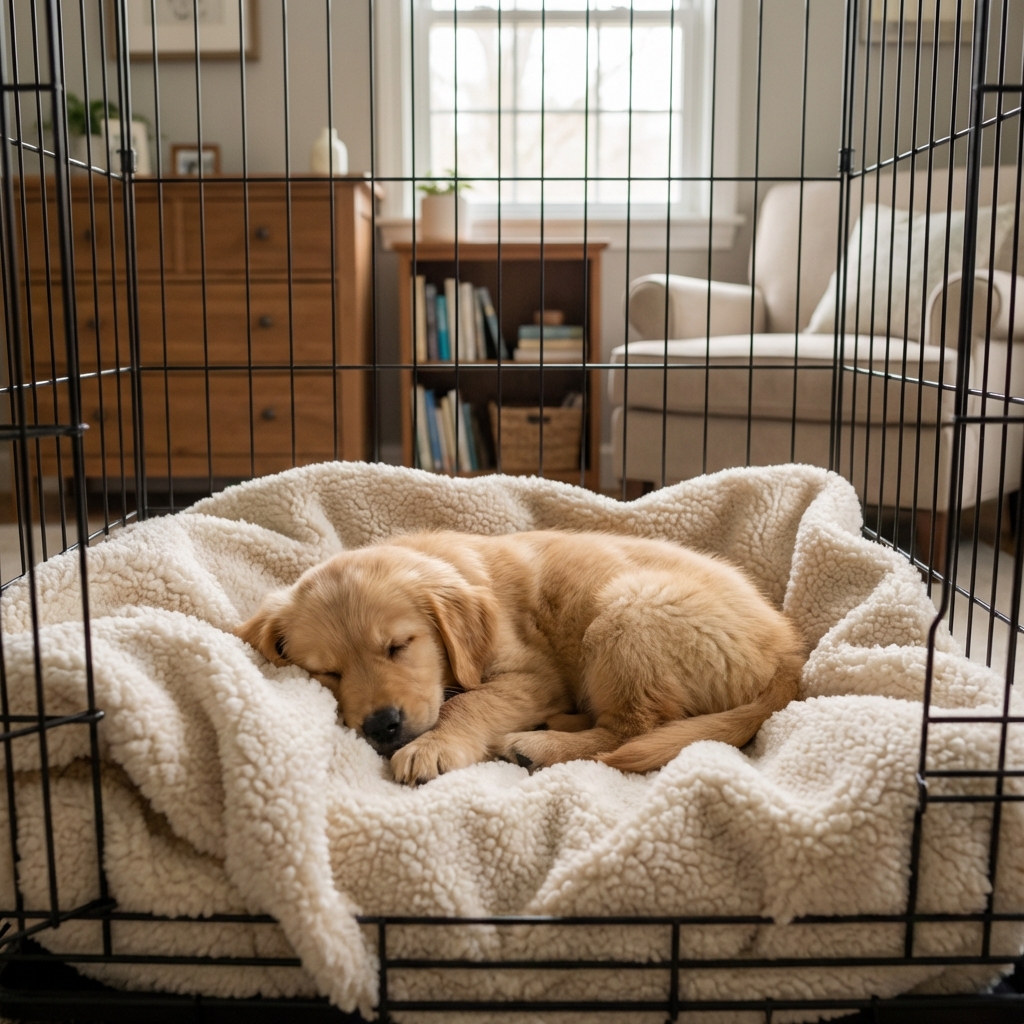
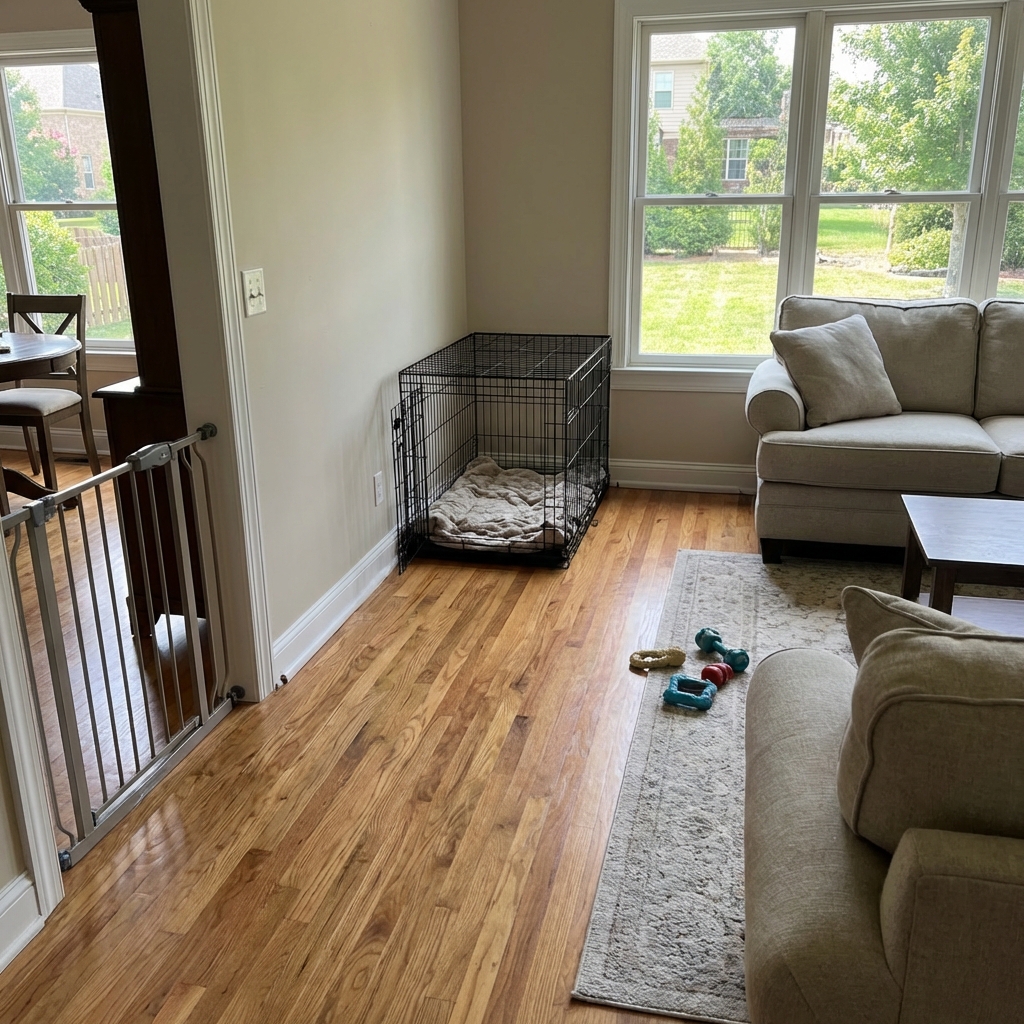
For most puppies, a properly sized crate or a secure playpen is the safest way to sleep. It prevents chewing hazards, wandering accidents, and unsafe jumping off furniture. It also supports a healthy routine for house training.
Crate size tip: your puppy should be able to stand up, turn around, and lie down comfortably. If the crate is larger, a divider can help prevent accidents by limiting extra space.
Keep the sleep space near you
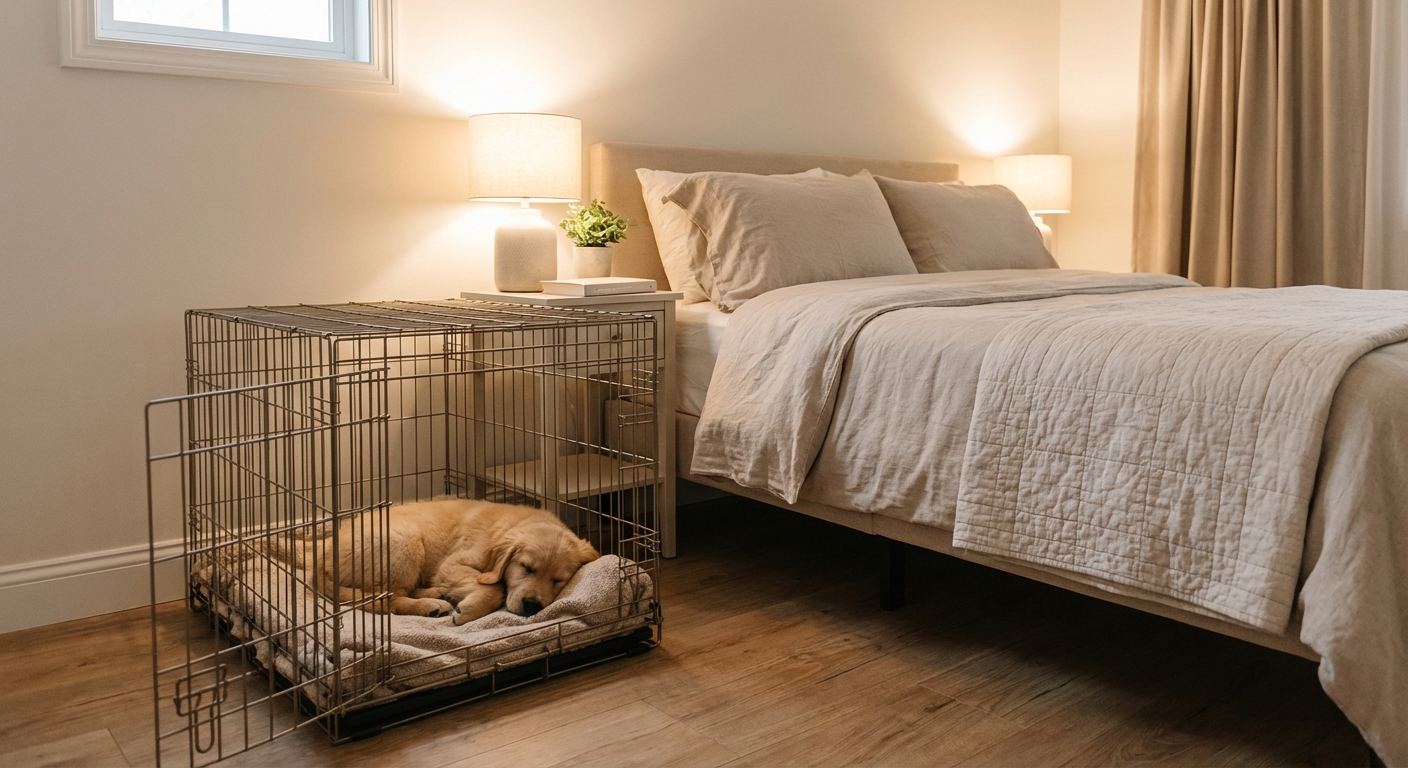
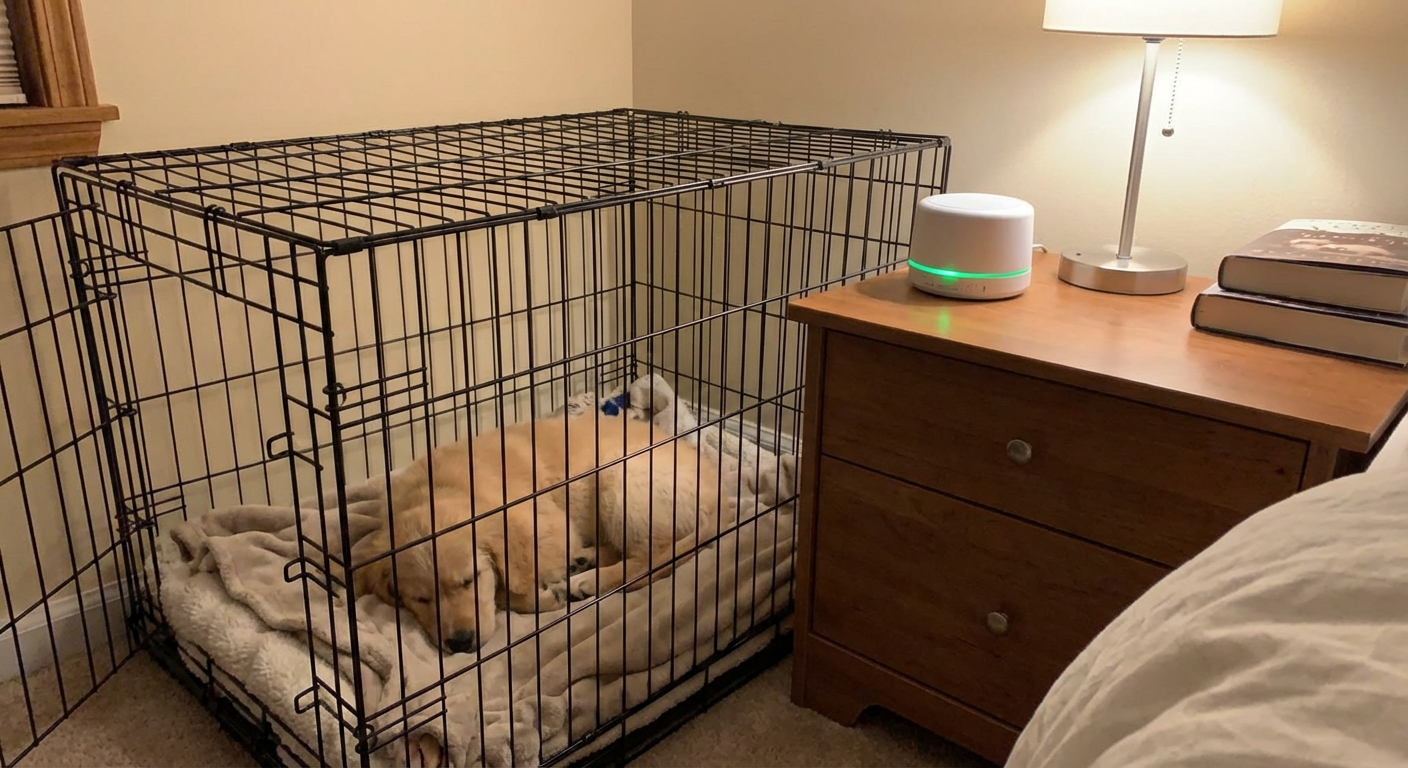
For the first few nights, consider placing the crate near your bed. Puppies settle better when they can hear and smell you. This can reduce crying and helps you respond quickly if they need to potty.
Make it cozy, not crowded
- Use a firm, washable bed or folded blanket.
- Add a light cover over part of the crate to reduce visual stimulation (make sure airflow is good).
- Skip bulky items if your puppy chews and could swallow fabric.
If your puppy cries, they are not “being bad.” They are communicating. The trick is meeting real needs (potty, comfort) without accidentally teaching that crying always equals playtime.
How to reduce crying at night
Use comfort tools that are truly safe
- White noise (fan, sound machine) to mask household creaks and outside sounds.
- Gentle warmth: a warm (not hot) item can help some puppies settle. If you use a warm water bottle, keep it well wrapped, temperature-tested against your wrist, and placed where your puppy cannot access or chew it. Purpose-made puppy warming discs are often safer.
- A ticking clock near the crate can be soothing for some puppies (it is not a guaranteed fix, but it can help in the first few nights).
- A durable rubber toy (for example, a stuffed Kong-style toy) can give your puppy something calming to focus on while settling. Avoid leaving consumable chews in the crate overnight. If you offer an edible chew during wind-down time, remove it before you go to sleep.
Respond in a boring way
If your puppy cries, pause briefly and listen for 30 to 60 seconds. If it sounds urgent, or they have not been out recently, take them out. Keep it calm and simple: leash on, potty spot, quiet praise, and back to bed. A tiny treat is fine if it helps reinforce potty outside, but keep it low-key so it does not turn into a party.
If you think they just want company
Try a gentle, low-stimulation reassurance first: sit beside the crate, speak softly, or place your fingers near the crate door. Many puppies settle with your presence. If your puppy escalates into panic or cannot settle night after night, talk with your veterinarian or a qualified trainer. Some pups need a slower crate-training plan.
How long is crying normal?
The first 2 to 3 nights are often the loudest. Many puppies improve quickly once the routine becomes predictable. If crying is intense, worsening, or continues for more than a week despite consistent potty breaks and a calm setup, it is worth getting help from your veterinarian or a trainer to rule out discomfort, anxiety, or a crate setup issue.
Your first-night schedule
A simple routine
- Evening: short play session, calm bonding time, potty break.
- 1 to 2 hours before bed: last water break (optional) and a final calm potty outing.
- Bedtime: into crate, lights low, white noise on.
- Overnight: one or two quick potty breaks if needed. Keep it quiet and brief.
- Morning: potty immediately, then breakfast, then another potty shortly after.
Consistency is everything. If you follow a similar pattern each night, your puppy learns what to expect, and that reduces anxiety.
If there is a crate accident
Accidents happen, especially in the first week.
- Do not punish. Puppies do not have the control to “be spiteful,” and fear will slow training.
- Clean thoroughly with an enzymatic cleaner to remove odor.
- Recheck your setup: crate may be too large (use a divider), bedtime water timing may need adjustment, or your puppy may need an extra overnight potty break.
Safety checks: what not to do
- Do not let your puppy roam the house unsupervised at night. Chewing electrical cords and swallowing objects are common emergencies.
- Do not punish crying. Fear slows training and can worsen separation-related stress.
- Do not give new treats or rich foods late at night. Stress plus new food can trigger diarrhea.
- Remove collars and harnesses in the crate unless your veterinarian specifically instructs otherwise. Even breakaway collars are not fail-proof, and any snag risk is a risk worth avoiding.
When to call the vet
A little whining is normal. These signs are not:
- Repeated vomiting, especially more than once or with lethargy
- Diarrhea that is frequent, watery, or contains blood
- Refusing food and water for an entire day, or acting weak
- Coughing, labored breathing, or pale gums
- Straining to urinate or no urination
If your puppy is very young, very small, not fully vaccinated, or you are unsure what is normal, it is better to call sooner rather than later. Puppies can get dehydrated quickly.
Note: This article is general guidance and not a substitute for veterinary advice. Your puppy’s age, breed, and health history matter.
Encouragement for you, too
If tonight feels messy, you are not failing. You are helping a baby animal learn an entirely new world. Most puppies improve dramatically after a few nights of predictable routines. Keep things calm, meet real needs, and celebrate small wins like a quiet minute, a successful potty break, or a few hours of sleep.