Your puppy’s first night home can be noisy and stressful. Learn a simple bedtime routine, safe crate setup, potty-break timing, and comfort tips to reduce ...
Article
•
Designer Mixes
Puppy First Night Home Care

Shari Shidate
Designer Mixes contributor
Your puppy’s first night home is a big deal, for them and for you. You have a tiny puppy who just left mom, littermates, familiar smells, and a predictable routine. It’s normal for a puppy to cry, pace, or have an accident, even if they were doing great with a breeder or rescue.
The goal for night one is simple: help your puppy feel safe, prevent accidents, and start gentle routines that you can build on over time.
Before bedtime: set up a calm, safe space
Plan for your puppy to be tired, a little overwhelmed, and very curious. A good setup reduces stress and makes sleep more likely.
Choose a sleep spot
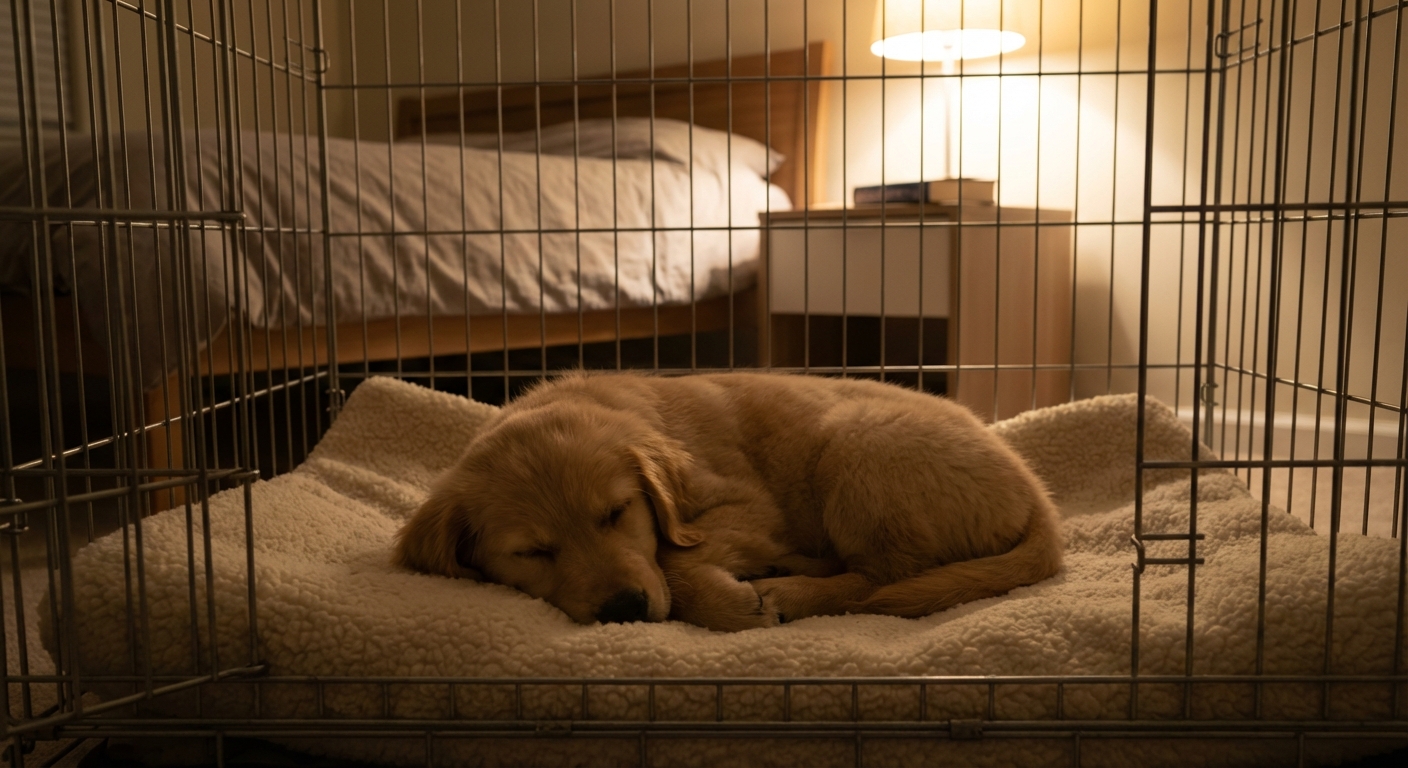
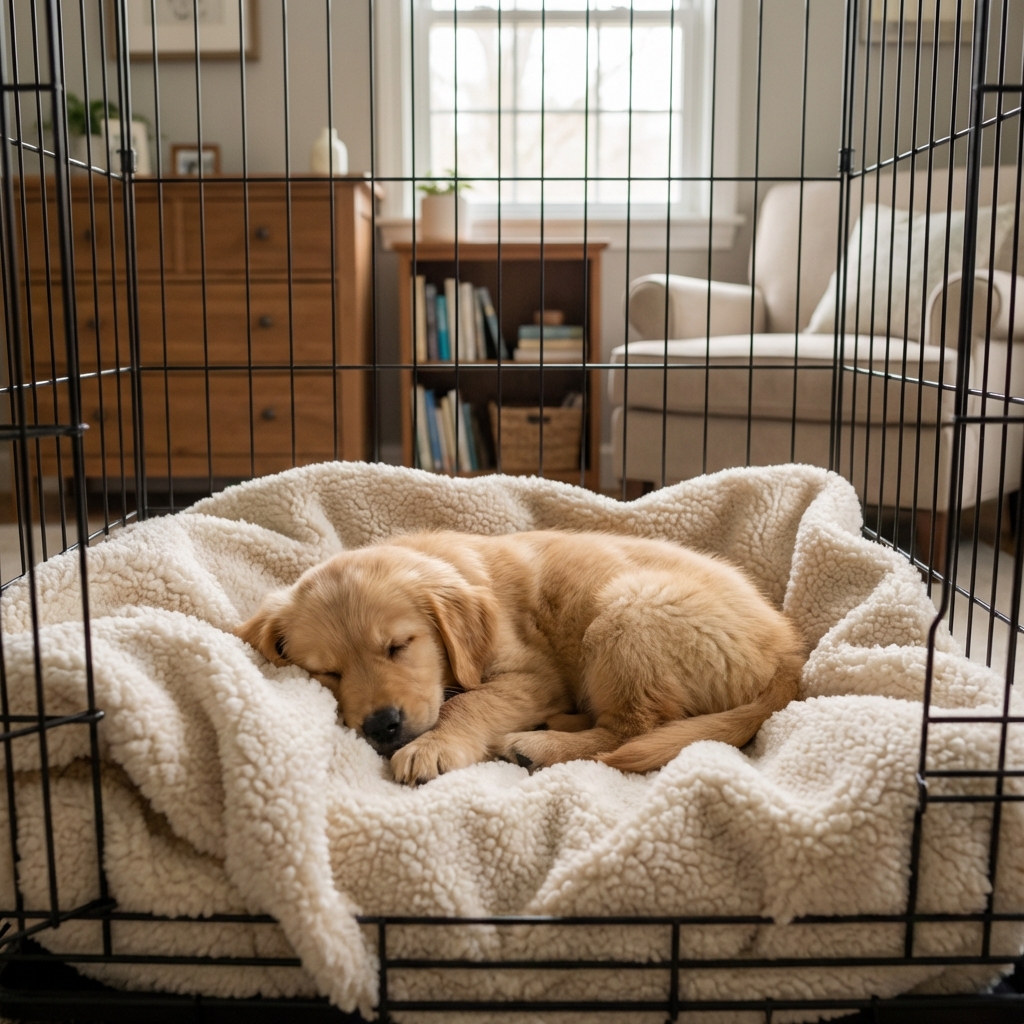
- Best option for most puppies: a crate or playpen in your bedroom or right outside it. Being near you helps them feel secure and can reduce crying.
- Crate sizing matters: the crate should be big enough for your puppy to stand up, turn around, and lie down comfortably, but not so large that they can potty in one corner and sleep in another.
- If you are using a crate: keep it comfortable but not cluttered. A fitted crate pad or folded blanket is usually enough.
- If you are not using a crate yet: use a puppy-proofed playpen area with an easy-to-clean floor surface.
Keep the environment soothing
- Dim lights and quiet voices after dinner.
- Try soft white noise or a fan to mask household sounds.
- Keep the room comfortably warm. If your puppy is shivering or their ears and paws feel cold, add warmth with a safe option like a warmer room or a crate placed away from drafts.
Safety note: For very young puppies, avoid loose bedding, plush items, or anything with strings they could chew, swallow, or get tangled in. If your puppy is a chewer, go minimal until you learn their habits.
Comfort tip: Some puppies settle better with a breeder-scented cloth or a snuggle-style heartbeat toy. Use only sturdy, puppy-safe items and remove anything your puppy starts to shred.
What to do the first evening (simple routine)
Puppies relax when the night follows a predictable pattern. Here is a gentle “first night” flow you can repeat.
1) Dinner early, not late
Feed the last meal a bit earlier than you think. Many puppies do better when dinner is 2 to 3 hours before bedtime, so they have time to potty.
- Keep food the same as what they were eating before for now. Sudden diet changes can cause diarrhea overnight.
- Skip rich treats and new chews on night one. Excitement and upset stomach are not a fun combo at 2 a.m.
2) Calm play, then a wind-down
A short play session helps burn energy, but avoid turning your living room into a puppy rave. End with a calm activity like gentle petting or a lick mat using their normal food.
3) Potty, potty, potty
Plan a potty trip:
- Right after dinner
- After play
- Right before you place them in the crate or pen
Use the same door, the same patch of grass, and the same cue phrase each time. Consistency is your best friend.
Health note: Until your puppy is fully vaccinated, avoid high-dog-traffic potty spots like dog parks, pet store lawns, and shared apartment relief areas when possible. Choose a low-traffic spot and ask your veterinarian what is safest in your area.
The crate on night one: how to make it work
As a veterinary assistant, I’ve seen how often crate training succeeds when we treat it like a comfort skill, not a punishment.
Make the crate feel safe
- Toss a few pieces of kibble in the crate so your puppy walks in willingly.
- Use a light blanket over part of the crate (leave airflow). Many puppies settle better when it feels den-like.
- Place the crate close enough that your puppy can hear and smell you.
Should you put water in the crate?
For most healthy puppies, offer water normally during the day and earlier in the evening. Overnight, some owners choose not to leave a full bowl in the crate because it can increase accidents or spills. Do not restrict water during the day, and if your puppy is very young, recently ill, on medications, or your home is warm, ask your veterinarian what is appropriate.
If your puppy cries
Crying is common. Your puppy is not being “bad,” they are adjusting. Over time, you will learn the difference between “I’m upset” and “I need to potty.” Here’s what helps:
- Wait a moment: some puppies settle after a minute or two.
- Offer reassurance without a party: speak softly. You can place your fingers near the crate for comfort.
- Potty check: if crying escalates, if you suspect they need to go, or if it has been about 2 to 4 hours for a very young puppy, take them out quietly for a quick potty. No play. No big talk. Then back to bed.
- Avoid accidental training: if your puppy is actively screaming and you are sure they are safe, wait for a brief pause in the noise before opening the crate so you do not teach “scream and the door opens.”
Night one is about safety and trust. You are teaching your puppy: “I hear you, and you are okay.”
Potty plans for the night (realistic expectations)
Most puppies cannot “hold it” all night at first. Many will need a potty break overnight, sometimes two.
How often will they need to go?
This varies by age, size, and routine, but here is a helpful rule of thumb for very young puppies: plan on a potty break about every 2 to 3 hours overnight at first. Use an alarm for the first few nights, then adjust as your puppy proves they can sleep longer.
How to do night potty breaks
- Carry your puppy if possible so they do not stop to pee on the way out.
- Keep lights low and your voice calm.
- Use one cue phrase (example: “Go potty”).
- Give quiet praise after they go, then straight back inside.
Accident tip: If your puppy has an accident, clean with an enzymatic cleaner so the smell does not linger and invite repeat accidents.
Feeding and tummy comfort the first night
Stress can upset digestion. New homes, new water, new schedules, and new treats can cause soft stool even when nothing is “wrong.”
Keep food consistent
- Use the same brand and formula they were eating for at least the first week, unless your veterinarian advises otherwise.
- If you plan to switch foods, do a slow transition over 7 to 10 days.
Skip risky foods
The first night is not the time for table scraps or rich “welcome home” treats. Foods like fatty meats can trigger diarrhea and, in some dogs (especially those prone to it), pancreatitis.
When to call the vet
Call your veterinarian or an emergency clinic if you see:
- Repeated vomiting
- Bloody diarrhea or black or tarry stool
- Extreme lethargy, pale gums, or weakness
- Swollen belly with unproductive retching
- Suspected toxin exposure (chocolate, xylitol, grapes or raisins, medications, etc.)
Puppy-proofing for nighttime safety
Puppies explore with their mouths. Nighttime is when chewing can happen quietly, which is why setup matters.
Quick puppy-proof checklist
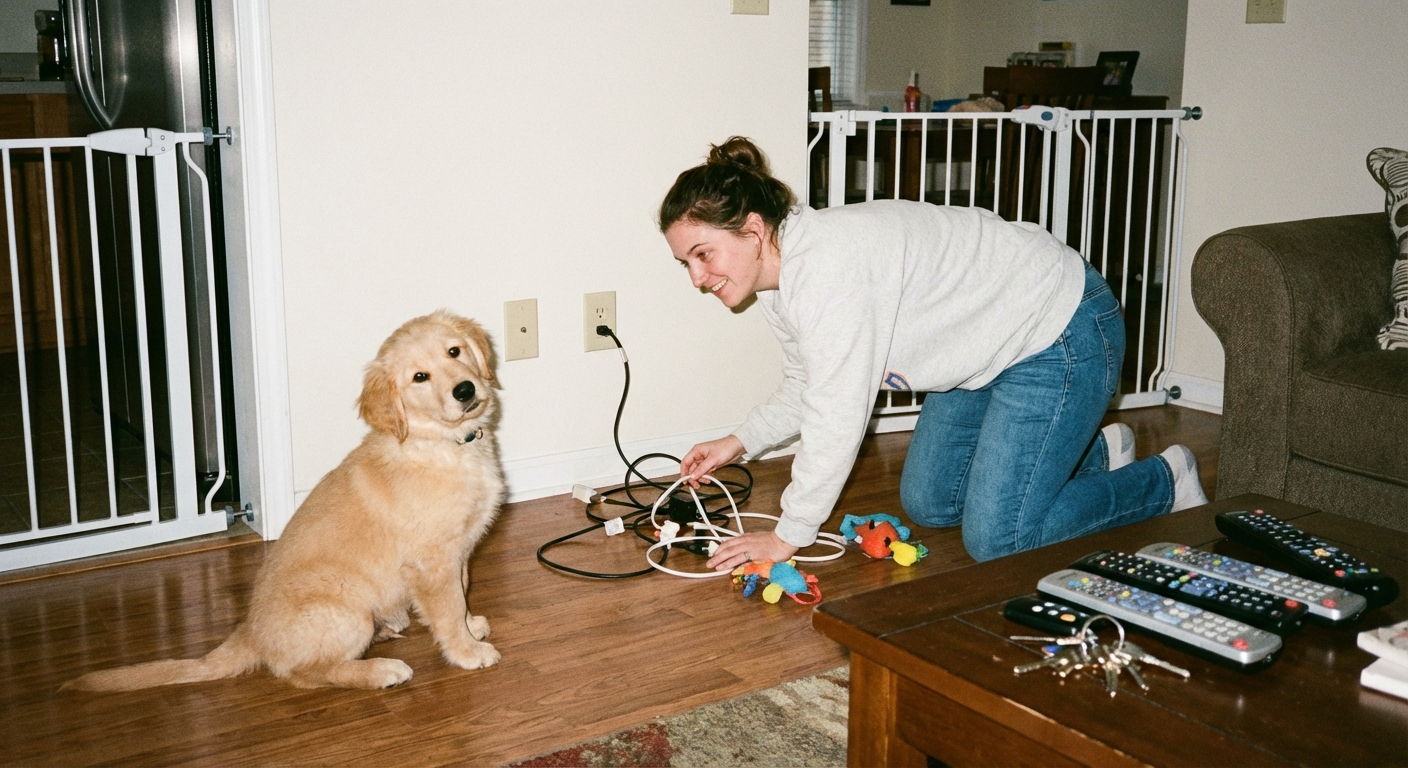
- Pick up shoes, kids’ toys, hair ties, and small objects.
- Hide electrical cords or block access.
- Keep trash behind a closed door.
- Remove houseplants that could be toxic.
- Use baby gates to limit roaming.
Chew safety: choose chews sized appropriately for your puppy and monitor new items. If it can be bitten off and swallowed, it is a risk.
What to prepare ahead of time (shopping list)
You do not need a mountain of gear. A few practical items make a huge difference on night one.
- Crate and or playpen
- Enzymatic cleaner
- Paper towels and washable blankets
- Collar or harness and a lightweight leash
- ID tag (even for indoor puppies)
- Food they are already eating
- Simple treats for training
- Veterinarian contact info and nearest emergency clinic address
The morning after: set the tone gently
Congratulations, you made it through night one. The next morning is a perfect time to start your rhythm.
- Go straight outside for a potty break.
- Feed breakfast on schedule.
- Do a calm, short walk or play session.
- Start tiny training moments like “sit” for food or “touch” for a treat.
If the first night felt messy, that does not mean you are failing. It means you have a normal puppy. With consistency, most puppies improve quickly once they learn your home is safe and predictable.