Turn chicken and rice into a more balanced homemade dog meal with veggies, calcium carbonate, and omega-3s. Includes gram weights, portion guidance, swaps, a...
Article
•
Designer Mixes
Puppy Diarrhea: Need-to-Know Tips

Shari Shidate
Designer Mixes contributor
There are few things more stressful than bringing home a new puppy and then seeing runny stool in the yard or in the crate. As a veterinary assistant, I want you to know two things right away: puppy diarrhea is common, and it can also become serious quickly because puppies dehydrate faster than adult dogs.
This guide will help you sort out what is normal, what is not, and what you can do at home while you figure out the cause. When in doubt, call your veterinarian. Trust your gut, and trust what you see. If your puppy seems quieter than usual, is not eating, or is having repeated watery stool, it is worth a quick professional check-in.
First, a quick safety check
If you are seeing diarrhea, take 30 seconds to assess your puppy. These details help your vet team triage the situation fast.
Go to the vet now if you notice
- Blood in the stool (red streaks or black, tarry stool)
- Vomiting along with diarrhea, especially repeated vomiting
- Weakness, collapse, severe lethargy, or your puppy will not get up
- Refusing water or cannot keep water down
- Dehydration signs: tacky or dry gums, sunken eyes, skin that does not spring back quickly, very low energy
- Known toxin risk (chewed meds, chocolate, xylitol gum, rodent bait, mushrooms, compost)
- Suspected parvo exposure (not fully vaccinated and has been in high-dog-traffic areas)
Call your vet urgently (same day) if
- Your puppy is under 12 weeks, very small, or not fully vaccinated, even if they seem mostly bright
- Diarrhea is watery or happening many times in a short period
- Your puppy is not eating like normal
If your puppy is stable and bright, you can often do supportive care at home while you monitor closely, but keep reading for when to escalate.
What puppy diarrhea can mean
Diarrhea is a symptom, not a diagnosis. In puppies, it most commonly comes down to one of these categories.
1) Diet changes and new home stress
Puppies have sensitive GI tracts. A sudden switch in food, too many treats, new chews, or stress from rehoming can speed up the gut and cause loose stool.
2) Parasites
Roundworms, hookworms, and especially giardia are frequent offenders in young dogs. Whipworms are possible too, but are less common in very young puppies. Many puppies look otherwise fine but still have soft stool, mucus, or intermittent diarrhea.
3) Viral or bacterial infection
Parvovirus is the biggest fear because it can be life-threatening. Other infections can also cause diarrhea, fever, low appetite, or vomiting. Puppies who are not fully vaccinated have less protection.
4) Eating something they should not
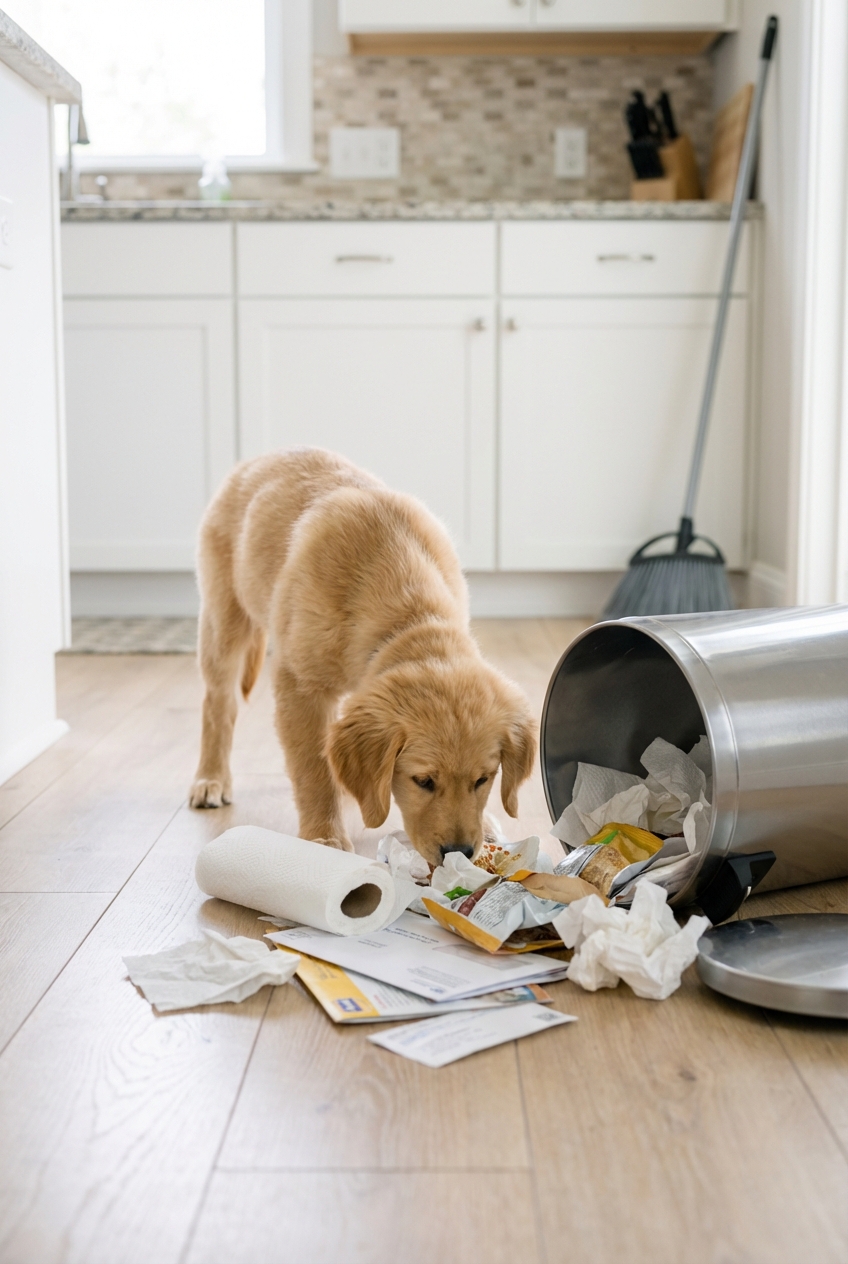
Puppies explore with their mouths. Garbage, fatty foods, spoiled food, sticks, socks, and high-fat table scraps can irritate the gut or even cause an obstruction.
5) Food intolerance or sensitivity
Some puppies do not tolerate certain proteins, very rich diets, or specific ingredients. This is more likely if diarrhea is recurring or paired with itchy skin or chronic ear issues.
6) Other causes
If diarrhea keeps coming back, your vet may look beyond the common triggers. Less common issues can include inflammatory conditions, congenital problems, reactions to medications, or other GI disease. Recurrent diarrhea is always worth a veterinary conversation.
How to describe the diarrhea
When you call your vet, you will get faster help if you can describe what you are seeing. Take a photo if you can do so safely and discreetly.
- Consistency: pudding-soft, watery, or formed but soft
- Frequency: more trips outside than normal, accidents, urgency
- Color: normal brown, yellow, green-tinged, black or tarry
- Contents: mucus, worms, foreign material, visible blood
- Other signs: vomiting, appetite change, fever, low energy
- Timeline: when it started and if it is getting better or worse
At-home care for mild diarrhea
If your puppy is acting normal, has no blood, and is still drinking water, these steps can help calm the gut while you monitor. If symptoms persist or worsen, contact your vet.
Step 1: Protect hydration
Water matters most. Offer fresh water frequently. For some puppies, offering smaller amounts more often is easier on the stomach.
- If your puppy will not drink, call your veterinarian.
- If your puppy is vomiting water back up, this is an urgent vet visit.
Step 2: Pause the extras
Stop all treats, chews, table food, and rich add-ons for a couple of days. Many well-meaning snacks are the reason stools stay soft.
Step 3: Feed a gentle, short-term diet
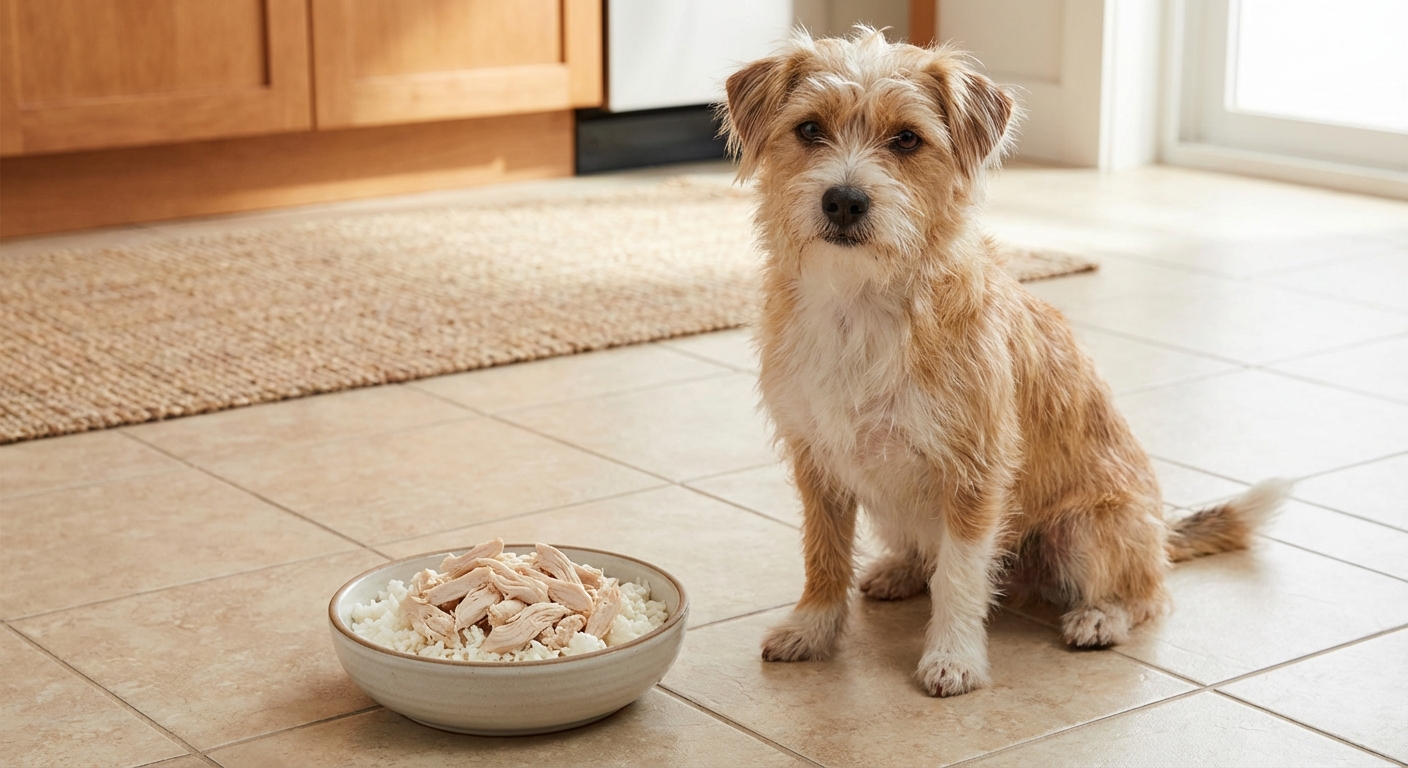
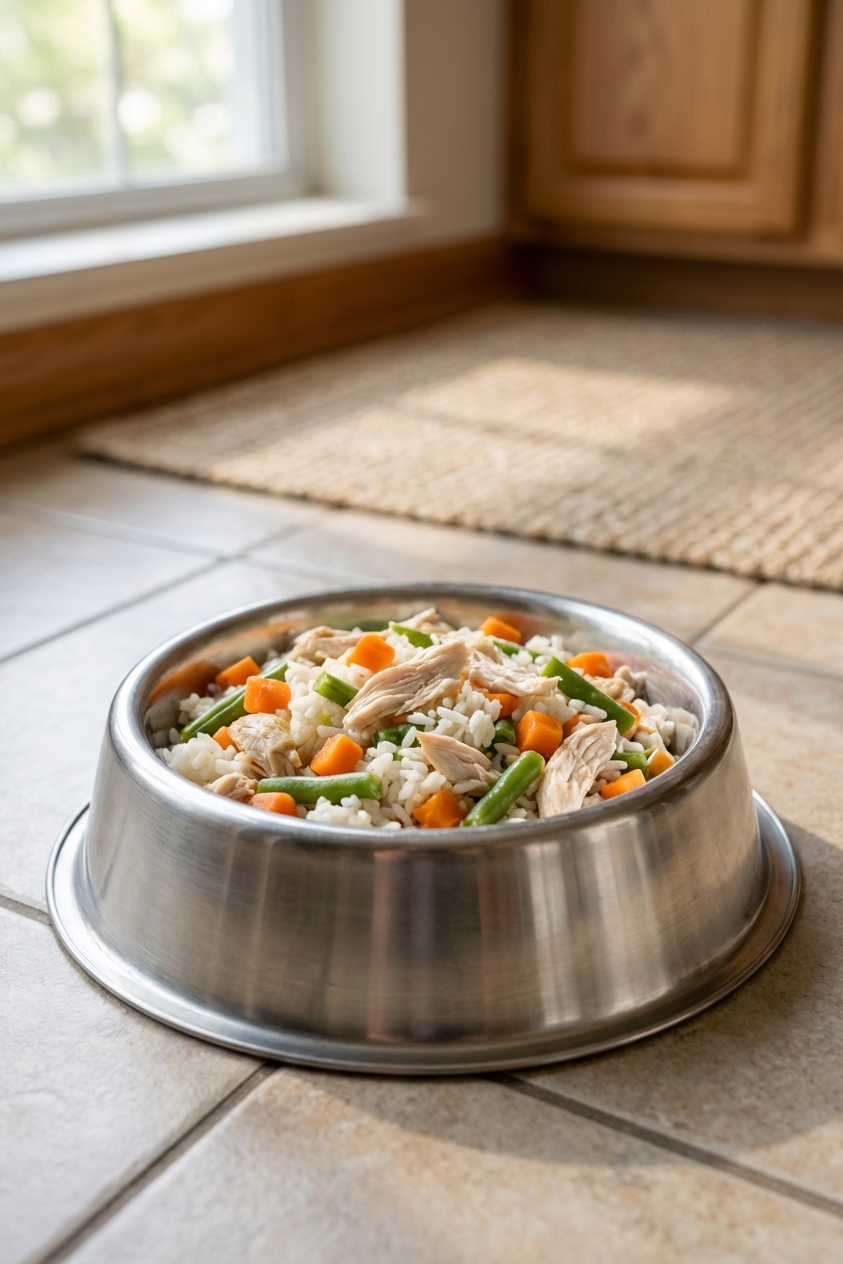
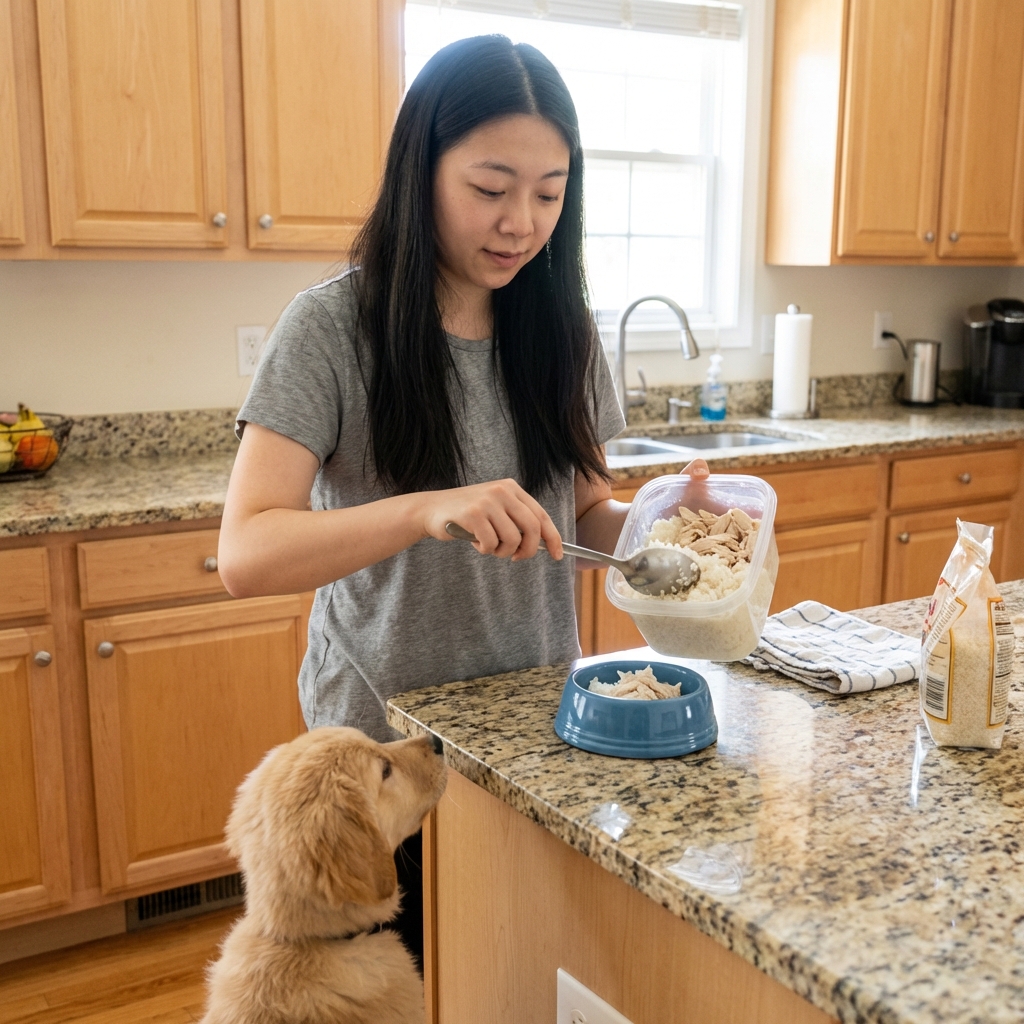
For many puppies, a simple bland meal for 24 to 48 hours can help. Common options include boiled chicken breast with plain white rice. Another gentle option is lean ground turkey with rice. Keep portions small and split into 3 to 4 meals per day.
Important: this is a short-term strategy, not a complete long-term puppy diet. Also, some veterinarians prefer a prescription GI diet for young or small puppies because it is more balanced for growth and can be easier to digest. If you have access to a prescription option, ask your vet if that is a better fit for your puppy.
Also important: puppies should not be fasted the way adult dogs sometimes are. Because they are growing and can become hypoglycemic, check with your veterinarian before withholding food, especially for toy breeds.
Step 4: Consider fiber, only if appropriate
A small amount of plain canned pumpkin (not pie filling) can help some puppies by supporting stool consistency. Ask your vet for the right amount for your puppy’s size.
Step 5: Probiotics can be helpful
Veterinary probiotics are often used to support a healthy gut microbiome during diarrhea. Your vet can recommend a product and dosing. Avoid random human supplements unless your veterinarian approves them.
Step 6: Transition back to normal food
Once stool is improving and your puppy is acting normal, transition back to the regular puppy food gradually over 2 to 3 days. A simple approach is 75% bland and 25% regular for a day, then 50/50, then 25/75, then back to 100% regular. If diarrhea returns during the transition, pause and call your vet.
What not to do
- Do not give human anti-diarrheal meds (like loperamide) unless your veterinarian specifically instructs you. It can be risky in certain situations, including infectious diarrhea, some toxin ingestions, and in dogs with MDR1 gene sensitivity (common in some herding breeds like Collies).
- Do not switch foods repeatedly trying to fix the issue. Rapid changes can keep the GI tract irritated.
- Do not assume it is just stress if diarrhea is watery, frequent, or your puppy is not fully vaccinated.
- Do not delay deworming and stool testing when diarrhea lasts more than 24 hours in a puppy. Parasites are extremely common in young dogs.
Hygiene and isolation
Because infectious causes like giardia and parvo are possible, play it safe until you know more.
- Limit contact with other dogs and avoid shared potty areas.
- Pick up stool promptly and wash your hands after cleaning.
- Clean accidents with an appropriate disinfectant. Your vet can advise you on what works best if parvo is a concern, since not all cleaners kill viruses.
When to call your vet
Reach out promptly if:
- Diarrhea lasts more than 24 hours in a puppy
- Your puppy has multiple watery stools in a short time
- You see mucus repeatedly or any blood
- Your puppy is not eating normally
- There is a recent diet change, new treats, or trash exposure
- Your puppy is due for vaccines or has not completed the series
Your vet may recommend a fecal test, dewormer, a prescription GI diet, probiotics, or additional testing depending on your puppy’s age and risk factors.
Preventing diarrhea
You cannot prevent every upset tummy, but you can lower the odds significantly with a few simple habits.
Transition food slowly
When changing foods, aim for a gradual transition over 7 to 10 days. A common approach is:
- Days 1 to 3: 75% old food, 25% new food
- Days 4 to 6: 50% old food, 50% new food
- Days 7 to 9: 25% old food, 75% new food
- Day 10+: 100% new food
Keep treats simple
Especially during the first few weeks at home, keep treats to under 10% of daily calories and avoid rich, fatty options.
Stay consistent with parasite prevention
Use vet-recommended deworming and monthly preventatives. Bring a fresh stool sample to puppy visits when possible.
Stool sample tips
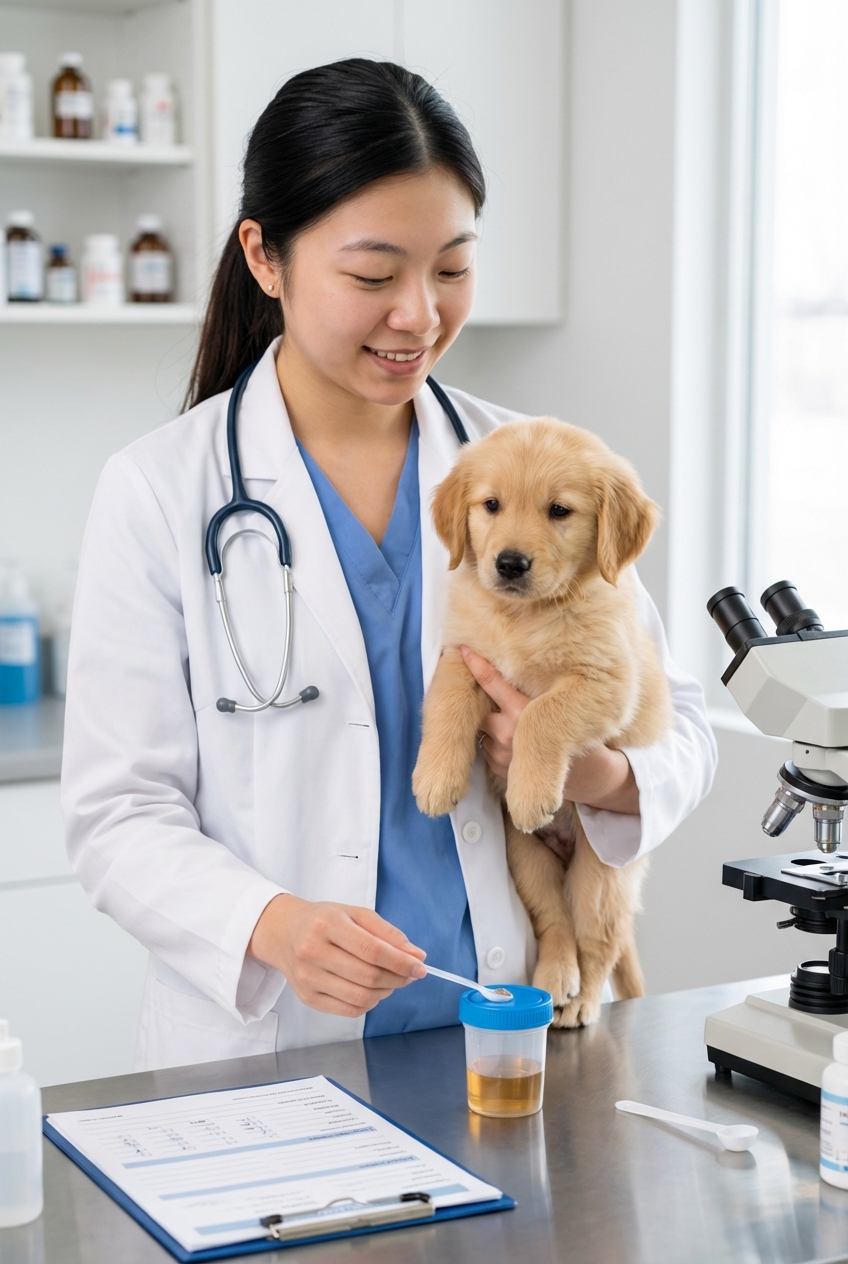
If your clinic asks for a stool sample, bring one that is as fresh as possible. If you cannot drop it off right away, place it in a sealed bag or container and refrigerate it. Many clinics prefer the sample delivered within 24 hours, but follow your clinic’s instructions since policies vary.
Choose socialization spots carefully
Until your puppy is fully vaccinated, be cautious with high-traffic dog areas. Socialization is important, but it can be done safely with controlled environments.
FAQ
Is diarrhea normal after vaccines?
Some puppies have mild GI upset after vaccines, often from the day itself, stress, excitement, or a temporary reaction. It should be short-lived. If diarrhea is severe, watery, bloody, or paired with vomiting or lethargy, call your veterinarian.
What if my puppy has diarrhea but still wants to play?
That is a reassuring sign, but it does not rule out parasites or infection. Monitor closely and contact your vet if it lasts more than 24 hours, becomes watery, or you notice any red flags.
Can I start homemade food if my puppy has diarrhea?
During active diarrhea is not the time for major diet experiments. A short-term bland diet can be helpful, but long-term homemade puppy diets must be carefully balanced for growth. If you want to go that route, partner with your veterinarian or a board-certified veterinary nutritionist.
Bottom line
Puppy diarrhea is common, but it is not something to ignore. Mild cases often improve with hydration support, removing treat overload, and a short-term gentle diet. Persistent or severe diarrhea, especially in not fully vaccinated puppies, needs veterinary care.
If you are ever unsure, call your vet clinic. You are not overreacting. You are protecting a growing puppy who cannot afford to get dehydrated.