Vet-assisted guide to puppy diarrhea: emergency red flags, bland diet options, pumpkin and probiotics, hydration support, foods to avoid, feeding schedule, a...
Article
•
Designer Mixes
Puppy Diarrhea Home Remedy Steps

Shari Shidate
Designer Mixes contributor
Puppy diarrhea is one of the most common reasons pet parents call our clinic, and I get it. It is stressful, messy, and it can change quickly. The encouraging news is that many mild cases improve with smart, supportive care at home, as long as your puppy is bright and alert, hydrated, and otherwise acting normal.
This step-by-step home remedy guide is designed for mild diarrhea only. Because puppies can dehydrate faster than adult dogs (especially very young pups and very small pups), you will also see clear “do not wait” warning signs so you know when it is time to call your veterinarian.
First, decide if home care is safe
Before you change food or try a bland diet, do a quick safety check. Home care is only appropriate if your puppy has mild diarrhea and otherwise seems okay.
Home care can be reasonable if
- Your puppy is alert and responsive, still interested in food or treats.
- Diarrhea is mild to moderate and has been present for less than 24 to 48 hours.
- No blood is seen (no bright red streaks and no black, tarry stool).
- No repeated vomiting.
- Your puppy is drinking and can keep water down.
- Your puppy has no known chronic illness and is not on medications that affect the gut.
Call a vet now if you notice any of these
- Blood in stool, or stool that looks black and sticky (this can mean digested blood).
- Vomiting more than once, or vomiting plus diarrhea together.
- Very frequent diarrhea (for example, hourly or constant squirts), even if it started today. This can become an emergency fast in young or small puppies.
- Signs of dehydration like dry gums, sunken eyes, weakness, tacky saliva, or skin that does not spring back when gently lifted at the shoulder.
- Lethargy, collapse, painful belly, fever, or your puppy seems “not themselves.”
- Diarrhea in a very young puppy (especially under 12 weeks), a tiny breed, or a very small puppy (often under about 5 pounds), or an unvaccinated puppy.
- Possible toxin exposure (human meds, xylitol gum, grapes and raisins, rodent bait, etc.).
- Diarrhea lasting longer than 48 hours even if your puppy seems fine.
Puppies can go from “a little loose stool” to dangerously dehydrated fast. If your gut tells you something is off, trust that instinct and call your veterinarian.
Step-by-step home remedy plan
Step 1: Stop extras and simplify
If diarrhea started after a new treat, chew, bone, table food, rich training treats, or a sudden food switch, stop those extras immediately. Keep your puppy calm and rested. Excitement and stress can worsen diarrhea, especially in sensitive pups.
Also check the basics: Did your puppy get into the trash? Eat sticks or toys? Start a new dewormer or antibiotic? Visit a dog park? These details help your vet later if you need to call.
Step 2: Hydration first
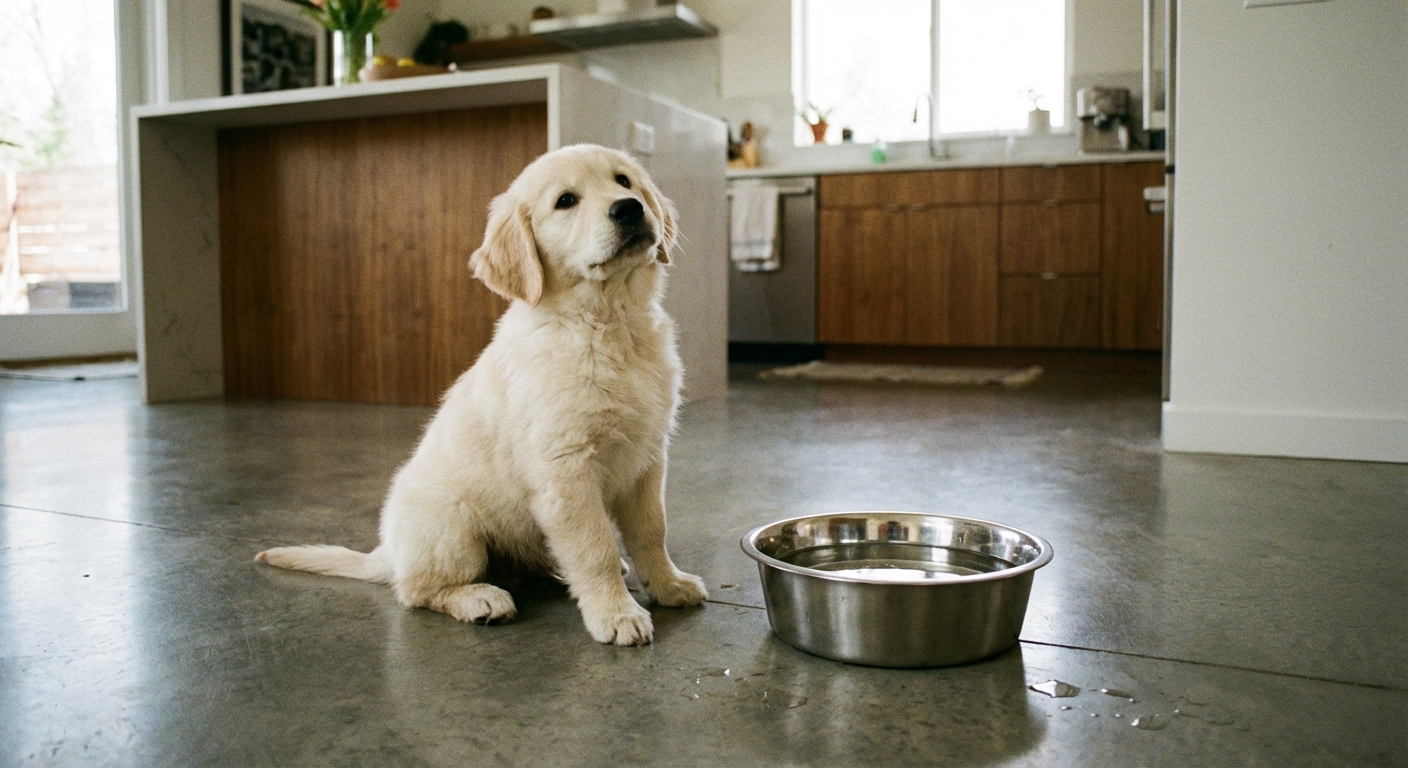
Diarrhea causes fluid and electrolyte loss. Your goal is steady hydration.
- Offer fresh water at all times.
- If your puppy gulps and then vomits, offer small amounts more frequently (for example, a few laps every 15 to 30 minutes).
- Ask your veterinarian if a pet-safe, unflavored oral electrolyte solution is appropriate for your puppy’s size and situation. Avoid sports drinks and avoid anything sweetened or flavored. Always confirm ingredients and keep anything containing xylitol far away from pets.
Quick hydration check: Gums should feel slick and moist, not sticky or dry. If you gently lift the skin over the shoulder blades, it should return quickly. These checks are helpful screening tools, but they are not perfect in puppies. If you are unsure, call your vet.
Step 3: Decide about fasting
For adult dogs, a short fast is sometimes recommended. For puppies, fasting can be risky because they are smaller and can have blood sugar dips.
- Very young puppies (under 4 months): Do not fast unless your veterinarian instructs you to. Instead, move to small, bland meals.
- Older puppies (around 4 to 6 months and up): Some may tolerate a short break from food, but many do better with smaller bland meals rather than a full fast. If you are unsure, call your vet.
If your puppy is vomiting, refusing water, seems weak, or has a painful belly, skip home care and call your veterinarian.
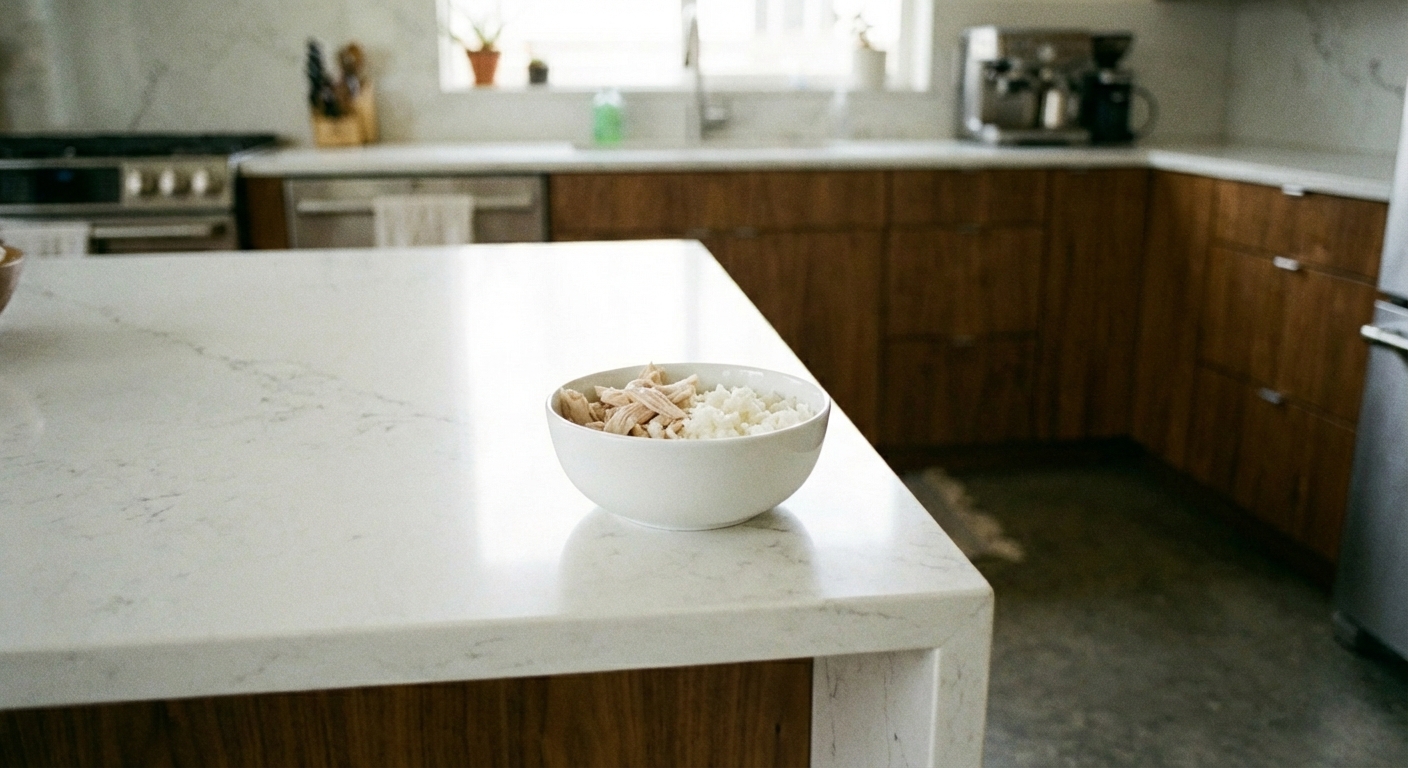
Step 4: Bland diet, small meals
A bland diet gives the intestines a break while still providing calories. Keep portions modest. Overfeeding, even bland food, can trigger more diarrhea.
Common bland options (choose one protein and one carb):
- Boiled, skinless chicken breast plus plain white rice
- Boiled lean turkey plus white rice
- Low-fat cottage cheese (if dairy tolerant) plus white rice
How much and how often: Offer small meals every 3 to 4 hours for the first day. A practical starting point is a few spoonfuls for tiny pups, or a small portion for larger pups, then adjust based on stool and appetite. If diarrhea worsens after feeding, stop and call your vet.
Avoid for now: fatty meats, oils, peanut butter, rich chews, bones, raw diets during active diarrhea, and high-fiber add-ins unless your vet recommends them.
Step 5: Add a vet probiotic
There is some evidence that certain veterinary probiotics can shorten the duration of acute diarrhea in dogs by supporting a healthier gut microbiome. Choose a product made for pets, and follow the label for your puppy’s weight.
If your puppy is on antibiotics, probiotics are often especially helpful, but timing can matter. Ask your vet whether to separate doses by a couple of hours.
Step 6: Pumpkin, carefully
Plain pumpkin can help some dogs because it contains soluble fiber that can support stool quality. It is not a cure-all, and too much can loosen stool more. Pumpkin also adds calories, so keep it small.
- Use only plain canned pumpkin, not pumpkin pie filling.
- Start small: a teaspoon for small pups, up to a tablespoon for larger pups, mixed into bland food.
If your puppy’s stool worsens after pumpkin, stop it. If your puppy is very young, has repeated diarrhea, or you suspect parasites, use pumpkin only if your vet agrees.
Step 7: Watch poop for 48 hours
I know it is not glamorous, but stool tells you what the gut is doing. Track these details:
- Frequency: Is it every hour, or just a couple times a day?
- Volume: Large volumes can sometimes suggest small intestine involvement, while frequent small squirts with straining can often suggest large bowel irritation. This is not a diagnosis, but it helps describe what you are seeing.
- Mucus: A little mucus can happen with irritation, but heavy mucus deserves a call.
- Color: Bright red blood, black stool, or pale gray stool needs veterinary help.
- Energy and appetite: Your puppy’s behavior matters as much as the stool.
If stools are improving, continue bland food for 2 to 3 days before transitioning back.
Step 8: Transition back slowly
Once stool is normal for at least 24 hours, begin a gradual transition back to your puppy’s regular diet. A fast switch is a classic reason diarrhea returns.
- Days 1 to 2: 75% bland, 25% regular puppy food
- Days 3 to 4: 50% bland, 50% regular
- Days 5 to 6: 25% bland, 75% regular
- Day 7: 100% regular
If loose stool returns, step back to the previous ratio and call your vet for guidance.
Why puppies get diarrhea
Puppies explore with their mouths, their immune systems are still developing, and their digestion is more sensitive than an adult dog’s. Common causes include:
- Dietary indiscretion: new treats, table food, garbage snacks
- Sudden food change
- Parasites such as roundworms, hookworms, whipworms, giardia, and coccidia
- Stress from travel, boarding, new home, or training classes
- Viral illness (more concerning in unvaccinated puppies)
- Antibiotic-associated diarrhea
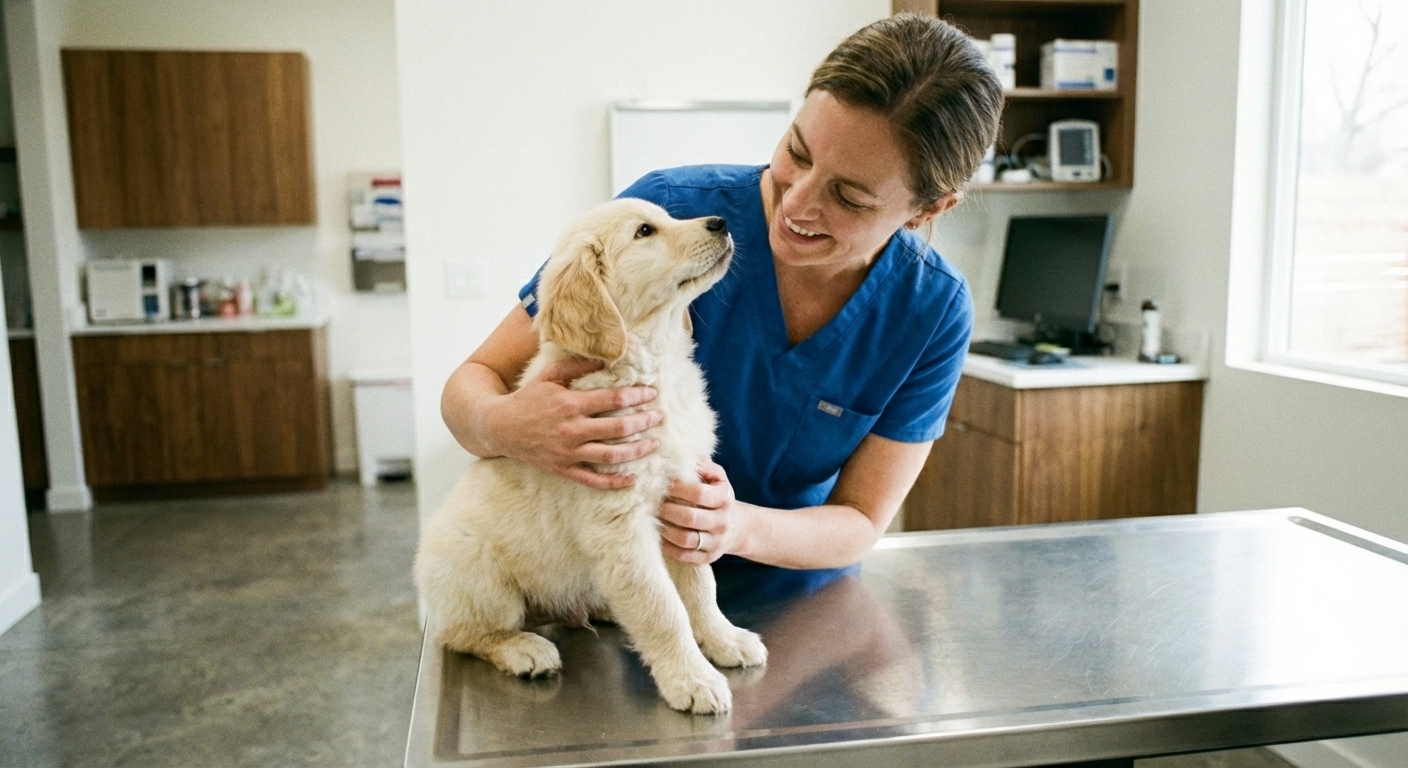
If diarrhea keeps recurring, bring a fresh stool sample to your vet. Parasite testing is one of the most practical, high-value steps you can take for a puppy with repeated loose stool.
Hygiene and exposure
Some causes of diarrhea (especially giardia and coccidia) can spread to other dogs. While your puppy has diarrhea:
- Pick up stool right away and dispose of it properly.
- Clean soiled areas promptly. Ask your vet what disinfectant is appropriate for your surfaces and situation.
- Avoid dog parks, daycare, and playdates until stools are normal.
- Wash hands after clean-up, and keep faces away from puppy mouths if they are having digestive issues.
Stool sample tips
If your vet asks for a stool sample, here is what helps most:
- Collect a fresh sample (ideally within a few hours).
- Use a clean bag or container and avoid as much dirt or litter as possible.
- If you cannot bring it in right away, refrigerate it (do not freeze) and deliver it as soon as you can.
Do not give at home
These are common mistakes I see, and they can delay proper treatment:
- Human anti-diarrhea medications unless your vet explicitly recommends them. Some can be dangerous for puppies or mask worsening illness.
- Multiple new supplements at once. If you add three things and diarrhea improves or worsens, you will not know what helped.
- High-fat foods (even “healthy” fats) during active diarrhea.
- Raw eggs or raw meat while the gut is already irritated.
- Milk or rich dairy. Some pups are lactose sensitive.
When to worry about an obstruction
Puppies are famous for chewing and swallowing things they should not. Call your vet urgently if you suspect a foreign body, especially if you notice any of these:
- Repeated vomiting or retching
- Diarrhea plus vomiting, especially if your puppy cannot keep water down
- Painful or tight belly
- Sudden loss of appetite, lethargy, or straining without producing much stool
- A known history of eating toys, socks, bones, corn cobs, or trash
When to expect improvement
With mild dietary diarrhea, many puppies show improvement within 24 hours of a bland diet and supportive care, with more normal stool over 24 to 48 hours. If you are not seeing clear improvement by day two, if diarrhea is very frequent, or if new symptoms appear, contact your veterinarian.
A reminder from a vet assistant
You are not overreacting. Diarrhea feels urgent because, in puppies, it can be. If your puppy is bright and alert, hydrated, and improving, the steps above often help you settle things quickly. If anything feels off, your vet would rather talk to you early than treat a more serious problem later.
If you call, have these details ready: your puppy’s age and weight, vaccination status, parasite prevention and deworming history, what they ate in the last 48 hours, stool frequency, and any vomiting or lethargy.