A practical home-care plan for mild puppy diarrhea: safety check, hydration tips, bland diet portions, probiotics and pumpkin, plus red flags that mean call ...
Article
•
Designer Mixes
Puppy Diarrhea: Family-Friendly Overview

Shari Shidate
Designer Mixes contributor
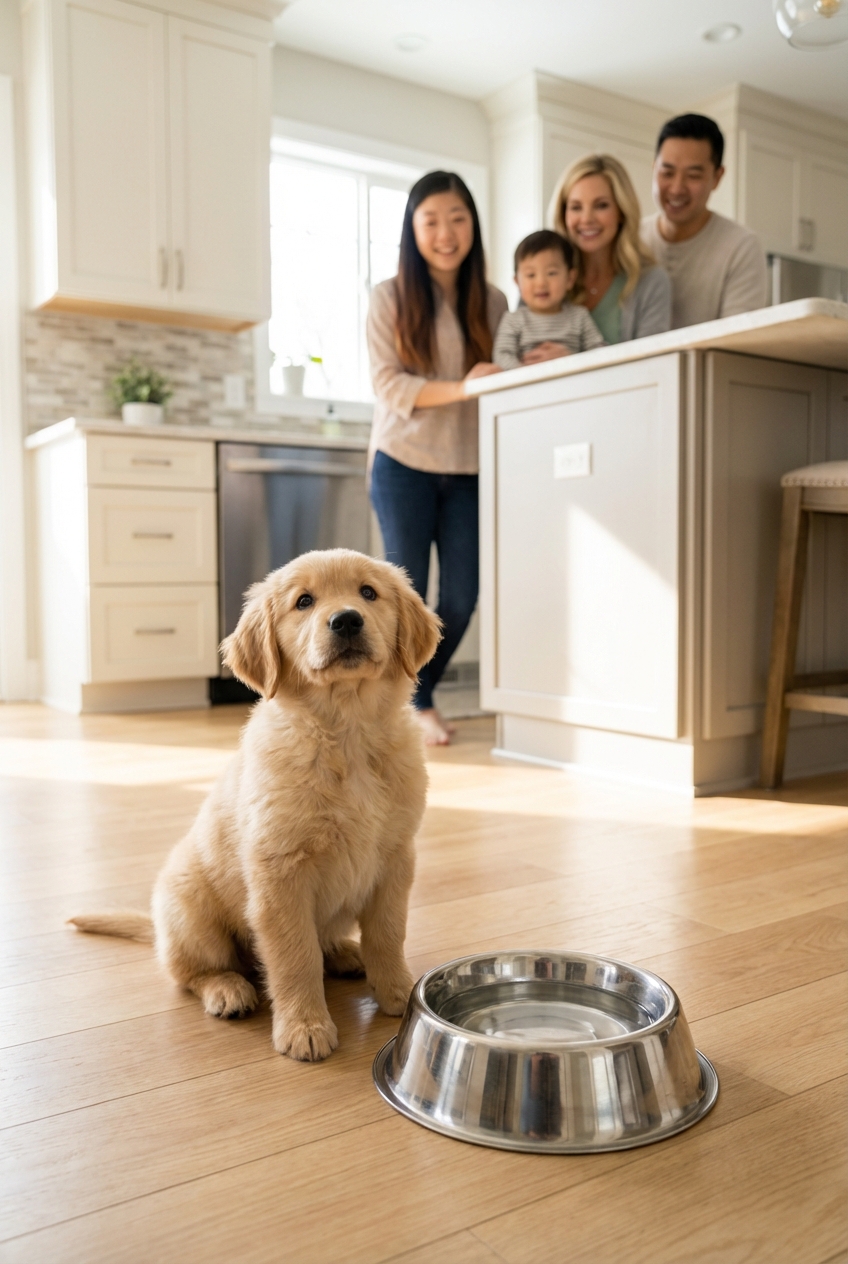
Puppy diarrhea is one of the most common reasons families call their vet, and it can feel extra stressful when you are also juggling kids, work, and a brand-new routine. The good news is that many cases are mild and short-lived. The key is knowing what is normal, what is not, and what you can safely do at home while you keep your puppy comfortable and hydrated.
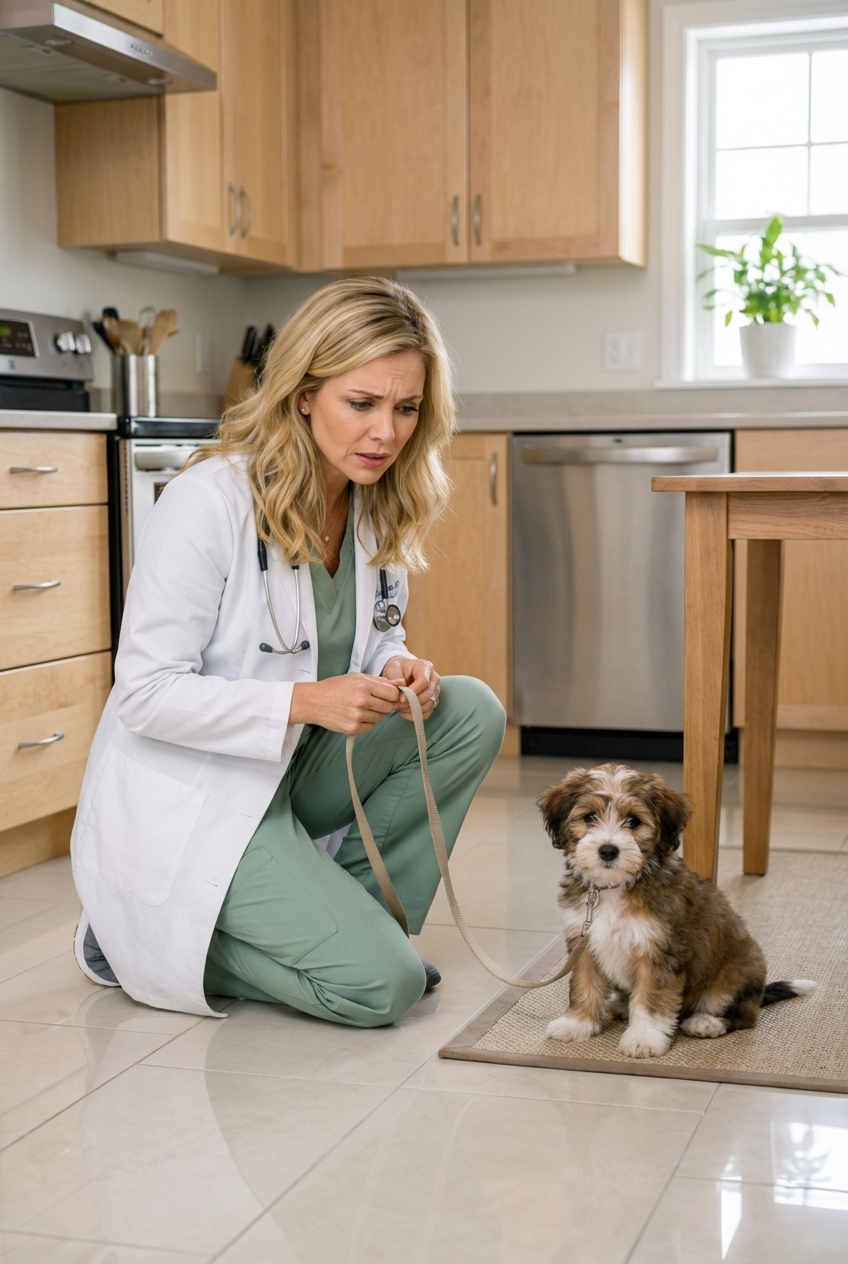
As a veterinary assistant in Frisco, Texas, I have seen how fast puppies can go from playful to droopy when their stomach is upset. Let’s walk through the causes, red flags, at-home care, and how to prevent repeat episodes in a way the whole family can follow.
What counts as diarrhea?
Diarrhea means stools are looser than normal, more frequent than normal, or both. With puppies, stool can change quickly because their digestive systems are still developing and they are exposed to new foods, new germs, and new stressors.
How families describe it
- Soft serve or pudding-like stool
- Watery stool
- Mucus (a slimy coating)
- Accidents in the house despite decent potty training
- Straining or frequent squatting with small amounts
Small intestine vs large intestine
This can help you describe what you are seeing. Small-intestinal diarrhea often looks like larger-volume watery stool and may come with weight loss or a dull coat if it is ongoing. Large-intestinal diarrhea is often frequent small amounts with mucus, urgency, and straining.
If your puppy otherwise seems bright, playful, and interested in food and water, that is often a reassuring sign. If your puppy seems weak, painful, or dehydrated, that is when you move faster toward veterinary care.
Why puppies get diarrhea
Puppies explore the world with their mouths. They also go through diet changes, vaccination visits, and exposure to new environments in the first few months of life. All of this increases risk.
Common causes
- Diet change: switching foods too quickly, new treats, rich table scraps, or chewing on something greasy.
- Dietary indiscretion: eating trash, sticks, socks, cat litter, or anything found outside.
- Stress: moving homes, new family members, boarding, doggy daycare, or even a busy weekend.
- Parasites: roundworms, hookworms, whipworms, Giardia, and coccidia are especially common in puppies.
- Viral or bacterial infections: some are mild, but others can be serious, especially in unvaccinated puppies.
- Medication effects: antibiotics and some dewormers can temporarily loosen stool.
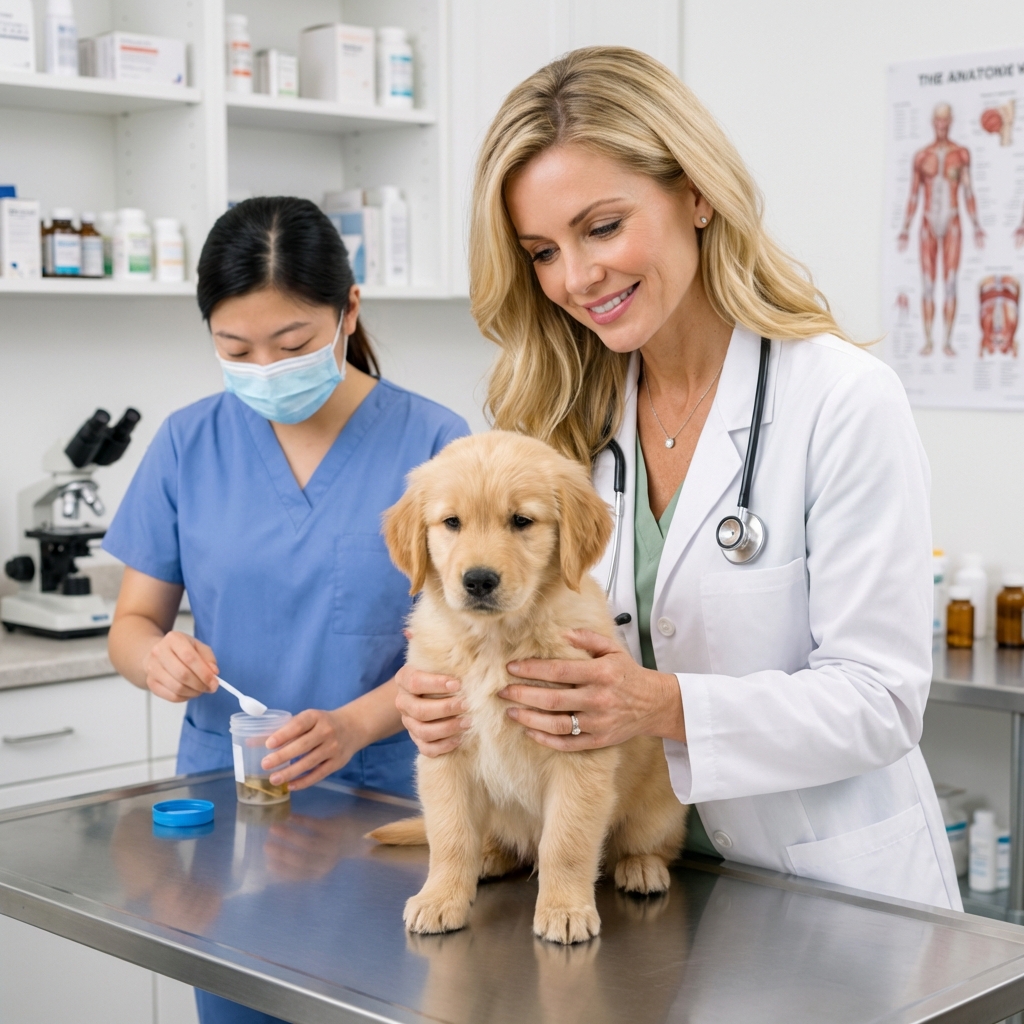
One quick note for families: even if your puppy has been dewormed, parasites can still happen. Many puppies need multiple rounds, and some parasites require specific medications.
Red flags
Trust your instincts. If your puppy looks “off,” it is worth a call. Puppies can dehydrate faster than adult dogs.
Call your vet urgently if you see
- Blood in the stool (bright red) or black, tarry stool (this can be digested blood and is an emergency)
- Repeated vomiting or vomiting plus diarrhea
- Lethargy, weakness, collapse, or acting painful
- Refusing water or cannot keep water down
- Signs of dehydration: tacky or dry gums, sunken eyes, reduced urination, or skin that does not “snap back” quickly when gently lifted (especially when paired with low energy)
- Very young age (especially under 16 weeks), very small breeds, or puppies with known health issues
- Not vaccinated or not fully vaccinated
- Suspected toxin or foreign object: chewed toy pieces, string, socks, bones, grapes, xylitol, medications, etc.
- Diarrhea that is not improving: more than 24 hours in very young or tiny puppies, or 24 to 48 hours in an otherwise bright, older puppy with mild signs
Parvo warning: If your puppy is not fully vaccinated and has diarrhea with vomiting, lethargy, or blood, treat it as urgent and call a veterinarian or emergency clinic right away.
If you are ever unsure, it is completely appropriate to call your vet and ask what they recommend based on your puppy’s age, size, and symptoms.
Home care for mild diarrhea
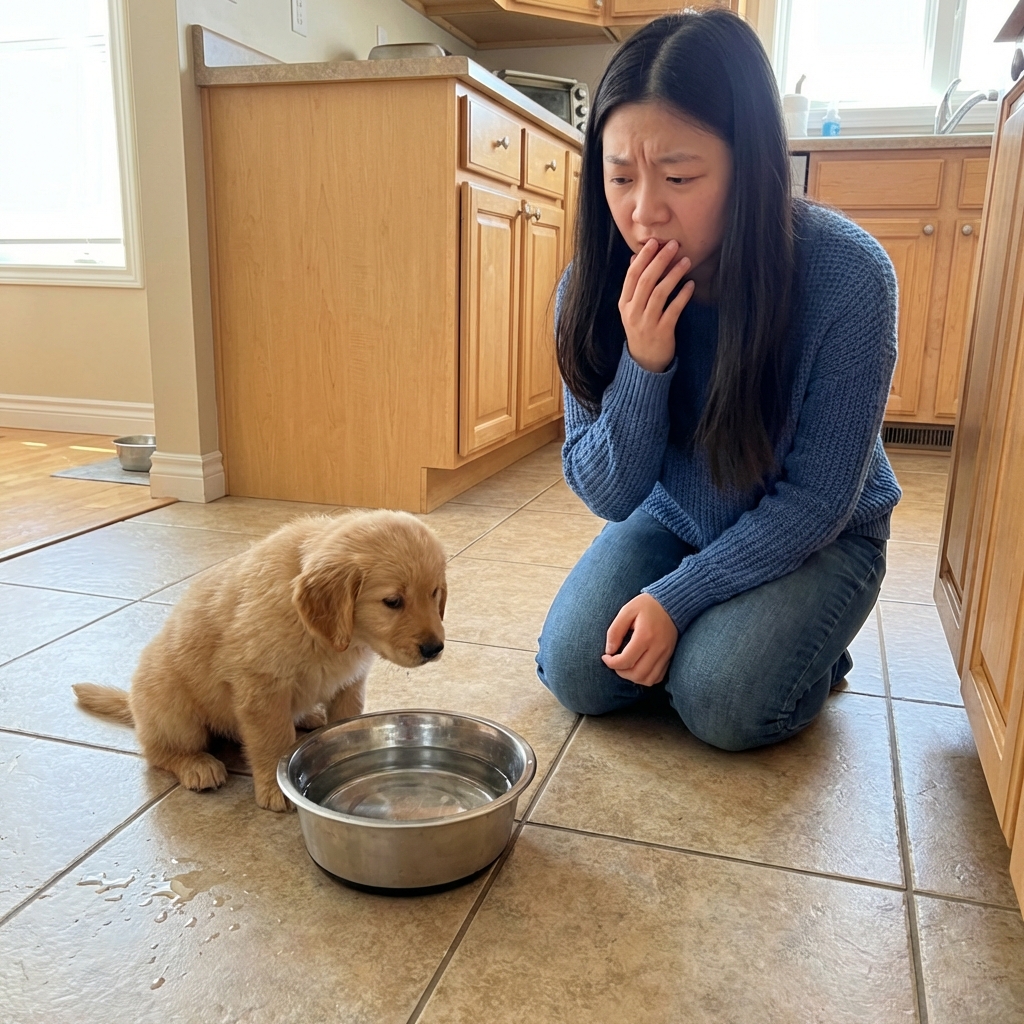
If your puppy is bright, drinking water, and has only mild diarrhea, supportive care at home may be reasonable while you monitor closely. Always follow your veterinarian’s guidance, especially for very young or tiny puppies.
Step 1: Hydration first
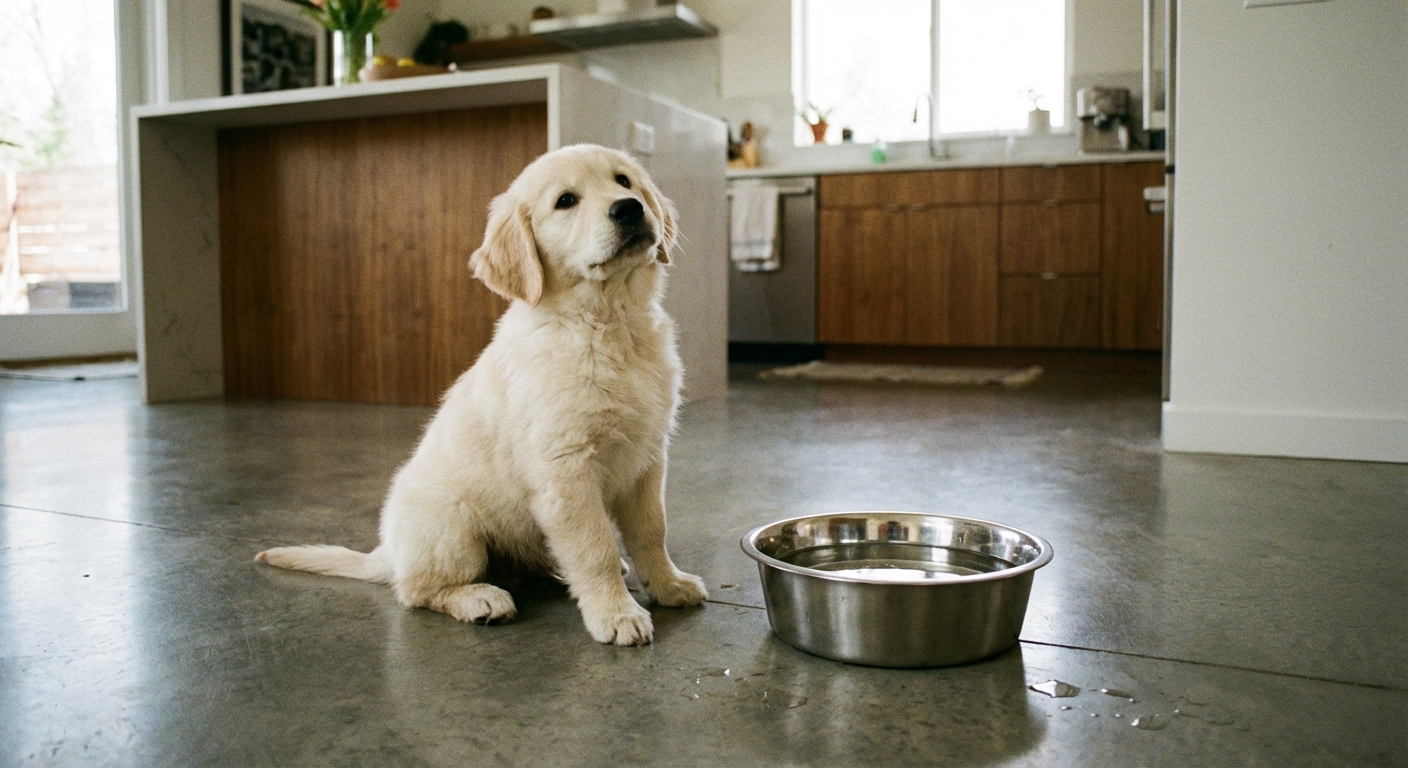
- Offer fresh water often.
- Encourage drinking by using a clean bowl, adding a second bowl in another room, or offering ice cubes to lick.
- If your vet approves, oral rehydration solutions may be used in some cases. Avoid sports drinks unless your veterinarian specifically directs you.
Step 2: Simple, small meals
Many vets recommend a short bland diet for mild cases. Common options include:
- Boiled skinless chicken breast with plain white rice
- Lean ground turkey with rice
- Prescription gastrointestinal diets (very helpful if diarrhea is recurring)
Feed small, frequent meals (for example, 3 to 6 mini-meals a day), then transition back to the regular diet slowly over several days once stools are normal.
A quick caution: chicken and rice is common advice, but it is not perfect for every puppy (for example, some sensitive puppies do better on a veterinary GI diet). If your puppy has had pancreatitis, has a history of food reactions, or keeps relapsing, ask your vet what diet is best.
Step 3: Skip rich extras
No new treats, no table scraps, no bully sticks, and no high-fat chews while the gut is irritated.
Step 4: Ask before meds
Please do not give human anti-diarrheal medications unless your veterinarian specifically says to. Some can be unsafe for puppies and can also mask symptoms of more serious problems.
What not to do
- Do not fast a young puppy unless your veterinarian tells you to. Puppies, especially small breeds, can run into low blood sugar if they go too long without food.
- Do not use leftover antibiotics or someone else’s medications.
- Avoid dairy (milk, cheese, ice cream), which can worsen diarrhea.
- Avoid sudden diet changes in an attempt to “fix it fast.”
- Be cautious with add-ons like pumpkin or supplements. These can help some dogs, but for very young puppies it is best to ask your vet first.
How your vet finds the cause
Veterinary teams usually start with your puppy’s history and a physical exam, then decide what tests are most useful. A lot of the time, the answer is in the details: diet change, chewing habits, vaccination status, and parasite exposure.
Common tests
- Fecal test to look for worms and parasite eggs
- Giardia or parvo testing depending on symptoms and vaccine status
- Bloodwork if dehydration, infection, or systemic illness is suspected
- X-rays or ultrasound if a foreign object or obstruction is possible
Stool sample tips
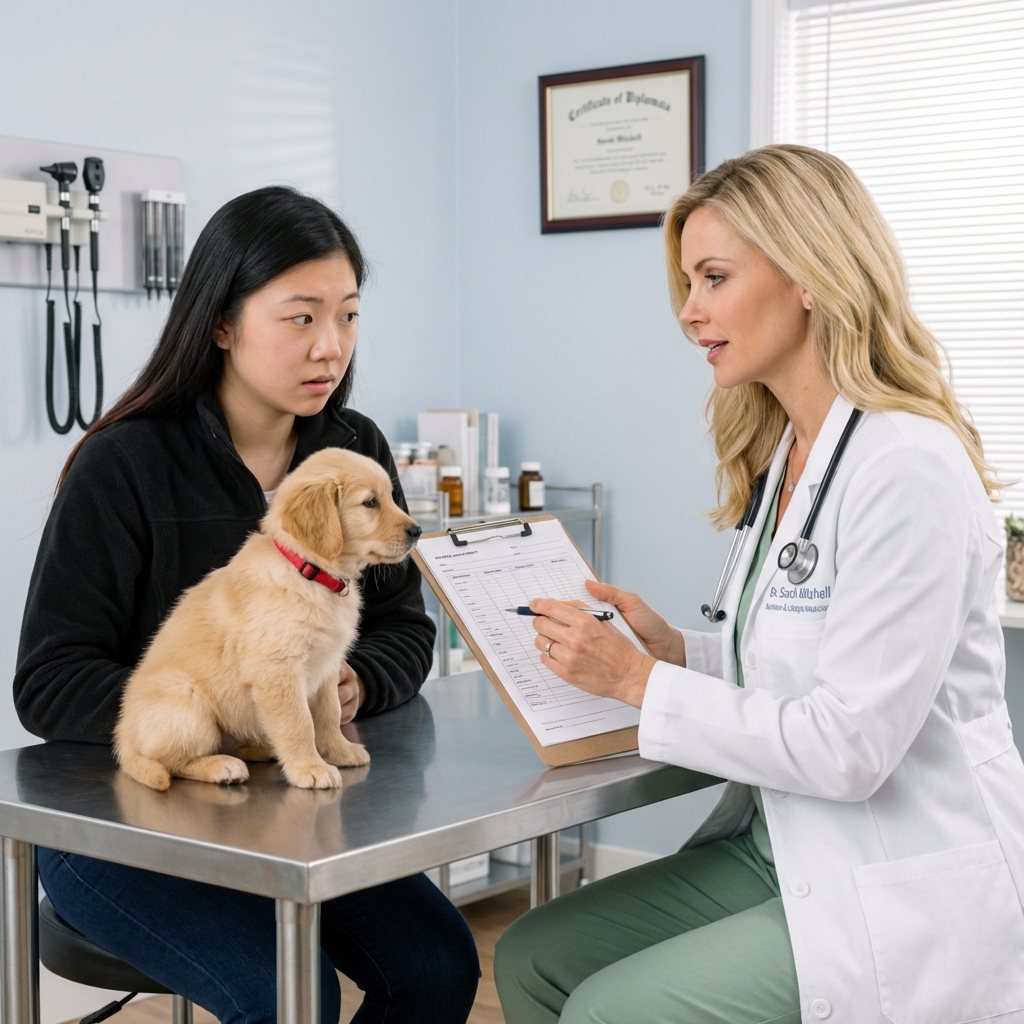
Bring a fresh stool sample if you can. Ideally, collect it in a clean container or sealed bag, keep it cool (refrigerated is fine), and bring it to your clinic within about 12 hours unless they give different instructions. It helps your veterinary team move faster, and it can save you from having to “catch one” in the parking lot later.
Cleanup and infection control
Diarrhea can spread germs, and some parasites can affect people too. A simple, consistent cleanup routine protects the whole household.
Quick cleanup rules
- Assign one adult to handle stool cleanup when possible.
- Wear disposable gloves or use a plastic bag barrier.
- Wash hands with soap and water after cleanup, especially before food prep.
- Pick up stool in the yard promptly. Some parasite eggs can persist in soil for a long time, so quick pickup really matters.
- Disinfect hard floors with a pet-safe disinfectant. For parvovirus risk, your vet may recommend specific products and contact time.
- Wash soiled bedding on hot if the fabric allows.
If you have kids, keep it simple: “We do not touch puppy poop, and we always wash hands after playing with the puppy.” That one rule prevents a lot of problems.
Prevention
Many diarrhea episodes are preventable with a few routines that are easy to keep up with, even in a busy family.
Simple habits
- Consistent diet: transition foods slowly over 7 to 10 days.
- Limit treats: keep treats to a small portion of daily calories and avoid high-fat options for young puppies.
- Parasite prevention: use vet-recommended deworming and monthly preventives consistently.
- Vaccines on schedule: especially critical for parvovirus protection.
- Puppy-proofing: pick up socks, kids’ toys, strings, and small chewable objects.
- Supervised outdoor time: discourage eating grass clumps, feces, or standing water.
Also, if your puppy goes to daycare or puppy classes, ask what cleaning protocols they use and whether they require proof of vaccination. Good facilities will be happy to share their standards.
Stool tracker
Keeping notes for just 24 to 48 hours can help your veterinarian spot patterns fast.
What to write down
- Time of each stool
- Consistency (soft, watery, mucusy)
- Any blood (yes or no)
- Vomiting (yes or no)
- Energy level (normal, slightly tired, very tired)
- What your puppy ate, including treats
If your puppy improves, you will feel more confident. If your puppy worsens, you will have solid info ready for the vet team.
Bottom line
Mild puppy diarrhea is common, but it should never be ignored. Focus on hydration, keep meals simple, avoid over-the-counter medications unless your vet says otherwise, and watch closely for red flags like blood, vomiting, lethargy, or dehydration.
Your puppy does not need perfection from you. They need calm, consistent care and a family who knows when to get help. If you are on the fence, call your veterinarian.