A practical, vet-informed guide to puppy growth stages from 0–24 months, including socialization, teething timelines, feeding tips, exercise guidance, vacc...
Article
•
Designer Mixes
Puppy Development Stages

Shari Shidate
Designer Mixes contributor
Puppies change fast. One week they are tiny, wobbly babies. A few weeks later they are learning their name, testing boundaries, and discovering the world with their mouths. Understanding the step-by-step stages of puppy development helps you respond with the right kind of care, training, and patience at exactly the right time.
As a veterinary assistant here in Frisco, Texas, I love seeing families relax once they realize most puppy behaviors are normal. The key is knowing what is normal for their age, and when to call your veterinarian.
At-a-glance timeline
These age ranges are averages. Small breeds often mature earlier, and large breeds may stay puppy-like longer. Some stages overlap on purpose because development does not happen in neat boxes.
- 0 to 2 weeks: Neonatal stage (sleep, nurse, minimal senses)
- 2 to 4 weeks: Transitional stage (eyes and ears open, first steps)
- 3 to 12 weeks: Socialization stage (most important learning window)
- 8 to 16 weeks: Early learning stage (training foundations, chewing often increases)
- 3 to 6 months: Teething and chewing stage (baby teeth fall out, adult teeth come in)
- 6 to 18 months: Adolescence (big feelings, testing limits, continued brain growth)
- 12 to 24 months: Young adult (settling in, depending on breed size)
Stage 1: Neonatal (0 to 2 weeks)
Newborn puppies are essentially little eating and sleeping machines. They cannot regulate body temperature well, and they rely completely on mom for warmth, nutrition, and stimulation to potty.
What you will notice
- Eyes and ear canals are closed
- Crawling movements, not true walking
- Lots of sleep and frequent nursing
- Soft, quiet vocalizations
How to support healthy development
- Warmth matters: Chilling is dangerous for neonates. Breeders and fosters often use safe heat sources, but overheating is also a risk.
- Weight checks: Healthy puppies typically gain weight daily. If a puppy is not gaining, it is a veterinary red flag.
- Gentle handling, low stress: Brief, calm handling is fine and can even be beneficial when done correctly. The goal is to avoid stress and keep pups warm, safe, and stable.
Call your veterinarian promptly if you see constant crying, weakness, refusal to nurse, labored breathing, or a puppy that feels cool to the touch.
Stage 2: Transitional (2 to 4 weeks)
This is when the lights come on. Puppies begin to see and hear, and their world expands quickly.
What changes
- Eyes open (vision is still developing)
- Ear canals open and hearing improves
- First attempts at standing and walking
- Baby teeth start to appear
- Early play behaviors begin
What to do at home or in foster care
- Introduce safe textures: Soft bedding, stable surfaces, and gentle obstacles build confidence.
- Keep it clean: Puppies begin moving to potty away from the sleeping area. A clean whelping space supports skin and gut health.
- Start gentle sounds: Low-volume household noise exposure helps later resilience.
Stage 3: Socialization (3 to 12 weeks)
If there is one stage to prioritize, it is this one. During socialization, puppies learn what is safe, what is scary, and how to handle new experiences. It is also when they begin learning bite control through play with littermates.
Key milestones
- More coordinated movement and play
- Rapid learning and curiosity
- Beginning of puppy independence from mom
- Stronger startle responses as awareness grows
Safe socialization
Socialization does not mean letting your puppy meet every dog in the neighborhood before vaccines are complete. It means carefully controlled exposure to the world while protecting health.
- People variety: Adults, calm kids, people in hats, people with umbrellas, people using walkers
- Handling practice: Brief daily touches to paws, ears, mouth, collar area, and gentle restraint paired with treats
- Home sounds: Vacuum, doorbell, hair dryer at a comfortable distance
- Car rides: Short, positive trips
- Novel surfaces: Grass, tile, rubber mat, gravel pathways
Health note: Ask your veterinarian about the safest places to take your puppy based on local parvo risk. In many areas, avoiding dog parks and unknown-dog spaces is wise until the vaccination series is complete.
Fear periods
Many puppies go through short fear phases where something that was fine yesterday suddenly feels scary. Timing varies, but a common window is around 8 to 11 weeks, and some dogs have another fear period during adolescence.
What to do
- Do not force it: Give space and let your puppy choose to approach at their own pace.
- Pair with good stuff: Treats, praise, and distance help your puppy learn they are safe.
- Keep exposures positive: One bad scare can stick, so aim for calm, controlled experiences.
If fear seems intense, lasts more than a couple weeks, or comes with aggression, talk with your veterinarian and consider a qualified trainer who uses reward-based methods.
Stage 4: Early learning (8 to 16 weeks)
This is prime time for foundation skills. Your puppy is old enough to learn quickly, but still young enough that habits form fast.
Training focus
- Name response: Say name, reward eye contact
- Potty routine: Frequent breaks, reward immediately after success
- Crate comfort: Short sessions, food puzzles, calm entry and exit
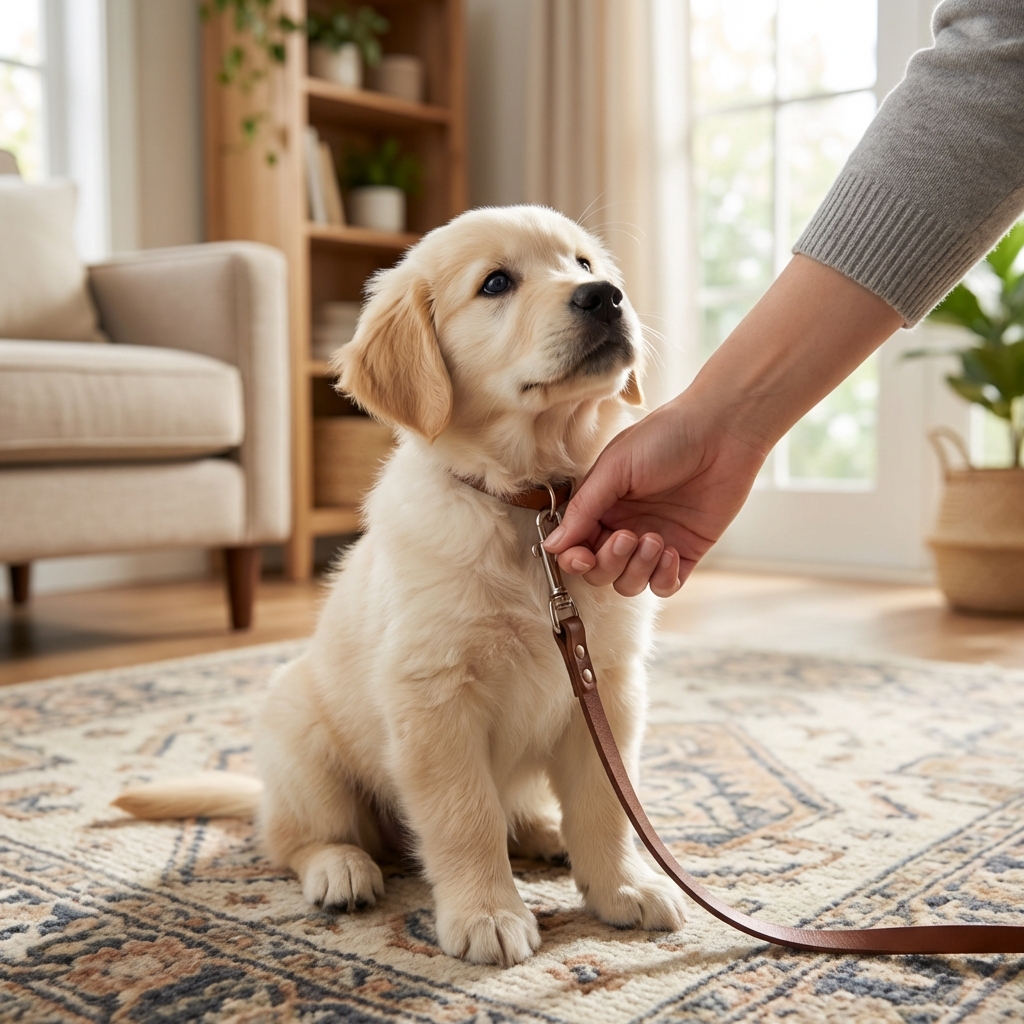
- Gentle leash skills: Follow-the-treat walking, tiny practice sessions
- Alone-time practice: Prevent separation issues by doing short, successful absences
Normal challenges
- Mouthing often increases
- Puppies may have short attention spans
- Overtired puppies can look “naughty”
Actionable tip: If biting ramps up, do a quick checklist: needs a nap, needs a potty break, is hungry, or is overstimulated. Many biting episodes improve with a calm reset and a chew toy.
Training safety note: Avoid punishment-based or aversive tools for mouthing. They can increase fear and make biting worse. Instead, redirect to an appropriate chew, reinforce calm behavior, and use short breaks when needed.
Sleep needs
Sleep is one of the most overlooked parts of puppy health. Many young puppies need 18 to 20 hours of sleep in a day. Overtired puppies are more likely to bite, zoom, bark, and struggle with focus.
Simple ways to help
- Build a nap routine in a crate or pen
- Keep play sessions short and end on a calm note
- Use a chew or food puzzle to help your puppy settle
Stage 5: Teething and independence (3 to 6 months)
Teething is intense for many pups. Around 3 to 4 months, puppies usually start losing baby teeth, and adult teeth erupt through about 6 months. Gums can be sore, and chewing becomes a full-time hobby.
What is normal
- Chewing on furniture, hands, and anything within reach
- Loose baby teeth, and sometimes you find them on the floor
- Increased interest in digging and exploring
How to make teething easier
- Provide legal chews: Ask your veterinarian which chews are safest for your puppy’s size and chewing style.
- Manage the environment: Use baby gates, pens, and puppy-proofing to prevent rehearsing bad habits.
- Teach “trade”: Swap stolen items for a treat so your puppy learns humans approaching is good news.
Safety reminder: Avoid chew items that can fracture teeth or be swallowed in chunks. When in doubt, bring a chew to your next vet visit and ask.
House-training basics
Potty training is one of the biggest stress points for families, and it helps to set realistic expectations. As a general rule, young puppies can often hold it about one hour per month of age (with overnight sleep sometimes being longer). That said, many puppies need to go out more often, especially during play, after meals, and after naps.
What works best
- Supervision: If you cannot watch closely, use a crate or puppy-safe pen.
- Go out on a schedule: After waking, after eating, after play, and before bed.
- Reward immediately: Treat within a few seconds of finishing outside.
- Clean thoroughly: Use an enzymatic cleaner to remove scent cues that invite repeat accidents.
Stage 6: Adolescence (6 to 18 months)
This stage surprises many families because the puppy looks grown but behaves like a teenager. Brain development, hormones, and increased confidence can lead to selective hearing and boundary testing.
Common behaviors
- Jumping, pulling on leash, and ignoring cues they “knew” last month
- Increased reactivity or fear phases in some dogs
- More interest in other dogs and the environment than in you
What helps the most
- Consistency: Keep rules the same day to day
- More enrichment: Sniff walks, training games, food puzzles, safe chewing
- Short training sessions: Think 3 to 5 minutes, multiple times a day
- Reward calm: Reinforce settling on a mat and relaxing after excitement
- Impulse control, slowly: With practice, you can often start to see early impulse control improvements over time.
If behavior suddenly changes, especially with growling, snapping, or new fear, schedule a vet check. Pain, infections, and medical issues can show up as “behavior problems.”
Stage 7: Young adult (12 to 24 months)
Many dogs start to “click” into steadier behavior during young adulthood, but the timeline depends heavily on breed and size. Large breeds may not fully mature until around 18 to 24 months, and some giant breeds can take longer.
What to keep building
- Ongoing social skills: Continue positive exposures so confidence stays strong
- Fitness: Age-appropriate exercise that protects joints
- Preventive care: Dental habits, weight management, parasite prevention
Think of this stage as maintenance and refinement. The training you invested in earlier becomes your dog’s lifelong default.
Nutrition and health
Development is not just behavior. Puppies are literally building bones, muscles, immune systems, and brains.
Puppy nutrition basics
- Feed a complete and balanced puppy diet (look for an AAFCO statement for growth, or growth including large-size dogs if relevant).
- Do not DIY supplements like calcium unless your veterinarian tells you to. Too much calcium can be harmful, especially for large-breed puppies.
- Track body condition: you should be able to feel ribs with light pressure, and your puppy should have a visible waist from above.
Vet care milestones
- Vaccine series based on your veterinarian’s schedule and local risk
- Parasite testing and prevention (fleas, ticks, heartworm, intestinal parasites)
- Spay or neuter discussion individualized to breed, size, and lifestyle
- Microchipping and ID strategies
When to call the vet
Puppies can go downhill quickly. It is always okay to call and ask.
- Vomiting repeatedly, or vomiting with lethargy
- Diarrhea that is persistent, watery, or has blood
- Not eating for more than one meal in a young puppy, especially if they seem tired
- Coughing, labored breathing, or nasal discharge with poor energy
- Swollen face, hives, or sudden itching after a new food or medication
- Limping, yelping, or sudden behavior changes that could suggest pain
Most puppy mistakes are not stubbornness. They are either age-appropriate behavior, a lack of practice, or a need you can meet with structure, rest, and clear training.
Final encouragement
Your puppy is not giving you a hard time. Your puppy is having a hard time learning how to live in a human world. If you take development stage by stage, focus on prevention, and celebrate small wins, you will be amazed how quickly that whirlwind turns into a wonderful companion.