Use this vet-informed puppy vaccine timeline to stay on track with DHPP and rabies, add lifestyle vaccines as needed, and learn safe socialization plus what ...
Article
•
Designer Mixes
Puppy Development by Week

Shari Shidate
Designer Mixes contributor
Bringing home a puppy is equal parts joy and questions. One week they are wobbly and sleepy, and the next they are confidently exploring your living room like they pay the mortgage. As a veterinary assistant in Frisco, Texas, I love helping families understand what is normal at each stage, what needs a veterinarian’s attention, and how to support healthy growth without getting overwhelmed.
This week-by-week guide focuses on the early weeks (birth through 12 weeks), plus what to expect as your puppy heads into adolescence. I am also sharing veterinarian-informed milestones, practical care tips, and simple “watch-fors” you can use at home.
Quick safety note
Puppies can decline quickly if they are not eating, are vomiting repeatedly, have diarrhea, or seem weak. Call your veterinarian the same day if you notice:
- Refusing food for more than one meal (especially in very small breeds)
- Repeated vomiting or diarrhea (for many puppies, 2 or more episodes in a day), inability to keep water down, or any blood in vomit or stool
- Swollen belly, painful crying, or collapse
- Coughing, labored breathing, blue or pale gums
- Extreme lethargy, trembling, or acting “not right”
If your puppy is not yet fully vaccinated, assume infectious diseases are possible and avoid dog-heavy areas until your veterinarian says it is safe. The good news is you can often still socialize smartly before the series is complete, with low-risk outings and controlled puppy classes that follow strict cleaning and vaccine rules.
Week-by-week puppy development (birth to 12 weeks)
Week 1: Newborn basics
What you’ll see: Puppies are born blind and deaf, and they cannot regulate body temperature well. Most of their day is nursing and sleeping.
How to help: Keep the whelping area warm, quiet, and clean. Weight should increase steadily every day. If a puppy is not gaining weight or is pushed away from nursing, that is an urgent situation.
Vet tip: Early weight tracking is one of the best predictors of thriving. A kitchen scale works beautifully.
Week 2: Eyes begin to open
What you’ll see: Eyes typically start opening around days 10 to 14. Puppies still rely on mom for warmth and nutrition.
How to help: Handle gently for short periods to support early neurological development and comfort with human touch, but avoid overstimulation.
Week 3: Ears open and first wobbly steps
What you’ll see: Hearing improves, baby teeth start coming in, and puppies begin standing and walking (awkwardly). They also begin interacting with littermates.
How to help: Start very gentle exposure to normal household sounds at a low volume. Keep surfaces safe and non-slippery to prevent falls.
Week 4: Social learning starts
What you’ll see: Play increases, tails wag, and puppies start learning bite inhibition from littermates and mom. They may begin showing interest in soft food.
How to help: If you are the breeder or foster, this is a good time to introduce a shallow pan of high-quality puppy gruel and fresh water, while nursing continues.
Week 5: Weaning and curiosity
What you’ll see: Puppies become more coordinated. They explore, play, and start forming early preferences.
How to help: Gentle, positive handling by different people is valuable. Keep experiences calm and safe, with plenty of rest breaks.
Week 6: Busy brains, busy bodies
What you’ll see: Increased independence. Many puppies are eating more solid food now.
How to help: Begin very short training games (name recognition, following you for a treat). Focus on positive reinforcement, not corrections.
Veterinary note: Many puppies start their core DHPP vaccine series around 6 to 8 weeks, depending on risk and your clinic’s protocol.
Week 7: Prime socialization window
What you’ll see: This is a key time for learning what is “normal” and safe. Puppies can be bold and absorbent, but still need gentle pacing.
How to help: Introduce new textures underfoot, gentle grooming, being alone for very short moments, and calm car rides. Keep it positive and brief.
Week 8: Common go-home week
What you’ll see: Many puppies move to their new homes around 8 weeks. They may miss littermates and show mild stress: whining, reduced appetite, or restlessness.
How to help: Create a predictable routine: potty, play, food, nap. Use a properly sized crate or safe pen, and expect nighttime wake-ups.
Training focus: Potty training, gentle crate training, and rewarding calm behavior.
Week 9: Confidence and chewing
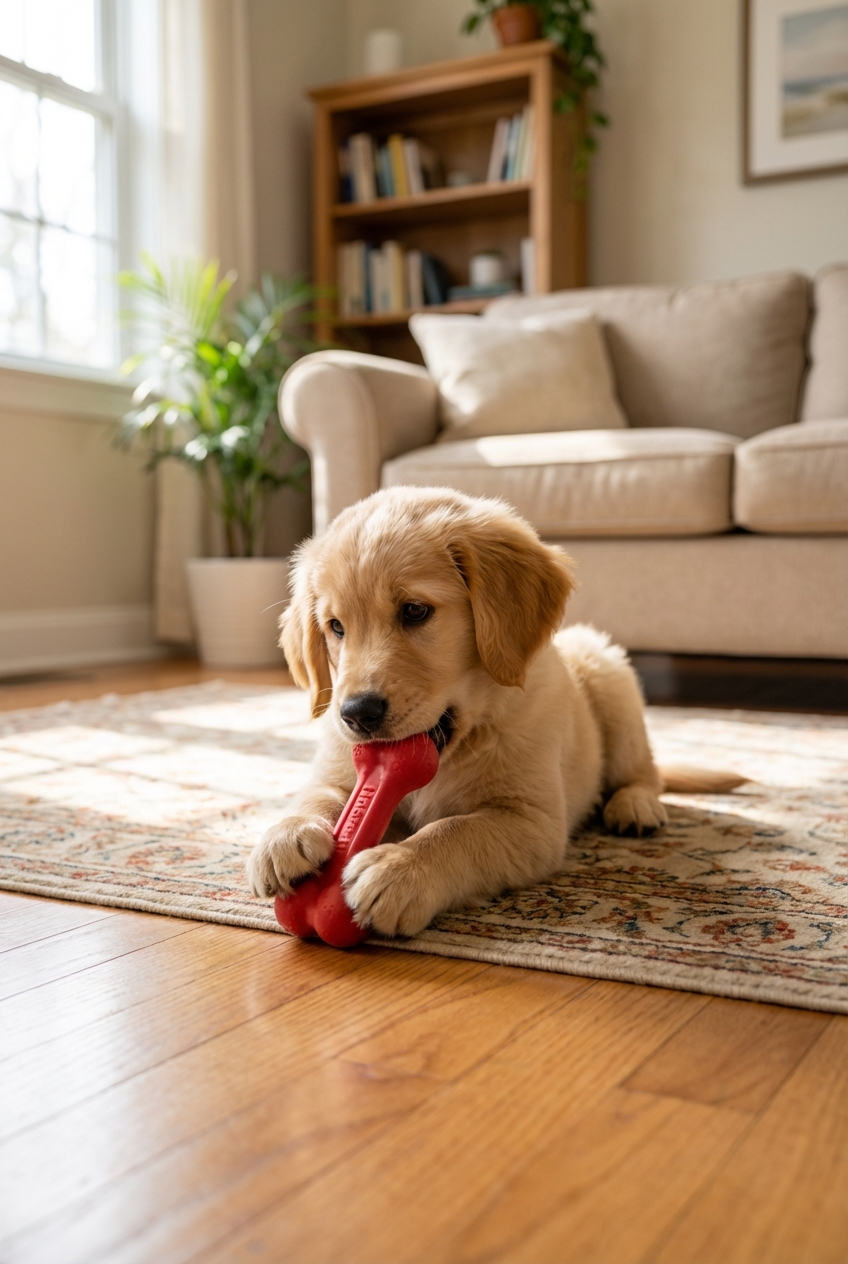
What you’ll see: Puppies can be mouthier. Chewing increases, and many puppies start acting “extra teething-y” even before they begin losing baby teeth.
How to help: Provide safe chew options, rotate toys, and prevent access to electrical cords and socks. If your puppy bites hands, redirect to a toy and reward when they choose the toy.
Week 10: Learning fast, testing limits
What you’ll see: Puppies start to push boundaries. This is normal development, not “dominance.”
How to help: Keep rules consistent. Reward what you want. Prevent what you do not want with management (baby gates, leash inside the house, puppy-proofing).
Week 11: Stronger body control
What you’ll see: Improved coordination and stamina, but they still tire quickly.
How to help: Short training sessions (1 to 3 minutes) multiple times a day beat one long session. Prioritize naps, because overtired puppies get bitey.
Week 12: Exposure planning
What you’ll see: Many puppies are due for ongoing vaccine boosters around this stage. Your veterinarian will advise timing based on risk and local disease patterns.
How to help: Continue safe socialization. You can build confidence without nose-to-nose greetings by visiting parking lots, watching people, and hearing new sounds from a safe distance.
After 12 weeks
3 to 6 months: Teething and growth spurts
- Teething: Many puppies start losing baby teeth around 12 to 16 weeks, with chewing often peaking closer to 4 to 6 months.
- Training: Keep practicing sit, down, come, leash manners, and handling (ears, paws, mouth).
- Body changes: Rapid growth, especially in large breeds. Ask your veterinarian about large-breed puppy nutrition if applicable.
6 to 18 months: Adolescence
This is when many families feel like their “sweet puppy forgot everything.” They did not. Their brain is developing, hormones may change behavior, and distractions become more interesting.
- Use higher-value rewards outside.
- Keep routines predictable.
- Increase enrichment: sniff walks, food puzzles, short training games.
- Ask your veterinarian about spay and neuter timing for your puppy’s breed, size, and lifestyle.
- Watch for a second fear period. Many dogs have one in adolescence, but timing varies by individual.
Care essentials by stage
First vet visit
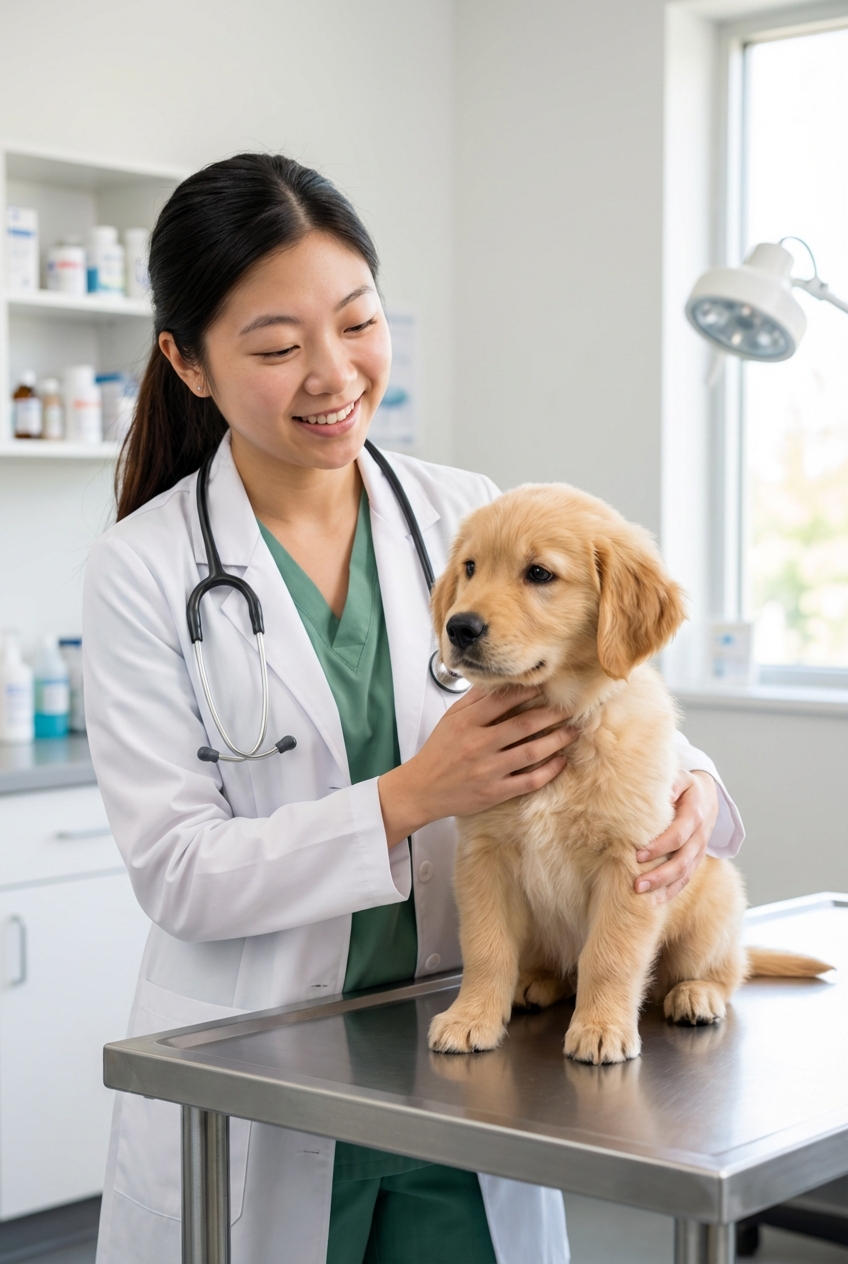
If you adopted your puppy, plan a first veterinary visit soon after bringing them home (often within a few days). Your clinic can confirm weight, check for parasites, set a vaccine plan, and help with early behavior questions before habits set in.
Vaccines and parasite prevention
Your veterinarian will tailor a schedule, but here is a typical roadmap many clinics use:
- DHPP (core): Often starts at 6 to 8 weeks, then repeats every 3 to 4 weeks until at least 16 weeks (some protocols extend to 18 to 20 weeks in higher-risk situations).
- Rabies: Timing varies by jurisdiction, but many puppies receive it around 12 to 16 weeks.
- Other vaccines: Bordetella, canine influenza, and leptospirosis are considered based on lifestyle and local risk.
One important detail: full protection is not immediate. Immunity builds over the series, which is why your veterinarian may recommend a mix of caution and smart socialization.
Deworming is also common early on, because intestinal parasites are frequent in puppies. Ask your clinic which prevention is best for your region for:
- Heartworm
- Fleas and ticks
- Intestinal parasites
Socialization, safely
Socialization is not the same as “meet every dog.” It means positive exposure to the world in a way that builds confidence, while still protecting health.
- Choose controlled puppy classes that require vaccines and follow good sanitation, if your veterinarian says your puppy is a good candidate.
- Carry your puppy in pet-friendly stores that allow it, or use a clean cart liner and avoid placing paws on high-traffic floors.
- Set up playdates only with known, healthy, vaccinated dogs.
- Reward your puppy for calmly observing new things.
Nutrition and growth
Choose a complete and balanced puppy food that matches your puppy’s size category (especially for large and giant breeds). Puppies need more calories and specific nutrient ratios compared to adult dogs.
- Meal frequency: Many puppies do well with 3 meals per day until about 6 months, then transition to 2 meals as advised by your veterinarian.
- Treats: Keep treats at 10% or less of daily calories to avoid unbalancing nutrition.
- Supplements: Avoid adding calcium or “growth boosters” unless a veterinarian directs you. Too much can harm developing bones.
Potty and crate basics
Potty training goes faster when you assume your puppy cannot “hold it” yet, because they truly cannot. A common rule of thumb is about one hour per month of age (with plenty of exceptions), and most young puppies still need nighttime potty trips.
- Take your puppy out after sleep, after eating, after play, and at least every 1 to 2 hours at first.
- Reward immediately after they go in the right spot.
- If accidents happen, clean with an enzymatic cleaner and tighten supervision, not punishment.
For crate training, aim for “safe and cozy,” not “long and lonely.” Short sessions, a predictable routine, and a bedtime potty trip help most families a lot.
Sleep helps everything
Many young puppies need a lot of sleep, often 18 to 20 hours a day. A puppy that is biting more, zooming, or acting “wild” often needs a nap, not more exercise.
ID and microchipping
Even the best-behaved puppy can slip a door. Ask your veterinarian about microchipping, register it, and use a collar with an ID tag (as appropriate for your puppy’s age and safety). It is one of those “boring” steps that you are grateful for if you ever need it.
Budgeting and insurance
Puppies are talented at finding trouble. If pet insurance is on your radar, earlier is usually easier since most plans do not cover pre-existing conditions. If insurance is not a fit, ask your clinic about typical puppy costs in your area so you can plan for vaccines, prevention, and the occasional surprise tummy upset.
Hygiene with kids in the house
Some intestinal parasites can affect people, especially kids. Keep it simple: pick up stool promptly, wash hands after yard cleanup, and follow through on deworming and fecal testing recommended by your veterinarian.
At-home weekly check-ins
If you want an easy routine that aligns with what we watch in clinic, do this once a week:
- Body check: Look at ears, eyes, skin, and paws. Note any redness, odor, or hair loss.
- Weight: Weigh small puppies weekly to confirm steady growth.
- Poop check: Stool should be formed and easy to pick up. Soft stool can happen with stress or diet changes, but ongoing diarrhea needs a call to your veterinarian.
- Behavior check: Is your puppy eating, drinking, playing, and sleeping normally?
When to call the veterinarian
Vomiting and diarrhea
Puppies dehydrate faster than adult dogs. One episode may be mild, but repeated vomiting or diarrhea, vomiting that prevents water staying down, or symptoms with lethargy warrant prompt care.
Coughing and nasal discharge
Young dogs can catch contagious respiratory infections. Early guidance can prevent complications and protect other pets.
Itchy skin or ear scratching
Allergies, fleas, mites, and ear infections can start early. Catching issues quickly is kinder and often cheaper.
Limping
Puppies are clumsy, but persistent limping is not something to “wait out.” Your veterinarian will look for injury, growth-related pain, or paw issues.
Frequently asked questions
Is it normal for my puppy to be scared around 8 to 12 weeks?
Some puppies experience a fear period where new things feel extra intense, often somewhere around 8 to 11 weeks, but timing varies and some puppies barely show it. Keep exposures gentle and positive. Do not force greetings. Pair the scary thing with treats at a distance where your puppy can still relax.
How much exercise does a puppy need?
Think short and frequent. A few minutes of play, training, and sniffing multiple times a day usually works better than long runs. Ask your veterinarian for breed-specific guidance, especially for large breeds.
When can my puppy go to parks or daycare?
This depends on vaccine status and local disease risk. Many veterinarians recommend avoiding high-traffic dog areas until the vaccine series is complete and immunity has had time to build. In the meantime, you can still socialize safely through controlled puppy classes, clean environments, and playdates with known healthy, vaccinated dogs, as directed by your veterinarian.
A gentle next step
If you are unsure where your puppy is developmentally, keep it simple: focus on nutrition, sleep, parasite prevention, and positive training. Then build confidence through safe, upbeat socialization.
If you tell your veterinarian your puppy’s breed mix, age, and current weight, they can help you fine-tune food portions, vaccine timing, and behavior support so you feel confident week by week.