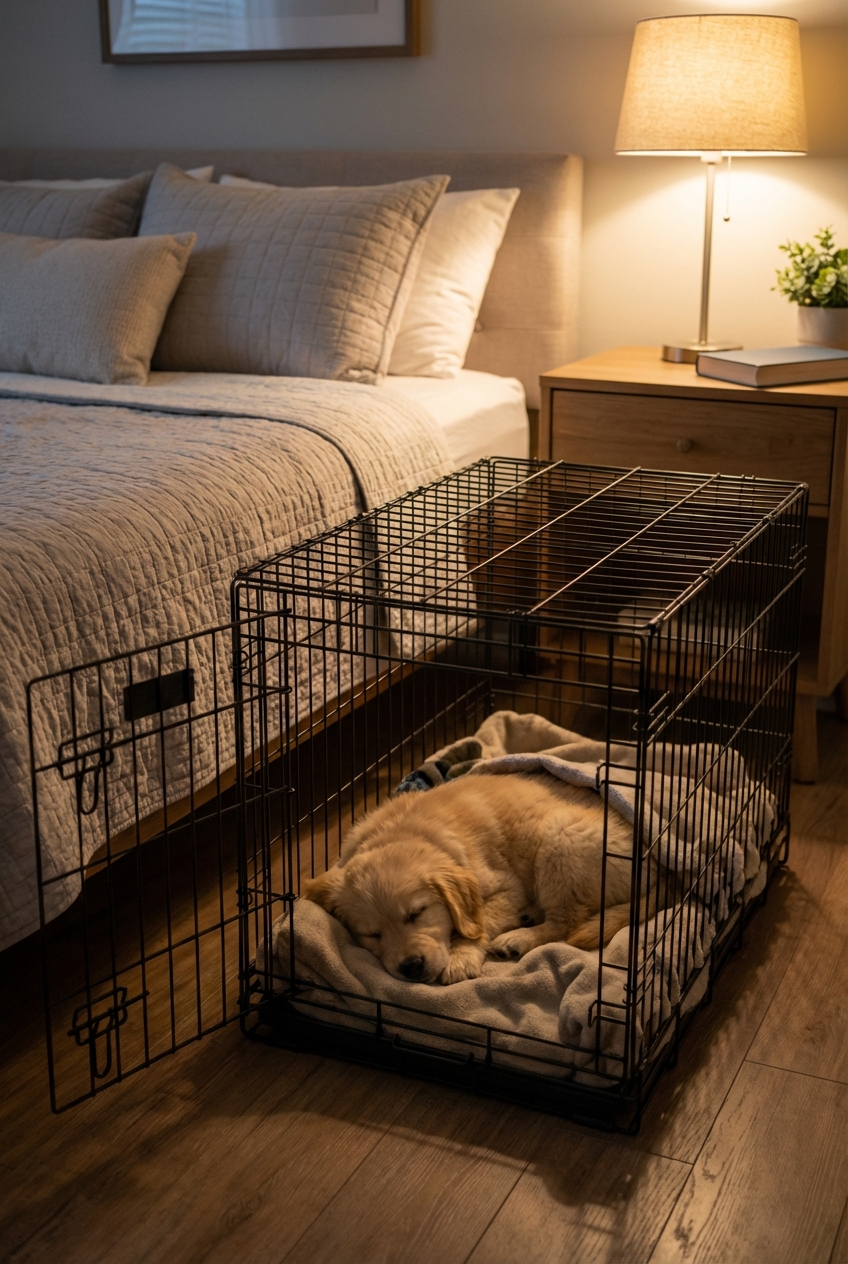
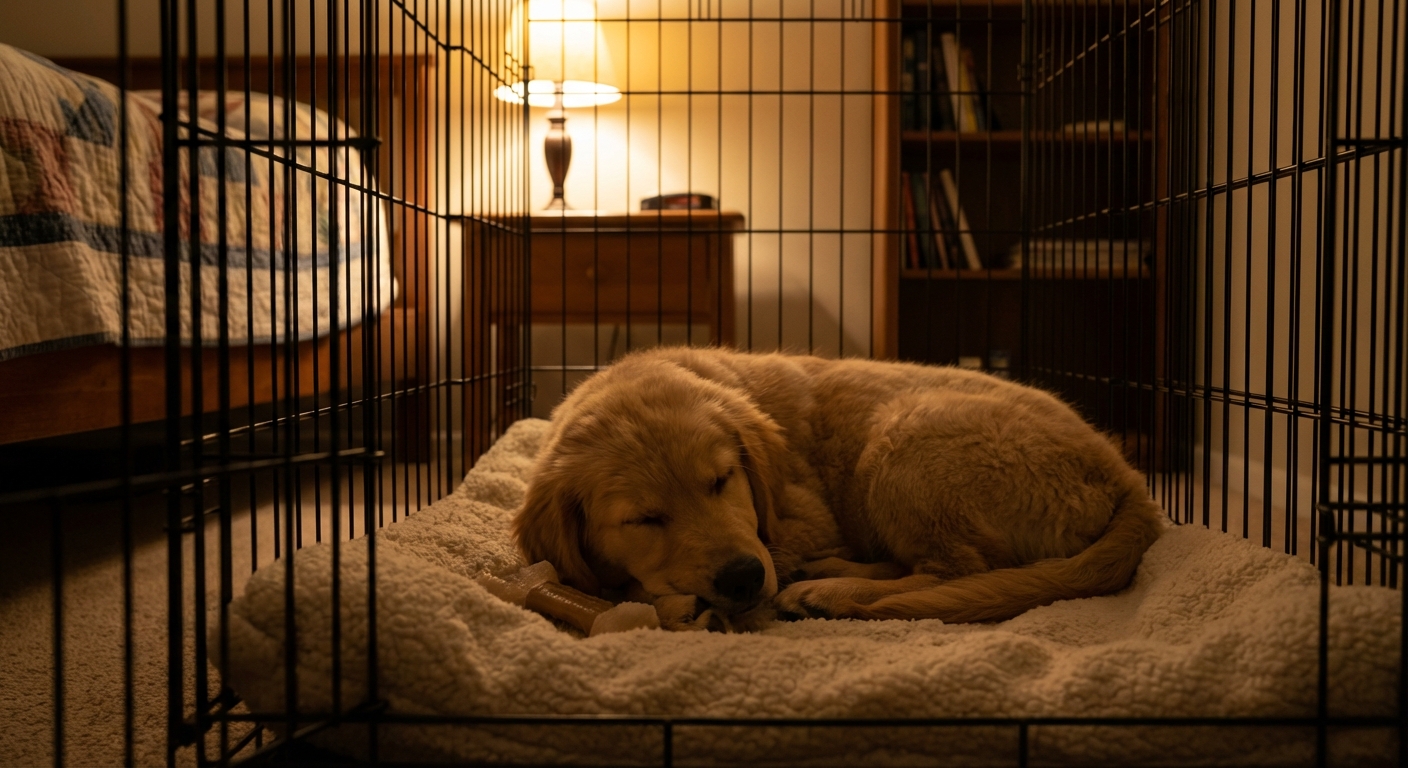
Nighttime crate barking can feel relentless, especially when you are exhausted and worried your puppy is upset. The good news is that most crate barking is fixable with a plan that meets your puppy’s needs first, then gently teaches the skill of settling.
As a veterinary assistant, I like to start with two questions: What is your puppy trying to communicate and what skill are we building? Barking is information. When you decode it correctly, your training gets faster and kinder.
Barking vs whining: why it matters
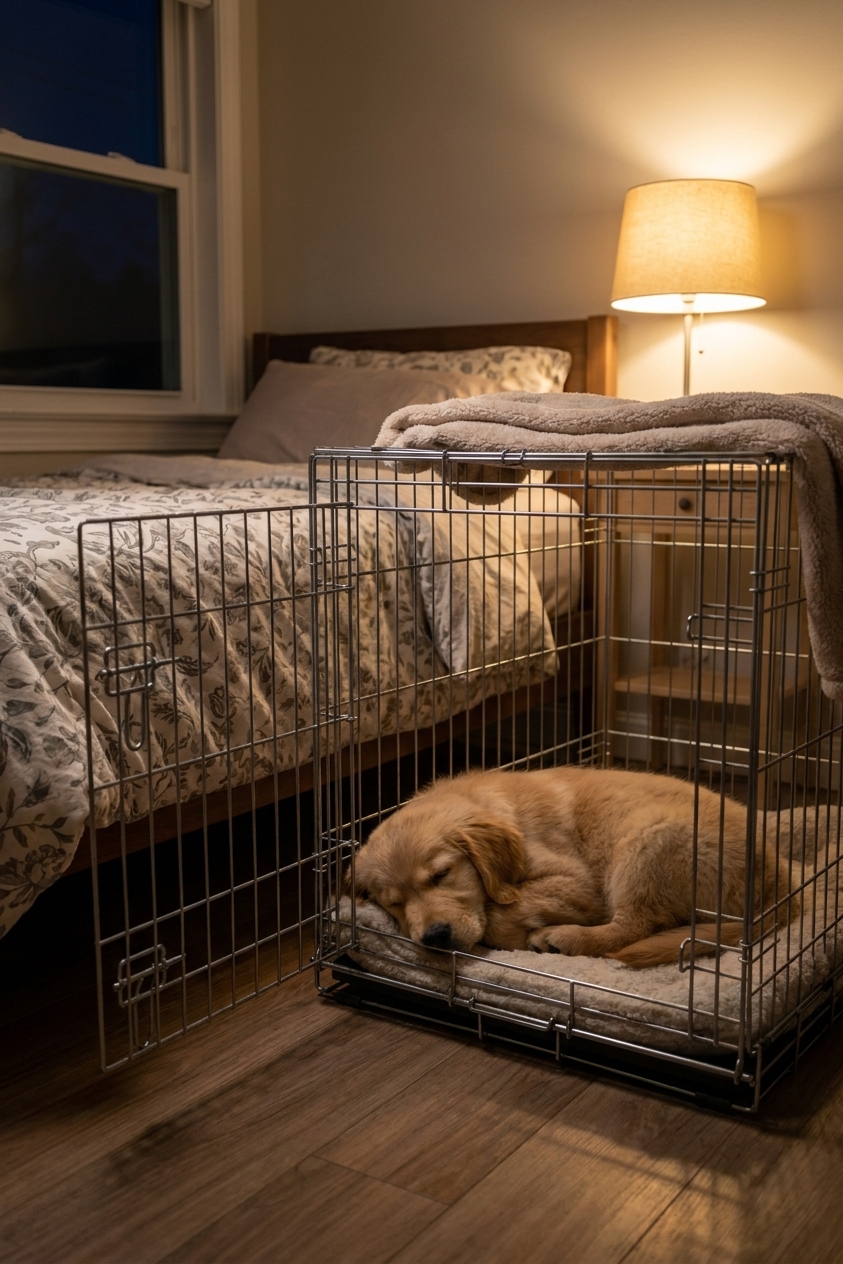
Many articles focus on crate whining and crying, but barking has its own pattern. Whining often signals discomfort, uncertainty, or a need to potty. Barking more often signals arousal: frustration, demand behavior, boredom, alarm, or escalating stress.
Common sounds and what they usually mean
- Soft whining that comes and goes: “I am not sure about this,” or “I need to go out.”
- Sharp, repetitive barking as soon as the door closes: protest or demand behavior, sometimes boredom.
- Barking that ramps up over time with panting, drooling, or frantic movement: possible panic. Treat this as an emotional emergency, not disobedience.
- Single bark bursts after a noise: alert barking, often helped by crate placement and white noise.
Your goal is not to “win” against barking. Your goal is to reduce arousal and teach calm, because calm is a learnable behavior.
Rule out the basics first
Before we troubleshoot training, make sure you are not accidentally asking a very young puppy to do an impossible overnight stretch.
Quick checklist
- Potty: Most puppies need a nighttime bathroom trip, especially under 16 weeks.
- Comfort: Appropriate crate size, safe bedding, comfortable temperature, and access to water earlier in the evening.
- Hunger: Very young puppies may need their last meal timed closer to bedtime, based on your veterinarian’s guidance.
- Medical issues: Diarrhea, vomiting, coughing, frequent urination, or sudden new restlessness warrants a vet call.
If barking is new, intense, or paired with signs like drooling, vomiting, self-injury attempts, or nonstop thrashing, treat it like panic and ask your veterinarian and a qualified trainer for help.
What causes nighttime crate barking?
1) “I can’t settle yet” (overtired and overstimulated)
Puppies get overtired like toddlers. Overtired puppies often bark more, not less. A calmer evening routine typically helps more than extra play.
2) “I’m alone” (normal social distress)
Dogs are social sleepers. Many puppies do best when the crate is near you at first, then gradually moved to the desired long-term spot.
3) “Let me out” (learned demand barking)
If barking has repeatedly opened the crate door, your puppy learned a powerful lesson: barking works. The fix is not punishment. The fix is teaching a new behavior that works better, like quiet.
4) “Something is happening” (alert barking)
Outdoor noises, hallway footsteps, and other pets can trigger barking. Crate placement, covering the crate partially, and white noise can reduce triggers.
5) True panic
Some puppies experience panic in confinement or when separated. This is not stubbornness. It is an emotional response that needs gradual desensitization and professional support.
Where the crate should go (at first)
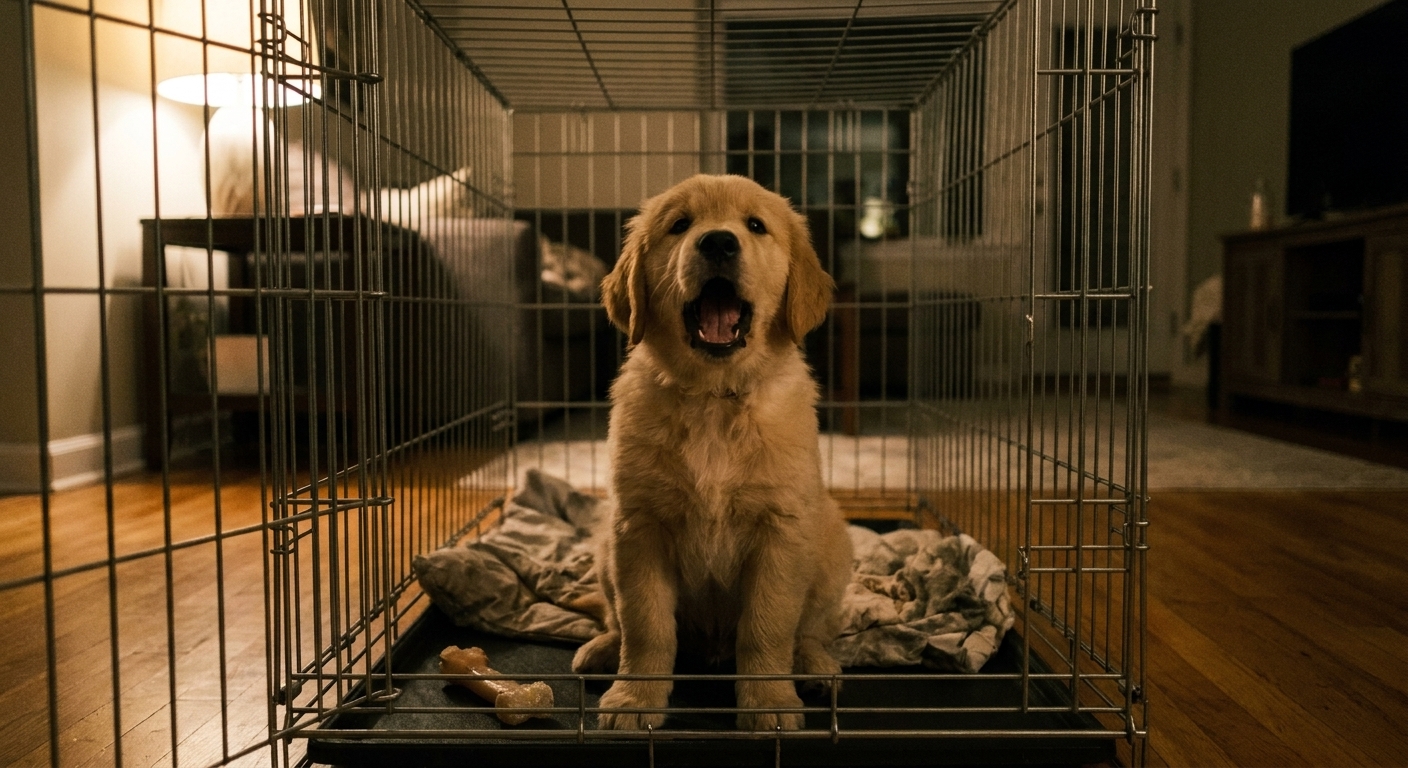
For most puppies, I recommend starting with the crate in your bedroom or right outside your bedroom door for the first couple weeks. This supports sleep, reduces panic, and keeps potty trips quick.
Best placement tips
- Close enough to hear soft cues: You want to catch “I need to potty” before it becomes full barking.
- Not in a high-traffic zone: Hallways and living rooms can be too stimulating.
- Stable and cozy: Put the crate on a non-slip surface and consider a light crate cover on three sides if it helps your puppy settle.
- Add sound buffering: A fan or white noise can reduce alert barking.
Once your puppy sleeps well, you can gradually move the crate a few feet every few nights toward your preferred location.
The pre-sleep routine that prevents barking
The easiest barking to solve is the barking you prevent. Your bedtime routine should lower arousal and meet basic needs.
A simple 60 to 90 minute wind-down
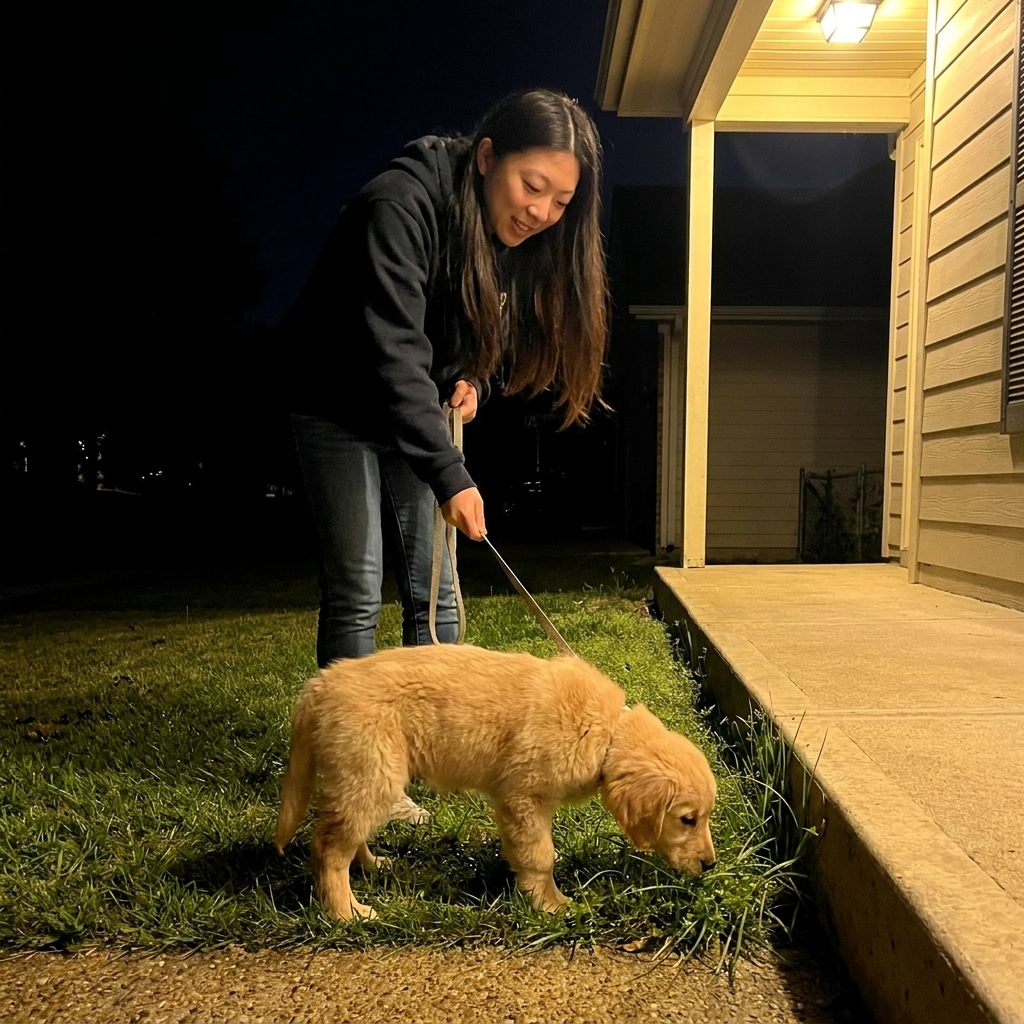
- Potty break: Calm, boring, leashed.
- Sniff walk or gentle play: 10 to 20 minutes. Avoid high-octane chasing right before bed.
- Short training session: 3 to 5 minutes of sit, down, touch, or leash skills. Mental work is settling work.
- Calm enrichment: A safe lick mat or stuffed food toy can help many puppies relax.
- Final potty break: Then straight to crate.
If you use a lick mat or stuffed food toy, offer it before you put your puppy down for the night and supervise while they work on it. For many young puppies, it is safest to pick it up once it is finished rather than leaving chews or food toys in the crate overnight, since choking and chewing hazards are real in the dark.
A quiet training plan that works overnight
Think of quiet as a behavior you can reinforce. We do not wait for perfect silence all night. We build it in tiny, doable steps.
Step 1: Teach “quiet” during the day
Pick an easy moment when your puppy pauses naturally. Softly say “quiet”, then give a tiny treat. Repeat until your puppy understands that silence pays.
- Start with 1 second of quiet, then reward.
- Slowly build to 3 seconds, then 5 seconds.
- Keep it calm. This is not a hype game.
Step 2: Practice “crate calm” in daylight
Multiple short sessions beat one long session.
- Toss a treat in the crate, let your puppy go in, and let them come out.
- Close the door for 1 to 3 seconds, feed through the bars, then open.
- Increase duration gradually, always ending sessions before frustration starts.
Step 3: Use an overnight response rule
Overnight is different than daytime. Your puppy might truly need to potty, and you want to keep trust strong.
My evidence-based rule of thumb: if you suspect a potty need, take them out calmly on leash, no play, no snacks, then back to the crate. If it is not potty, return inside and continue your quiet plan.
Step 4: The 10-minute decision tree
When barking starts, use this quick process:
- Listen for escalation: Is this getting more frantic, or is it steady protest?
- Wait for a tiny pause: Even one second of silence.
- Keep your response low-key: A soft “good” (or no words at all) helps keep arousal down.
- Use the pause as the doorway: If you need to open the crate, do it during the quiet moment, then go straight to a boring potty break if needed.
- If barking continues past about 10 minutes: reassess. Potty break, check temperature, check crate placement, and consider whether you are dealing with panic.
Do not let your puppy out while they are actively barking, if you can safely avoid it. Wait for that tiny pause, then open the door. This one detail prevents you from accidentally training “bark harder.”
Important note: I do not recommend tossing treats into the crate in the middle of the night to reward pauses. It can accidentally create a pattern where your puppy wakes up, barks, pauses, and expects a midnight snack. It can also frustrate puppies if they cannot find the treat in the dark. Save food rewards for daytime practice, and keep nights boring and predictable.
Sample overnight schedule (adjust for age)
Every puppy is different, but a predictable routine helps their nervous system settle.
Example for a young puppy
- 8:30 pm: Calm walk, sniff time.
- 8:45 to 9:00 pm: Short training and a calm chew or lick mat (supervised), then pick it up when finished.
- 8:00 pm: Water taper begins if recommended by your vet, especially for frequent nighttime urination. Many puppies do better with about a 2-hour taper before bedtime. Do not restrict water excessively.
- 10:00 pm: Final potty break and into crate.
- 1:30 to 3:00 am: One boring potty trip if needed.
- 6:00 to 7:00 am: Wake, potty immediately, then breakfast.
If your puppy is older and reliably sleeping, you can fade the middle-of-the-night potty trip gradually, not abruptly.
Impulse control that reduces night barking
Night barking is often the symptom. The bigger skill is learning to tolerate frustration and settle.
Two simple daily games
- “Treat toss and settle”: Toss one treat onto a mat. When your puppy steps onto the mat, calmly feed a second treat for staying there. Build duration slowly.
- “Doorway pause”: Before going outside, ask for a sit. Open the door a crack. If your puppy surges, close it gently. When they hold position, open and go. This builds patience without scolding.
These skills carry over into crate time because your puppy learns that calm behavior makes good things happen.
When barking suggests panic (and what to do)
It is normal for puppies to protest change. Panic looks different.
Red flags for panic
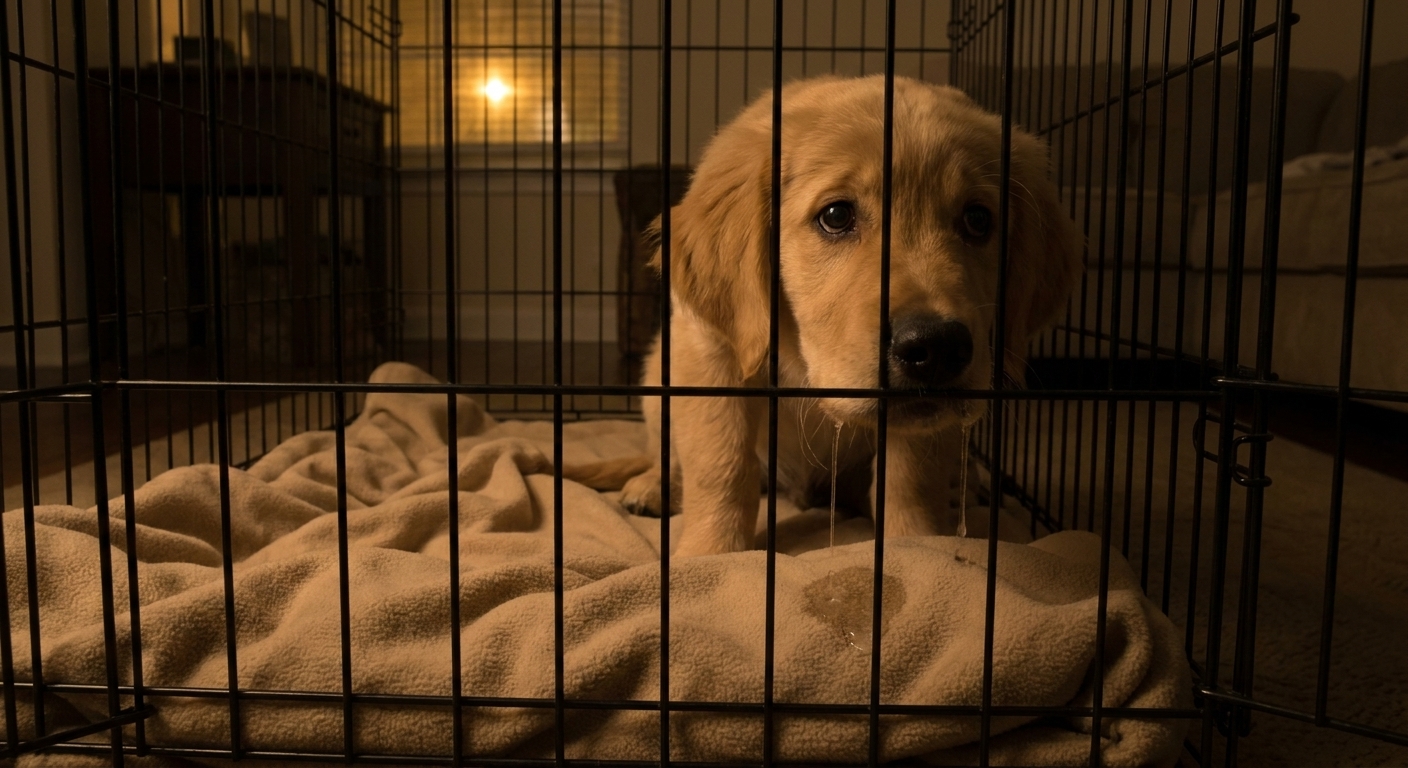
- Drooling, soaking the crate
- Trying to chew through bars or escape at all costs
- Self-injury, broken nails, bloody gums
- Continuous barking with intense panting and inability to settle
- Symptoms worsen quickly over nights instead of gradually improving
If you see these signs, stop trying to “outwait” the barking. Contact your veterinarian and work with a qualified force-free trainer. A gradual, structured plan can make a huge difference, and sometimes short-term medical support is part of humane treatment.
Common mistakes that keep barking going
- Too much freedom too soon: If the crate only happens at bedtime, it feels like isolation. Practice short, positive crate time during the day.
- Accidentally rewarding barking: Opening the door mid-bark teaches barking works. Wait for a pause.
- Overexercising late: An over-tired puppy can become wired and bark more.
- Using punishment: Yelling, banging the crate, or spray tools can increase fear and worsen long-term crate distress.
- Expecting week-one perfection: Consistency matters more than speed.
How long does it take?
Many puppies improve within 7 to 14 nights with consistent routines, proper potty support, and daytime crate practice. Puppies who are more sensitive or who have panic signs need a slower plan, and that is okay. Slow and steady is still progress.
If you are exhausted, ask for help. Even a few nights of support from a partner, friend, or pet sitter can help you stay consistent and calm, which helps your puppy learn faster.
Quick recap
- Barking often signals arousal, not just sadness.
- Start with the crate close to you, then move it gradually.
- Prevent barking with a calm bedtime routine and an appropriate potty schedule.
- Teach “quiet” and “crate calm” during the day.
- Do not ignore panic signs. Get veterinary and training support.
If you want, tell me your puppy’s age, breed mix, and current schedule, and I can help you tailor the overnight plan to something realistic for your household.