
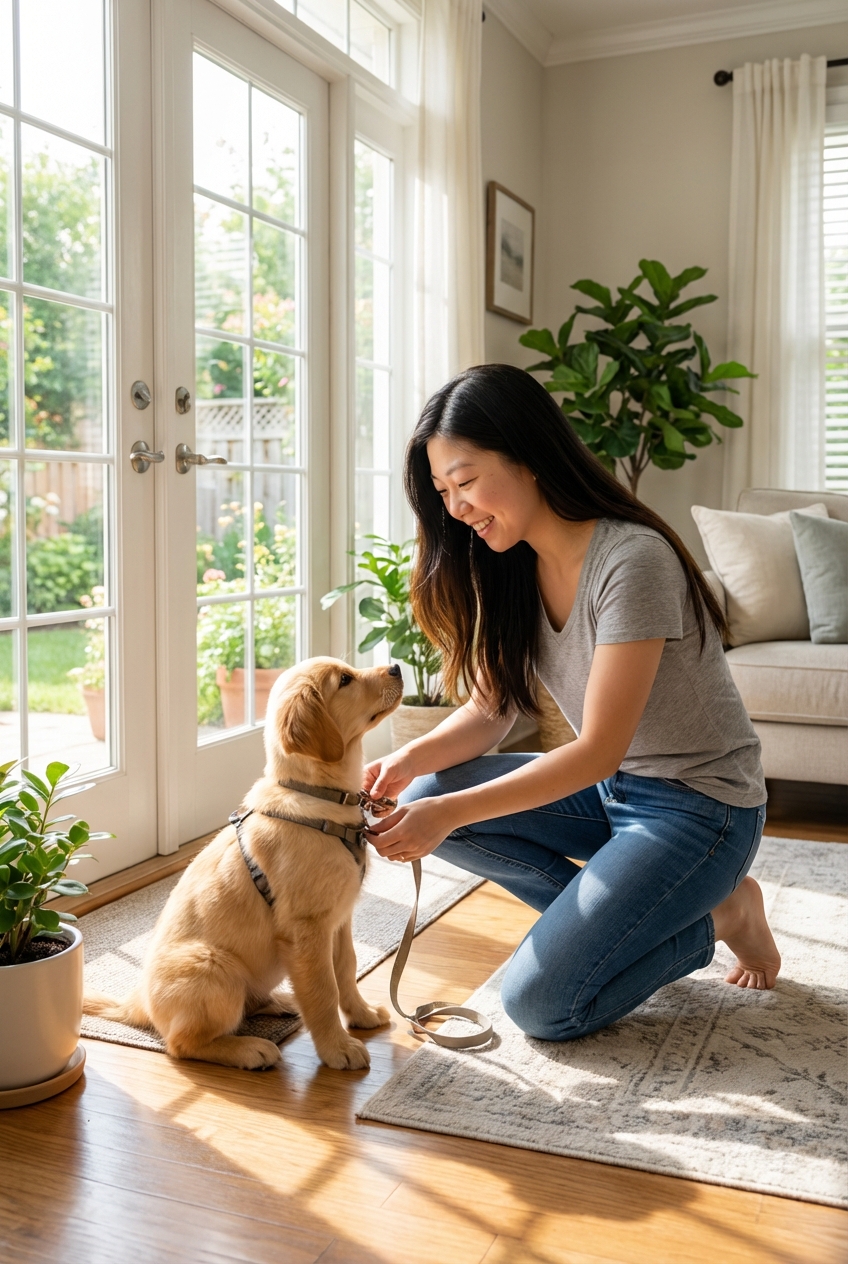
Stop guessing and start succeeding with a simple potty schedule. Learn age-based intervals, after-meal timing, nighttime routines, crate support, and calm wa...
Article
•
Designer Mixes
Proven Puppy Potty Training Tips

Shari Shidate
Designer Mixes contributor
Potty training can feel like a full-time job in the beginning, especially if you are juggling work, kids, and a brand-new puppy who seems to pee the moment you look away. The good news is that puppy potty training is not about “perfect” puppies. It is about predictable routines, smart setup, and rewarding the right behavior so your pup understands what you want.
As a veterinary assistant, I also want to gently remind you that accidents are information. They help you fine-tune timing, supervision, and your puppy’s environment. With consistency and a little patience, most families see real progress within weeks.
Start with realistic expectations
Puppies are learning two things at once: where to go and how to “hold it.” The ability to hold urine develops with age and with sleep patterns. During awake, active times, many puppies need to go much sooner than you expect. Stress and excitement can also lead to more frequent accidents, even when your puppy is trying.
How often do puppies need breaks?
- After waking up from naps and overnight sleep
- After eating (often within 5 to 30 minutes, but it varies)
- After drinking
- After play or excitement
- Every 1 to 2 hours during active times for many young puppies (and sometimes every 30 to 60 minutes for very young pups during busy play)
A common rule of thumb you may hear is “months of age plus one” for how many hours a puppy can hold it. Think of this as a rough maximum under ideal conditions, and often more realistic for overnight or nap time. When your puppy is awake, playing, drinking, or distracted, the true number is usually lower. Smaller breeds often need more frequent trips, and nervous or distracted puppies may not fully empty their bladder.
Set up your home for success
Your training goes faster when your puppy has fewer chances to rehearse accidents indoors. Think of the setup as training wheels for your home.
Use a crate and pen well
- Crate: Great for sleep and short, calm downtime. Many puppies avoid soiling where they sleep, which can support bladder control. Very young puppies, sick puppies, or puppies who came from poor conditions may need extra help and more frequent breaks.
- Playpen or gated area: Ideal when you need hands-free time but still want supervision and a smaller “safe zone.”
Pick a crate size where your puppy can stand, turn around, and lie down comfortably, but not so large that one corner becomes a bathroom. If your puppy will grow a lot, use a divider.
Clean accidents thoroughly
Use an enzymatic pet stain cleaner made for urine. Many household cleaners leave behind scent markers that your puppy can still detect, which can invite repeat accidents in the same spot. Avoid ammonia-based cleaners (they can smell like urine to dogs). For safety, keep pets and kids away from cleaned areas until the product is fully dry, and follow the label directions.
Build a simple routine
Routines remove guesswork for you and confusion for your puppy. Your goal is to get your puppy to the right spot often enough that the “right” behavior happens naturally, then you reward it.
A daily schedule that helps
- Morning: Straight outside from the crate, then breakfast, then outside again
- Daytime: Potty break every 1 to 2 hours while awake, plus after meals, naps, play, and training sessions
- Evening: Potty after dinner, after play, and right before bed
- Overnight: Many young puppies need 1 overnight potty trip at first
If you are not sure whether your puppy needs to go, assume the answer is yes and take the quick trip. Potty breaks are short, boring, and consistent. Fun comes after.
Stick to one potty spot
Dogs learn by association. If you always bring your puppy to the same small area, the smell and routine help trigger the behavior. This matters a lot for easily distracted puppies.
Use a cue word
Choose one cue and be consistent, like “Go potty.” Say it once when your puppy starts sniffing and circling. Avoid repeating the cue over and over because it becomes background noise.
Reward right away
This is one of the most proven potty-training tips because it uses basic learning science. Behaviors that are rewarded immediately are more likely to be repeated.
How to reward
- Timing: Praise and give a treat immediately (within a few seconds) after your puppy finishes
- Location: Reward outside at the potty spot, not after you go indoors
- Value: Use small, high-value treats your puppy loves
Then give a little bonus: 2 to 5 minutes of supervised freedom or a short play session. This helps prevent a common problem where puppies learn to hold it because they think potty means “the fun ends.”
Supervision is the shortcut
If your puppy is loose in the house, your eyes should be on them. If you cannot supervise, use the crate or a playpen. This is not about being strict. It is about preventing accidents that slow training.
Watch for signals
- Sudden sniffing or nose to the floor
- Circling
- Wandering away from the family
- Heading toward a previous accident area
- Stopping play abruptly
If you see a signal, calmly pick your puppy up or leash them and go outside right away.
If your puppy has an accident
Accidents happen, especially in the first few weeks. Your response matters.
- If you catch them mid-accident: Calmly interrupt with a gentle sound, scoop them up, and go straight outside to finish. Reward if they finish outdoors.
- If you find it after the fact: Say nothing to your puppy. Clean thoroughly with an enzyme-based pet cleaner.
- Never punish: Scolding can teach your puppy to hide when they need to go, which makes training harder.
The goal is not to convince your puppy that potty is “bad.” The goal is to show them that potty outside is wonderful and always worth it.
Nighttime tips
Nighttime is often where families feel exhausted and discouraged. It helps to remember this phase is temporary.
Make nights easier
- Crate near your bed: You will hear your puppy stir before they are in full distress
- Keep it boring: No play, no bright lights, no long conversations
- Direct trip: Out to potty spot, then back to the crate
- Set an alarm: If your puppy is having nightly accidents, an alarm can prevent them until their bladder matures
As your puppy stays dry, gradually push the alarm later, or wait for your puppy to wake you.
Pee pads and indoor options
Some households need indoor solutions, such as high-rise apartments, unsafe outdoor areas, extreme weather, or long work shifts. Pee pads can be useful, but they can also slow outdoor training for some puppies if “anywhere inside” starts to feel acceptable. The workaround is to treat pads as a single, dedicated potty station, not a whole-house option.
If you use pads, be consistent
- Place pads in one consistent location, not all over the home
- Consider a pad holder or grass-style indoor potty to reduce shredding and improve aim
- When transitioning to outdoors, slowly move the station closer to the door over days
Potty training in apartments
If it takes several minutes to get outside (elevators, stairs, lobbies), your puppy may not be “failing.” The trip is just too long for a young bladder.
Make the trip easier
- Carry your puppy until you reach the potty area when they are very young or when you suspect they need to go urgently
- Pick a temporary outdoor spot close to the exit so you can reward quickly and build the habit
- Leash up before you open the door so you do not lose time fumbling with gear
- Use an indoor station if needed while your puppy is tiny, then transition once outdoor access is reliable
Poop training basics
Many puppies are more predictable with poop than pee, once you know their pattern. Most poop timing ties closely to meals, waking, and activity.
Common poop windows
- After meals: Often within 10 to 30 minutes (sometimes longer)
- After waking: Especially in the morning
- After play: Movement can get things moving
Use the same potty spot, wait quietly, and reward right after they finish. If stools suddenly become very soft, frequent, contain blood, or your puppy strains, check in with your veterinarian.
When progress stalls
If you are consistent and still seeing lots of accidents, it is time to troubleshoot. Most issues come down to timing, supervision, too much freedom, or a medical concern.
Common training mistakes
- Waiting for the puppy to “ask” instead of proactively scheduling trips
- Giving too much freedom too soon
- Not rewarding immediately outdoors
- Using cleaners that do not remove urine odor
- Long indoor play sessions without a potty break
Possible medical reasons to discuss with your veterinarian
- Urinary tract infection
- Parasites or gastrointestinal upset causing frequent stools
- Increased thirst and urination
- Straining, discomfort, blood in urine, or sudden changes in habits
Trust your instincts. If something feels off, it is always okay to call your vet. Getting answers early can save you weeks of frustration.
A simple 7-day reset
If potty training feels messy, this reset can get you back on track quickly.
Day 1 to 2: Tight supervision
- Leash your puppy to you indoors or keep them in a playpen
- Potty every 60 to 90 minutes while awake (more often for very young puppies)
- Reward every outdoor potty like it is a big win
Day 3 to 5: Add small freedom
- Allow one puppy-proofed room after a successful potty
- If an accident happens, reduce freedom again for 24 hours
Day 6 to 7: Build reliability
- Keep the schedule and keep rewards consistent
- Start spacing potty trips slightly if your puppy is staying clean and comfortable
Progress is not always linear. But if you stay consistent, your puppy will connect the dots.
When to add more freedom
A simple rule that helps many families is this: expand space slowly, and only after your puppy has been reliable in the current space.
- Aim for 7 to 14 accident-free days in one area before giving access to a new room
- Add one new space at a time, and keep supervision high for the first few days
- If accidents return, scale back freedom and tighten the schedule for a few days
Quick recap
- Prevent accidents with supervision, crate, and smart confinement
- Take frequent, predictable potty breaks (often more often when your puppy is awake and active)
- Use one potty spot and a consistent cue
- Reward immediately after your puppy finishes outside
- Clean indoor accidents with an enzyme-based pet cleaner
- Check with your vet if progress stalls or symptoms appear
You’ve got this. Potty training is one of the first big communication skills you and your puppy build together, and it sets the tone for so many other healthy habits.
