A vet assistant explains how omega-3s (EPA and DHA) support dogs’ skin, coat, joints, and some heart conditions—plus how to dose by weight, read labels, ...
Article
•
Designer Mixes
Proven Home Remedies for Shedding Dogs

Shari Shidate
Designer Mixes contributor
If your dog is shedding like it is their full-time job, you are not alone. I see this all the time as a veterinary assistant here in Frisco, Texas. The good news is that many cases of heavy shedding improve with a few simple, evidence-based home steps that support skin health, coat quality, and overall comfort.
Before we jump in, one important truth: you cannot stop shedding completely. Shedding is normal for most breeds. What we can do is reduce excessive shedding, limit hair tumbleweeds in your home, and make sure shedding is not a sign of a medical problem.
Quick note: This is general education, not a diagnosis. If your dog has persistent itching, hair loss, or skin sores, an exam is the safest next step.
What is too much shedding?
Seasonal coat blow (often spring and fall) is common, especially in double-coated mixes. Shedding may be excessive or abnormal when you notice:
- Bald patches or thinning hair along the back, tail base, belly, or around the eyes
- Constant scratching, licking, rubbing, or chewing paws
- Dandruff, greasy coat, odor, or red, inflamed skin
- Recurrent ear infections or hot spots
- Sudden change in shedding that does not match the season
If any of these apply, home care can still help, but it is smart to loop in your veterinarian to rule out allergies, parasites, fungal or bacterial infections, endocrine disease (like hypothyroidism), or pain and stress.
Coat basics that matter
Single coat vs double coat
Single-coated dogs tend to shed more steadily year-round. Double-coated dogs often do a bigger seasonal shed when the undercoat “blows.” That is normal, but the volume can feel intense.
About shaving
For most double-coated dogs, shaving is usually not the best shedding solution. The undercoat can grow back unevenly and the coat may not insulate as well. If mats, skin disease, or comfort issues make shaving necessary, let your vet or a pro groomer guide you.
Home steps that help
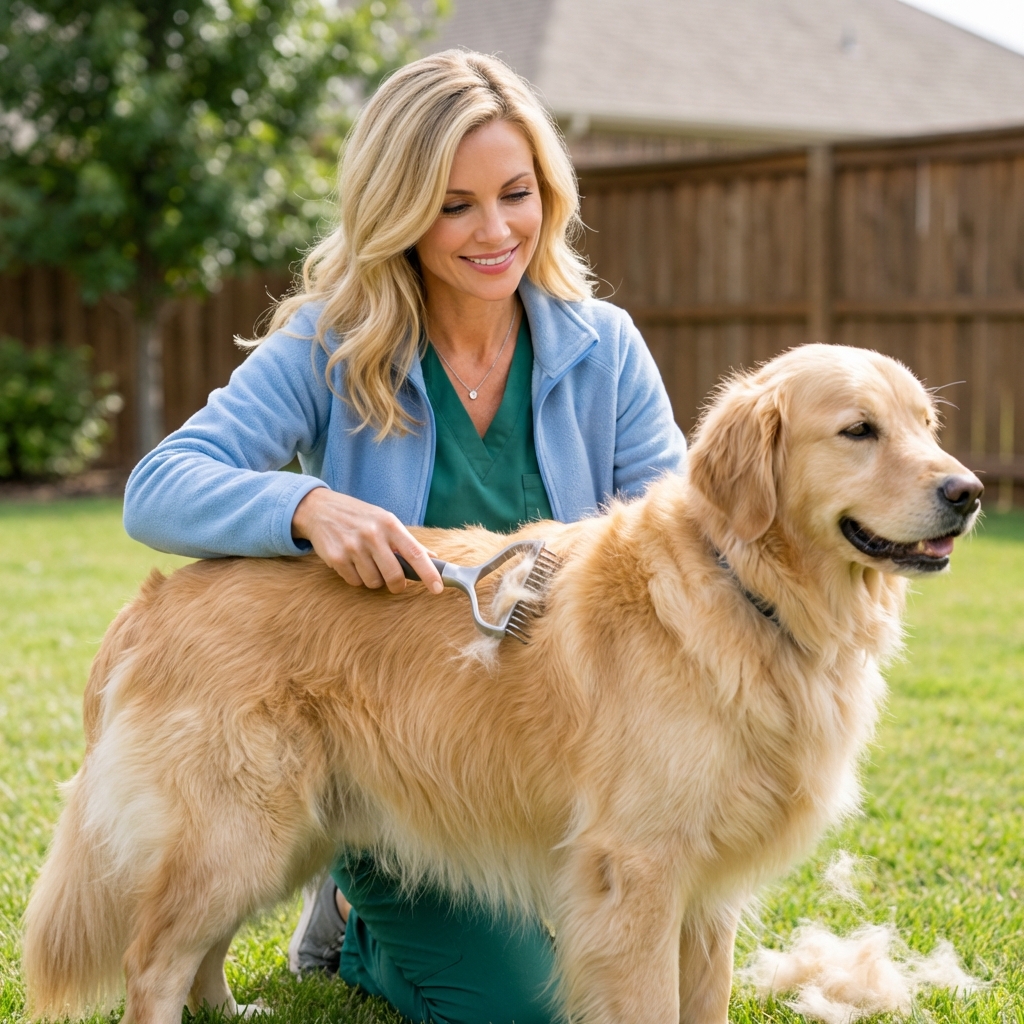
1) Brush smarter, not harder
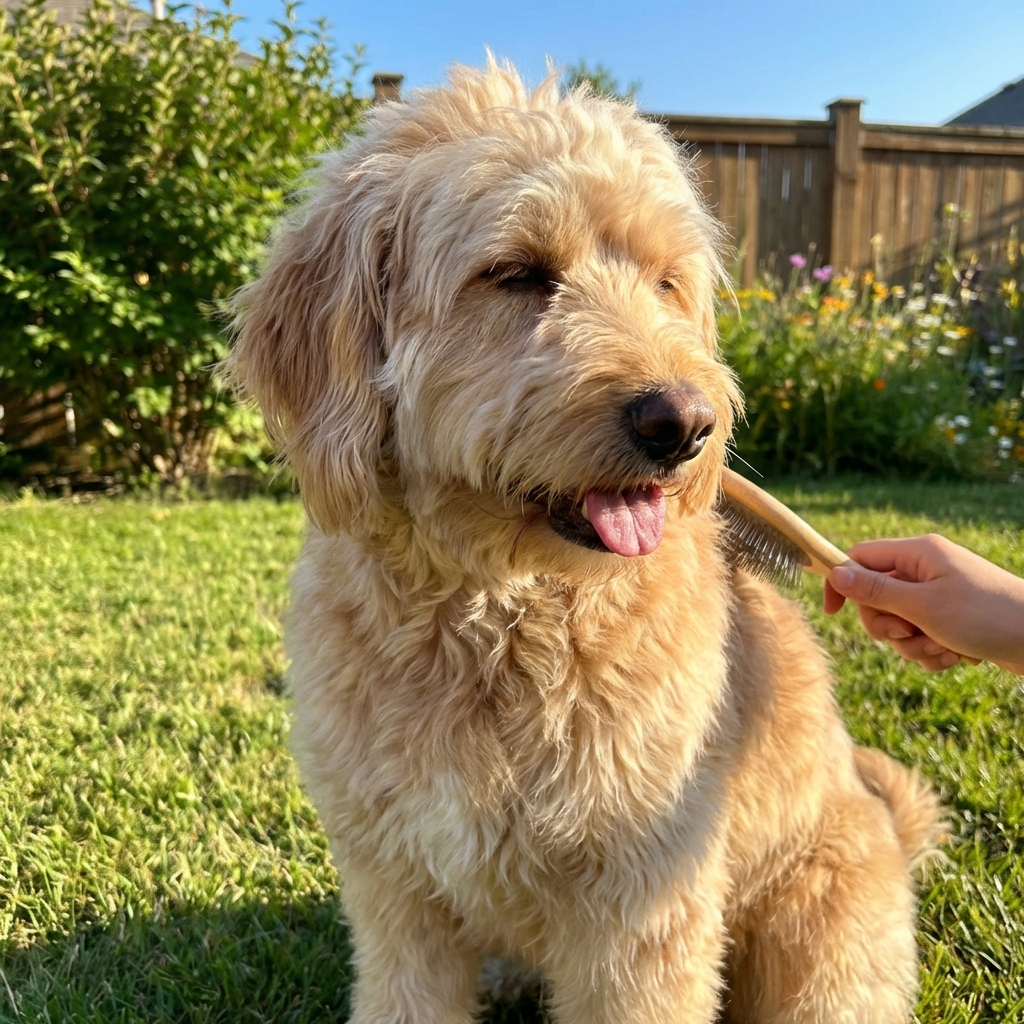
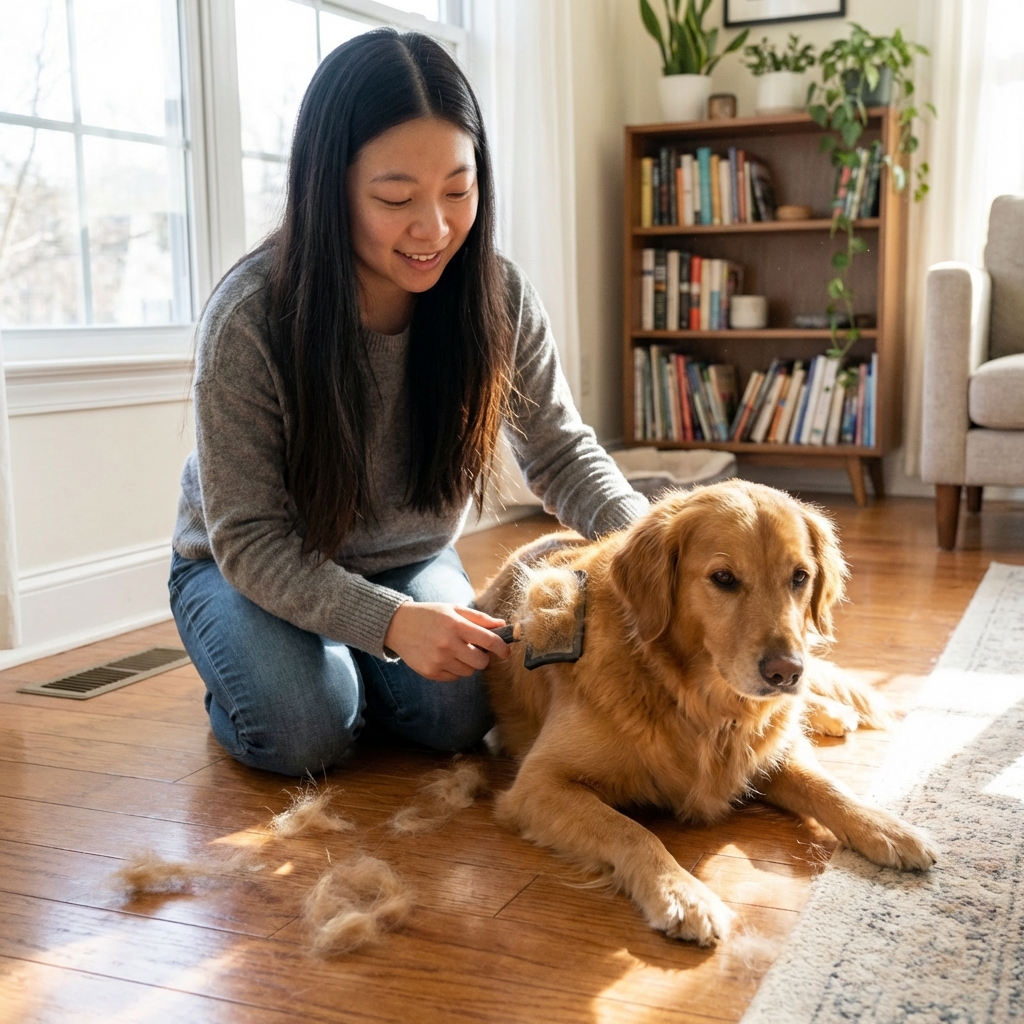
Brushing is the fastest home tool for shedding because it physically removes loose hair before it lands on your couch. It also distributes skin oils along the coat, which can reduce breakage and dryness.
- Short coats: rubber curry brush or grooming glove, 3 to 5 minutes, 3 to 4 times per week
- Medium to long coats: slicker brush plus a metal comb, about 10 minutes, 3 to 5 times per week
- Double coats: undercoat rake 1 to 2 times per week during heavy shed seasons
Tool safety tip: Undercoat rakes and deshedding blades can irritate skin if you overdo them. Aim for “brush until the hair release slows,” not “brush until the skin is pink.”
Tip: Brush after a short walk. Movement helps loosen dead hairs and you will often get a better release with less tugging.
2) Upgrade the bath routine
A proper bath can often noticeably reduce shedding for several days, especially when followed by a thorough dry and brush-out. But frequent bathing with harsh products can dry the skin and make shedding worse.
- Many dogs do well with a bath every 3 to 6 weeks, but coat type, lifestyle, and skin conditions vary. Some dogs need less, and some need more or a medicated schedule per your vet.
- Use a gentle, fragrance-light dog shampoo designed for sensitive skin.
- Follow with a dog conditioner if your dog is dry, flaky, or prone to tangles.
At-home deshed trick: during the bath, massage shampoo in for a full 5 minutes (set a timer), then rinse extremely well. Leftover product residue is a common itch trigger.
3) Add omega-3s the evidence-based way
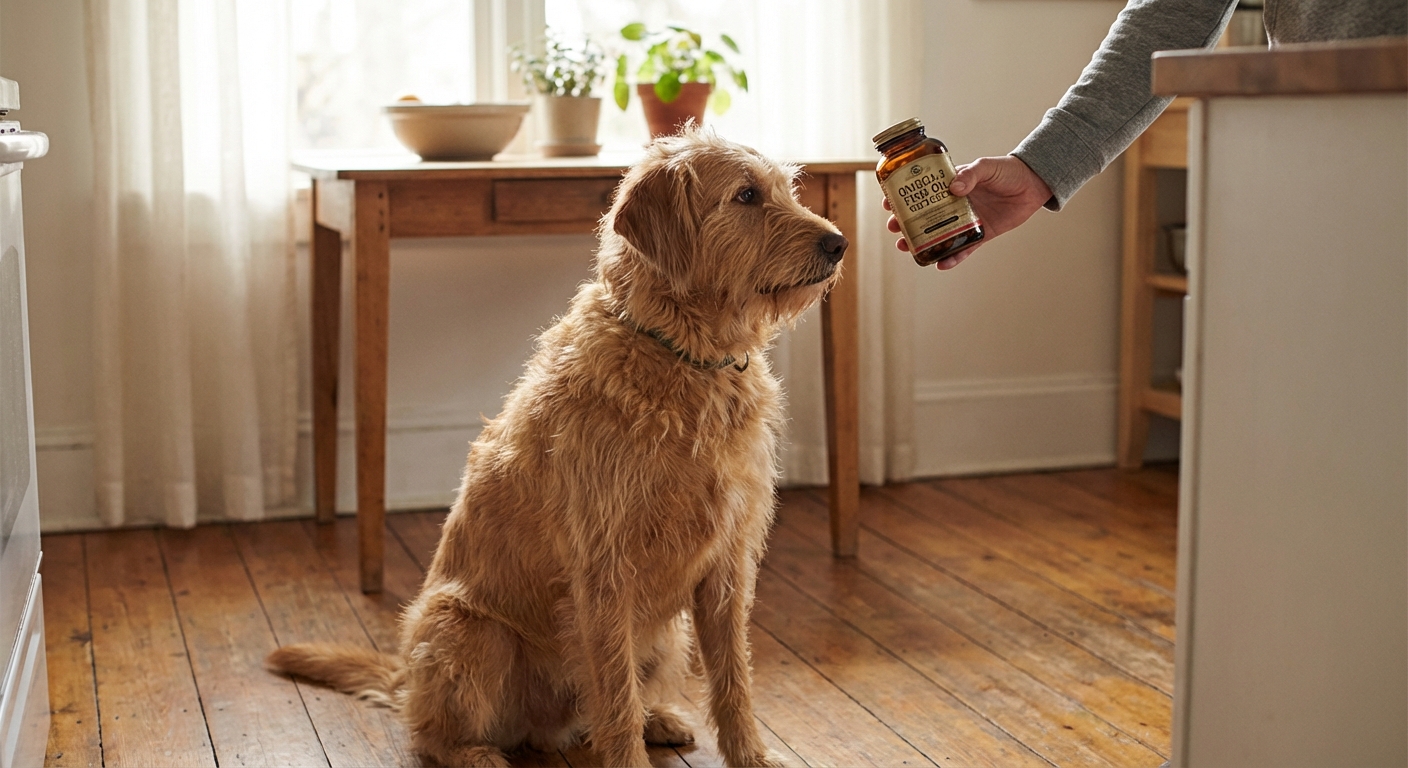
When families ask me for the most helpful supplement for coat and skin, omega-3 fatty acids are usually my first pick. Research supports omega-3s (EPA and DHA) for improving skin barrier function and reducing inflammation, which can help with dryness, itch, and shedding tied to irritated skin.
- Look for fish oil labeled for pets or a reputable human-grade brand with clear EPA and DHA amounts.
- Dose is based on the combined EPA + DHA, and it is best set with your veterinarian (mg per kg). Too much can cause GI upset and adds calories.
- Introduce slowly over 5 to 7 days to avoid loose stool.
- Store oils properly (cool, dark place) to prevent rancidity.
Safety note: Talk to your vet before starting omega-3s if your dog is on blood-thinning medication, has pancreatitis history, needs a low-fat diet, or is already on a therapeutic skin diet.
4) Support nutrition and hydration
A dull coat and excessive shedding often improve when a dog gets the right balance of protein, fats, and moisture. Even small changes can help, as long as they stay nutritionally safe.
- Boost moisture: add a spoonful of warm water to meals.
- If you use broth: choose low-sodium, and avoid any with onion, garlic, or “natural flavors” you cannot verify.
- Prioritize protein: choose diets where a named animal protein is a main ingredient.
- Topper rule: keep treats and toppers to about 10% of daily calories unless a vet or veterinary nutritionist helps you balance more.
Easy topper ideas (start small): cooked egg, plain kefir, or a small amount of pumpkin for digestion support. Fatty toppers like sardines can be useful for some dogs, but go slow and skip them for dogs prone to pancreatitis or on low-fat plans.
5) Control fleas and mites
One flea bite can trigger intense itch in sensitive dogs with flea allergy dermatitis, leading to chewing, hair loss, and lots of shedding. Even indoor dogs can be exposed.
- Use veterinarian-recommended flea and tick prevention consistently.
- Wash bedding weekly during peak seasons.
- Vacuum high-traffic nap zones often, then empty the canister outside.
If you see pepper-like specks near the tail base or your dog suddenly cannot stop scratching, do not assume it is just dry skin.
6) Rinse off allergens after walks
For dogs with environmental allergies, pollen and grass can sit on the coat and skin and keep the itch cycle going. A simple rinse helps more than people expect.
- After outdoor time, wipe paws and belly with a damp cloth.
- For flare-ups, do a quick lukewarm rinse (no shampoo) and towel dry.
- Wash blankets and soft beds regularly.
7) Use humidity for dry skin
Dry indoor air can lead to flaky skin and extra shedding. In North Texas, heating and air conditioning can be drying.
- Run a cool-mist humidifier near your dog’s main rest area.
- Clean the humidifier as directed to prevent mold and bacteria buildup.
8) Manage hair in the house
Reducing shedding on the dog is step one. Step two is making cleanup easier:
- Use a vacuum with a HEPA filter, especially if allergies are in the home.
- Washable throws on favorite furniture spots can catch hair before it spreads.
- An air purifier in the main living area can help with dander and fine hair.
Home remedies to avoid
These are popular online, but I do not recommend them for shedding because they can irritate skin or create bigger health problems.
- Coconut oil slathered on the coat: can trap dirt, worsen yeast in some dogs, and cause greasy skin. If used, keep it minimal and consider it a food supplement first, not a topical fix.
- Apple cider vinegar sprays: can sting inflamed skin and does not treat underlying infection.
- Human dandruff shampoos: often too harsh for canine skin, and some ingredients can be irritating or harmful if your dog licks them off while grooming.
- Essential oils: many are unsafe for pets and can trigger toxicity or dermatitis.
14-day shedding reset
If you want a clear starting point, here is a gentle plan you can try at home.
Days 1 to 3
- Brush daily for 5 to 10 minutes
- Start paw and belly wipe-down after walks
- Confirm flea prevention is current and wash bedding
Days 4 to 7
- If your dog is due, give one bath, then fully dry and brush out
- Add moisture to meals (water is perfect)
Days 8 to 14
- Add omega-3s slowly if appropriate and vet-approved
- Continue brushing 3 to 5 times per week
- Track itch level, coat feel, and stool quality
Many families notice less hair fallout and less scratching by week two when the main drivers are loose coat, dry skin, or mild irritation.
When to call the vet
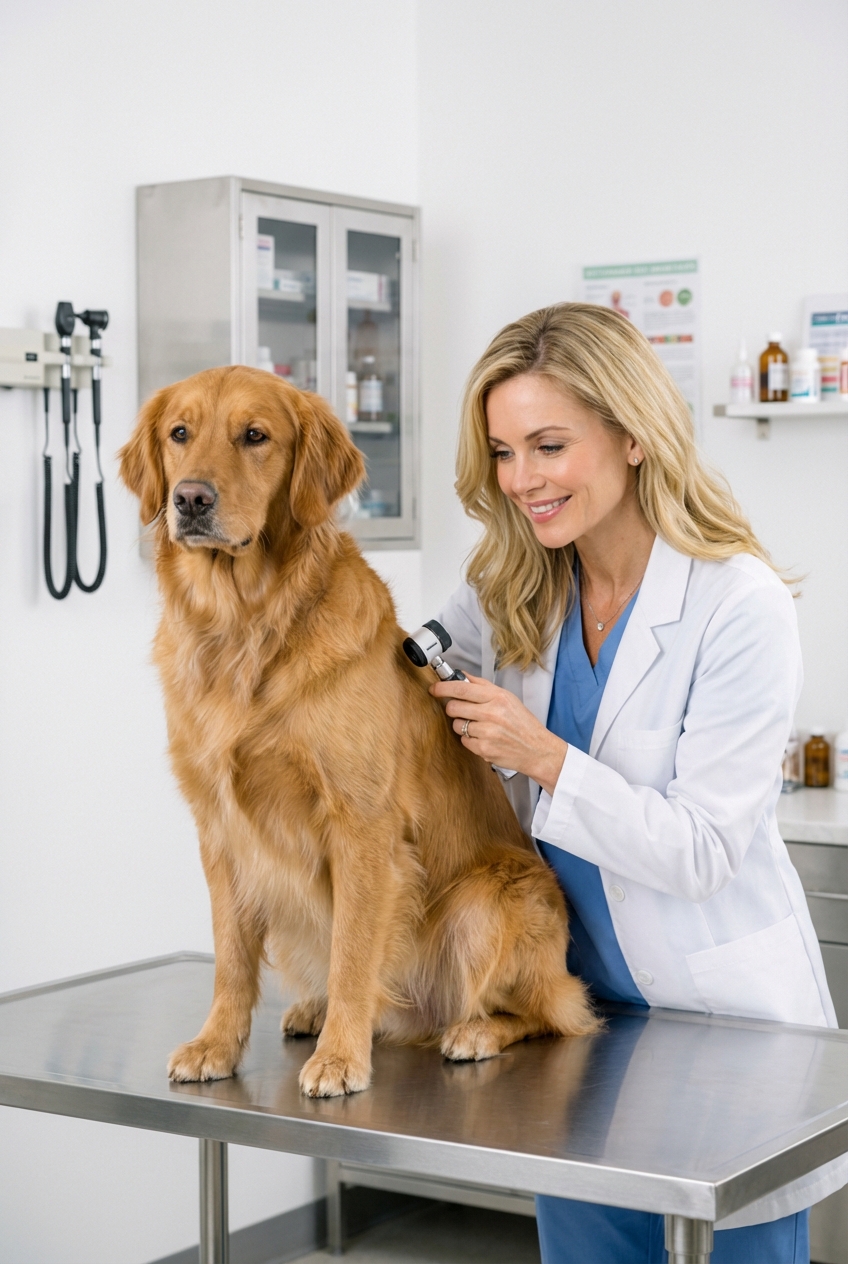
If you are seeing any of the red flags listed earlier (hair loss, constant itching, odor, inflamed skin, ear issues, sudden shedding changes), schedule a visit. Please also call your vet if you notice:
- Hair loss with red, moist, scabby, or painful skin
- Strong odor, greasy coat, or recurring hot spots
- Ear debris, head shaking, or persistent paw chewing
- Weight gain, lethargy, or thinning coat (possible thyroid concerns)
- No improvement after 2 to 3 weeks of consistent home care
What your vet may do depends on the signs, but common next steps include checking for fleas, doing a skin scrape or skin cytology, testing for yeast or bacteria, discussing allergy plans, and possibly running bloodwork (including thyroid testing) if the pattern fits.
Bring photos of the skin and a list of foods, treats, and supplements. That little bit of prep can speed up answers.
Bottom line
The most reliable home steps for shedding dogs are wonderfully simple: consistent brushing, a gentle bath routine, omega-3 support with the right dose, good nutrition and hydration, parasite control, and allergen rinse-offs. Start small, stay consistent, and watch your dog’s skin as closely as you watch their coat. Healthy skin is the real goal, and the coat almost always follows.