Wondering what Cerenia does for dogs? Learn how it helps nausea, vomiting, and motion sickness, how fast it works, tablets vs injection, side effects, and ke...
Article
•
Designer Mixes
Proven Dog Car Sick Behavior Guide

Shari Shidate
Designer Mixes contributor
If your dog gets car sick, you are not imagining it and your dog is not being “dramatic.” In my work as a veterinary assistant here in Frisco, Texas, I see this all the time: drooling, lip licking, whining, vomiting, and then the learned fear that can follow. The good news is that motion sickness is often very manageable with training and, when needed, veterinary support.
This guide walks you through what causes car sickness, how to tell nausea from anxiety, and the most proven behavior steps to help your dog ride more comfortably.
Why dogs get car sick
Car sickness usually comes down to one (or a combination) of these factors:
- Motion sensitivity: The inner ear balance system gets overstimulated, especially in puppies and young dogs whose vestibular system is still developing. Some puppies improve as they mature.
- Stress and learned association: If the car only means the vet, grooming, or a scary event, your dog can feel nauseated from anxiety alone, and then the nausea becomes part of the memory.
- Poor ventilation, strong smells, or heat: Warm cars and strong odors (air fresheners, cleaning products) can worsen nausea.
- Not being safely supported: Sliding, standing, or being unsteady in turns can make motion feel more intense.
Most dogs can improve, especially when you address both nausea and the emotional response to the car.
Signs of nausea (not just “acting up”)
Many dogs show early signs before they vomit. Watch for clues so you can intervene sooner:
- Excess drooling, wet chin, or foamy saliva
- Lip licking, gulping, or swallowing repeatedly
- Yawning when not tired
- Whining, restless shifting, or freezing in place
- Refusing treats they normally love
- Diarrhea or vomiting during or shortly after car rides
If symptoms only happen in the car, motion sickness or car-related anxiety is most likely. If nausea happens at home too, talk with your veterinarian to rule out GI disease, ear issues, or other medical causes.
Safety and comfort first
Before you do any training, set your dog up physically so the ride feels more stable and predictable. This is strongly recommended for both safety and progress.
Best setup for most dogs
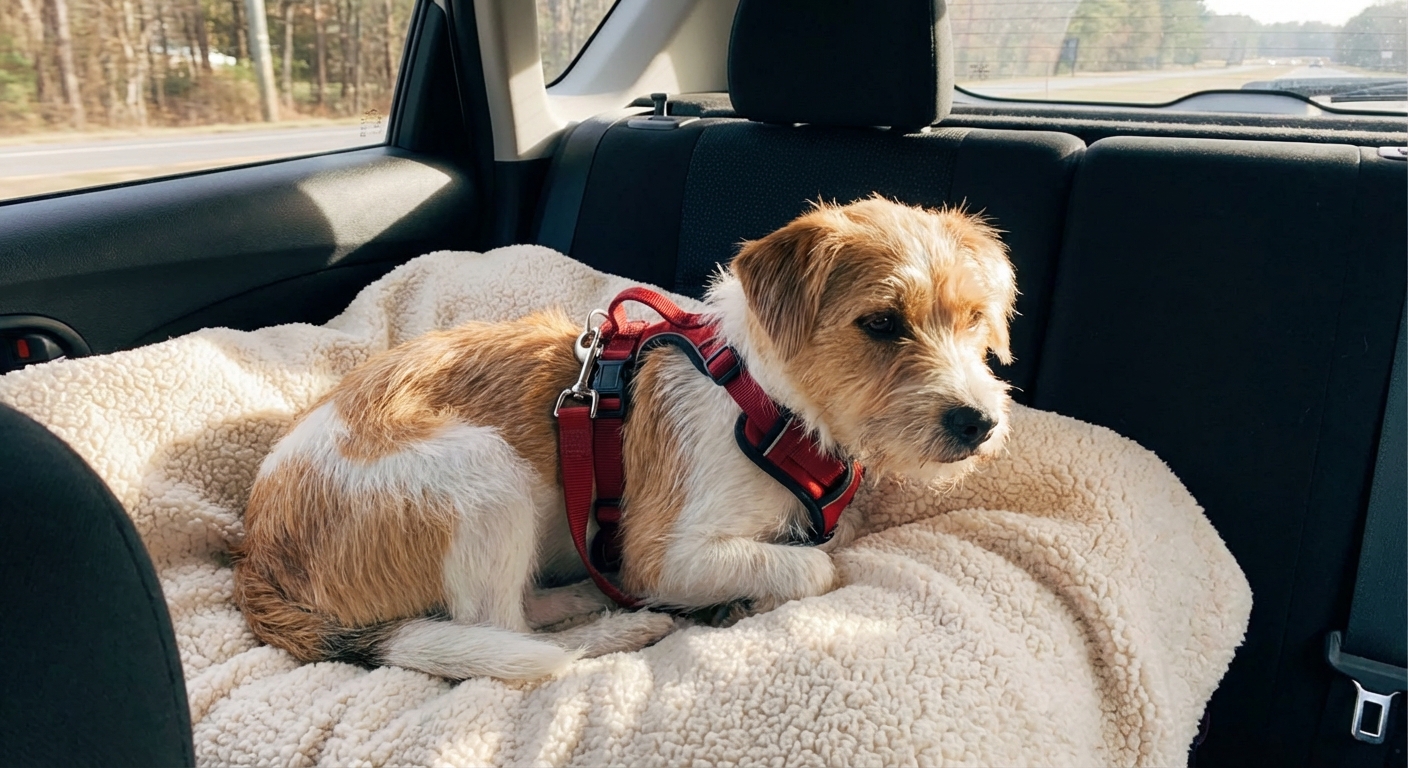
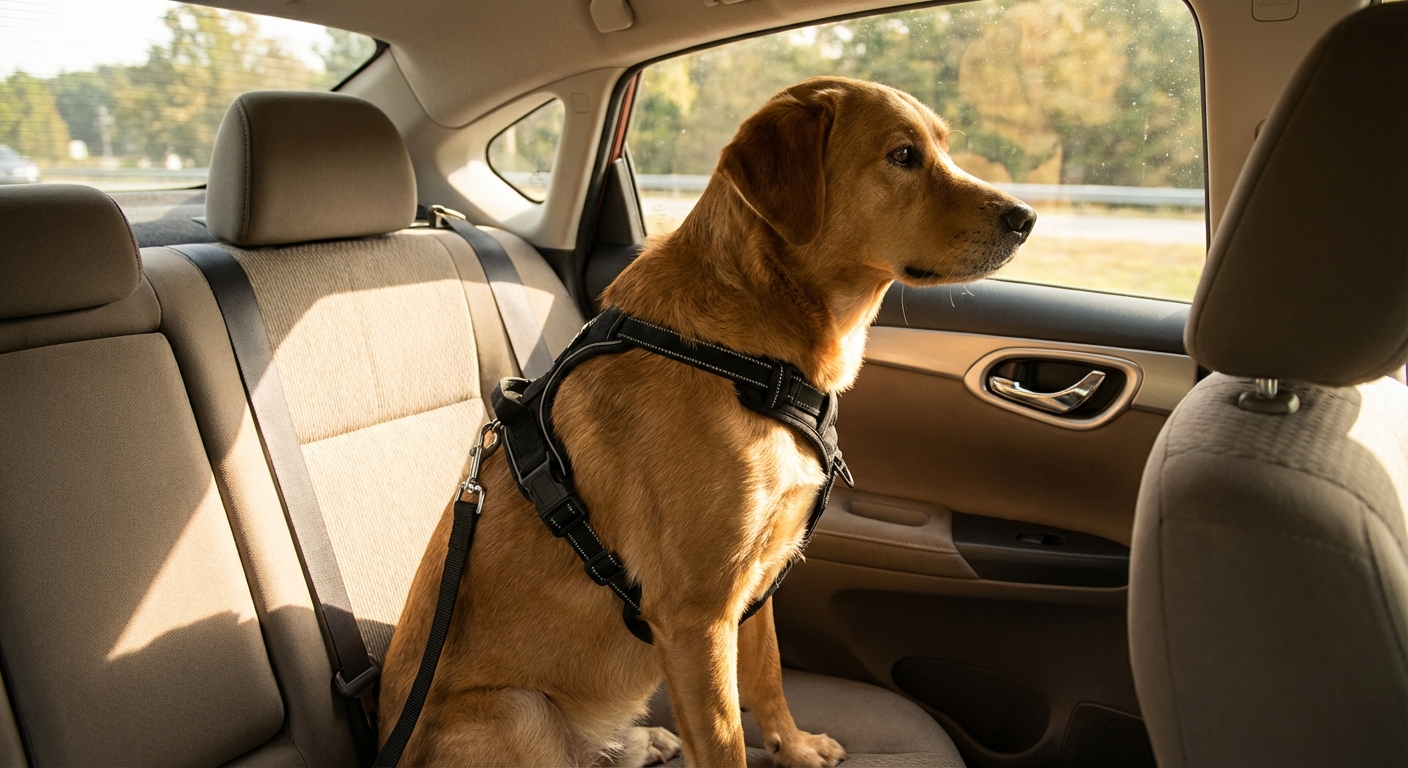
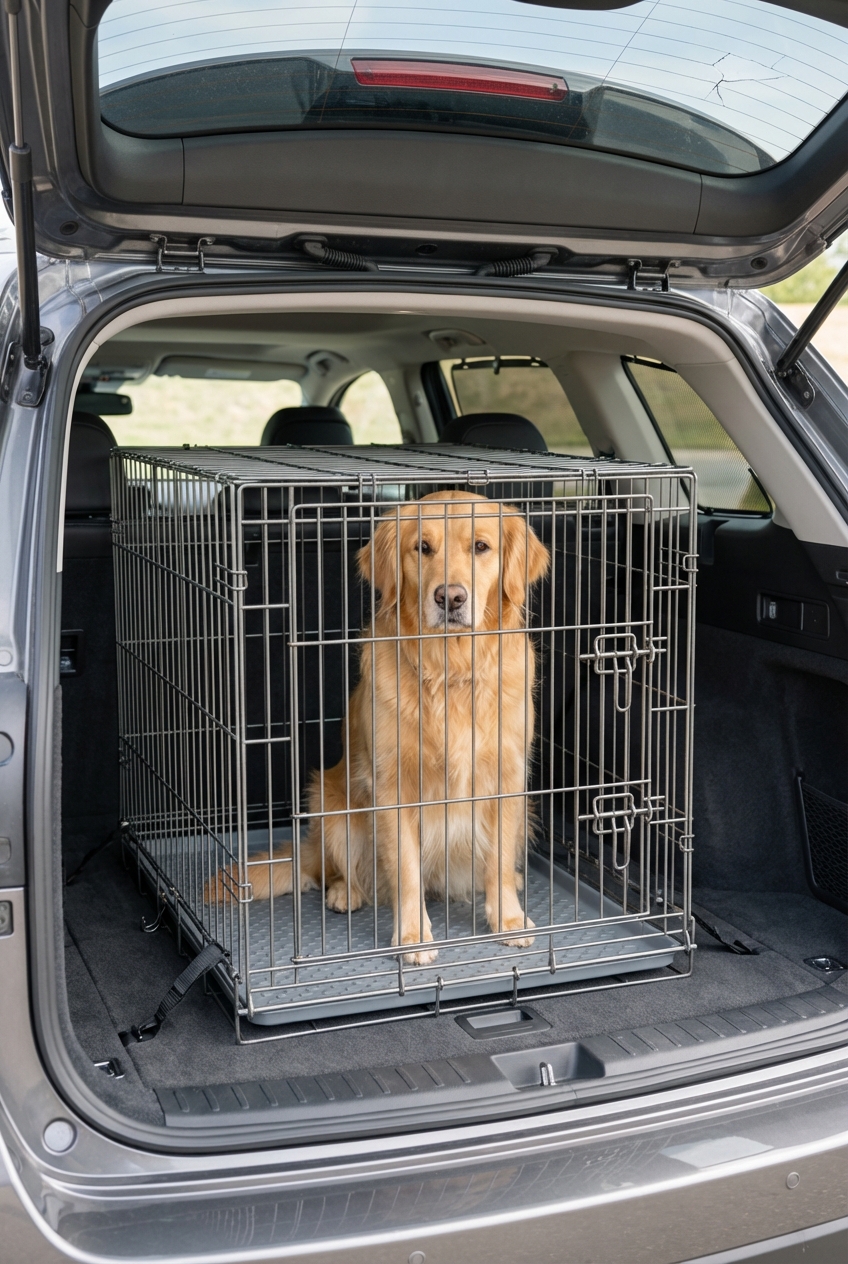
- Secure restraint: A crash-tested harness and seat belt attachment, or a secured crate. More stability may help reduce nausea for some dogs.
- Cool air: Keep the car cool, crack a window slightly for fresh air (safely), and avoid heavy scents.
- Positioning: Many dogs do better in the back seat, facing forward. Some do better when they cannot see as much motion out the windows.
- Traction: Use a non-slip mat or a snug crate so paws are not sliding.
Do not skip these safety basics:
- Do not let your dog ride loose.
- Avoid the front seat due to airbag risk.
- Do not allow your dog to ride with their head out the window.
- If you use a crate or carrier, secure it so it cannot slide or tip. Never place a crate in an open truck bed.
Behavior plan: step-by-step
The goal is to teach your dog: “The car predicts calm, good things, and short rides that do not make me feel sick.” This is classic desensitization plus counterconditioning, and it works best when you go slowly enough that your dog stays under their stress threshold.
Plain English: “Under threshold” means your dog can still take treats, breathe normally, and respond to you.
Important: Do not train through active nausea. If drooling, lip licking, or vomiting starts, end the session, get your dog comfortable, and make the next step easier.
Step 1: Car equals snacks (engine off)
- Bring your dog to the parked car.
- Open the door, let them look, and feed a high-value treat.
- If they will hop in comfortably, feed a treat inside, then hop out.
- Keep sessions to 1 to 3 minutes. End on a win.
Repeat daily until your dog approaches the car with a relaxed body and will take treats easily.
Step 2: Sit in the car calmly (engine off)
- Have your dog settle into their harnessed seat or crate.
- Feed a few treats slowly, one at a time, for calm behavior.
- Practice a short “settle” or “down” if your dog already knows it.
Step 3: Engine on, not moving
- Start the engine, feed treats, then turn it off.
- Work up to 30 to 60 seconds with the engine running while your dog stays relaxed.
Step 4: Micro-rides (30 seconds to 2 minutes)
- Drive to the end of the driveway and back.
- Next session, go around the block.
- Keep the route smooth. Avoid sharp turns and bumpy roads early on.
Key rule: Increase only one thing at a time: duration, speed, or complexity.
Step 5: Make the destination pleasant
If every ride ends at the vet, your training will struggle. Mix in low-pressure destinations:
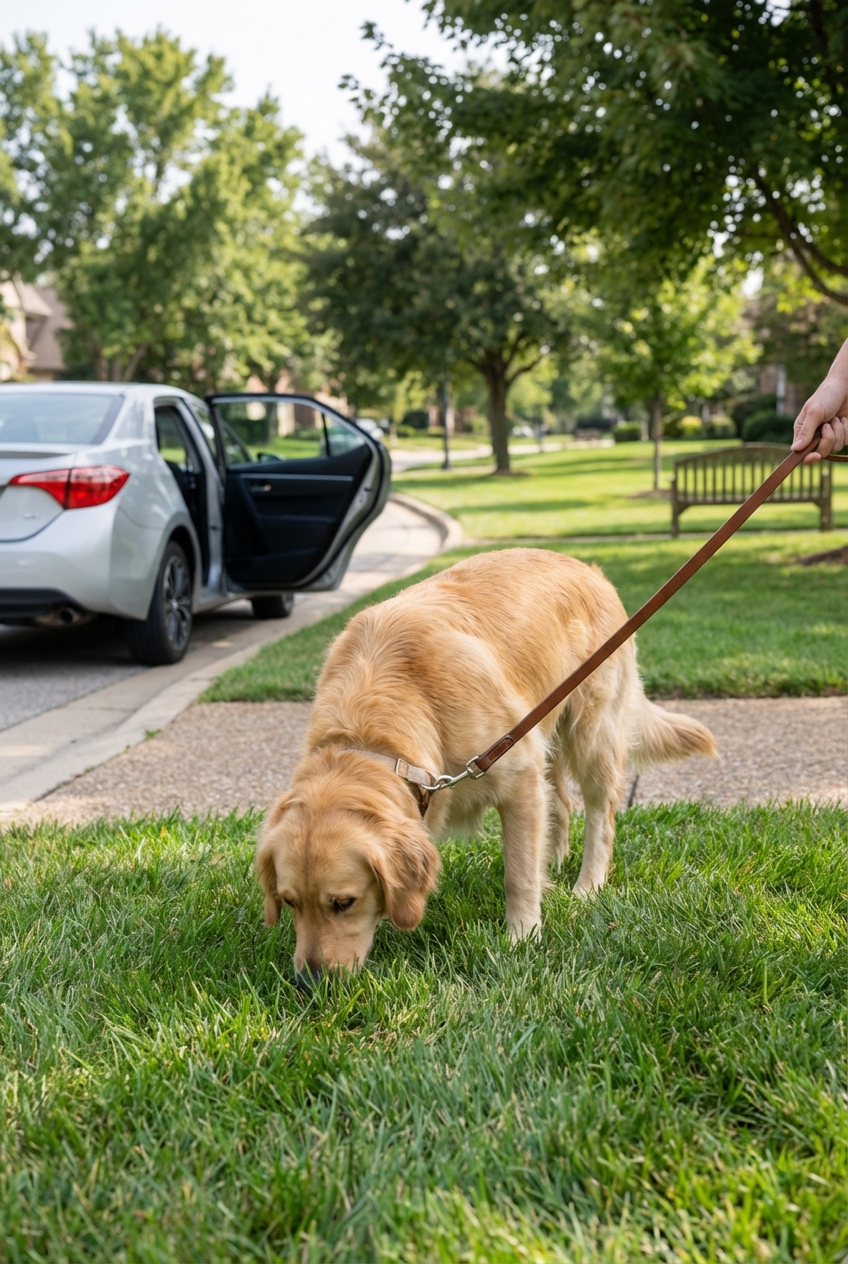
- A quiet park walk
- A sniffy decompression stroll
- Picking up a pup cup (only if dairy agrees with your dog)
- Visiting a friend your dog loves
Food and timing tips
- Skip a full meal before travel: For many dogs, traveling on a light stomach helps. Ask your vet for the best timing for your dog’s age and health.
- Offer small, bland bites if needed: A tiny amount of plain chicken or a simple treat can help some dogs, but others do better with no food at all. Watch your dog’s pattern.
- Hydration matters: A small drink is fine, but avoid letting your dog gulp a lot of water right before the ride.
If your dog vomits frequently, focus first on shorter rides and talk with your veterinarian about nausea control. Dogs cannot learn well when they feel sick.
Cleanup tip: If your dog has an accident in the car, use an enzymatic cleaner. Lingering odor can become part of the “car equals nausea” association.
Calming tools that support training
Behavior work is the foundation, but these can help your dog stay relaxed enough to learn.
Simple environmental calmers
- White noise or soft music: Helps some dogs mask traffic sounds.
- Sun shades: Reduces visual motion for dogs who feel overwhelmed by passing scenery.
- Predictable routine: Same loading process, same seat, same cue like “car time.”
Supplements and pheromones
Some dogs benefit from veterinarian-approved calming supplements or pheromone products. These do not replace training, but they can lower the intensity of anxiety. If you are considering an over-the-counter option, check with your veterinarian first, especially if your dog is on other medications or has health conditions.
When to ask your vet about medication
If your dog is drooling heavily, vomiting, or panicking even on short rides, talk with your veterinarian about medical options. There are evidence-based medications that can help with motion sickness, nausea, and situational anxiety.
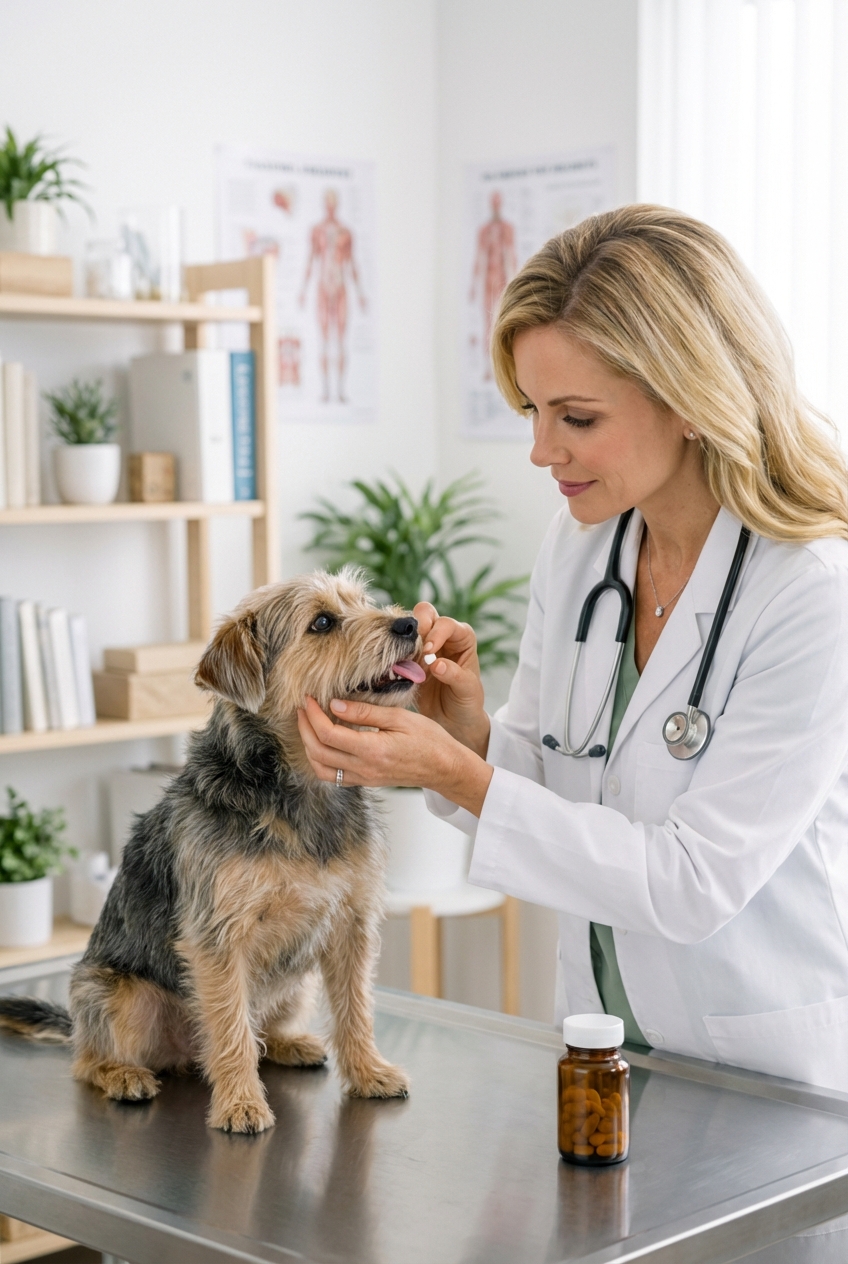
Examples your veterinarian may discuss (no dosing here): maropitant (Cerenia) for nausea and motion sickness; meclizine or dimenhydrinate in some cases; and situational anxiety medications such as trazodone or gabapentin when fear is the main driver. Some OTC antihistamines are not safe for every dog, so do not start them without guidance.
Medication can be a kindness, not a failure. In many cases, the right support helps your dog experience successful rides, which makes training much easier.
Seek veterinary care promptly if you notice any of the following:
- Car sickness that starts suddenly in an adult dog who used to ride fine
- Head tilt, balance issues, ear scratching, or repeated ear infections
- Vomiting outside the car, weight loss, or low appetite
- Extreme panic that escalates quickly
Common mistakes
- Going too far too fast: One long ride can undo multiple good sessions.
- Waiting for vomiting: Intervene at the first signs of nausea.
- Only driving to stressful places: Add easy, happy destinations on purpose.
- Unrestrained riding: Sliding and bracing can increase stress, and it is unsafe.
- Asking for too much when your dog is overwhelmed: Comforting your dog does not cause fear. Instead, focus on making the situation easier and reinforcing any calm behavior you can catch. If your dog is over threshold, reduce the challenge and try again at a simpler step.
2-week starter plan
Every dog is different, so you may move faster or slower. The goal is relaxed repetition.
Week 1
- Daily: treats near the parked car, then inside the car with engine off.
- By the end of the week: engine on for 30 to 60 seconds while relaxed.
Week 2
- 3 to 5 micro-rides total: driveway and back, then around the block.
- End at least one ride at a pleasant destination.
If your dog shows nausea, shorten the next session and talk with your veterinarian about anti-nausea support while you train.
Bottom line
Car sickness is real, and it can turn into a learned fear if we push too hard. With a stable riding setup, short positive sessions, and help from your veterinarian when needed, many dogs improve significantly. Start small, celebrate calm moments, and remember: comfort comes first.