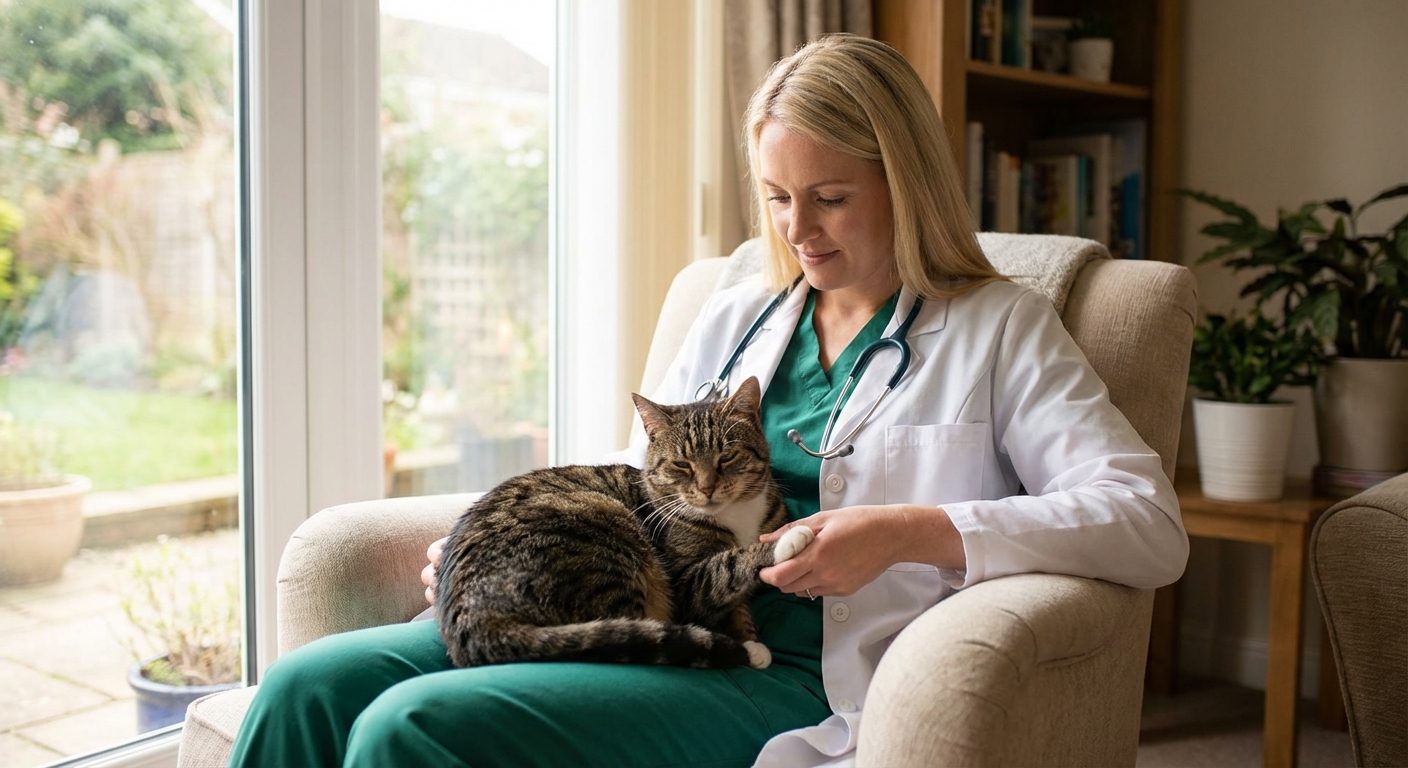
Cats scratch to stretch, maintain claws, mark territory, and relieve stress. Use this vet-assistant plan to redirect scratching with the right post, placemen...
Article
•
Designer Mixes
Pros and Cons of Declawing a Cat

Shari Shidate
Designer Mixes contributor
Declawing can sound like a quick fix for scratched furniture, but it is a big medical decision with real, long-term effects on a cat’s comfort and behavior. As a veterinary assistant, I have seen families who were never told the full story. My goal here is to give you an evidence-based, easy-to-understand breakdown, plus practical alternatives that protect both your home and your cat.
Note: This article is for general education and is not a substitute for veterinary advice for your specific cat.
What declawing actually is
Declawing is not the same as trimming nails. Declawing (onychectomy) typically removes the last bone of each affected toe (the third phalanx, or P3), because the claw grows from that bone. In human terms, it is closer to amputating the tip of each finger at the last joint.
This matters because it can change how a cat walks, how they balance, and how they feel about using their paws.
You may also hear people use “declawing” to describe a less common procedure called a tendonectomy, which does not remove the toe bone but cuts the tendon that extends the claw. Cats still need frequent nail trims afterward, and many welfare organizations raise concerns about complications and long-term care needs with this procedure too.
Why people consider declawing
Families usually consider declawing for one of these reasons:
- Protecting furniture and preventing property damage
- Reducing scratches to children, older adults, or immunocompromised household members
- Keeping a cat in the home when the alternative feels like rehoming
Those are real concerns. But because declawing is permanent and can come with significant downsides, it is worth slowing down and exploring options first.
Pros of declawing (the commonly stated benefits)
Let’s be honest about the perceived upsides, because this is what many owners are told.
- Less damage from scratching to furniture, curtains, and carpet
- Fewer accidental scratches on people in the home
- May prevent surrender in households that feel out of options
However, these “pros” are about outcomes people want, not necessarily what a cat experiences after surgery. The question becomes: can we reach the same goals without surgery?
Cons of declawing (health and behavior risks)
Major veterinary organizations and many feline-focused welfare groups caution against routine declawing because of the potential for pain and complications. Several outcomes below have been associated with declawing in clinical experience and in published research, but individual cats can vary.
Pain and recovery challenges
- Post-operative pain can be significant, even with appropriate pain control.
- Bandage and incision issues can occur, especially if the cat is active or stressed.
- Long-term pain or lameness has been documented in some cats after declawing.
Litter box problems
If using the litter box hurts, some cats begin avoiding it. Even a short period of painful digging can create a lasting negative association. Some cats do better with softer litter after surgery, but not all households catch the issue early.
Behavior changes
When a cat loses their primary defense tool, some become more anxious. Others may respond by:
- Biting more often when they feel cornered (this has been reported as an association in some studies and clinical settings)
- Hiding or becoming less social
- Redirecting scratching behavior by going through the motions of scratching (marking) with their paws on different surfaces, or using their back claws more frequently
Changes in gait and mobility
Removing the last toe bone can alter how weight is distributed through the feet. Some cats compensate by shifting their posture, which may contribute to discomfort over time.
Front vs. all four: Most declawing is front paws only. Declawing all four paws is generally viewed as higher risk for mobility and behavior issues, and it is especially important to discuss welfare implications with your veterinarian if this is ever proposed.
Declawing laws and clinic policies
Declawing is restricted or banned in some cities, states, and countries, and many clinics choose not to offer it. For example, it is banned in the UK and in many parts of Europe. In the United States, it is restricted in some places such as New York State and certain cities and counties. Rules change, so ask your veterinarian about local regulations and the clinic’s policy.
Better solutions: cat-friendly ways to stop destructive scratching
Because scratching is a normal need (marking, stretching, and nail maintenance), management works best when you meet the need, just in the right place.
Scratching is normal, healthy cat behavior. The trick is to make the “yes” options more appealing than the “no” options.
1) Set up the right scratch stations
- Go vertical and horizontal: many cats have a clear preference, so offer both.
- Stability matters: a wobbly post is a hard no for most cats.
- Size matters: for vertical posts, choose one tall enough for a full stretch (often 28 inches or taller for many cats).
- Location is everything: place posts near the couch corners, near entryways, and near sleeping areas.
- Texture variety: sisal, cardboard, low-pile fabric that will not snag easily, and wood-like surfaces can all be winners.
2) Make scratching posts irresistible
- Rub a little catnip or silvervine on the post if your cat responds to it.
- Praise and treat immediately when your cat scratches the post.
- Use interactive play (like a wand toy) near the post, then let your cat “finish” by scratching.
3) Protect your furniture during training
- Use double-sided tape or a furniture-safe scratch deterrent where your cat targets.
- Temporary covers or guards can prevent damage while new habits form.
- Block access to the favorite corner for a short period, if needed.
4) Nail trims and nail caps
Regular nail trimming reduces damage dramatically. If trims are stressful, ask your veterinary team for a quick demo. Nail caps are another option for some cats, though they require proper sizing, correct adhesive use, and routine monitoring.
5) Reduce stress, reduce scratching
Increased scratching can be a stress signal. Common triggers include a new pet, a move, schedule changes, neighborhood cats outside the window, or boredom.
- Add predictable play sessions, especially before meals.
- Increase vertical space like cat trees or shelves.
- Consider pheromone diffusers if your veterinarian agrees they are appropriate.
If declawing is being discussed medically
There are rare situations where a veterinarian may discuss declawing as a medical procedure, such as severe trauma, cancer, or chronic nail bed disease that has not responded to other treatment. If that comes up, ask what options exist, what paw(s) are involved, and what pain control and recovery plan will be used.
Care tips if your cat is already declawed
If you adopted a cat who is already declawed, you can still support their comfort and confidence.
- Choose soft litter if you notice hesitancy or discomfort in the box.
- Watch for subtle pain signs: reduced jumping, stiffness, irritability, hiding, or litter box avoidance.
- Offer traction: rugs or runners help some cats feel steadier on slick floors.
- Keep them indoors: declawed cats are more vulnerable outside because they have reduced ability to defend themselves and to climb to escape danger.
- Schedule a vet check if you see limping, swelling, or persistent behavior changes.
When to talk to your veterinarian
Reach out to your vet if:
- Your cat is scratching aggressively despite added posts and training
- You are seeing biting, hiding, or other behavior changes
- There are repeated litter box issues
- You have a household health concern where scratch prevention feels urgent
In many cases, a personalized plan involving environment changes, nail care, and behavior support solves the problem without surgery.
Most cats are not trying to be “bad.” They are trying to be cats. Our job is to give them a safe, satisfying place to do it.
Sources to review
- American Veterinary Medical Association (AVMA): declawing policy and welfare guidance
- American Association of Feline Practitioners (AAFP): position statements and feline behavior resources
- International Cat Care: scratching behavior and declawing welfare information
- Peer-reviewed research on onychectomy outcomes (pain, behavior, complications)