From “coffee ground” ear debris to nonstop scratching, learn how vets diagnose ear mites and the most effective treatments, safe ear cleaning steps, and ...
Article
•
Designer Mixes
Prevent Ear Mites in Cats

Shari Shidate
Designer Mixes contributor
Ear mites are one of those frustrating cat problems that can feel like they come out of nowhere. One day your cat is fine, and the next you are seeing intense scratching, head shaking, and that telltale dark debris in the ears. The good news is that ear mites are often preventable, or at least much less likely, once you understand how they spread and what actually works to stop them.
What ear mites are and why they spread so easily
Most feline ear mite cases are caused by Otodectes cynotis, a tiny parasite that lives on the surface of the ear canal skin. They feed on skin debris and oils, causing inflammation and that classic itchy, irritated ear.
One key factor for prevention is this: ear mites spread primarily through direct contact with an infected animal. They can also survive for short periods off the host, so shared bedding or close-contact spaces can play a small role during an outbreak. That means prevention is less about constantly cleaning ears and more about reducing exposure, catching cases early, and treating every pet in the household when needed.
- Common sources: new kittens, shelter or rescue environments, outdoor roaming, multi-cat households, and contact with stray cats.
- Not just cats: ear mites can also affect dogs and ferrets, and pets can pass them to each other.
Signs people miss at first
Many cats do not start with obvious symptoms. Mild infestations can look like “a little ear gunk” until the irritation ramps up.
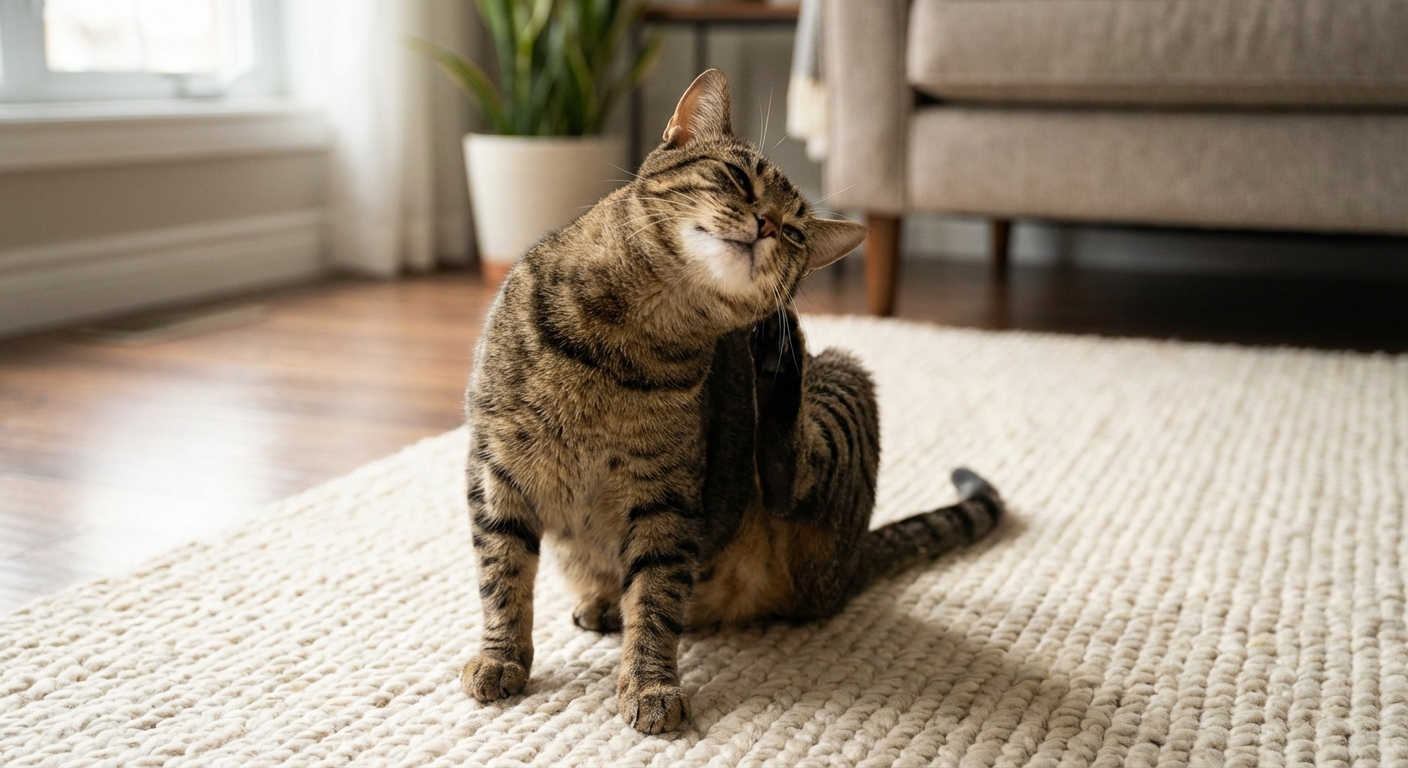
- Frequent ear scratching or rubbing the face on furniture
- Head shaking or head tilt
- Red, inflamed ears
- Dark brown to black debris that can resemble coffee grounds
- Crusts or scabs around the ears from scratching
- Foul odor from the ears (can also suggest infection, not just mites)
If you see pain, swelling, a strong odor, pus, or your cat cries when touched, book a vet visit promptly. Ear mites can lead to secondary bacterial or yeast infections, and those need targeted treatment.
Seek urgent veterinary care if your cat has severe head tilt, loss of balance, weakness, or other sudden neurologic signs.
What actually prevents ear mites
1) Quarantine and check new pets
If you bring home a kitten or a new adult cat, assume they could have ear mites until proven otherwise. This is especially true for rescues and strays.
- Keep newcomers in a separate room for 10 to 14 days when possible.
- Wash hands between handling pets during that period.
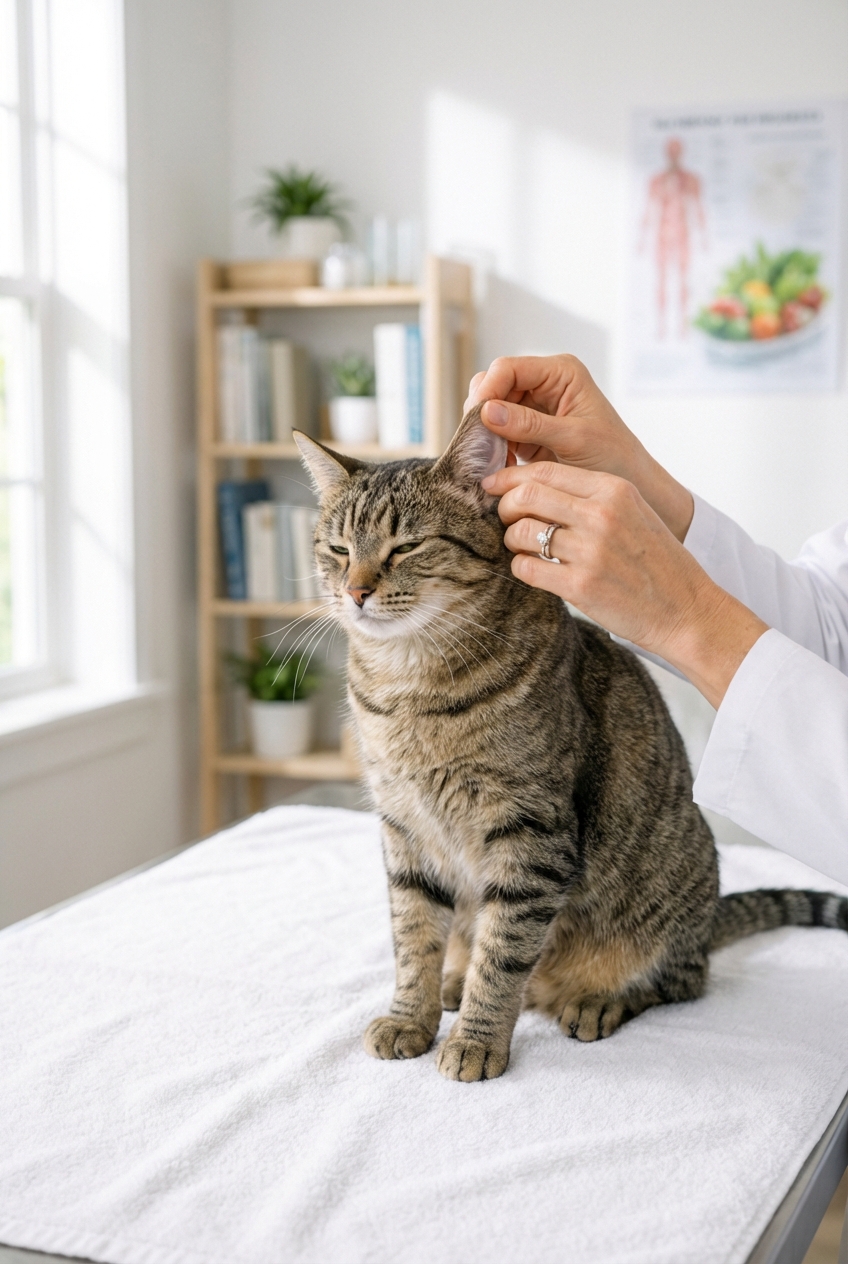
- Schedule a wellness exam and ask your vet to check the ears with an otoscope.
Note: the ear mite life cycle can be around 3 weeks. Quarantine is mainly to reduce exposure and monitor for signs until a vet exam can confirm what is going on, rather than to “wait out” mites.
2) Use a vet-recommended preventive consistently
One of the best prevention tools is surprisingly simple: keep your cat on a consistent flea and parasite preventive that covers ear mites when appropriate. Many prescription topical or oral preventives can treat ear mites and may reduce future risk, depending on the active ingredient, your region, and the product label.
Not all flea preventives cover ear mites, so it is worth double-checking the label and your veterinarian’s guidance. Common vet-used options may include products with ingredients such as selamectin, moxidectin (often combined with imidacloprid), or fluralaner, depending on what is approved where you live and what fits your cat.
Because product choice depends on your cat’s age, weight, medical history, and household pets, ask your veterinarian which preventive is best for your situation.
3) Treat every pet in the home when mites are found
This is the prevention step that makes the biggest difference in multi-pet households. If one pet has ear mites, others may be carrying them without obvious symptoms.
- Ask your veterinarian if all cats, dogs, and ferrets in the home should be treated.
- Follow the full treatment timeline, even if the itching improves quickly.
4) Keep cats indoors or limit contact with unknown animals
Outdoor cats have higher exposure to parasites, including ear mites. Keeping your cat indoors reduces risk dramatically. If your cat goes outside, supervised time on a harness or a secure catio helps reduce contact with stray cats and wildlife.
5) Do ear checks at home, but do not over-clean
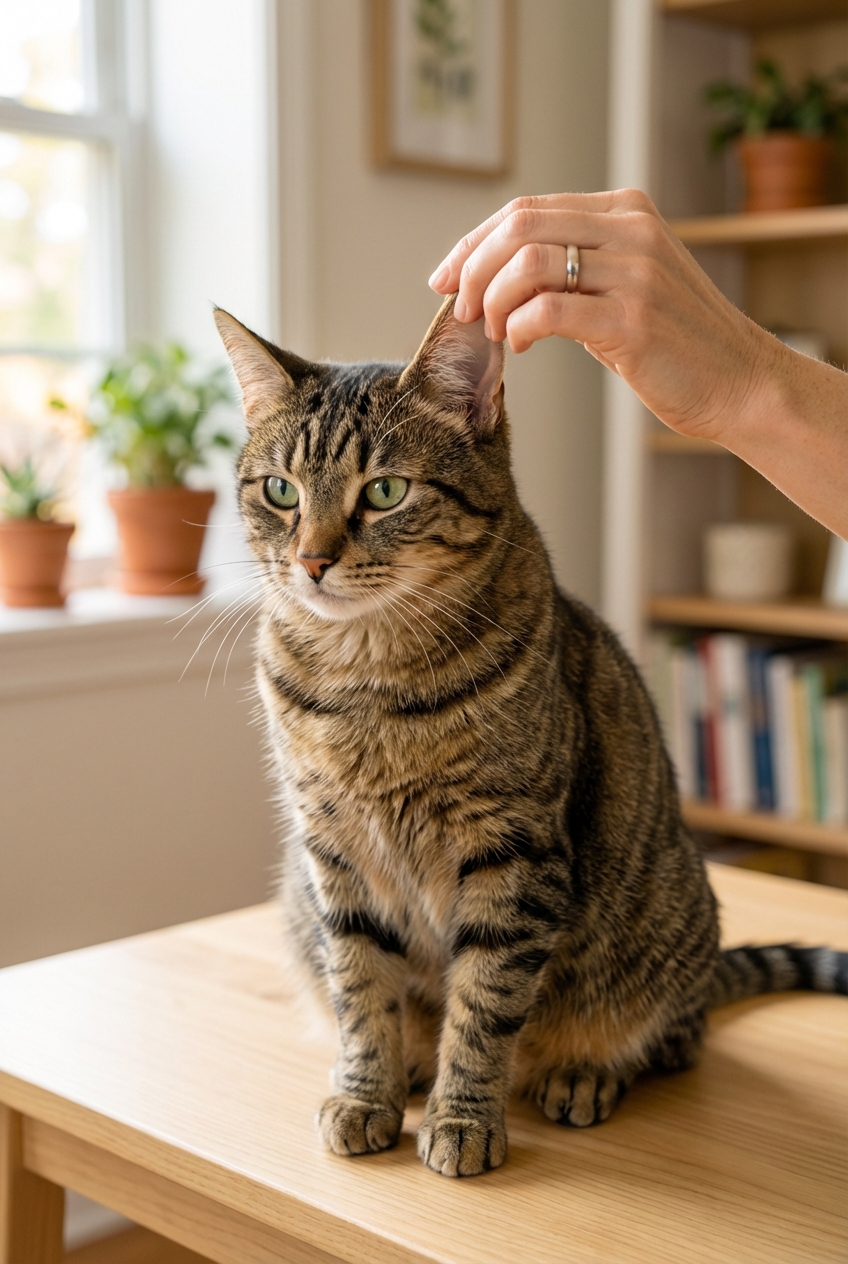
Weekly “look and sniff” checks are a practical habit. You are simply looking for redness, excessive debris, swelling, or odor.
It is a myth that routine deep cleaning prevents ear mites. Over-cleaning can irritate the ear canal and make inflammation worse. Clean only when advised by your vet, or when your cat has visible buildup and you have a cat-safe ear cleaner.
A safety note that matters: avoid cotton swabs (Q-tips) inside the ear canal. They can push debris deeper and may injure sensitive tissue.

6) Clean bedding and reduce reinfestation pressure
Ear mites live mainly on the animal, but basic hygiene helps lower the overall parasite load in your home during treatment, especially since mites can survive briefly off-host.
- Wash your cat’s bedding in hot water weekly during an outbreak.
- Vacuum favorite sleeping spots and furniture regularly.
- Disinfect grooming tools between pets.
How vets diagnose and treat ear mites
Diagnosis is usually straightforward. Your veterinarian may examine the ear canal with an otoscope and confirm mites by looking at ear debris under a microscope. Treatment commonly involves a prescription parasite medication (often topical, sometimes oral), and sometimes gentle ear cleaning. If a bacterial or yeast infection is also present, your cat may need additional ear medication to fully resolve the problem.
Safe steps if you suspect ear mites
If you suspect ear mites, your goal is to keep your cat comfortable while you get a proper diagnosis. Ear mites can look similar to yeast infections, bacterial infections, allergies, or even ear polyps. Treating the wrong thing delays relief.
- Call your veterinarian: diagnosis is often confirmed by checking ear debris under a microscope.
- Do not put oils or random home remedies in the ear: some can trap infection, irritate tissue, or be unsafe if the eardrum is damaged.
- Avoid cotton swabs (Q-tips): they can push debris deeper and irritate the ear canal.
- Prevent self-trauma: trim nails if safe to do so, and ask your vet about an e-collar if scratching is severe.
- Limit close contact: keep pets separated as much as practical until you know what you are dealing with.
Why coffee-ground ears are not always mites
That dark debris is common with ear mites, but it is not exclusive to them. Cats can also have dark wax buildup from yeast or bacterial infections. The overlooked detail is that ear problems are not one-size-fits-all. The wrong medication can make things worse, especially if the ear canal is inflamed or infected.
The fastest path to prevention is accurate diagnosis. Once you know the cause, you can treat it fully and stop the cycle.
Frequently asked questions
Can humans catch ear mites from cats?
True ear mite infestation in humans is rare. In uncommon cases, close contact may cause temporary skin irritation (a transient dermatitis). If you have concerns, speak with your healthcare provider, and focus on treating the pets and cleaning the environment.
Do indoor-only cats get ear mites?
They can, usually from a new kitten, a visiting pet, or contact with an infected animal in a shared space. Indoor-only cats are lower risk, not zero risk.
How fast do ear mites spread?
Often quickly in close-contact homes, especially cats who sleep together or groom each other. That is why household-wide treatment is often recommended.
A simple prevention checklist
- Keep cats on a vet-recommended parasite preventive that covers ear mites when appropriate.
- Quarantine and examine new pets before introductions.
- Do weekly ear “look and sniff” checks.
- Avoid unnecessary ear cleaning and avoid cotton swabs (Q-tips).
- Limit contact with unknown animals, especially for outdoor cats.
- If one pet has mites, ask your vet about treating everyone.
- Wash bedding and vacuum regularly during treatment.
For the most reliable results, work with your veterinarian to build a prevention routine that fits your home setup, such as indoor-only, multi-cat, or cats who spend time outdoors. The goal is simple: fewer flare-ups, fewer vet visits for itchy ears, and a happier, more comfortable kitty.