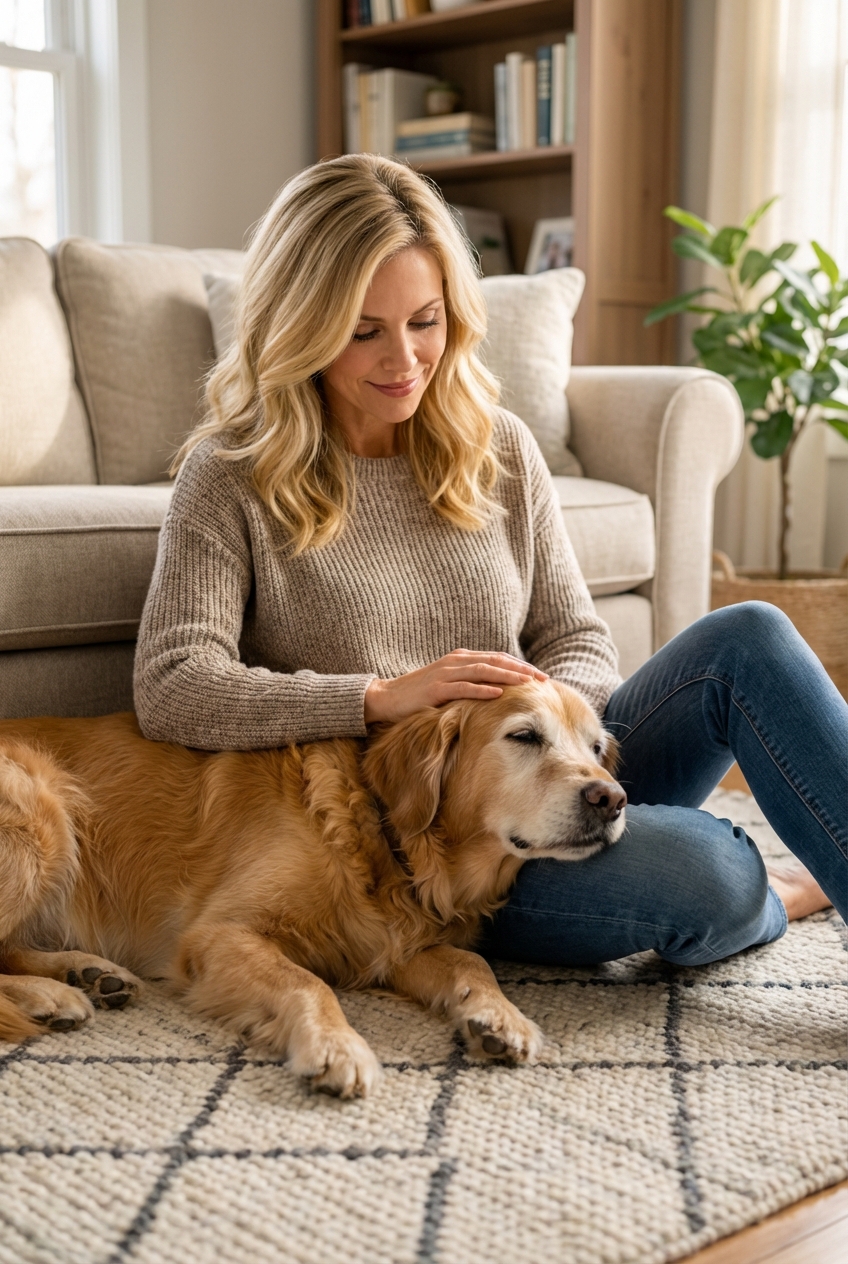
A gentle guide to dog home euthanasia: signs it may be time, what happens during the visit, how to plan the space, questions to ask your vet, aftercare choic...
Article
•
Designer Mixes
Preparing Kids for a Dog Passing at Home

Shari Shidate
Designer Mixes contributor
As a veterinary assistant here in Frisco, Texas, I have seen how deeply kids love their dogs. When a dog is nearing the end of life, many families hope for a peaceful passing at home. That can be a beautiful choice, but it also comes with big feelings and big questions, especially for children.
This guide shares warm, practical guidance aligned with what veterinary teams and child grief experts commonly recommend. It is general support, not a substitute for your veterinarian’s medical advice or a pediatric counselor’s mental health guidance.
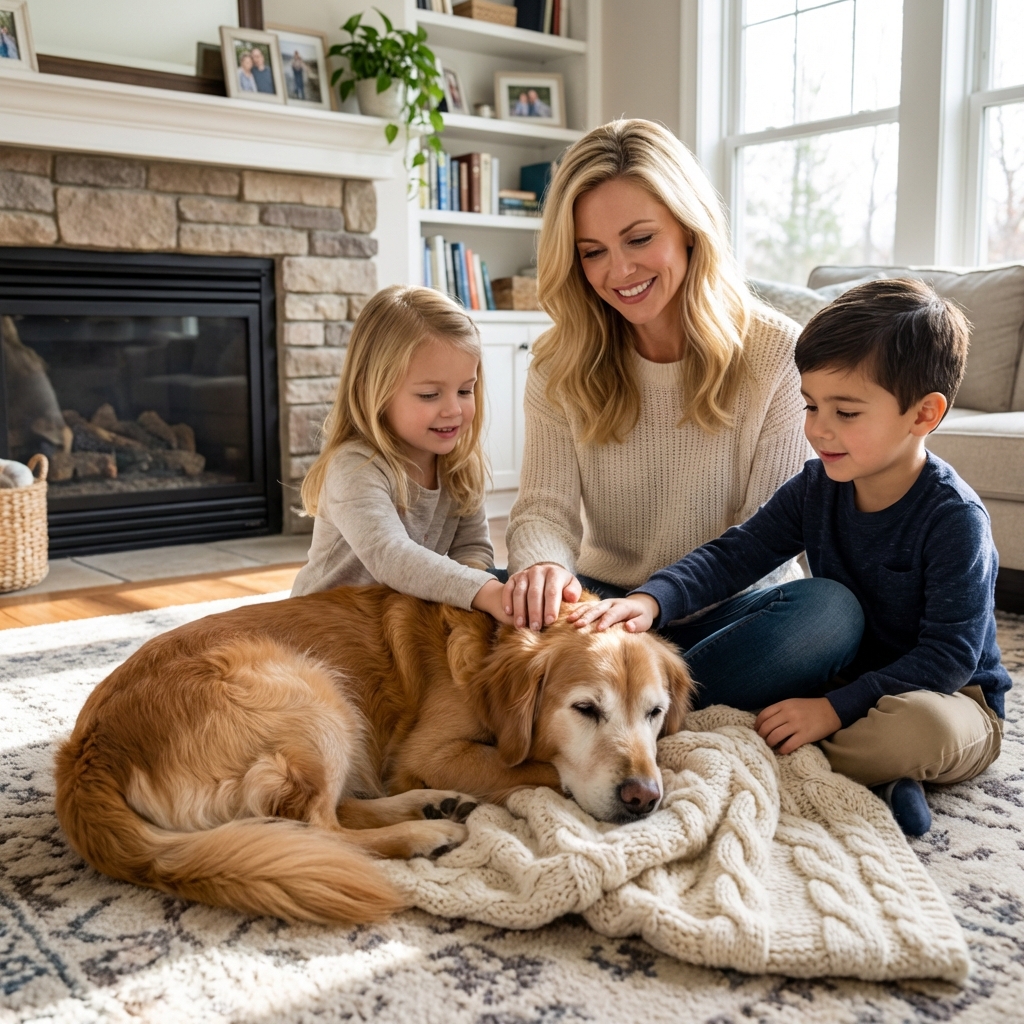
Start with what kids need most
Most children do best with three things: clear information, reassurance, and choice. Your goal is not to remove sadness. Your goal is to help them feel safe inside the sadness.
Use simple, truthful language
Many child grief counselors recommend avoiding euphemisms like “going to sleep” or “we are putting the dog down.” Those phrases can confuse kids and sometimes create fears about bedtime, naps, or medical care.
If your family has spiritual or religious beliefs, you can include them in a way that stays clear. For example, you can say: “Her body will die, and we believe her spirit will be at peace.”
- Clear: “Bella’s body is very sick and it is not getting better. Her body will stop working soon, and she will die.”
- Reassuring: “We will do our best to be with her and keep her comfortable. She will be cared for.”
- Grounding: “It is okay to feel sad, mad, or confused. I feel that way too.”
Check what they already believe
A gentle opener: “What have you noticed about Max lately?” or “What do you think is happening?” Kids often fill gaps with their imagination. You can correct misunderstandings early and kindly.
How to explain it by age
Preschool (about 3 to 5)
Young children think in concrete terms and may ask the same questions repeatedly. That is normal. Offer brief explanations, repeated calmly.
- “Her body stopped working. She cannot breathe, eat, or play anymore.”
- “Nothing you did caused this.”
- “We will still take care of you, and you are safe.”
School-age (about 6 to 9)
Kids this age often want specifics. They may also worry about their own health or yours.
- Explain the illness in simple terms: “Her heart is failing” or “The cancer is spreading.”
- Reassure them: “Most dogs die when they are very old or very sick. This is not something that usually happens suddenly to everyone.”
- Invite questions and answer honestly, even if it is “I do not know, but we can ask the veterinarian.”
Older kids and teens
They may understand death fully but still struggle with anticipatory grief. Some teens prefer privacy, while others want to be closely involved.
- Offer choice and respect: “Do you want to be in the room? Do you want to say goodbye privately?”
- Validate complex emotions, including relief: “It is okay to feel relieved that she will not hurt anymore.”

Natural passing at home
If your dog is expected to pass naturally at home (without euthanasia), it helps to prepare kids for what they may see and hear. Many families find it less frightening when they know what is common and what is a sign to call for help.
Common signs near the end
- More sleep and less interest in food or water.
- Quietness or restlessness. Some pets pace, seek closeness, or prefer solitude.
- Changes in breathing. Breaths may become shallow, slower, or irregular. There can be long pauses.
- Accidents. Bladder or bowel control can be lost as muscles relax.
- Cooler paws or ears. Circulation slows down.
You might say: “Her breathing may look different, and she may not respond the way she used to. That is a sign her body is slowing down.”
If something looks scary
Sometimes a dog may gasp, twitch, or vocalize. Some of these changes can be reflexive as the body shuts down, but they can also be signs of discomfort depending on the situation. If you are working with a veterinarian or hospice service, ask ahead of time what is expected and when to call.
If your child witnesses something upsetting, keep your voice low and steady: “This looks intense. Sometimes bodies do reflex things at the end. If we are worried she is not comfortable, we will call the vet right away.”
If you are unsure whether your dog is comfortable, call your veterinarian or an in-home hospice provider. Comfort is the priority.
Have a comfort plan
Before the final days, ask your veterinarian about comfort medications (and how to give them), what “after-hours” support looks like, and what to do if your dog seems distressed in the middle of the night. Having a written plan can lower everyone’s anxiety, including yours.
Deciding between options
Some families plan for a natural passing. Others choose euthanasia at home to prevent suffering. Many people are making that decision in real time as symptoms change. You are not failing your dog either way. You are trying to love them well.
Euthanasia at home
Many families choose in-home euthanasia so their dog can pass peacefully with familiar smells and people. If this is your plan, kids often do better when they understand the basic steps. Protocols vary, and your veterinarian will explain the exact plan for your dog.
A gentle explanation
- “The veterinarian will typically give medicine that helps her relax and takes away fear or pain.”
- “Then the veterinarian gives another medicine that helps her heart stop.”
- “The goal is for it to be peaceful for her.”
Body changes kids may notice
- The dog usually becomes very sleepy first.
- Eyes may stay open.
- There may be a final breath, sigh, or small muscle movements after the heart stops.
- Sometimes there is urine or stool release.
It can help to tell kids: “Her body might do a few reflex things, but the veterinarian is making sure she is not feeling pain. It is the body letting go.”

Choices for kids
Children cope better when they have some control. Offer options without pressure, and let them change their mind.
- Do you want to be in the room, or say goodbye earlier?
- Do you want to pet her, talk to her, or sit nearby?
- Do you want to draw a picture or write a note to place with her blanket?
- Do you want a job, like bringing her favorite toy or helping pick music?
For some kids, being present is healing. For others, it is too much. Both are valid.
Very young kids
If a toddler or preschooler will be nearby, it helps to have a second adult available. That adult can step out quickly for snacks, a break, or big feelings, and your child can come back in later if they want.
Make the space calm
Set up a comfort area
- A soft blanket or dog bed that can get soiled without stress
- Dim lighting
- Quiet background music if your family likes that
- Tissues, water, and a trash bag nearby
- Disposable gloves and puppy pads if needed
Keep the room small
Some families keep the room to primary caregivers and any child who truly wants to be present. If there are younger siblings, you may want one adult who can step out with them quickly if emotions run high.
After death logistics
It can help kids to know what happens next, because unknowns can feel scary. Use simple, concrete language.
What happens next
- If euthanasia is involved: The veterinarian or service usually handles transport for cremation, or they will give you next-step options.
- If your dog passes naturally at home: Call your veterinarian for guidance. Some clinics can arrange transport, and some areas have pet aftercare services that can help.
- Burial or cremation: Options vary by location and local rules. Your veterinarian can tell you what is legal and common in your area.
You might say: “Her body has died. We are going to take care of her body gently by (cremation or burial).”
Helping kids grieve
Kids often grieve in waves. They may cry hard, then go play, then cry again later. That does not mean they “forgot.” It is how many children regulate big emotions.
What to say in the first hours
- “I am so glad we loved her the way we did.”
- “It is okay to miss her. I miss her too.”
- “Would you like to talk about your favorite memory?”
Memorial ideas
- Make a small photo display at home.
- Let them keep the collar tag or a favorite toy in a memory box.
- Plant a flower or small tree.
- Write a letter to the dog and read it out loud.
- Make a paw print keepsake if you have a kit or ask your vet for one.
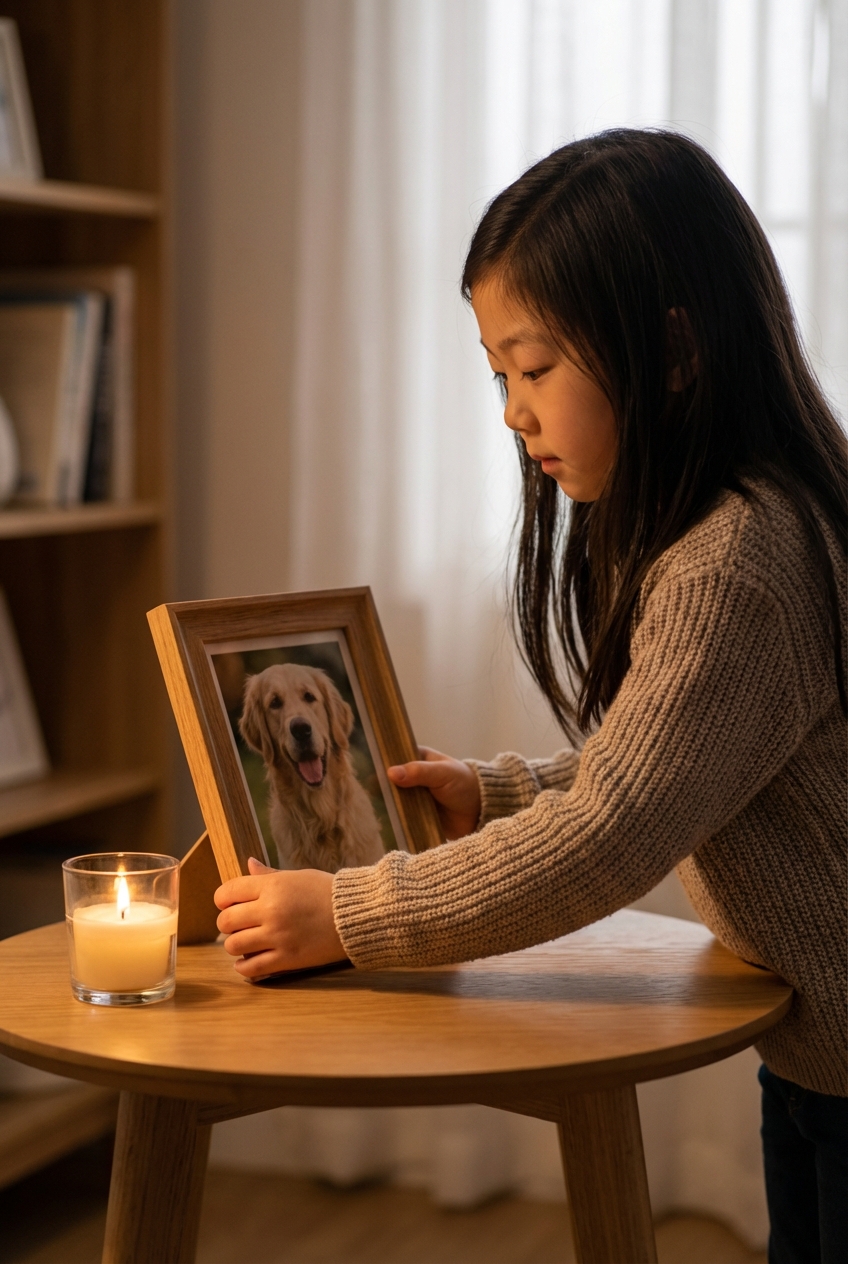
When to get extra support
Grief is not a problem to fix, but sometimes a child needs additional help. Consider reaching out to a pediatric counselor, school counselor, or a pet-loss hotline if you notice:
- Persistent sleep problems or nightmares that continue for weeks
- Strong guilt that does not ease with reassurance
- Ongoing withdrawal from friends or favorite activities
- Declining school performance paired with distress
- Intense anxiety about you or other pets dying immediately
You can also ask your veterinary clinic for local pet-loss resources. Many clinics keep a short list of counselors and support groups.
A final note
One of the kindest gifts you can give your child is a steady, honest presence. You do not have to have perfect words. You just have to be willing to sit with them, answer what you can, and remind them that love does not end when a body does.
If you are planning for a passing at home, talk with your veterinarian ahead of time about comfort care, what to watch for, and who to call after-hours. A little planning can make a big emotional difference for the whole family.