House-train your puppy with a proven routine: best potty schedule, crate and confinement tips, reward timing, accident cleanup, door signals or bells, and a ...
Article
•
Designer Mixes
Potty Training Dogs: Understanding & Solutions

Shari Shidate
Designer Mixes contributor
Potty training can feel like a mystery, especially when you are sleep-deprived and your pup is somehow faster than you are. The good news is that potty training is not about “dominance” or stubbornness. It is about biology, timing, consistency, and making the right choice easy for your dog. As a veterinary assistant in Frisco, Texas, I have seen that most potty issues improve quickly once we match the plan to the dog’s age, routine, and health.
This guide will help you understand why accidents happen and what to do next, whether you have a brand-new puppy, an adult rescue, or a dog who suddenly “forgot” their training. And if you are in the thick of it, please know this: setbacks are normal. They are information, not failure.
How potty training works
Potty training is a simple loop:
- Predict when your dog needs to go.
- Prevent accidents by supervising or confining when you cannot supervise.
- Provide frequent opportunities to potty in the right place.
- Reward immediately and consistently so your dog repeats the behavior.
Dogs repeat what works. If peeing on the rug “works” because it brings relief, your job is to make the right option easier and more rewarding than the rug.
What to expect by age
Puppies
Puppies have small bladders and limited control. A common rule of thumb is that a puppy can hold it often about one hour per month of age (up to a point), but many puppies need more frequent breaks, especially when they are awake and active. Toy breeds, very young puppies, and excited puppies may need to go even sooner.
Adult dogs
Adult dogs often learn faster because they have better bladder control, but rescues may need time to settle in. Stress, new schedules, and a new environment can temporarily increase accidents.
Senior dogs
Seniors may have weaker bladder control or mobility issues. If a senior dog is suddenly having accidents, it is especially important to consider a medical check.
Your step-by-step plan
1) Set a schedule
Consistency beats perfection. Start with a schedule and tighten it if accidents happen. For many young puppies, a helpful starting point when awake is every 30 to 60 minutes, plus the “big trigger” times below.
- First thing in the morning: straight outside, no detours.
- After meals: dogs often need to poop within 5 to 30 minutes after eating, but timing varies.
- After waking: even short naps.
- After play: movement stimulates the bladder and bowels.
- Before bedtime: last call potty break.
2) Pick one potty spot
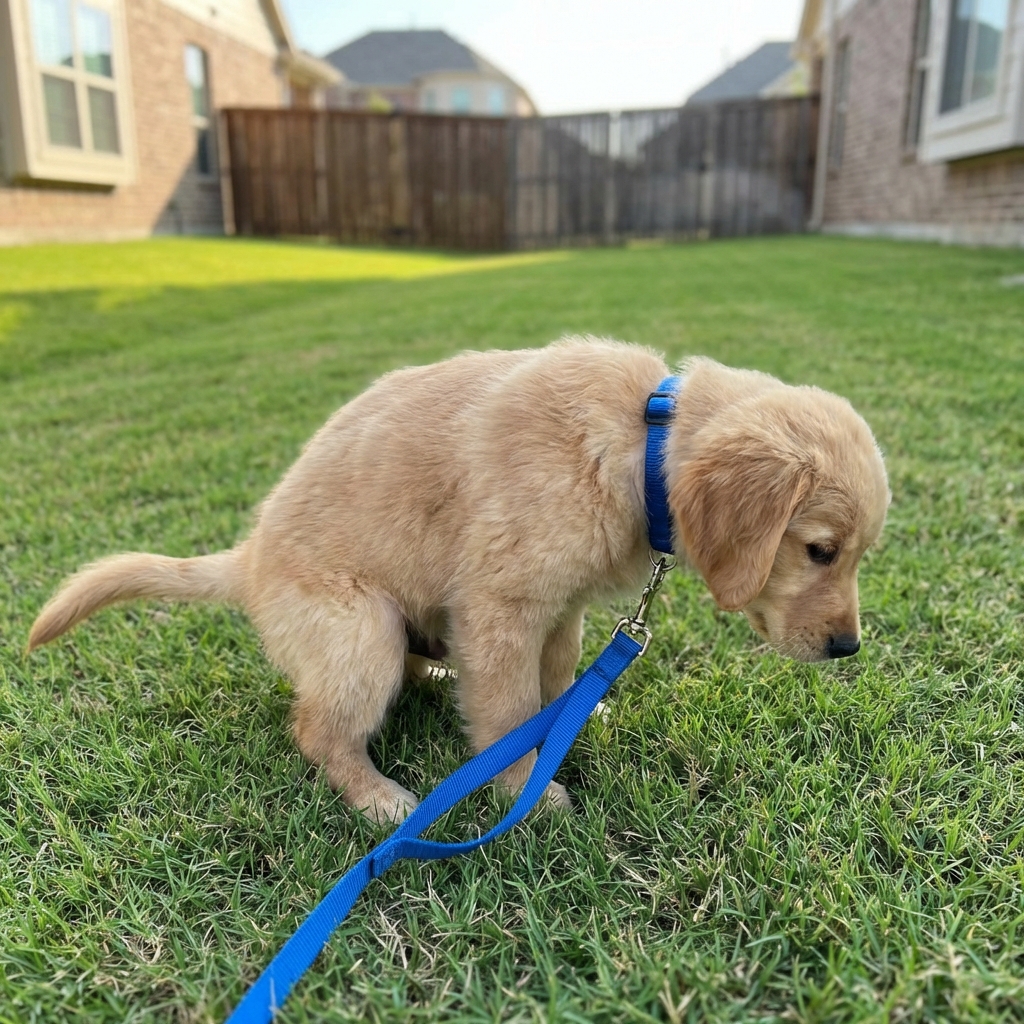
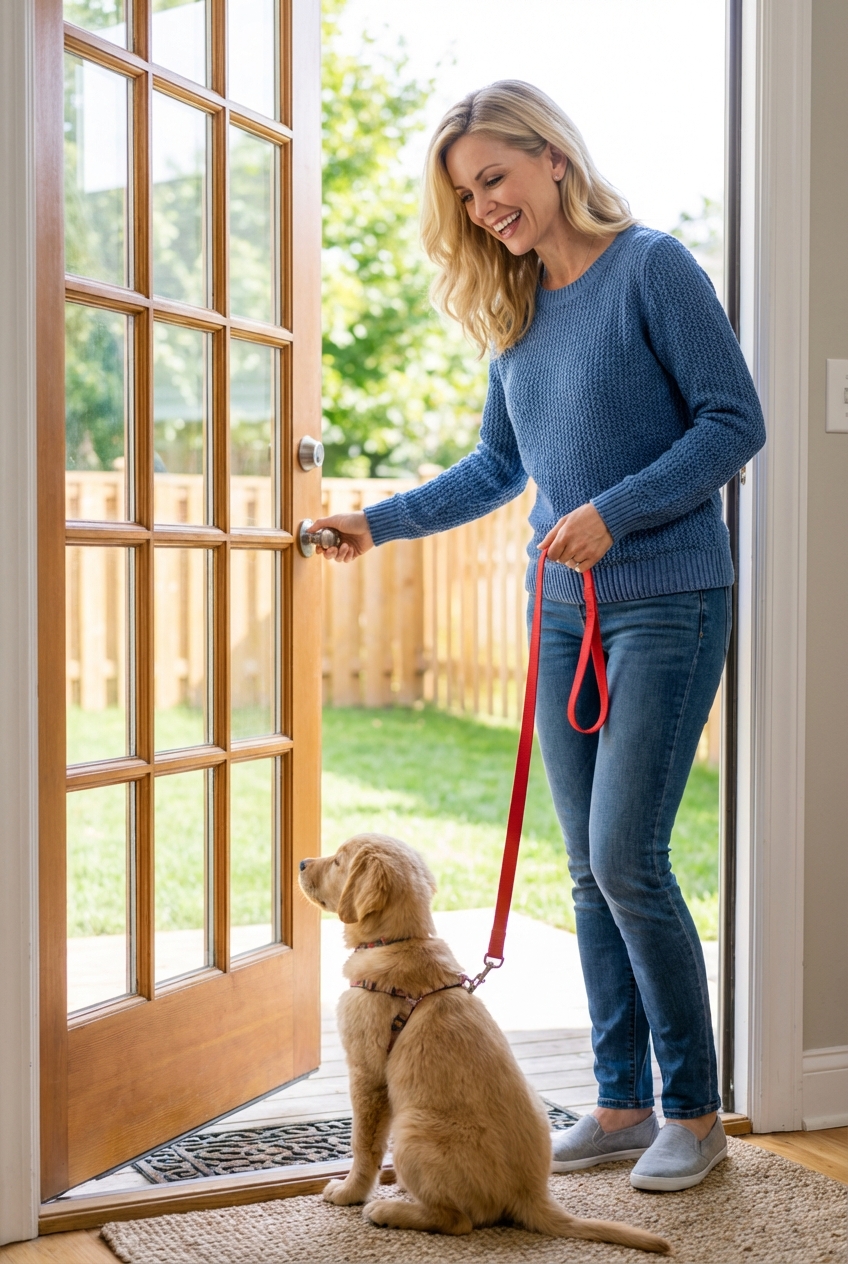
Use the same outdoor area at first. The scent tells your dog, “This is the bathroom.” Take them on leash, stand still, and give them time to sniff and circle.
3) Add a cue
Say the cue once, calmly, as they begin to go: “Go potty” or “Do your business.” Avoid repeating it over and over, which can turn it into background noise.
4) Reward fast
Give a small, high-value treat immediately (within a few seconds) after they finish, plus praise.
What happens next depends on your dog:
- If your dog stalls to stay outside: after they potty, give them a short “bonus” reward like a 2 to 5 minute sniff walk or a quick play session. This helps them learn that pottying does not end all outdoor time.
- If you need a quick business trip (potty then back inside): that is fine too. Just make the food reward extra worthwhile so it can compete with the disappointment of going indoors.
5) Supervise closely
During training, freedom is earned. If your dog is not actively supervised, they should be in a safe confinement area: a crate, exercise pen, or a puppy-proofed room. Accidents happen in the moments we look away.
Practical options that help:
- Tethering: clip the leash to you indoors so you notice sniffing and circling.
- Baby gates: keep your dog in the same room with you until they are reliable.
6) Use the crate correctly
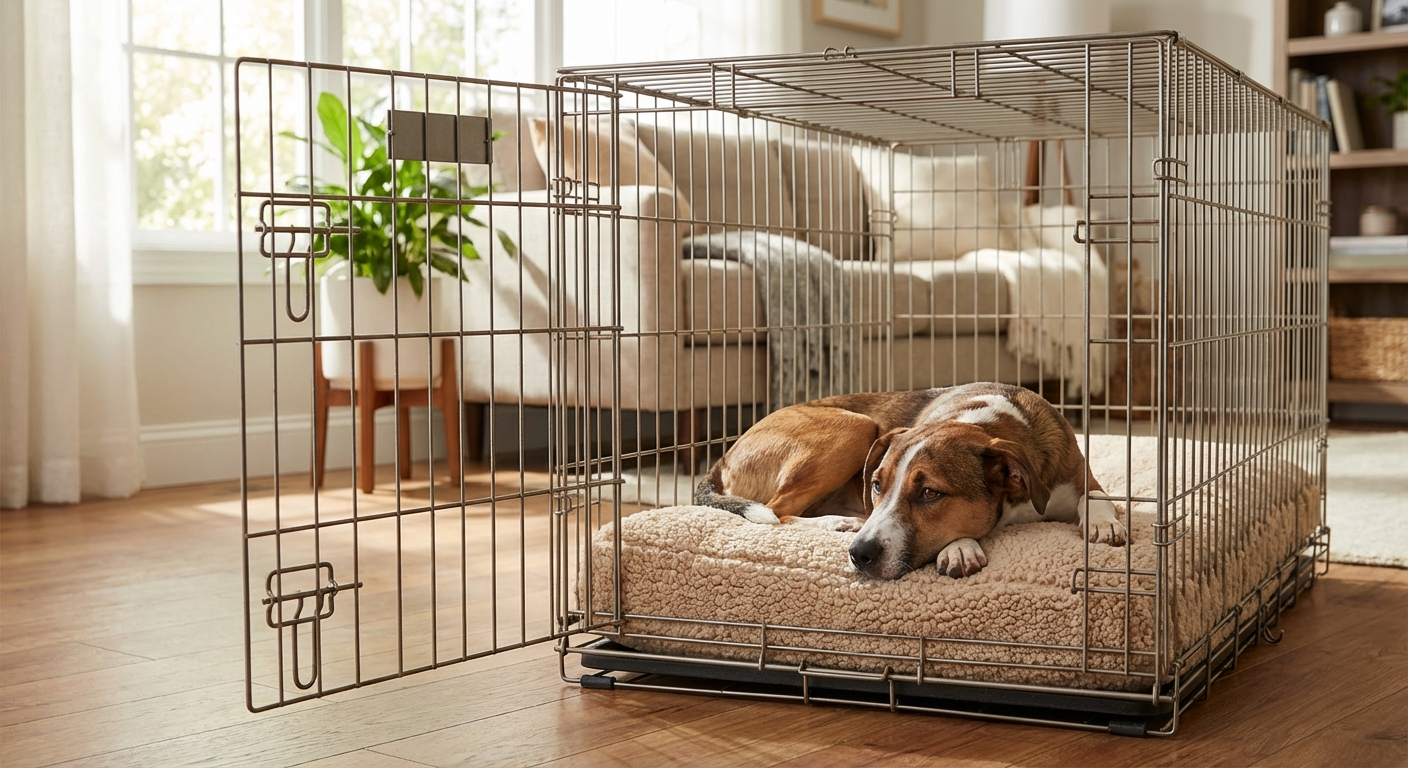
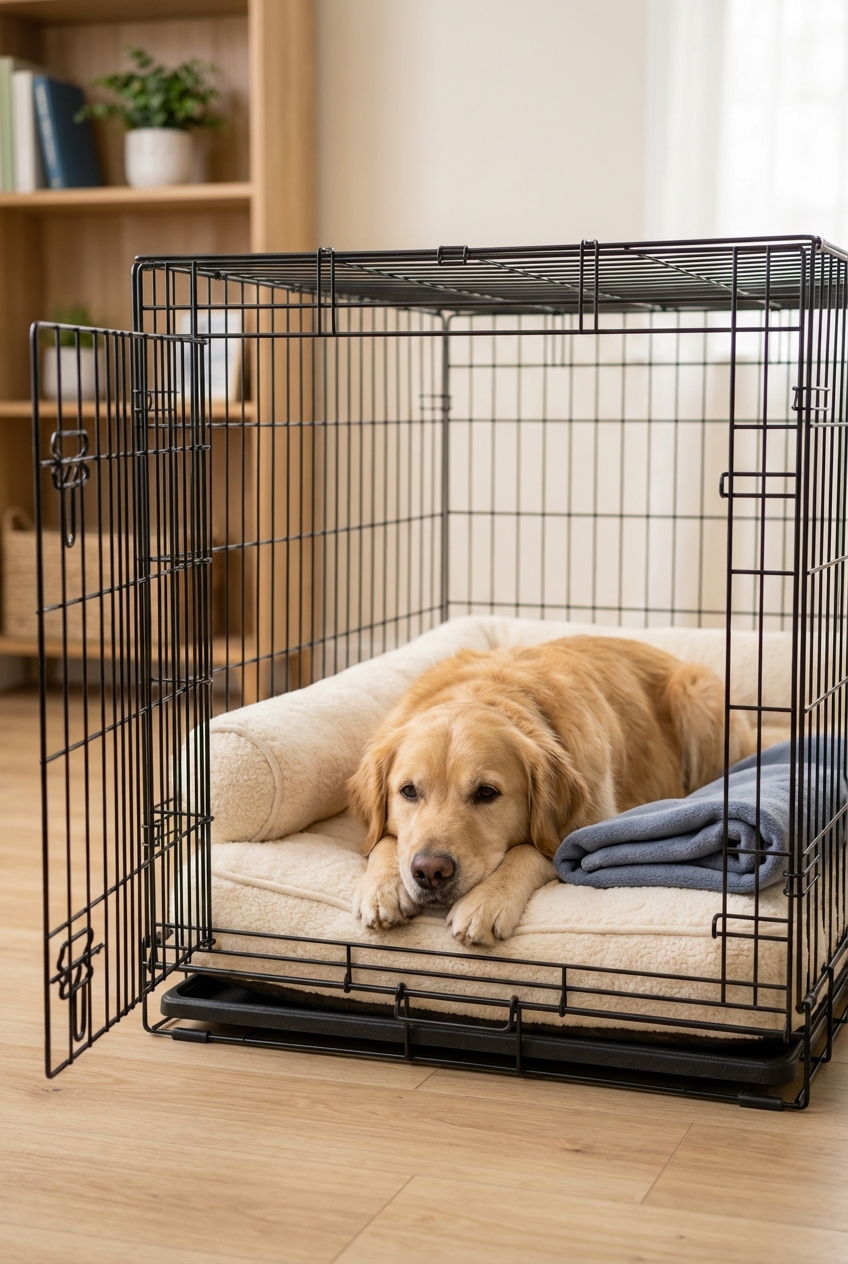
A properly sized crate can help because most dogs avoid soiling where they sleep. The crate should be large enough to stand, turn around, and lie down, but not so big that your dog can potty in one corner and sleep in another.
Important: Crates are not a punishment. If a dog is anxious or forced to stay too long, crate training can backfire.
Signs the crate interval is too long include repeated accidents in the crate, frantic behavior that stops right after a potty break, or a puppy who cannot settle. If you are unsure, shorten the time and add a scheduled break. For young puppies, overnight usually still requires at least one break for a while.
If you catch an accident
If you see your dog starting to go indoors, stay calm.
- Interrupt gently: a soft “Oops” or clap is enough. No scolding.
- Go outside right away: take them to the potty spot on leash.
- Reward if they finish outside: even a small amount outside counts as a win.
- Clean the indoor spot: use the right cleaner so it does not become “the bathroom.”
Understanding accidents
If accidents happen often
- Your schedule may be too long between breaks.
- Your dog may not be fully supervised indoors.
- The reward may not be motivating enough.
- Your dog may have a medical issue, especially if this is new behavior.
If accidents happen in the same spot
Scent draws dogs back. Clean with an enzymatic cleaner designed for pet urine and stool. Regular household cleaners often remove the smell for us, but not for dogs. Avoid ammonia-based cleaners because the smell can resemble urine.
If your dog pees right after coming inside
This is usually one of these:
- Too little time outside: some dogs need 5 to 10 minutes.
- Too much excitement: they are distracted outdoors.
- Learning history: they have practiced indoor pottying before and it feels normal.
Try a quiet potty trip on leash with minimal talking. Reward the moment they finish, then consider a short bonus sniff after potty if they tend to stall.
Common problems
Excitement urination
Some dogs dribble urine when they are nervous or overly excited, especially during greetings. This is not a house-training failure.
- Keep greetings calm and low-key.
- Avoid leaning over, hugging, or direct staring.
- Take your dog out before guests arrive.
- Reward calm behavior.
Marking
Marking is usually small amounts of urine on vertical surfaces. It can be triggered by stress, new pets, visitors, or outdoor smells brought inside.
- Increase potty breaks and supervision.
- Clean thoroughly with enzymatic cleaner.
- Use belly bands short-term for management, not as a solution.
- Consider a vet visit if marking is sudden or intense.
Spaying or neutering can reduce marking for some dogs, but it does not always eliminate it, especially if the habit is well-practiced.
Soiling the crate
If a puppy soils the crate, it usually means they were crated too long, the crate is too large, they are stressed, or they have diarrhea. Adjust the schedule first, then crate size and setup, and talk to your vet if stools are not normal.
Nighttime accidents
- Move bedtime potty later and keep it calm.
- Limit heavy drinking right before bed, but never restrict water excessively.
- Set one scheduled nighttime break for young puppies and slowly phase it out.
When it may be medical
If your dog was doing well and suddenly starts having accidents, do not assume it is behavioral. In the clinic, we commonly see medical causes that look like “bad potty training.”
- Urinary tract infection: frequent urination, straining, licking, accidents.
- Bladder stones or crystals: straining, blood in urine, discomfort.
- Diabetes: increased thirst and urination.
- Kidney disease: changes in drinking and urinating, appetite changes.
- GI parasites or diet intolerance: diarrhea, urgency, nighttime stool accidents.
- Arthritis: the dog may wait too long because getting up hurts.
Call your veterinarian promptly if you see blood in urine, repeated straining, pain, vomiting, lethargy, or sudden changes in thirst and urination.
Apartment options
Not everyone has a backyard, and some dogs cannot safely do long walks during extreme heat. If you need an indoor option, you can still keep training clean and consistent.
Pee pads
Pads can work, but they can also teach “soft things are bathrooms,” which includes rugs and bath mats. If you use pads, keep them in one location and consider a pad holder to prevent shredding.
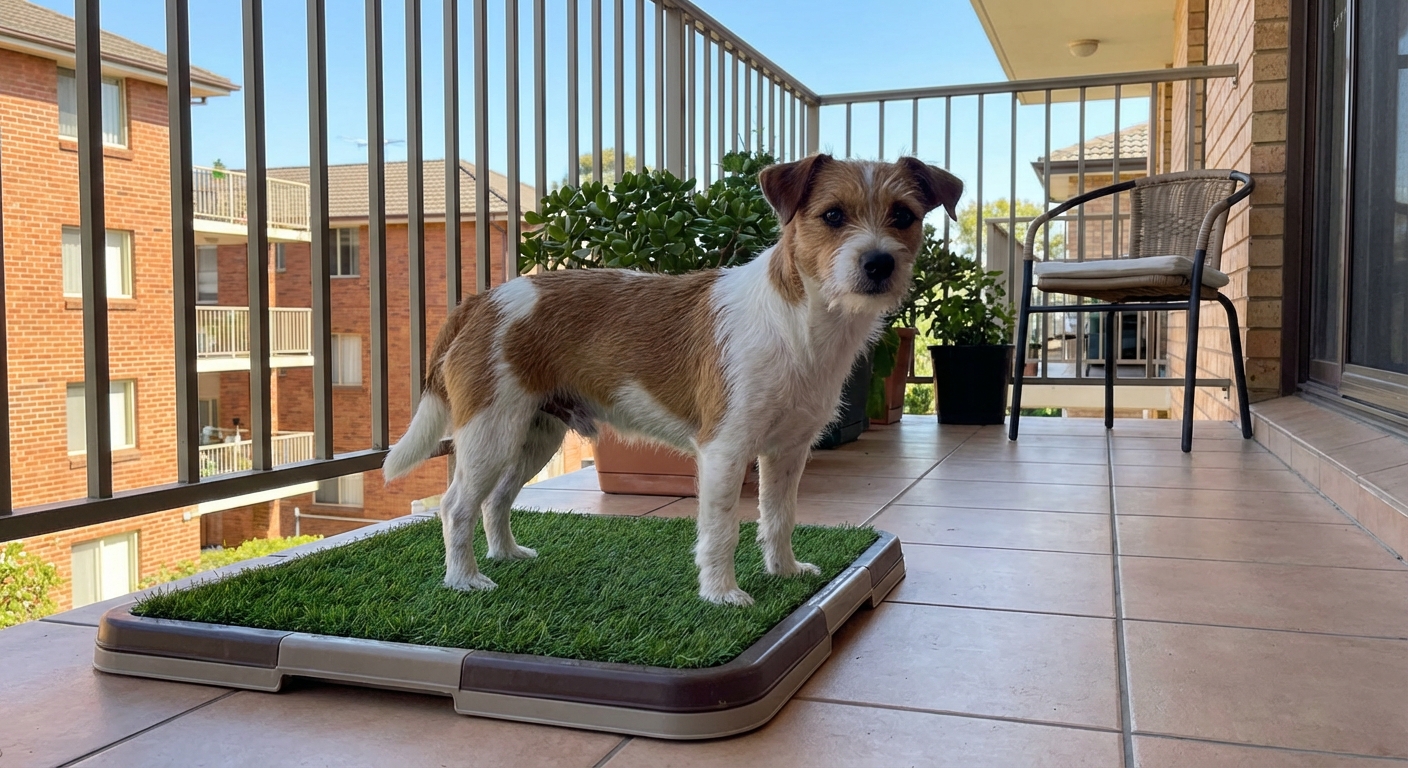
Grass patches
Many dogs prefer a grass-like surface. Place it near the door and treat it like an outdoor potty spot: same cue, same reward, same schedule.
What not to do
- Do not punish after the fact. If you find an accident later, your dog will not connect punishment to the earlier behavior. They may only learn to hide from you when they have to go.
- Do not rub your dog’s nose in it. It is stressful and does not teach the right skill.
- Do not give too much freedom too soon. More space usually equals more accidents in early training.
14-day reset plan
If training feels messy, a reset brings clarity. For two weeks, act like your dog is untrained.
- Days 1 to 3: Potty breaks every 2 to 3 hours (more for young puppies), strict supervision, reward every success.
- Days 4 to 7: If accidents are decreasing, extend time slowly by 15 to 30 minutes.
- Days 8 to 14: Add small amounts of freedom, one room at a time, only if your dog stays accident-free.
If accidents continue at the same rate, shorten the time between breaks and consider a veterinary visit to rule out medical causes.
Troubleshooting checklist
- Is my dog on a predictable feeding schedule?
- Am I taking them out after sleep, meals, and play?
- Am I rewarding immediately after pottying?
- Do I supervise or confine 100% of the time during training?
- Am I using an enzymatic cleaner for indoor accidents?
- Is this sudden or unusual enough to justify a vet check?
Potty training is not about catching your dog doing something wrong. It is about catching them doing it right, then making that choice their new habit.