Poodles are famous for intelligence, athleticism, and a coat that is typically low-shedding in many households. But they are not a one-size-fits-all breed. The AKC recognizes three size varieties of the same breed, Toy, Miniature, and Standard, and each size tends to fit different lifestyles.
As a veterinary assistant here in Frisco, Texas, I love Poodles because they are typically bright, responsive dogs who thrive with good grooming, consistent training, and proactive health care. This hub walks you through temperament, coat care, exercise, and common medical concerns so you can choose the right Poodle and support them for the long haul.
Poodle sizes at a glance
All three varieties share the same breed standard and general traits. The biggest differences you will notice day-to-day are space needs, exercise style, and some size-linked health risks.
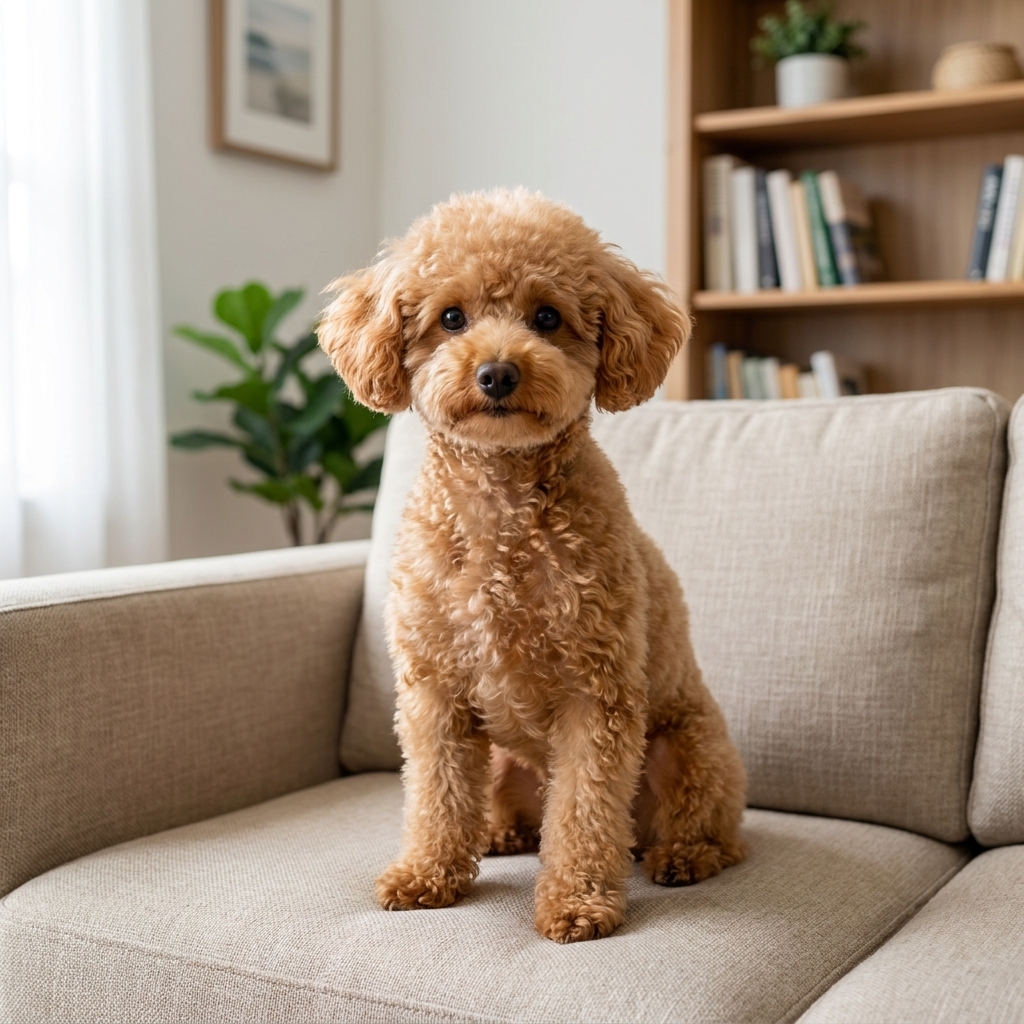
- Toy Poodle: 10 inches and under at the highest point of the shoulders.
- Miniature Poodle: Over 10 inches and up to 15 inches.
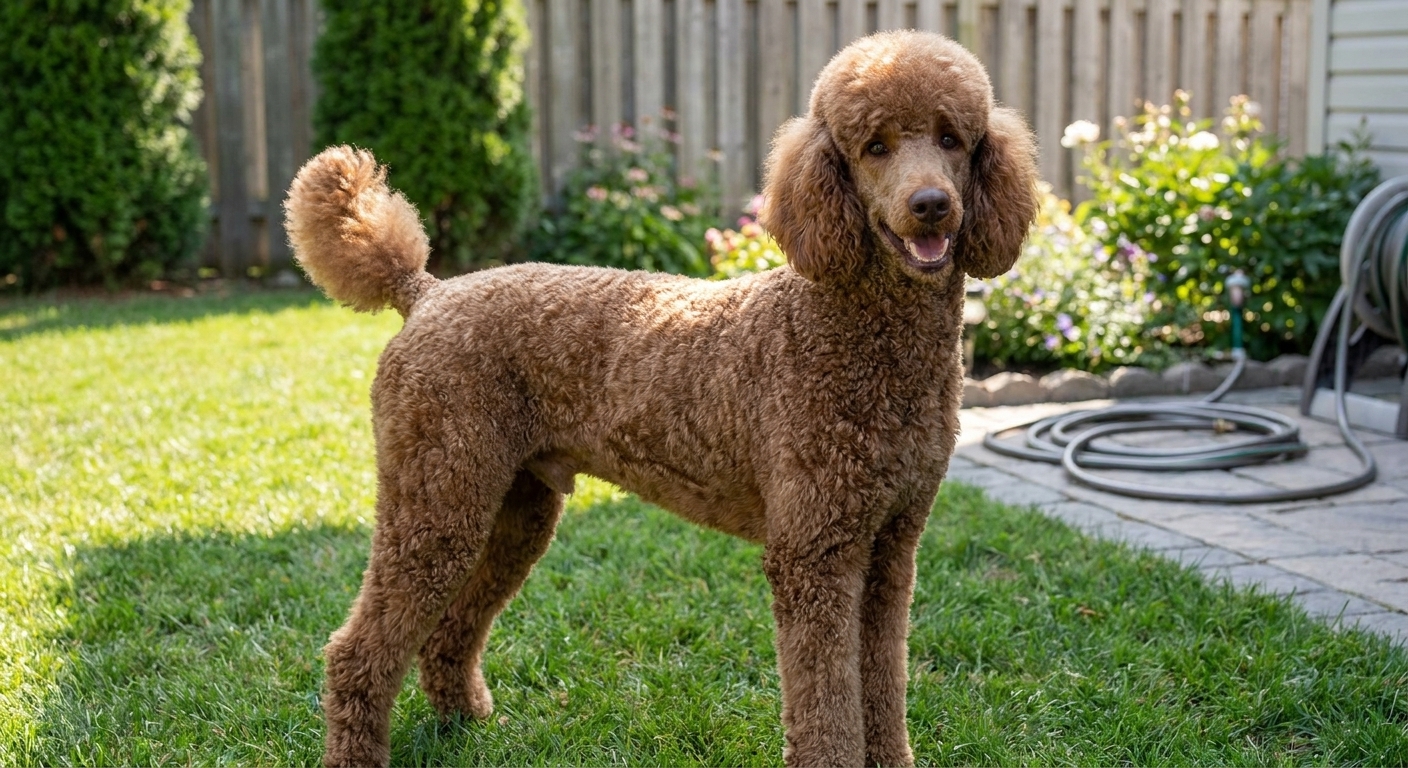
- Standard Poodle: Over 15 inches.
Within each size, individuals still vary. Breeding choices, early socialization, and training matter just as much as height.
Typical adult weight and lifespan (rough ranges):
- Toy: often 4 to 6 lb, commonly 12 to 16 years.
- Miniature: often 10 to 15 lb, commonly 12 to 15 years.
- Standard: often 40 to 70 lb, commonly 10 to 14 years.
These are general expectations, not guarantees. Ask your veterinarian what is ideal for your individual dog and their frame.
Temperament and personality
Poodles are often described as “people dogs.” They tend to bond closely, learn quickly, and notice everything. That is wonderful when you enjoy interacting with your dog. It can be challenging if you want a pet who mostly entertains themselves.
Common Poodle traits
- Highly intelligent: They learn cues fast, including the ones you did not mean to teach.
- Social and sensitive: Many Poodles do best with gentle, consistent training instead of harsh corrections.
- Energetic and athletic: Even smaller Poodles can surprise you with stamina.
- Alert: They can be great watchdogs, and may bark if not taught calm behavior.
Toy vs. Mini vs. Standard temperament
These are broad tendencies, not guarantees, but they can help you decide where you fit.
- Toy Poodles: Often affectionate, bright, and tuned in to their person. They can be more fragile physically and may be more prone to fear if not carefully socialized.
- Miniature Poodles: A popular middle ground, typically playful and confident with good training. Many do well in apartments if exercise and enrichment are consistent.
- Standard Poodles: Usually the most athletic and outdoorsy. Many are excellent family dogs when socialized early and given a job to do.
Poodles are not “just fancy.” Under that coat is a smart, active dog who needs training, exercise, and mental enrichment.
Trainability and activities
Poodles are famously trainable, but their intelligence comes with opinions. They do best when training is rewarding, clear, and frequent.
Training tips that work well
- Start early: Socialization and basic cues in puppyhood help prevent reactivity and nuisance barking later.
- Use positive reinforcement: Food rewards, toys, and praise tend to work beautifully with this breed.
- Practice calm: Teach “place,” “settle,” and polite greetings. Smart dogs can get overstimulated.
- Keep sessions short: 3 to 8 minutes, multiple times a day, often beats one long session.
Great outlets for Poodles
- Obedience and rally
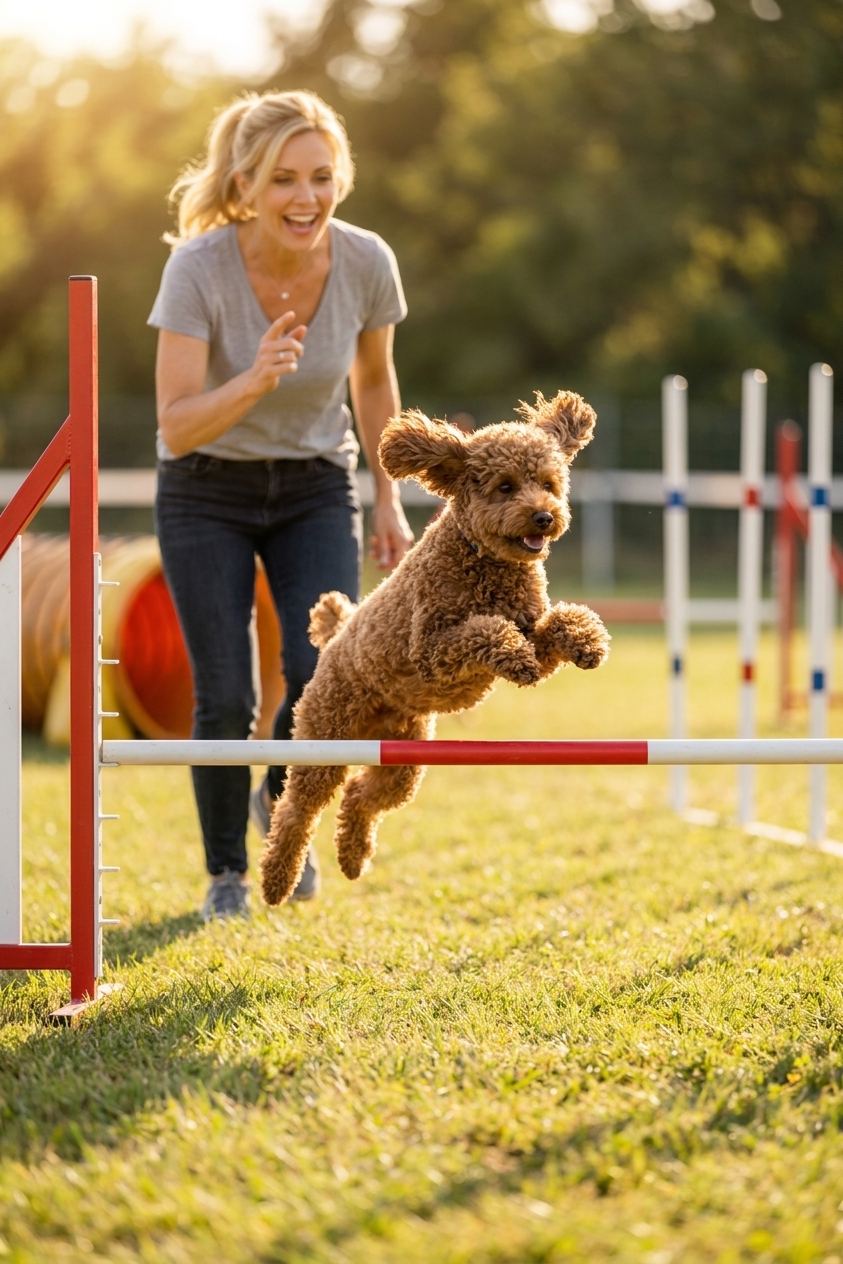
- Agility
- Nose work and scent games
- Fetch and structured play
- Swimming for many individuals
Exercise needs by size
Poodles are active dogs, even the small ones. Exercise needs vary by age, health, and personality, but here are typical starting ranges for many healthy adult dogs.
- Toy: Several short walks plus indoor play and training games. Many do well with about 30 to 60 minutes total activity spread across the day.
- Miniature: Daily walks plus a more vigorous play session. Often about 45 to 90 minutes total, depending on the dog.
- Standard: A true athletic companion. Many do best with about 60 to 120 minutes of combined walking, running, play, and training.
Remember, mental exercise counts. A 10-minute sniff walk, puzzle feeder, or short training session can take the edge off energy better than mindless laps around the yard.
Puppy note: With Poodle puppies, especially Standards, avoid repetitive high-impact exercise (like long forced runs and lots of jumping) while they are still growing. Short, varied play, training, and sniffy walks are usually a better plan. If you are unsure, ask your vet what is appropriate for your puppy’s age and build.
Grooming expectations
The Poodle coat is hair-like and continuously growing. That often means less hair around the house, but it also means more maintenance. The biggest grooming issue I see in clinics and rescue is not “bad hair.” It is matting, which can be painful, hide skin infections, and lead to shave downs.
Brushing and at-home care
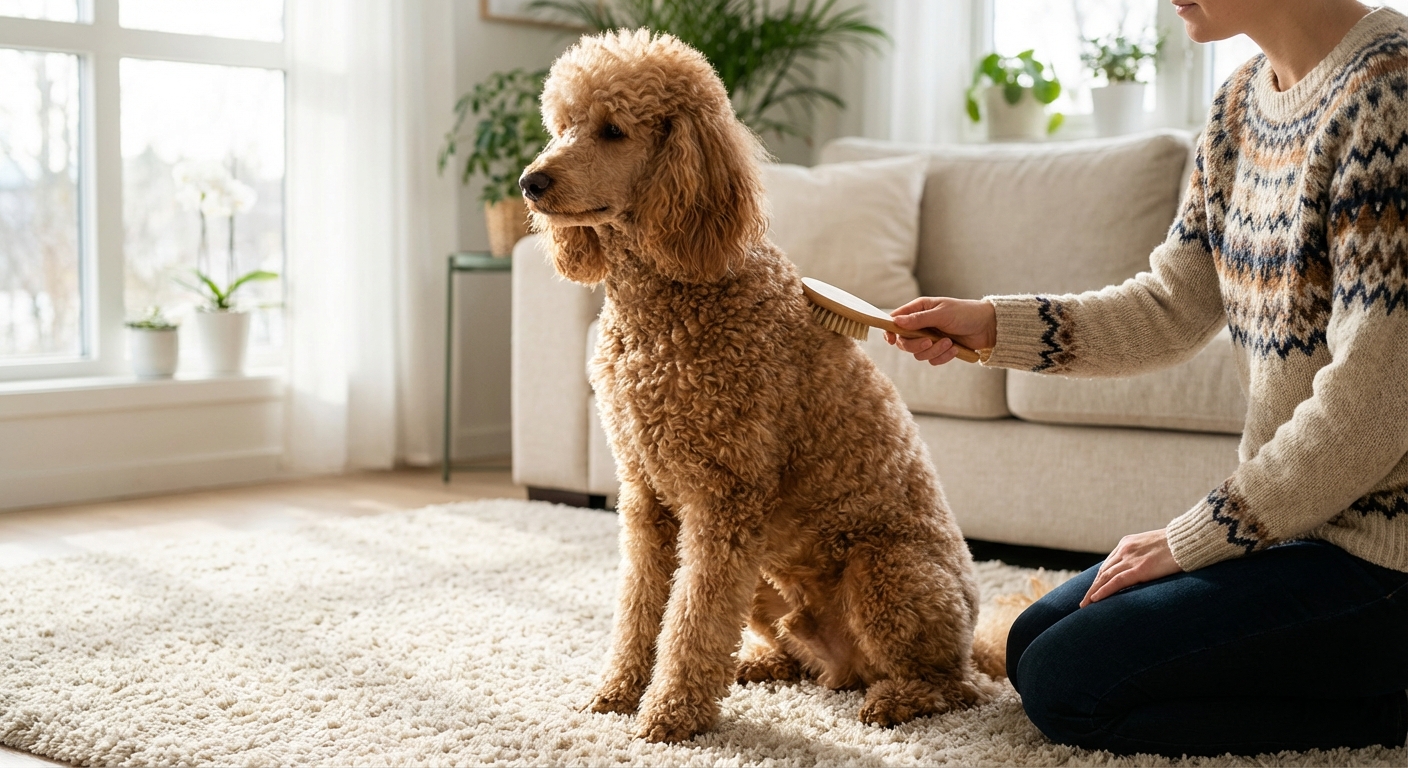
- Brush thoroughly: Most pet Poodles need brushing several times per week. Longer styles may need daily brushing.
- Comb to the skin: A brush can glide over mats. A metal comb helps you find tangles at the base.
- Check friction zones: Ears, collar area, armpits, groin, tail base, and under the harness are common mat spots.
- Ear care: Ask your veterinarian what is appropriate for your dog. Some Poodles are prone to ear issues, especially when moisture gets trapped. Hair management in the ear canal is very individual, so get guidance before you pluck or trim anything yourself.
- Dental care: Daily brushing is ideal, particularly for Toys and Minis where dental disease can progress quickly.
Helpful grooming tools
- Slicker brush
- Metal greyhound comb
- Detangling spray or light conditioning spray (especially for longer styles)
- Blunt-tip scissors for very minor tidying only (leave mat removal to a pro)
Professional grooming schedule
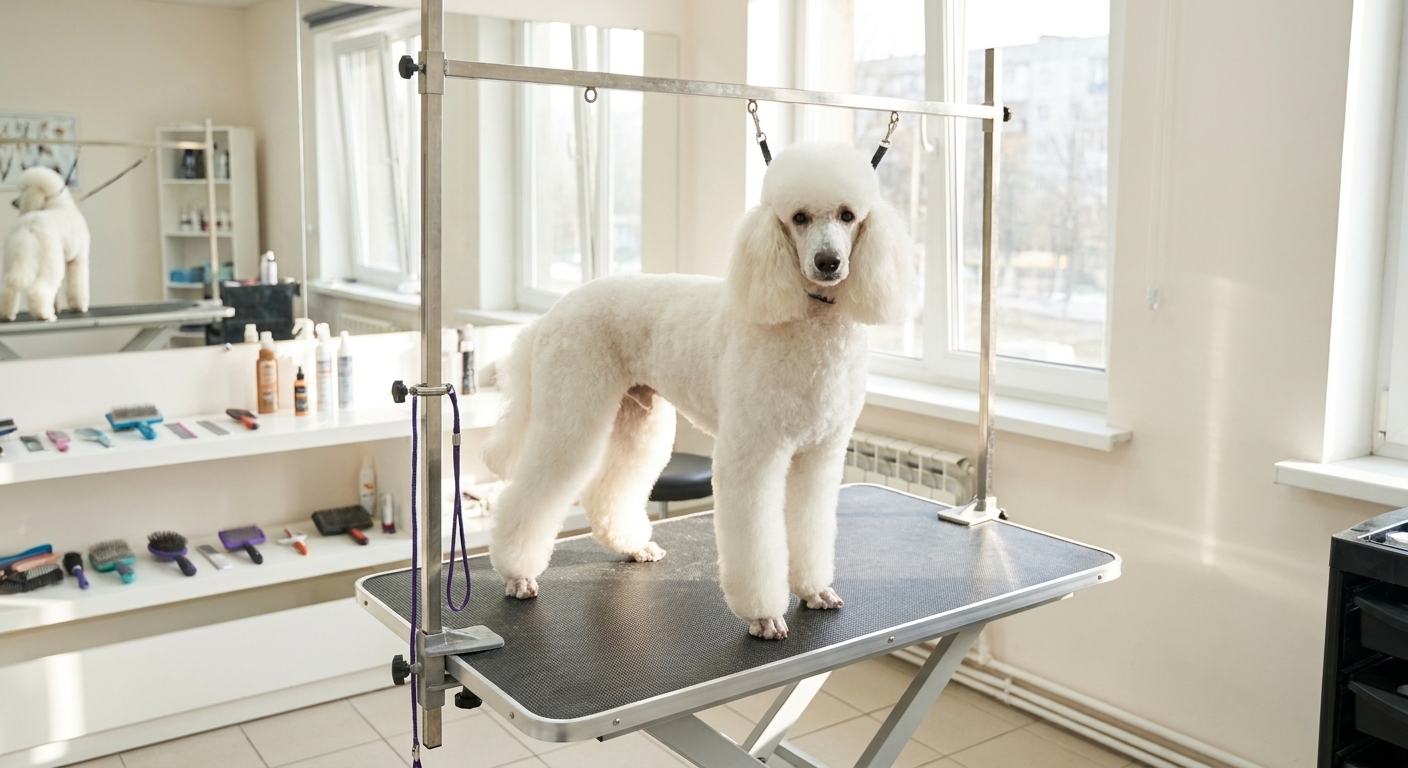
Most Poodles do best with a professional groom every 4 to 8 weeks, depending on coat length and lifestyle. Typical visits include bathing, blow-dry, clipping, nail trim, and ear cleaning. If you love a fluffy teddy-bear style, plan on the more frequent end of that range.
Popular Poodle clips
You do not have to do a show clip. Many families choose low-maintenance trims that still look adorable.
- Puppy clip: Even length with a fuller face and tail, very common for pets.
- Sporting clip: Shorter all over, often easiest for active dogs.
- Teddy bear style: Rounder face and legs, usually requires more brushing.
Common health issues
Poodles are generally long-lived, especially with thoughtful breeding and preventive care. Still, each size has patterns. If you are shopping for a puppy, ask what health testing has been done on the parents and request documentation.
Health concerns seen across Poodles
- Ear infections: Many Poodles can be prone to recurring ear issues. Chronic ear problems deserve veterinary guidance.
- Dental disease: Especially common in Toys and Minis. Daily tooth brushing and regular professional cleanings matter.
- Allergies and skin issues: Can show up as itching, ear infections, or paw licking. Work with your vet on diet trials and parasite prevention.
- Eye disease: Some lines have higher risk for inherited eye issues. Regular exams help.
Toy and Mini health watch list
- Patellar luxation: A kneecap that slips out of place, ranging from mild to surgical.
- Tracheal sensitivity: Some small dogs cough with collar pressure. Harnesses are often kinder.
- Legg-Calvé-Perthes disease: A hip condition more common in small breeds.
- Hypoglycemia in very small puppies: This is one reason “teacup” marketing can be risky.
Standard health watch list
- Gastric dilatation-volvulus (bloat): A true emergency. Ask your vet about risk reduction and whether a preventive gastropexy makes sense.
- Hip dysplasia: Responsible breeding and maintaining a lean body condition help.
- Addison’s disease: More common in Standards than many breeds. Symptoms can be vague, so persistent lethargy, vomiting, diarrhea, or collapse warrants prompt veterinary care.
- Epilepsy: Seen in some lines.
Preventive care that matters
- Keep your Poodle lean. Excess weight worsens joint issues and overall inflammation.
- Ask your vet for a target Body Condition Score (BCS) and re-check it as your dog ages.
- Stay consistent with parasite prevention recommended by your veterinarian.
- Schedule routine wellness visits and discuss baseline bloodwork, especially as your dog gets older.
- Do not ignore recurring ear or skin problems. Chronic inflammation has a cost.
Choosing a breeder or rescue
If I could add one clinic-side observation here, it is this: many heartbreaking (and expensive) problems start with poor sourcing. A great breeder or a great rescue sets you up with a healthier dog and better support.
What to look for
- Documented health testing: Ask for OFA or equivalent results and proof of screenings recommended for Poodles (hips, patellas, eyes, and relevant DNA tests). Standards may also have additional screening conversations depending on the line.
- Temperament focus: Parents should be stable, social, and safe to handle.
- Early socialization: Puppies should be raised with thoughtful exposure to sounds, handling, grooming, and normal household life.
- Clear contract and return policy: Ethical breeders will take a dog back if life changes.
- No pressure sales: Be cautious with “rare” marketing, extreme tiny sizes, or anyone unwilling to show documentation.
If you are adopting
- Ask what the dog has shown in foster care: grooming tolerance, separation comfort, barking tendencies, and energy level.
- Budget for an initial vet visit and grooming assessment. Many newly adopted Poodles need a coat reset and a dental plan.
Why Poodles are behind so many mixes
On DesignerMixes.org you will see Poodle influence everywhere, and that is not an accident. Poodles bring a combination of traits that many families want:
- High trainability: They often learn household routines quickly.
- Coat options: While no dog is truly hypoallergenic, many Poodle mixes shed less than double-coated breeds.
- Size flexibility: Because Poodles come in three sizes, breeders can create mixes from small to large.
- People-focused temperament: Many Poodles and Poodle mixes thrive with family involvement.
One important note: mixing breeds does not guarantee a specific coat type, shedding level, or temperament. A doodle puppy can take after either parent, and grooming needs can still be significant, sometimes even more complicated if the coat is a mix of textures.
Popular Poodle mixes
If you are drawn to the Poodle but want a different look, energy level, or size range, here are some popular Poodle mix directions to explore on DesignerMixes.org:

Is a Poodle right for you?
Poodles are a great match if you want a companion who is engaged, trainable, and up for activities, and if you are willing to budget time and money for grooming.
A Poodle may be a great fit if you want:
- A smart dog you can train and communicate with
- A companion for walks, games, and enrichment
- A coat that often sheds less in many homes, with the understanding that grooming is ongoing
You may want to rethink if:
- You prefer a very low-maintenance coat and rarely want to brush or book grooming
- You want a dog who needs minimal mental stimulation
- You are not ready to address barking and excitability with training
If you decide on a Poodle, take it slow and steady. A little structure, a consistent grooming routine, and proactive veterinary care can set you up for years of joyful companionship.