Practical, evidence-based pony and horse care and training tips: daily checks and vitals, hoof care, forage-first feeding, short training wins, grooming, tur...
Article
•
Designer Mixes
Pony vs. Horse: Differences, Care, and Help

Shari Shidate
Designer Mixes contributor
If you have ever stood next to a “pony” that felt as strong as a tank, you are not imagining things. Ponies and horses are the same species (the domestic horse, Equus ferus caballus), but they can differ in height, body shape, metabolism, and even how they respond to training and handling. Knowing what makes a pony a pony is not just trivia. It can change how you feed, tack up, and care for them day to day.
The simplest difference: height
The most common way people define a pony versus a horse is by height at the withers, which is the highest point of the shoulders (not the head).
- Pony: typically 14.2 hands (58 inches or 147 cm) or under.
- Horse: typically over 14.2 hands.
Hands clarification: “Hands” are measured in 4-inch units. The “.2” in 14.2 means 2 inches, not two tenths of a hand. So 14.2 hands equals 14 hands (56 inches) plus 2 inches, for a total of 58 inches. You may also see .1, .2, or .3, meaning 1, 2, or 3 inches.
Important: This cutoff is traditional and widely used, but it is not universal. Some registries define ponies by breed type or registry rules rather than height alone. Some “pony” breeds may include individuals that measure over 14.2, and some small horses are still considered horses by breed and registration.
Not just size: body and metabolism
Many ponies are not simply “short horses.” Many pony breeds and types have a different build and a different internal “engine.”
Common pony traits
- Thicker neck and crest and a more compact, sturdy body.
- Shorter legs with strong bone and durable hooves.
- Denser coat and mane, often adapted to harsher climates.
- Efficient metabolism, meaning many maintain weight on less feed and can gain weight quickly on rich pasture.
Common horse traits
- Longer legs and more athletic proportions (especially in riding breeds).
- Greater stride length, which can translate to different movement and speed.
- Metabolism varies widely by breed and individual. Some horse breeds and types are also easy keepers (for example, many stock-type horses and some Morgans), while some ponies are naturally lean.
For many ponies, metabolism is one of the biggest practical care issues. A pony can look perfectly content on spring grass while still trending toward unwanted weight gain and higher laminitis risk.
Temperament and training
Ponies are often incredibly smart, confident, and economical with their effort. That can be wonderful, and it can also feel like “stubbornness” if the training is inconsistent.
- Many ponies learn patterns fast, including patterns you did not mean to teach.
- Food motivation is common, which can be used positively with careful boundaries.
- They benefit from clear rules, short sessions, and frequent rewards that are not always treats.
Horses vary widely by breed and individual, of course. But when people say ponies are “cheekier,” they are often reacting to how quickly a pony will test whether a rule is really a rule.
Care differences that matter
1) Feeding and weight management
This is the big one. Many ponies are easy keepers, meaning they need fewer calories to maintain condition.
- Prioritize forage: Most equines should eat mostly hay or pasture, but many ponies do best with lower-sugar hay and more careful portions.
- Watch pasture conditions: Grass sugar (non-structural carbohydrates) fluctuates with season, sunlight, temperature swings (especially cold nights followed by sunny days), drought, and even time of day. Many owners pay extra attention in spring and fall, but the key is that risk can spike under several common weather patterns.
- Use a grazing muzzle if needed: It can help reduce intake while still allowing turnout and social time.
- Measure feed by weight, not scoops: A “flake” varies a lot. A small scale makes feeding far more accurate.
- Do not skip minerals: If you restrict calories, you still need a balanced vitamin and mineral plan. A ration balancer may be helpful for many easy keepers.
Practical note: Obesity is strongly associated with insulin dysregulation and laminitis risk. If you see a cresty neck, fat pads, or an equine that gains weight extremely easily, ask your vet about body condition scoring and metabolic screening.
2) Laminitis and metabolic concerns
In many barns and clinical settings, ponies and easy-keeper types are seen frequently in cases involving:
- Laminitis (painful inflammation and structural failure within the hoof).
- Equine metabolic syndrome (EMS), which involves insulin dysregulation and can increase laminitis risk.
- PPID (often called equine Cushing’s), especially in older animals. This affects both ponies and horses.
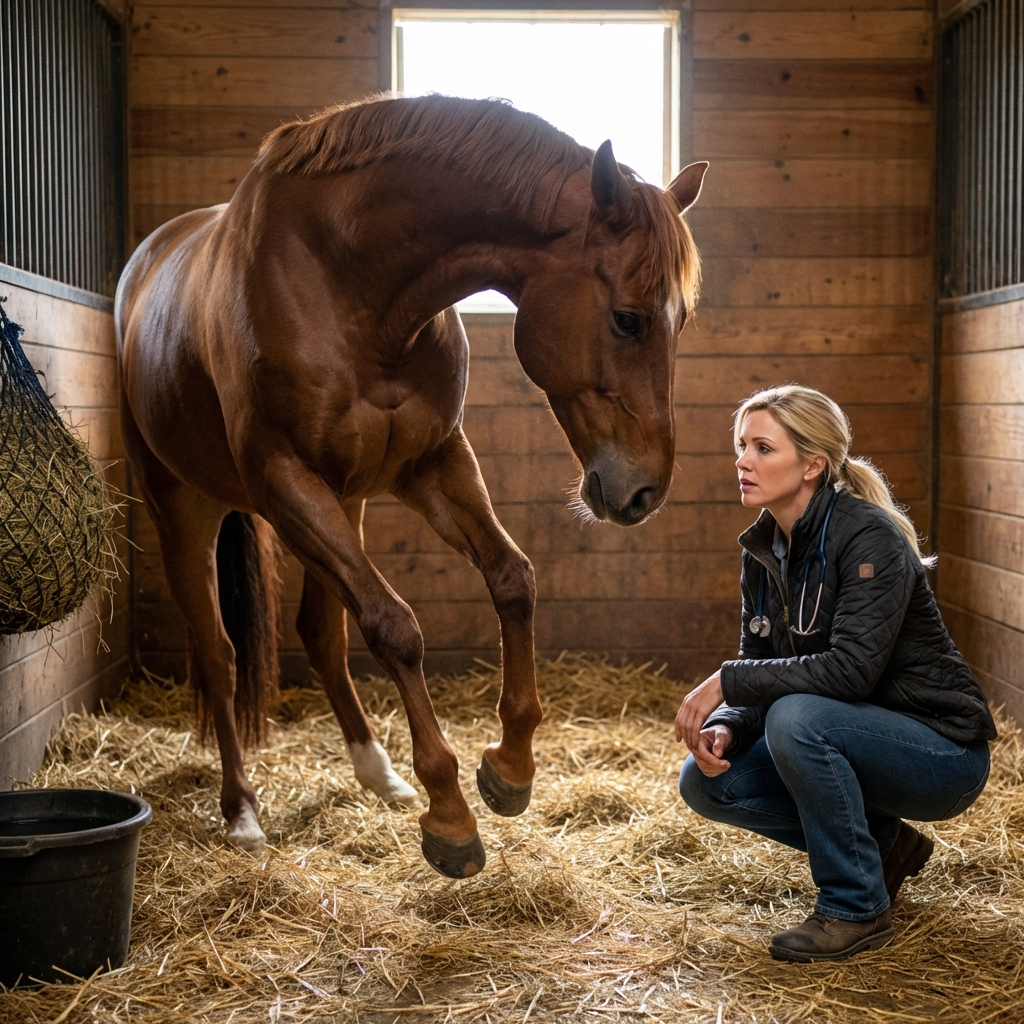
Seek help quickly if you notice heat in the hooves, a stronger-than-normal digital pulse, reluctance to walk, a short “pottery” stride, or leaning back to take weight off the front feet.
3) Tack and fit
Ponies often need pony-specific tack, not just smaller versions of horse gear.
- Saddles: Many ponies have rounder barrels and lower withers, which can make saddle fit tricky. Many also have shorter backs, so panel length and where the saddle sits relative to the last rib matters. A poorly fitting saddle can cause pain, bucking, or sour behavior.
- Bridles and bits: Mouth size and head shape matter. A thick pony tongue with a low palate may need different bit considerations.
- Girths: Round-bodied ponies may experience saddle slippage without a properly shaped girth.
4) Hoof care
Both ponies and horses need regular farrier visits, commonly every 6 to 8 weeks, though individual needs vary. For ponies that are prone to laminitis, hoof balance and early intervention are especially important.
- Pick out hooves daily when possible.
- Keep footing clean and dry to reduce thrush risk.
- Partner with a farrier and vet team if metabolic concerns exist.
5) Exercise and enrichment
Ponies often thrive with consistent work and mental engagement. A bored pony is very good at inventing hobbies you will not enjoy.
- Consistency beats intensity: Regular movement supports weight control and hoof health.
- Add variety: Poles, trail walks, groundwork, obstacle work, and gentle hill work can be excellent.
- Enrichment matters: Slow feeders, safe toys, and social turnout reduce stress and improve wellbeing.
6) Dental care and parasites
These are not pony-only issues, but they matter a lot if you are hoping for the long, healthy lifespan many ponies can enjoy.
- Dental exams: Regular dental checks help prevent weight loss, quidding, and training issues linked to mouth pain.
- Parasite control: Use fecal egg counts and a vet-guided plan rather than deworming on autopilot. Good parasite management supports weight, coat, and overall health.
Choosing a pony or a horse
If you are deciding which is right for your family, think beyond height.
- Rider size and skill: A pony is not automatically a beginner animal. Some are wonderful teachers, but others can outsmart an inconsistent rider.
- Purpose: Trail riding, jumping, driving, youth lessons, or showing can all be great fits for ponies or horses depending on the individual.
- Budget: Ponies may eat less, but tack fit challenges, metabolic management, and hoof care can offset savings.
- Management style: If your pasture is rich and you cannot restrict grazing, a laminitis-prone pony may be a stressful match.
My best advice is to choose the right individual with a known history, a good temperament, and a body type that matches your management realities, not just a label.
Quick help: common questions
Can a pony be stronger than a horse?
Yes. Many ponies are incredibly strong for their size, with dense bone and powerful hindquarters. Strength and pulling power are not only about height.
Do ponies live longer?
Often, yes. Many ponies can live into their 30s, and some beyond, especially with good dental care, weight control, appropriate parasite management, and routine veterinary attention.
Is a mini horse a pony?
Not necessarily. Miniature horses are typically bred to be horse-like in proportion, just very small. They are often registered separately from pony breeds.
When to call a veterinarian
Please reach out to your veterinarian promptly if your pony or horse shows:
- Sudden lameness, hoof heat, or a strong digital pulse
- Rapid weight gain, fat pads, or a developing cresty neck
- Excessive drinking and urination, lethargy, or abnormal shedding (especially in older equines)
- Repeated episodes of colic signs such as pawing, rolling, or looking at the flank
Early help is not overreacting. With hoof and metabolic issues in particular, early action can be the difference between a short setback and a long, painful road.
Takeaway
The classic definition is simple: ponies are 14.2 hands or under, horses are over that. The real-life difference is more practical: many ponies are compact, smart, and metabolically efficient, which means they often need more careful feeding and weight management. When you match the animal to the rider and the environment, both ponies and horses can be wonderful, steady partners for years.