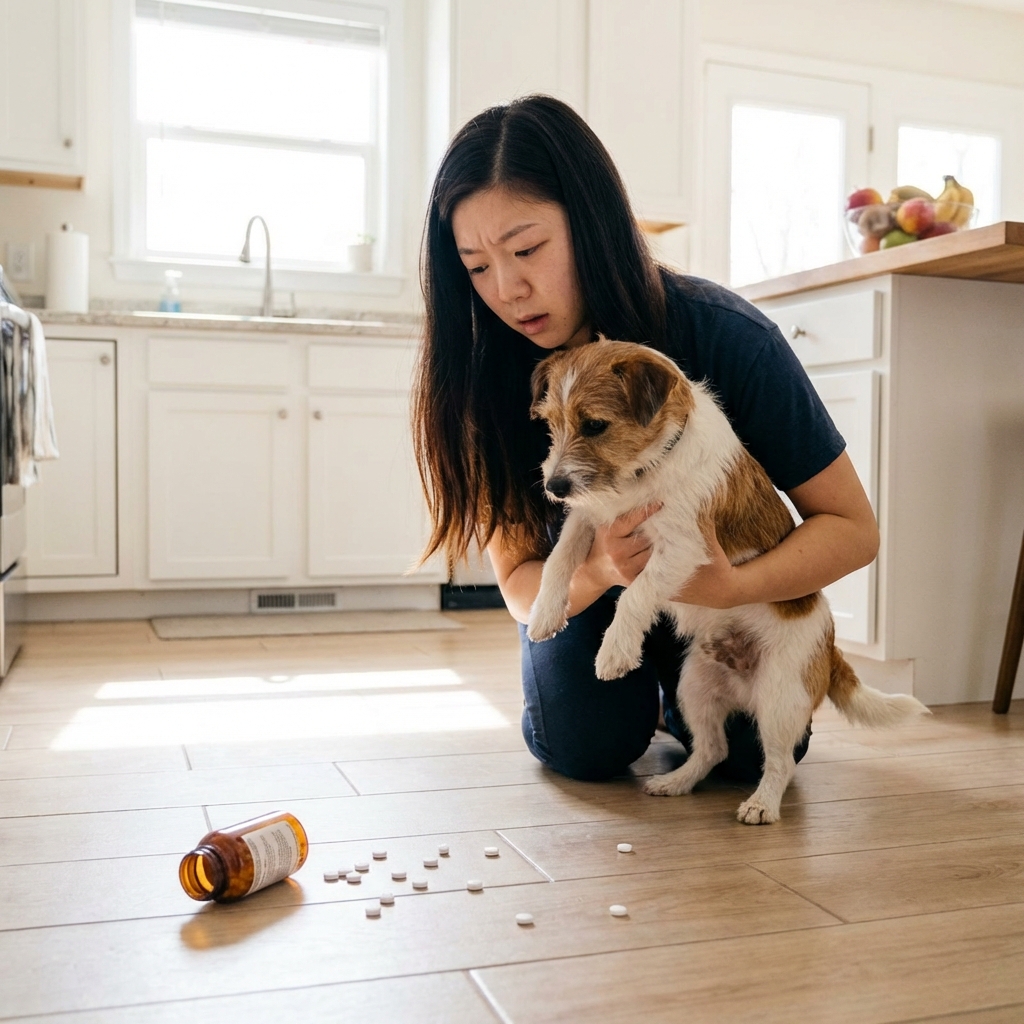
Know the warning signs of dog poisoning—vomiting, tremors, seizures, breathing trouble, bleeding, and more. Learn first steps, what not to do, and when to ...
Article
•
Designer Mixes
Poisoning in Dogs: Symptoms, What to Do, and What to Avoid

Shari Shidate
Designer Mixes contributor
Poisoning can happen fast, and it is one of those emergencies where minutes truly matter. As a veterinary assistant, I have seen worried families stay calm and do everything “right” in the moment, but still lose precious time because they are unsure what counts as an emergency and what to do first.
This article will help you recognize must-know poisoning symptoms in dogs, understand common sources of toxins, and take smart, practical steps while you contact a veterinarian or poison hotline.
First: Is This an Emergency?
If you think your dog may have eaten something toxic, assume it is urgent until proven otherwise. Some toxins act in minutes, others take hours, and some cause hidden internal damage before you see obvious symptoms.
Call right away if you notice any of these
- Repeated vomiting or vomiting with blood
- Seizures, tremors, or twitching
- Collapse, extreme weakness, or inability to stand
- Blue, very pale, or gray gums
- Severe lethargy, confusion, or acting “drunk”
- Difficulty breathing, excessive panting, or choking sounds
- Swollen belly, unproductive retching, or severe abdominal pain (often bloat, not always poisoning, but still go now)
- Uncontrolled drooling, especially with pawing at the mouth
When in doubt: call your vet, an emergency clinic, or a pet poison hotline. It is always better to be “over-cautious” than late.
Why drooling and pawing at the mouth matters: this can happen with nausea, but it can also be a sign of something irritating or caustic (like certain cleaners), a plant sap, or even something stuck in the mouth. It is a good reason to call promptly.
Poisoning Symptoms in Dogs
Poisoning does not look the same every time. Symptoms depend on the toxin, the dose, and your dog’s size and health.
Digestive signs
- Vomiting or dry heaving
- Diarrhea, sometimes bloody
- Drooling, lip smacking, refusing food
- Abdominal pain, hunched posture
Neurologic signs
- Tremors, shaking, seizures
- Wobbly walking, disorientation
- Restlessness, agitation, or unusual vocalizing
Heart and breathing signs
- Very fast or very slow heart rate
- Weak pulses, collapse
- Rapid breathing, wheezing, labored breathing
Bleeding or clotting problems
- Bruising, nosebleeds, bleeding gums
- Bloody stool or black, tarry stool
- Weakness that worsens over time
Kidney and liver warning signs
- Increased thirst and urination, or very little urine
- Yellow tint to gums or eyes
- Ongoing vomiting and lethargy hours after exposure
Common Dog Poisons
Many “everyday” household items can be toxic. Here are some of the big ones veterinary teams see often.
Human medications
Over-the-counter and prescription meds are one of the most common causes of pet poison emergencies. A very typical scenario is a dropped pill that gets vacuumed up by a curious dog before anyone realizes it.
- NSAIDs (ibuprofen, naproxen): stomach ulcers, kidney injury
- Acetaminophen: liver damage, red blood cell injury
- ADHD meds, antidepressants, sleep aids: agitation, tremors, heart issues, seizures
Chocolate and caffeine
Dark chocolate and baking chocolate are especially risky. Caffeine pills and pre-workout powders can be extremely dangerous for dogs.
Xylitol (birch sugar)
Found in some sugar-free gums, mints, peanut butters, baked goods, and oral care products. Xylitol can cause a dangerous drop in blood sugar and can also lead to acute liver injury.
One detail to know: newer “birch sugar” products can be xylitol or xylitol blends, so label-checking matters. If you are not sure, treat it as a possible xylitol exposure and call.
Rodenticides (rat and mouse bait)
This is always a “call now” situation. Different products cause different problems. Examples include:
- Anticoagulants: internal bleeding
- Bromethalin: neurologic signs like tremors and seizures
- Cholecalciferol (vitamin D3): kidney failure and dangerous calcium changes
Grapes and raisins
Even small amounts can trigger kidney failure in some dogs. There is no reliable “safe” dose.
Nicotine, cannabis, and alcohol
- Nicotine (vapes, e-liquids, pouches, gum): can cause vomiting, tremors, seizures, and heart problems
- Cannabis (including edibles): can cause extreme sleepiness, wobbliness, abnormal heart rate, and agitation. Edibles often contain chocolate or xylitol too
- Alcohol: can cause low blood sugar, low body temperature, and breathing problems
Onions, garlic, and macadamia nuts
- Onions and garlic (including powders): can damage red blood cells
- Macadamia nuts: can cause weakness, tremors, and fever
Household chemicals
- Cleaning sprays and concentrates
- Laundry and dishwasher pods
- Antifreeze (ethylene glycol): highly lethal. It can taste sweet or otherwise be attractive to pets, even though some brands add bittering agents
Essential oils
Some essential oils can irritate the mouth and stomach or affect the nervous system, especially if concentrated oils are swallowed or applied to skin. If a diffuser spills or a bottle gets chewed, call your vet or poison hotline.
Toxic plants
Some plants are mild irritants, others are life-threatening.
- Lilies are especially dangerous for cats. In dogs, many lilies more often cause vomiting and drooling, but it is still worth calling for guidance if a dog chews on one
- Sago palm can cause severe liver failure
- Oleander can affect the heart
What to Do If You Suspect Poisoning
This is the part you can control. Your calm, quick steps make a difference.
1) Remove access and secure your dog
Move your dog away from the substance. If there is residue on the coat or paws, prevent licking by using an e-collar if you have one or gently covering with a towel until you get guidance.
2) Skin or eye exposure
If a chemical got on your dog’s skin or in the eyes, call for guidance right away. In many cases, gentle flushing with lukewarm water can help while you head to care, but your vet or poison hotline can tell you how long to rinse and what to avoid.
3) Gather details before you call
- What was eaten or exposed to
- How much you think was involved
- When it happened (best estimate)
- Your dog’s weight, age, and any medical conditions
- Current symptoms, even if mild
- Bring the package or take clear photos of the ingredient list, active ingredient, and concentration/strength
- If it is a plant, bring a photo (or a small sample in a bag if safe to do so)
4) Call for expert help
Contact your regular veterinarian, the nearest emergency vet, or a pet poison hotline. Follow instructions exactly. Treatments can vary widely depending on the toxin.
- ASPCA Animal Poison Control (24/7): 1-888-426-4435 (consultation fee may apply)
- Pet Poison Helpline (24/7): 1-855-764-7661 (consultation fee may apply)
5) Only do first aid if instructed
For some toxins, inducing vomiting can help. For others, it can make things worse or be dangerous. Your vet will advise based on what was eaten and your dog’s condition.
If your dog is having trouble breathing, is unconscious, has seizures, or cannot swallow normally, do not try to give anything by mouth. Go to an emergency clinic immediately.
What Not to Do
- Do not “wait and see” when a known toxin is involved. Delay can remove the safest treatment options.
- Do not induce vomiting unless a professional tells you to. Caustic chemicals, sharp objects, and certain medications can cause serious damage coming back up.
- Do not give milk, oils, or home “antidotes”. These can worsen absorption or cause aspiration.
- Do not give human medications to treat symptoms like vomiting or pain unless your veterinarian specifically instructs it.
- Do not assume a small dose is safe. Small dogs and puppies can be affected by tiny amounts.
What Treatment Might Look Like
Knowing what may happen can reduce anxiety. Your veterinary team will tailor care to the toxin and timing.
- Decontamination: inducing vomiting, activated charcoal, bathing for skin exposures
- Supportive care: IV fluids, anti-nausea meds, pain control, temperature support
- Antidotes: available for some toxins, such as certain rodenticides
- Monitoring: bloodwork to check kidney and liver values, clotting, electrolytes
- Hospitalization: when symptoms are severe or delayed effects are expected
Prevention
Most poisonings are preventable with a few household routines. I know life is busy, so focus on the highest-impact habits.
- Store all medications in closed cabinets, not purses, nightstands, or countertops
- Use a lidded trash can and keep compost secured
- Check gum, mints, and peanut butter labels for xylitol before sharing
- Keep chocolate, edibles, and baked goods out of reach, especially during holidays
- Keep nicotine products (vapes, pouches, gum) locked up and never on a coffee table
- Keep rodent bait inaccessible, or ask a professional about pet-safe control options
- Know the names of your houseplants and remove high-risk plants like sago palm
- Keep antifreeze and car fluids locked up and clean spills immediately
- Use care with essential oils, especially concentrated products
Make a fridge note
Write down your dog’s weight, your primary vet number, the closest emergency clinic, and a poison hotline number. In an emergency, you will be grateful you did.
Not Sure It Was Poisoning?
Dogs can vomit or act tired for many reasons, from dietary indiscretion to pancreatitis to infections. If symptoms are ongoing, severe, or paired with neurologic changes, treat it as urgent. Your vet would rather rule out a toxin than miss one.
Trust your instincts. You know your dog’s normal better than anyone.