Vet-assistant tips to ease dog allergy itch safely at home: rinses, oatmeal baths, omega-3s, cool compresses, and lick prevention—plus remedies to avoid an...
Article
•
Designer Mixes
Pitbull Skin Issues

Shari Shidate
Designer Mixes contributor
Pitbull-type dogs are wonderful, athletic companions, but many of them struggle with itchy skin, recurring rashes, and ear infections . As a veterinary assistant, I can tell you this is one of the most common reasons families come into the clinic feeling frustrated and a little helpless. The good news is that most skin issues are manageable once you identify the real trigger and build a consistent plan.
Important note: This article is educational and not a substitute for veterinary care. If your dog has facial swelling, trouble breathing, widespread hives , open sores, fever, or severe pain, please contact your veterinarian right away.
Why pit bull-type dogs get skin issues
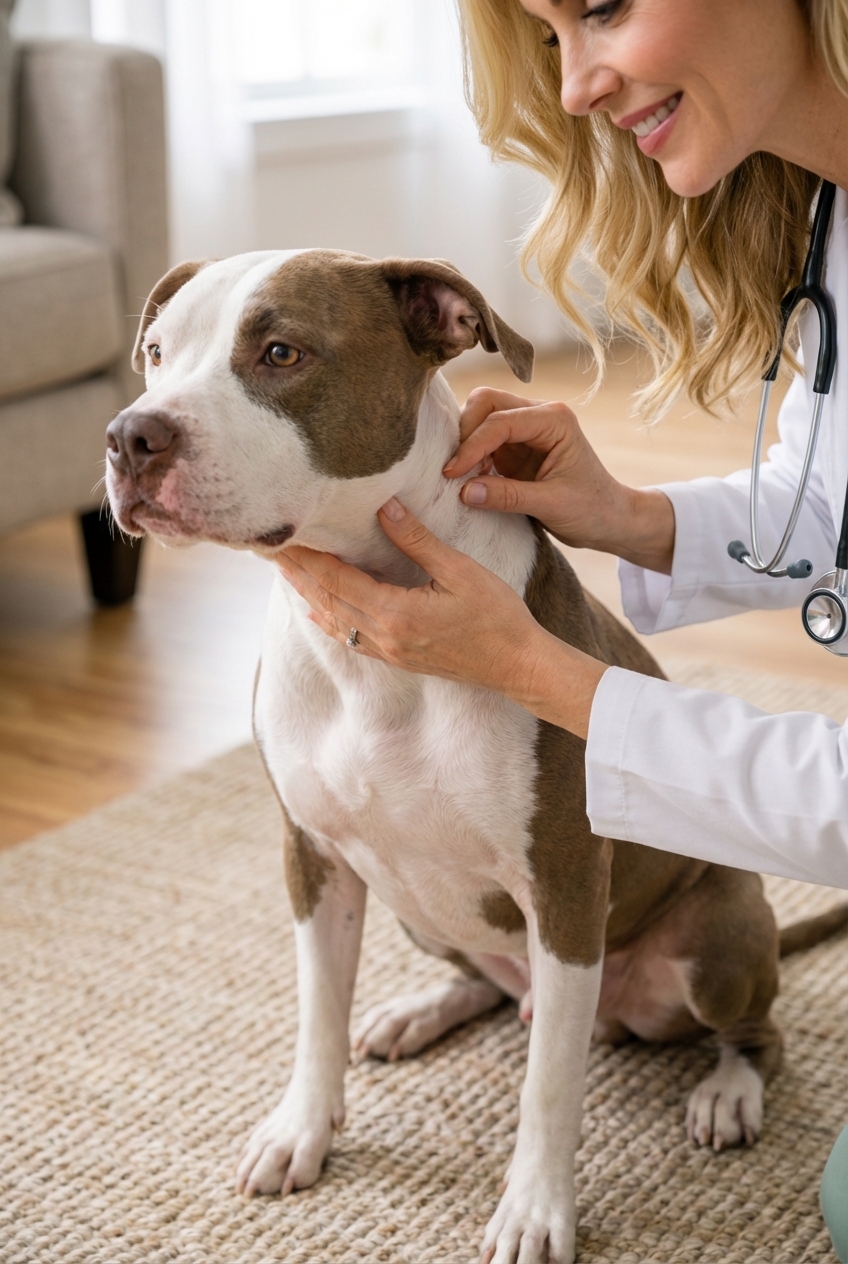
Pit bull-type dogs and many bully breeds tend to have short coats and sensitive skin, and allergies are common in dogs overall. This combination can make even small irritations look dramatic quickly.
- Short hair and sparse coat areas can expose skin to pollen, grasses, and friction.
- Skin barrier changes can be part of canine atopic dermatitis (environmental allergies), which may allow allergens and bacteria to get in more easily.
- Immune “overreaction” is common with atopic dermatitis, which is an inherited allergy pattern seen in many dogs.
- Secondary infections happen easily when a dog scratches, licks, or chews.
Common signs
Many skin problems look alike at home, especially early on. Here are clues that help you narrow down what might be going on.
Allergy signs
- Itching that affects paws, belly, armpits, groin, face, and ears
- Recurring ear infections or head shaking
- Redness that comes and goes, sometimes seasonally
- Chewing feet until they look stained or damp
Rash and irritation signs
- Red bumps on the belly after going outdoors
- Localized redness under a harness or collar
- Dry, flaky patches or dandruff
- Hives that appear suddenly (often raised welts)
Infection signs (bacteria or yeast)
- Odor that is musty or sweet, often described as “corn chip-like”
- Greasy skin, scabs, or oozing spots
- Thickened, darkened skin (often in chronic cases)
- Intense itch that seems out of proportion to what you can see
One important point: allergies often start the itch, but infections keep it going. That is why many dogs need both allergy control and infection treatment.
Also, ear infections are very often secondary to allergies. Your vet may recommend an ear cytology to check whether yeast , bacteria, or both are involved so treatment matches the cause.
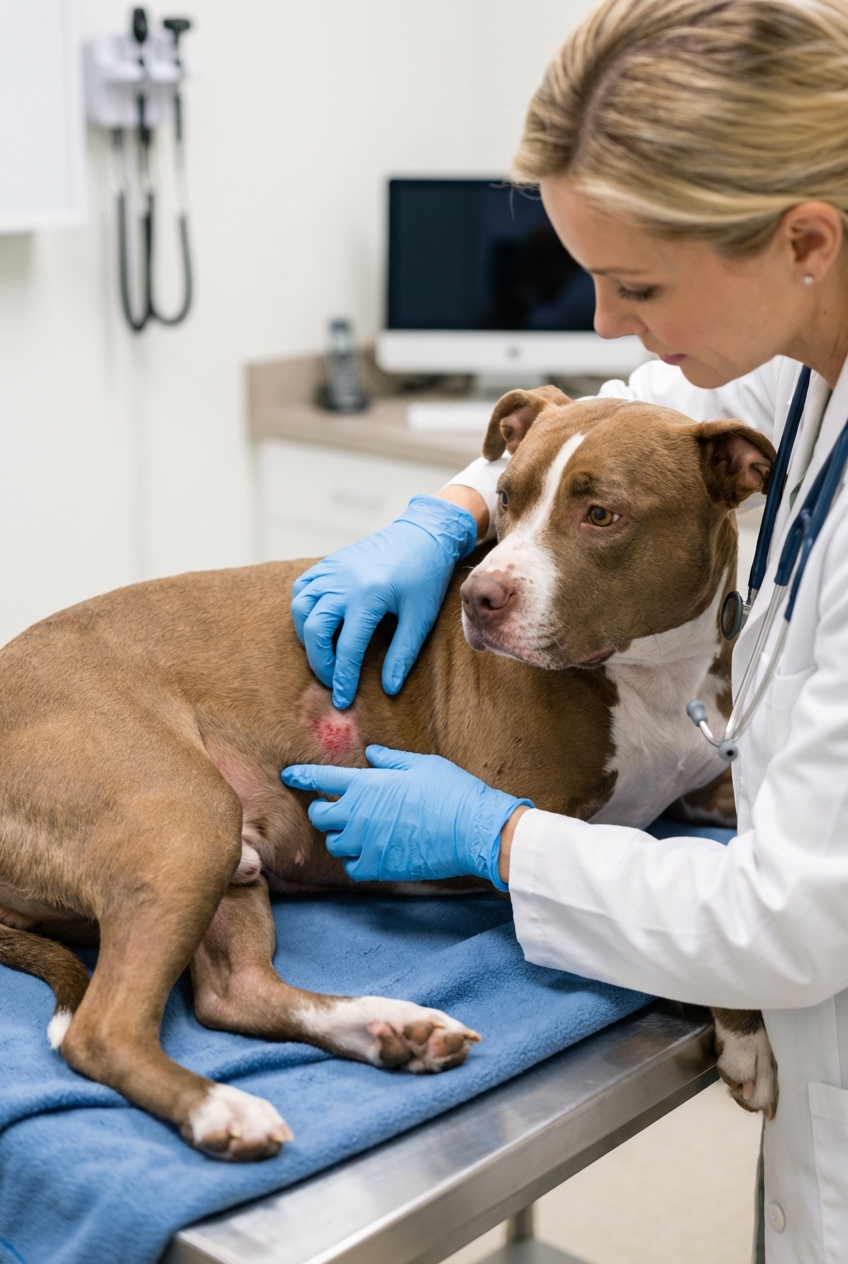
Main causes
1) Environmental allergies (atopy)
These are reactions to things like pollen, grasses, dust mites, and molds. Many dogs start showing signs between 1 and 3 years old, but it can happen earlier or later.
2) Food allergy or food sensitivity
True food allergies are less common than environmental allergies, but they do happen. Food allergy often shows up as year-round itch, recurrent ear infections, or chronic paw licking . The most reliable way to diagnose it is a veterinarian-guided elimination diet trial, followed by a planned challenge (symptoms improve on the trial diet, then return when the previous food is reintroduced).
3) Flea allergy dermatitis
Some dogs are extremely allergic to flea saliva. One bite can trigger intense itching, especially along the back, tail base, and inner thighs. Fleas can be hard to find on short coats, so do not assume “no fleas seen” means “no fleas.”
4) Contact irritation
Think lawn chemicals, certain shampoos, wipes, detergents, and even new bedding. Rashes often appear where skin is thin, like the belly or armpits.
5) Mange mites
Demodex and sarcoptic mange can cause hair loss, redness, and crusting. Sarcoptic mange is usually intensely itchy . Demodex can be mild or even not very itchy at first, but it can become very inflamed and itchy if there is a secondary infection. These require veterinary diagnosis and prescription treatment.
6) Ringworm (fungal infection)
Ringworm can cause circular hair loss, scaling, and sometimes redness. It is also contagious to other pets and people. If you suspect it, schedule a vet visit and limit close contact until you have guidance.
7) Hot spots (acute moist dermatitis)
Hot spots are painful, wet, rapidly worsening patches that often start after licking or scratching. They are usually secondary to allergies, fleas, or irritation and often need veterinary treatment to get ahead of infection and pain .
8) Endocrine and other medical issues
Hypothyroidism, Cushing’s disease, and other conditions can affect skin quality and increase infections. If your pit bull-type dog has recurrent issues despite good care, your vet may recommend bloodwork.
What your vet may do
Skin cases can feel repetitive, but a step-by-step approach saves time and money long-term.
Common tests
- Skin cytology (a quick microscope check for yeast and bacteria)
- Skin scraping (for mites)
- Fungal testing if ringworm is a concern
- Culture for stubborn infections
- Diet trial for suspected food allergy
- Allergy testing (blood or intradermal) to help formulate immunotherapy
One quick clarification: allergy testing is mainly used to build allergen-specific immunotherapy (shots or drops). It is not used to diagnose food allergy.
Common treatments
- Prescription flea prevention year-round when flea allergy is possible
- Medicated shampoos and mousses (often chlorhexidine, miconazole, ketoconazole, or similar)
- Antibiotics or antifungals for infections when needed
- Anti-itch and allergy medications such as oclacitinib , lokivetmab injections, or corticosteroids in select cases
- Ear medications if the ears are involved
- Allergen-specific immunotherapy (allergy shots or drops) for long-term control in some dogs
If your dog is constantly itchy, the goal is not only to stop the scratching today. It is to reduce flare-ups over the whole year.
Safe at-home care
Home care matters, especially for pit bull-type dogs with sensitive skin. These steps are low-risk and often very helpful, but they do not replace a vet visit if your dog has infection signs or significant discomfort.
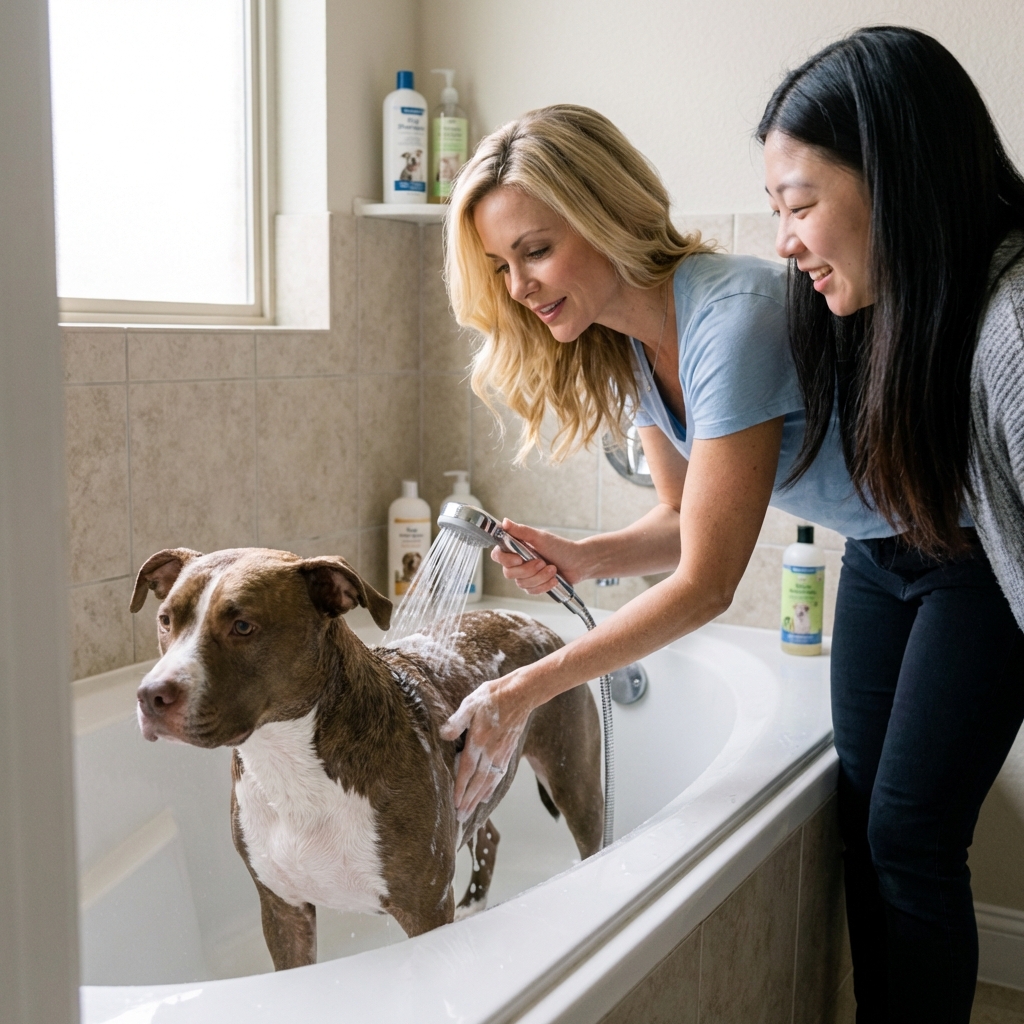
1) Bathe with a purpose
- For allergy-prone dogs, bathing 1 to 2 times per week during flare season can help physically remove allergens from the coat.
- Use a gentle, dog-specific shampoo. If your vet prescribes a medicated shampoo, follow the contact time directions (often 5 to 10 minutes).
- Rinse extremely well. Residue can worsen itching.
- If your dog seems drier or itchier after frequent baths, scale back and ask your vet what schedule is best for your dog.
2) Wipe paws and belly after outdoor time
A quick rinse or wipe down after walks can reduce pollen and grass exposure. Focus on paws, between toes, belly, and armpits. Choose fragrance-free, alcohol-free products when possible.
3) Manage licking and chewing
- Use an e-collar or recovery cone during active flare-ups if needed. It is not mean, it is skin protection.
- Keep nails short to reduce self-trauma from scratching.
4) Support the skin barrier
- Ask your veterinarian about omega-3 fatty acids (EPA/DHA). These can improve skin and coat health and may reduce inflammation over time.
- Consider vet-recommended topical barrier products, especially for dogs with recurring dermatitis.
5) Clean the environment
- Wash bedding weekly with fragrance-free detergent.
- Vacuum frequently, especially if dust mites are a trigger.
- Use unscented household cleaners when possible.
Food tips
Nutrition is not the only cause of skin disease, but it can be part of the solution. The biggest mistake I see is constant diet switching without a plan. That makes it harder to identify the trigger and can upset your dog’s stomach.
When food allergy is suspected
Talk with your vet about a strict elimination trial using either a prescription hydrolyzed diet or a truly novel protein diet. During the trial:
- Feed only the trial diet for 8 to 12 weeks (no flavored medications, no treats unless approved).
- Use the same diet consistently. “Almost strict” does not give reliable results.
- Track itch level weekly so you can see trends.
- If your dog improves, your vet may recommend a controlled challenge to confirm the diagnosis.
Helpful add-ons (with vet approval)
- Omega-3s (fish oil) for skin inflammation support
- Probiotics for some dogs with allergies or sensitive digestion
- Whole-food toppers only if you are not in the middle of an elimination trial
If you are interested in homemade feeding, it can be done safely, but it should be balanced. For itchy dogs, I recommend working with your veterinarian or a board-certified veterinary nutritionist so you are not accidentally creating deficiencies while trying to “eat clean.”
What not to do
- Do not diet hop every couple of weeks. It can backfire and makes food allergy harder to sort out.
- Do not stop flea control just because you do not see fleas. One bite can trigger a major flare in sensitive dogs.
- Do not use OTC antibiotics, antifungals, or steroid creams without guidance. Some products can worsen infections or cause irritation.
- Avoid essential oils and heavily fragranced products. They can irritate skin and some are toxic if licked.
- Do not share human medications (including antihistamines or pain meds) unless your veterinarian tells you the exact product and dose.
When it is urgent
Please contact your veterinarian promptly if you notice any of the following:
- Swollen face, muzzle, or eyelids
- Difficulty breathing or vomiting after a suspected allergic reaction
- Rapidly spreading hives
- Open sores, draining wounds, or significant bleeding
- Severe lethargy, fever, or loss of appetite with skin symptoms
- Ear pain with head tilt or loss of balance
A simple flare plan
If your pit bull-type dog has recurring skin issues, ask your vet for a written plan you can follow. In many homes, a plan like this reduces stress and prevents small problems from becoming full infections:
- Step 1: Start allergy wipes or rinses after outdoor exposure.
- Step 2: Bathe with the recommended shampoo schedule.
- Step 3: Use prescribed anti-itch medication when flares begin (as directed) .
- Step 4: If odor, greasy skin, pustules, hot spots , or ear debris appear, schedule a recheck for cytology.
- Step 5: Stay consistent with flea prevention year-round.
Most pit bull-type dogs do not need perfection. They need consistency. Once you find the combination that works for your dog, the skin can calm down beautifully.