
Pica in Cats: Why Cats Eat Non-Food Items

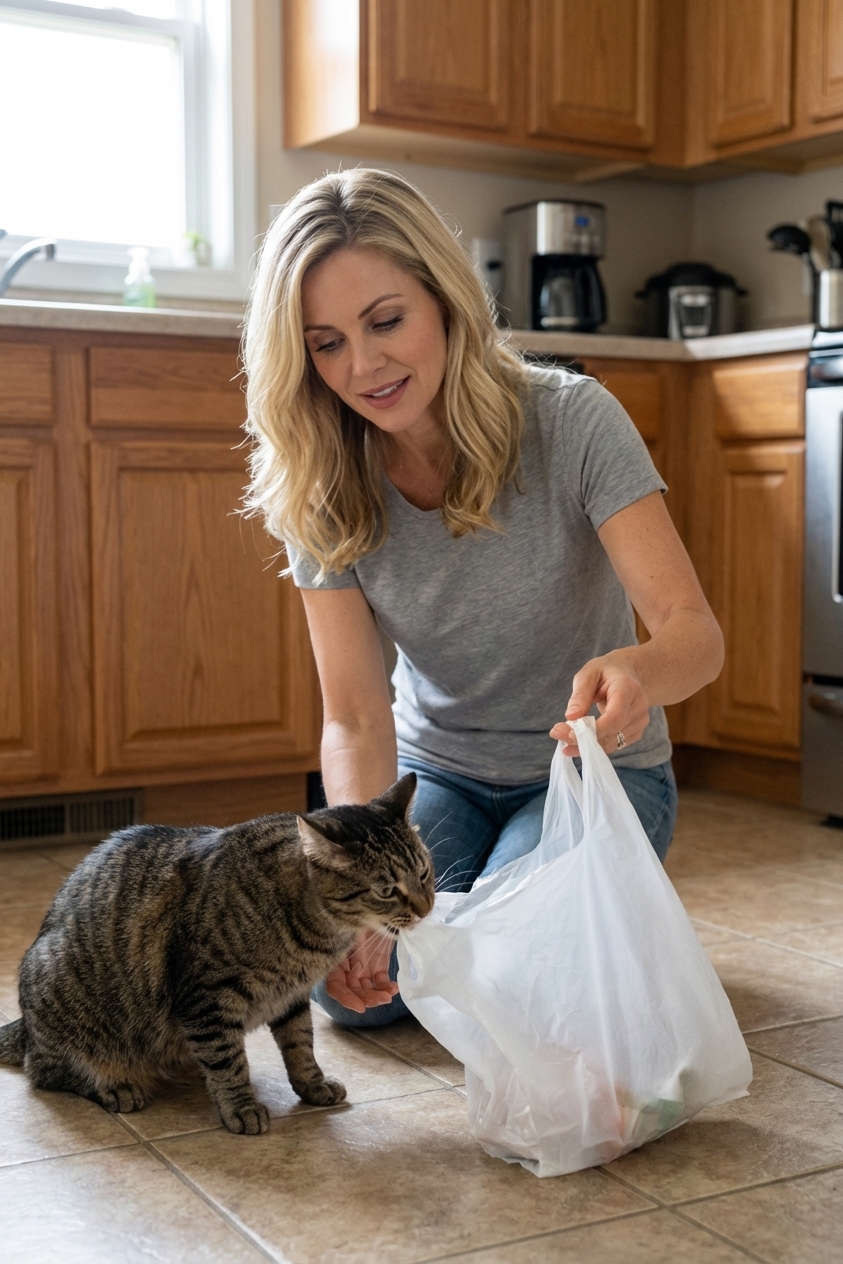
If you have ever caught your cat chewing on plastic, licking the shower curtain, swallowing string, or munching on cardboard, you are not alone. This behavior is called pica, and it can range from mildly annoying to truly dangerous.
As a veterinary assistant, I want to reassure you and still be very clear: pica is common, and it is also a reason to take action. Some items can cause choking, dental injury, toxin exposure, and life-threatening intestinal blockages. The good news is that with the right plan, many cats improve a lot.
Quick note: This article is educational and not a substitute for veterinary care. If you think your cat swallowed something unsafe, contact a veterinarian right away.
What is pica in cats?
Pica is the repeated chewing, sucking, licking, or eating of non-food items. Some cats only mouth objects. Others actively swallow them, which is when the risk spikes.
Pica vs normal chewing
Some chewing can be normal play or exploration, especially in kittens. Pica is more concerning when it is repetitive, targeted (your cat seeks the same material over and over), hard to interrupt, or involves swallowing.
Common non-food items cats go after
- Fabric and wool: sweaters, blankets, socks, carpet
- Stringy items: yarn, ribbon, hair ties, dental floss, thread, tinsel
- Plastics: bags, packaging, shrink wrap, shower curtains
- Paper products: tissues, cardboard, toilet paper
- Foam and rubber: earplugs, toy stuffing, bands, shoe soles
If your cat focuses on one specific texture, that pattern can help your veterinarian narrow down causes and create a safer home setup.
Why pica matters
Many “weird cat habits” are harmless. Pica is different because the consequences can be severe.
Potential complications
- Intestinal blockage (foreign body obstruction)
- Linear foreign body from string, yarn, ribbon, floss, tinsel, or thread, which can cut into the intestines
- Choking or airway obstruction
- Tooth fractures and oral trauma
- Toxin exposure from glues, dyes, detergents, and certain plastics
String-like items are high risk. If you see string hanging from your cat’s mouth or rear end, or you suspect they swallowed it, seek emergency veterinary care and do not pull it. Pulling can cause internal tearing.
If you simply found chewed string but did not witness swallowing and your cat seems normal, call your vet promptly for guidance and monitor closely.
Medical causes of pica
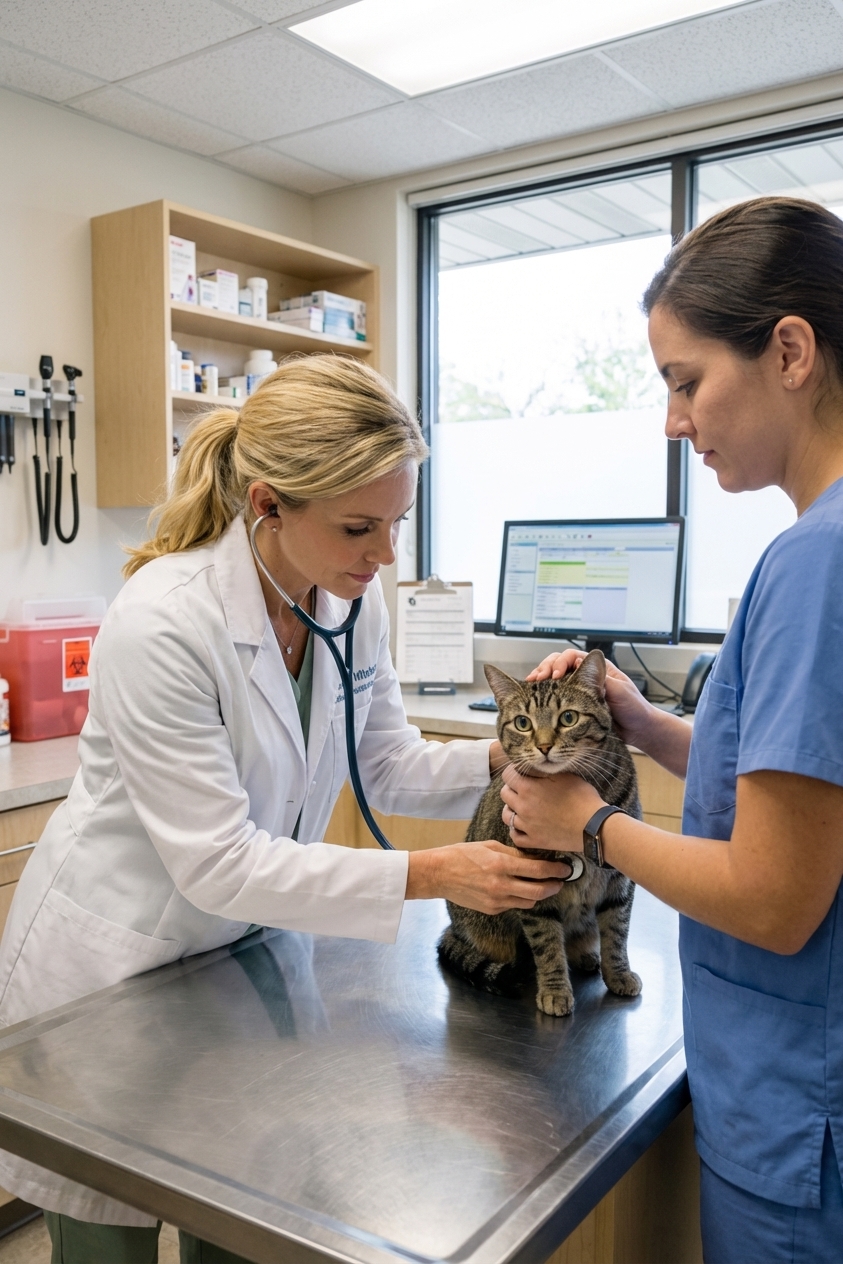
Pica can be behavioral, but it can also be a clue that something physical is going on. A vet visit is especially important if pica is new, escalating, or paired with vomiting, weight loss, diarrhea, or decreased appetite.
Diet and nutrient issues
In cats, true nutrient deficiencies are possible but not the most common reason for pica. Still, diet can matter, and it is worth a review, especially if the behavior is new or your cat is always hungry.
Potential contributors include:
- Unbalanced diet (especially unbalanced homemade diets)
- Iron deficiency anemia or other medical issues affecting appetite and cravings
- Satiety and feeding setup: very small meals, long gaps between meals, or low-volume diets that leave some cats persistently hungry
Your vet may recommend a diet change, a prescription diet, and labwork to look for anemia and other problems.
Gastrointestinal disease and nausea
GI discomfort can drive licking and chewing as self-soothing. Conditions sometimes linked to pica-like behaviors include:
- Inflammatory bowel disease (IBD)
- Food intolerance or food allergy
- Parasites (more common in kittens or outdoor cats)
- Chronic nausea from kidney disease, liver disease, pancreatitis, or hyperthyroidism
Some cats that chew plastic may be responding to nausea or reflux. Addressing the underlying GI issue can reduce the behavior dramatically.
Dental pain or oral disease
Chewing odd items can also be a sign of oral discomfort. Cats are masters at hiding mouth pain.
- Resorptive lesions
- Gingivitis and periodontal disease
- Broken teeth or oral ulcers
If your cat has bad breath, drools, paws at the mouth, drops food, chews on one side, cries when eating, avoids hard food, or stops grooming, ask your vet about an oral exam and dental x-rays.
Other medical contributors
- Neurologic disease (less common, but possible)
- Medication effects that increase appetite or restlessness
- Pregnancy or growth (kittens may mouth objects as they explore)
Behavioral causes of pica
When medical causes are ruled out or treated and the habit remains, we look at behavior and environment. Many pica cats are doing some form of self-soothing, hunting practice, or stress coping.
Anxiety and stress
Cats can develop pica during stressful changes such as:
- Moving homes
- New baby or new pet
- Schedule changes
- Conflict with another cat
- Lack of safe hiding or vertical space
Chewing, sucking, and licking can be self-soothing for some cats, and over time the behavior can become a strong habit.
Boredom and under-stimulation
Indoor cats, especially young cats, often need more enrichment than we realize. If there is not enough play, climbing, and “hunting,” cats may redirect energy to chewing and shredding.
Compulsive behavior
Some cats develop repetitive behaviors that look like compulsions. Pica can overlap with overgrooming, tail chasing, and other repetitive habits. These cases often benefit from a combined plan: environment changes plus veterinary guidance, and sometimes medication.
Breeds at higher risk
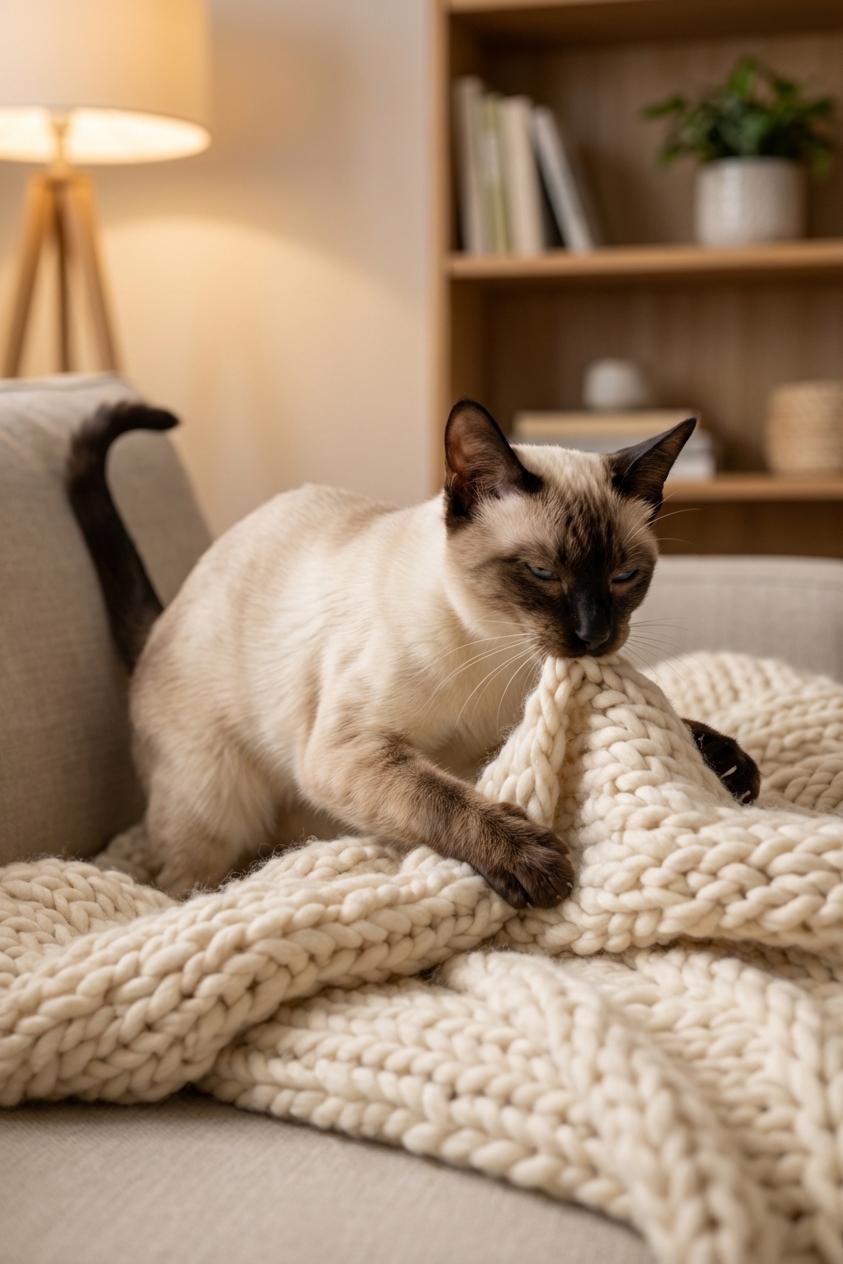
Pica can happen in any cat, but some breeds are known for higher rates, especially of wool-sucking and fabric chewing.
- Siamese
- Burmese
- Oriental Shorthair
- Tonkinese
In these cats, pica may show up young and can be strongly texture-driven. That does not mean you are stuck with it. It just means management and enrichment are extra important.
How vets diagnose pica
If your cat is swallowing non-food items, a veterinary exam is the safest next step. Bring details. The more specific you are, the faster your team can help.
Helpful information to share
- What items your cat targets and whether they chew, suck, lick, or swallow
- How often it happens and when it started
- Any vomiting, gagging, diarrhea, constipation, appetite change, or weight change
- Diet brand, treats, supplements, and feeding schedule
- Recent stressors or household changes
Possible tests
- Oral exam and dental evaluation
- Fecal testing for parasites
- Bloodwork to screen for anemia, kidney disease, thyroid disease, inflammation
- X-rays and or ultrasound if obstruction is suspected
One thing to know: some swallowed items (like certain plastics, fabric, and string) may not show clearly on x-rays. Your vet may recommend ultrasound or other imaging based on symptoms and exam findings.
If your cat swallowed something recently, do not wait to “see if it passes.” Early intervention is often simpler and safer.
How to stop pica
Most successful plans combine three things: make the environment safer, meet the cat’s needs, and reduce access to the trigger item. Here is where I like to start with families.
1) Make pica items hard to access
- Put string, yarn, ribbons, hair ties, rubber bands, and floss in closed drawers or bins
- Use lidded laundry hampers and keep closets closed
- Store plastic bags in a cabinet, not under the sink where they are easy to reach
- Cover cords if your cat chews wiring
- Choose cat toys that are durable and sized appropriately, and discard toys that shed pieces
Safety is not a failure. It is step one.
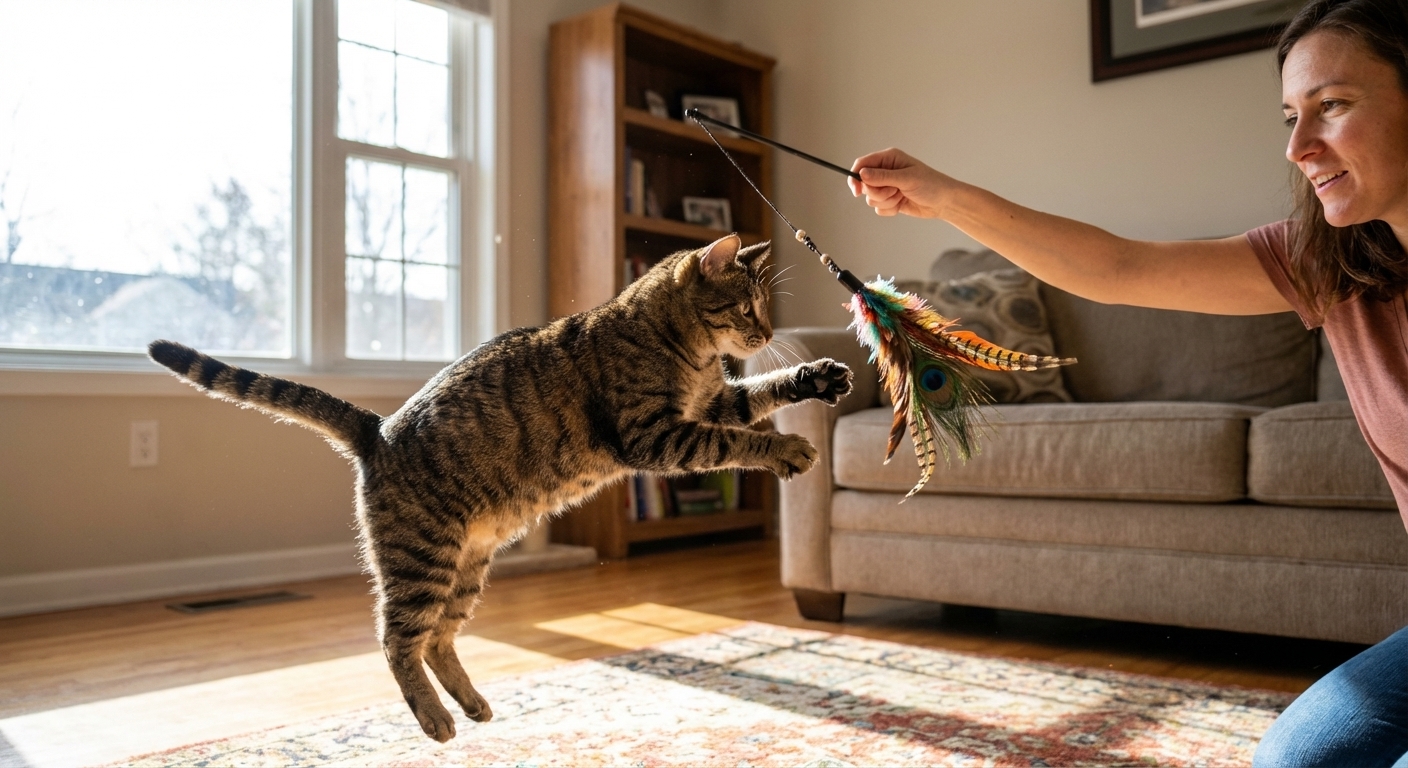
2) Add daily play that mimics hunting
A simple routine can reduce chewing urges fast, especially in young cats.
- Do two short play sessions daily (5 to 10 minutes each)
- Use wand toys to encourage stalking, chasing, and pouncing
- End with a small meal or treat to complete the hunt cycle
Safety tip: do not leave wand toys, string toys, or ribbon toys out unattended.
3) Use food enrichment
- Offer part of meals in puzzle feeders
- Scatter kibble in safe locations for “foraging” if your cat eats dry food
- Use lick mats with vet-approved wet food for cats that lick and chew to self-soothe
4) Support stress reduction
- Provide vertical space like cat trees and shelves
- Offer at least one quiet hiding spot per cat
- Keep litter boxes clean and accessible, and follow the common guideline of one box per cat plus one extra
- Consider pheromone diffusers if your vet recommends them
5) Train a safe redirect
When you catch pica in the moment, avoid punishment. Yelling can add stress and make the habit worse. Instead:
- Calmly remove the object if safe to do so
- Immediately offer an approved alternative like a treat puzzle, a chew-safe cat toy, or a play session
- Reward engagement with the appropriate item
6) Review the diet with your veterinarian
If your cat is hungry all the time, losing weight, vomiting, or has chronic soft stools, pica can be a symptom. A diet adjustment can be a game-changer.
- Ask whether a different life-stage diet is needed
- Discuss a GI-support diet if nausea or IBD is suspected
- If you feed homemade, ask about balancing to meet feline requirements, including taurine and essential vitamins and minerals
7) Medication and behavior therapy
For true compulsive cases, your veterinarian may discuss anti-anxiety medication or referral to a veterinary behaviorist. This is not “giving up.” It is treating brain and behavior health the same way we treat the gut or the skin.
What not to do
- Do not pull string from the mouth or rear end
- Do not induce vomiting unless a veterinarian instructs you to
- Do not punish pica. It can increase stress and make the behavior worse
- Do not rely on bitter sprays without vet guidance. Some cats ignore them, and some products are not meant for cats
- Do not offer unsafe “chews” meant for dogs, bones, or hard objects that can fracture teeth
Tracking helps
If pica is ongoing, keep a simple log for 1 to 2 weeks. Track the item, time of day, what happened right before (meal timing, visitors, another pet interaction), and whether your cat swallowed anything. This can reveal patterns you can fix, and it gives your vet better clues.
What to expect long-term
Many cats improve with home-proofing and enrichment. Some will relapse during stressful periods, which is a sign to tighten management and check in with your veterinarian.
When pica is an emergency
Contact an emergency veterinarian right away if you notice any of the following:
- Repeated vomiting or retching
- Not eating for 12 to 24 hours, or any sudden appetite drop (sooner if your cat is young, elderly, or has other symptoms)
- Lethargy, hiding, or obvious abdominal pain
- Constipation, straining, or no stool
- Drooling, gagging, or trouble breathing
- You suspect your cat swallowed string, ribbon, floss, tinsel, or thread
- A known ingestion of plastic, foam, or toy pieces
If you can, bring the packaging or a similar sample of the item to the clinic. It helps your vet choose the best imaging and treatment plan.
Quick checklist
- Schedule a vet check if pica is new or worsening
- Remove access to string-like items as much as possible
- Lock up plastics, laundry, and craft supplies
- Play twice daily and finish with a small meal
- Use puzzle feeding to reduce boredom
- Create calm spaces, vertical territory, and predictable routines
- Track episodes so you can spot triggers
Pica can be scary, but you do not have to figure it out alone. With safety changes at home plus a medical and behavioral plan, most cats can improve and many stop entirely.