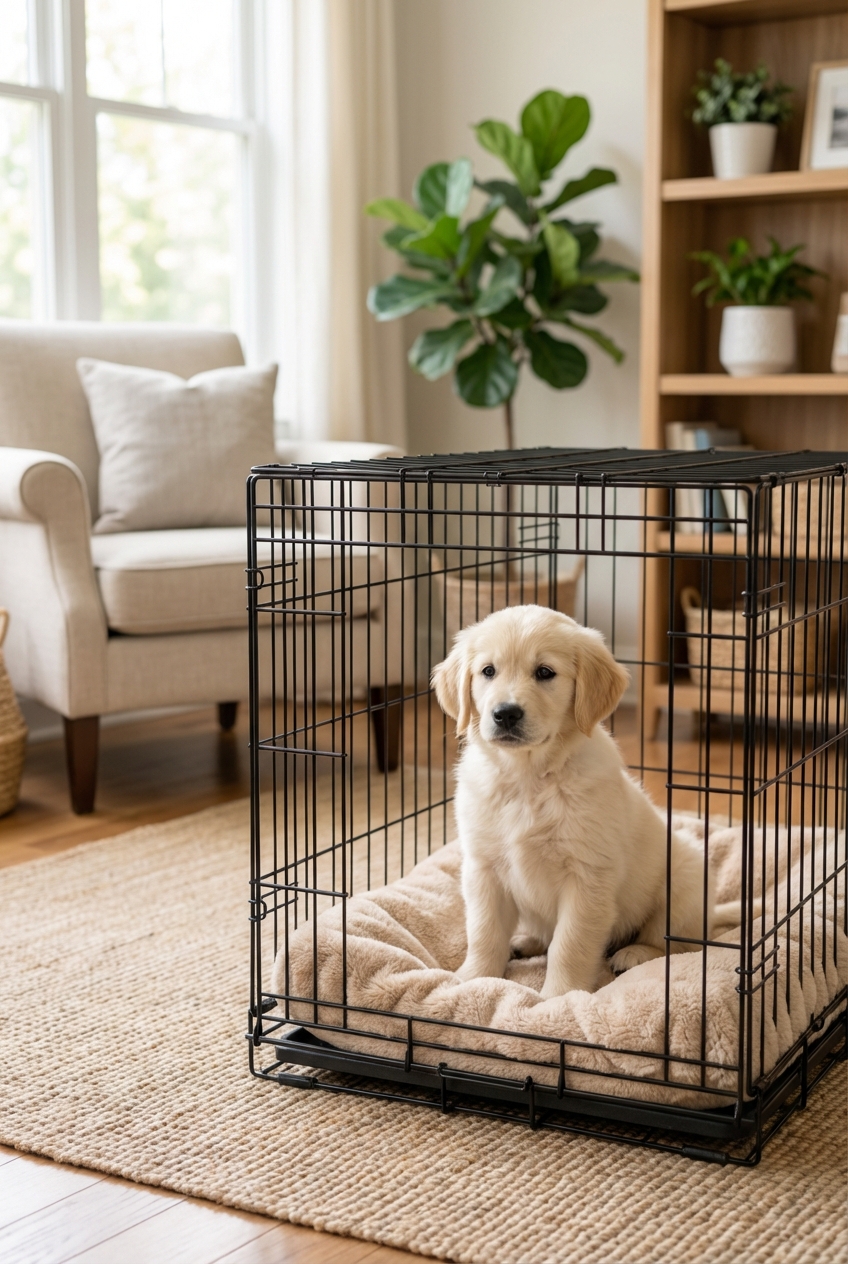
A step-by-step puppy crate training guide: choosing the right crate, building positive associations, first-week routines, nighttime potty breaks, and solutio...
Article
•
Designer Mixes
Pet-Lover’s Crate Train Puppy Care Tips

Shari Shidate
Designer Mixes contributor
Crate training can be one of the kindest, most practical gifts you can give a puppy. When it’s done thoughtfully, a crate becomes a safe little den where your pup can settle, nap, and learn calm independence. It also helps you prevent accidents, protect your home, and build a predictable routine that makes puppies feel secure.
As a veterinary assistant in Frisco, Texas, I’ve seen this truth over and over: most “crate problems” are really routine problems or comfort problems, not a stubborn puppy. For example, an overtired pup who missed a nap, a puppy crated a bit too long after dinner, or a crate set up in a busy, noisy spot can all look like “crate refusal.” Let’s make the crate feel safe, not scary, and set your puppy up for success.
Start with the right crate setup
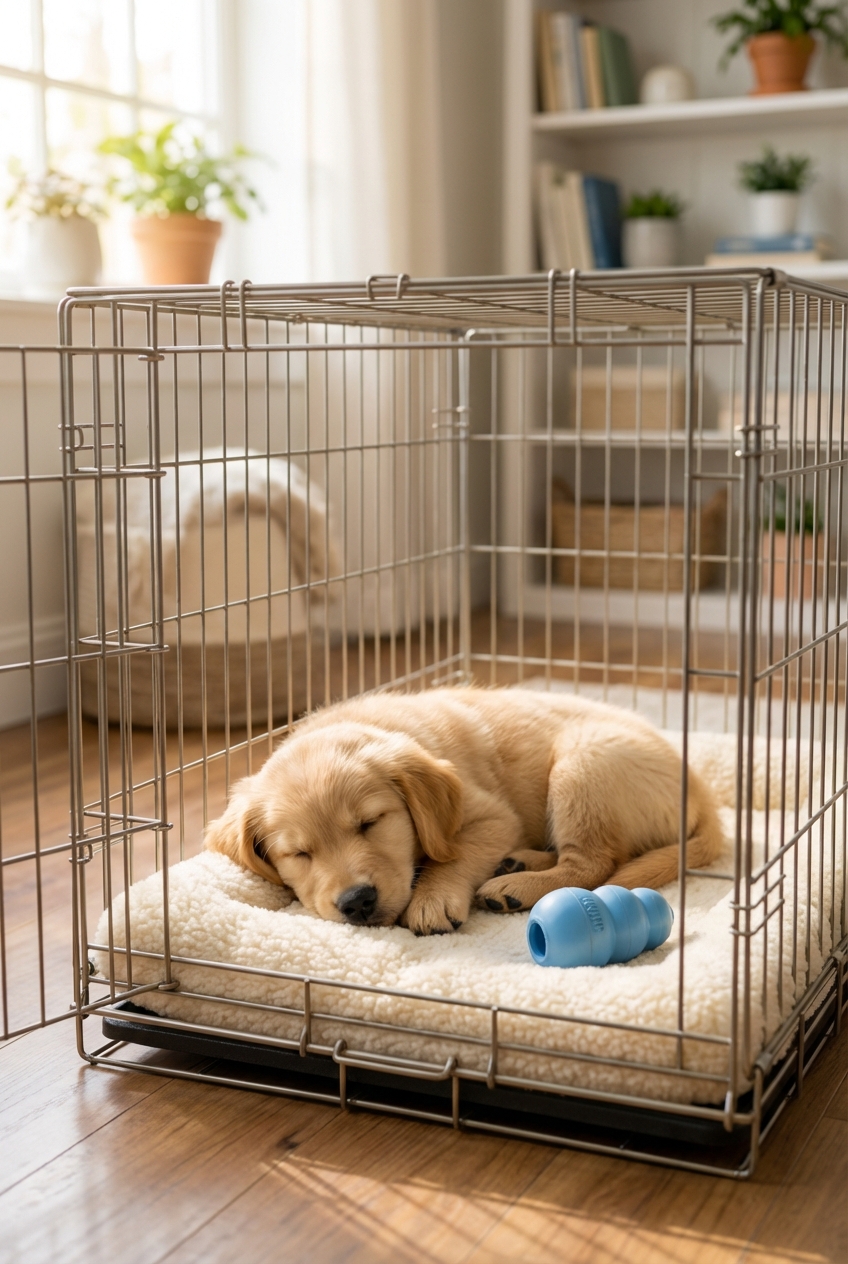
The crate should feel cozy, clean, and predictable. Think “bedroom,” not “time-out zone.”
Choosing the crate
- Size matters: Your puppy should be able to stand up, turn around, and lie down comfortably. Too large can encourage pottying in one corner.
- Wire vs. plastic: Wire crates offer airflow and visibility. Plastic crates can feel den-like and calmer for some puppies. Both can work well.
- Use a divider: If you have a large breed puppy, a divider lets the crate “grow” with them and supports potty training.
Comfort and safety basics
- Bed or mat: Start simple. Some puppies chew bedding, so you may need a flat mat or even a towel at first.
- Water: For longer crating periods, consider a crate-safe water bowl that clips to the side.
- Safe chew: A puppy-appropriate chew or stuffed rubber toy can make crate time feel rewarding.
- Location: Place the crate near the family activity during the day, and near your bed at night in the early weeks.
Safety note: Avoid leaving collars or harnesses on while crated. They can snag and become a serious hazard.
Make the crate a happy place
Crate training goes best when your puppy chooses the crate willingly. You are building an emotional association: crate equals calm, comfort, and good things.
Quick wins
- Feed meals near the crate: Start just outside the door. Over a few meals, move the bowl inside.
- Toss treats in and let your puppy come out: No tricks, no shutting the door at first.
- Add a cue: A gentle “kennel” or “crate” cue can help your puppy understand what you’re asking.
- Practice short, calm closures: Close the door for 5 to 10 seconds while they’re chewing, then open it before they worry. Repeat a few times, then slowly build to 20 seconds, 45 seconds, and a minute over multiple sessions.
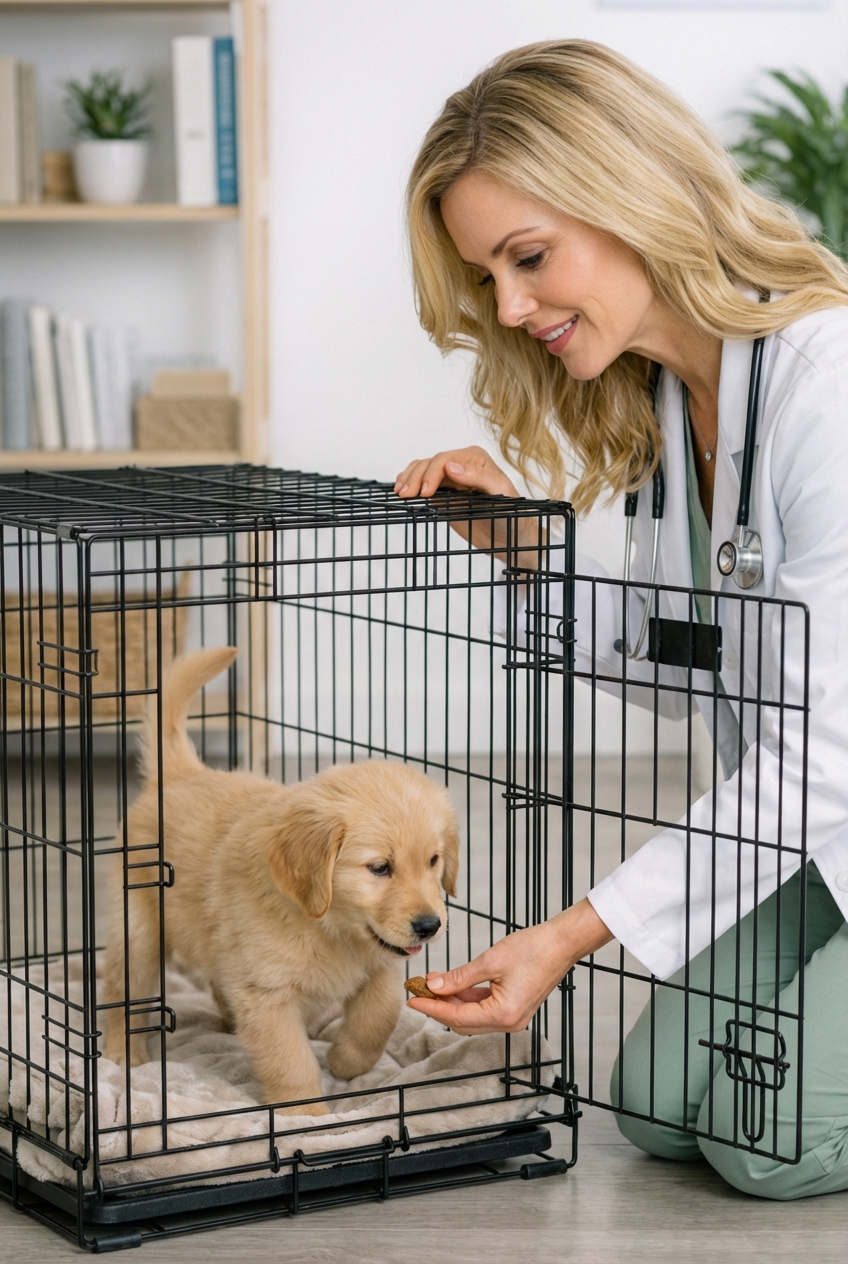
Progress is measured in calm seconds first, then calm minutes. Rushing is what creates fear and frustration.
A simple crate schedule
Puppies thrive on predictable cycles: potty, play, food, calm, sleep. Most crate training becomes easier when you schedule crate time around natural nap times, not around your puppy’s peak energy.
Sample daytime rhythm
- Wake up: Potty break immediately
- Play and training: 10 to 20 minutes, then a short calm-down
- Crate nap: 45 to 90 minutes (varies by age and energy)
- Repeat: Potty, play, potty, nap
Nighttime basics
- Last call potty: Right before bed, same spot, low excitement
- Keep nights boring: If your puppy needs a potty break, no playtime, no bright lights
- Set them up to succeed: Many young puppies need at least one nighttime potty break at first
If you’re wondering how long is “too long,” you may hear the rule of thumb of about one hour per month of age, but it is not a hard standard. It varies by breed, individual puppy, and whether they’re asleep or awake.
- When awake: very young puppies often need a potty break every 1 to 2 hours.
- Overnight: many puppies can go longer stretches because they are sleeping, but some still need a break.
When in doubt, err on the side of more frequent potty breaks and shorter, successful crate sessions.
Potty training and the crate
Crates support potty training because many puppies avoid soiling where they sleep, but not all do. Puppies who had to potty where they slept earlier in life (like some pet store or puppy mill situations) may need extra patience and a tighter routine.
Take your puppy out
- Right after waking up
- After eating
- After playtime or zoomies
- After a training session
- Before and after crate time
Accidents happen. If your puppy has an accident in the crate, it usually means the time frame was too long, the crate was too big, or your puppy is dealing with stress or a digestive issue. Clean with an enzymatic cleaner and adjust the routine, not the puppy.
If your puppy cries in the crate
Crying can mean several things: they need to potty, they are overtired, they feel lonely, or they have learned that noise brings attention. Your response should be calm, consistent, and based on likely needs.
Troubleshooting steps
- Rule out potty first: If it’s been a while, take them out on leash for a quick potty break with minimal interaction.
- Check the basics: Temperature, bedding comfort, and whether something is poking or noisy.
- Use a calm cue: A soft “settle” can help, but avoid exciting chatter.
- Reward quiet: Wait for 2 to 3 seconds of quiet, then calmly praise or drop a treat. As your puppy improves, stretch that to 5 seconds, 10 seconds, and beyond.
Please avoid: letting a puppy out while they are actively screaming unless you truly believe it is a potty emergency. If you open the door during the loudest moment, many puppies learn that crying is the key that unlocks freedom.
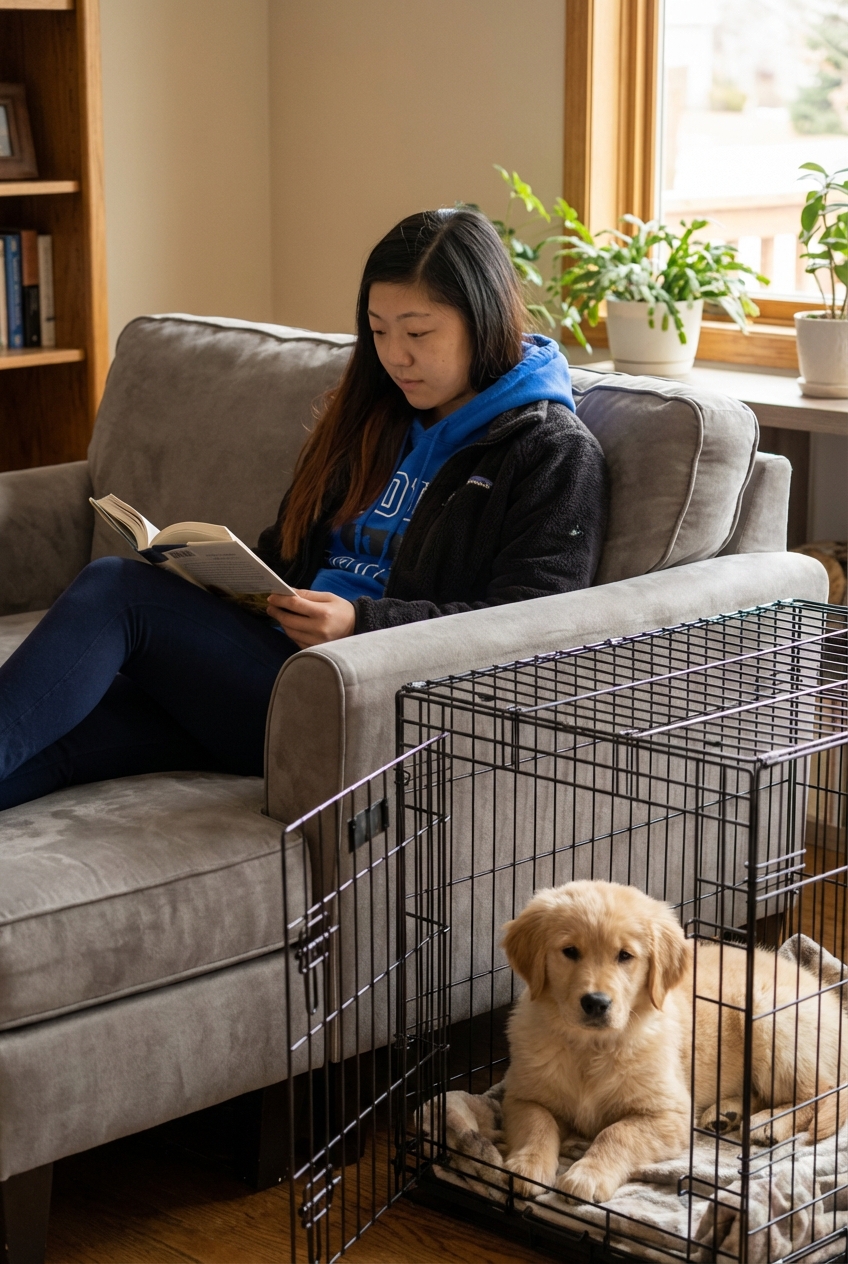
Crate training do’s and don’ts
Do
- Keep crate time paired with something positive like a stuffed toy or a small chew
- Practice short sessions during the day so the crate is not only for nighttime
- Build calm routines before crating: potty, water sip, quick cuddle, then crate
- Use a consistent phrase like “kennel” and reward your puppy for going in
Don’t
- Use the crate primarily for punishment
- Crate a puppy who has not had enough potty breaks and age-appropriate movement
- Leave unsafe items inside (anything that can be shredded and swallowed)
- Expect your puppy to self-soothe instantly without gradual practice
Transition and alternatives
Moving the crate
If your puppy sleeps best near you at first, that’s okay. When you’re ready to move the crate, do it gradually: move it a few feet farther away every couple of nights, or move it to the doorway, then the hall, then the final spot. Keep the bedtime routine the same.
Cover and sound
- Crate cover: Some puppies settle better with a partial cover for privacy, but keep plenty of ventilation and stop if your puppy seems hotter or more anxious.
- White noise: A fan or white noise can help some puppies relax, especially in busy homes.
If a crate is not the right fit
Some puppies do better with an exercise pen, a puppy-proofed room, or a gated area, especially if they show panic-level distress. The goal is always the same: safe confinement that supports rest and learning.
Health and safety tips
Crate training intersects with health more than people realize. When your puppy is comfortable, they rest better, stress less, and learn faster.
Keep your puppy comfortable
- Vaccination timing: Until your veterinarian says it’s safe, avoid high-traffic dog areas for potty breaks. Choose a low-risk, low-dog-traffic spot your vet agrees is appropriate. Be extra cautious with shared apartment lawns or unknown areas.
- Parasite prevention: Puppies commonly pick up intestinal parasites. Follow your vet’s deworming and fecal testing plan.
- Watch for stress diarrhea: New homes can cause temporary tummy upset. If diarrhea is persistent, watery, bloody, or your puppy is lethargic, call your veterinarian.
- Overheating risk: Never cover a crate in a way that traps heat, especially in Texas summers.
Red flags: vomiting, repeated diarrhea, refusal to eat, labored breathing, swollen face, or sudden extreme lethargy. Those warrant a vet call right away.
FAQ
Should I ignore crying?
Start by ruling out potty needs and discomfort. After that, focus on teaching calm: reward brief quiet moments and build duration. “Cry it out” is not a training plan for a distressed puppy.
Is it okay to crate during the day?
Yes. In fact, short daytime sessions help your puppy learn that the crate is part of normal life, not just nighttime separation.
What if my puppy hates the crate?
Slow down and go back to easy wins: meals near the crate, treats in and out, and very short closures. If you see panic, heavy drooling, or escape attempts that risk injury, skip longer crating and get professional help.
When to get help
If your puppy panics in the crate, drools heavily, injures their mouth trying to escape, or has intense separation distress, you’re not failing. You’re seeing a real behavior and welfare issue that deserves support.
- Talk with your veterinarian to rule out pain, GI issues, or other medical factors.
- Ask for a referral to a credentialed trainer or a veterinary behaviorist.
- In the meantime, focus on gradual training and shorter, successful crate sessions.
Most puppies can learn to love their crate, but we always want to honor what your individual puppy is telling you.
The bottom line
Crate training is not about control. It’s about building trust, supporting potty training, and giving your puppy a calm space to rest. Start slow, keep it positive, and let routine do the heavy lifting.
With consistency, your puppy will learn: the crate is safe, you always come back, and good naps are part of growing up.