Follow your puppy’s growth from neonatal to young adult with a clear timeline, what’s normal at each age, training and socialization tips, teething help,...
Article
•
Designer Mixes
Pet-Friendly Puppy Milestones Care & Training Tips

Shari Shidate
Designer Mixes contributor
Puppies grow fast, and the early weeks can feel like a blur of naps, zoomies, and learning curves. The good news is that most puppy challenges are normal developmental milestones, not “bad behavior.” When you know what to expect and how to respond, you can keep your home pet-friendly, your puppy confident, and your training moving forward in a calm, evidence-based way.
Puppy milestones by age
Every pup develops at their own pace, and breed and size matter. A Great Dane puppy’s timeline can look different from a small mixed-breed or toy breed puppy. Use these ranges as a guide, and check in with your veterinarian if anything feels off.
8 to 10 weeks: settling in
- What you may notice: frequent napping, short bursts of play, mouthy behavior, and some homesickness or whining.
- Your focus: gentle routines, lots of reinforcement for calm behavior, and short training sessions (30 to 90 seconds at a time).
- Key training goals: name recognition, coming when called indoors, start crate comfort, start “touch” (nose to hand), and begin handling practice (paws, ears, collar).
10 to 16 weeks: socialization and exposure
This is a critical period in puppy brain development. Many behavior professionals describe the primary socialization window as closing around 12 to 14 weeks for most puppies, so earlier is better. Positive exposure now can reduce fear later. Socialization means safe, positive experiences, not flooding your puppy with chaos. Some early exposure may have started with the breeder or rescue, and you can build on that work.
- What you may notice: curiosity, confidence gains, sudden startle responses, and more energy.
- Your focus: controlled introductions to sights, sounds, surfaces, gentle people, and friendly dogs. Keep sessions short and end on a win.
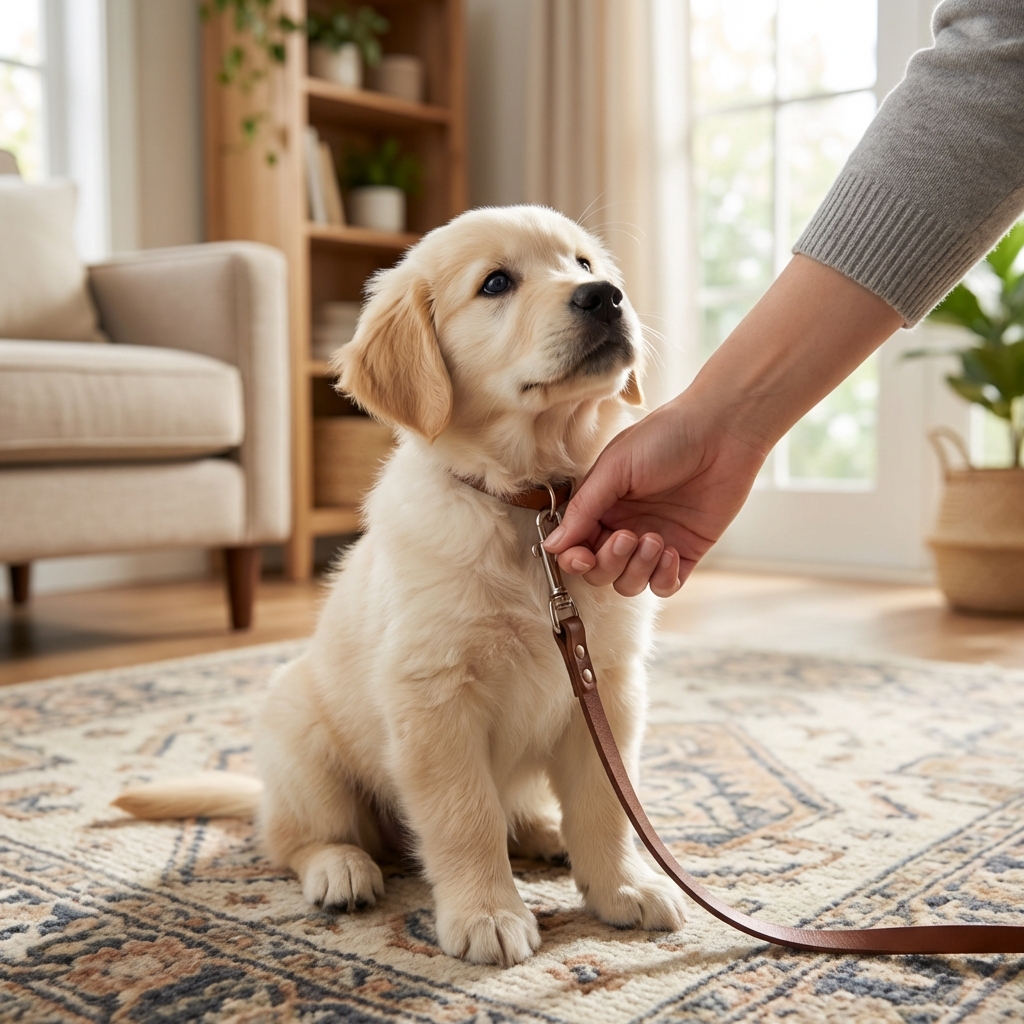
- Key training goals: loose-leash foundations, “leave it,” “drop it,” and polite greeting skills.
4 to 6 months: teething
- What you may notice: intense chewing, chewing that targets hands, and selective listening as confidence grows.
- Your focus: management plus training. Prevent habits before they become patterns.
- Key training goals: strengthen recall, reward calm on a mat, and build impulse control with simple games.
6 to 18 months: adolescence
Adolescence is real. Your puppy is not trying to dominate you. Their brain is developing, hormones may be involved, and the world is suddenly more distracting.
- What you may notice: new fears, boundary testing, increased pulling, and more interest in other dogs and smells.
- Your focus: consistency, enrichment, and realistic expectations. Increase exercise thoughtfully and protect joints for large breeds.
- Key training goals: proofing cues around distractions, cooperative care skills, and structured calm in busy environments.
Pet-friendly home setup
A pet-friendly home is not just “cute.” It is safety, prevention, and sanity. The more you manage your environment, the less you have to correct.
Must-have basics
- Crate or exercise pen: a safe spot for naps, decompression, and preventing chewing practice.
- Baby gates: to create puppy-safe zones and protect other pets’ space.
- Chew options in different textures: rubber, softer nylon-type, and edible chews sized appropriately.
- Enrichment feeders: snuffle mats, slow feeders, and food puzzles to turn meals into training.
- Non-slip rugs: especially for energetic pups and slippery floors.
Puppy-proofing checklist
- Hide cords and use cord covers where possible.
- Store medications, xylitol-containing items (gum, some peanut butters), and cleaning products in closed cabinets.
- Keep laundry, socks, and kids’ toys off the floor to reduce foreign body risks.
- Use lidded trash cans and block off litter boxes if you have cats.
- Confirm houseplants are non-toxic. Many common plants can cause GI upset or worse.
Making it safe for other pets
If you have a resident dog or cat, give them a puppy-free escape zone. This lowers stress and helps prevent conflict. Separate feeding stations and supervise every interaction until you have a consistent history of calm behavior.
Training tips you can rely on
As a veterinary assistant, I see how training affects health. Stress, fear, and punishment-based methods can increase anxiety and make handling at the vet harder. Reward-based training supports confidence, trust, and reliable behavior.
One quick note that helps many households: young puppies often need a lot more sleep than we expect. Many do best with roughly 18 to 20 hours of sleep per day early on. An overtired puppy is more likely to bite, zoom, and melt down.
Keep sessions short
A puppy’s attention span is tiny. Aim for 3 to 5 mini-sessions per day, each 1 to 3 minutes long.
Use the “yes, then reward” rhythm
- Mark the behavior with a cheerful “yes” (or a clicker).
- Reward immediately with a tiny treat, toy, or praise.
- Repeat in easy environments before adding distractions.
Teach these cues early
- Come: start indoors, reward heavily, never punish after they come to you.
- Leave it: helps prevent grabbing unsafe items.
- Drop it: trade item for treat, do not chase your puppy.
- Place or mat: teaches settling and reduces jumping and underfoot chaos.
Potty training basics
Most potty training is not about intelligence. It is about timing, consistency, and supervision.
- Take your puppy out after waking, after eating, after play, and at least every 1 to 2 hours at first.
- Optional rule of thumb (approximate): many puppies can hold it for about their age in months plus 1 hour, but younger puppies often need more frequent trips.
- Reward the moment they finish outside.
- Accidents are information. Clean with an enzymatic cleaner and adjust your schedule.
Crate training, low stress
- Feed meals near the crate, then inside the crate.
- Use a stuffed food toy for calm crate time.
- Start with short durations while you are home.
- If crying escalates, reassess. You may have progressed too quickly.
Exercise guardrails
- Prioritize sniffy walks, training games, and food puzzles over long runs.
- Avoid forced running, repetitive jumping, and hard-impact exercise, especially for growing puppies and large breeds.
- If your puppy seems “wild,” try rest and enrichment before adding more physical exercise.
Chewing, biting, and teething
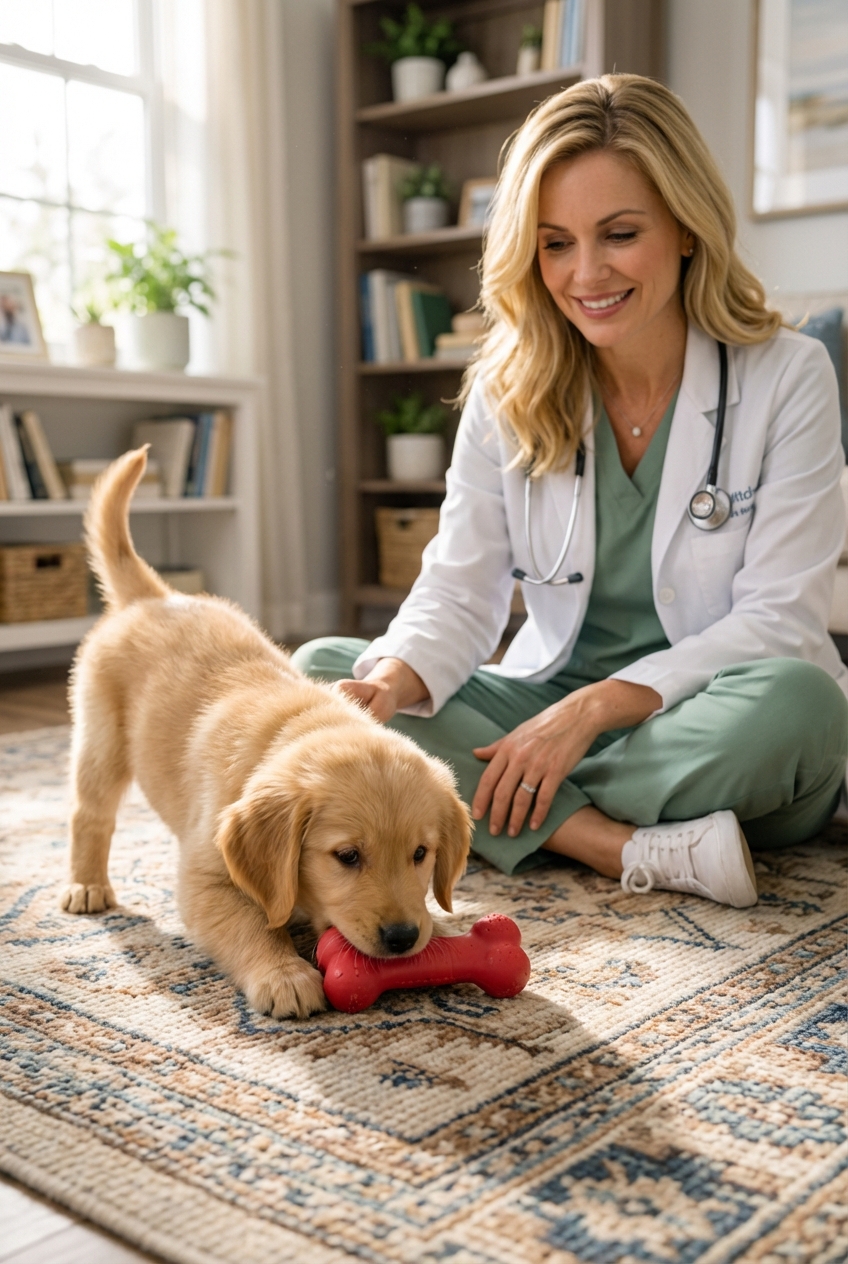
Mouthing is normal puppy behavior, especially during teething. Your goal is to teach what to bite and what not to bite, without scaring your puppy.
When your puppy bites hands
- Redirect: calmly offer a chew toy.
- Reinforce gentle: reward when teeth are off skin.
- Use short time-outs: if the puppy is overstimulated, move them to a pen with a chew for 30 to 60 seconds.
- Increase naps: overtired puppies get extra mouthy.
Chews: safety first
- Choose chews that are size-appropriate and not brittle.
- Quick safety check: if you cannot make an indent with a fingernail, it may be too hard for puppy teeth (and even adult teeth).
- Supervise edible chews and remove small choking pieces.
- Stop and reassess if you notice gum bleeding, cracked teeth, or chews splintering.
- Ask your veterinarian if you are unsure what is safe for your puppy’s teeth.
Socialization, the safe way
Socialization is a health intervention as much as a training plan. A well-socialized puppy is often easier to examine, groom, and handle, which supports lifelong preventive care.
What good socialization looks like
- Meeting calm, friendly people of different ages and appearances.
- Hearing everyday sounds at a comfortable volume, paired with treats.
- Walking on different surfaces like grass, gravel, and smooth floors.
- Watching the world from a distance while staying relaxed.
Also, socialization is not the same as “play with every dog.” Many puppies do best with a few steady, positive dog friends instead of lots of greetings.
Avoid these mistakes
- Dog parks for young puppies. They are unpredictable and can create fear.
- Forcing greetings. Let your puppy choose to approach.
- Overloading the day with too many new experiences without rest.
Puppy classes: A well-run puppy class can be a great option, especially one that requires age-appropriate vaccines, screens for health, and uses reward-based methods.
Vaccines and outings: Follow your veterinarian’s guidance. Many puppies can safely do some low-risk outings before completing all vaccines, but it depends on local parvo risk and your puppy’s lifestyle. Lower-risk examples can include being carried in pet-friendly stores, riding in a cart with a clean barrier, visiting clean private yards, doing “parking lot sits” to watch the world, and meeting known healthy, well-vaccinated dogs. Avoid high-dog-traffic areas like dog parks and shared potty spots until your vet says it is safe.
Care milestones
Veterinary care basics
- Vaccines: typically a series in early puppyhood, plus boosters. Your vet will set the schedule based on local risk.
- Parasite prevention: heartworm prevention and flea and tick control are commonly recommended year-round in many areas, especially warm climates. Follow your veterinarian’s guidance for your region and your puppy’s risk.
- Spay or neuter timing: individualized based on breed, size, and lifestyle. Ask about growth plates for large breeds.
- Microchip and ID: consider microchipping and using a collar tag early. Puppies are fast, curious, and excellent at slipping out of doors.
Nutrition for growth
Feed a complete and balanced puppy diet that meets AAFCO standards for growth. If you want to add fresh foods, do it slowly and keep treats and extras to a small portion of daily calories.
- Weigh your puppy every 2 to 4 weeks to track healthy growth.
- Use treats strategically by saving part of their kibble for training.
- Sudden diet changes can cause diarrhea. Transition over 7 to 10 days when possible.
Grooming and handling
Even short-coated mixes benefit from routine brushing, nail trims, ear checks, and tooth brushing practice. The trick is making it gentle and predictable.
- Touch paws, lift lips, and handle ears for 5 to 10 seconds, then treat.
- Introduce the toothbrush as a “lick this yummy paste” tool first.
- Keep nail trims frequent and tiny. One nail a day is a win.
When to call your veterinarian
Puppies can go downhill quickly, especially with vomiting or diarrhea. Trust your instincts and call your vet if something feels wrong.
- Repeated vomiting, diarrhea, or any blood in stool
- Not eating for a full day (or even a single missed meal for toy breeds or very small puppies)
- Extreme lethargy, weakness, or collapse
- Coughing, labored breathing, or blue-tinged gums
- Possible toxin exposure (meds, chocolate, xylitol, grapes and raisins, cleaning agents)
- Straining to urinate or inability to urinate
If you are ever unsure whether it is “serious enough,” call. Getting guidance early can prevent emergencies and keep your puppy safer.
A simple weekly routine
If you want a doable plan that keeps training and care consistent, start here and adjust to your household.
- Daily: 3 to 5 micro-training sessions, enrichment at mealtime, one short social exposure, and at least one calm nap in a safe space.
- Weekly: practice handling and grooming tools, a new low-pressure “field trip,” and review cues around mild distractions.
- Monthly: weigh-in and body condition check, restock chews that are appropriate for the current teething stage.
Your puppy does not need perfection. They need consistency, safety, and kind guidance. Celebrate the small wins, because those tiny moments are exactly how you build a confident adult dog.
References worth bookmarking: AVSAB socialization position statement, and AAHA canine vaccination guidelines.