Get ready for your new kitten with a vet assistant’s practical guide: safe room setup, kitten-proofing to prevent emergencies, must-have supplies, feeding ...
Article
•
Designer Mixes
Pet-Friendly Kitten Care: Fun Facts & Tips

Shari Shidate
Designer Mixes contributor
Bringing home a kitten is pure joy: tiny paws, big purrs, and a whole lot of curiosity. It is also a short window where good care makes a lifelong difference in health, behavior, and confidence. As a veterinary assistant in Frisco, Texas, I love helping new kitten parents keep things simple, safe, and evidence-based.
In this guide, you will find practical, pet-friendly kitten care tips plus a few fun facts that help you understand what your kitten is really doing and why.
Quick kitten fun facts
- Kittens are born with eyes closed. Most open them around 7 to 10 days, and vision keeps improving over the next few weeks.
- Purring is not always "happy". Kittens may purr when content, but also when stressed or trying to comfort themselves.
- The socialization window is short. Many behavior experts point to about 2 to 7 weeks (sometimes up to 9 weeks) as a key period for gentle exposure to people, sounds, and handling.
- They are tiny athletes. Kittens sleep a lot, but when they are awake, play is how they build coordination and learn cat manners.
- Teething happens. Baby teeth typically start coming in around 2 to 6 weeks, and adult teeth usually arrive around 3 to 6 months. Chewing and mouthy play can spike during this time.
Set up a kitten-safe home
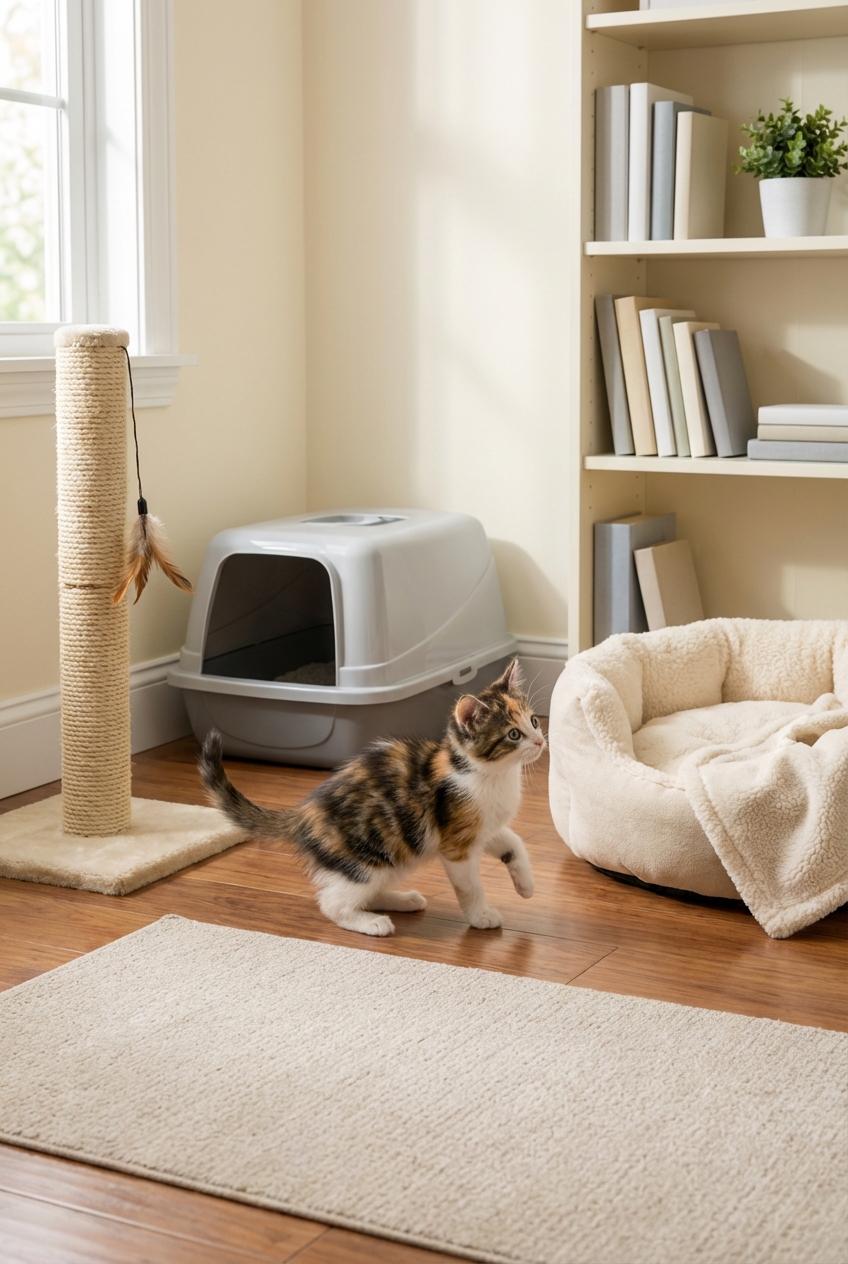
Before your kitten explores the whole house, start with one safe “home base” room. This helps them feel secure and reduces accidents.
Home base checklist
- Litter box in a quiet spot, away from food and water
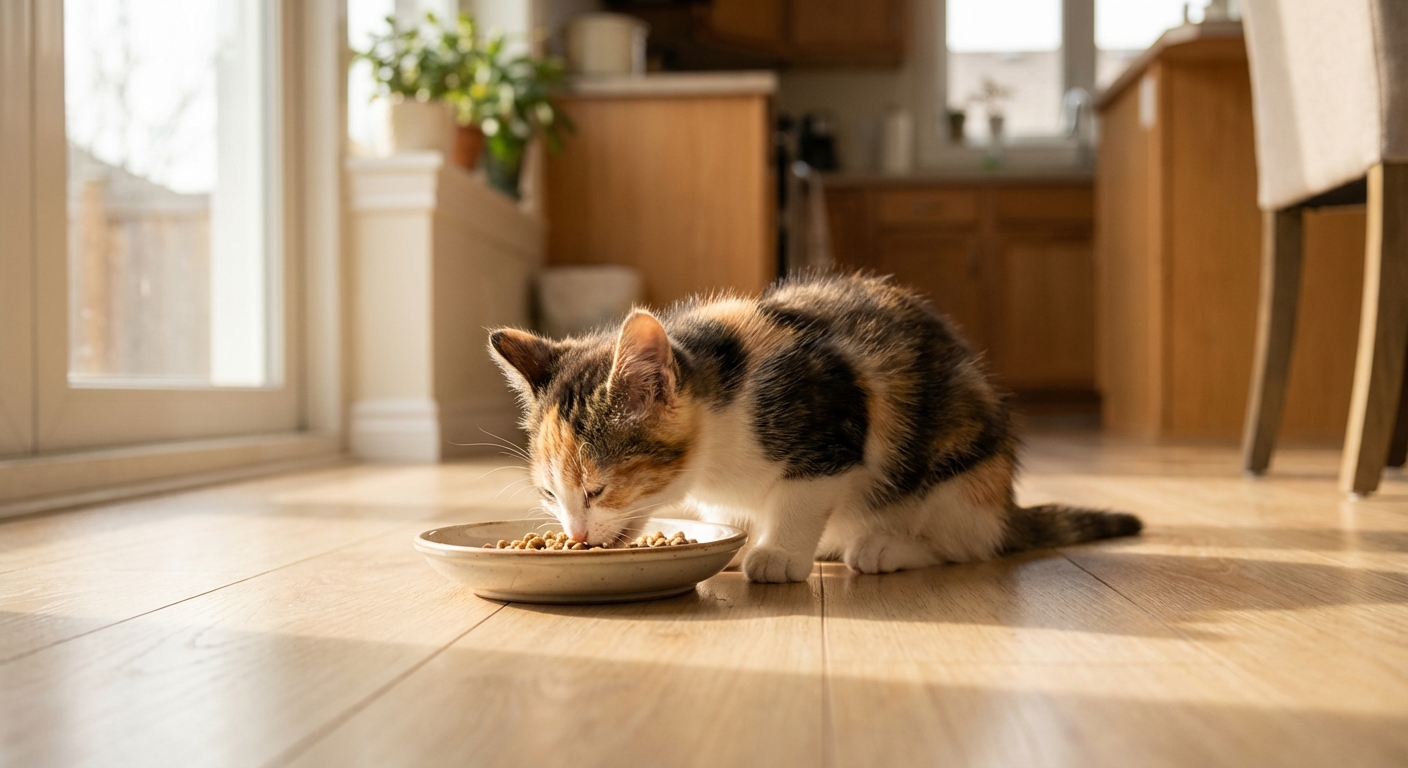
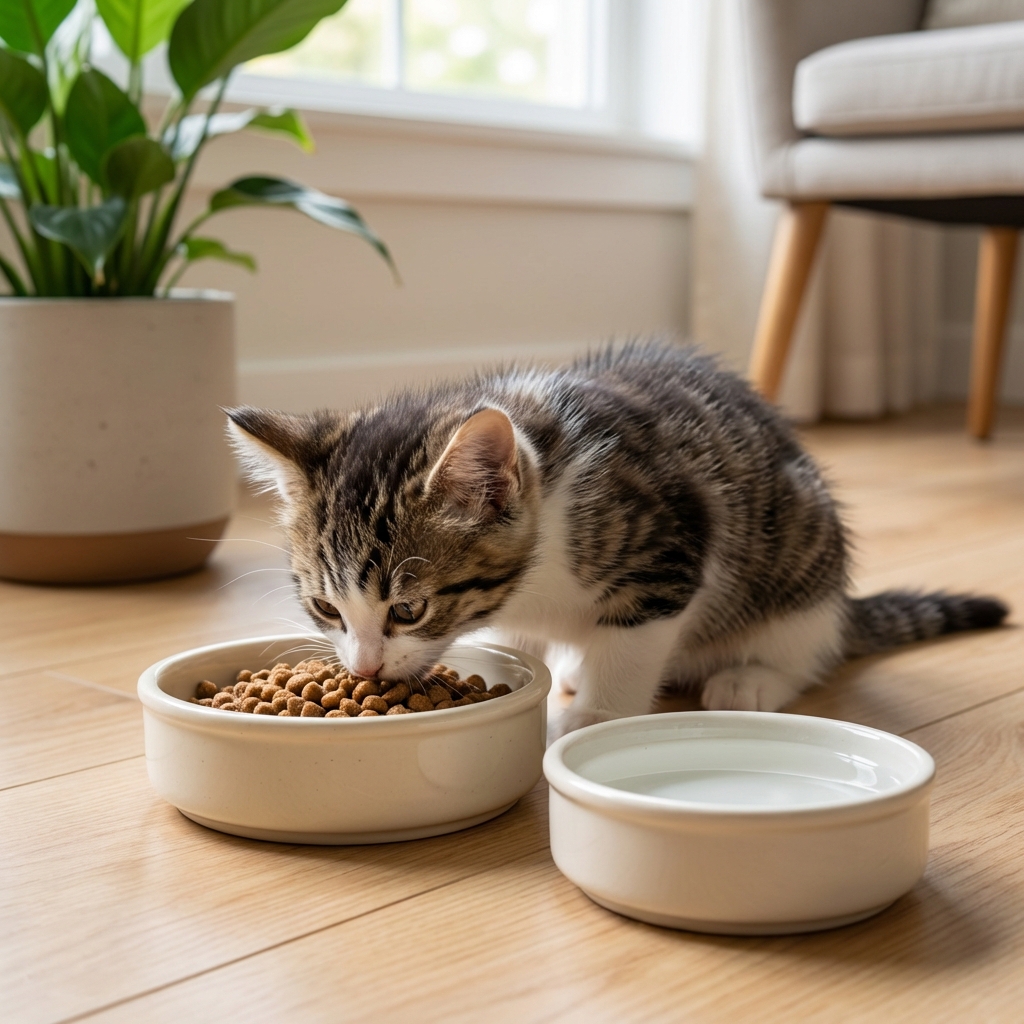
- Food and water bowls that are easy to clean (ceramic or stainless steel are great)
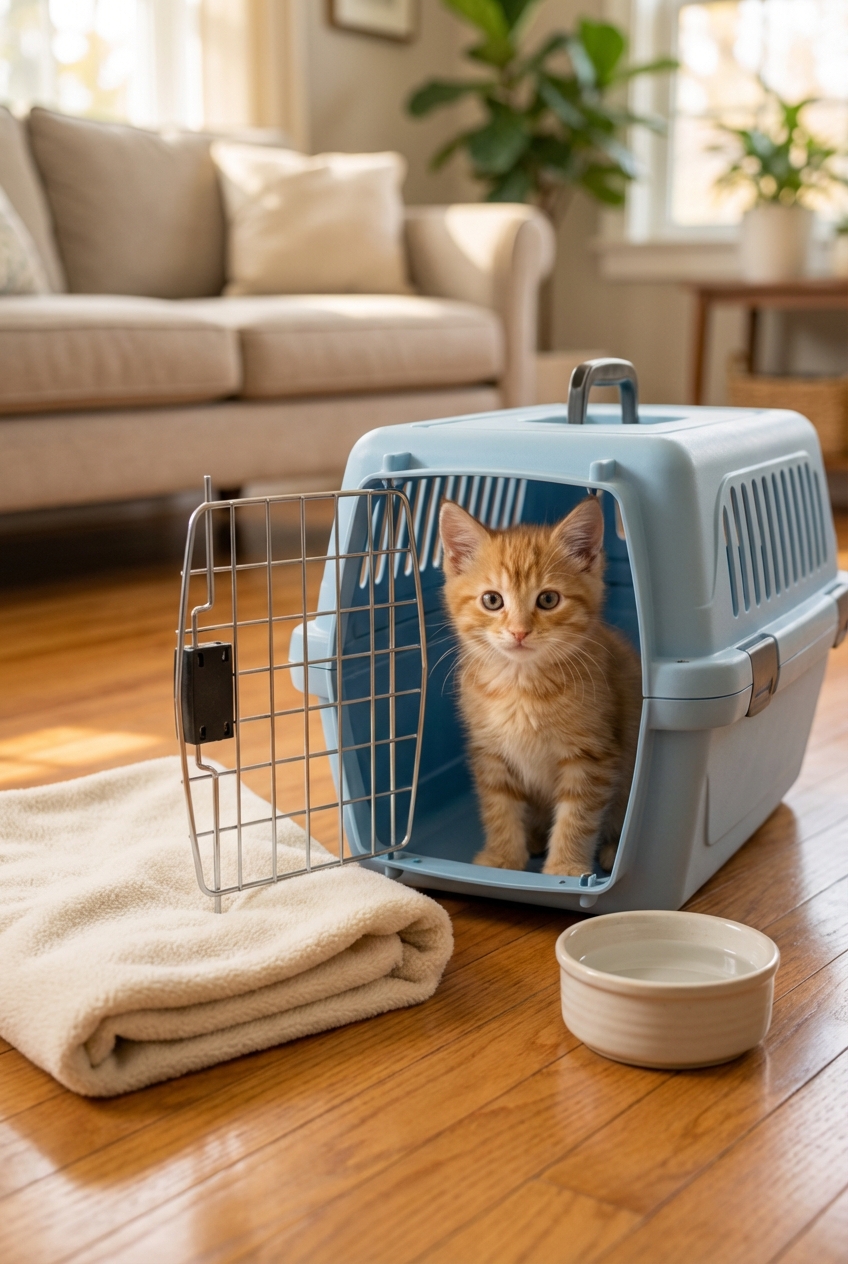
- Cozy bed plus a hiding spot (a covered cat bed or an open box with a blanket)
- Scratching post or scratch pad to protect your furniture and build good habits early
- Toys that encourage hunting behavior (wand toy for you to hold, small toss toys)
Common household hazards
- Strings and cords (hair ties, yarn, ribbon): ingestion can be a serious emergency
- Open windows without secure screens
- Small chewable items (rubber bands, earplugs, kids’ toys)
- Plants: many are toxic to cats, including lilies (especially dangerous), sago palm, and some philodendrons
- Human medications and essential oils (including diffusers): keep locked up and never “guess” a dose
Nutrition basics
Kittens are not just small cats. They are growing rapidly, and they need higher calories, high-quality protein, and the right balance of vitamins and minerals.
What to feed
- Choose a diet labeled for “growth” or “all life stages.” These formulas are designed to meet kitten needs.
- Wet food helps hydration. Many kittens do well with a mix of wet and dry, depending on their preferences and your veterinarian’s guidance.
- Keep treats minimal. Treats are great for training and bonding, but they should not crowd out balanced kitten nutrition.
How often to feed
Most kittens do best with multiple small meals per day. Many families start with 3 to 4 meals daily and gradually adjust as the kitten matures. If you adopt a very young kitten (especially under 8 weeks), ask your veterinarian right away about feeding frequency, weaning status, and weight checks.
Foods to avoid
- Cow’s milk (many kittens get diarrhea)
- Dog food as a regular diet (it is not nutritionally complete for cats)
- Onions, garlic, chocolate, alcohol
- Grapes and raisins (best avoided, possible toxicity and not worth the risk)
- Cooked bones (splinter risk)
Litter training made easy
Most kittens instinctively use a litter box, but setup matters.
Best practices
- Go low and wide. Use a low-entry box so a tiny kitten can climb in comfortably.
- Use non-clumping litter for young kittens. Many veterinarians prefer non-clumping until kittens are a bit older (often around 3 to 4 months), because if swallowed, clumping litter can clump in the stomach or intestines. Avoid scented litter whenever possible.
- Scoop daily. Clean boxes reduce accidents and stress.
- One box per cat, plus one extra is a common guideline for multi-cat homes.
If accidents happen
Do not punish. Clean thoroughly with an enzymatic cleaner and consider whether the box is too far away, too dirty, or in a noisy location. If a kitten suddenly stops using the litter box, it is worth a vet visit to rule out medical issues.
Veterinary care
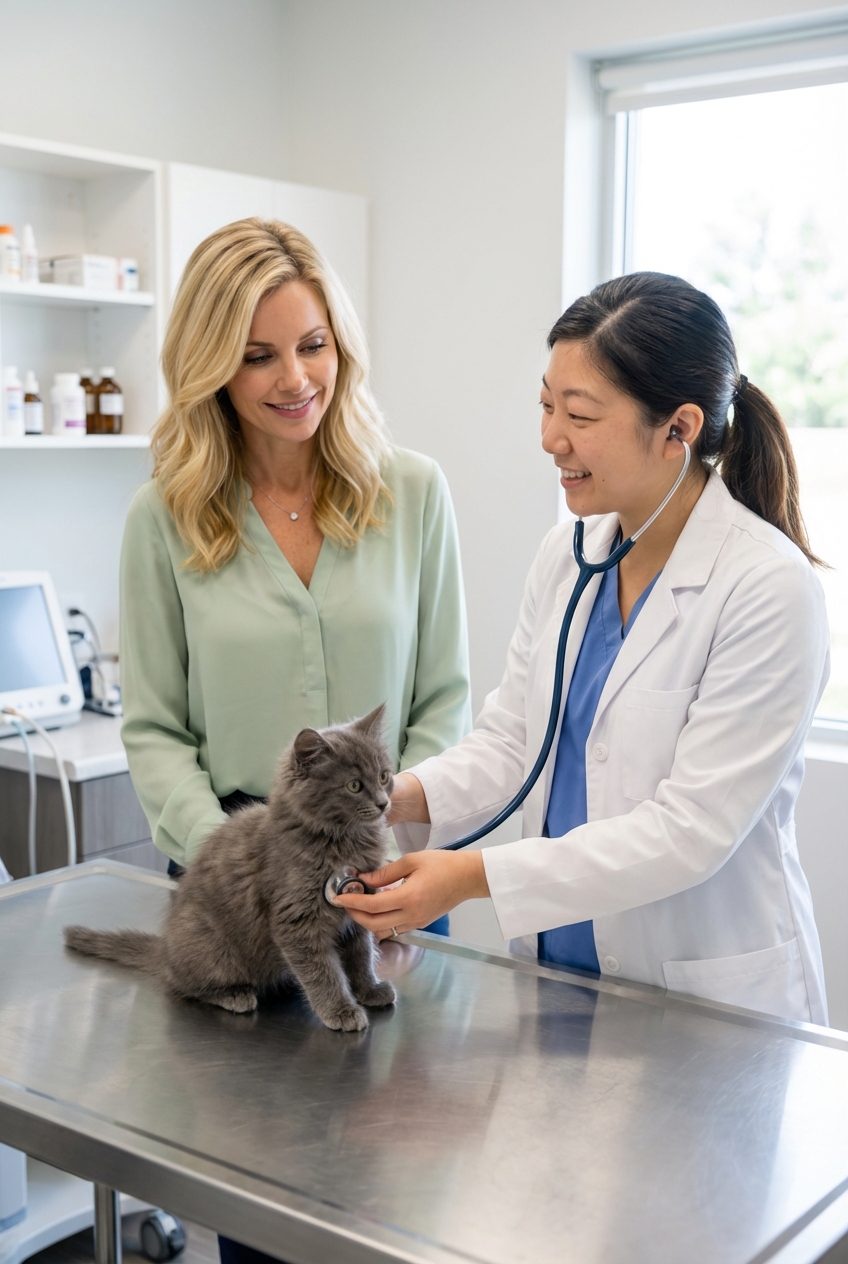
A good veterinarian will guide you through vaccines, parasite prevention, growth, and behavior. Early visits also help your kitten learn that handling and exams are normal.
Typical early timeline
- First visit: As soon as you can after adoption for an exam, weight, and a plan.
- Core vaccines: Many kittens start around 6 to 8 weeks, then get boosters every 3 to 4 weeks until about 16 weeks (your veterinarian will tailor this).
- Rabies: Timing depends on local law and your clinic’s protocol.
- Parasites: Fecal testing and deworming are common, since intestinal parasites are very common in kittens.
What to ask at your first visit
- Recommended vaccine schedule based on lifestyle and local risk
- Flea, tick, and heartworm prevention options that are safe for your kitten’s age and weight
- De-worming plan and fecal testing
- Spay or neuter timing (commonly around 5 to 6 months, sometimes earlier for shelter kittens)
- Microchip and ID recommendations (even indoor-only cats can slip out)
Tip: Bring a fresh stool sample if your clinic requests it, especially for newly adopted kittens. It helps your veterinarian check for intestinal parasites that may not be obvious at home.
Safety note: Never use dog flea or tick medications on cats. Many products are species-specific and can be dangerous. Use only feline products recommended by your veterinarian.
Grooming and handling
Think of grooming as a training session, not a chore. Start small and keep it calm.
Simple routines that build trust
- Brush for 30 to 60 seconds a few times a week, then increase as tolerated.
- Touch paws daily so nail trims become less stressful later.
- Clip just the sharp tip of the nail, and stop if your kitten is squirmy. You can always do one paw at a time.
- Practice handling ears, mouth, and belly gently, paired with a treat.
Baths are usually unnecessary
Most kittens do not need routine baths unless they are dirty or have a medical reason. If you must bathe, use a cat-safe shampoo and keep them warm and calm.
Play and manners
Play is not optional. It is how kittens learn coordination, confidence, and healthy boundaries.
What good play looks like
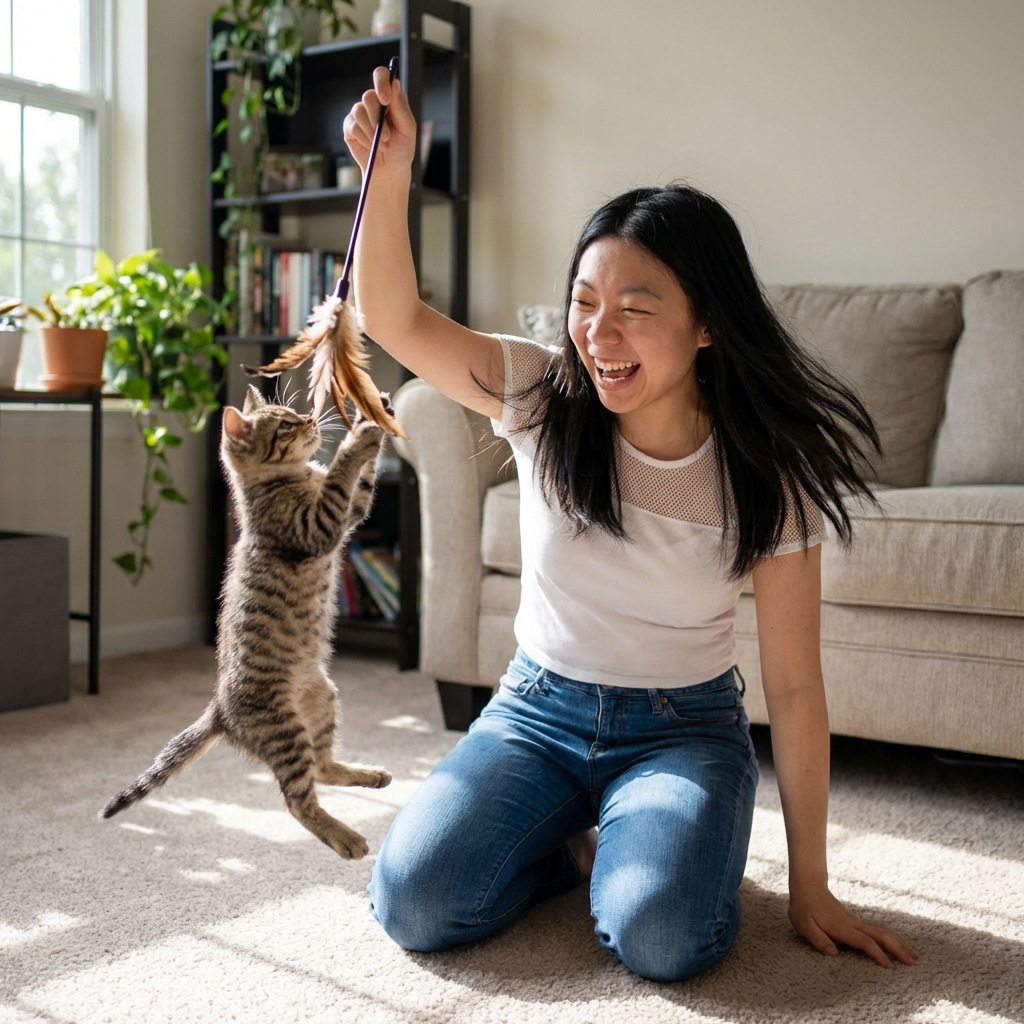
- Two to three short play sessions daily (even 5 to 10 minutes helps)
- Use wand toys to keep hands out of the “prey zone”
- Let them win sometimes by catching the toy at the end
- Offer scratch options near sleeping areas and common hangouts, then reward and praise when your kitten uses them
Stop biting without scaring them
If your kitten bites during play, freeze your hand, calmly end the interaction, and redirect to a toy. Avoid rough hand play, because it teaches kittens that fingers are targets.
If scratching is a challenge, focus on more appropriate scratch surfaces, routine nail trims, and enrichment. Many veterinary teams discourage declawing because it can cause long-term pain and behavior issues. If you are overwhelmed, ask your veterinarian about kinder alternatives.
Sleep and stress
Kittens sleep a lot, often 16 to 20 hours a day. That rest supports growth and brain development. Stress, on the other hand, can show up as hiding, poor appetite, diarrhea, or increased vocalizing.
Comfort tips that work
- Keep routines predictable for meals and play.
- Give choice. Provide a cozy hideaway so your kitten can retreat when overwhelmed.
- Use slow introductions to new rooms, people, and pets.
- Consider pheromone support if your veterinarian recommends it for anxious kittens.
Introducing other pets
Slow is kind. Many problems happen when introductions move faster than comfort allows.
Step-by-step basics
- Separate at first with a closed door, allowing scent exchange (swap blankets or bedding).
- Feed on opposite sides of the door so good things happen near the other pet’s scent.
- Use short, supervised meetings once both pets seem relaxed.
- Provide vertical space like a cat tree so your kitten can observe safely.
If there is hissing, growling, or chasing, pause and step back a stage. Some pets need days, others need weeks.
Call the vet right away
Kittens can get dehydrated and weak quickly. Trust your instincts and call your clinic if you are worried.
- Not eating for more than a meal or two, especially in very young kittens
- Repeated vomiting or diarrhea
- Labored breathing, open-mouth breathing, or persistent coughing
- Eye discharge, swelling, or keeping an eye closed
- Lethargy, collapse, or unusual weakness
- Suspected toxin exposure (plants, medications, chemicals)
If it is after hours, ask your veterinarian where the nearest emergency clinic is located and keep that number saved in your phone.