New to cockatiels? Get a practical care guide covering cage setup, sleep, pellets vs seeds, safe foods, taming, enrichment, grooming, home hazards, and when ...
Article
•
Designer Mixes
Pet-Friendly Cockatiel Care Tips & Advice

Shari Shidate
Designer Mixes contributor
Cockatiels are sweet, sensitive little companions, and when their home is set up thoughtfully, they truly shine. As a veterinary assistant in Frisco, Texas, I have seen how small changes in diet, air quality, and daily routine can make a big difference in a bird’s energy, feathers, and confidence.
Below are practical, pet-friendly cockatiel care tips that help your bird feel safe while also keeping your home healthier for everyone, including dogs and cats.
Start with a safe, calm setup
Your cockatiel’s environment is their foundation. A good setup can help lower stress, support healthy routines, and prevent many common behavior problems.
Cage size and placement
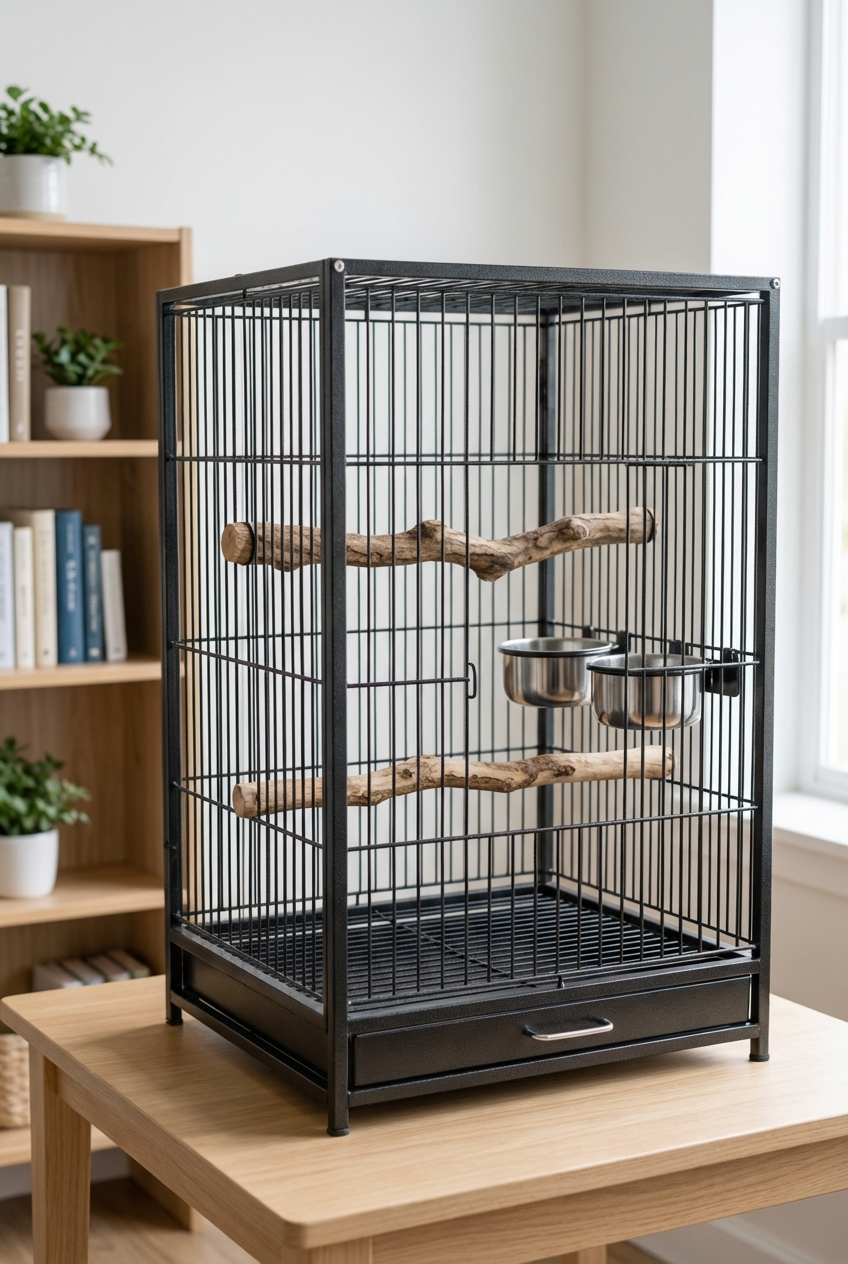
- Go bigger than the minimum. Cockatiels do best when they can fully spread their wings and hop between perches. More space also encourages movement, which supports heart and joint health.
- Helpful specs to look for. Many cockatiels do well with bar spacing around 1/2 inch. For size, bigger is always better, but look for a cage with enough width for short flights and a footprint that allows multiple perches and toys without crowding.
- Place the cage at “family height.” A cage on a sturdy stand, in a room where you spend time, helps your bird feel included without being overwhelmed.
- Avoid the kitchen. Cooking fumes and overheated nonstick coatings can be dangerous for birds.
- Choose a draft-free spot. Steady temperature and predictable light cycles help with appetite and sleep.
Perches, toys, and enrichment
Cockatiels need variety. The goal is to keep feet healthy, beaks busy, and minds engaged.
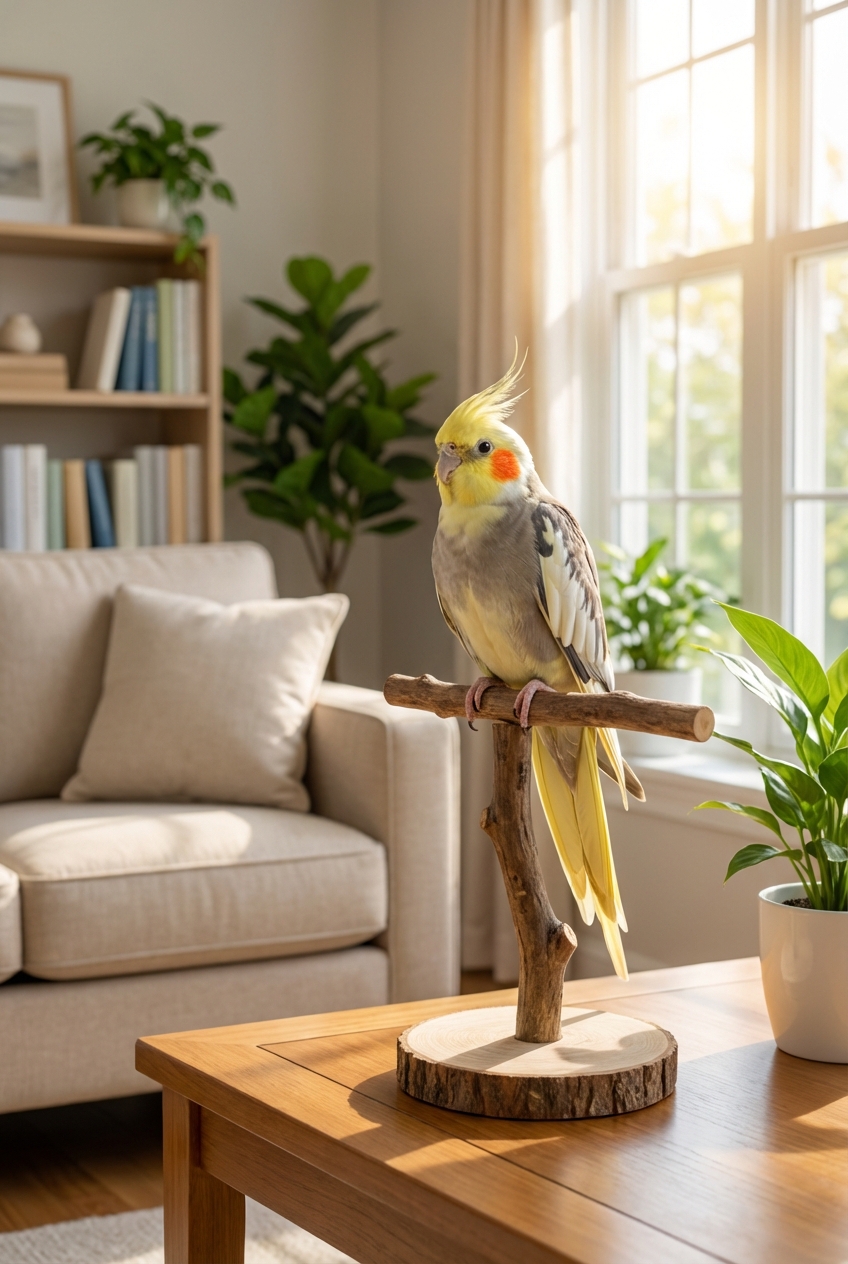
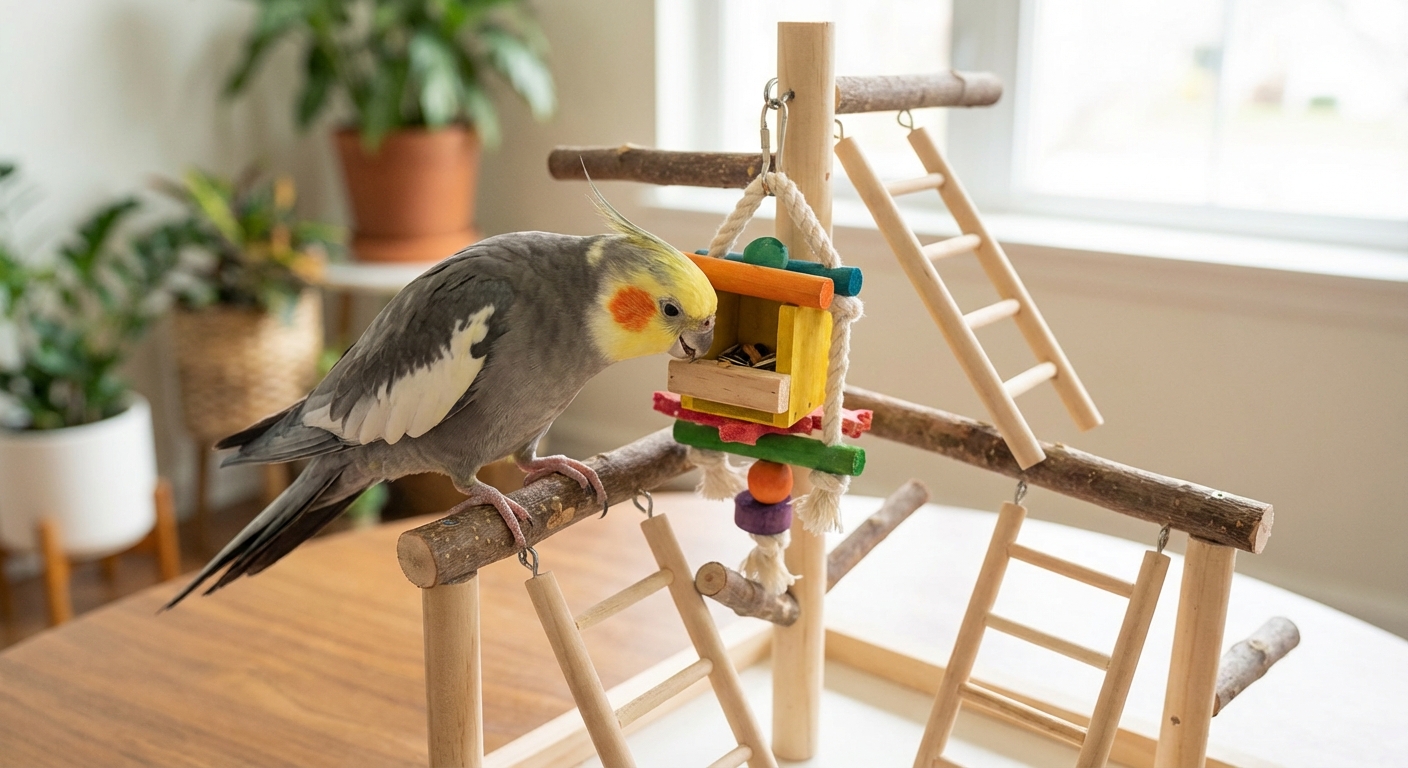
- Perches: Offer multiple diameters and textures. Natural wood perches are great for foot exercise. Avoid sandpaper covers that can irritate feet.
- Toys: Rotate toys weekly to prevent boredom. Include shreddables (paper, palm, bird-safe wood), foraging toys, and one “comfort” toy if your bird likes it.
- Out-of-cage time: Aim for daily, supervised time on a play stand in a bird-safe room. When possible, many cockatiels thrive with at least 1 to 2 hours a day, but even shorter sessions help if you are consistent.
Pet-friendly home safety
Many cockatiels live in multi-pet homes. It can work beautifully, but it needs to be managed like a safety plan, not wishful thinking.
Rules that prevent accidents
- No direct contact. Even gentle dogs and cats can react in a split second. A single paw swipe can be fatal to a bird.
- Use barriers. Close doors, use baby gates, and keep a consistent “bird room” routine during out-of-cage time.
- Train a default calm behavior. Reward your dog for lying on a mat while the cockatiel is safely caged. This reduces stalking and fixation.
- Mind the air. Dander, litter dust, and strong scents can irritate a bird’s respiratory system.
Air and household hazards
A cockatiel’s respiratory system is very efficient, which also means airborne irritants can hit them harder and faster than they do us.
- Nonstick fumes: Avoid overheated nonstick cookware and appliances with PTFE-type coatings. Fumes released when overheated can be lethal to birds. When in doubt, keep birds far away from cooking areas and use strong ventilation.
- Smoke and aerosols: No smoking, vaping, spray fragrances, hairspray, or aerosol cleaners near the bird.
- Essential oils and diffusers: Many are irritating and some can be toxic. If you use them at all, keep them far from your bird with excellent ventilation.
- Heavy cleaners: Choose bird-safe cleaning options like diluted vinegar and rinse thoroughly. Avoid phenol-based products around birds.
- Lead and zinc: Watch for old paint chips, stained glass solder, curtain weights, costume jewelry, keychains, and some hardware. These are common sources of heavy metal poisoning in pet birds.
- Plants and water hazards: Many houseplants are toxic if chewed, and open water can be dangerous. During out-of-cage time, cover aquariums, close toilets, and skip open buckets or sinks.
- Fans and windows: Turn off ceiling fans and secure windows and doors before letting your cockatiel out.
Nutrition for long-term health
If you want better feathers, steadier energy, and fewer vet visits, nutrition matters. Many cockatiels raised on seed-only diets struggle later with vitamin A deficiency, obesity, and fatty liver disease. The good news is that improvements can happen with gradual, consistent changes.
A balanced daily plan
- Quality pellets as the base: Often recommended as the primary diet component because they are formulated to be nutritionally complete.
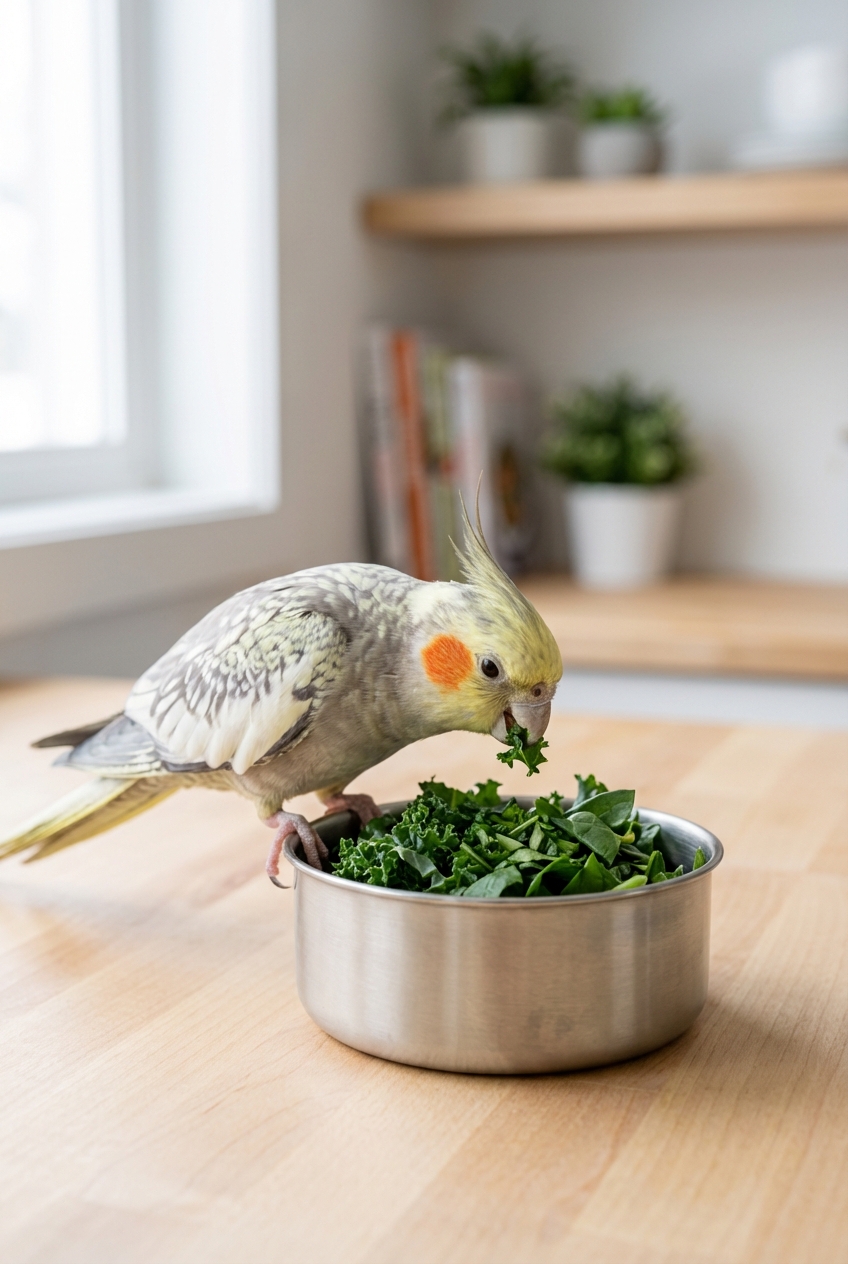
- Fresh vegetables daily: Prioritize vegetables, especially dark leafy greens and orange veggies for vitamin A support.
- Fruit as a treat: Fruit is fine in small amounts, a few times a week. For most cockatiels, vegetables are the better everyday choice.
- Seeds and millet: Best used for training rewards and enrichment, not as the main meal.
Easy veggies to start with
Chop small and offer a “try it” portion consistently. Birds often need repeated exposure before they accept new foods.
- Romaine, kale, collard greens
- Carrot (shredded), sweet potato (cooked and cooled)
- Bell pepper, broccoli florets
- Squash (cooked and cooled)
Foods to avoid or limit
- Avocado
- Chocolate
- Caffeine and alcohol
- Onion and garlic (best avoided, and larger amounts can be risky)
- High-salt and high-fat human snacks
- Xylitol sweetener
Tip: If your cockatiel is very seed-focused, switch slowly. Rapid diet changes can cause a bird to eat less than you think. Weigh your bird routinely with a gram scale during transitions and talk with an avian veterinarian for a safe plan.
Water, hygiene, and breathing
Clean food and water routines are a quiet superpower in bird care. A cockatiel’s respiratory system is delicate, and bacteria and mold are common triggers for illness.
Daily and weekly cleaning
- Fresh water daily: Wash the bowl with hot soapy water, rinse well, and refill.
- Remove fresh foods promptly: In most homes, remove produce after 2 to 4 hours (sooner in warm rooms).
- Spot-clean droppings daily: Keeping the cage bottom clean reduces odor, bacteria, and pests.
- Weekly deeper clean: Wash grates, perches, and toys as needed. Use a bird-safe disinfectant if you need one, and rinse thoroughly. Let everything dry fully before returning it to the cage.
Humidity and bathing
Cockatiels often enjoy a light mist bath or a shallow dish bath. Regular bathing can help with feather condition and reduce dusty dander.
- Mist with lukewarm water in the morning so feathers dry before bedtime.
- Keep the room warm and draft-free during baths.
Temperature and safe heat
Most cockatiels do best in a stable, comfortable room temperature with minimal swings. If your home runs chilly, use bird-safe heating options. Avoid space heaters or appliances that use PTFE-type nonstick coatings.
Sleep, stress, and behavior
Behavior is communication. Many screaming, biting, or plucking concerns are linked to poor sleep, chronic stress, or boredom.
Healthy sleep routine
- Aim for 10 to 12 hours of quiet darkness. Covering the cage can help if your home stays active late, but make sure airflow is good.
- Reduce night frights: A small night light can help some cockatiels stay oriented and calmer.
Common behavior notes
- Whistling and flock calls: Normal. Responding calmly and providing enrichment can reduce “attention yelling.”
- Nipping: Often fear-based or boundary-setting. Move slowly, read body language, and avoid forcing handling.
- Feather plucking: Can be medical, behavioral, or both. It is always worth a vet visit first.
Light and UVB
Natural daylight and a consistent day and night schedule support normal behavior and appetite. Some households consider full-spectrum or UVB lighting. Because placement, distance, and duration matter for safety, I recommend asking your avian vet what is appropriate for your specific bird and setup.
When to call an avian vet
Birds can hide illness until they are truly unwell. If you notice changes, trust your instincts and call an avian veterinarian promptly. It is also a good idea to establish care with an avian vet and schedule routine wellness exams, even when your cockatiel seems perfectly healthy.
Red flags
- Fluffed feathers and lethargy for more than a short period
- Tail bobbing, open-mouth breathing, or wheezing
- Not eating, or a noticeable drop in weight
- Sitting low on the perch or spending time on the cage bottom
- Major changes in droppings (very watery, black tarry stool, or little to no droppings)
- Bleeding, injury, or sudden inability to perch
Home tip while you arrange care: Keep your bird warm, quiet, and stress-free. Do not try to medicate with human products unless your veterinarian instructs you to.
Nails and wings
If nails are catching on fabric or perches, ask a professional for a trim. For wing trimming, safety and quality of life depend on the bird and household. If you are considering it, talk with an avian vet or experienced groomer about the safest approach for your home.
Simple weekly routine
Consistency makes cockatiels feel secure, and it makes care easier for you.
- Daily: Fresh water, remove old produce, quick wipe-down of messiest areas, short training or bonding session
- 3 to 5 times per week: Offer a fresh veggie mix, rotate toys, weigh if your bird is on a diet transition or has health concerns
- Weekly: Deep clean cage base and grates, wash perches as needed, assess nails and beak condition
- Monthly: Review diet variety and enrichment, replace worn toys and frayed ropes
The bottom line is that small daily habits add up. A safer home, better food, clean air, and steady sleep can support a cockatiel’s health for years.