Start your first freshwater aquarium with confidence. Learn tank sizing, the nitrogen cycle, essential gear, fishless cycling, beginner fish picks, testing, ...
Article
•
Designer Mixes
Pet-Friendly Betta Fish Care

Shari Shidate
Designer Mixes contributor
Betta fish are often sold as “easy” pets, but the truth is they thrive with thoughtful care. As a veterinary assistant and lifelong pet person, I love bettas because they are interactive, colorful, and surprisingly full of personality. And if your home includes other animals like cats or dogs, a betta can be a wonderful, low-dander companion as long as you set things up safely.
This guide focuses on two goals: helping your betta live a long, healthy life and keeping the rest of your pets safe and stress-free around an aquarium.
Why bettas make great pets
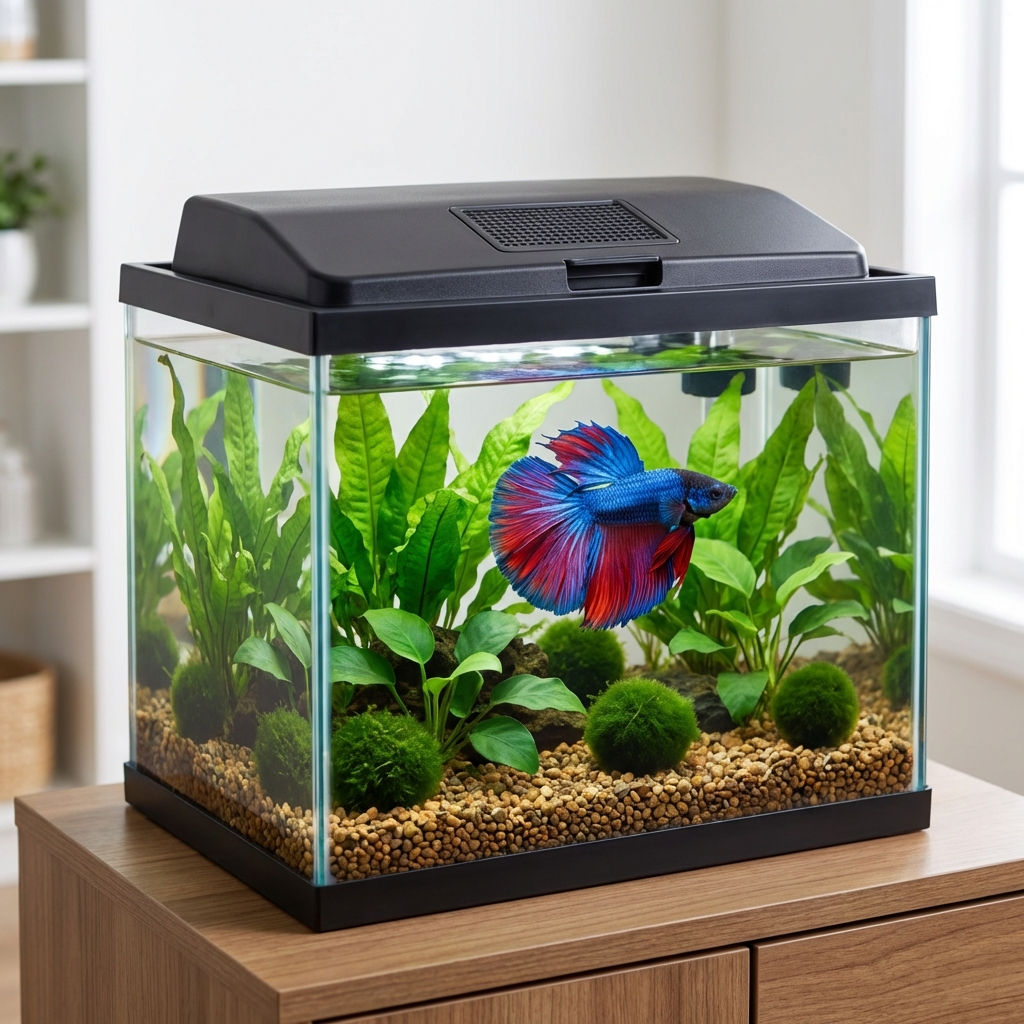
Bettas (Betta splendens) are freshwater tropical fish known for their bold colors and flowing fins. With the right environment, many bettas live 3 to 5 years, sometimes longer.
- They are interactive. Many learn to recognize the person who feeds them.
- They are space-friendly. A small aquarium fits well in many homes, but “small” still needs to be appropriate.
- They can be a good option for allergy-sensitive households. Fish do not produce dander like furry pets, though you still want to be mindful of mold and humidity around tanks.
The right tank setup (this is where health starts)
Tank size
A common myth is that bettas are happiest in bowls. In reality, a 5-gallon tank is a solid minimum for stable water quality and enough swimming room. Bigger is often easier because water parameters stay steadier.
Lid is not optional in pet homes
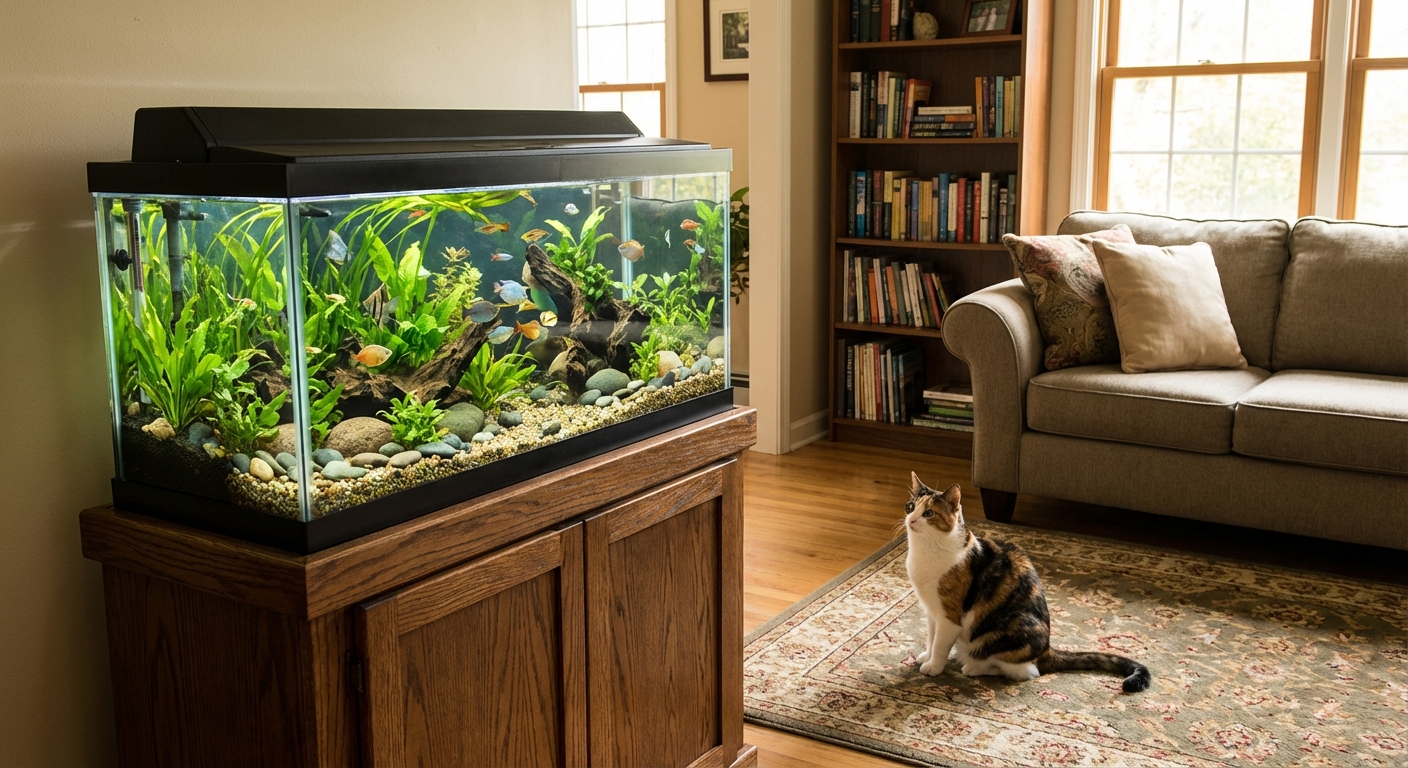
Bettas can jump, and cats can pounce. Use a tight-fitting lid with minimal gaps for cords. This is one of the most important “pet-friendly” upgrades you can make.
Filter and gentle flow
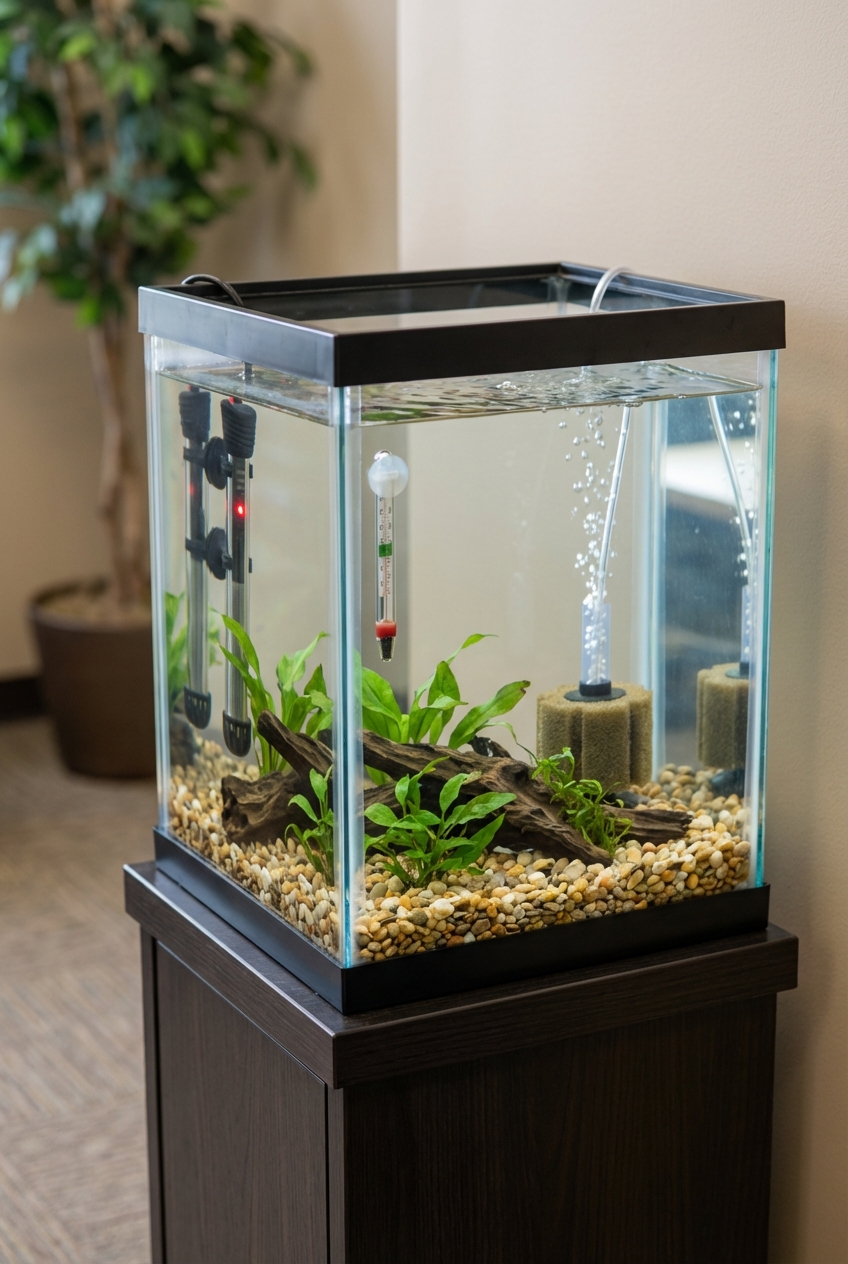
Bettas prefer calmer water. Choose a filter designed for small tanks, and aim for gentle flow so your betta is not constantly fighting the current. A sponge filter or a baffled filter outlet works well.
Heater and thermometer
Bettas are tropical fish. Most do best around 78 to 80°F. A reliable heater and a separate thermometer help prevent sudden temperature swings, which can stress fish and increase disease risk.
Lighting and day-night rhythm
A simple aquarium light on a timer (8 to 10 hours daily) supports plants and helps your betta maintain a healthy day-night cycle. Avoid keeping the tank in direct sunlight, which can overheat the water and fuel algae blooms.
Water quality basics (the part most people skip)
Clean water is the foundation of betta health. Most “mysterious” betta problems trace back to water quality issues.
The nitrogen cycle, explained simply
Fish waste turns into ammonia, which is toxic. Beneficial bacteria convert ammonia into nitrite (also toxic), then into nitrate (less toxic). Your job is to keep this system stable with a properly cycled tank and regular water changes.
What to test
- Ammonia: 0 ppm
- Nitrite: 0 ppm
- Nitrate: ideally under 20 to 40 ppm
- Temperature: stable in the upper 70s (°F)
A liquid test kit is typically more reliable than strips. If you are new, testing frequently at first helps you learn your tank’s patterns.
Water changes
For many 5 to 10 gallon betta tanks, a 25% water change once a week is a good starting point. If your tank is still cycling, stocked heavily, or you are seeing elevated nitrates, you may need more frequent changes.
Always treat tap water with a dechlorinator and try to match temperature so you do not shock your fish.
Betta-safe decor and enrichment
Bettas explore, rest, and sometimes wedge themselves into cozy spots. Choose decor that supports natural behaviors without damaging delicate fins.
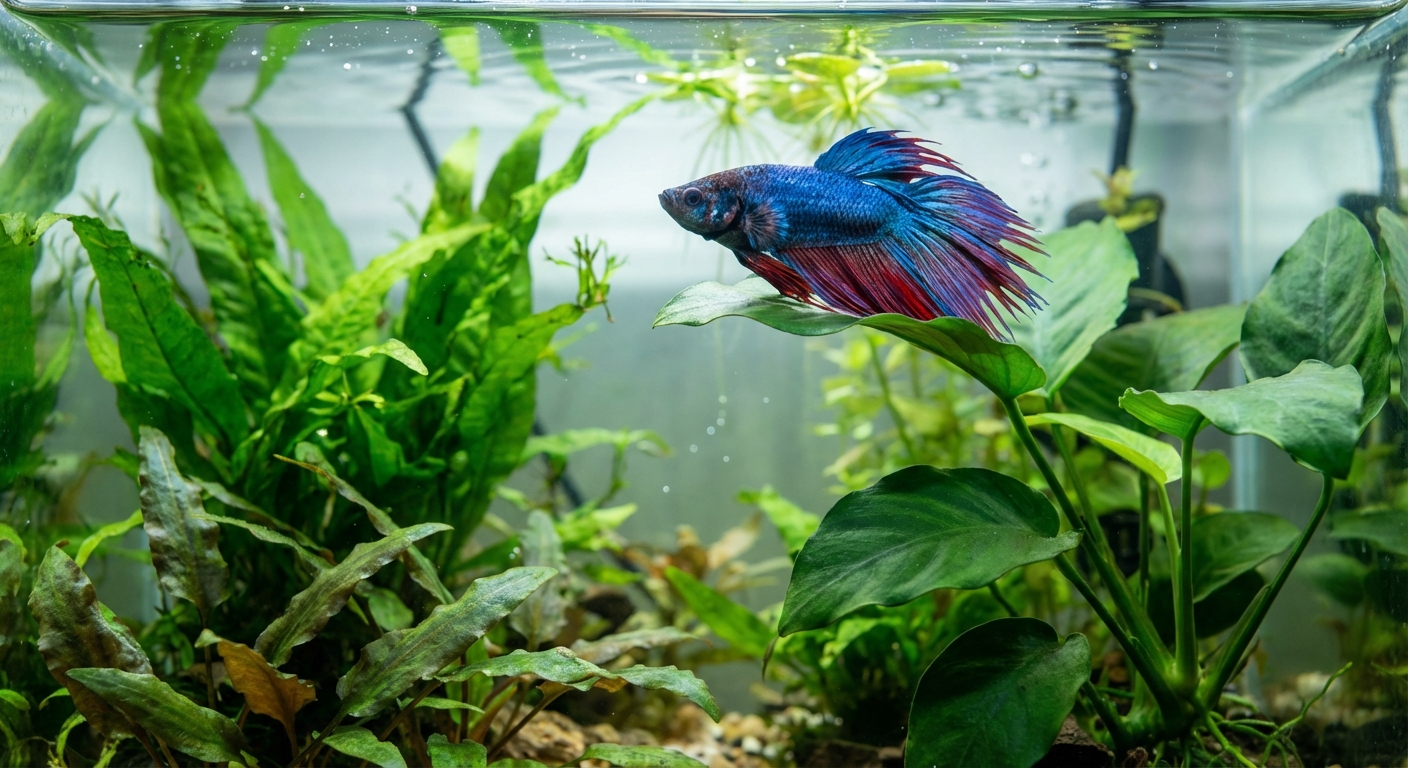
- Plants: Live plants (like anubias, java fern, or floaters) are fantastic for cover and water quality support. Silk plants are a good alternative.
- Hides: Provide at least one cave or hide, plus plant cover.
- Resting spots: Bettas like to lounge near the surface. A broad-leaf plant or a betta hammock gives them a comfy “bed.”
- Avoid sharp plastic: If it can snag pantyhose, it can snag fins.
Feeding your betta (quality over quantity)
Overfeeding is one of the quickest routes to poor water quality and a sick fish. Bettas are enthusiastic eaters, so you may need to be the “kind but firm” parent.
What to feed
- Staple: A high-quality betta pellet with animal protein as a main ingredient
- Variety: Frozen or live foods such as brine shrimp, daphnia, or bloodworms as treats
How much
Many bettas do well with small meals once or twice daily, only what they can finish in about a minute. Remove uneaten food to protect water quality.
Helpful routine
If your betta looks bloated, seems less active, or your water tests are trending worse, reduce portions and review your feeding schedule. Gentle consistency beats “big meals” every time.
Keeping the tank safe around cats and dogs
This is the “pet-friendly” part that often gets overlooked. Your betta deserves a calm home, and your other pets need clear boundaries.
Placement matters
- Choose a stable stand that cannot wobble if bumped.
- Keep the tank away from edges and away from cat launching zones like windowsills or narrow shelves.
- Avoid high-traffic areas where tails, zoomies, or curious noses can cause stress.
Use a secure lid and manage cords
A lid protects your fish from jumping and protects the tank from paws. Use cord organizers and consider a drip loop on electrical cords for safety.
Train and redirect, do not punish
If a cat is fixated on the fish, redirect with an appropriate toy and add barriers as needed. For dogs, “leave it” training paired with distance is very effective. The goal is a peaceful environment, not a constant standoff.
Signs of stress or illness to watch for
Bettas are hardy, but they are not invincible. Catching problems early is one of the best gifts you can give your fish.
Red flags
- Clamped fins (held close to the body)
- Loss of appetite or spitting food
- Lethargy, hiding constantly, or resting excessively at the bottom
- Gasping at the surface (can be water quality, temperature, or gill issues)
- White spots (possible ich)
- Frayed fins (fin damage, fin rot, or nipping from tankmates)
- Bloating or pineconing scales (seek help promptly)
First step: test your water
Before you add any medication, test ammonia, nitrite, and nitrate. Poor water quality can mimic many diseases, and fixing the environment is often the most important part of recovery.
If you are unsure, consult a fish-savvy aquatic veterinarian or an experienced local aquarium professional. Bring your water test results with you. That information is gold.
Can bettas live with other fish?
Sometimes, but it depends on the individual betta, the tank size, and the temperament of potential tankmates. Many issues come from trying to do too much in a small tank.
- Safest beginner route: A betta living alone in a well-planted 5 to 10 gallon tank.
- If you want tankmates: Consider a larger tank and research compatibility carefully. Avoid fin-nipping fish and avoid mixing two male bettas.
If you try tankmates, have a backup plan. A spare tank or divider can prevent injuries if your betta becomes territorial.
A simple weekly routine
If you like clear steps, here is a calm, repeatable routine that fits most betta homes.
- Daily: Feed small portions, observe behavior, check temperature
- Weekly: Test water, change 20 to 30% of water, gently clean algae
- Monthly: Rinse filter media in old tank water (not tap water), check equipment function
Consistency is what your betta wants. Stable warm water, clean conditions, and low stress are the real “secret” to vibrant color and energy.
Quick pet-friendly checklist
- 5+ gallon tank
- Secure lid with minimal gaps
- Heater plus thermometer (78 to 80°F)
- Gentle filter
- Water conditioner and test kit
- Soft plants and a hide
- Tank placed securely away from curious paws
- Small, high-quality meals and no overfeeding
If you set up the environment right from day one, betta care becomes simple and genuinely enjoyable. You will spend less time troubleshooting and more time watching your little aquatic friend thrive.