Bad breath in cats isn’t just “stinky”—it can signal dental disease, stomatitis, kidney disease, or diabetes. Learn odor clues, safe home checks, and...
Article
•
Designer Mixes
Periodontal Disease in Cats: Stages, Symptoms, and Prevention

Shari Shidate
Designer Mixes contributor
As a veterinary assistant, I can tell you with a lot of confidence: dental disease in cats is common, sneaky, and often very manageable when we catch it early. Many veterinary dentistry sources and prevalence studies commonly report that a majority of cats show some signs of dental disease by around age 3 (often quoted in the 70% range). That means if you have a young cat, you are not “behind” at all. You are right on time to prevent bigger problems.
Periodontal disease is not just “bad breath.” It is an ongoing infection and inflammation around the teeth that can progress from mild gingivitis to painful tooth loss. And because the mouth is full of bacteria, chronic dental disease can contribute to whole-body inflammation and may be associated with issues elsewhere in the body, especially in older cats.
What it is and why it happens
Periodontal disease starts with plaque, a sticky film of bacteria that forms on teeth every day. If plaque is not removed, it mineralizes into tartar (calculus). Tartar irritates the gums, bacteria move under the gumline, and inflammation damages the structures that hold teeth in place.
Cats are especially good at hiding discomfort. Many continue eating even with painful mouths, which is why periodontal disease can progress quietly.
Common risk factors
- Age: risk increases over time, but young cats can be affected too.
- Genetics and breed: some cats have crowding or small mouths that trap plaque more easily.
- Diet and chewing behavior: soft foods do not mechanically clean teeth very well. Cats that rarely chew dental diets or approved dental treats may get less “scrubbing” on the tooth surface.
- Underlying conditions: immune issues, chronic inflammation, and certain viral diseases can worsen oral health.
Stages of periodontal disease
Periodontal disease is usually described as a progression. Not every cat moves through stages at the same pace, and staging systems can vary. In practice, veterinarians assess severity using a combination of an oral exam, gumline probing (measuring pocket depth and attachment loss), and dental X-rays.
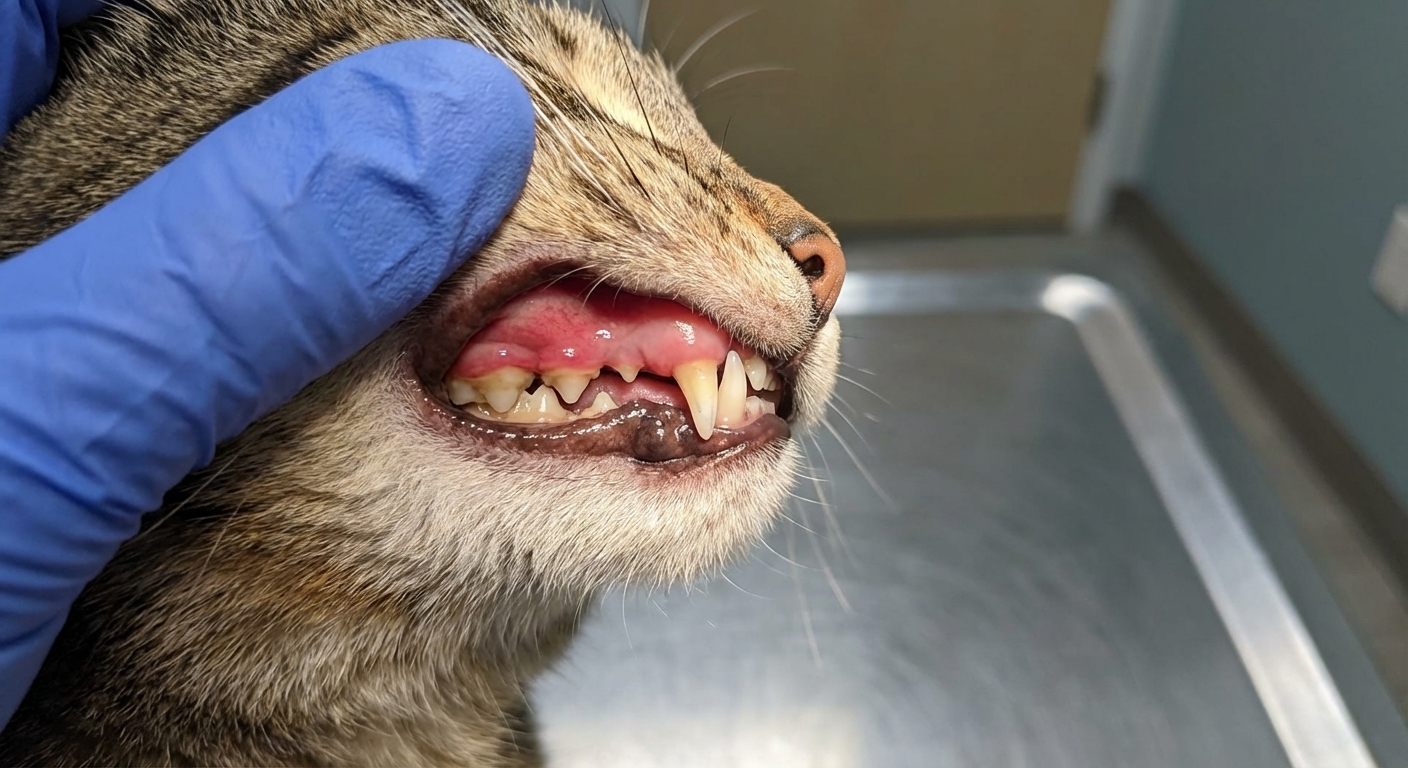
Stage 1: Gingivitis
What is happening: the gums are inflamed, but the tissue and bone that support the teeth are still intact.
- Red or puffy gumline
- Mild odor to the breath
- Small amounts of tartar on teeth
Why this stage matters: gingivitis is often reversible with consistent plaque control. That may mean home care, professional cleaning, or both depending on how inflamed things are and how cooperative your cat is.
Stage 2: Early periodontitis
What is happening: bacteria and inflammation begin to damage the attachment between tooth and gum. Early bone loss may begin.
- More noticeable tartar buildup
- Bleeding gums, especially when chewing or during brushing
- Bad breath that returns quickly after “freshening” treats
Stage 3: Moderate periodontitis
What is happening: deeper pockets form under the gumline and more bone support is lost. Teeth can be painful even if they still look “okay” from a distance.
- Drooling or thicker saliva
- Chewing on one side, dropping food
- Pawing at the mouth or rubbing the face
- Less grooming, a messier coat
Stage 4: Advanced periodontitis
What is happening: significant bone loss and severe infection. Teeth may be loose, fractured, or require extraction.
- Strong odor, visible gum recession
- Loose teeth or teeth missing
- Swelling along the jaw or under the eye (possible tooth root abscess)
- Behavior changes: hiding more, irritability, reduced appetite
If you ever notice facial swelling, pus, bleeding that will not stop, or your cat suddenly will not eat, treat it as urgent and call your vet.
Early symptoms owners miss
Many loving owners miss dental disease early because the signs look “normal” or come on slowly. Here are the big ones to watch for.
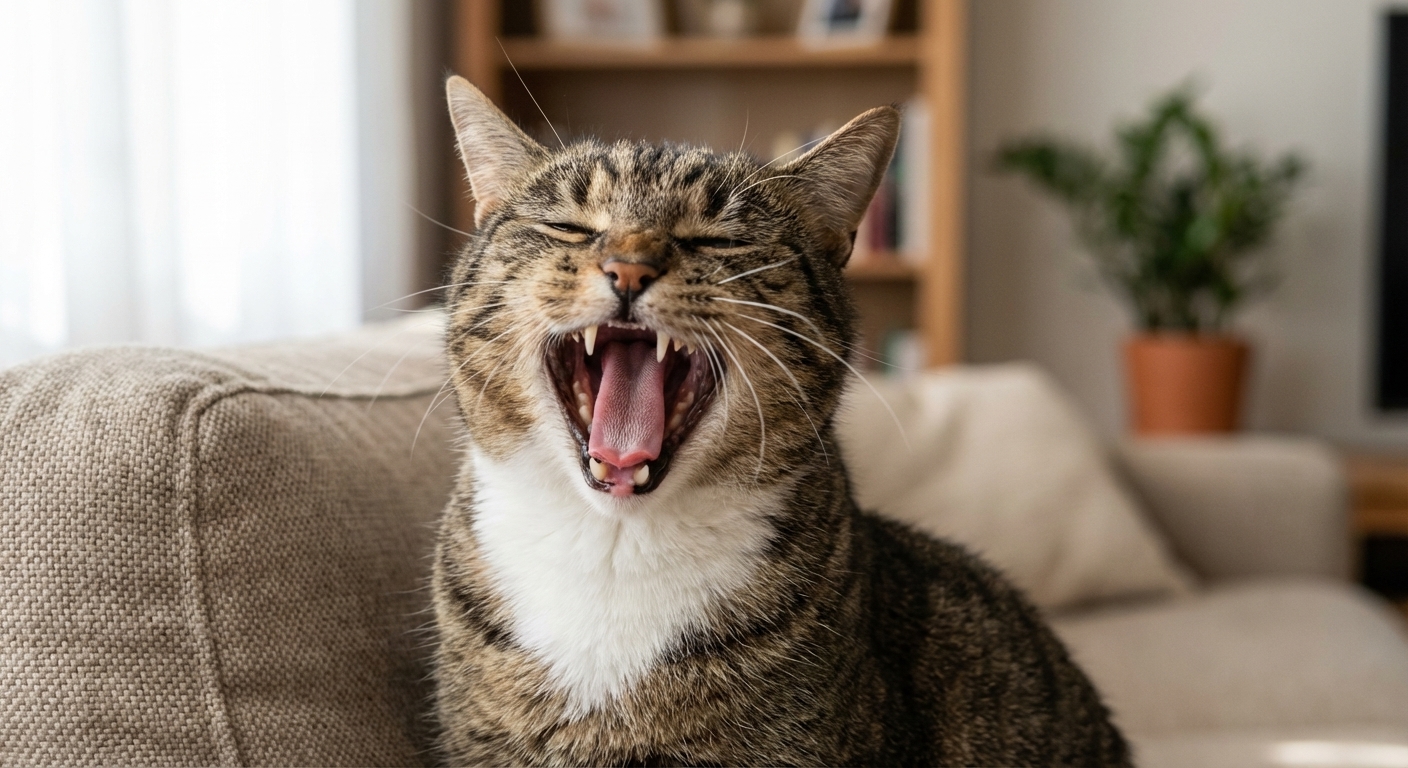
- Persistent bad breath: not “tuna breath,” but a foul odor that sticks around.
- Drooling: especially if it is new, stringy, or tinged with blood.
- Pawing at the mouth: or sudden sensitivity around the face.
- Head tilting while chewing: or chewing more slowly.
- Crunchy food suddenly avoided: cats may prefer softer textures when their gums hurt.
- Grooming less: oral pain can make grooming uncomfortable.
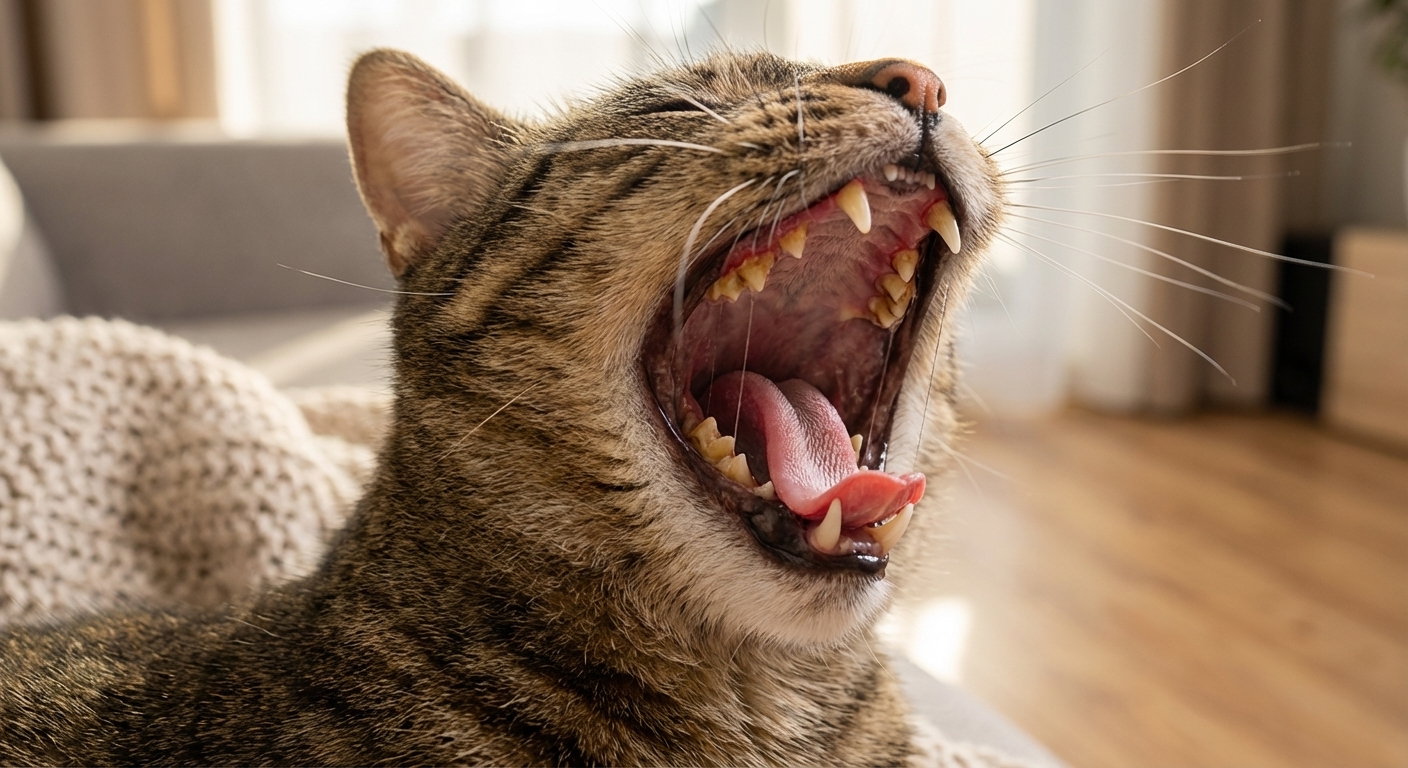
- Visible tartar: yellow or brown buildup, often on the back teeth.
Not all mouth pain is periodontal
This is important in cats: not every painful mouth is “just tartar.” Two common feline conditions can look similar at home but need specific veterinary treatment.
Tooth resorption (FORLs)
Feline Odontoclastic Resorptive Lesions (FORLs) happen when parts of the tooth structure break down, often starting below the gumline. A tooth can look normal on the surface while the root is actively resorbing underneath. These lesions are painful and often require extraction. Dental X-rays are the best way to find the full extent.
Gingivostomatitis
Some cats develop severe inflammation of the gums and mouth (often called feline chronic gingivostomatitis). These cats may have intense redness, drooling, pain, and trouble eating, even if tartar is not dramatic. They need a veterinarian’s guidance, and treatment can go beyond cleaning alone.
Bottom line: drooling, bad breath, or appetite changes always deserve a proper oral exam, even if you do not see much when you lift the lip.
Whole-body effects
The mouth is part of the body, not separate from it. With periodontal disease, bacteria and inflammatory mediators can enter the bloodstream, especially when gums bleed. Over time, chronic oral inflammation may contribute to systemic inflammation and stress on the body.
Kidneys
Cats are already prone to chronic kidney disease as they age. While we cannot say dental disease “causes” kidney disease, chronic infection and inflammation may be associated with overall health strain. Dental pain can also reduce appetite and hydration, which are both important for kidney support.
Heart
In people, periodontal disease is linked with cardiovascular disease. In cats, we are still learning the full relationship. The practical takeaway is simple: a healthier mouth supports whole-body health.
At-home dental care
You do not need perfection. You need consistency. Even a few times a week can make a difference, and daily is the gold standard.
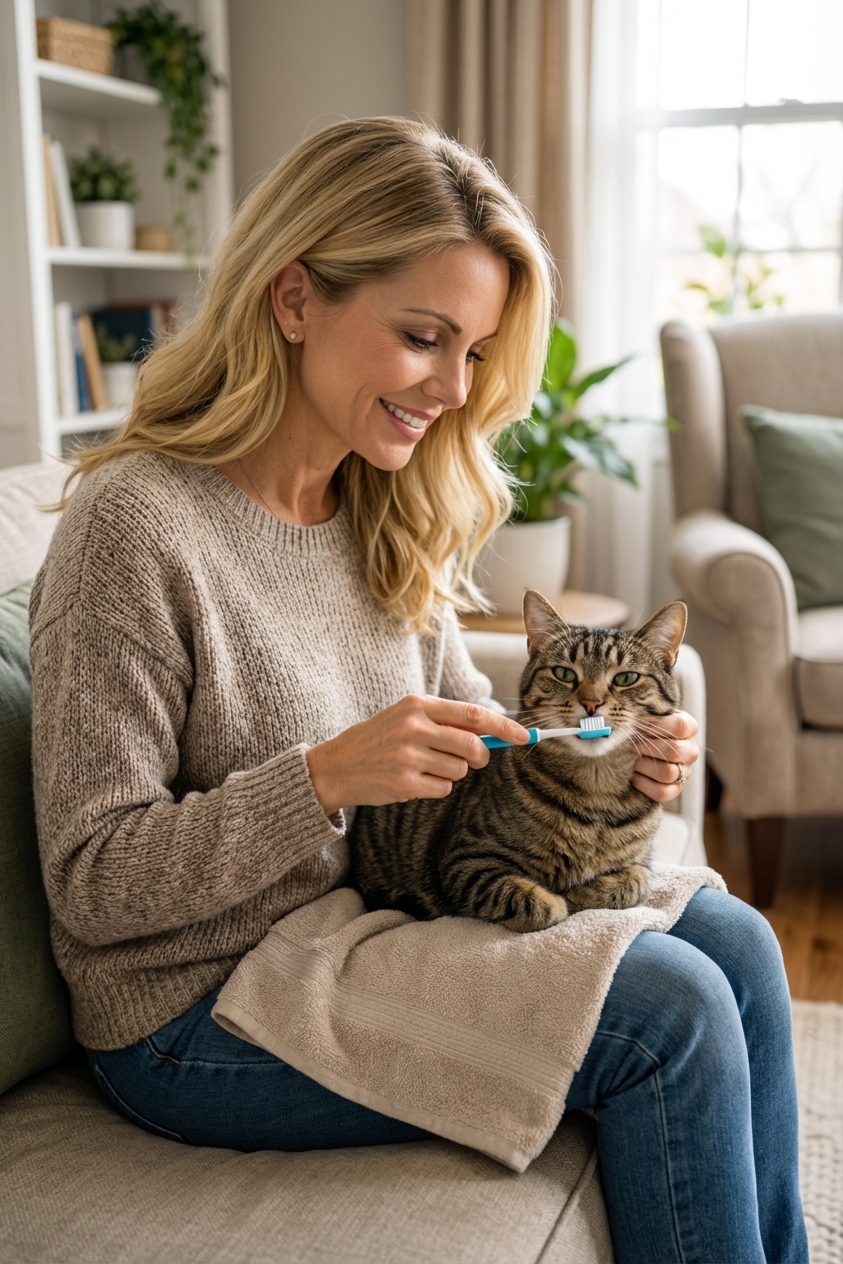
1) Toothbrushing (best option)
- Use a cat toothbrush or soft finger brush.
- Use pet-safe toothpaste only. Human toothpaste can be harmful if swallowed.
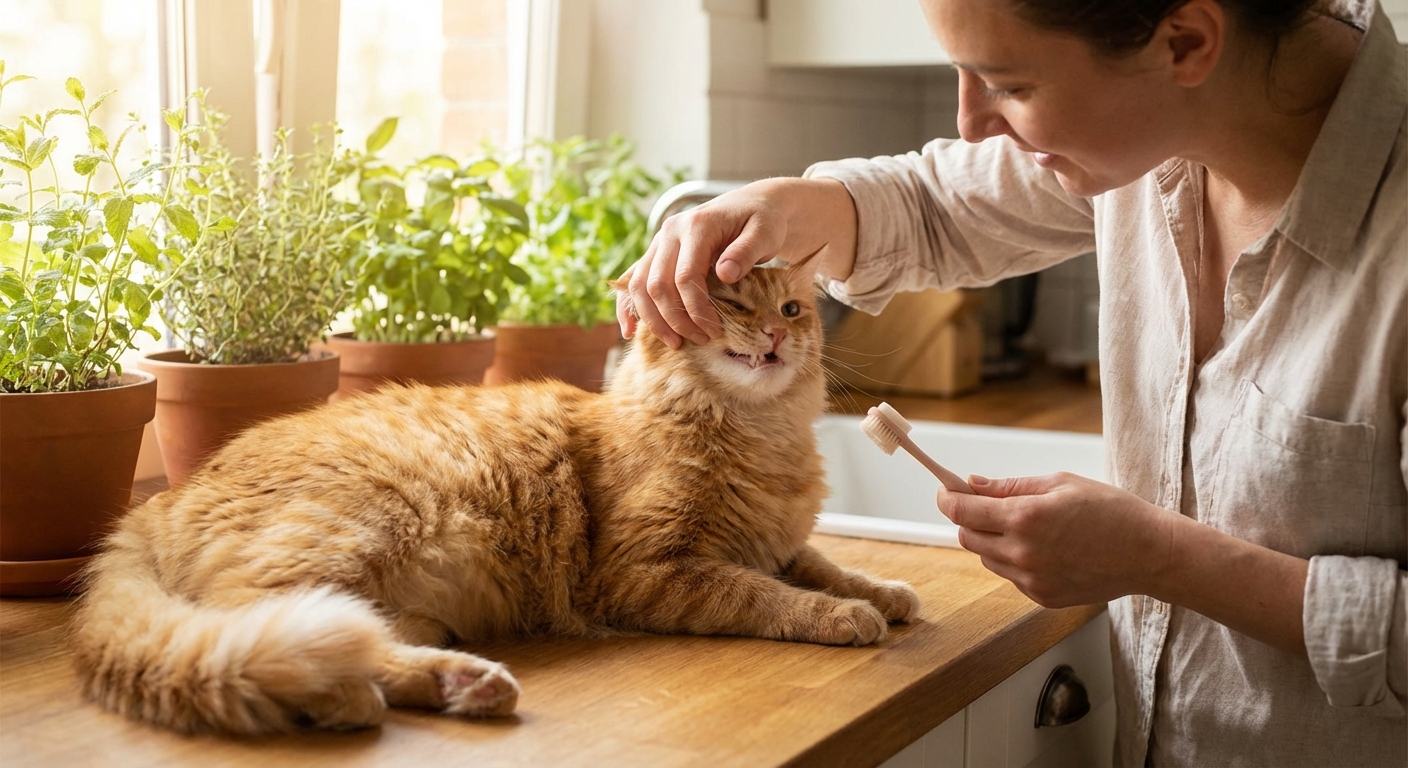
- Start with short sessions: lift the lip, touch the brush to the outer surfaces, and stop before your cat gets upset.
- Aim for the outer gumline, especially the back teeth where tartar builds.
My favorite tip from the clinic: pair brushing with something your cat loves right after, like a small treat or play session. It helps build a positive routine.
2) Dental treats and dental diets
Look for products with the VOHC (Veterinary Oral Health Council) seal when available. The VOHC seal indicates the product meets standards for reducing plaque and or tartar. It does not cure dental disease, but it can help as part of a plan. Dental kibble or treats can reduce plaque mechanically, but they are best as an add-on, not a replacement for brushing.
3) Water additives and oral gels
Some cats do well with water additives or oral gels that reduce bacterial load. These can be helpful when brushing is not possible, but results vary. If your cat refuses treated water, do not force it. Hydration matters.
4) Chews and toys (use caution)
Cats do not chew like dogs, and overly hard products can crack teeth. Choose cat-specific dental chews and ask your veterinarian what is safe for your cat’s mouth.
Quick do not list
- Do not use human toothpaste.
- Do not try to scrape tartar off at home with tools. It can damage enamel and gums, and you can get bitten.
- Do not use essential oils in your cat’s mouth unless your vet specifically recommends a product. Many are unsafe for cats.
- Do not use anything containing xylitol. It is dangerous for pets.
When a professional cleaning is needed
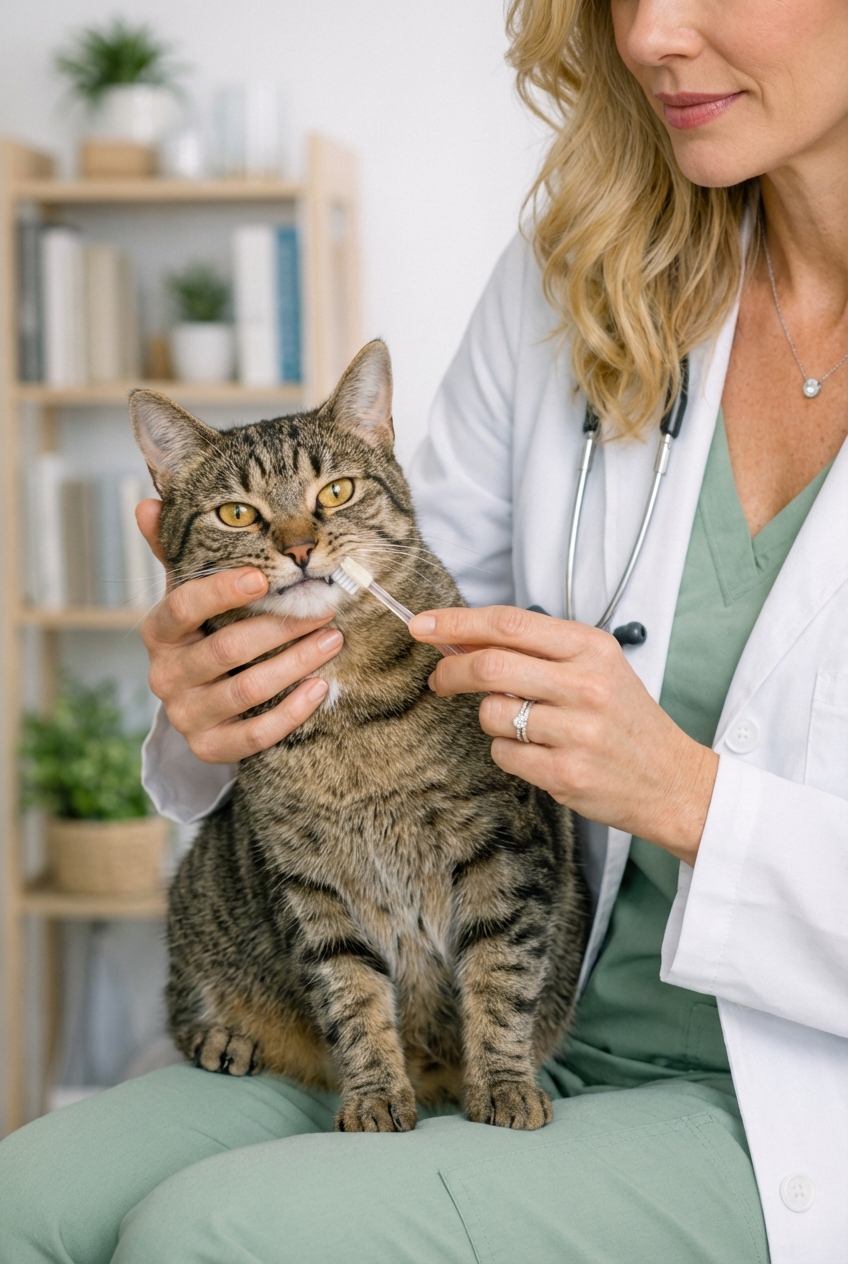
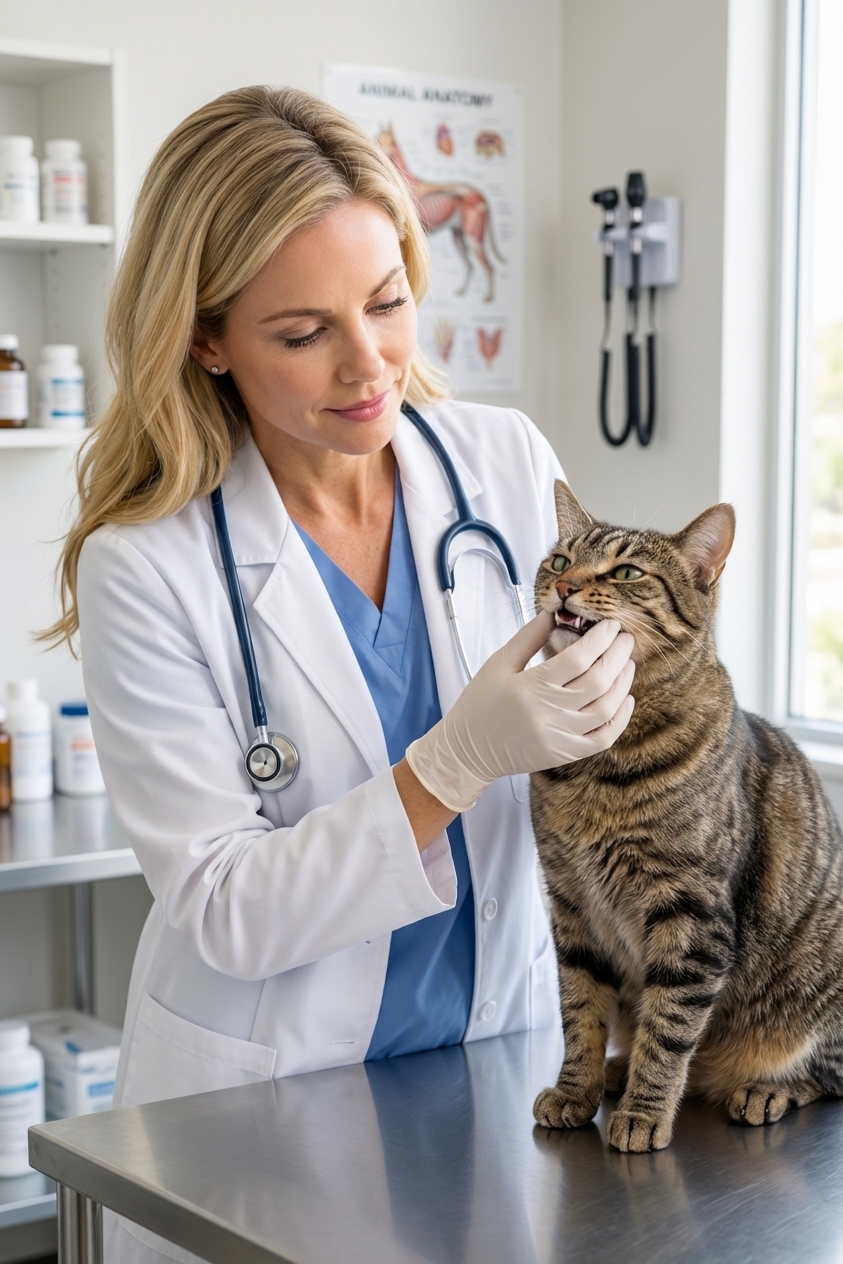
If you see tartar, gum redness, or your cat has persistent bad breath, it is time for a veterinary dental evaluation. Most cats with periodontal disease need a professional dental cleaning under anesthesia because the most important work happens under the gumline, where cats will not allow cleaning while awake.
What it usually includes
- Full oral exam
- Gumline probing to assess pockets and attachment loss
- Scaling and polishing above and below the gumline
- Dental X-rays to look for hidden root disease, tooth resorption (FORLs), and bone loss
- Treatment plan for extractions if teeth are unstable or infected
Dental X-rays are especially important in cats because a tooth can look fine on the surface while the root is painful or resorbing underneath.
Anesthesia safety (a common worry)
It is normal to feel nervous about anesthesia. Veterinary dental cleanings are typically done with pre-anesthetic assessment (often including bloodwork), modern monitoring, and a trained team focused on safety. Your veterinarian can walk you through your cat’s individual risk factors and what monitoring they use during the procedure.
When to schedule soon
- Persistent bad breath
- Red gums, bleeding, or drooling
- Pawing at the mouth, chewing changes, food dropping
- Visible tartar on the back teeth
- Any facial swelling
Prevention plan
If you want an easy plan you can actually stick with, start here:
- Weekly: quick “lip lift” check at home. Look for redness, tartar, or swelling.
- 3 to 7 days per week: brushing, even if it is brief.
- Every 6 to 12 months: veterinary exam with an oral check (more often for cats with a history of dental disease).
- As recommended: professional cleanings based on your cat’s tartar, gum health, and dental X-rays when indicated.
The earlier we address dental disease, the more teeth we can save and the less pain your cat has to live with.
If you are unsure where to start, talk with your veterinarian about your cat’s specific risk factors and the best home care options. You can absolutely improve dental health one small habit at a time.