New to cockatiels? Get a practical care guide covering cage setup, sleep, pellets vs seeds, safe foods, taming, enrichment, grooming, home hazards, and when ...
Article
•
Designer Mixes
Parakeet Care Basics

Shari Shidate
Designer Mixes contributor
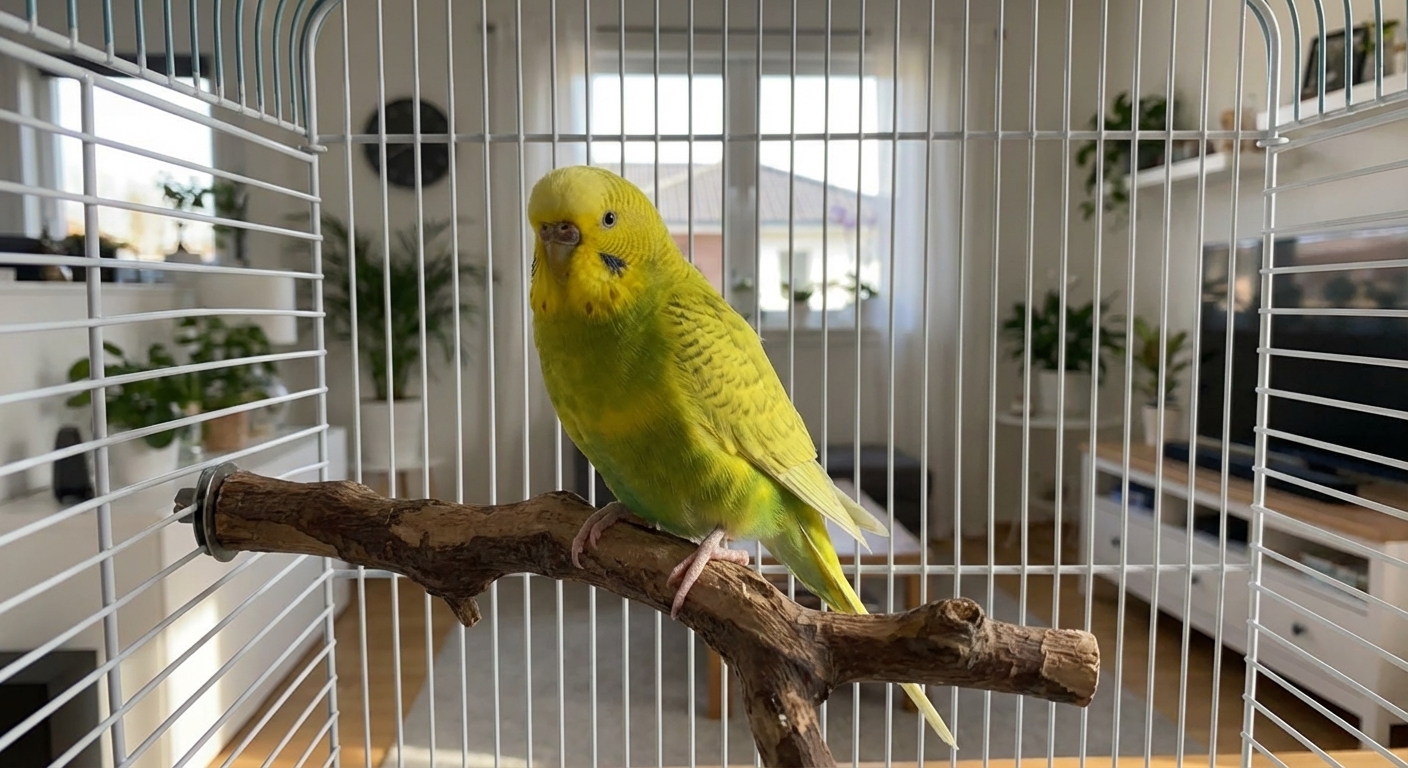
Budgerigars (often called budgies) are one of the most popular pet parakeets. They are small birds with big personalities. If you are new to birds, budgies are a wonderful place to start because they are social, playful, and often eager to bond with their people. The key is setting up the right diet, the right cage, and a calm daily routine so your budgie feels safe enough to relax and connect with you.
Diet: seeds vs pellets
Food is where many beginner mistakes happen, and it is not because people do not care. It is because older advice focused heavily on seed. Seed is tasty, but an all-seed diet can be too high in fat and too low in key nutrients. Over time, that can contribute to obesity, fatty liver disease, and vitamin deficiencies.
What a balanced diet looks like
There is some healthy debate in the bird world about exactly how pellet-forward a budgie diet should be. A practical, beginner-friendly approach is to use pellets as a steady base, lean heavily on vegetables, and keep seeds as a smaller portion and training treat. Your avian veterinarian can help you tailor this for your individual bird.
- Pellets: Often used as the “base” because they are formulated to be complete. A common target range is about 50% to 70% of the daily diet.
- Fresh vegetables: A daily habit that supports vitamins, minerals, hydration, and gut health. Many owners aim for roughly 20% to 40%.
- Seeds: Best used as a smaller portion of the diet and as high-value treats for training and bonding. A common target is about 5% to 15%, depending on the bird.
- Fresh water: Changed daily, more often if it gets soiled.
Calcium support: Offer a cuttlebone or mineral block. Avoid adding vitamins to drinking water unless your avian vet specifically recommends it. It can spoil quickly, and dosing is inconsistent.
Beginner-friendly veggie list
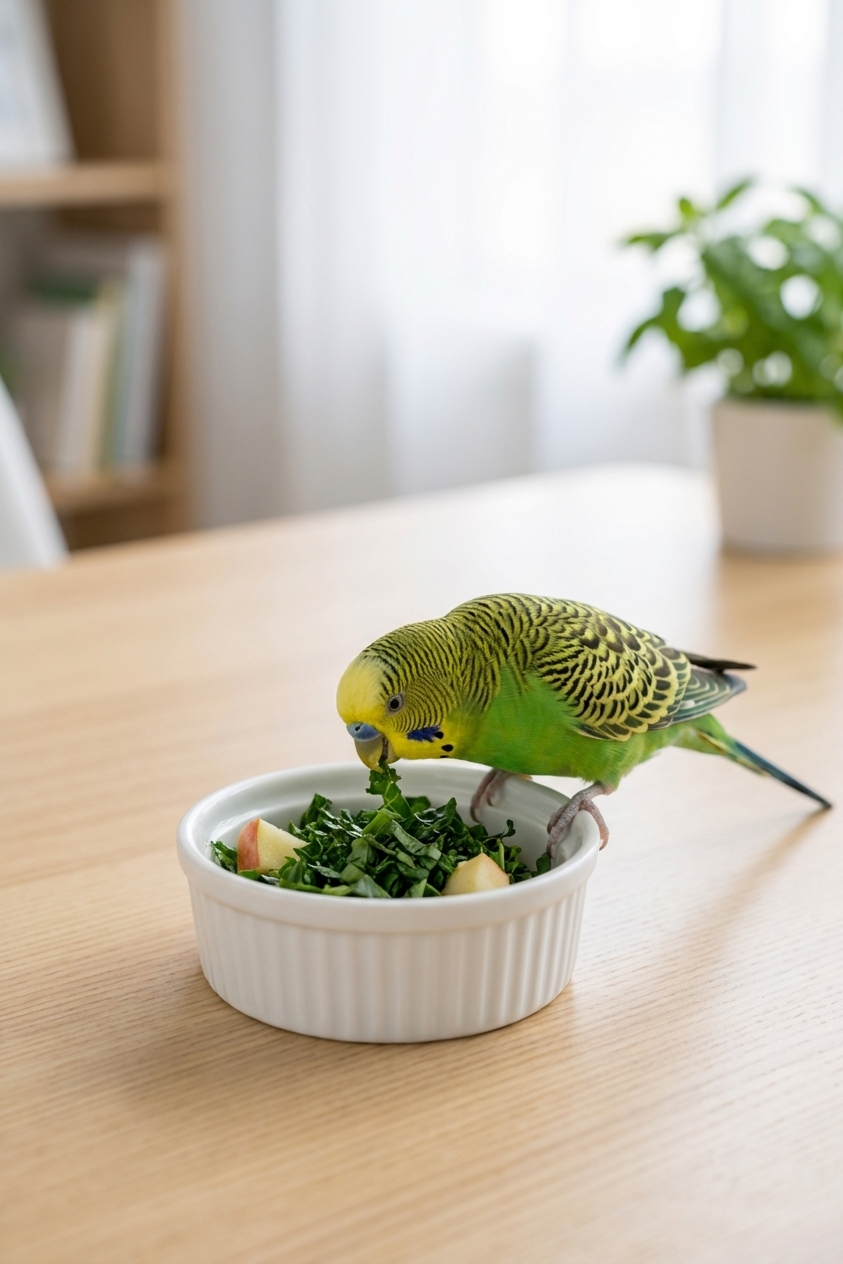
Start simple and rotate. Offer small chopped pieces, clipped leafy greens, or finely minced veggies in a separate dish.
- Romaine, green leaf, or red leaf lettuce (avoid iceberg)
- Kale, collard greens, mustard greens (small amounts at first)
- Broccoli florets and stems
- Carrot (grated or thin slices)
- Bell pepper
- Snap peas
- Cooked sweet potato (cooled, plain)
Fruit and treats
Fruit is like dessert for budgies. Offer tiny portions a few times a week.
- Good options: berries, apple (no seeds), pear, melon
- Keep it small: fruit is higher in sugar than veggies
Foods to avoid
- Avocado
- Chocolate
- Caffeine and alcohol
- Onion and garlic (safety-first: best avoided for pet birds)
- Apple seeds and fruit pits
- Rhubarb
- Salty, sugary, or fried “people foods”
Switching from seed to pellets
Budgies can be stubborn about new food. Go slowly and watch droppings, energy, and appetite. A gram scale is one of the best tools you can own. Weigh your budgie at the same time of day, and ask an avian vet what a safe weight range is for your bird. If your budgie stops eating, seems weak, or loses weight, pause and contact an avian vet.
Some budgies switch in a week or two, and some need several weeks. Here is an example progression if your budgie is doing well:
- Days 1 to 4: 75% current seed mix, 25% pellets
- Days 5 to 10: 50% seed, 50% pellets
- Days 11 to 18: 25% seed, 75% pellets
- After: pellets and vegetables as staples, seed mostly for treats
Tip: Offer pellets first in the morning when your budgie is hungriest, then add the usual food later. You can also crush a few pellets and lightly dust them over seed so the smell becomes familiar.
Cage setup: size and layout
Your budgie’s cage is their home base, so comfort and safety matter more than fancy accessories. If you can, choose the biggest cage you can reasonably fit in your home. Bigger makes it easier for your bird to move, play, and stay emotionally healthy.
Cage size guidelines
- Better minimum footprint: Aim for about 30 in long x 18 in wide x 18 in tall or larger for one budgie, with an emphasis on width for horizontal movement.
- Small cages: An 18 in x 18 in x 18 in cage can be a bare minimum in very limited situations, but it is not ideal as a long-term home.
- Bar spacing: About 3/8 in to 1/2 in, ideally closer to 3/8 in for smaller budgies so heads do not get stuck.
Best placement
- Place the cage in a “family area” where your budgie can see and hear you.
- Keep one side of the cage against a wall so your bird feels secure.
- Avoid kitchens due to fumes, smoke, and nonstick cookware risks.
- Avoid direct drafts from vents and doors.
- Provide a consistent light and sleep schedule. Most budgies do well with about 10 to 12 hours of quiet darkness, and many thrive closer to 12.
Perches
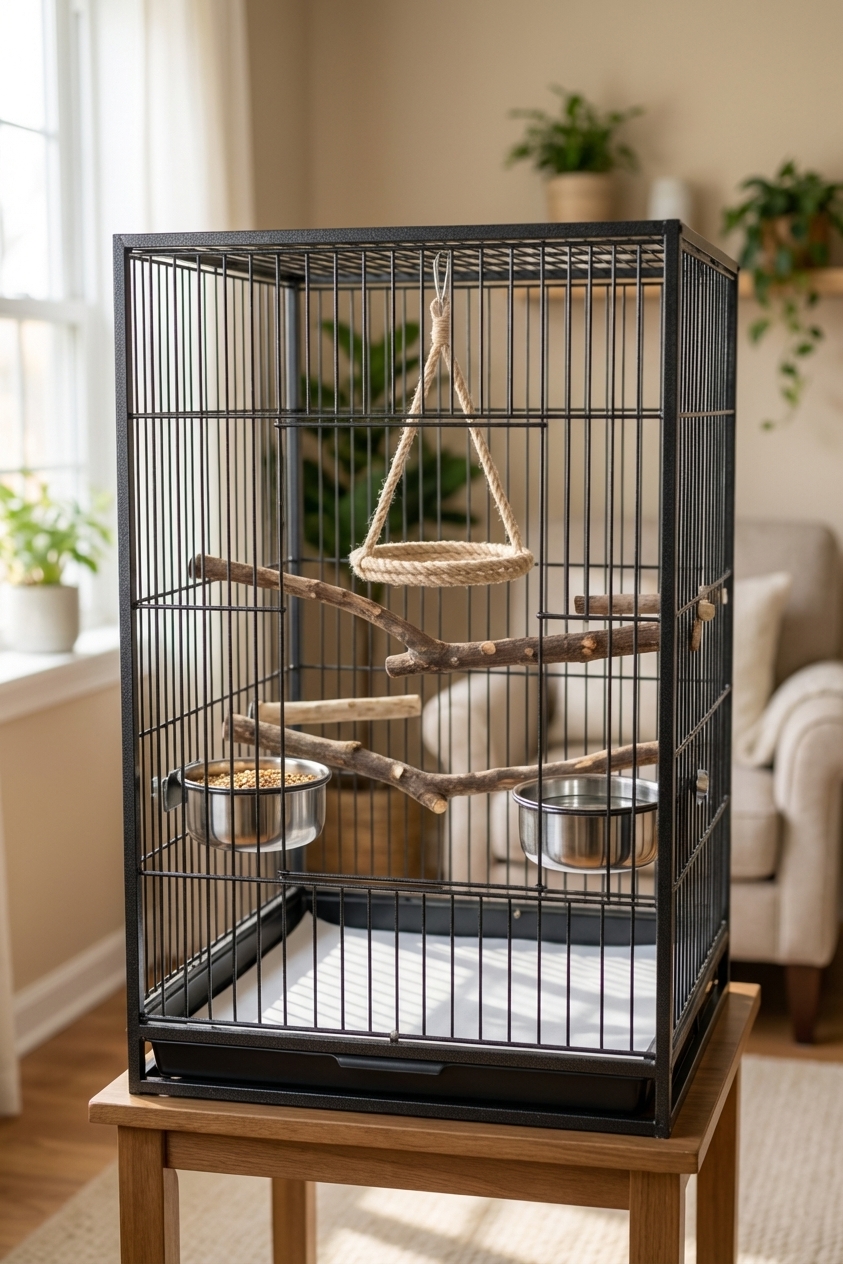
One smooth dowel perch is not enough. Budgies need varied textures and diameters to support healthy feet and reduce pressure points.
- Use natural wood perches in different widths.
- Add a platform perch or flat resting spot if possible.
- Avoid sandpaper perch covers, which can irritate feet.
Toys and enrichment
Budgies are curious chewers. Safe toys help prevent boredom and can reduce boredom-related noise. Enrichment can also be one helpful piece of a bigger plan if you are dealing with stress behaviors, but medical issues should always be ruled out first.
- Great choices: shreddable paper toys, untreated palm or seagrass, simple swings, foraging cups, and bird-safe balsa.
- Rotate weekly: keep a few favorites and swap in “new” toys to maintain interest.
- Watch for hazards: frayed strings, small loose parts, or toys that can trap toes.
Out-of-cage time and safety
Daily out-of-cage time is a big quality-of-life boost, even if it is just a short session at first. Before you open the door, make the room safe.
- Close windows and doors, and cover mirrors and large windows if your bird startles easily.
- Turn off ceiling fans.
- Keep other pets out of the room.
- Remove open water hazards like sinks, toilets, buckets, and hot drinks.
- Watch cords, small chewable items, and toxic houseplants.
- Avoid aerosol sprays, plug-in air fresheners, incense, and essential oil diffusers around birds.
Bonding and step-up
Budgies bond through calm repetition. Your goal is to become predictable and safe. Think of it like building trust with a shy animal at a shelter. You are showing your bird, day after day, that your hands are not scary.
Start with your presence
- Sit by the cage and talk softly for a few minutes at a time.
- Move slowly and avoid reaching in quickly from above, which can feel like a predator.
- Offer treats through the bars first if your budgie is nervous.
Use treats
Millet is the classic training treat for a reason. Offer a tiny piece, then pause. Over time, your bird learns that your hand predicts good things.
Step-up training
When your budgie is comfortable eating near you, you can teach “step up.”
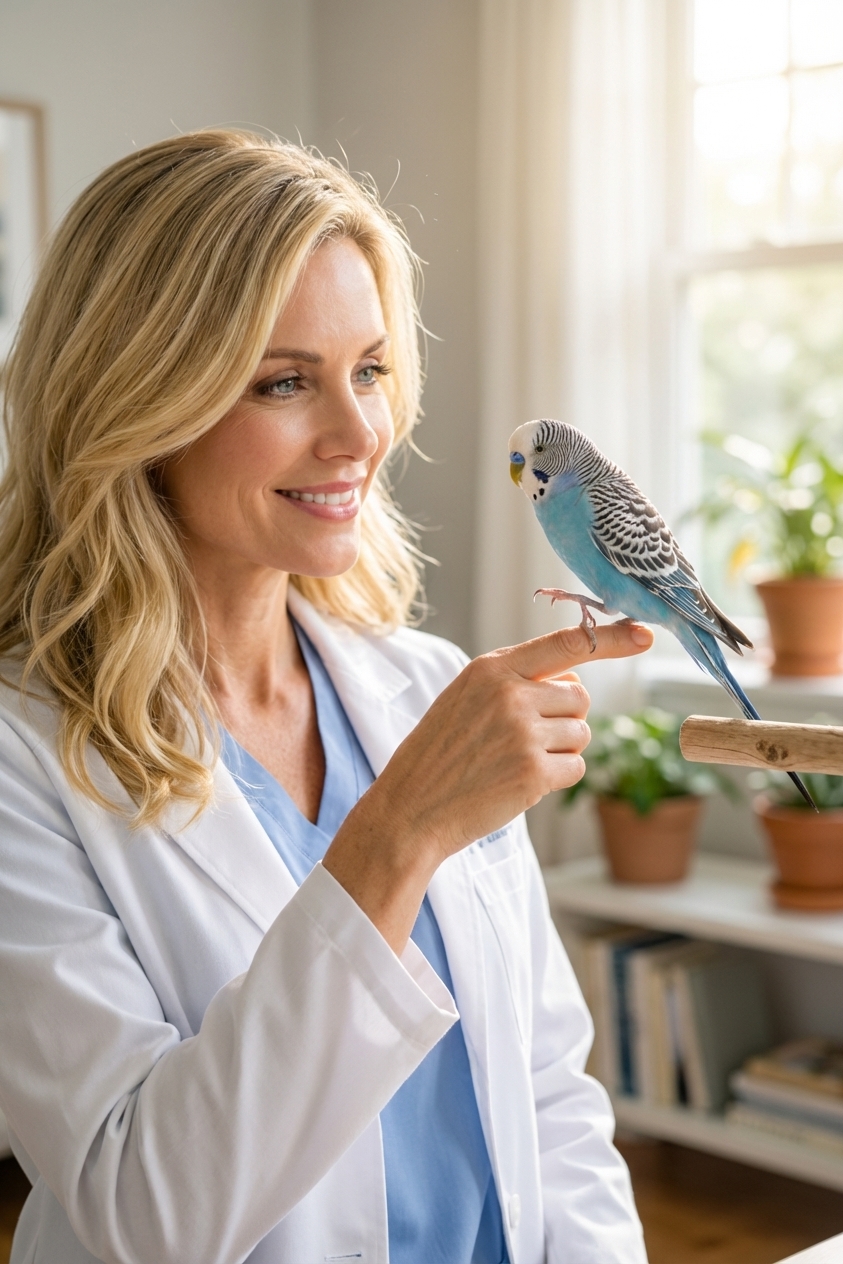
- Place your finger gently against your bird’s lower chest, just above the feet.
- Say “step up” once, calmly.
- Reward immediately when your budgie steps on your finger, even if it is just one foot at first.
- Keep sessions short, like 2 to 5 minutes.
One budgie or two
Budgies are highly social. Two can keep each other company, especially if you are away from home for long stretches. The trade-off is that a pair may bond more strongly with each other than with you. If your main goal is hands-on training and you are home often, one budgie can be a great choice, as long as you provide daily interaction.
Happy vs stressed
Budgies communicate constantly with posture, feathers, and sound. Learning these signals early helps you adjust before small stress turns into illness.
Comfort signs
- Chattering, soft singing, and gentle beak grinding at rest
- Playing with toys and exploring the cage
- Standing on one foot while relaxed
- Preening normally and looking sleek and well-kept
- Eating regularly and producing normal droppings
Stress signs
- Frozen posture, wide eyes, or frantic fluttering
- Heavy breathing after a scare
- Repeated pacing or hanging on cage bars constantly
- Not eating when people are near
- Aggressive lunging, especially when you approach the cage
When it is urgent
Birds often hide illness. If you see lethargy, sitting fluffed for long periods, tail bobbing with each breath, or a sudden drop in appetite, treat it as urgent and contact an avian veterinarian.
Health signs to watch
One of the simplest habits you can build is a quick daily glance at droppings and behavior. Just remember that diet changes can temporarily change droppings, especially when you introduce fresh vegetables. What matters most is whether your bird is acting normal, eating normally, and whether changes persist beyond a day or come with other symptoms.
Red flags for an avian vet
- Fluffed up and quiet for hours at a time
- Tail bobbing or open-mouth breathing
- Change in droppings that lasts more than a day, especially very watery stool or black, tarry stool
- Weight loss or prominent keel bone (use a gram scale if you can)
- Vomiting or repeated head shaking with wet feathers around the face
- Limping, favoring a foot, or not perching normally
- Crusty cere, thickened beak, or scaly legs that worsen
Vomiting vs regurgitation: Regurgitation can be a bonding or hormonal behavior in some parrots, but true vomiting is more forceful, messy, and often comes with a “sick bird” look. If you are unsure, treat it seriously and call an avian vet.
Quick safety note: Birds are sensitive to airborne toxins. If your bird seems suddenly weak or is breathing hard, consider environmental causes such as smoke, strong cleaners, scented candles, aerosols, plug-ins, essential oil diffusers, and fumes from overheated nonstick cookware, and get veterinary help right away.
New bird basics
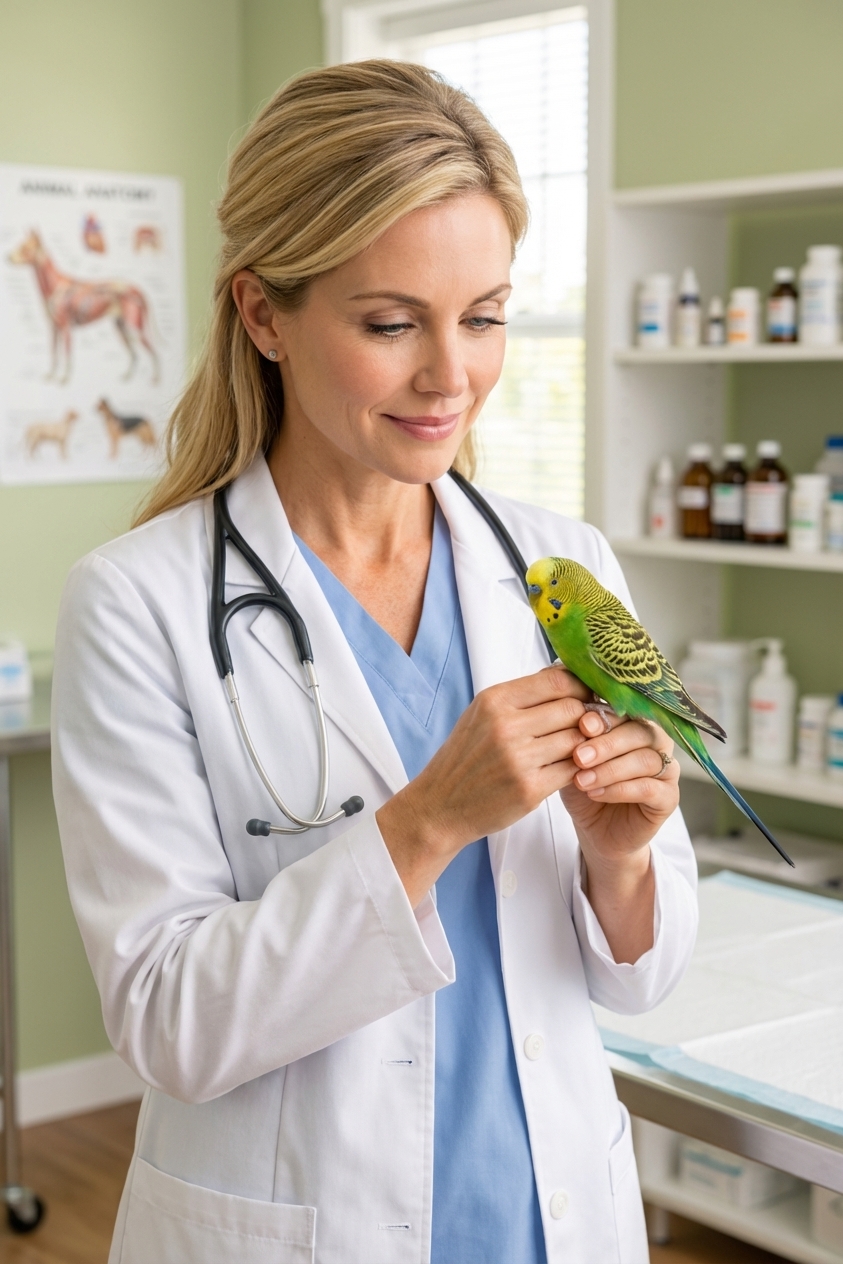
If you bring home a new budgie, a wellness exam with an avian veterinarian is a smart first step. If you already have birds at home, consider a quarantine period in a separate room to reduce the risk of spreading illness.
Molting basics
Molting is when your budgie replaces old feathers with new ones. It can look dramatic, but it is usually normal and seasonal. During a molt, many budgies are a little crankier and sleep more because feather growth takes energy.
Normal signs
- Feathers on the cage floor
- Small “pin feathers” that look like tiny spikes, especially around the head
- More preening than usual
How to help
- Prioritize good nutrition, especially pellets and vegetables
- Offer bathing options like a shallow dish or gentle misting if your bird enjoys it
- Keep handling gentle if your budgie seems sensitive
Not normal
Bald patches, broken feathers, bleeding feathers, or intense itching can signal parasites, skin infection, or stress behaviors. If you are unsure, it is always worth an avian vet visit.
Simple daily routine
If you are craving a clear starting point, this routine is realistic and builds trust.
- Morning: Fresh water, pellets offered first, remove any leftover fresh produce (do not leave fresh foods sitting all day).
- Midday or afternoon: Offer a small dish of veggies for about 1 to 2 hours, then remove. In warm rooms, remove sooner.
- Evening: Short training session with millet, calm talking time, and a quiet lights-down schedule.
- Weekly: Rotate toys, wipe cage surfaces, wash bowls thoroughly, and check perches for wear.
- Ongoing: Track weight with a gram scale weekly, and increase frequency if your budgie is ill, molting hard, or transitioning diets (with vet guidance).
Your budgie does not need perfection. They need consistency, safety, and small daily moments of connection.
Medical disclaimer: This article is educational and not a substitute for veterinary care. If your bird seems sick, contact an avian veterinarian promptly.