
Designer Mixes

Dog Heat Cycle Discharge Colors: What’s Normal?
If you have a female dog who is not spayed, you may notice vulvar swelling and some type of discharge during her heat cycle. For many families, the first heat cycle is a little alarming, especially when the color changes from bright red to pink or even straw-colored. The good news is that a range...
Read more →
Dog Heat Cycle Stages
If you have a female dog who is not spayed, her heat cycle can feel confusing at first. One day she seems a little clingy, and the next you notice spotting, swelling, or sudden interest from male dogs on your walks. As a veterinary assistant, I want you to know this is normal physiology, and once...
Read more →
Dog Heat Cycle Signs Before Bleeding Starts
If you have a female dog who is not spayed, the first heat cycle can feel like it comes out of nowhere. One day she is her normal self, and the next she is acting clingy, restless, and suddenly very interesting to every male dog in the neighborhood. The tricky part is that many dogs show clear...
Read more →
Dog Shaking and Panting: Pain vs Anxiety
Seeing your dog shake and pant can be scary, especially when it seems to come out of nowhere. As a veterinary assistant, I can tell you this pattern often fits into two common buckets: pain or anxiety . Sometimes it is both. Depending on your dog’s age, breed, and health history, medical issues...
Read more →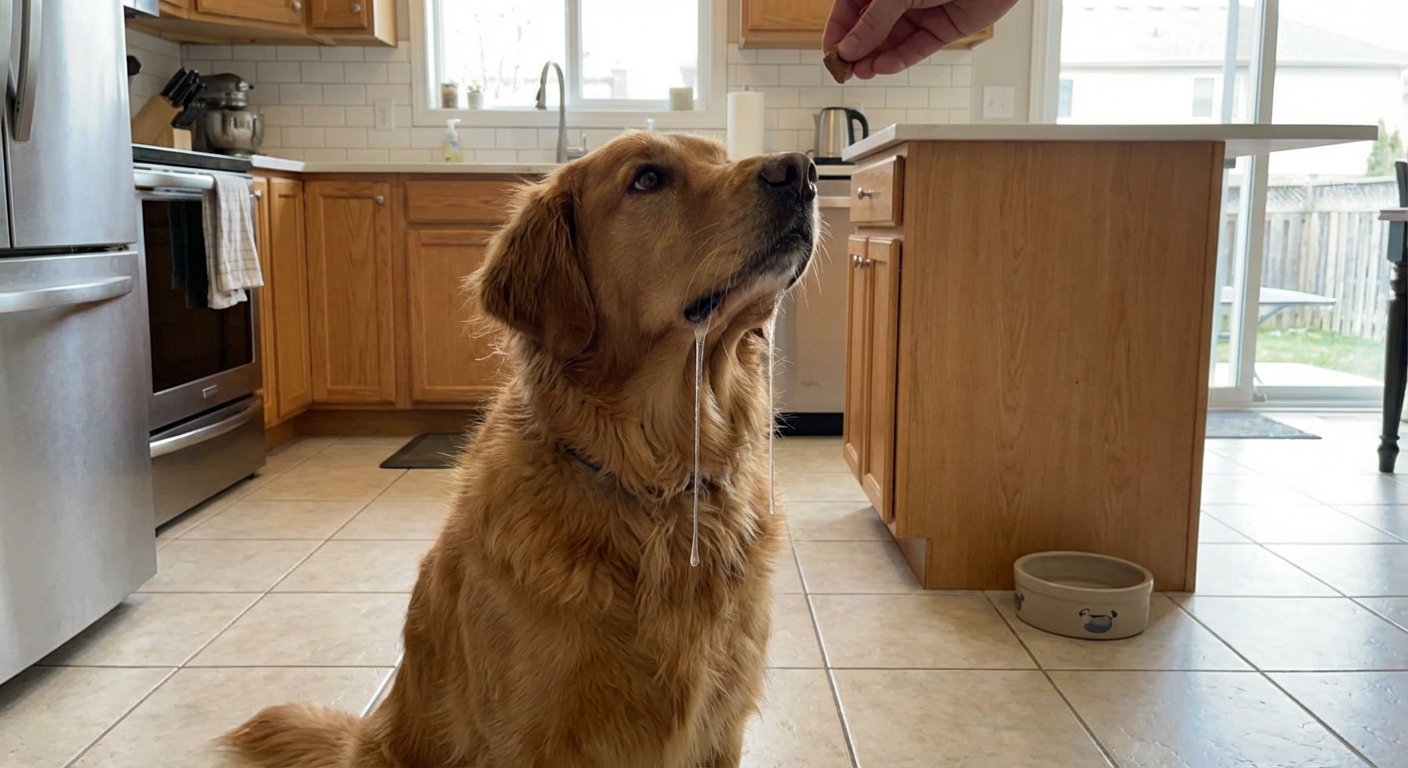
Dog Drooling and Gagging Causes at Home
Seeing your dog suddenly drool a lot, gag, or look like they are trying to vomit can be scary. As a veterinary assistant, I can tell you that some causes are minor and can settle with simple home steps, but a few are true emergencies. The key is knowing what to check first and what signs mean you...
Read more →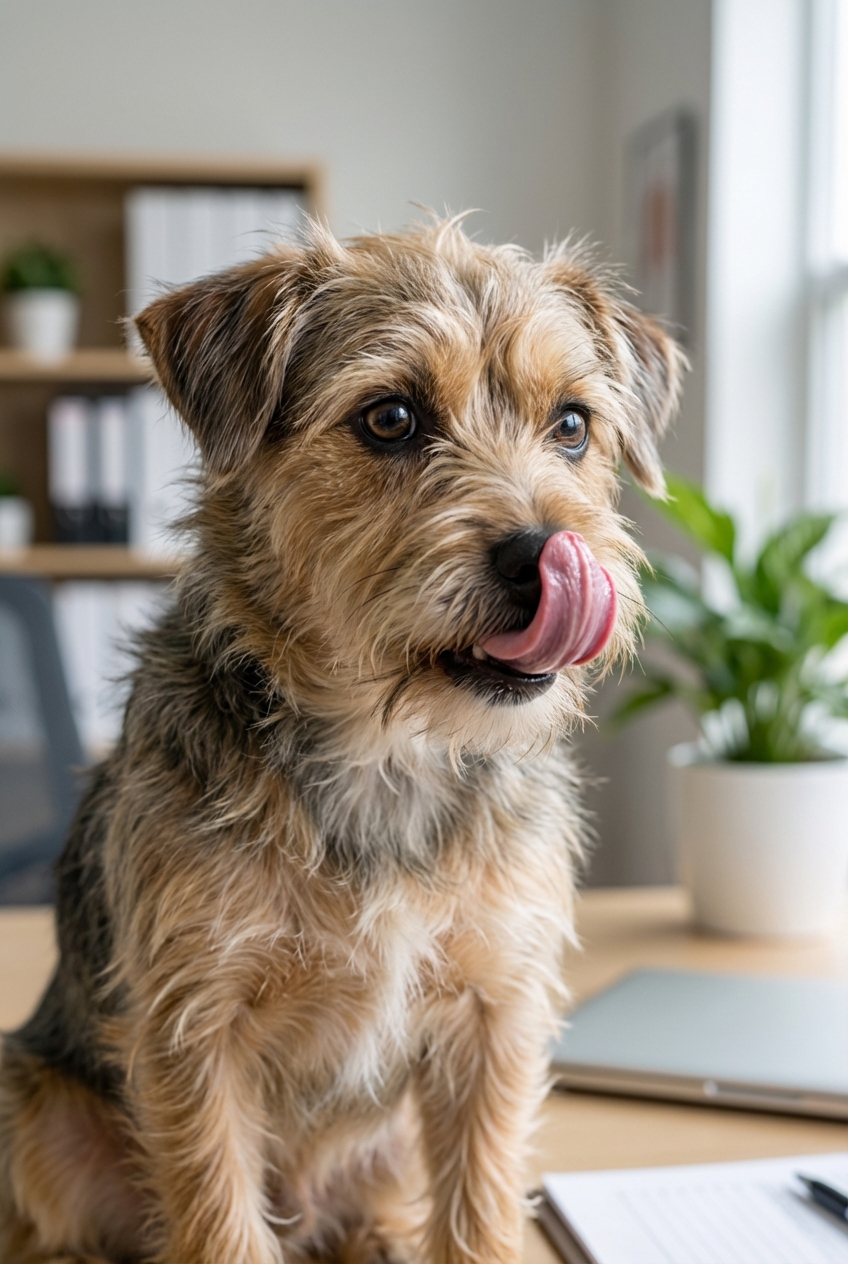
Dog Licking Lips: Nausea, Stress, or Mouth Pain?
As a veterinary assistant, I hear this question a lot: “My dog keeps licking their lips. Is that normal?” Occasional lip-licking after a tasty treat, after a drink, or when anticipating food is totally expected. But repeated, frequent lip-licking, especially when it shows up out of nowhere, is...
Read more →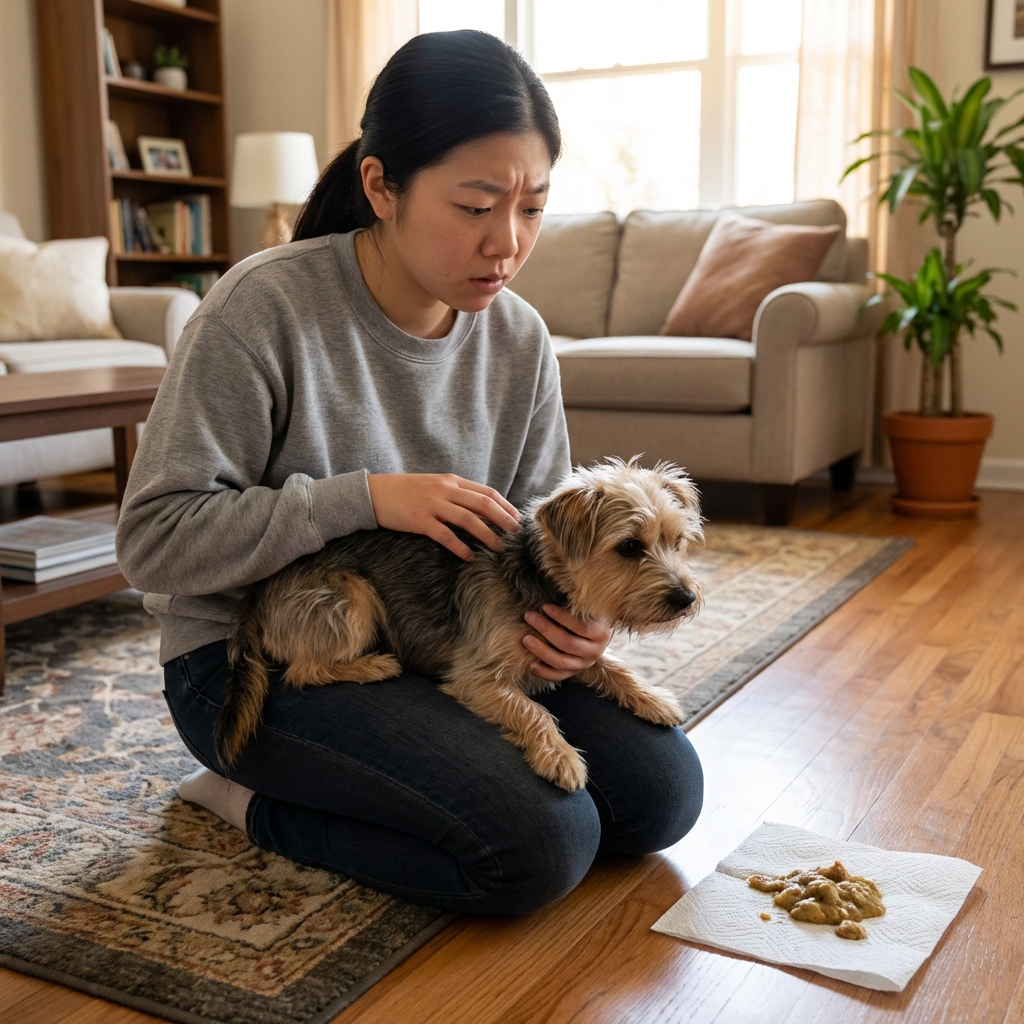
When to Go to the Vet for Dog Vomiting
Seeing your dog vomit can be scary, especially when it happens out of the blue. As a veterinary assistant here in Frisco, Texas, I have talked with many worried pet parents who ask the same question: Is this an emergency, or can I monitor at home? The truth is, vomiting ranges from mild and...
Read more →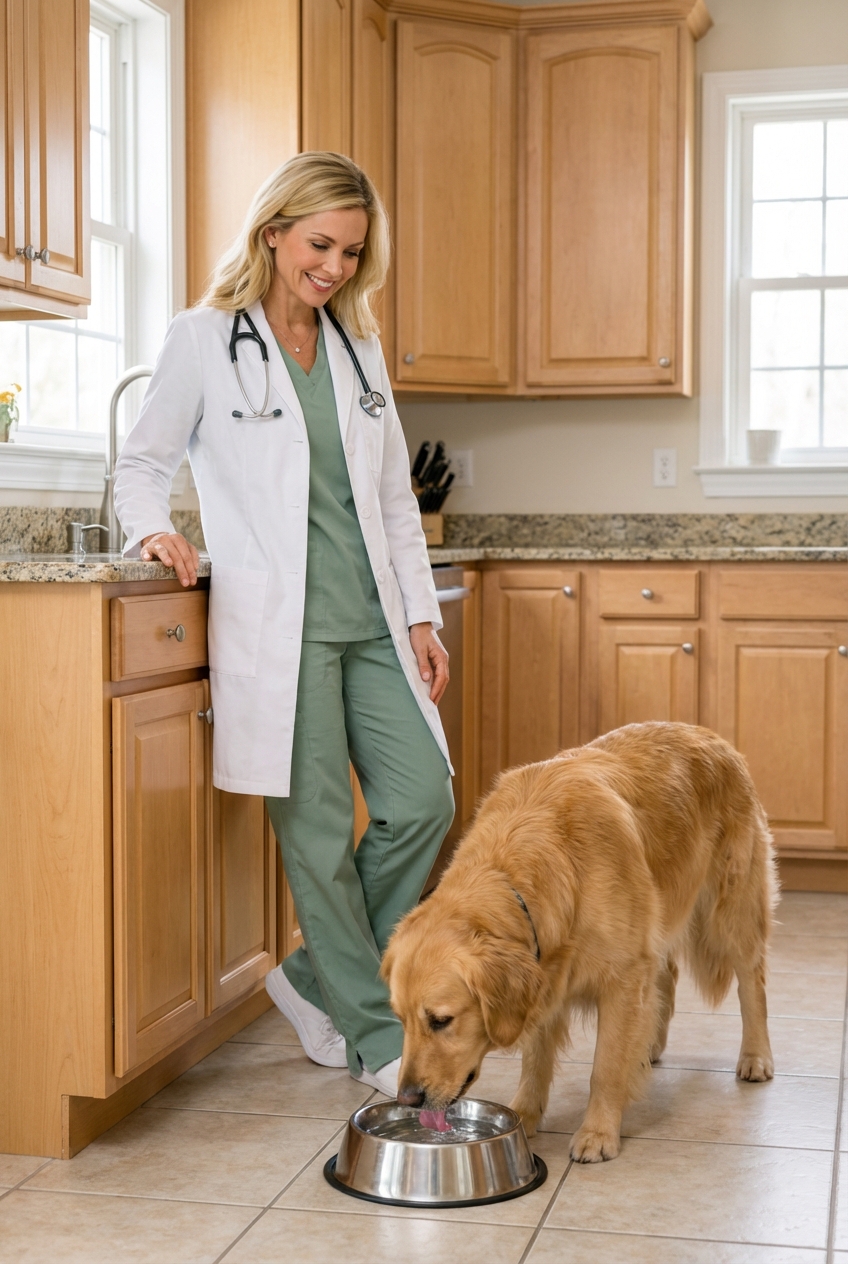
Dog Vomiting After Drinking Water: Causes and Risks
If your dog drinks water and then immediately throws up, it can feel scary and confusing. In my work as a veterinary assistant here in Frisco, Texas, I have seen this happen for many reasons, ranging from totally fixable habits like drinking too fast to urgent medical problems that need same-day...
Read more →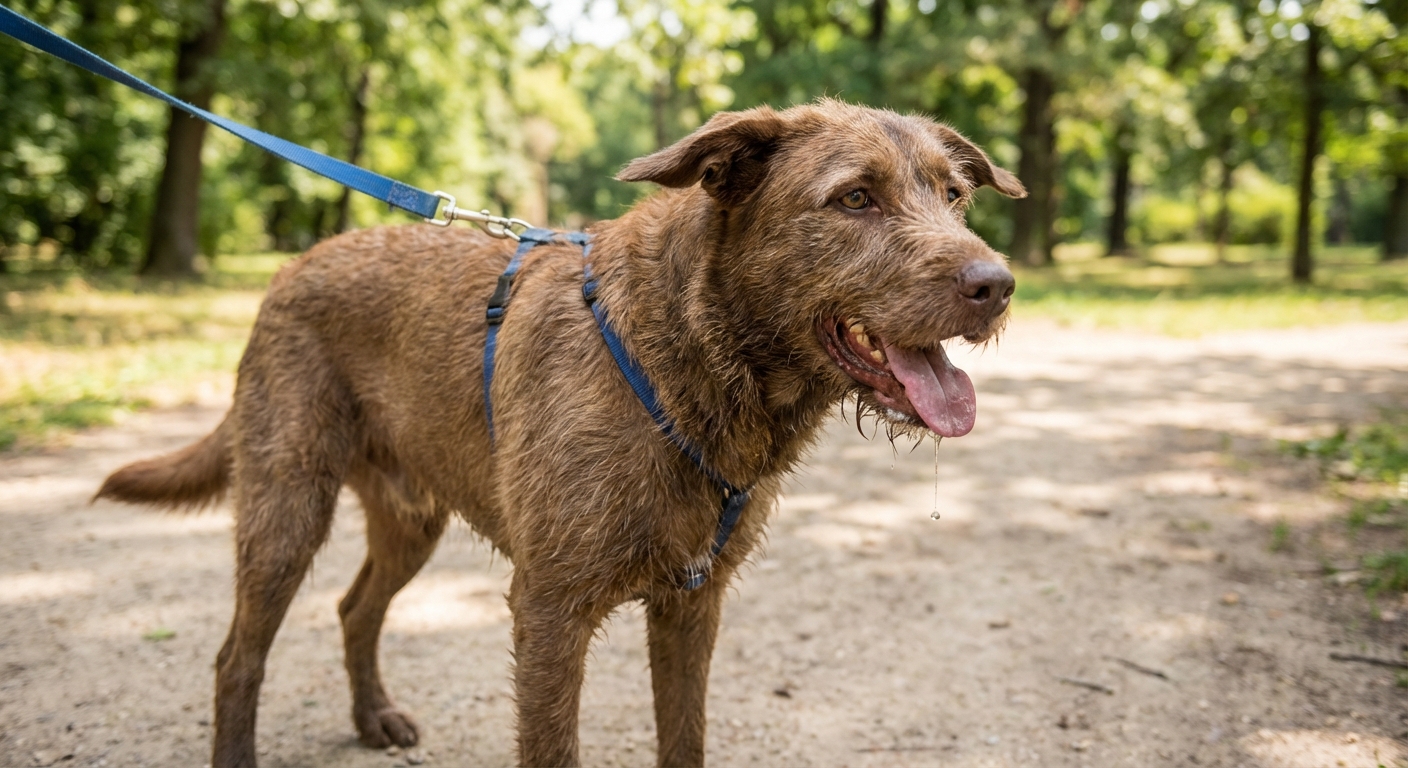
Dog Dry Heaving After Exercise: When to Worry
If your dog finishes a run, has zoomies around the yard, or plays a game of fetch and then starts dry heaving (retching with little or no vomit), it can be scary. Sometimes it is a simple irritation like gulping air or water too fast. Other times, it is a true emergency that needs a vet right away....
Read more →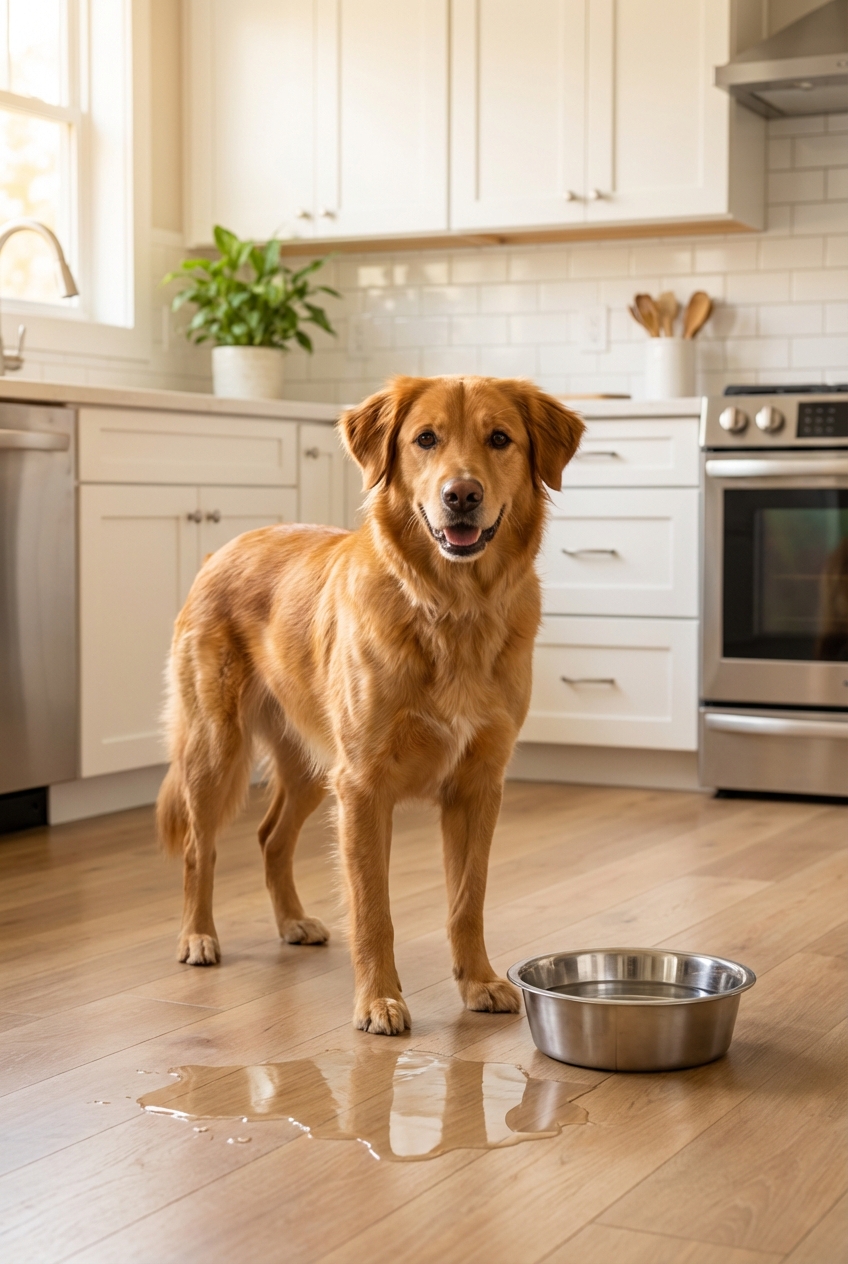
Dog Gagging After Drinking Water Causes
Few things make your heart drop faster than hearing your dog gulp water and then immediately gag, cough, or hack like something “went down the wrong pipe.” The good news is that many causes are minor and fixable. The not-so-good news is that frequent gagging after drinking can sometimes point...
Read more →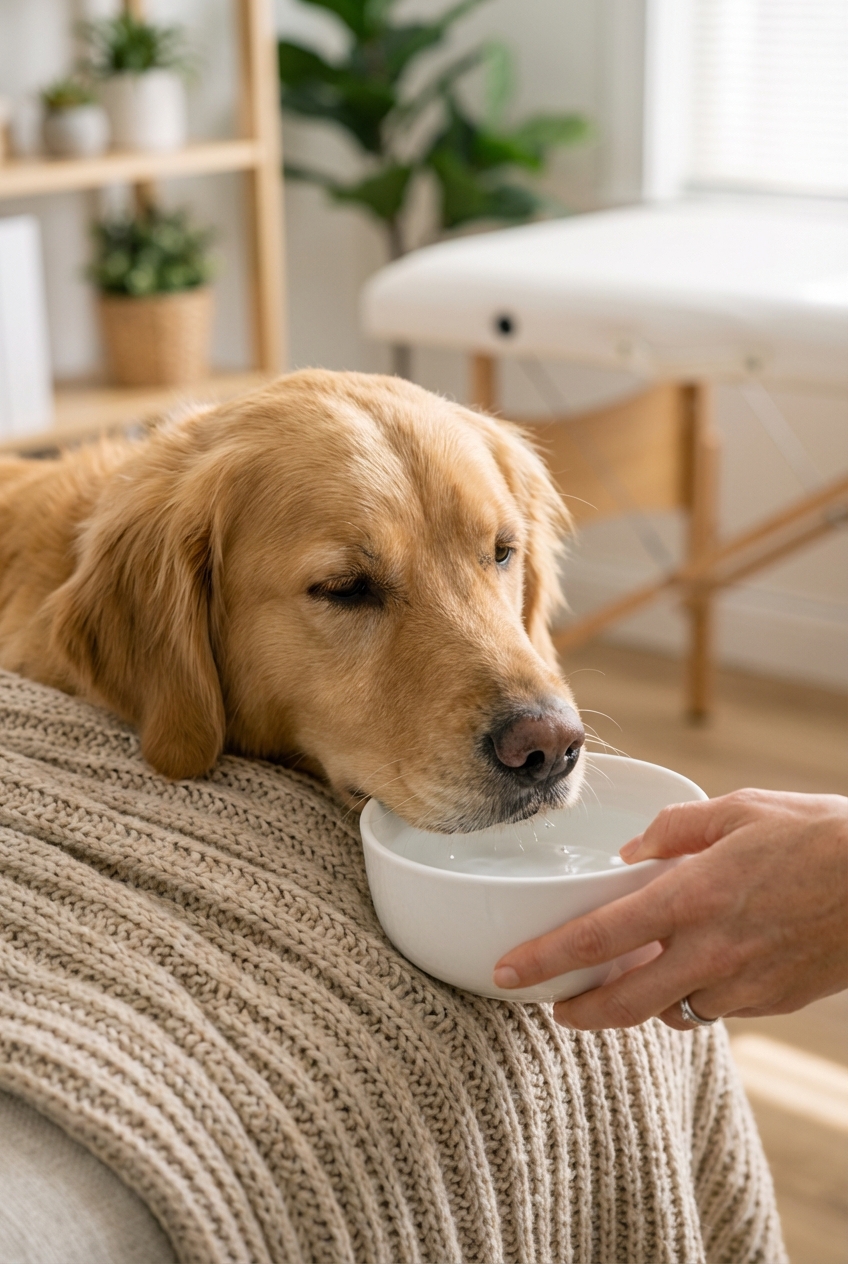
How to Rehydrate a Vomiting Dog Safely
When your dog is vomiting, it is natural to want to “fix it fast” with a big bowl of water. But here is the tricky part: a stomach that is already irritated may not tolerate normal drinking. Too much water too soon can trigger more vomiting, which means even more fluid loss. As a veterinary...
Read more →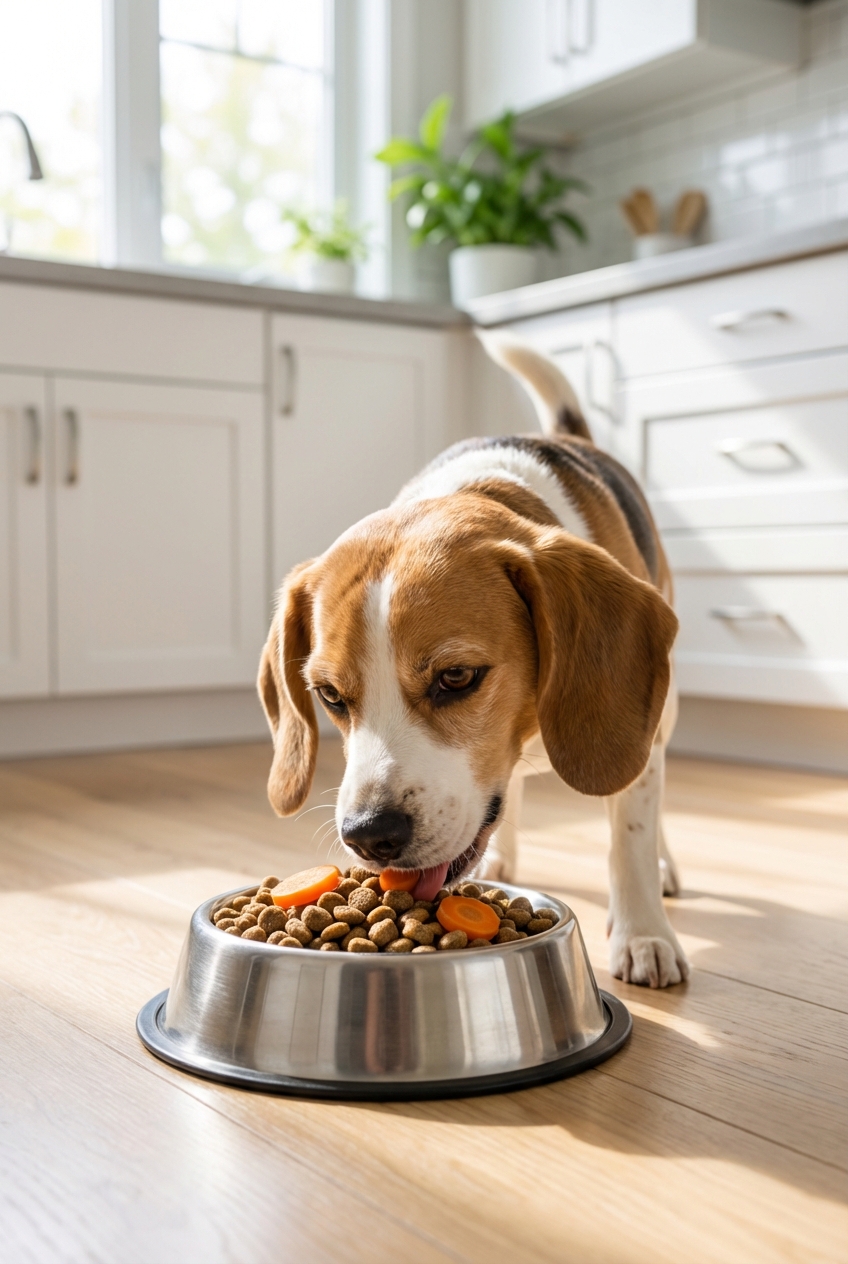
Bland Diet for Dogs: How Long to Feed It
If your dog has vomiting, diarrhea, or an upset tummy, your veterinarian may recommend a bland diet for a short time. As a veterinary assistant in Frisco, Texas, I can tell you this is one of the most common at-home steps we use to help the GI tract settle while you watch closely for red flags. But...
Read more →
Dog Vomit Color Chart
If you have ever cleaned up a surprise puddle and wondered, “What does this color mean?”, you are not alone. As a veterinary assistant in Frisco, Texas, I can tell you this is one of the most common questions pet parents ask. The color of your dog’s vomit can offer helpful clues about what is...
Read more →
Dog Vomiting Blood: Emergency Signs to Know
Seeing blood when your dog vomits is one of those moments that makes your stomach drop, and for good reason. Blood can mean anything from a small irritation to a true emergency like internal bleeding or toxin exposure. As a veterinary assistant, I always tell families the same thing: if your dog is...
Read more →
Dog Throwing Up Undigested Food: What It Means
If your dog just threw up food that looks basically unchanged, it is scary and confusing, especially when it seems like they ate only a short time ago. As a veterinary assistant in Frisco, Texas, I can tell you this is a common reason families call the clinic. The good news is that many causes are...
Read more →
Dog Vomiting and Diarrhea: What to Do First
Seeing your dog vomit or have diarrhea can be scary, and it is completely normal to feel unsure about what to do first. The good news is that many mild stomach upsets improve with simple, supportive care. The key is knowing when it is safe to monitor at home and when it is time to call your...
Read more →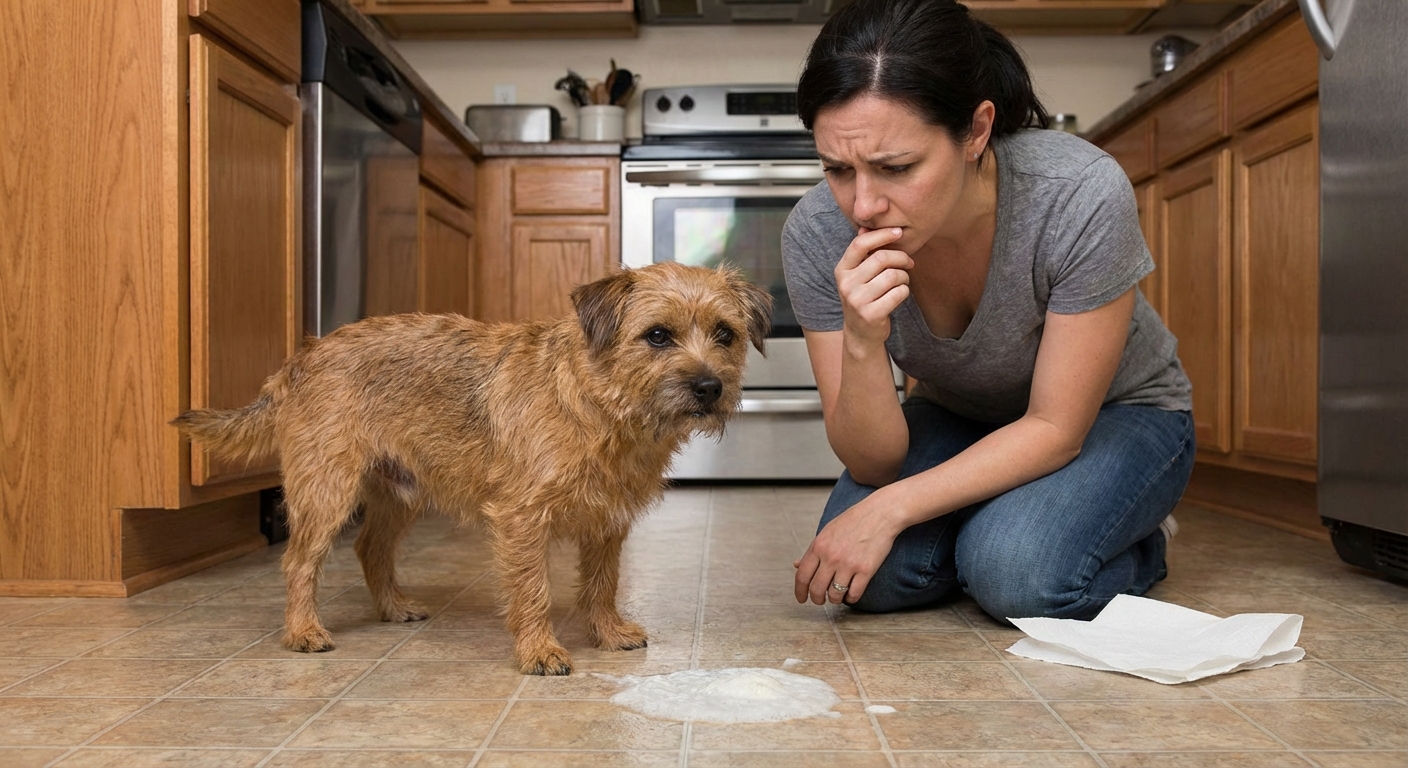
Dog Vomiting White Foam: Causes and Fixes
If you have ever walked into the room and found a little puddle of white, bubbly foam, your heart probably dropped. I have been there, both as a pet parent and as a veterinary assistant. The good news is that white foamy vomit can be related to stomach irritation, an empty stomach, mild nausea, or...
Read more →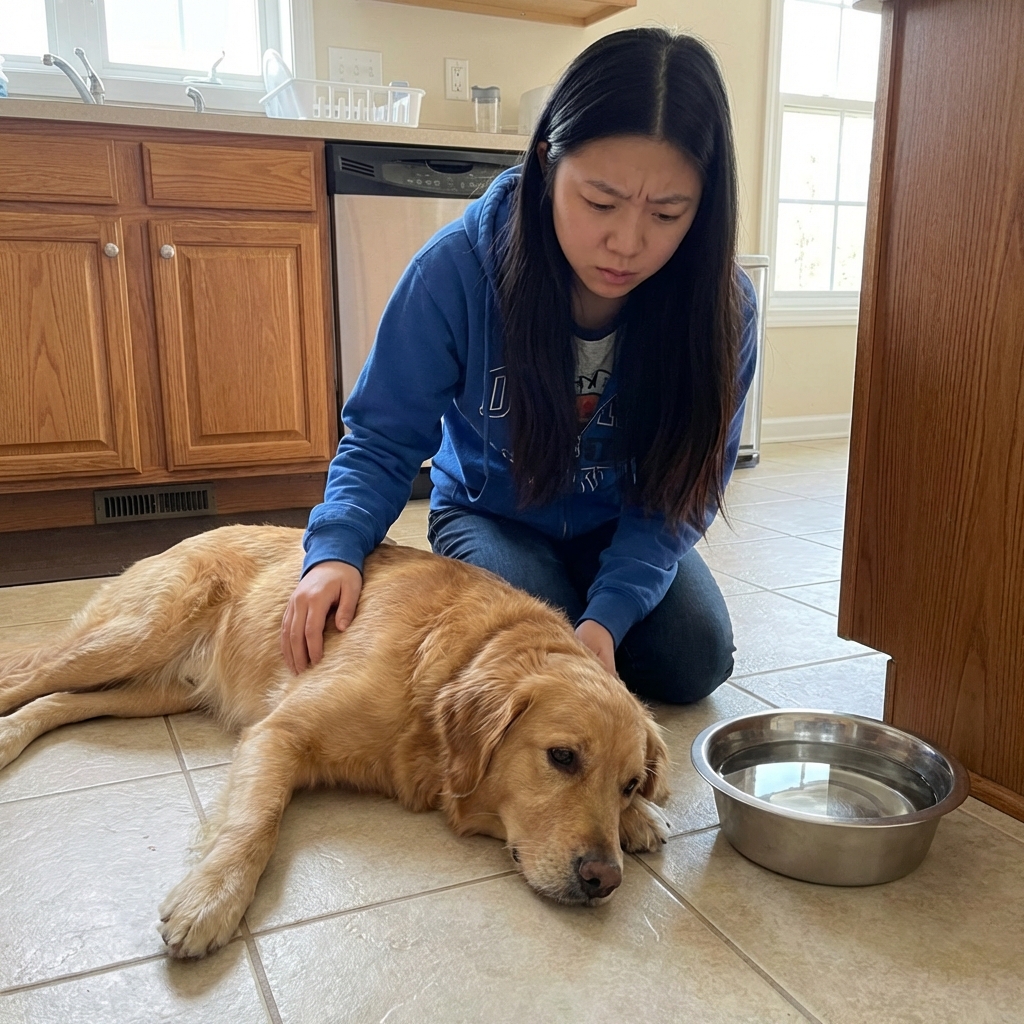
Dog Vomiting After Eating: When It Is Serious
Seeing your dog vomit right after a meal can be scary, and I completely understand the urge to panic. The good news is that many cases are mild and short-lived. The downside is that vomiting can also be an early warning sign of something urgent, like a blockage, toxin exposure, or bloat. This guide...
Read more →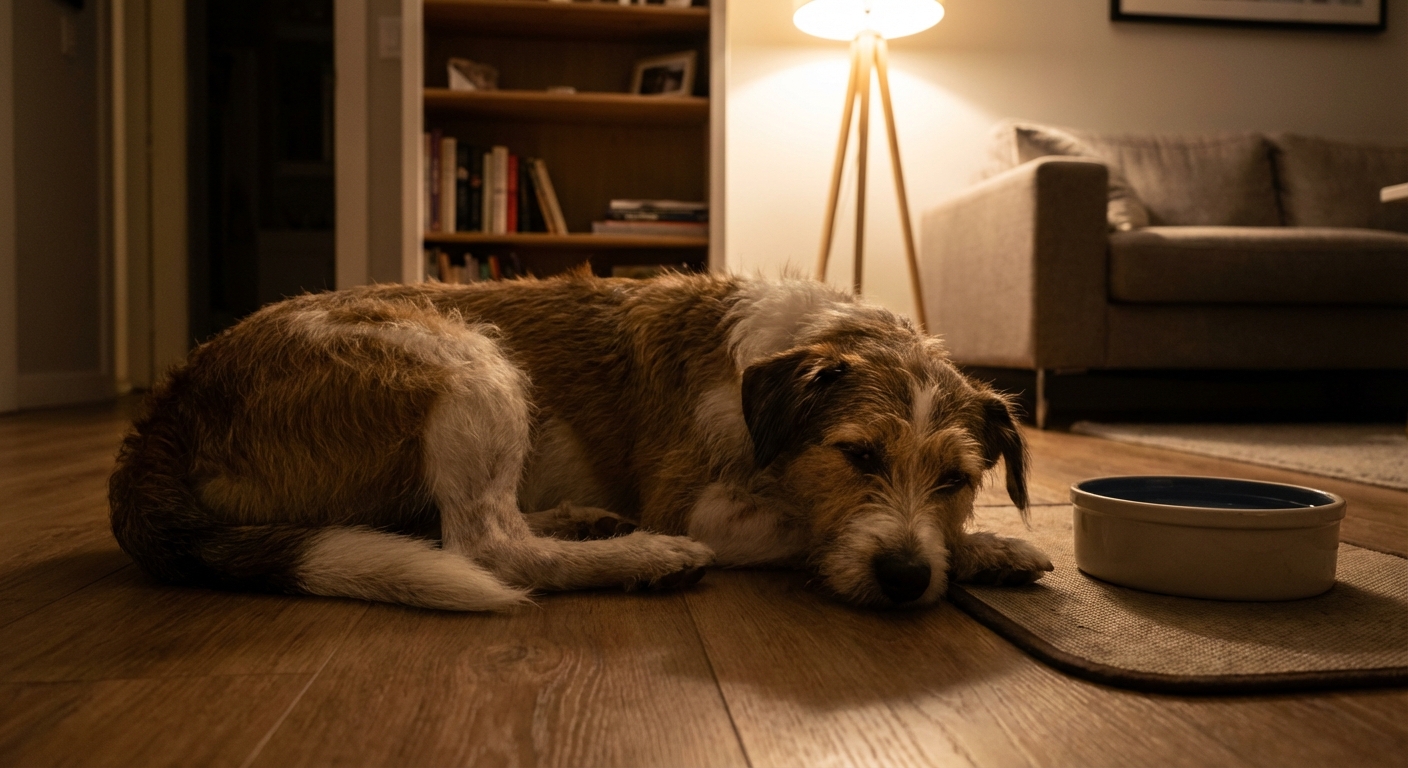
Dog Vomiting at Night: Causes and Home Steps
Waking up to the sound of your dog gagging or vomiting is stressful, and it can feel even scarier when it happens at night. As a veterinary assistant, I want you to know two things can be true at once: many nighttime vomiting episodes have manageable causes, and some situations need prompt...
Read more →
Can Dogs Eat Garlic? Myth vs Vet Facts
Garlic is one of those ingredients that can spark serious debate among dog owners. Some people swear it is a natural immune booster. Others are convinced a single clove is dangerous. As a veterinary assistant in Frisco, Texas, I have heard both sides, and here is the evidence-based takeaway: garlic...
Read more →