Start homemade dog food safely with this vet-informed starter plan. Learn what “vet approved” means, choose a balancer, follow a 14-day transition, and u...
Article
•
Designer Mixes
Open Wound on a Dog: Vet-Approved Care

Shari Shidate
Designer Mixes contributor
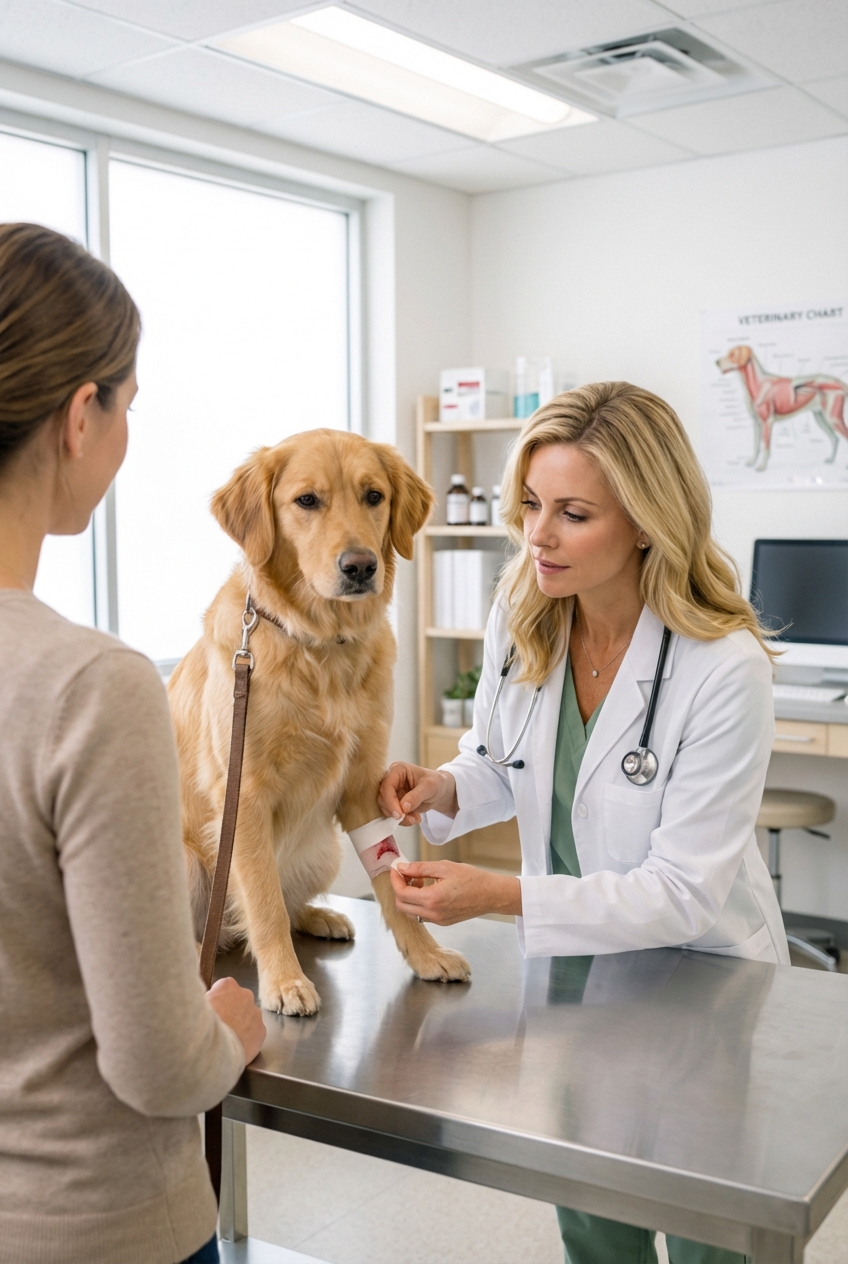
Seeing an open wound on your dog can make your stomach drop. I get it. As a veterinary assistant in Frisco, Texas, I have helped clean and bandage more scrapes, punctures, and torn nails than I can count, and the first step is always the same: stay calm, prevent licking, and decide whether this is a home-care wound or a vet-now wound.
Quick note: this guide is not a substitute for veterinary diagnosis. It is meant to help you give safe first aid and make a smart call about next steps.
This guide walks you through safe, veterinarian-aligned first aid, what to use and what to skip, and how to spot early infection. When in doubt, call your veterinarian. A quick phone triage can save you time and keep your dog much more comfortable.
When an open wound is an emergency
Some wounds need professional care right away, even if they do not look dramatic at first glance. Go to your vet or an emergency clinic if you notice any of the following:
- Heavy bleeding that does not slow after 5 to 10 minutes of steady pressure
- Deep wounds where you can see fat (yellow), muscle (dark red), tendon (white and shiny), or bone
- Puncture wounds (often from bites, sticks, or thorns), especially on the chest, belly, face, paws, or near joints
- Wounds on the face or near the eye
- Large skin flaps, torn pads, or degloving injuries
- Severe pain, limping, weakness, pale gums, collapse, or difficulty breathing
- Known animal bite, even if it looks small. Bites often seal on top and trap bacteria underneath.
- Foreign material embedded in the wound that you cannot easily flush out
- Signs of infection (increasing redness, heat, swelling, pus, foul odor, fever, lethargy)
- Your dog is immunocompromised (diabetes, Cushing’s, cancer treatment, long-term steroids) or the wound is not improving within 24 to 48 hours
Timing matters: if a wound might need stitches, it is best to be seen as soon as possible, often within the same day. The safe closure window varies based on location, contamination, and your dog’s health. Waiting can mean a bigger scar, higher infection risk, and a longer healing timeline.
First aid in the first 10 minutes
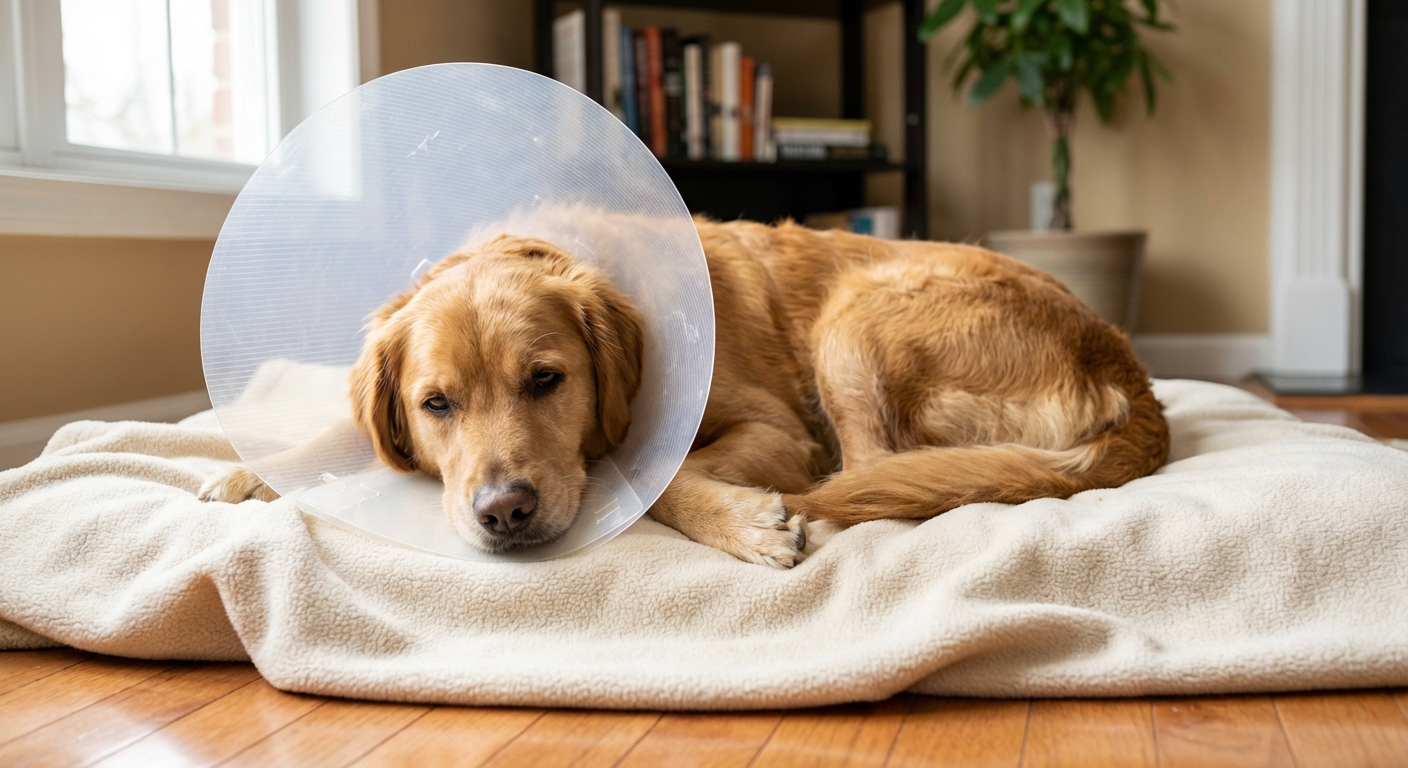
1) Keep your dog from licking or chewing
Licking feels “helpful” to dogs, but it introduces bacteria and breaks down healing tissue. Put on an e-collar (cone) if you have one. In a pinch, a well-fitted recovery collar, inflatable collar, or a snug T-shirt can help for body wounds.
2) Control bleeding with steady pressure
Use clean gauze or a clean cloth. Press firmly and continuously. Avoid peeking every few seconds because that disrupts clot formation.
- If blood soaks through, add layers. Do not remove the original layer.
- If a limb is bleeding and your dog will tolerate it, keep the limb elevated.
- Do not use a tourniquet unless a veterinarian specifically instructs you to. Tourniquets can cause serious tissue damage.
3) Do a quick safety check
Before you focus only on the wound, check your dog’s overall condition:
- Breathing comfortably
- Normal gum color (bubblegum pink in most dogs)
- Alertness and ability to stand
If anything seems off, treat it as urgent.
How to clean an open wound safely
If the wound is minor and your dog is stable, gentle cleaning is usually the best first step.
When to skip home cleaning
Do not try to clip or deep-clean at home if the wound is gaping, you cannot control bleeding, it is near the eye, you suspect a fracture, or your dog is too painful or stressed to handle. Cover it with a clean dressing if you can and head to the vet.
What to use
- Sterile saline (wound wash) is ideal
- Homemade saline for a temporary flush: 1 teaspoon of salt in 2 cups of boiled, cooled water (or 1/2 teaspoon in 1 cup). Use fresh and discard leftovers.
- Clean running water for a first rinse if saline is not available
- Chlorhexidine diluted to about 0.05% (for example, dilute a 2% chlorhexidine solution 1:40). Always check the concentration on your bottle and when in doubt, ask your vet for the right dilution.
- Povidone-iodine diluted to a weak tea color
What to avoid
- Hydrogen peroxide (damages healthy tissue and can delay healing)
- Rubbing alcohol (painful and tissue-damaging)
- Undiluted chlorhexidine or iodine (can irritate tissue)
- Powders or harsh “wound sprays” not specifically approved by your veterinarian
- Human pain creams (including lidocaine products) unless your vet directs it
- Common toxic topicals if licked such as zinc oxide creams, many steroid creams, and essential oils
Step-by-step: clean and flush
- Trim hair around the wound only if you can do it safely and the wound is minor. Use electric clippers if possible. Scissors can accidentally cut skin.
- Rinse thoroughly with saline or clean water to remove dirt and debris.
- Flush, do not scrub. Use a syringe or squeeze bottle to create gentle pressure. Strong, aggressive spraying can bruise tissue and make healing harder.
- Pat dry the surrounding skin with clean gauze.
If your dog is snapping, trembling, or too painful to handle, stop and seek veterinary care. Stress and pain can escalate quickly.
Cover it or air it out?
This is one of the most common questions I hear. In real life, it depends on location, size, and contamination risk.
- Cover wounds that are on paws, lower legs, or any area likely to get dirty or licked.
- Leave uncovered very small, clean, superficial wounds on areas your dog cannot reach, as long as you can keep them clean and dry.
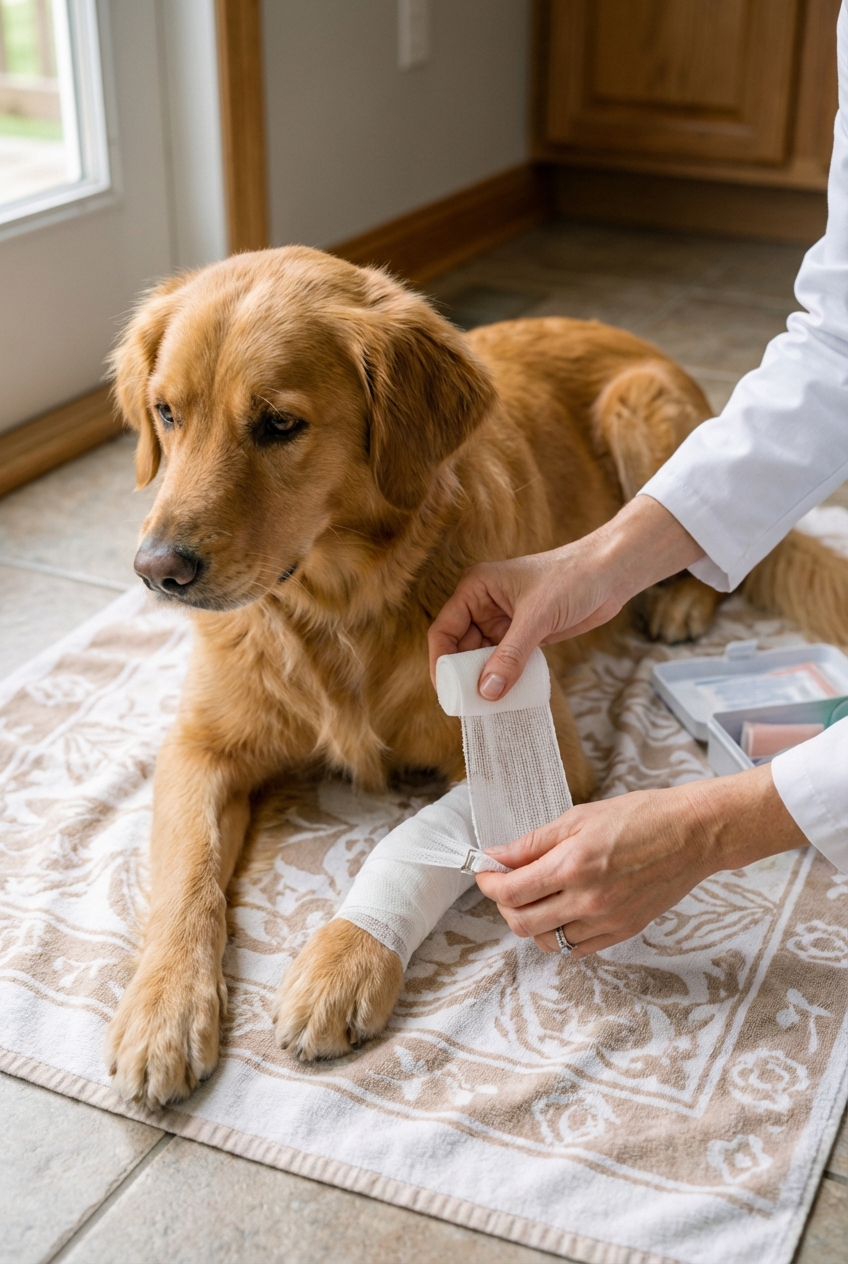
How to bandage a simple wound
A safe basic bandage has three layers. If bandaging feels intimidating, you are not alone. Ask your veterinary team to demonstrate. It is worth it.
- Non-stick pad over the wound (important so healing tissue is not ripped away)
- Soft padding (rolled gauze) to protect and absorb
- Outer wrap (self-adhering bandage) to hold everything in place
Bandage safety tips:
- Never wrap tightly. Toes should stay warm and normal colored.
- Check for swelling above or below the wrap.
- If toes become cold, pale, blue, or puffy, remove the bandage and call your vet right away.
- Keep it dry. Use a bootie outside, and remove it once indoors so moisture does not build up.
- Change at least daily for fresh wounds, or sooner if wet or dirty, unless your vet directs otherwise.
- Avoid putting thick ointments under a tight bandage unless your vet tells you to. Trapped moisture can macerate skin.
- Do not stick tape or adhesives directly to fur or skin if you can avoid it. It can cause painful skin trauma when removed.
Topicals your vet may recommend
Many dogs do well with simple cleaning and protection alone. If your veterinarian recommends a topical, it is usually one of these categories:
- Veterinary antiseptic sprays or gels designed for pets
- Medical-grade honey products for wound care (not the same as kitchen honey)
- Prescription antibiotic ointments for certain wounds
Skip thick, greasy layers. A thin film is typically plenty, and heavy ointment can trap moisture and debris.
How to tell if a wound is infected
Infection can happen even with good care, especially with punctures, bite wounds, and wounds on paws. Watch closely for:
- Increasing redness, swelling, or warmth
- Yellow, green, or cloudy discharge
- Bad odor
- Worsening pain or limping
- Fever, decreased appetite, low energy
- A hard lump or “pocket” forming under the skin (possible abscess)
If you see these signs, call your veterinarian promptly. Infected wounds often need prescription antibiotics, pain control, and sometimes drainage or debridement.
Healing timeline
Healing varies by wound depth, location, and your dog’s overall health. Here is a general, vet-clinic-friendly expectation:
- First 24 to 72 hours: mild swelling and pink edges can be normal. The wound should not look worse each day.
- Days 3 to 7: a healthy wound often looks less angry, with early scab formation or clean granulation tissue (moist, pink, bumpy surface) in deeper wounds.
- 1 to 3 weeks: many superficial wounds close. Lower-leg wounds can take longer because of less soft tissue and more movement.
Call your vet if the wound is not clearly improving within 48 hours, or if improvement stalls for several days.
Special situations
Paw pad wounds
Paw pads are tough, but they are also high motion and high contamination. Pads often need a protective bandage and strict activity restriction. Even small tears can be surprisingly painful.
Hot spots that look open
Hot spots (acute moist dermatitis) can look like raw open wounds. They usually need clipping, cleaning, and medication for itch and infection. Many dogs need prescription therapy to break the lick and itch cycle.
Punctures and bites
Punctures and bite wounds are sneaky. The surface can look small while bacteria are pushed deeper under the skin. Flushing at home is not enough for many of these cases. If you suspect a bite or puncture, it is best to be seen the same day.
What not to do
- Do not let your dog lick “just a little.” Licking is a top reason minor wounds become major problems.
- Do not use hydrogen peroxide repeatedly.
- Do not give human pain medications like ibuprofen, naproxen, or acetaminophen unless your veterinarian specifically instructs it. These can be dangerous for dogs.
- Do not wrap a bandage tightly or leave a wet bandage on.
- Do not delay care for punctures, bites, or deep wounds.
- Do not glue, staple, or “close” a wound at home.
At-home care checklist
If your vet has confirmed home care is appropriate, this simple routine helps you stay consistent:
- Clean or flush as directed (often 1 to 2 times daily early on)
- Keep the wound protected and dry
- Use an e-collar if there is any interest in licking
- Restrict activity (no running, rough play, or swimming)
- Take daily photos in the same lighting to track changes
- Recheck with your vet if redness, swelling, discharge, or pain increases
When to schedule a recheck
Even “simple” wounds benefit from a plan. Schedule or request a recheck if:
- You are changing bandages for more than a few days
- The wound is on the paw, near a joint, or over a bony area
- Your dog has allergies, chronic skin infections, or recurring hot spots
- There is any question about infection, foreign material, or pain control
Trust your gut. If your dog seems more uncomfortable, less energetic, or the wound looks “off,” your vet would much rather answer a quick question today than treat a bigger problem tomorrow.