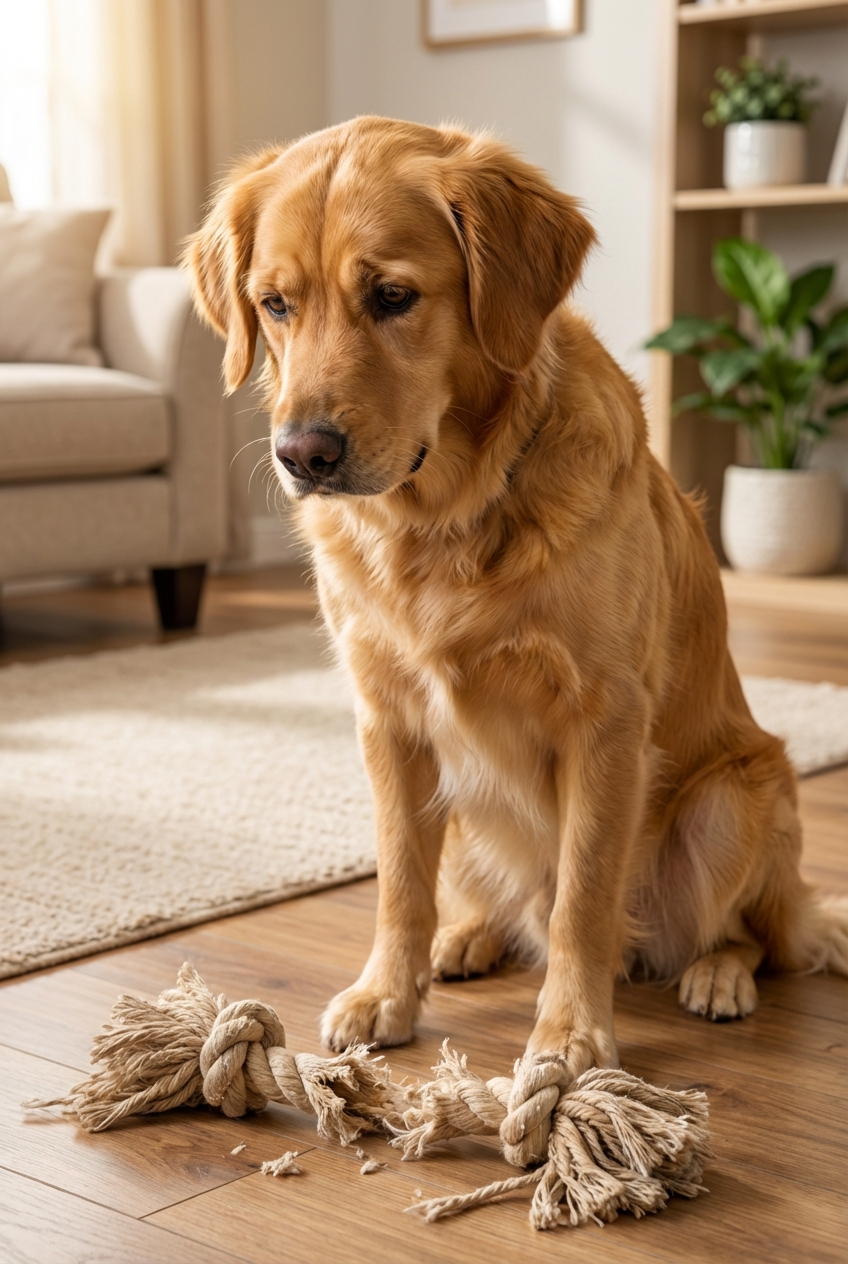
A dog bowel blockage can turn serious fast. Learn early symptoms, red flags, home do’s and don’ts, how vets diagnose obstructions, treatment options, rec...
Article
•
Designer Mixes
Obstruction in Dogs Care Guide

Shari Shidate
Designer Mixes contributor
When a dog has an obstruction, it means something is blocking the normal flow through the digestive tract. As a veterinary assistant in Frisco, Texas, I have seen how quickly a blockage can turn from “my dog seems off” to a true emergency. The good news is that fast action saves lives, and there are clear warning signs you can watch for at home.
This guide will help you recognize symptoms, understand what your veterinarian may do, and know how to support recovery safely and confidently.
What is an obstruction?
An obstruction is a partial or complete blockage in the gastrointestinal (GI) tract. Most commonly, it happens when a dog swallows something they cannot digest, like a toy, sock, corn cob, peach pit, bones, or large chunks of chew treats. Blockages can occur anywhere from the stomach to the intestines.
Blockages are serious because they can:
- Prevent food and water from passing, leading to dehydration and electrolyte imbalances.
- Cause swelling, inflammation, and severe pain.
- Cut off blood supply to part of the intestine, which can lead to tissue death (necrosis) and sepsis.
- Cause perforation, where intestinal contents leak into the abdomen.
Common causes and higher-risk dogs
Any dog can have an obstruction, but some situations raise the risk. In clinic, we most often see blockages tied to chewing habits and access to tempting items.
Common swallowed items
- Socks, underwear, washcloths
- Rope toys and string-like items (linear foreign bodies)
- Corn cobs, fruit pits, large seeds
- Chew bones that splinter, rawhide chunks, bully stick ends
- Foam, stuffing, squeakers
- Hair ties, pacifiers, kids’ toys
Dogs at higher risk
- Puppies and adolescents who explore with their mouths
- “Laundry lovers” who steal clothing
- Fast eaters and dogs who gulp toys or chews
- Anxious or bored dogs who chew destructively
- Breeds or individuals prone to gulping (some flat-faced dogs can fall into this category) especially if they eat quickly or grab toys in a hurry
Symptoms you should never ignore
Obstruction symptoms can look like “just an upset stomach” at first. The difference is that blockage signs often worsen, do not resolve, or come with significant pain and weakness.
Most common signs
- Vomiting, especially repeated vomiting or vomiting after drinking
- Loss of appetite
- Lethargy and reluctance to move
- Abdominal pain (tensing, hunching, trembling, guarding the belly)
- Diarrhea or straining to poop
- No stool or very small amounts of stool
- Drooling or lip smacking (nausea)
Emergency red flags
- Bloated or tight abdomen
- Pale gums, collapse, extreme weakness
- Blood in vomit or stool (bright red or black, tarry stool)
- Continuous retching with little coming up
- Known ingestion of a sharp object, string, needles, or multiple items
If you see red flags, go to an emergency vet now. Time matters with blockages.
What to do at home right now
If you suspect an obstruction, your safest “home care” is quick, calm decision-making. When in doubt, treat it as urgent and call for guidance.
Do
- Call your veterinarian or an ER clinic immediately and describe symptoms, timing, and what may have been eaten.
- Bring information: when symptoms started, vomiting frequency, last bowel movement, and any packaging or missing toy pieces.
- Keep your dog calm and prevent further chewing.
Do not
- Do not induce vomiting unless your veterinarian tells you to. Some objects can tear the esophagus or get stuck on the way up.
- Do not give laxatives, mineral oil, or stool softeners without veterinary direction.
- Do not pull on anything hanging from the mouth or rectum (string, rope, tinsel). This can cause severe internal injury.
- Do not “wait it out” if vomiting repeats, your dog cannot keep water down, or they seem painful or weak.
Trust your instincts. If your dog is acting “not themselves” and the symptoms are escalating, it is better to be seen and told it is not a blockage than to miss one.
Why string is so dangerous
String, rope toys, tinsel, and similar items are called linear foreign bodies. Instead of moving through like a single object, they can anchor in one spot while the intestines try to pull them along. That can cause the gut to bunch up and, in severe cases, cut into the intestinal wall. This is why we take “do not pull it” so seriously.
How vets diagnose an obstruction
Your veterinary team will typically start with a physical exam and targeted questions. Diagnostics may include:
- X-rays to look for foreign material, gas patterns, and intestinal dilation (and to help rule out other problems)
- Abdominal ultrasound to detect soft objects that do not show well on X-ray and to assess intestinal motion and fluid
- Bloodwork to evaluate dehydration, electrolyte changes, infection risk, and organ function
- Contrast studies (in select cases) to track movement through the GI tract
One helpful thing to know is that not all swallowed items show up clearly on X-rays. Your veterinarian may recommend ultrasound or repeat imaging if symptoms and the exam still point to a blockage.
Treatment options
Treatment depends on what was swallowed, where it is, how long it has been there, and how stable your dog is.
1) Supportive care and monitoring
If the blockage is partial and your veterinarian believes it may pass safely, your dog may be treated with fluids, anti-nausea medication, pain control, and close monitoring. This is not a “do nothing” plan. Your vet will be looking for progression and improvement, not just time passing.
2) Endoscopy
If an object is in the stomach, or sometimes the very beginning of the small intestine (depending on the case and equipment), a veterinarian may remove it with an endoscope. This can reduce recovery time compared with surgery, but it is not appropriate for every situation.
3) Surgery
If there is a complete blockage, a linear foreign body, worsening condition, suspected tissue damage, or the object cannot be removed via endoscopy, surgery is often the safest choice. During surgery, the veterinarian may remove the object and evaluate intestinal health. In severe cases, damaged segments may need to be removed.
Pro tip for pet parents: ask your clinic what aftercare includes, what complications to watch for, and what the recheck schedule is before you leave the hospital.
What to expect at the ER
Many owners feel overwhelmed walking into an emergency clinic. A common flow looks like this:
- Triage: the team checks vitals and urgency, especially if there is collapse, pale gums, severe pain, or repeated vomiting.
- Exam and history: what was eaten, when, and what symptoms you are seeing now.
- Imaging and labs: often X-rays first, then ultrasound or additional testing if needed.
- Plan and estimate: you will usually be offered options based on findings (monitoring, endoscopy, surgery, hospitalization).
In my experience, the more details you can provide up front, the faster the team can narrow down what is going on.
Recovery and aftercare at home
After an obstruction, your main goals are healing, hydration, comfort, and preventing re-injury. Always follow your veterinarian’s specific plan, but these are common home-care themes.
Feeding
- Feed the prescribed diet, often a bland, easy-to-digest food for a period of time.
- Offer small, frequent meals if instructed.
- Avoid rich treats, chews, bones, and table scraps until your veterinarian clears them.
Medications
- Give meds exactly as prescribed, especially antibiotics and pain relief.
- Never give human medications like ibuprofen or acetaminophen unless explicitly directed by a veterinarian.
Incision and activity restriction (post-surgery)
- Keep the e-collar or recovery suit on as directed.
- Leash walks only. No running, jumping, or rough play until cleared.
- Check the incision daily for swelling, redness, discharge, or gapping.
When to call your vet during recovery
- Vomiting, repeated nausea, or refusal to eat
- Diarrhea that is severe or persistent
- Bloated belly, worsening pain, or restlessness
- Incision changes (heat, swelling, discharge, missing stitches)
- Lethargy that is not improving
Prevention
Most obstructions are preventable. Think of prevention as “environment design” plus smart chewing habits.
Home safety checklist
- Keep laundry in a closed hamper.
- Store kids’ toys, hair ties, and small objects in bins with lids.
- Supervise trash access and use a locking trash can if needed.
- Pick up fallen fruit from yards (especially pits and large seeds).
Choose chews wisely
- Match chews to your dog’s chewing style. Power chewers need durable, appropriately sized options.
- Retire chews when they get small enough to swallow.
- Supervise new chews and toys until you know how your dog handles them.
Slow down fast eaters
- Use slow-feeder bowls or puzzle feeders.
- Offer smaller pieces of treats and chews.
- Teach “drop it” and “leave it” with positive reinforcement.
Quick FAQ
Can a dog still poop with an obstruction?
Yes. Some dogs can pass small amounts of stool early on, especially if the blockage is partial or located higher in the GI tract. Do not use stool output alone to rule out an obstruction.
How fast can an obstruction become dangerous?
It can become dangerous quickly, sometimes within hours, especially with linear foreign bodies, sharp objects, or complete blockages. In other cases it may progress more slowly. The safest move is prompt veterinary advice rather than watching and waiting.
Is vomiting always an obstruction?
No. Vomiting can be caused by many issues, from parasites to pancreatitis. But repeated vomiting plus lethargy, pain, or inability to keep water down deserves urgent evaluation.
A gentle final note
If you are reading this because you are worried, you are doing the right thing by looking for answers. Obstructions are stressful, but with prompt veterinary care, many dogs recover beautifully and get right back to being their happy, playful selves.
If your dog might have eaten something they should not, call your veterinarian or local emergency clinic now and describe exactly what you are seeing.